Woodlawn cemetery – George Washington De Long Memorial

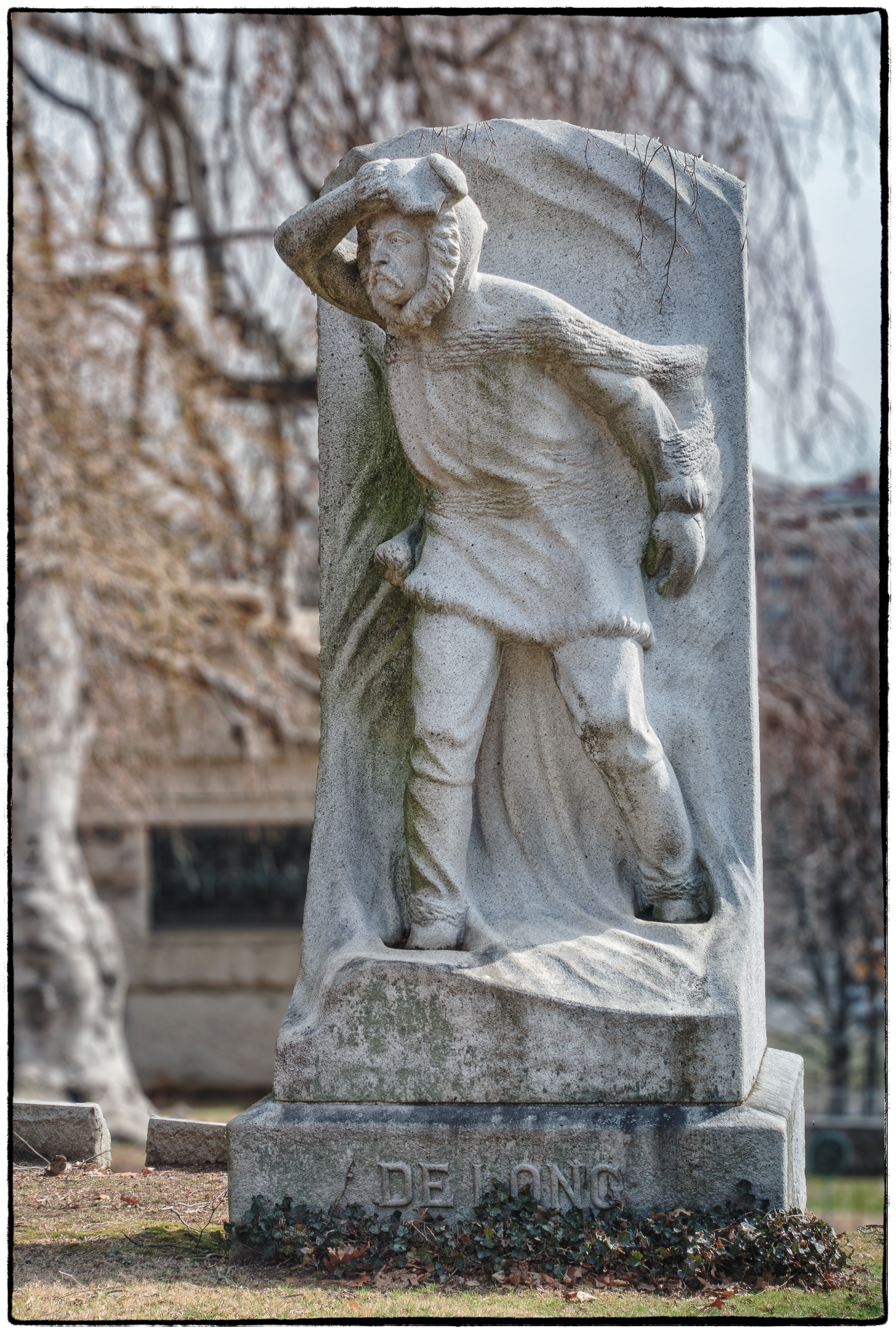
This was one of the first interesting memorials that we came across. Neither of us was familiar with the name, but the figure clearly seemed to be an explorer of some sought. There were also several grave markers in front of the statue, all apparently deceased on the same date. We guessed that these were members of an expedition that went horribly wrong and when I looked up the name afterwards I discovered that we were correct.

According to Wikipedia:

Born in New York City, he was educated at the United States Naval Academy, and graduated in 1865. In 1879, backed by James Gordon Bennett, Jr., owner of the New York Herald newspaper, and under the auspices of the US Navy, Lieutenant Commander De Long sailed from San Francisco, California on the ship USS Jeannette with a plan to find a quick way to the North Pole via the Bering Strait.

As well as collecting scientific data and animal specimens, De Long discovered and claimed three islands (De Long Islands) for the United States in the summer of 1881.

The ship became trapped in the ice pack in the Chukchi Sea northeast of Wrangel Island in September 1879. It drifted in the ice pack in a northwesterly direction until it was crushed in the shifting ice and sank on June 12, 1881 in the East Siberian Sea. De Long and his crew then traversed the ice pack to try to reach Siberia pulling three small boats. After reaching open water on September 11 they became separated and one boat, commanded by Executive Officer Charles W. Chipp, was lost; no trace of it was ever found. De Long’s own boat reached land, but only two men sent ahead for aid survived. The third boat, under the command of Chief Engineer George W. Melville, reached the Lena delta and its crew were rescued.

De Long died of starvation near Matvay Hut, Yakutia, Siberia. Melville returned a few months later and found the bodies of De Long and his boat crew. Overall, the doomed voyage took the lives of twenty expedition members, as well as additional men lost during the search operations.

National Geographic also has an interesting article on the Jennette story (see The Hair-Raising Tale of the U.S.S. Jeannette’s Ill-Fated 1879 Polar Voyage in the form of an interview with Hampton Sides author of The Kingdom of Ice: The Grand and Terrible Voyage of the U.S.S. Jeannette.
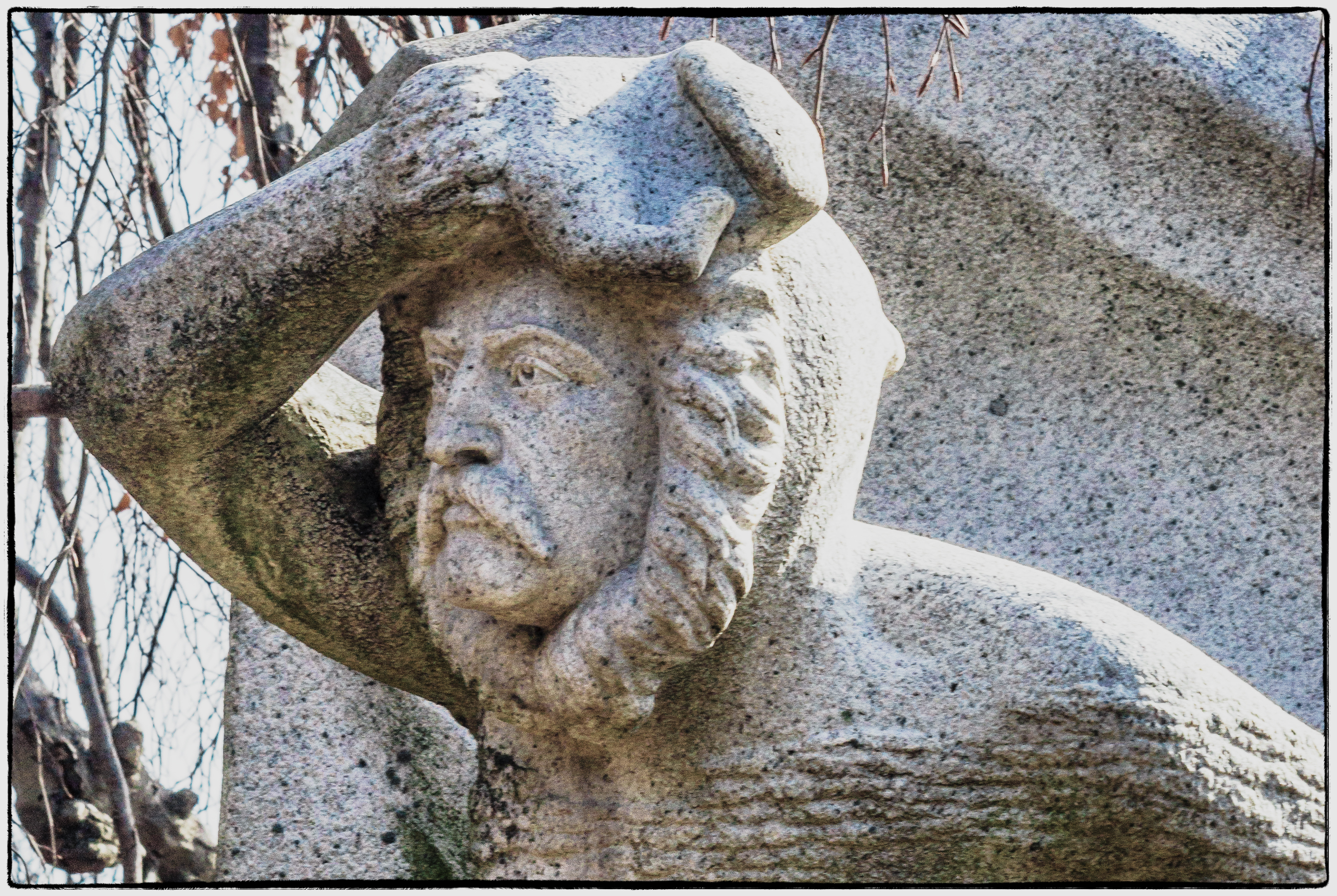
Closeup of the memorial.
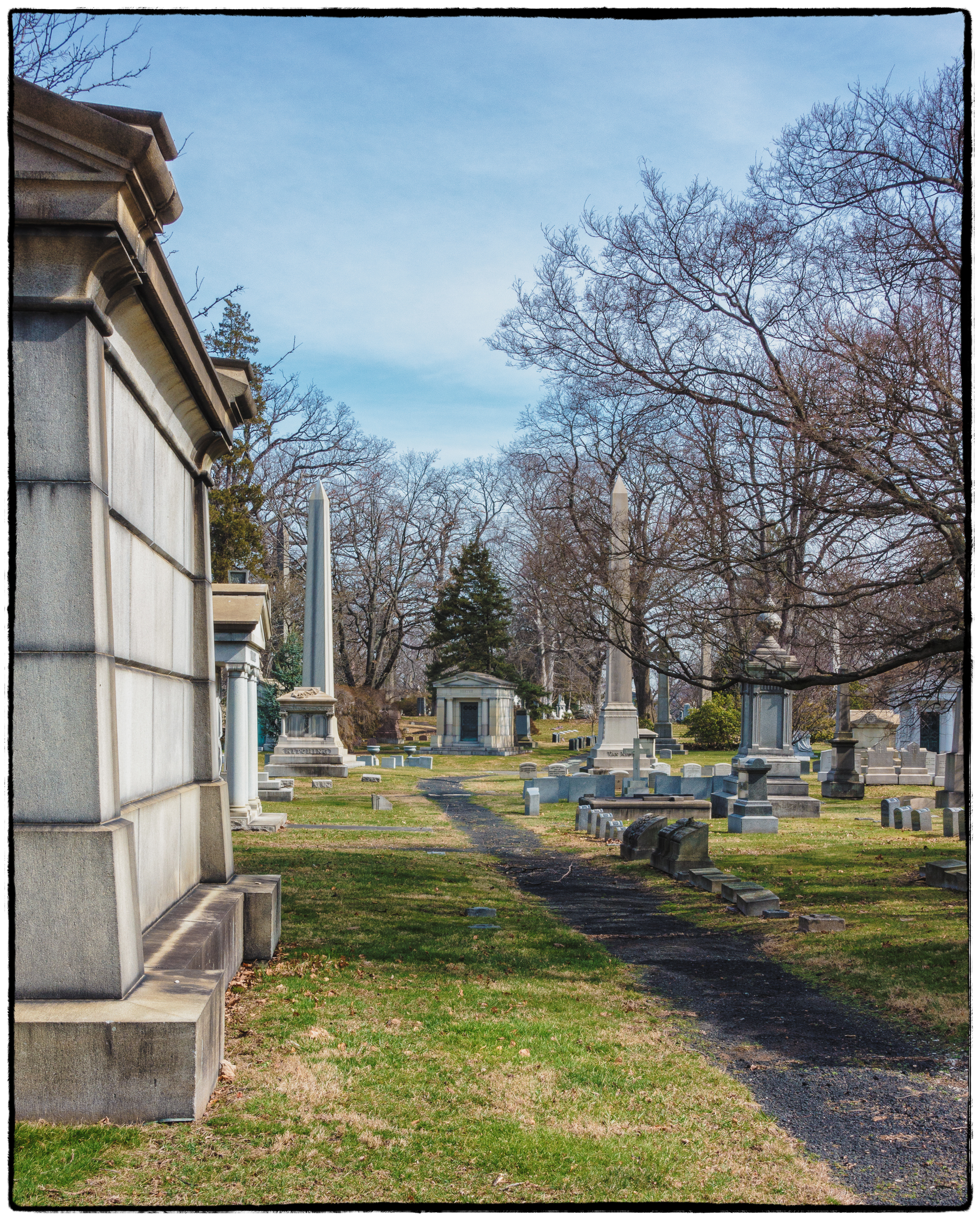
Woodlawn cemetery – Overview

For New York in Winter it was a nice day (February 27) so my friend George and I decided to go down to Woodlawn Cemetery in the Bronx where George grew up. We’d read that you had to check in at the office to register if you wanted to take pictures. They don’t object to people taking pictures, nor do they charge a fee but they ask you fill out a form (indicating the nature of your project and explaining their rules ) and show id. They then give you a copy of the signed form for you to show if asked. Security is tight. During our short visit we three times encountered security vehicles, the officers politely asking us what we were up. We explained that we had been to the office and filled out the form and they continued on their way (strangely nobody actually asked to see the forms. Possibly we didn’t look like professional photographers as I was using a Sony RX100 and NEX 5N rather than a huge DSLR with large lenses hanging all over the place).

This place is vast. We got a map from the office and set off walking. I had the Keister book (see below) with me so I had some idea of what I wanted to see. After we’d walked for a while we realized we were nowhere near where we wanted to be so we backtracked to the car and drove to the area of interest (stopping at a few interesting looking mausoleums along the way.)

This will be the first of about twenty posts on Woodlawn.

We spent about three hours walking around and by then my back was starting to hurt so we left. George drove us around some of the areas where he grew up and then we had lunch at what George referred to as the last Jewish deli in the Bronx for sandwiches (reuben for me, pastrami for him), pickles and cream soda. Then back to his house for a couple of beers at his house before calling it a day.

If you want to study New York City’s architecture, forget about craning your neck or dodging taxicabs. Just hop on the Number 4 subway north towards the Bronx and sit down and relax. The Woodlawn Cemetery – it’s the end of the line. Woodlawn’s 1,300 plus mausoleums are a study in almost every architectural style ever since there was architecture. Indeed, there is no better collection and condensation of architectural styles anywhere in he United States, and maybe the entire planet.

Woodlawn Cemetery was founded in 1863. At the time the land was part of Westchester County; then in 1874, New York City gobbled up the land and Woodlawn became part of the Bronx. Woodlawn was originally laid out using the rural cemetery ethos that was popular at the time. The design was altered a few years after the cemetery opened to conform to a more open landscaping theme, called the landscape-lawn plan, which meant eliminating fences and encouraging plot owners to have centerpiece monuments surrounded by smaller gravestones. The vast lawns became the perfect canvas for the glorious mausoleums that punctuate the immaculate grounds. By the end of the nineteenth century Woodlawn had eclipsed Green-Wood in Brooklyn as the place for New York’s movers and shakers to construct their eternal home. The 400-acre cemetery has over 300,000 burials. The addition of a large community mausoleum, a fair amount of underdeveloped land, the rise of cremation (which requires less space), and a well managed endowment fund assures that Woodlawn will continue to be an active cemetery for years to come.

Source: Stories in Stone New York. A field Guide to New York City area cemeteries and their residents by Douglas Keister (in subsequent posts this will be referred to as ‘Keister’.

Obviously we didn’t get to see everything, and there are a few monuments/mausoleums I would have liked to have seen that we missed”: Harbeck Mausoleum (with its bronze doors modeled on the Baptistery in Florence; Fiorella la Guardia; Herman Melville; and (maybe because of my interest in the US Civil War) Admiral David Farragut. Maybe next time.

Sleepy Hollow Cemetery – Journey’s End

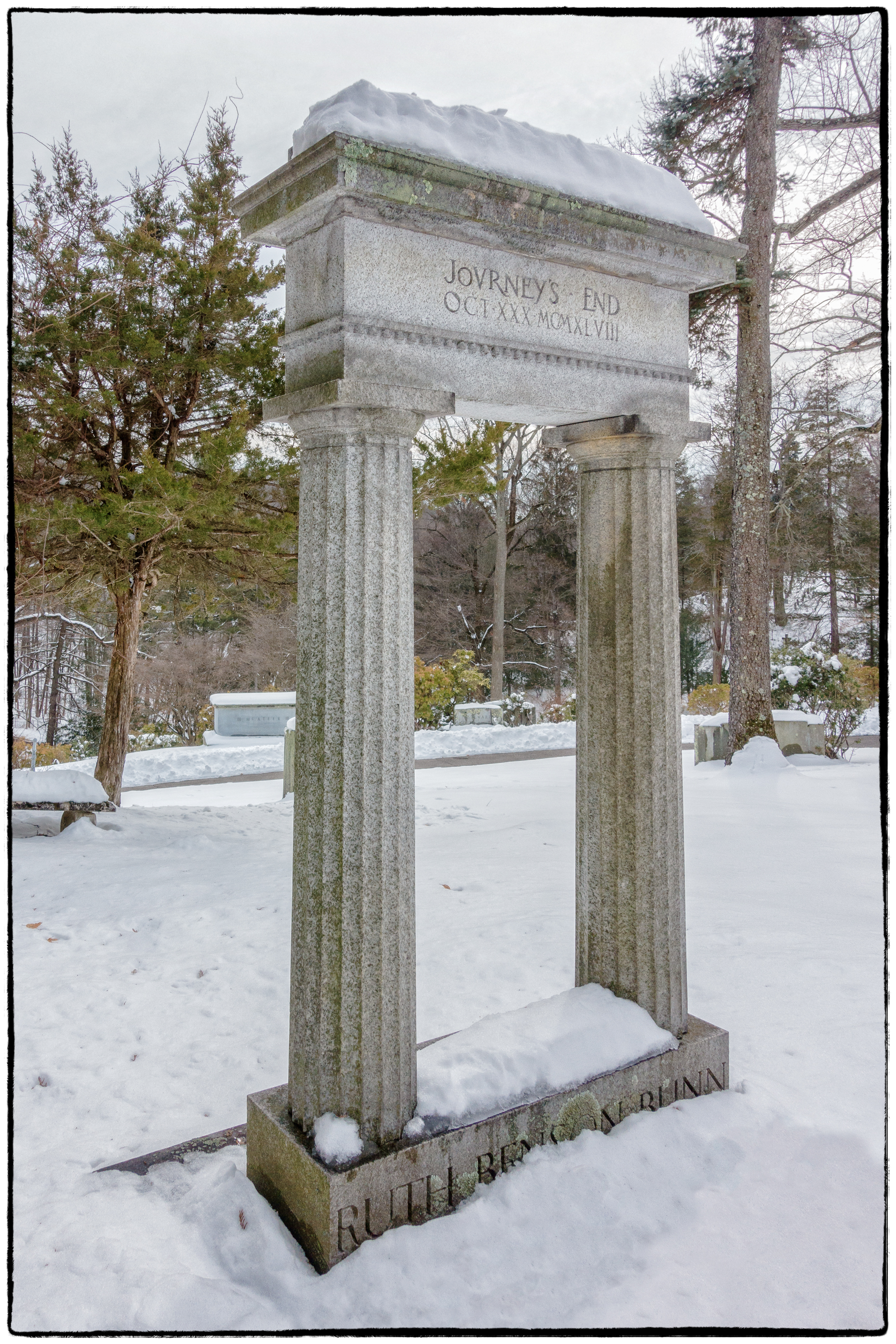
I found this small and simple memorial to be very appealing: a base (with the name Ruth Benson Blinn); two doric columns (the simplest of the Greek column styles); and a cornice with the words “Journey’s End. Oct XXX MCMXLVIII” (October 30, 1948).

I realized after conducting some research that this may actually be the rear of the memorial. If so the front bears the name “Holbrook Blinn” and also has the inscription “Journey’s End. June XXIV. MCMXXVII (June 24, 1928)

Sleepy Hollow Cemetery – Grant Family Plot

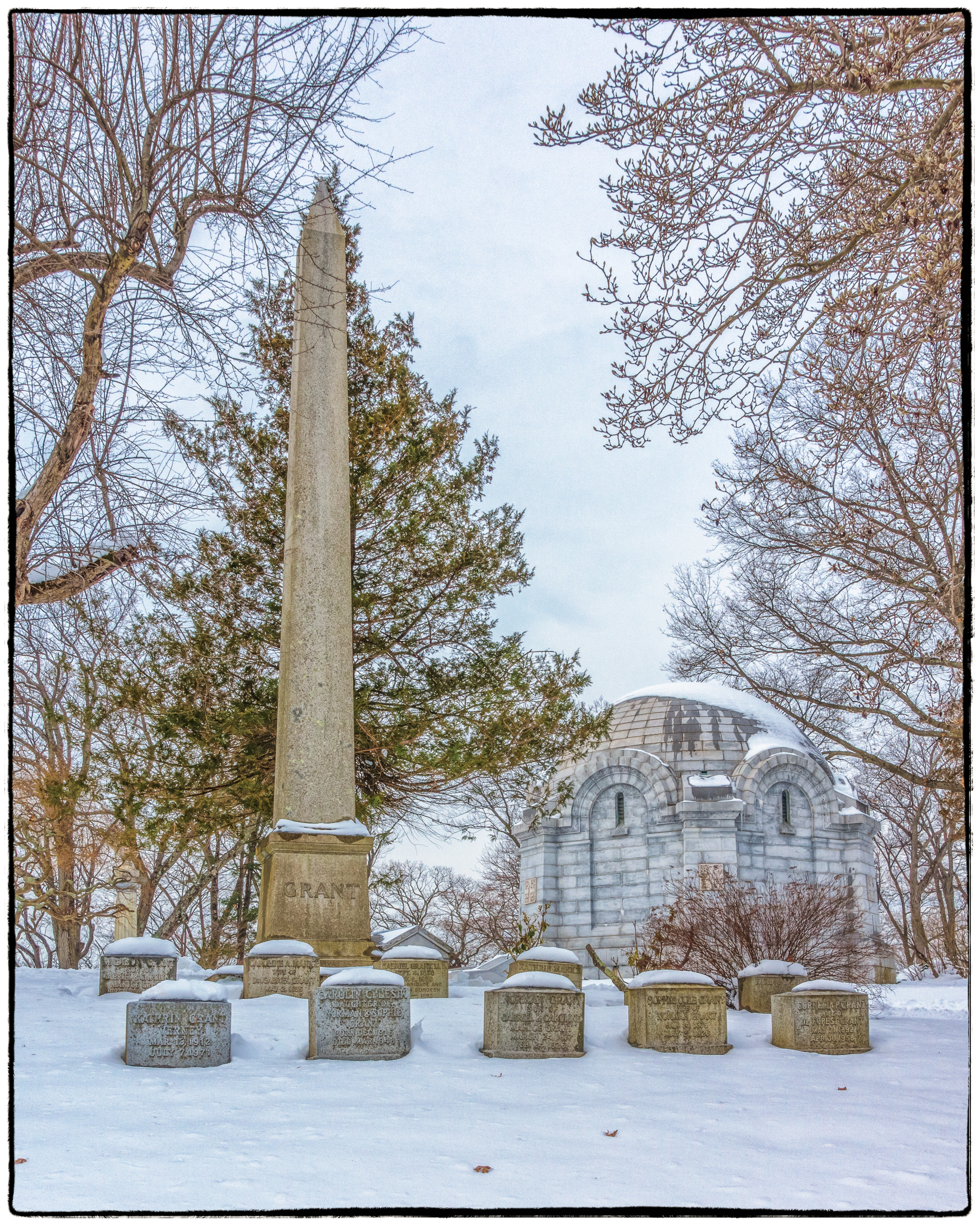
More Egyptian symbology – this time an obelisk (with the Archbold mausoleum in the background).

According to Wikipedia:

Dr. Gabriel Grant (September 4, 1826, Newark, New Jersey – November 8, 1909, Manhattan, New York) was an American doctor and Union Army major who was awarded the Medal of Honor for his actions at the American Civil War Battle of Fair Oaks.

Grant obtained A.B. and A.M. degrees from Williams College in 1846 and graduated from the College of Physicians and Surgeons in 1851. In 1852, he worked as a surgeon in Panama during the height of the California Gold Rush (when hordes of prospectors traveled across the isthmus on their way to the gold fields by sea) and organized the American Hospital the following year. While there, he also edited the Panama Herald. He then returned to practice medicine in his hometown of Newark. In 1854, he was part of a special commission set up to fight the cholera epidemic in the city.

With the onset of the Civil War, he served as the surgeon of the 2nd Infantry Regiment of New Jersey Volunteers from June to October 1861. He was a member of French’s Brigade during the Battle of Fair Oaks (better known as the Battle of Seven Pines), where his actions on June 1, 1862, earned him the Medal of Honor (awarded July 21, 1897). His Medal of Honor citation reads as follows:

Removed severely wounded officers and soldiers from the field while under a heavy fire from the enemy, exposing himself beyond the call of duty, thus furnishing an example of most distinguished gallantry.

In February 1863, he was appointed Medical Director of Hospitals in Evanston, Indiana, and was placed in charge of the United States Army Hospital in Madison, Indiana, on September 4 of the same year. He resigned his commission in January 1865 due to a wound he received while operating in the field.

Grant married the “wealthy Caroline Manice” in 1864. After the war, they lived in Newark, but soon moved to New York City, where all four of their children (three sons, one daughter) were born. The eldest was the lawyer, eugenicist and conservationist Madison Grant (1865–1937).

Gabriel Grant died at his home at 22 East 49th Street, Manhattan, New York, at the age of 83. He was survived by his wife and three sons

Sleepy Hollow Cemetery – Harris Plot

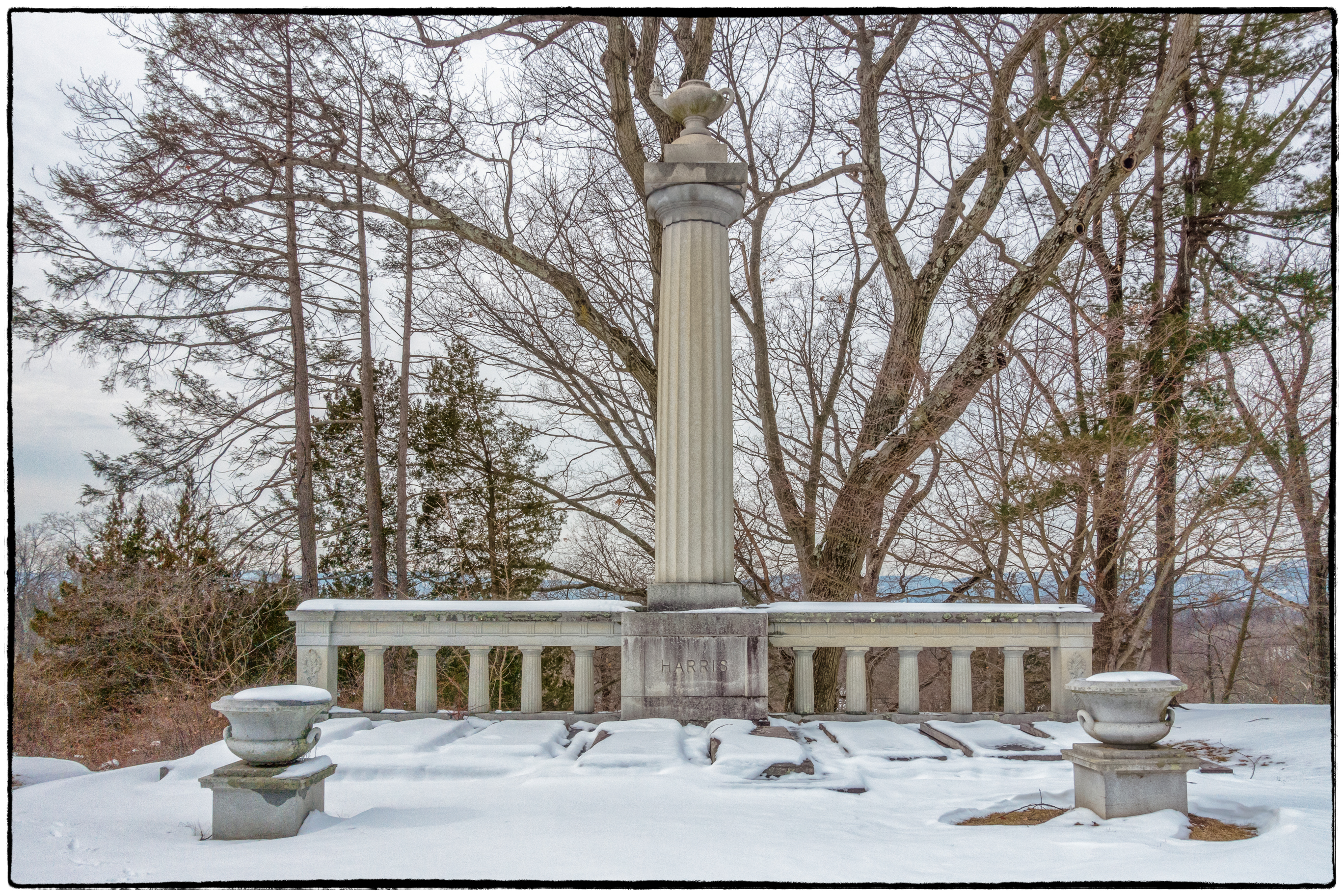
What caught my attention here was the large lamp on top of the central column. It looked like something out of The Arabian Nights.

According to Douglas Keister in Stories in Stone. A Field Guide to Cemetery Symbolism and Iconography:

Because of the light emitted by it the lamp is a symbol of wisdom, faithfulness and holiness. In 2 Samuel 2, a lamp is a symbol for God.

28 And the afflicted people thou wilt save, but thine eyes are upon the haughty, that thou mayest bring them down.
29 For thou art my lamp, O LORD: and the LORD will lighten my darkness.
30 For by thee I have run through a troop by: by my God have I leaped over a wall.

I was unable to discover which of the Harris’s built the memorial, but quite a few of them have grave markers right in front of the balustrade including:

William Rees Harris (1855 – 1915)
Florence Mary Harris (1858 – 1919)
Ieuan Harris (1881 – 1940)
Laura Houghton Harris (1879 – 1925)
Gwendoline Matthews Harris (1887 – 1981)
Hugh Harris (1883 – 1899)
John Houghton Harris (1915 – 1954)