NY Air Show – ANG 106th Rescue Wing CSRA Demo

According to the NY Air Show Website:

The 106th Rescue Wing deploys worldwide to provide combat search and rescue coverage for U.S. and allied forces. They are a World-Class Team of diverse, adaptable personnel recovery focused war fighters. The mission of the 106th Rescue Wing is to provide worldwide Personnel Recovery, Combat Search and Rescue Capability, Expeditionary Combat Support, and Civil Search and Rescue support to Federal and State authorities. They provide Personnel Recovery to the state of New York and deployed operations that they are tasked to support.

The Pararescuemen of the 106th Rescue Wing or “PJs” are among the most highly trained emergency trauma specialists in the U.S. military. They must maintain an emergency medical technician-paramedic qualification throughout their careers. With this medical and rescue expertise, along with their deployment capabilities, PJs are able to perform life-saving missions in the world’s most remote areas.

The 106th Rescue Wing utilizes HH-60G Pave Hawk helicopters and HC-130 aircraft to carry out their mission. The primary mission of the HH-60G Pave Hawk helicopter is to conduct day or night combat search and rescue, or CSAR, operations into hostile environments to recover downed aircrew or other isolated personnel during war. Because of its versatility, the HH-60G is also tasked to perform military operations other than war. These tasks include civil search and rescue, emergency aeromedical evacuation, disaster relief, international aid, counter drug activities and NASA space shuttle support.

The HC-130’s mission is to rapidly deploy to execute combatant commander directed recovery operations to austere airfields and denied territory for expeditionary, all weather personnel recovery operations to include airdrop, airland, helicopter air-to-air refueling, and forward area ground refueling missions. When tasked, the aircraft also conducts humanitarian assistance operations, disaster response, security cooperation/aviation advisory, emergency aeromedical evacuation, and noncombatant evacuation operations.
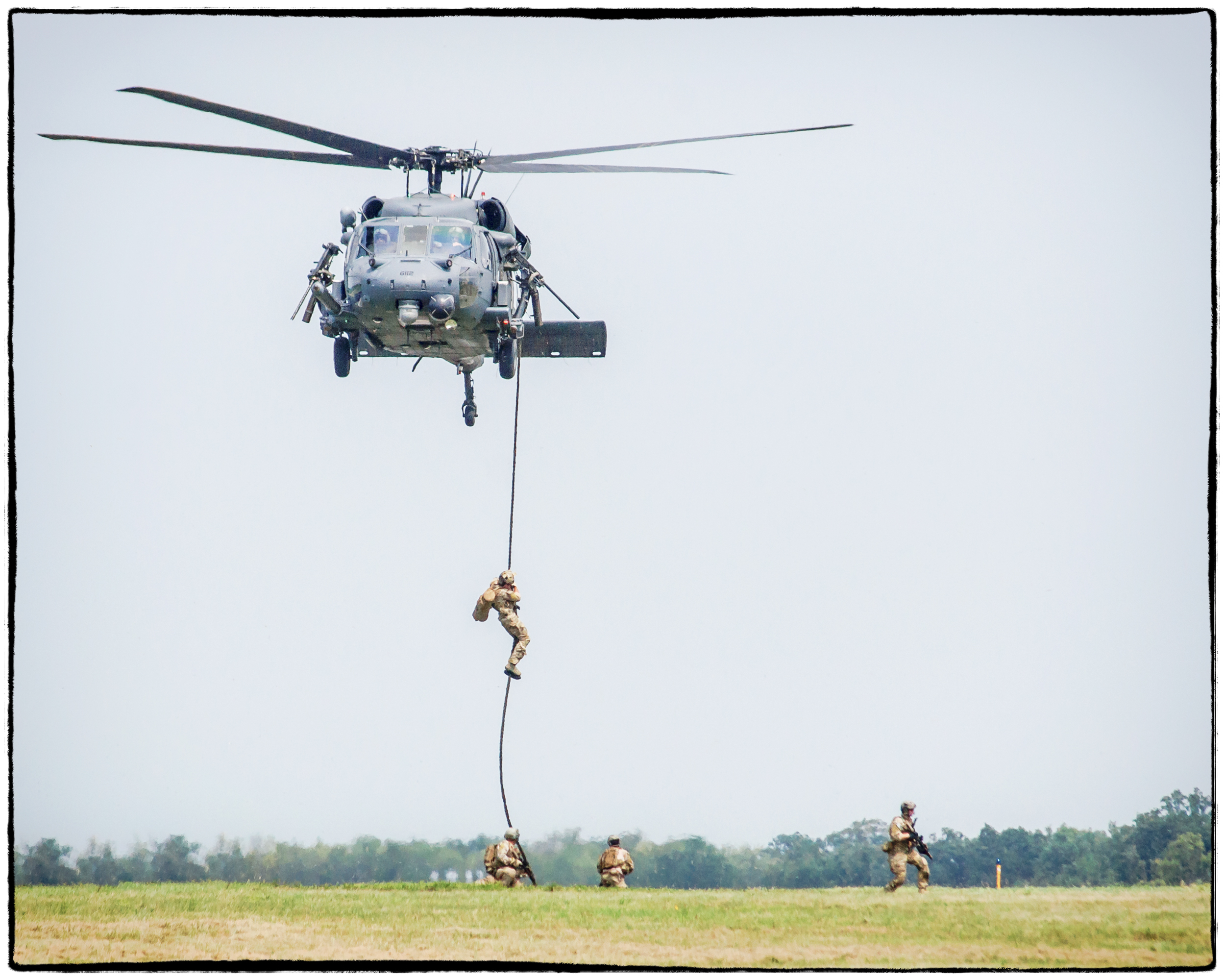
Dropping Off.
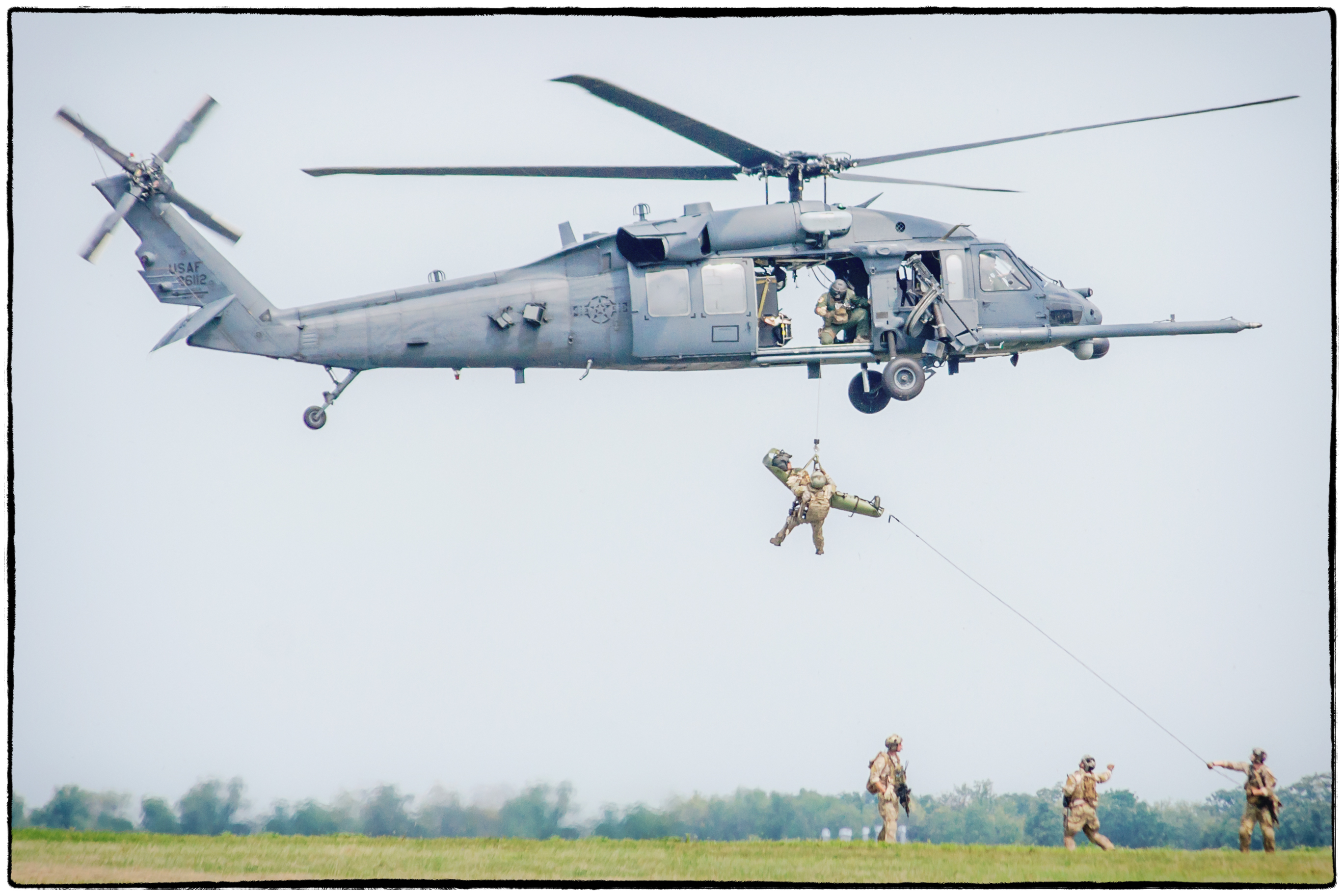
Picking Up.
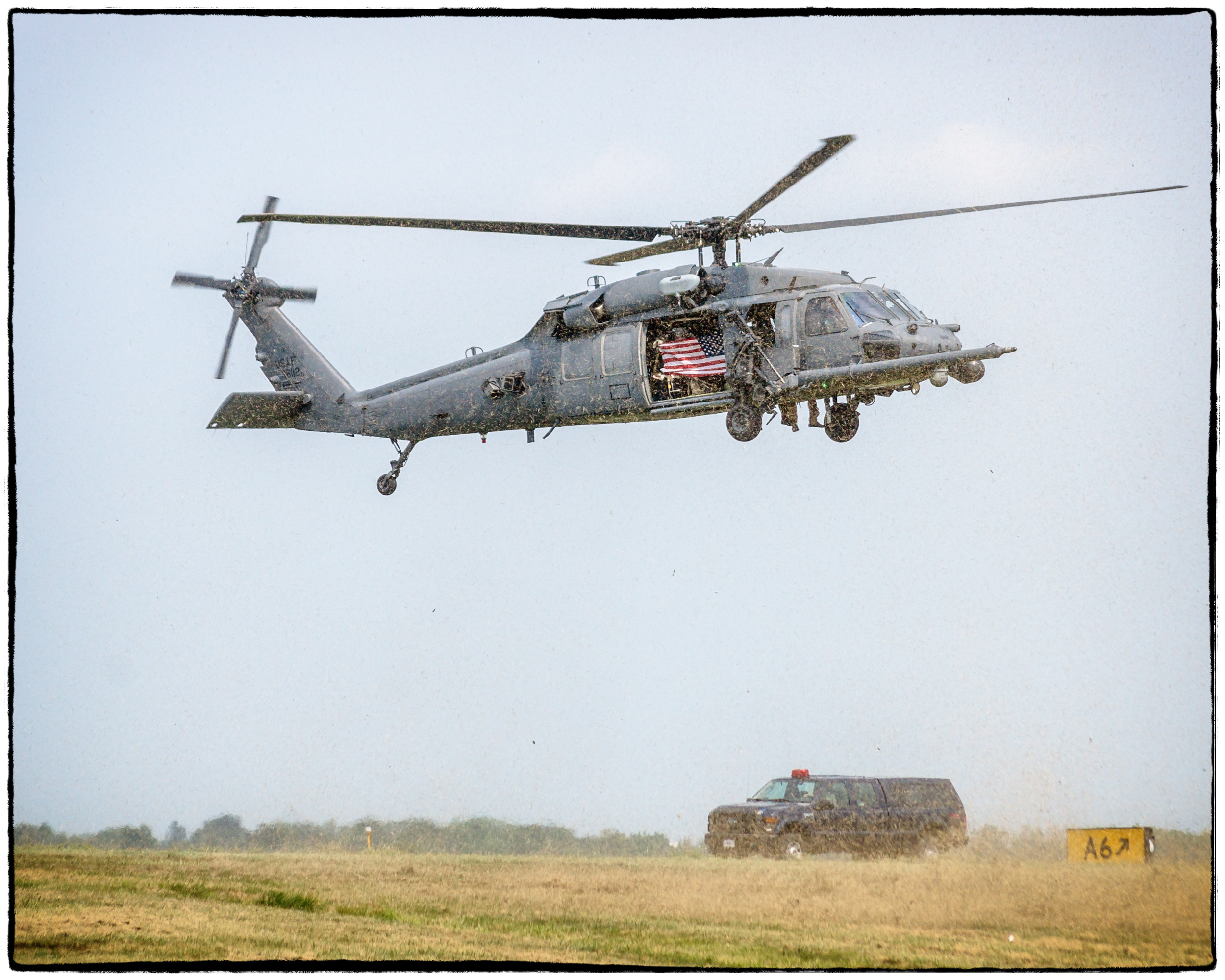
Leaving in a flurry of dust and grass clippings.

NY Air Show – AV-8B Harrier

It’s very hard to justice to this aircraft in a single picture. It doesn’t have the antique charm of the B25, nor does it have the raw power of the F/A-18. However, when you see it fly towards you, gradually slowing down until it stops in a hover – AND THEN FLIES BACKWARDS! you start to get some of sense of its capabilities.

It’s hard to believe that the design is as old as it is. In an earlier post I mentioned that I hadn’t been to an airshow since I was a child in the mid to late 1960s. This was about the time when the harrier was first going into service (1969). Apart from a much inferior Russian Aircraft, the Yakolev Yak-38 Forger (retired in 1991) it has been the only aircraft of its type in service, and will continue to be so until the F-35 becomes operational (I’m not even going to try to give a date for this as there have apparently been numerous delays already)

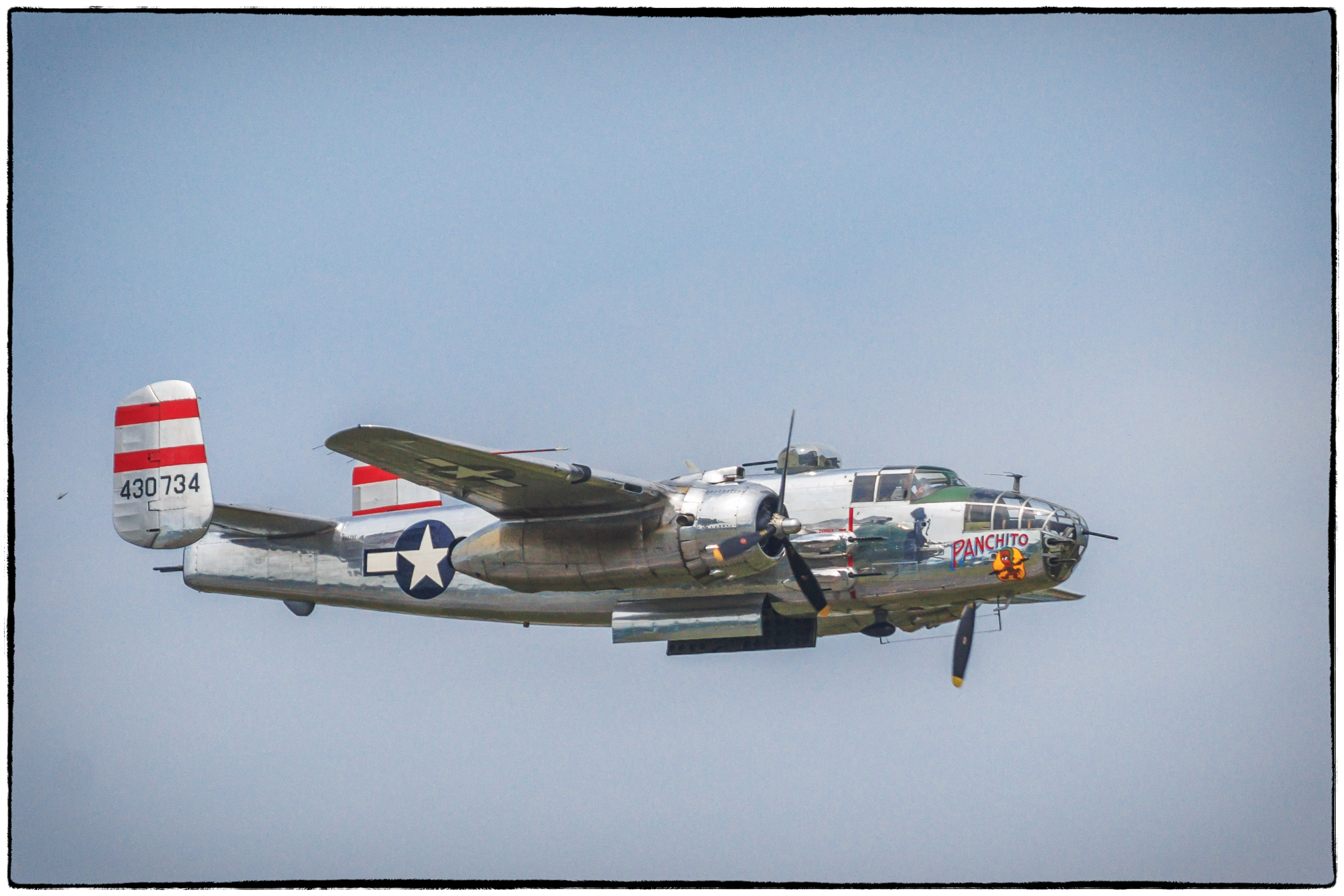
NY Air Show – B25 Mitchell

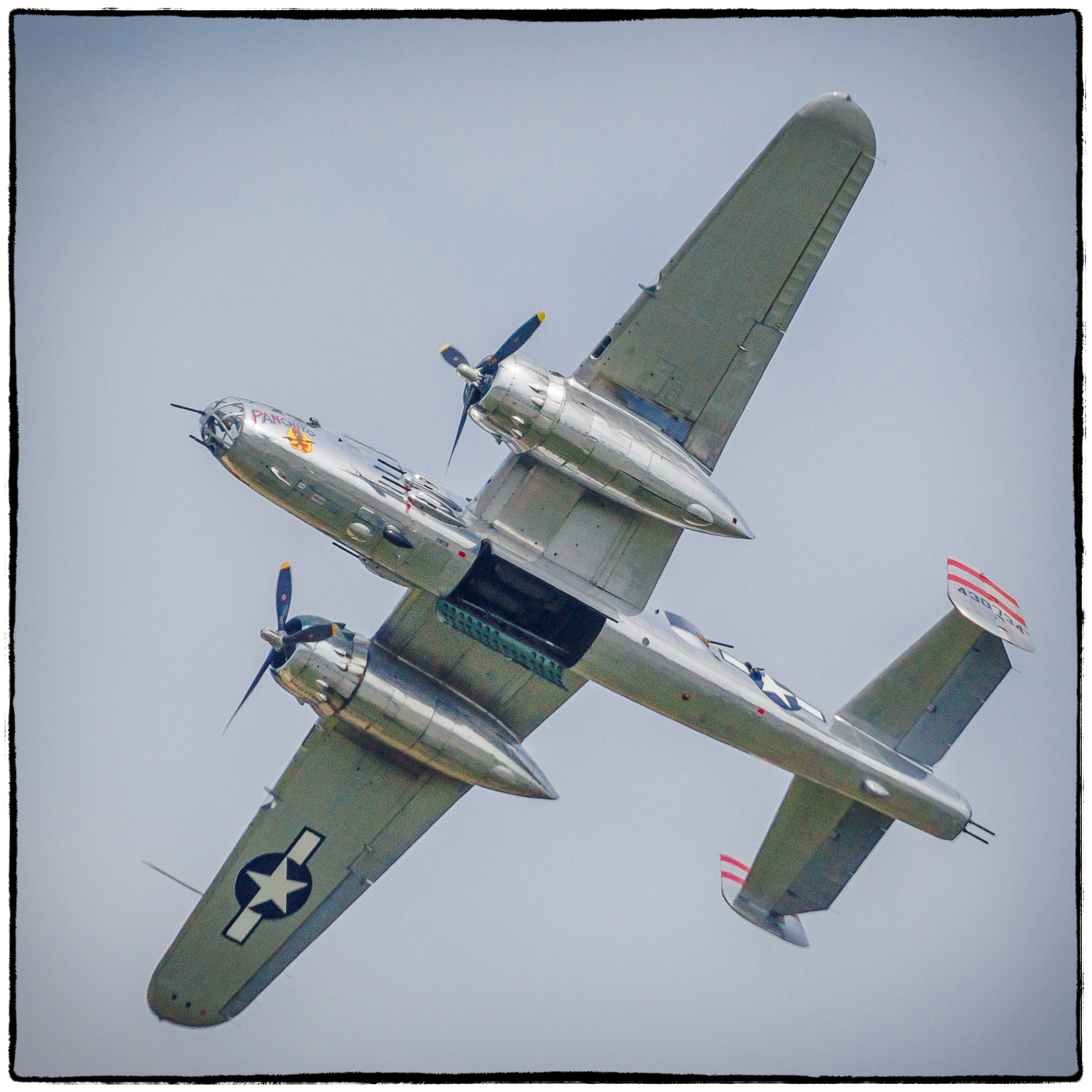
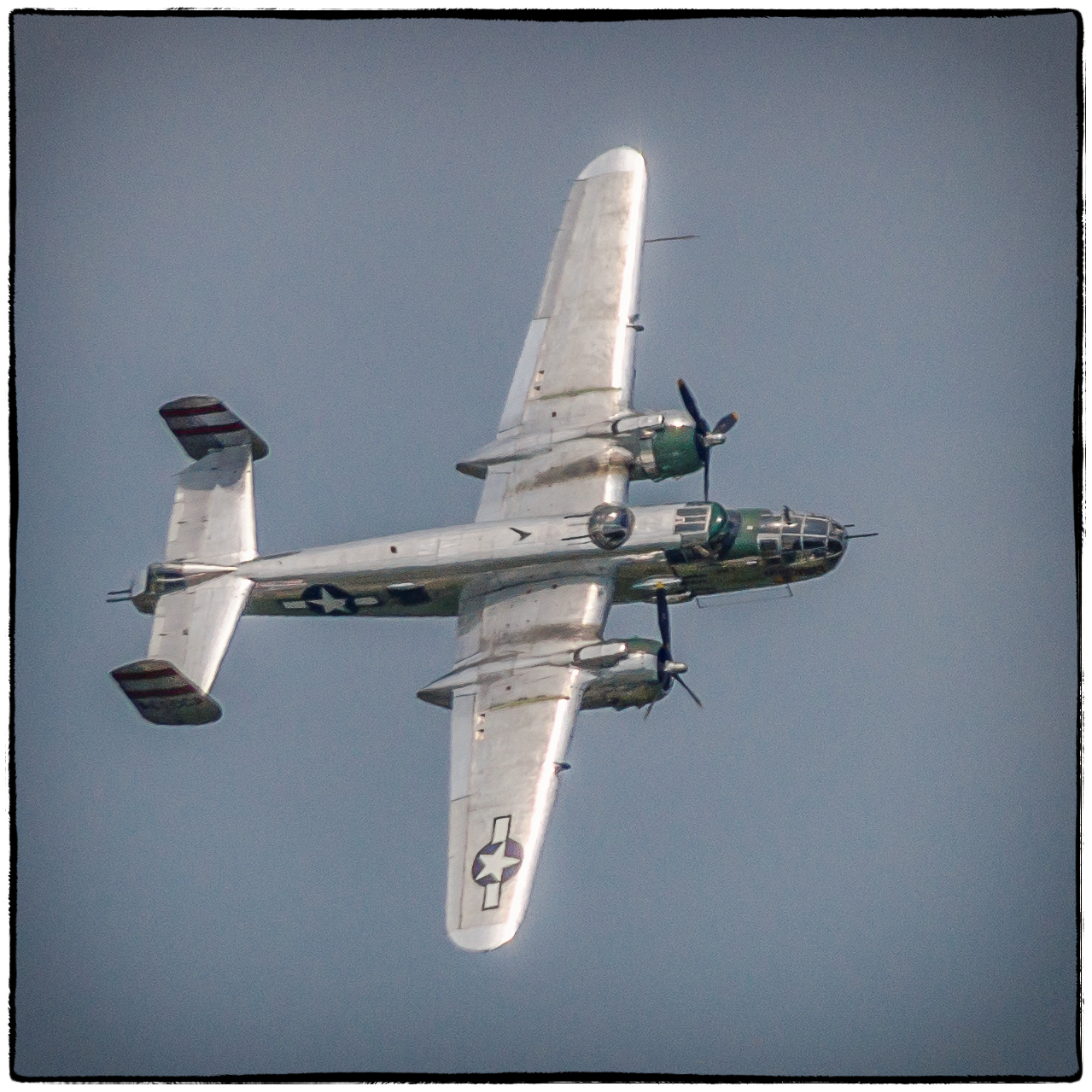
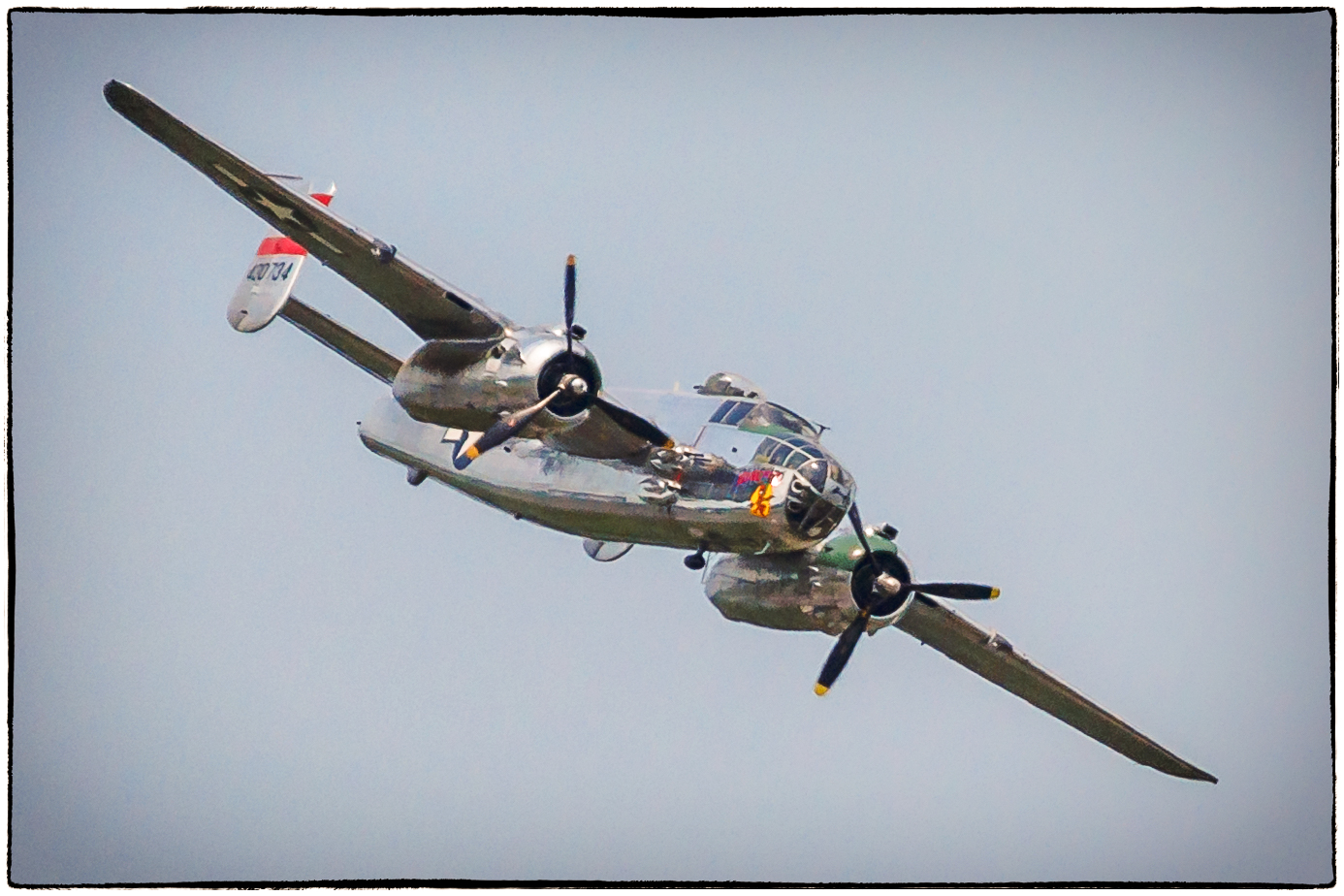
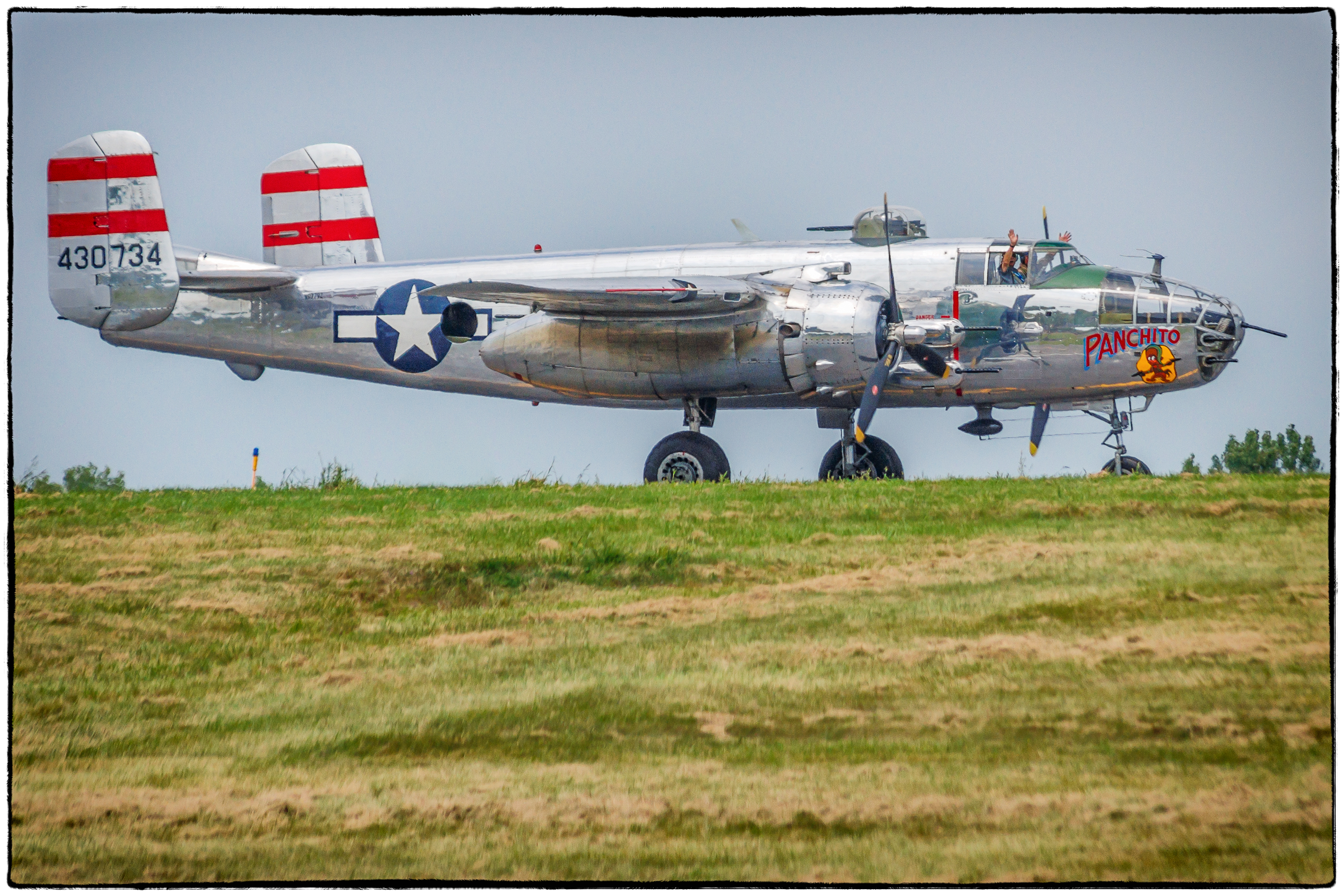
After the modern technology of the F/A-18 we now step back in time to World War II (WWII) with the B-25 Mitchell, the plane used in the famous Doolittle Raid shortly after the attack on Pearl Harbour. The Boeing website describes the B25 as follows:

The North American B-25 Mitchell, a twin-engine bomber that became standard equipment for the Allied air forces in World War II, was perhaps the most versatile aircraft of the war. It became the most heavily armed airplane in the world, was used for high- and low-level bombing, strafing, photoreconnaissance, submarine patrol, and even as a fighter and was distinguished as the aircraft that completed the historic raid over Tokyo in 1942.

It required 8,500 original drawings and 195,000 engineering man-hours to produce the first one, but nearly 10,000 were produced from late 1939, when the contract was awarded to North American Aviation, through 1945.

Named for famed airpower pioneer Brigadier General William “Billy” Mitchell, it was a twin-tail, mid-wing land monoplane powered by two 1,700-horsepower Wright Cyclone engines.

Normal bomb capacity was 5,000 pounds (2268 kilograms). Some versions carried 75 mm cannon, machine guns and added firepower of 13 .50-caliber guns in the conventional bombardier’s compartment. One version carried eight .50-caliber guns in the nose in an arrangement that provided 14 forward-firing guns.

As a child I was fascinated by WWII aircraft as I suspect where many of my generation. I was born not long after the war and my father was a soldier in the British army during it as was one of my uncles. My father didn’t really like to talk about the war, but my uncle did. He would regale us with stories of his military prowess. Sometimes after he left my father, who was in the same regiment, would turn to me and say: “you know none of that was true”. One of the famous victories that stood out was, of course, the Battle of Britain – an air battle in which, so the story goes, a relatively small number of British pilots stood up to the might of the German Luftwaffe. Spitfires, Hurricanes, Messerschmitts and Focke-Wulfs (although the latter did not become operational until after the Battle of Britain was over) were all the well known to us. US aircraft were also known to us, although perhaps not as well as the their British equivalents. I certainly knew about the B25 and the Doolittle Raid. My friends and I used to make Airfix scale models of the best known planes. Some of my friends were really good at it and produced beautiful creations. I seemed to lack the skill to do it properly: I always managed to get glue all over my fingers and subsequently all over the kit. My attempt at the camouflage paint also always seemed to leave something to be desired. None of this stopped me building them though. After I’d done one I’d attach thread to it and tack it to the ceiling of my bedroom so that it would be hanging as if flying. These kits are still available and sometimes when I’ve seen them in stores I’ve been tempted to buy one to see if I could do a better job now.

So, of course, it was with some nostalgia that I watched this venerable old WWII warbird take to the skies.

Bomb bay doors open.

Top View.

Front View.

Taxiing and waving goodbye.

NY Air Show – US Navy F/A-18 Super Hornet

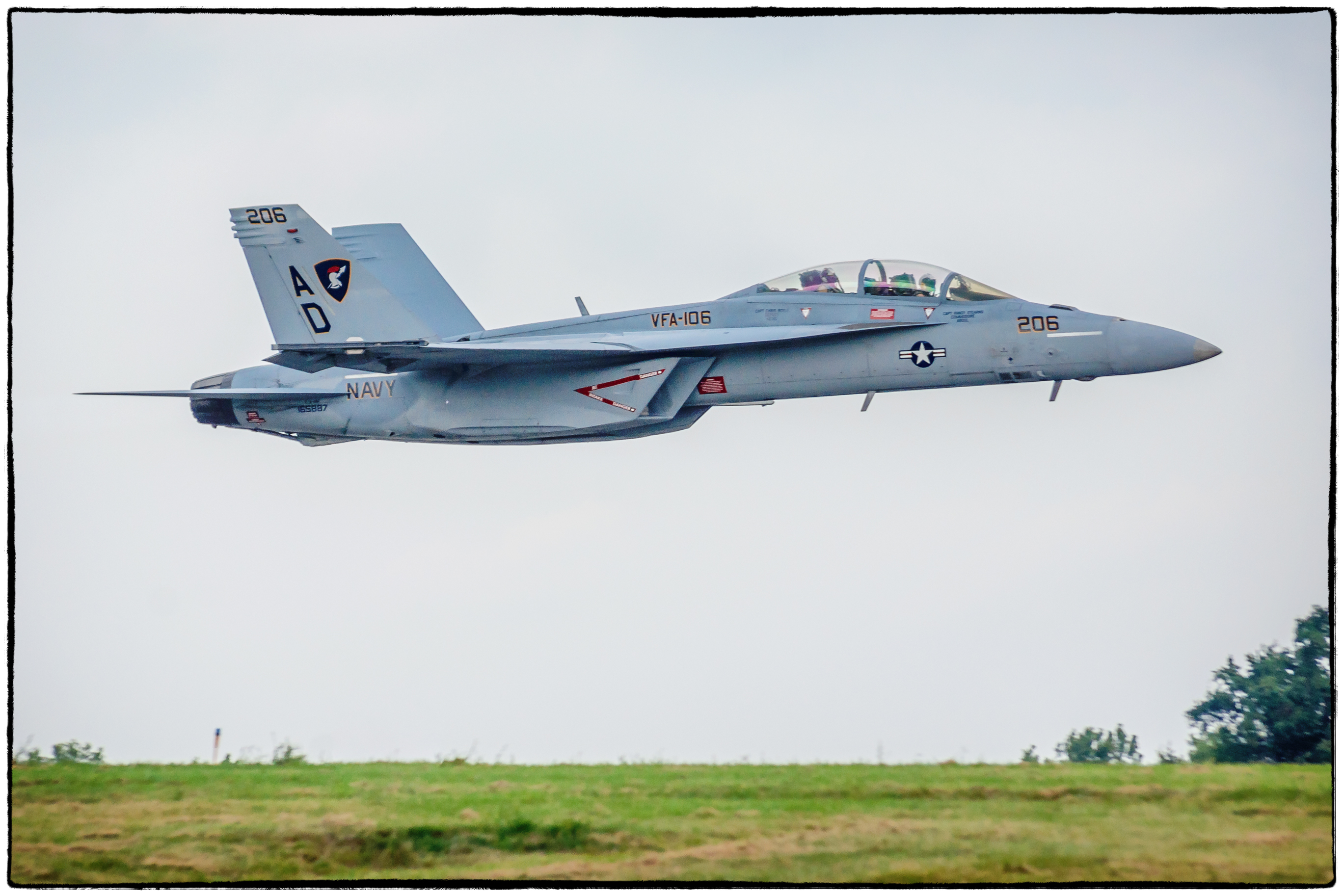
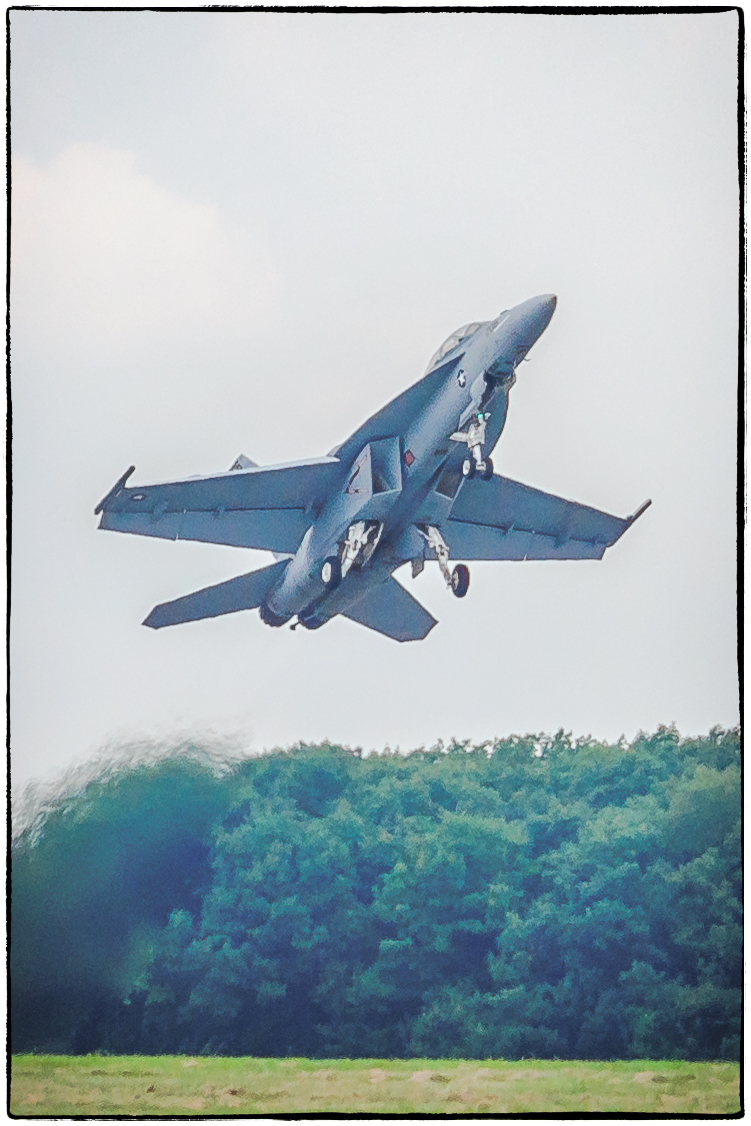
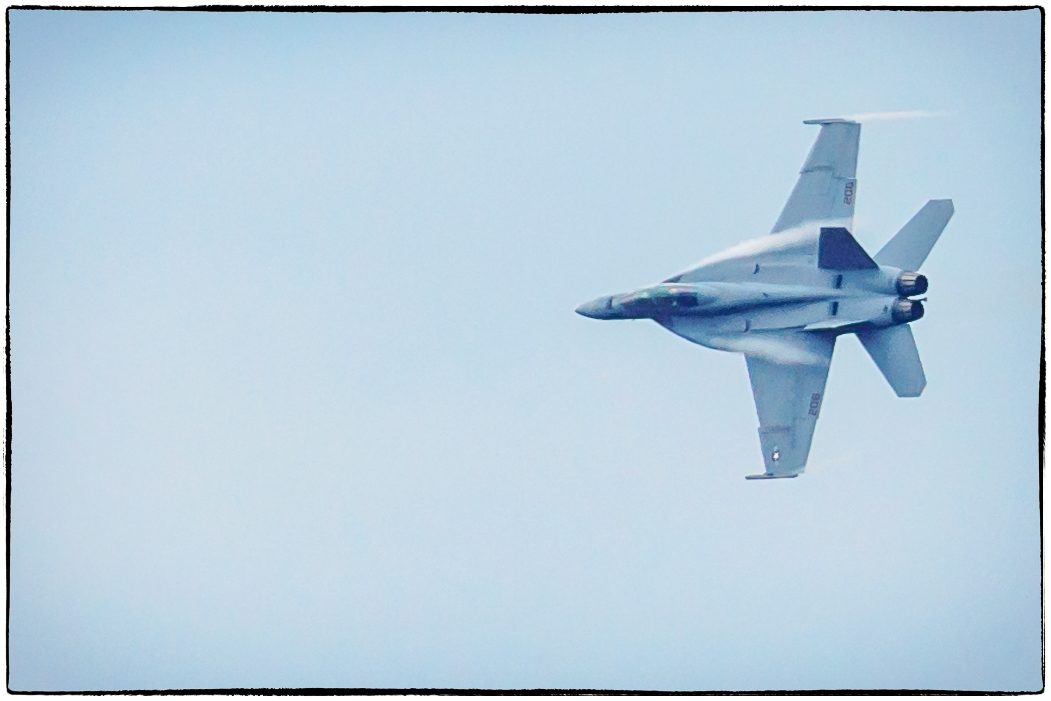
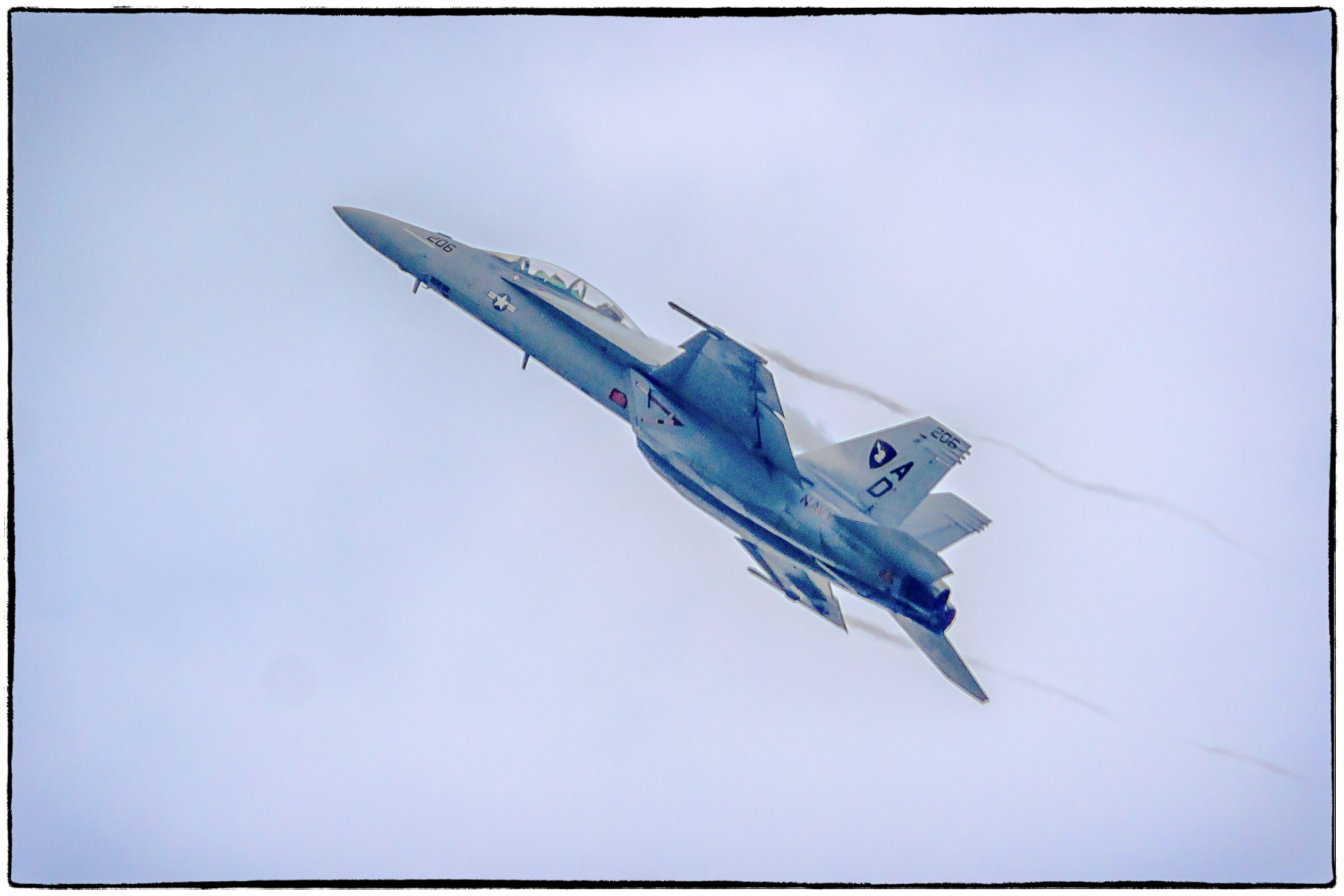
So far the airshow had been interesting but not really ‘awe-inspiring’. That was now about the change as the US Navy F/A-18 started to roll down the runway. The NY Air Show website describes the F/A-18 as follows:

The Boeing F/A-18F Super Hornet is a twin-engine fighter aircraft based on the original McDonnell Douglas F-18 Hornet also known as the “Legacy Hornet.” The Super Hornet is a larger and more advanced version of the legacy hornet. The Super Hornet has an internal 20 mm rotary cannon and can carry air-to-air missiles and air-to-surface weapons. The Super Hornet entered service with the United States Navy in 1999, replacing the Grumman F-14 Tomcat, which was retired in 2006.

The Super Hornet is largely a new aircraft and is about 20% larger in size than the legacy Hornet. The Super Hornet carries 33% more internal fuel, increasing mission range by 41% and endurance by 50% over the Legacy Hornet. The Super Hornet’s radar cross-section was reduced greatly making it harder to detect by enemy radar. The design of the engine inlets reduces the aircraft’s frontal radar cross-section. The alignment of the leading edges of the engine inlets is designed to scatter radiation to the sides. Fixed fanlike reflecting structures in the inlet tunnel divert radar energy away from the rotating fan blades.

As I mentioned in an earlier post I hadn’t been to an airshow since I was a child and I’d never seen such fast and powerful aircraft “in the flesh” as it were. It was really something.

Taking Off.

High Speed Turn.

Climbing.

Lunar Eclipse

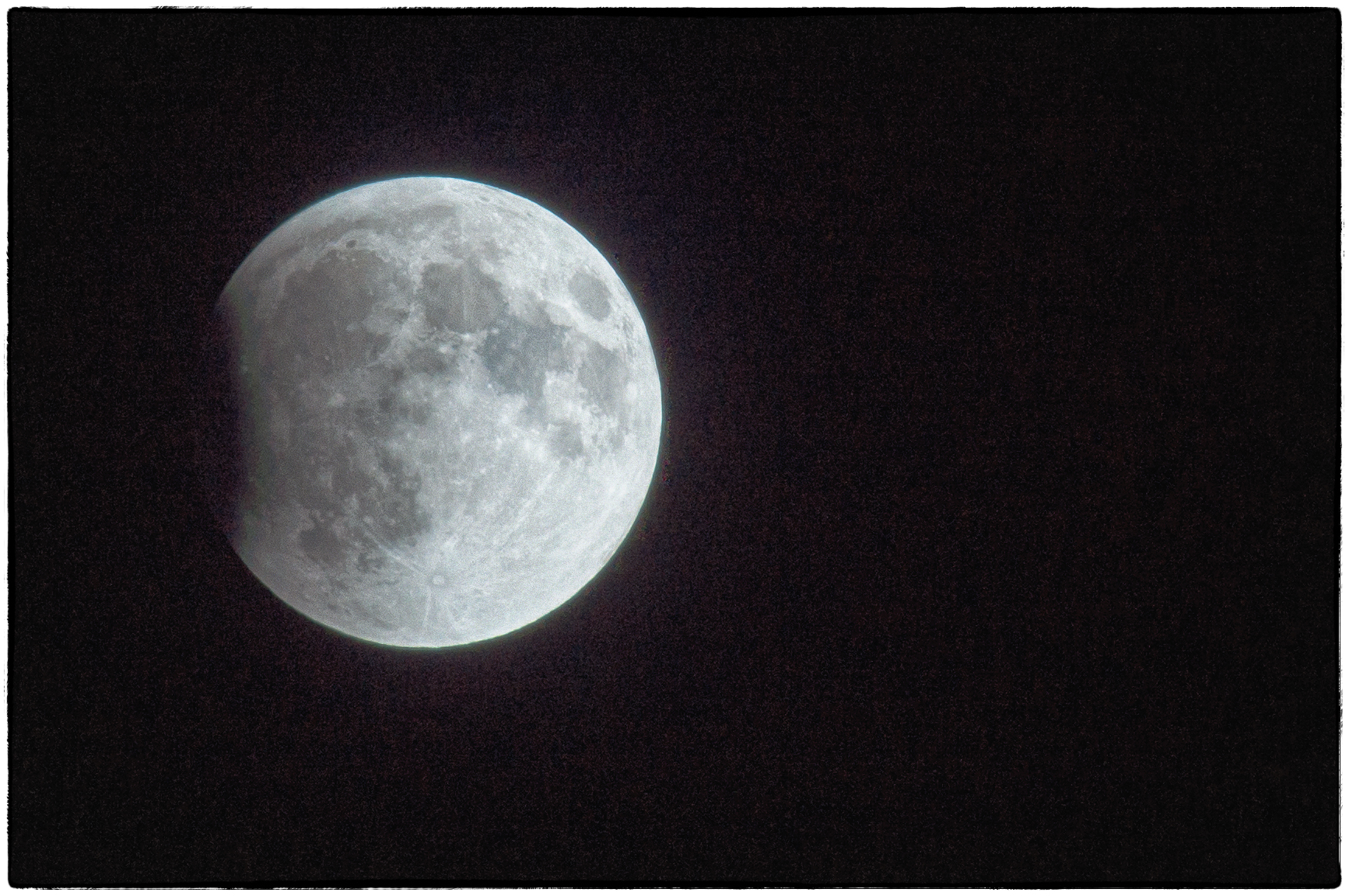
The eclipse is just beginning.

I’d heard about this event and thought to try to get some pictures. Unfortunately it had been a busy day: I’d been updating my blog, cooked lunch, cooked dinner and baked some bread. My eyes were hurting and I was feeling very tired. My natural laziness kicked in and I decided to skip it. Then it occurred to me that this event only happens every 20 years or so. Since the likelihood is that I won’t be around in 20 years I won’t have anther chance to get these pictures. A sobering thought: enough to make me get out an old Canon 300mm (450mm equivalent) FD lens that I’d never actually used; dig out the Canon FD-Sony Nex adapter; grab my tripod and give it a go.

USA Today describes the event as follows:

What’s actually happening is a confluence of three things. The moon will be full and in its closest point in its orbit around the Earth, making it a so-called supermoon, according to Dr. David Wolf, a former NASA astronaut and “extraordinary scientist in residence” for The Children’s Museum. Supermoons appear 14% larger and 33% brighter than other full moons.

In addition to this, a lunar eclipse will occur. In other words, the Earth will line up directly with the sun and moon, directly between the two, Wolf said. So the “moon will completely fall in the shadow of the Earth,” he said.

Because a lot of light scatters off the Earth’s atmosphere, the moon will not look completely dark but have a coppery red color — hence the blood moon moniker.

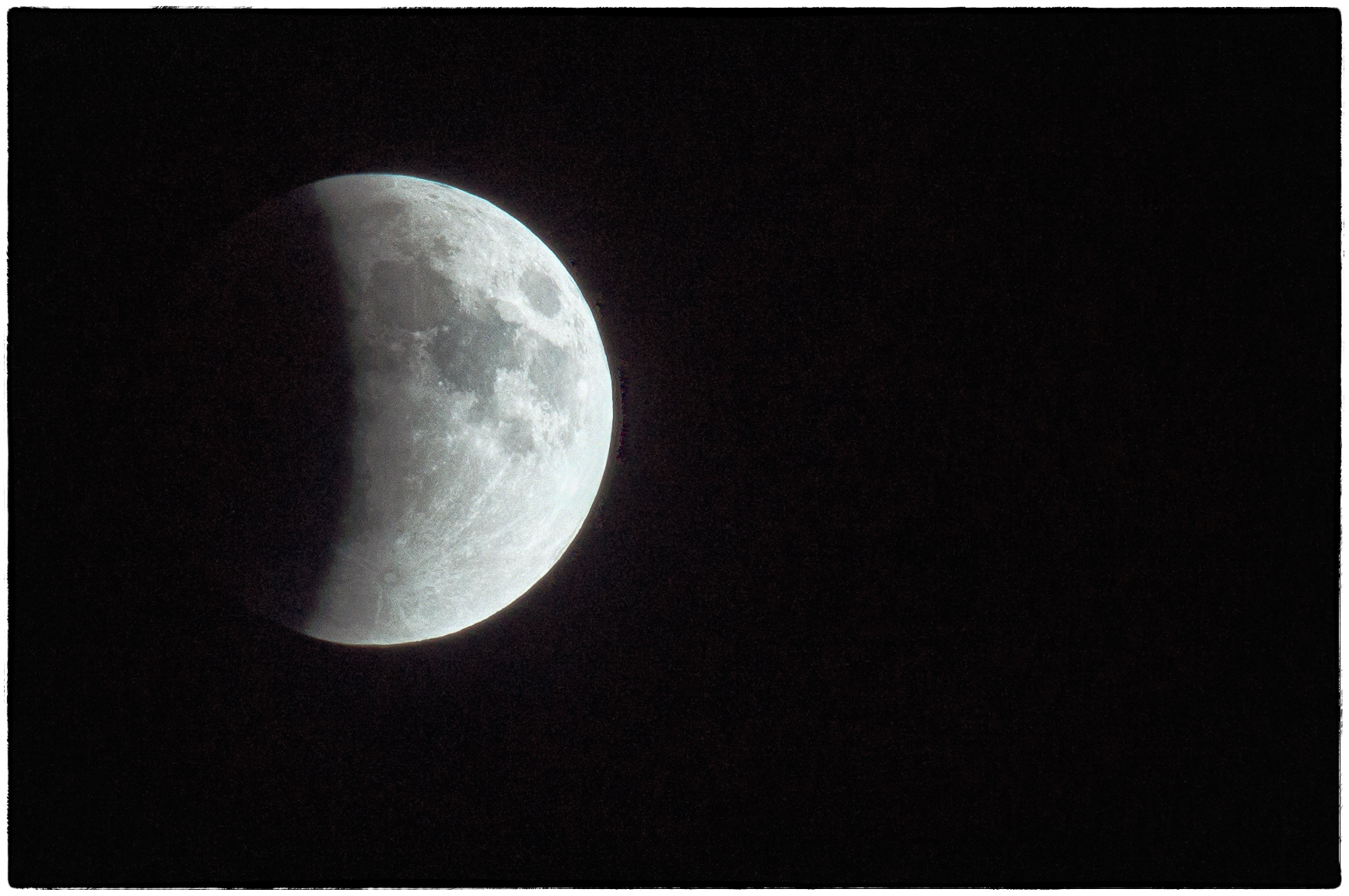
Going…

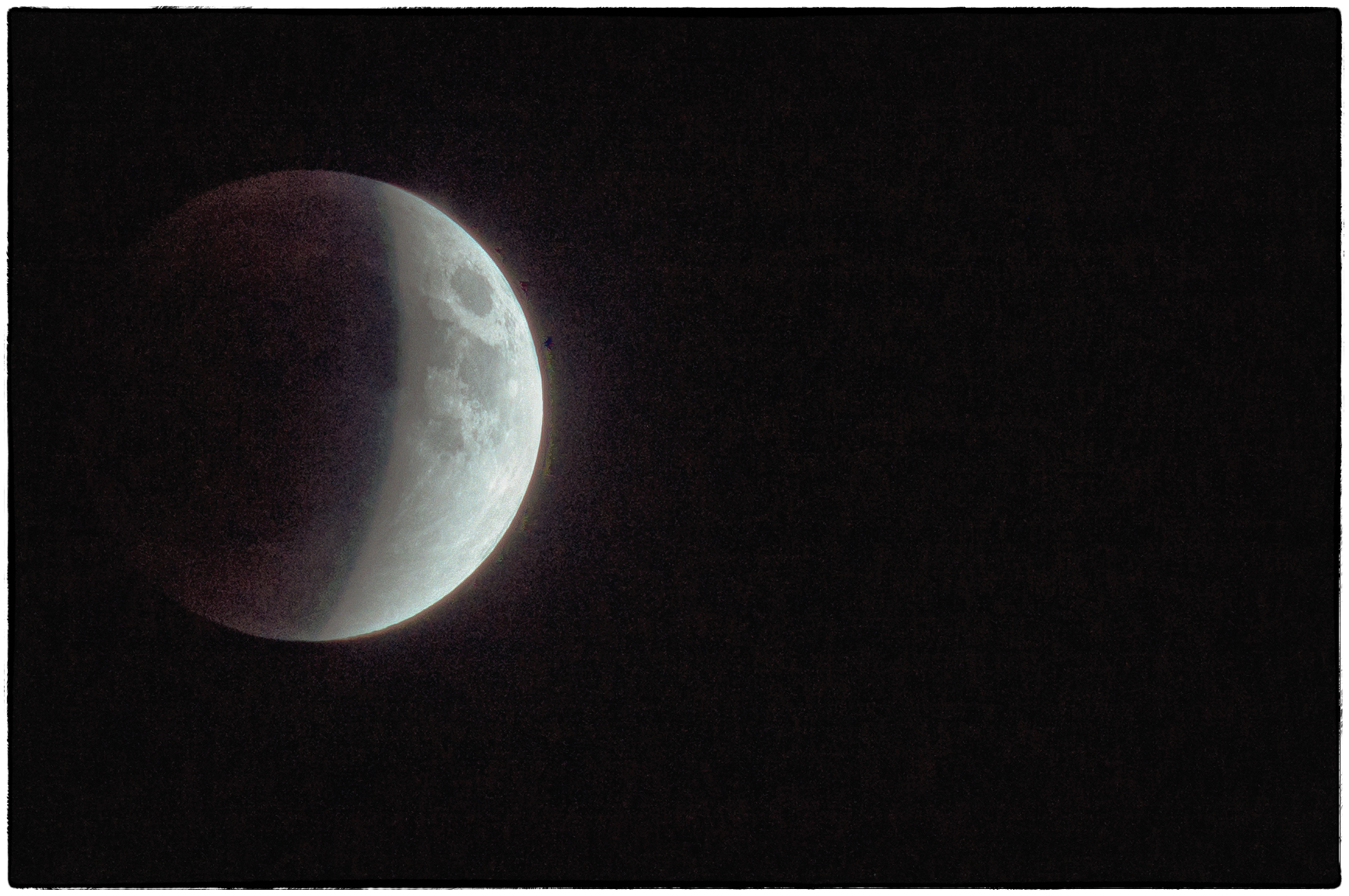
…Going…And then just as we were about to get to “Gone!”, where the red-tinged “blood moon” would be visible, the clouds rolled in and obscured everything. I hung around for a while to see if the clouds would break. And there were occasional very brief gaps in the clouds – enough for me to see the blood moon (very spectacular), but not long enough for me to get a picture. The exposure times were too long and the clouds moved back before the exposure could finish.

I was satisfied. I’d overcome my laziness, seen the ‘blood moon’ and got a few pictures of the eclipse. A decent night’s work.