A walk around Ossining – Sing Sing Kill Greenway

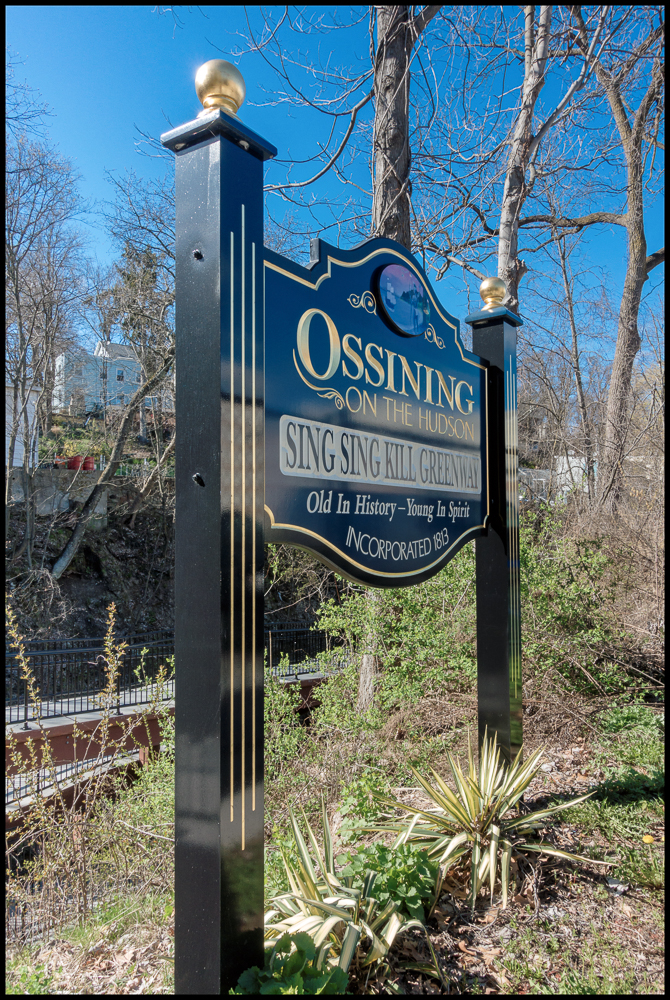
While I was up on top of the promenade I happened to glance down and see a ramp going down from near the Visitor’s Center. I wonder where that goes, I thought and went down to take a look.
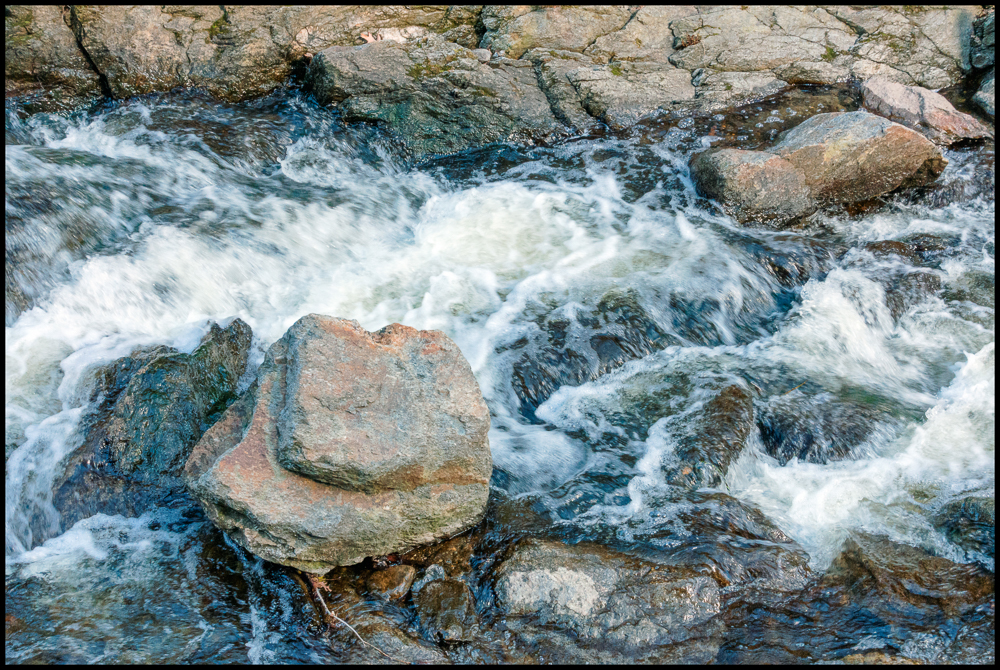
It turns out that since 2016 there’s been a new park that I didn’t even know existed.

According to Ossining Patch (In a 2016 article entitled: Ossining Opens New Greenway in the Sing Sing Kill):

Ossining will celebrate its newest park, the Sing Sing Kill Greenway, with a ribbon-cutting and tour on April 13 as part of a ‘Smart Water’ series of events.

The greenway gives access for the first time in decades inside the ravine that the Kill Brook carved over millennia in its headlong journey from the Ossining hills to the Hudson River.

“The Sing Sing Kill Greenway is an example of environmental ingenuity and maximizing the benefit of public investment,” said Village of Ossining Mayor Victoria Gearity in a prepared statement. “We’re taking a hard look at ways we can responsibly provide for our current needs, while looking ahead to the needs of future generations – all while making the most of taxpayer dollars. Thanks to innovative thinking from the village engineer, a required sanitary sewer upgrade has been transformed into a magnificent public greenway through the heart of downtown Ossining. We invite the public to celebrate in its beauty.”
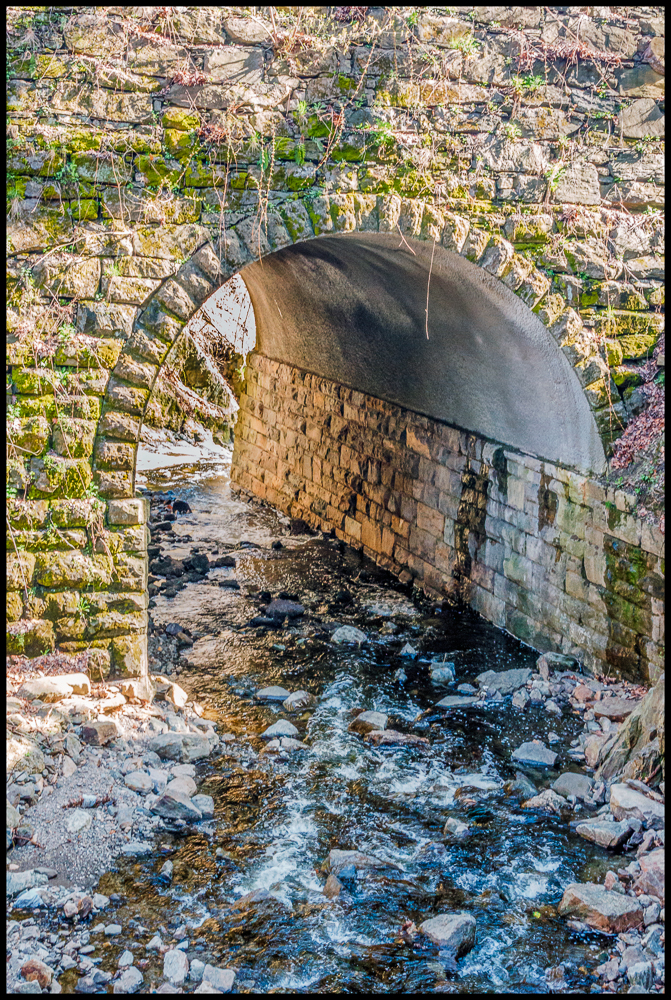
It was a pleasant, if rather short walk along the ‘Kill’ (Dutch for creek or water channel) with good view of the double arched bridge.

Taken with a Sony RX-100 M3.
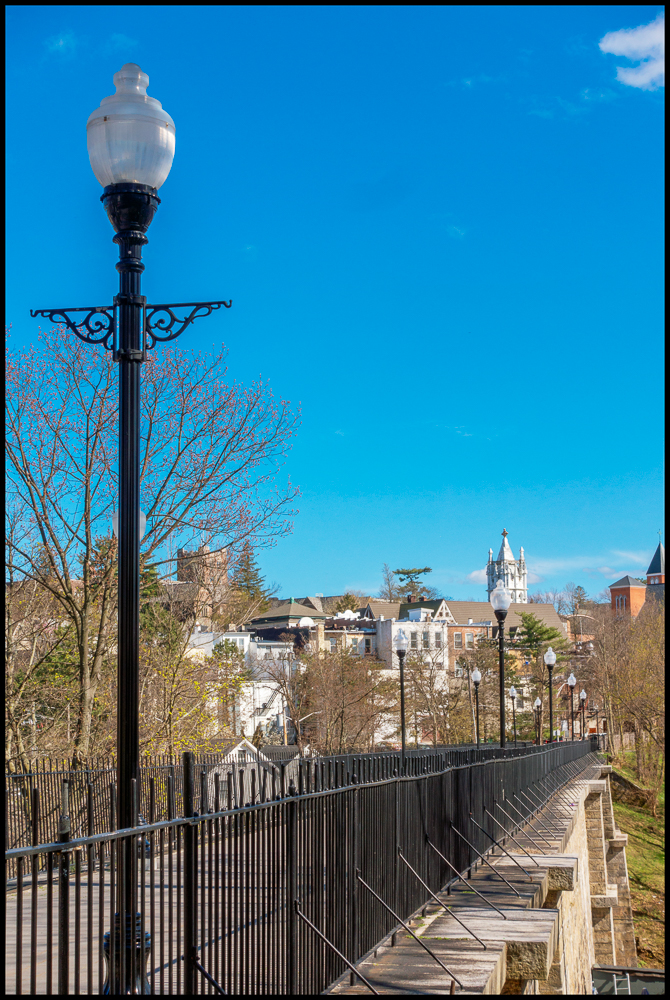
A walk around Ossining – Old Croton Aqueduct Promenade

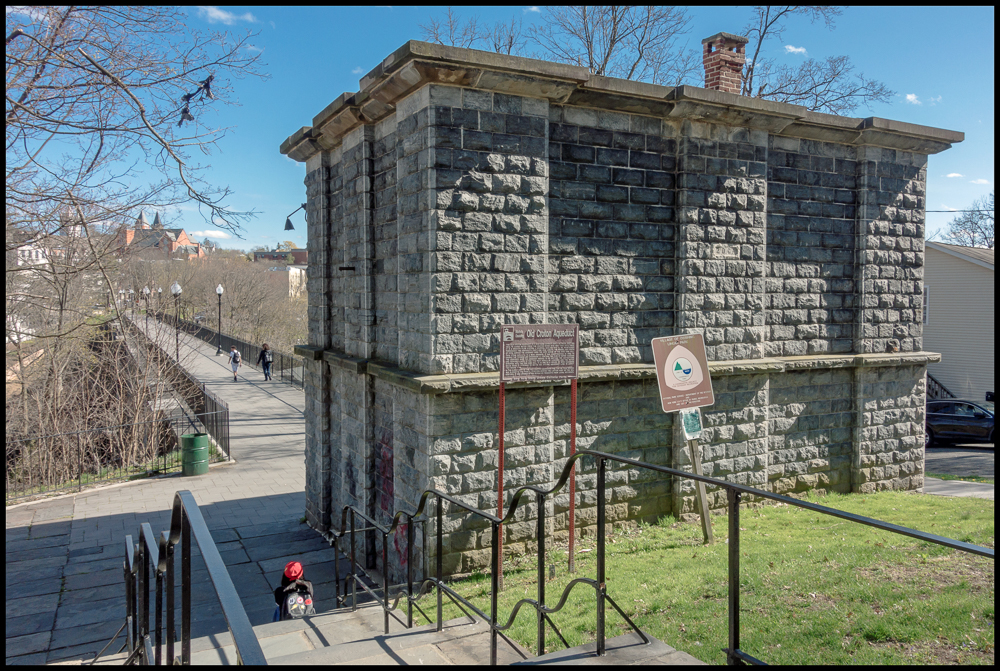
The picture above is taken from the Weir Chamber looking back towards the town. The tower of the First Baptist Church can be seen in the background

According to the Village of Ossining Downtown Walking Tour:

The Old Croton Aqueduct Promenade is the Downtown Ossining portion of the trail that is located directly above the water tunnel of the same name. The Aqueduct was constructed from 1837-1842 to provide growing New York City with access to new fresh water supplies. The Aqueduct tunnel connected the 660 million gallon Croton Reservoir in Cortlandt with a 180 million gallon receiving reservoir located on the site of what is now the Great Lawn in Manhattan’s Central Park, allowing 85 million gallons of water to be transported each day. The Aqueduct runs the entire length of both the Village of Ossining and of Westchester County with twenty-six miles of the total forty-one mile length located north of the New York City line. An interpretive sign located at the start of the promenade contains further information on the Aqueduct’s route and history.

A nearby interpretive sign reads:

The pathway over the Croton Aqueduct arch is known as the Promenade. During the 19th and early 20th centuries, the Promenade was a popular place to stroll. Romantic and picturesque places to walk were popular venues during the Victorian era. In that period, the Promenade was also used for concerts, dances and socials. Such was the popularity that Ossining was not the only promenade along the aqueduct. A wide promenade surrounded the reservoir at 42nd Street and Fifth Avenue in Manhattan, and Frederick Law Olmstead designated a promenade to extend over the Croton Aqueduct, connecting Jerome Park racetrack with the future Van Cortlandt Park in the Bronx.

Taken with a Sony RX-100 M3.

A walk around Ossining – Weir Chamber

According to the Village of Ossining Downtown Walking Tour:

The Ossining Weir Chamber, located on the Ann Street side of the Double Arch Bridge promenade, is one of six such structures located along the Old Croton Aqueduct. The purpose of the weir chambers was to regulate the flow of water along the aqueduct tunnel, allowing water to be emptied into local waterways in the event of flooding or when needed for maintenance and repair of the tunnel. The weir chambers also served as ventilators for the aqueduct system. Inside the weir chamber is a large iron sluice gate, the opening of which allowed water to drain out of the tunnel into the Sing Sing Kill below. When all of the weir chambers were opened, the entire aqueduct could be drained in just two hours. Today, the Ossining Weir Chamber is a component of the Old Croton Aqueduct State Historic Park. The organization “Friends of the Croton Aqueduct” conducts periodic tours of the Weir Chambers for the public, granting interested parties access to the inside of the weir chamber and aqueduct tunnel.

The Old Croton Aqueduct Trail is an off road footpath located directly above the water tunnel of the same name. The trail becomes the Promenade at its intersection with the Double Arch Bridge near downtown Ossining. North of downtown, the trail continues north through a wooded landscape, passing by the Gothic Revival-style Kane House before intersecting with Highland Avenue and continuing into Croton-on-Hudson. Please see the Village of Ossining Significant Sites and Structures Guide for further information on the Kane House.

Taken with a Sony RX-100 M3.

A walk around Ossining – First Baptist Church

According to the Village of Ossining Downtown Walking Tour:

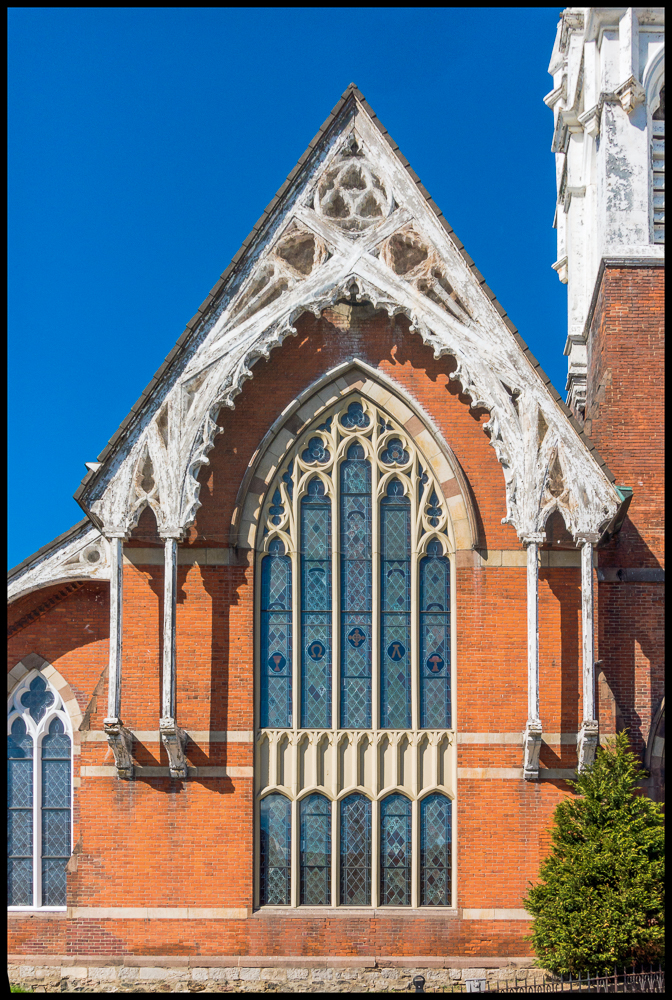
The First Baptist Church is a High Victorian Gothic-style structure completed in 1874. The Church is actually the second structure to occupy the site at 1 Church St; the first was constructed in the early 19th Century to house the Sing Sing Baptist Congregation, founded by Revolutionary War spy Elijah Hunter. Hunter chose a triangular-shaped site at the center of the Village near the convergence of the Albany Post Road (known today as Highland Avenue or Route 9), Croton Avenue, and Main Street in order to maximize its visibility and emphasize its central importance to Ossining’s religious life. The original church building was demolished once the size of the congregation grew too large, and the present structure was built on the same site. The church was designed by J. Walsh, a Brooklyn-based architect, and was built for a cost of $75,000 in 1874 dollars.

The church’s website provides additional information.

I love the woodwork on this church, even if it does need a paint job.

See also Ossining First Baptist Church

Taken with a Sony RX-100 M3.

A walk around Ossining – First Presbyterian Church

According to the Village of Ossining Downtown Walking Tour:

The First Presbyterian Church is a High Victorian Gothic style structure built in 1870 to house the congregation of the same name. The congregation’s previous church, located in the Sparta neighborhood, was damaged during the Revolutionary War. This prompted the congregation to build a new structure on the site of the current Trinity Episcopal Church at 7 South Highland Avenue in 1803. As the congregation grew, this church was expanded several times until it was no longer adequate to house all those who wished to worship there. The present church was constructed from 1868 to 1870 for a cost of approximately $95,000 by contractor Peter H. Terhune of Binghamton, NY and designed by Isaac Gale Perry, one of the designers of the New York State Capitol building.

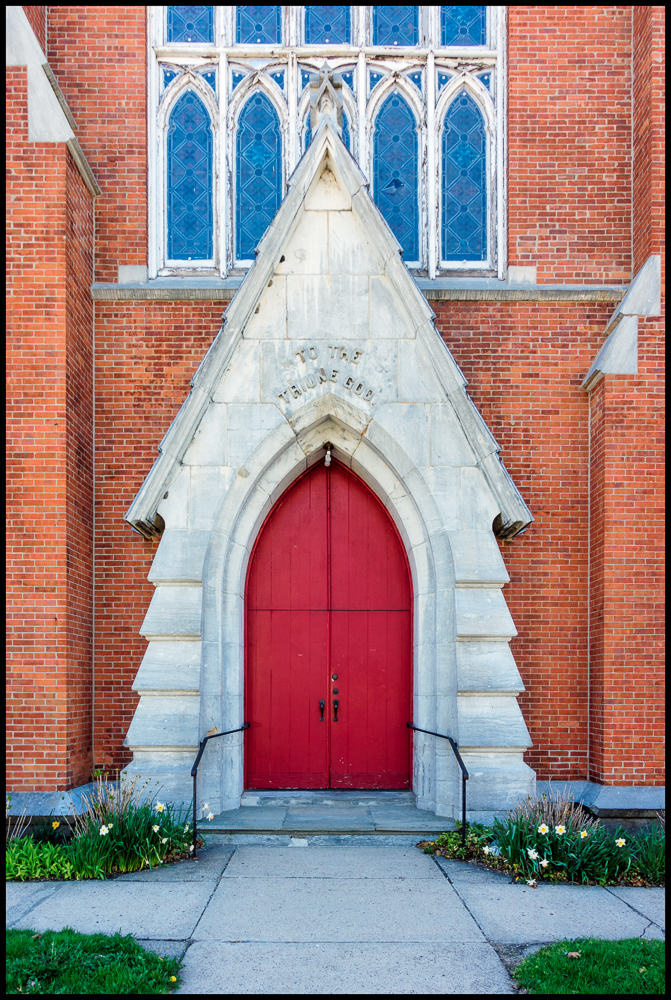
I was attracted to the rather unique shape of the stone surrounding the doorway. The word over the door read “To the Triune God”.

According to the church’s own website:

Our church came into being on June 28, 1763, when the Presbytery of Dutchess County delegated the Rev. John Smith, of White Plains, to conduct monthly worship service in homes in the Ossining area. Our first church was built in 1768 in the area now known as Sparta cemetery.

The first building was damaged in the Revolutionary War, and a new one was built in the village of Sing Sing, on the site of the present Trinity Episcopal Church, in 1803.

To accommodate further increases in the congregation, the present building was completed in 1870, with the high steeple on the south tower serving as a navigational aid for river traffic. The building was extensively renovated and modernized in the mid-1950’s, including the removal of the tall steeple and the addition of Sunday school rooms.

Today our Church houses an active ministry to Ossining and local community groups, in addition to a myriad of congregational activities.

It’s a pity that the spectacular, high steeple was removed!

Taken with a Sony RX-100 M3.