
I took the dog for a walk in the Hudson Highlands the other day.
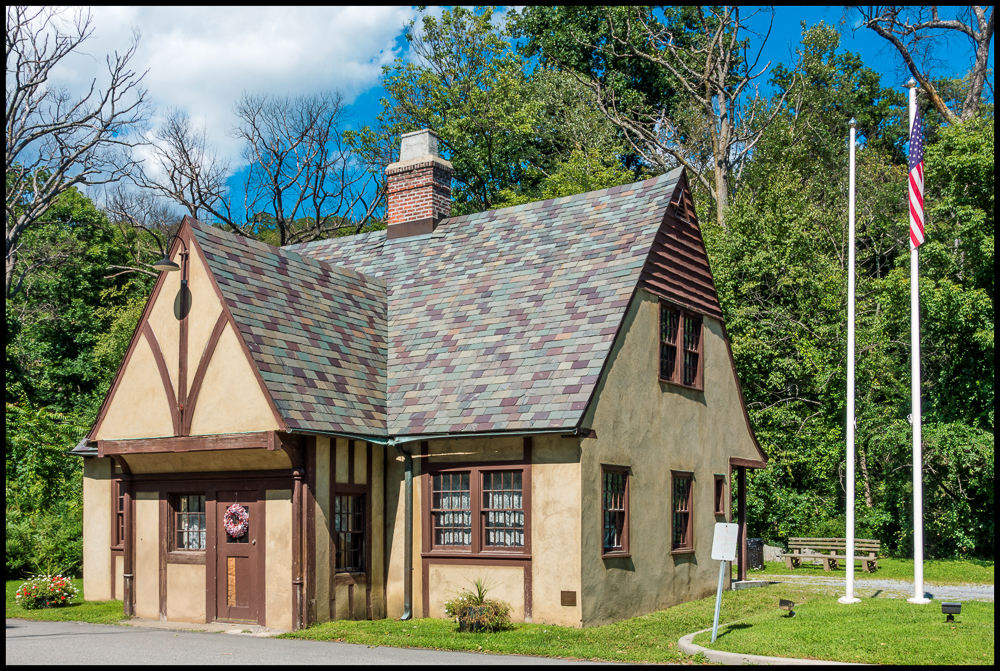
First stop was the Information Center in the old Bear Mountain Toll House where we parked. According to the Town of Cortlandt website:
Architecturally the Toll House is an excellent example for its time period and it is unique because of its use as a toll collection facility and home. The Bear Mountain Bridge, which opened to traffic on November 27, 1924, was the first bridge to span the Hudson River between Albany and New York City. The Harriman Family built it after the passing of a New York State legislative act in 1922 creating the Bear Mountain Hudson River Bridge Company. The private company also constructed Bear Mountain Road as a vehicular connection to the Bridge. The Road and Bridge were privately owned and tolls for such were collected at the Bear Mountain Road Toll House and at the Bridge itself. The one-story Tudor-style Toll House has a gabled slate roof, exposed timbers, and smooth stucco finish. The west bay of the Toll House housed the office and collection area for tolls. In 1940, the Bridge and Road were sold to the State of New York. Under ownership of the State, collection of tolls for the Road ceased and the Bear Mountain Road Toll House was essentially left vacant.
The Town of Cortlandt restored the Toll House on Route 6/202 (Bear Mountain Bridge Road) with NYS and the Town of Cortlandt funds. The restored Toll House is used as a Tourist Information and Welcome Center. Display areas for local history, the history of the Toll House, and local organizations will also be located in the building. The Bear Mountain Bridge, Route 6/202 (Bear Mountain Bridge Road) and the Toll House are listed on the National Register of Historic Places in 1982 as part of the Hudson Highlands Multiple Resource listing.
The Toll House is located at the beginning point of the designated Scenic Road, (Scenic Byways Program of the New York State Department of Transportation), portion of the Bear Mountain Road. The Toll House is located about 2.5 miles south of the Bear Mountain Bridge and backs up to the Camp Smith Military Reservation. The Building is a simple Tudor Style Toll House with a steep gabled slate roof, exposed half timbering and smooth stucco finish. A central bay for collecting tolls projects from the western facade of the building towards Bear Mountain Parkway (Route 6/202). The Toll House and Bear Mountain Road were constructed between 1923 and 1924 to connect the newly constructed Bear Mountain Bridge with Route 9.
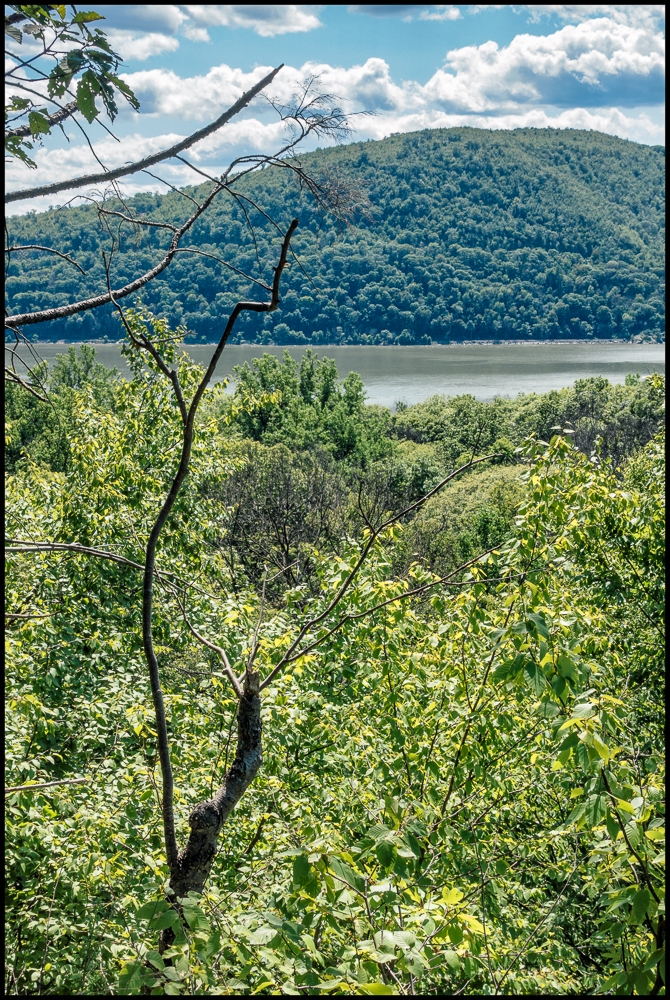
From the Tollhouse the trail ascends with occasional glimpses out over the Hudson River, in this case towards Plum Point on the other side.
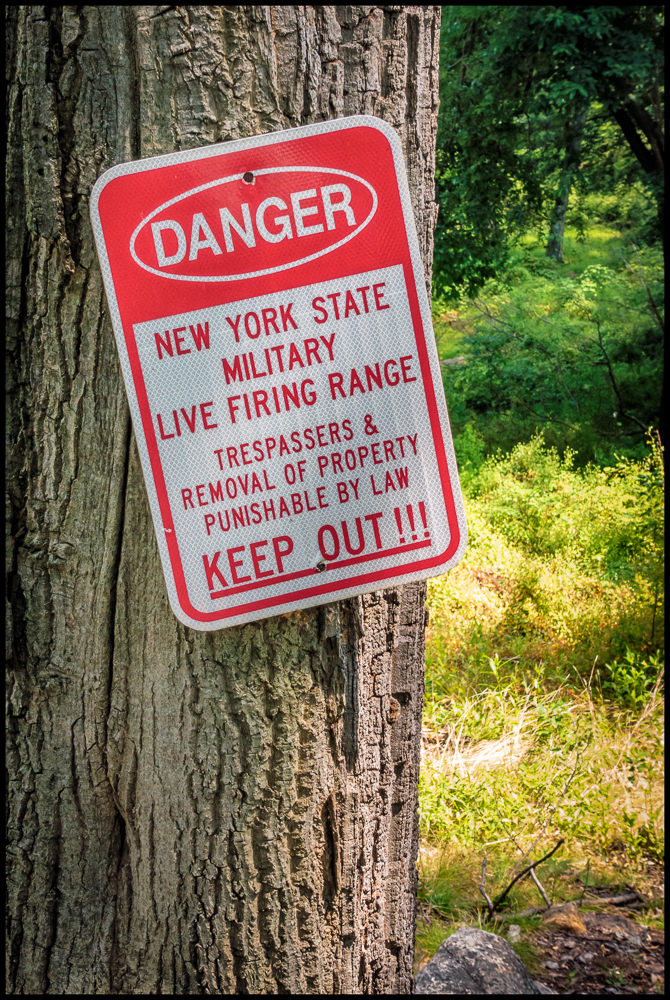
Make sure you stay on the trail.
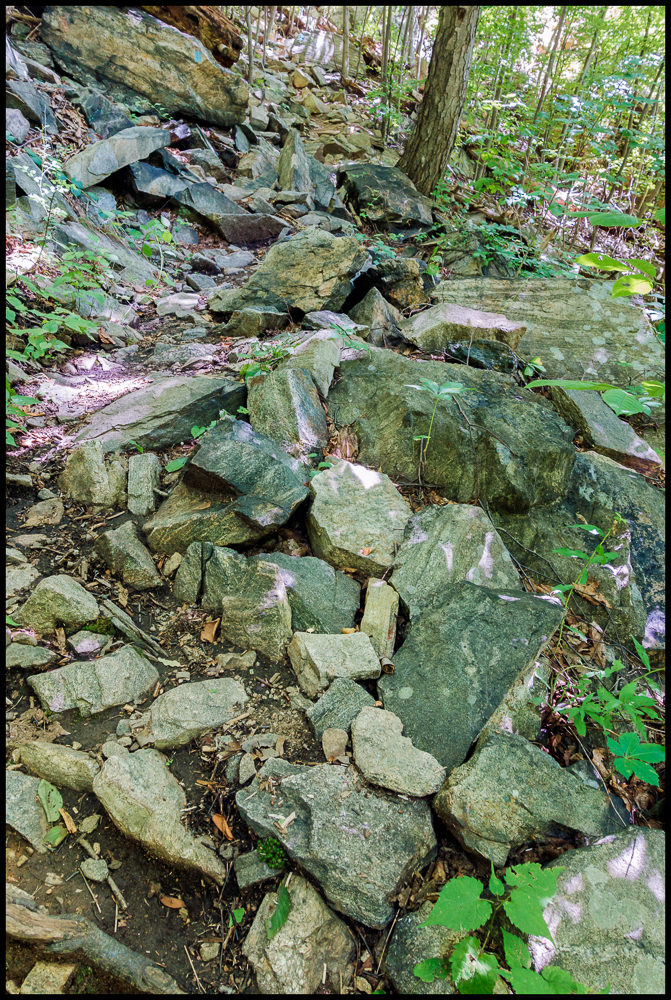
After a while the trail started to get very rocky. The rocks were a little large for our dog, Harley and I was afraid of losing my footing (I wasn’t prepared for such a rocky trail) so we turned around and went back to the Tollhouse.
Taken with a Sony RX-100 M3.