Hudson River School Painters at Boscobel

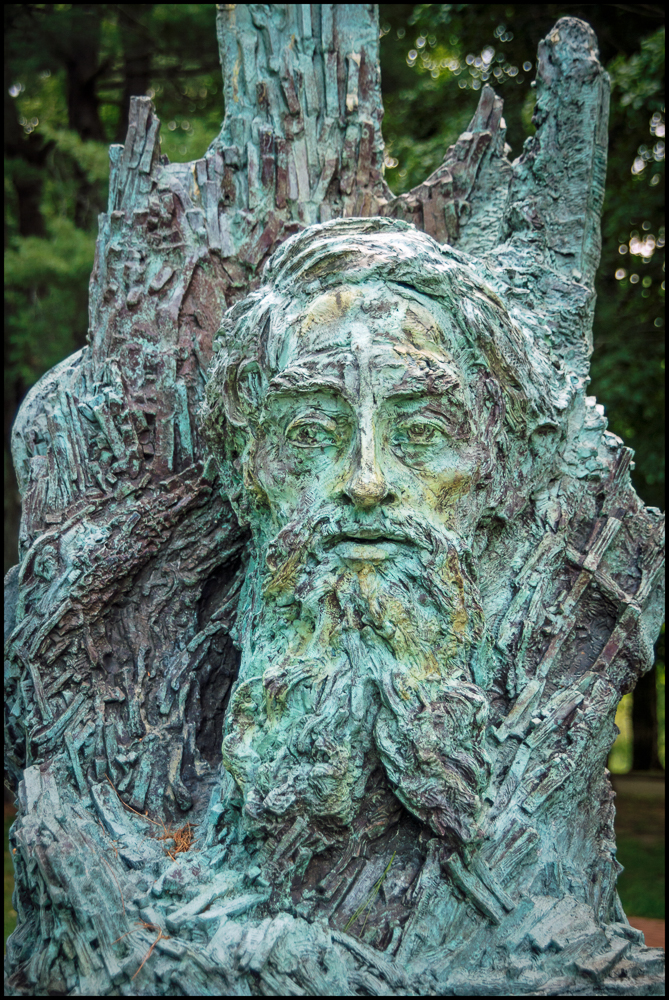
This is one of a series of sculptures (busts?) of Hudson River School painters to be found at Boscobel in Cold Spring NY.

This one is of Thomas Moran.

According to Wikipedia:

Thomas Moran (February 12, 1837 – August 25, 1926) was an American painter and printmaker of the Hudson River School in New York whose work often featured the Rocky Mountains. Moran and his family, wife Mary Nimmo Moran and daughter Ruth, took residence in New York where he obtained work as an artist. He was a younger brother of the noted marine artist Edward Moran, with whom he shared a studio. A talented illustrator and exquisite colorist, Thomas Moran was hired as an illustrator at Scribner’s Monthly. During the late 1860s, he was appointed the chief illustrator for the magazine, a position that helped him launch his career as one of the premier painters of the American landscape, in particular, the American West.

Moran along with Albert Bierstadt, Thomas Hill, and William Keith are sometimes referred to as belonging to the Rocky Mountain School of landscape painters because of all of the Western landscapes made by this group.

I had taken some pictures before (See: Boscobel – Sculptures of Hudson River School Artists), but it seems that they have added a number of new sculptures since then. Unfortunately, I had to rush off and was unable to photograph any of the other new ones.

Taken with a Sony A77II and Tamron A18 AF 18-250mm f3.5-6.3
A cove view

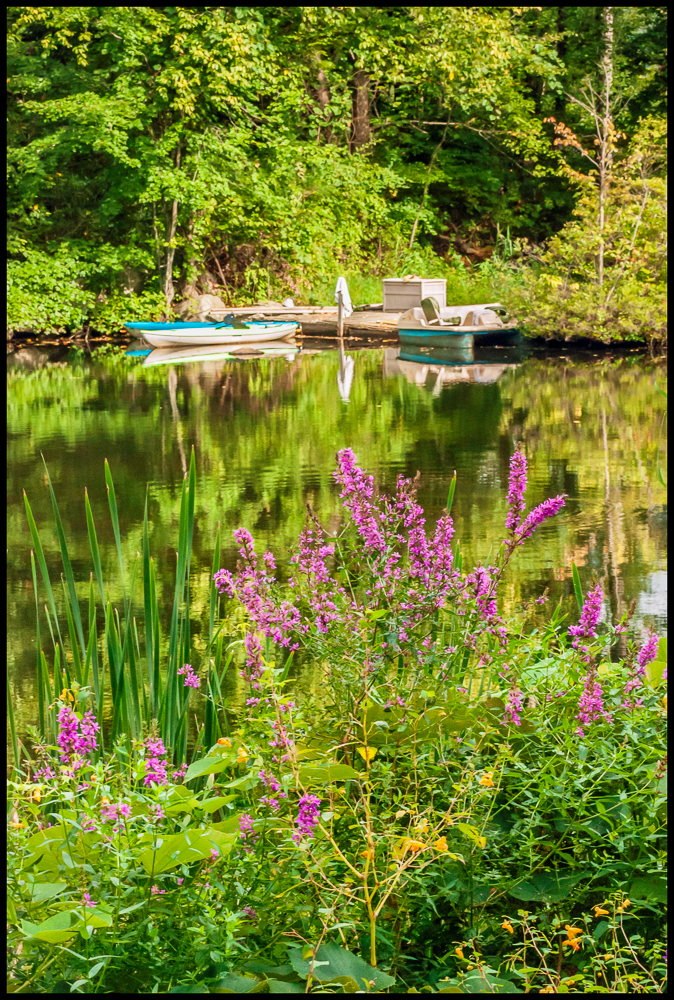
A view across one of the coves around Roaring Brook Lake.

In the foreground you can see the dreaded Lythrum salicaria (purple loosestrife). To me it’s not an unattractive plant, but apparently it’s considered as invasive so we’re supposed to pull it out whenever we see it.

According to Wikipedia:

The purple loosestrife has been introduced into temperate New Zealand and North America where it is now widely naturalised and officially listed in some controlling agents. Infestations result in dramatic disruption in water flow in rivers and canals, and a sharp decline in biological diversity as native food and cover plant species, notably cattails, are completely crowded out, and the life cycles of organisms from waterfowl to amphibians to algae are affected. A single plant may produce up to 2.7 million tiny seeds annually. Easily carried by wind and water, the seeds germinate in moist soils after overwintering. The plant can also sprout anew from pieces of root left in the soil or water. Once established, loosestrife stands are difficult and costly to remove by mechanical and chemical means.

Plants marketed under the name “European wand loosestrife” (L. virgatum) are the same species despite the different name. In some cases the plants sold are sterile, which is preferable.

In North America, purple loosestrife may be distinguished from similar native plants (e.g. fireweed Chamerion angustifolium, blue vervain Verbena hastata, Liatris Liatris spp., and spiraea (Spiraea douglasii) by its angular stalks which are square in outline, as well by its leaves, which are in pairs that alternate at right angle and are not serrated.

Taken with a Nikon D80 and Nikon 35-80mm f4-5.6.

Lunch at Pier 17

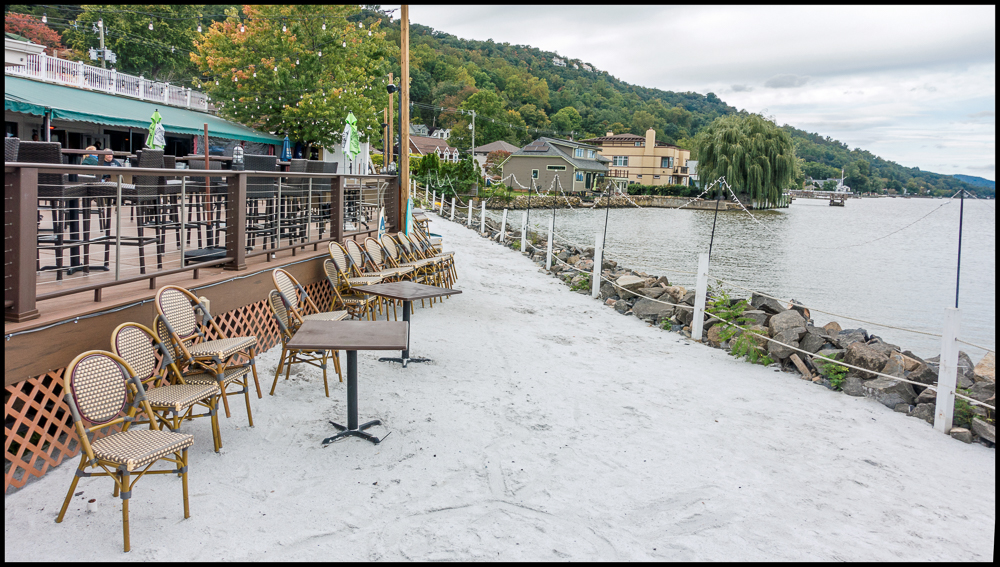
We recently went for lunch with some friends to Pier 17 restaurant in Piermont, NY. It was a pleasant change to go to the other side of the river.

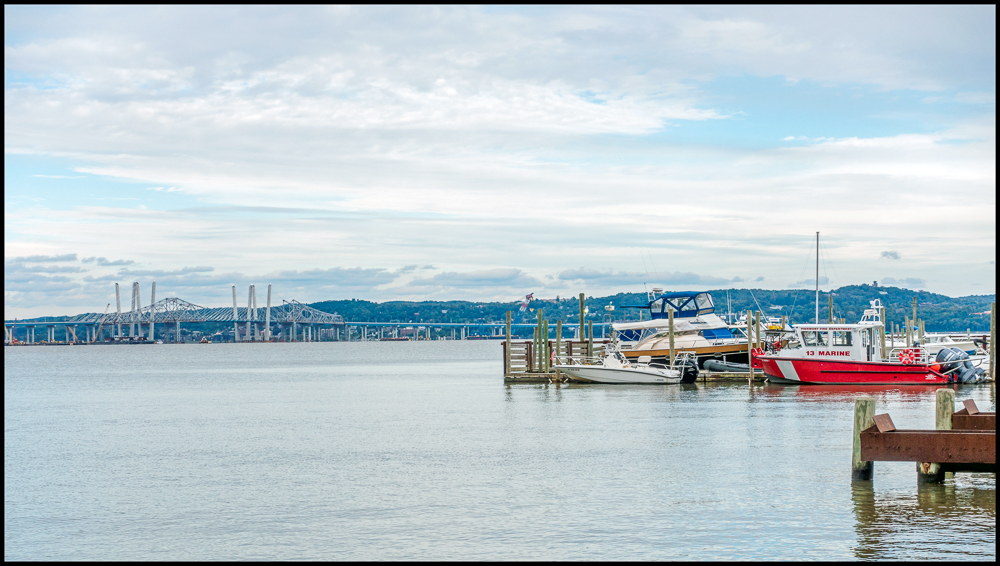
The restaurant has a lovely location right on the River Hudson with a view towards the New Tappan Zee Bridge (I can’t make myself refer to it as the Mario Cuomo bridge. To me it will always be the Tappan Zee) in the background.

Taken with a Sony RX-100 M3.