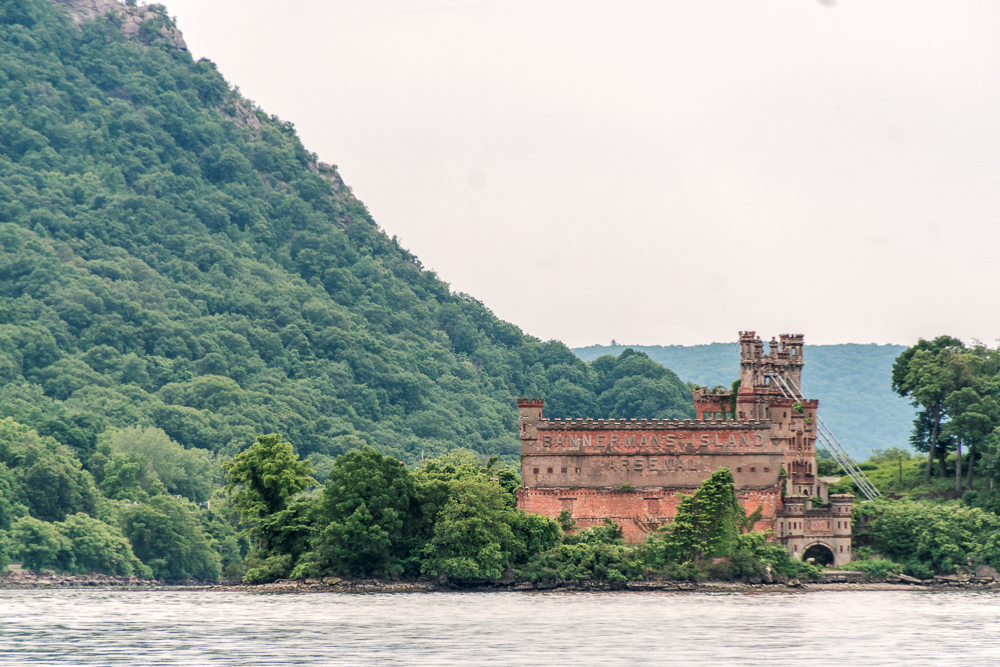
A pretty much unique site in the Hudson Valley. According to the Bannerman Castle Trust website (in the Island History section).
History
Pollepel – An Island Steeped in Historyby Jane Bannerman
A tiny jewel in the setting of the Hudson Highlands is called Pollepel, now familiarly known as Bannerman Island. Once an uninhabited place, accessible only by boat, it was considered haunted by some Indian tribes and thus became a refuge for those trying to escape them. These superstitions and others promoted by later Dutch sailors make for many fanciful tales. Even the name Pollepel (Polopel) originated with a legend about a young girl named (Polly) Pell who was romantically rescued from the breaking river ice and landed on the island shore, where she was promptly married to her sweetheart, who rescued her and her companion. The island was thereafter called Pollepel.
History reveals a connection to the American Revolution in attempted defense of the Highlands against the British fleet in 1777 using the famous “chevaux de frise”. These were devices constructed of wooden cribs sunken in the river, filled with metal-tipped, pointed logs to obstruct the passage of ships up the river by damaging their hulls, built by men commandeered from the local prison. The attempt was however, unsuccessful, as the British took to flat bottom boats and avoided the chevaux de frise. One of the “points” is now on display at Washington’s Headquarters in Newburgh, New York.
Since the time of the revolution there have been only five owners – William Van Wyck of Fishkill, Mary G. Taft of Cornwall, Francis Bannerman of Brooklyn, New York, and The Jackson Hole Preserve (Rockefeller Foundation), which donated the island to the people of the State of New York (Hudson Highlands State Park, Taconic Region, New York State Office of Parks, Recreation and Historic Preservation.)
Francis Bannerman (Frank) was born in Dundee, Scotland in 1851 and came to the United States to live in Brooklyn, at the age of three. His father took up the business of selling goods at Navy auction. Young Frank, while still in school, began to collect scrap from the harbor, then full of sailing ships. He was so successful at this that it soon became a business. At the end of the Civil War he increased his wares by buying surplus stock at government auctions. This source continued even after the Spanish American War. In 1872, on a buying trip to Ireland, he met and married Helen Boyce. Subsequently they had three sons; Francis Vll and David Boyce joined him in the business, and Walter became a doctor.
The business, known everywhere as “Bannerman’s” was founded in 1865 in Brooklyn. As more and more material was acquired, it moved several times, finally arriving at 501 Broadway, in Manhattan. From the Spanish War so much equipment and ammunition was bought that the laws of the city forced them to look for storage outside the city limits.
By chance while canoeing on the Hudson, David Bannerman noted the island. The Bannermans purchased it from the Taft family in 1900 as a safe storage site. Mr. Bannerman began construction on a simulated Scottish castle and simple residence in 1901.
Equipment of every description as well as ammunition were shipped there for storage until sold. Although Frank Bannerman was a munitions dealer, he described himself as a man of peace. He wrote in his catalogues that he hoped that his collection of arms would someday be known as “The Museum of the Lost Arts”. He was a devoted church goer, a member of the St. Andrews Society, founder of the Caledonian Hospital, and active in a boy’s club – often taking them on trips to the island in the summer months. During World War I he contributed cannons, uniforms, and blankets to the U.S. government. Frank and Helen Bannerman used the house on the island as a summer residence. Mrs. Bannerman, a successful gardener, enhanced the paths and terraces with wonderful flowers and shrubs, some of which still exist today.
Many tales both serious and comic have been told about this place over the years, some recounted in a pamphlet by Frank’s grandson Charles, who wrote prophetically in 1962 – five years before the island was given to the Taconic Park Commission, and seven years before the great fire that caused such destruction:
“No one can tell what associations and incidents will involve the island in the future. Time, the elements, and maybe even the goblins of the island will take their toll of some of the turrets and towers, and perhaps eventually the castle itself, but the little island will always have its place in history and in legend and will be forever a jewel in its Hudson Highland setting.”
The Bannerman Castle Trust, Inc. is hopefully its future.
(Jane Bannerman is the Granddaughter-in-law of the builder of the castle, Frank Bannerman VI.)
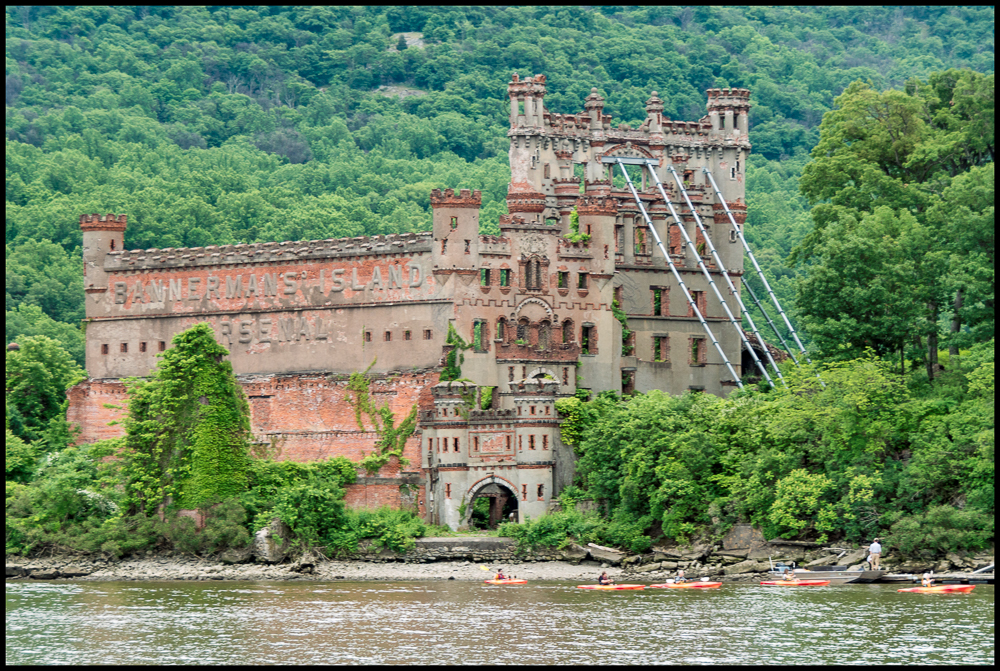
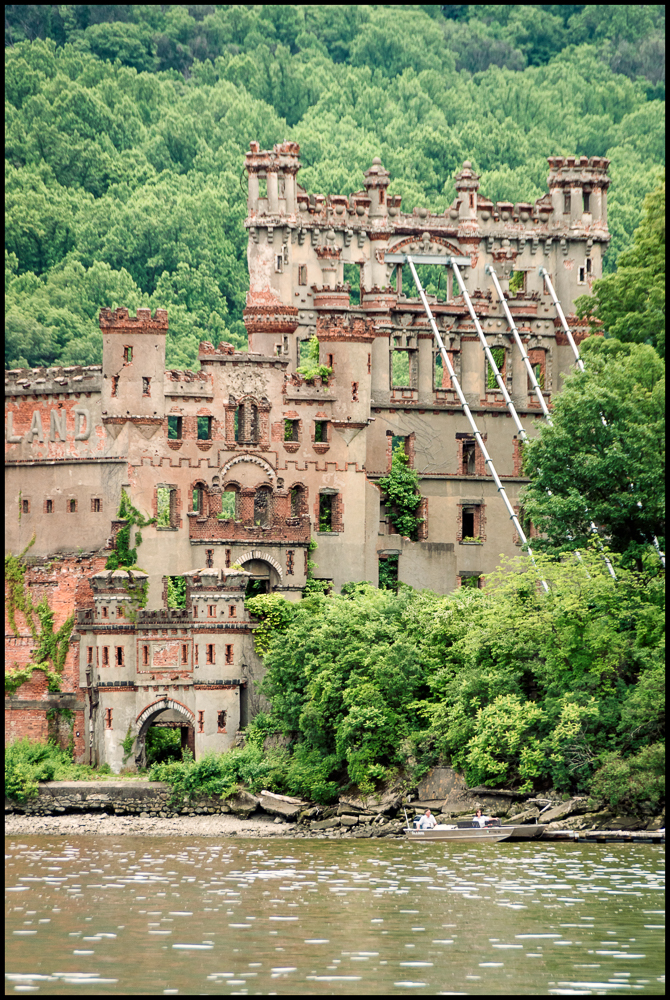
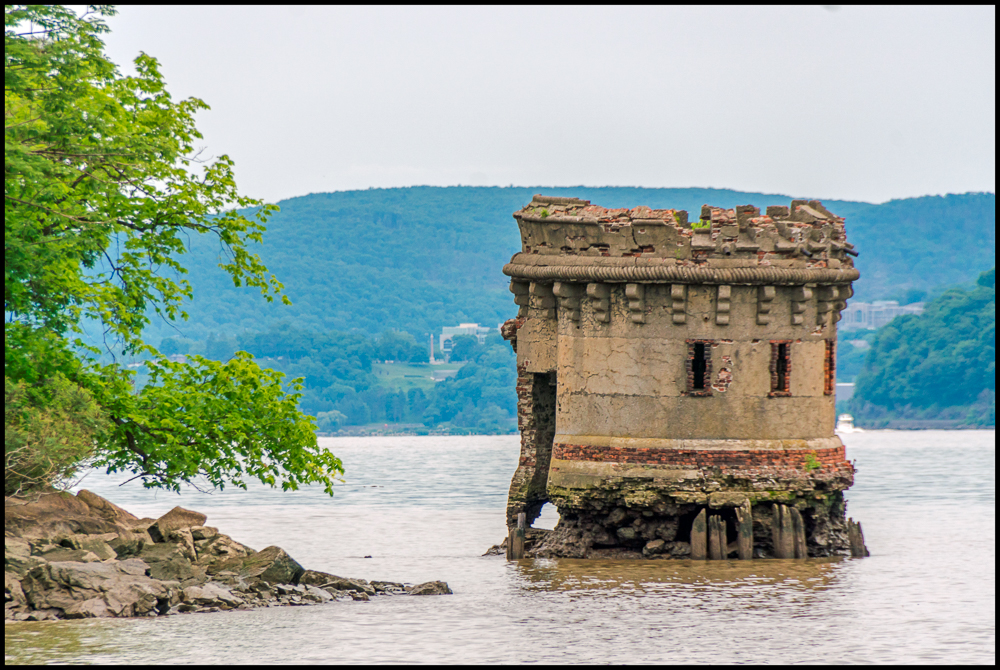
Taken with a Sony A77II and Tamron A18 AF 18-250mm f3.5-6.3.