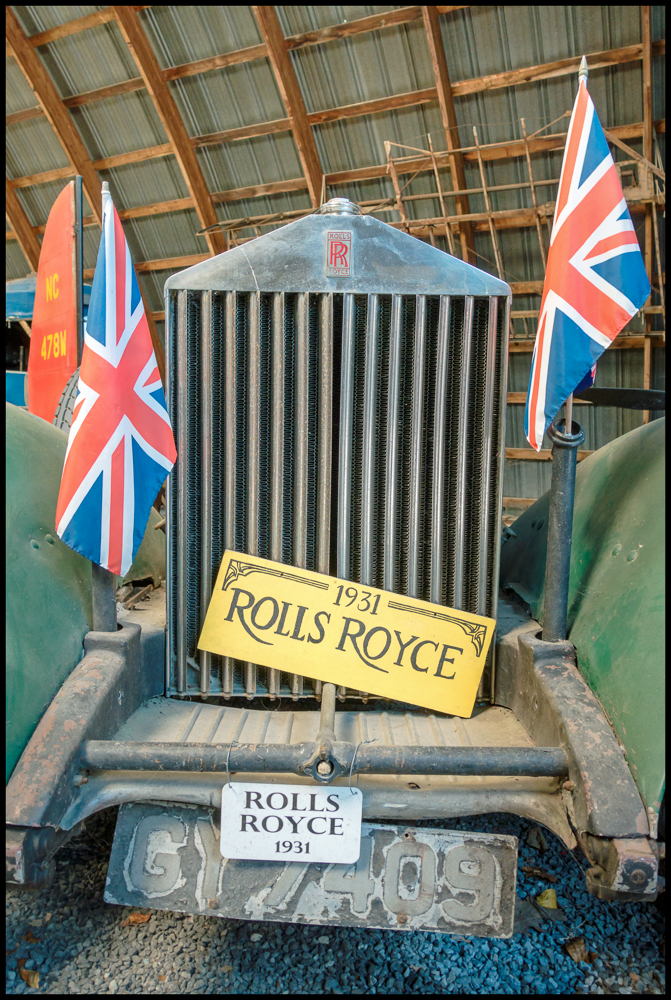
Old Rhinebeck Aerodrome – Golden Age Hangar. 1931 Rolls Royce.

According to the Museum’s website:

Royce Boat-Tailed Speedster (1931)

From 1904 through the present day the Rolls Royce name has become internationally known as the very finest in automotive engineering and luxury. Founded by Charles Rolls and Henry Royce, Rolls had the sales skills and Royce possessed the production and design knowledge to create a great team. They set new standards for excellence and the wealthy felt that a Rolls Royce in their garage was necessary equipment.

Sadly Charles Rolls has the distinction of being the first aviator to be killed in England in an aircraft accident.

Taken with a Sony RX-100 M3.

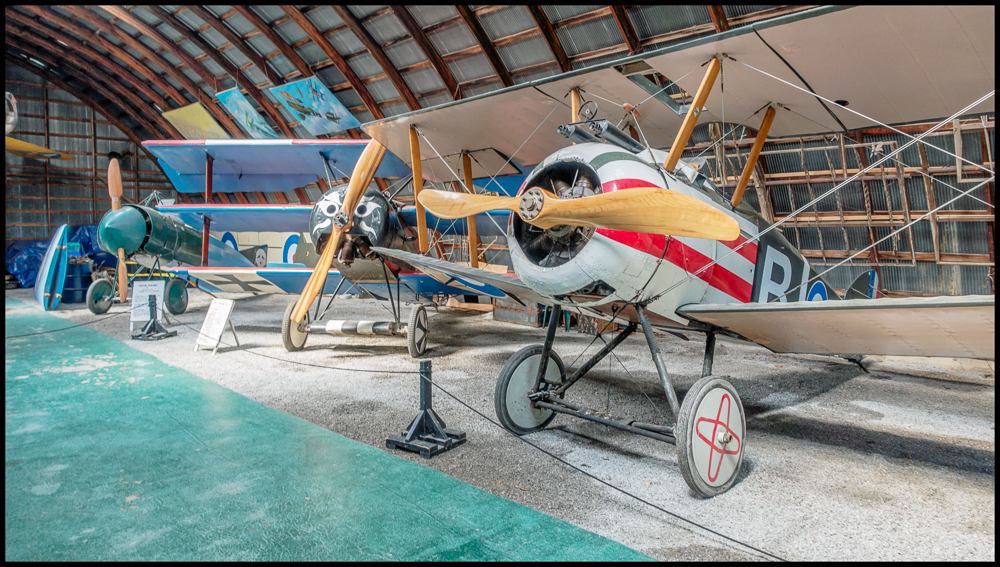
Old Rhinebeck Aerodrome – WWI Hangar. Sopwith Camel (Replica)

According to Wikipedia:

The Sopwith Camel was a British First World War single-seat biplane fighter aircraft introduced on the Western Front in 1917. It was developed by the Sopwith Aviation Company as a successor to the earlier Sopwith Pup and became one of the most iconic fighter aircraft of the First World War.

The Camel was powered by a single rotary engine and was armed with twin synchronized machine guns. Though proving difficult to handle, it provided for a high level of manoeuvrability to an experienced pilot, an attribute which was highly valued in the type’s principal use as a fighter aircraft. In total, Camel pilots have been credited with the shooting down of 1,294 enemy aircraft, more than any other Allied fighter of the conflict. Towards the end of the Great War, the type had also seen use as a ground-attack aircraft, partially due to it having become increasingly outclassed as the capabilities of fighter aircraft on both sides were rapidly advancing at that time.

The main variant of the Camel was designated as the F.1; several dedicated variants were built for a variety of roles, including the 2F.1 Ship’s Camel, which was used for operating from the flight decks of aircraft carriers, the Comic night fighter variant, and the T.F.1, a dedicated ‘trench fighter’ that had been armoured for the purpose of conducting ground attacks upon heavily defended enemy lines. The Camel also saw use as a two-seat trainer aircraft. In January 1920, the last aircraft of the type were withdrawn from RAF service.

Taken with a Sony RX-100 M3.

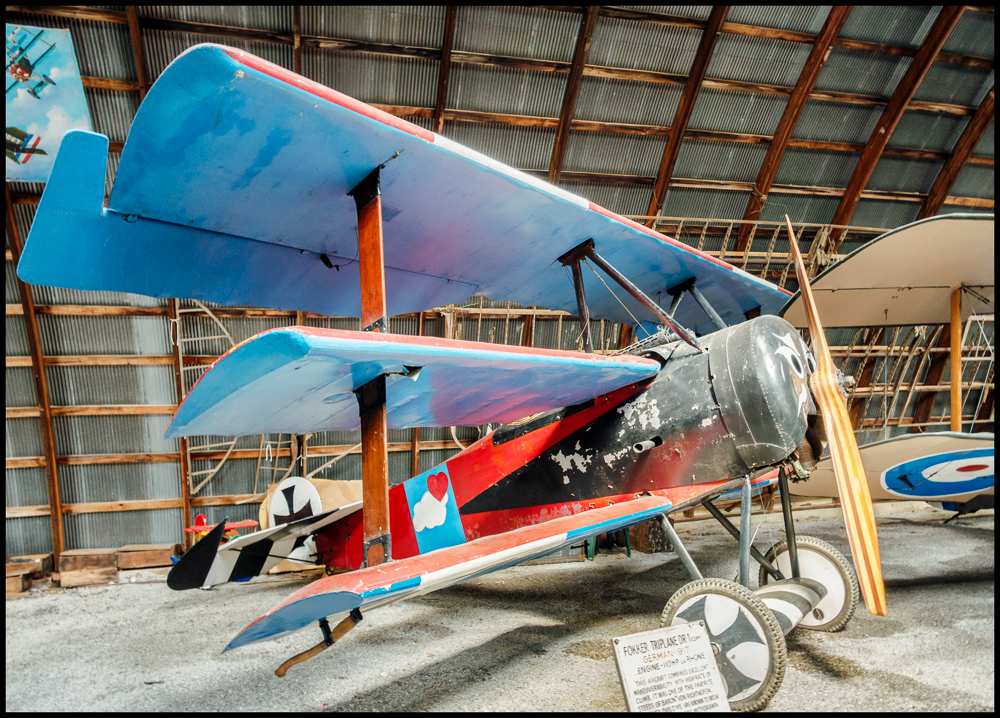
Old Rhinebeck Aerodrome – WWI Hangar. Fokker DR-1 Triplane (Replica)

According to Fantasy of Flight:

In early 1917, the British Sopwith Triplane began flying in combat, so the German High Command requested that a triplane be developed for their use.

Many concepts were tried in an effort to produce aircraft that outperformed the enemy. Several companies entered the competition; the contract was awarded to Anthony Fokker, a Dutch aircraft designer who had been building aircraft in Germany from before the war.

While not as fast as contemporary fighters, the Fokker Triplane had a reputation as a great dogfighter due to its great climbing and turning ability. Although over 300 were built, no original Fokker Triplanes are left in existence; the last was destroyed in WWII bombings of Berlin.

This aircraft is painted in the colors of Manfred von Richtofen, the famous “Red Baron,” who achieved 19 of his last 80 victories in the triplane. On von Richtofen’s last day, the front lines had been in flux, and he found himself chasing a Sopwith Camel at low level over enemy territory. Although there are many stories about his death, it is generally accepted that he was killed by one bullet from the ground. Photographs were taken of the funeral, and British planes dropped them over his aerodrome with this message:

TO THE GERMAN FLYING CORPS: Rittmeister Baron Manfred von Richthofen was killed in aerial combat on April 21st, 1918. He was buried with full military honors. –From the British Royal Air Force

Taken with a Sony RX-100 M3.