
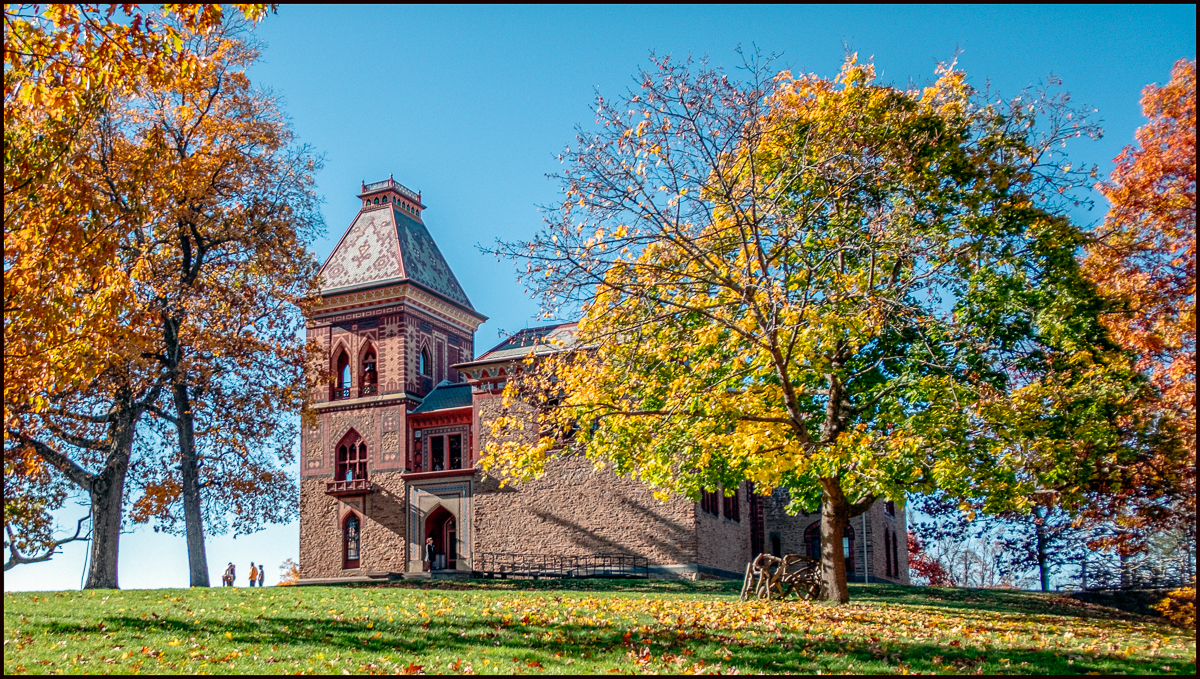
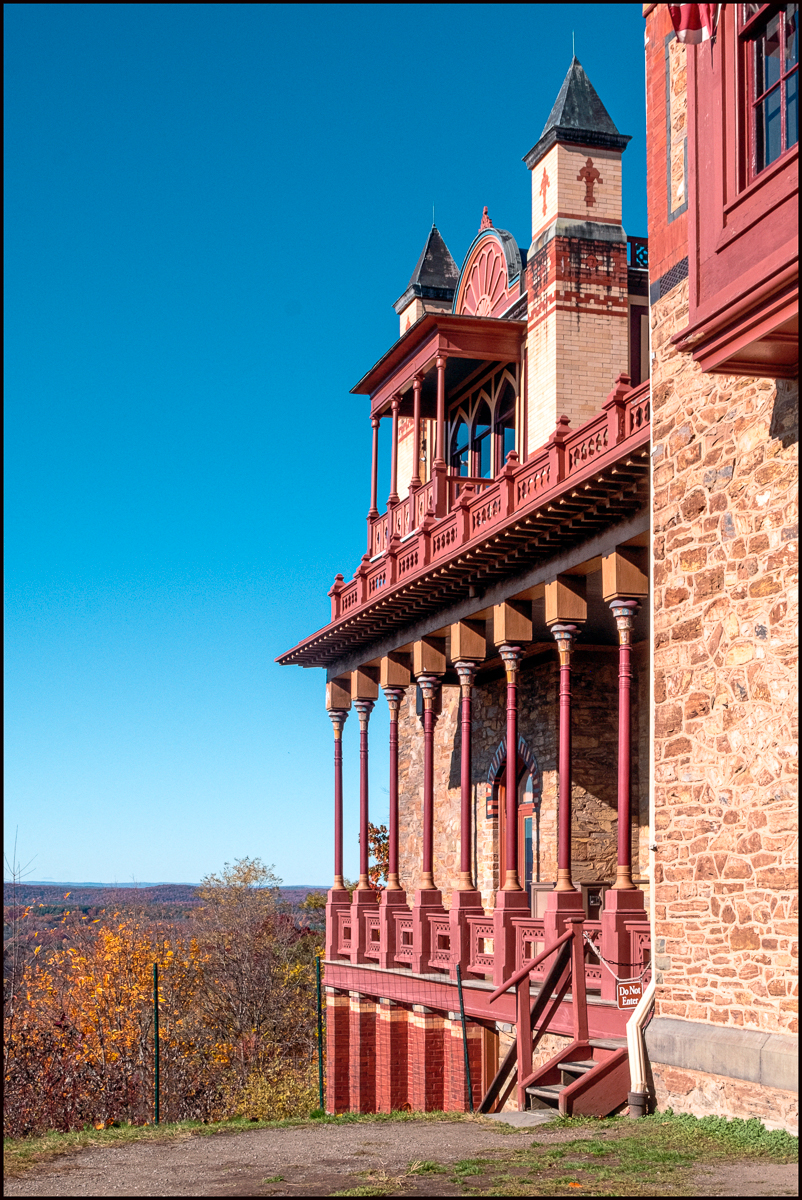
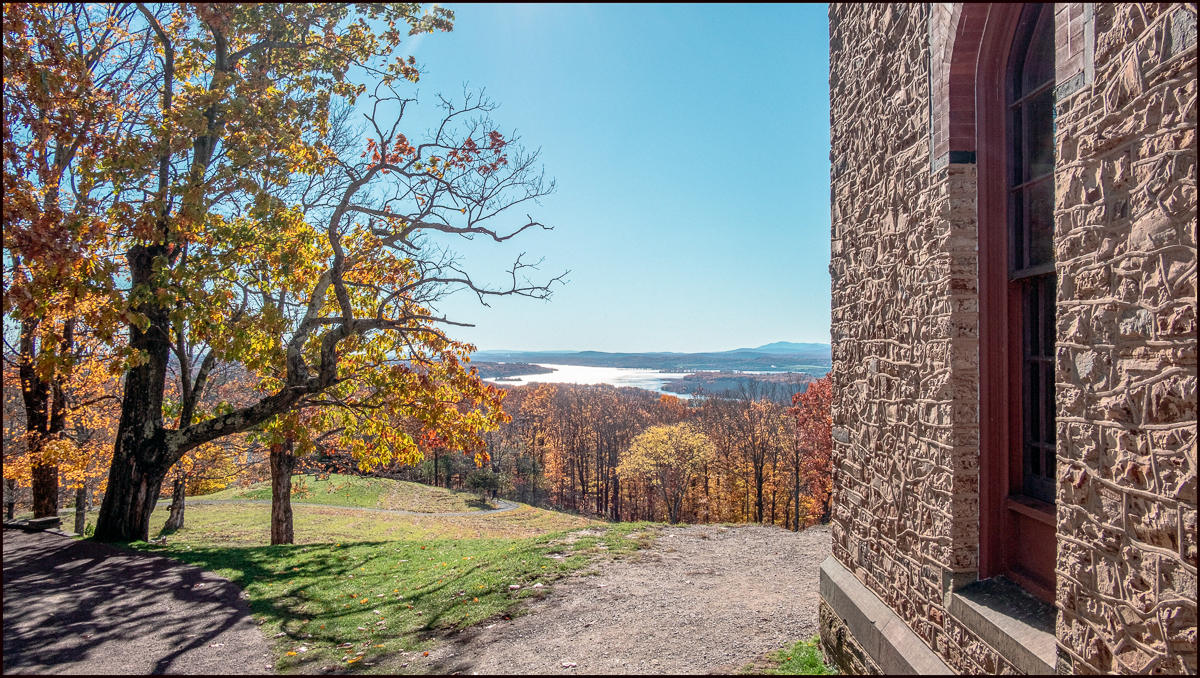
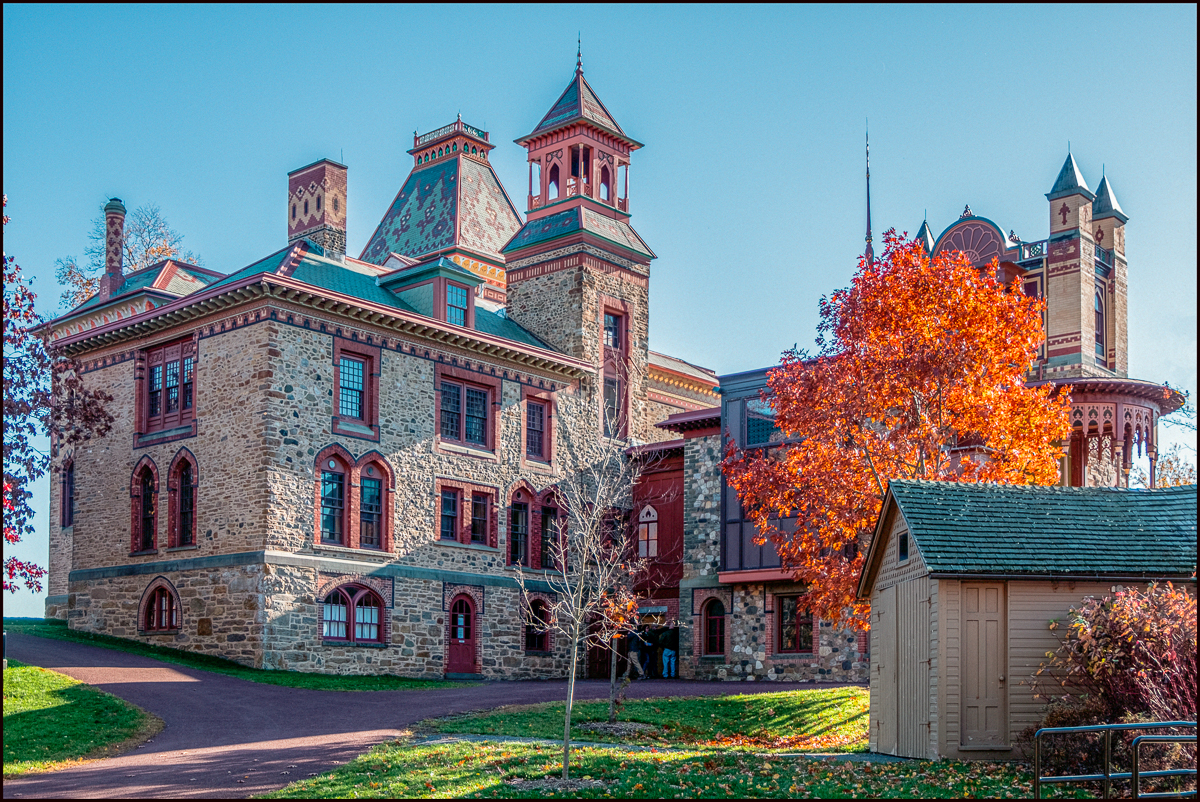
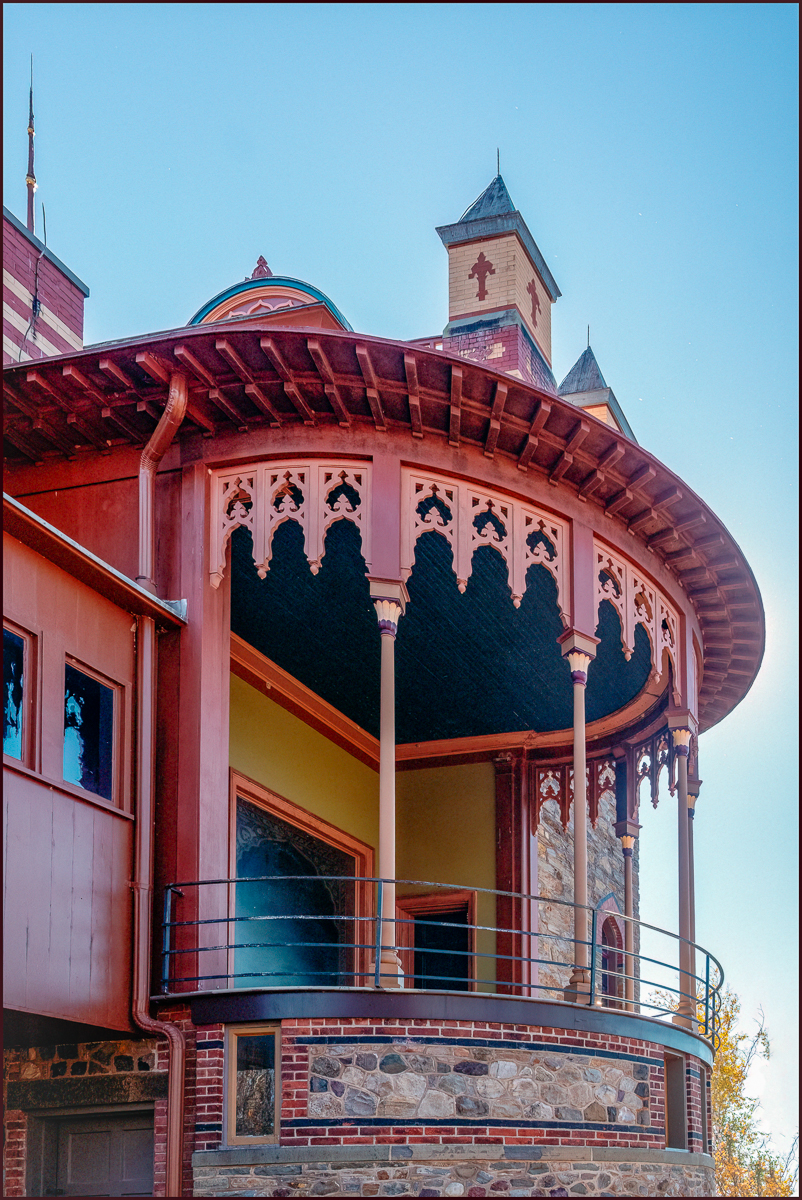
“The most imposing product of Church’s Old World travels may be El Khasné, Petra (1874), which he installed as a gift to his wife in the Persian-inspired “castle” (as he termed it) that he built in 1870–72 on his hilltop property in Hudson. Husband and wife dubbed the house “Olana” (based on a medieval geographer’s reference to a treasury storehouse in ancient Persia), and raised in it four children. In this period, Church also accepted the role of Parks Commissioner in New York City and became a founding trustee of The Metropolitan Museum of Art.
The primary role Church assumed in the design and construction of his house coincided with the onset of rheumatoid arthritis, which eventually retarded if not arrested his artistic output and drove him to seek seasonal relief in annual winter visits to Mexico. The artist also suffered the gradual neglect from patrons and public felt by all the Hudson River School painters, and by the time of his death in New York City in 1900 Church had been nearly forgotten. Nonetheless, the Metropolitan mounted the first retrospective of his work in the year he died and his reputation gradually recovered after 1960. Moreover, Church’s devoted son Louis and his wife Sally continued to live at Olana until her death in 1964, by which time the artist’s revived reputation generated a movement to preserve the house and grounds, which remain today one of the exceptional historic sites in the New York State park system.” (Avery, Kevin J. “Frederic Edwin Church (1826–1900).” In Heilbrunn Timeline of Art History. New York: The Metropolitan Museum of Art, 2000–. )
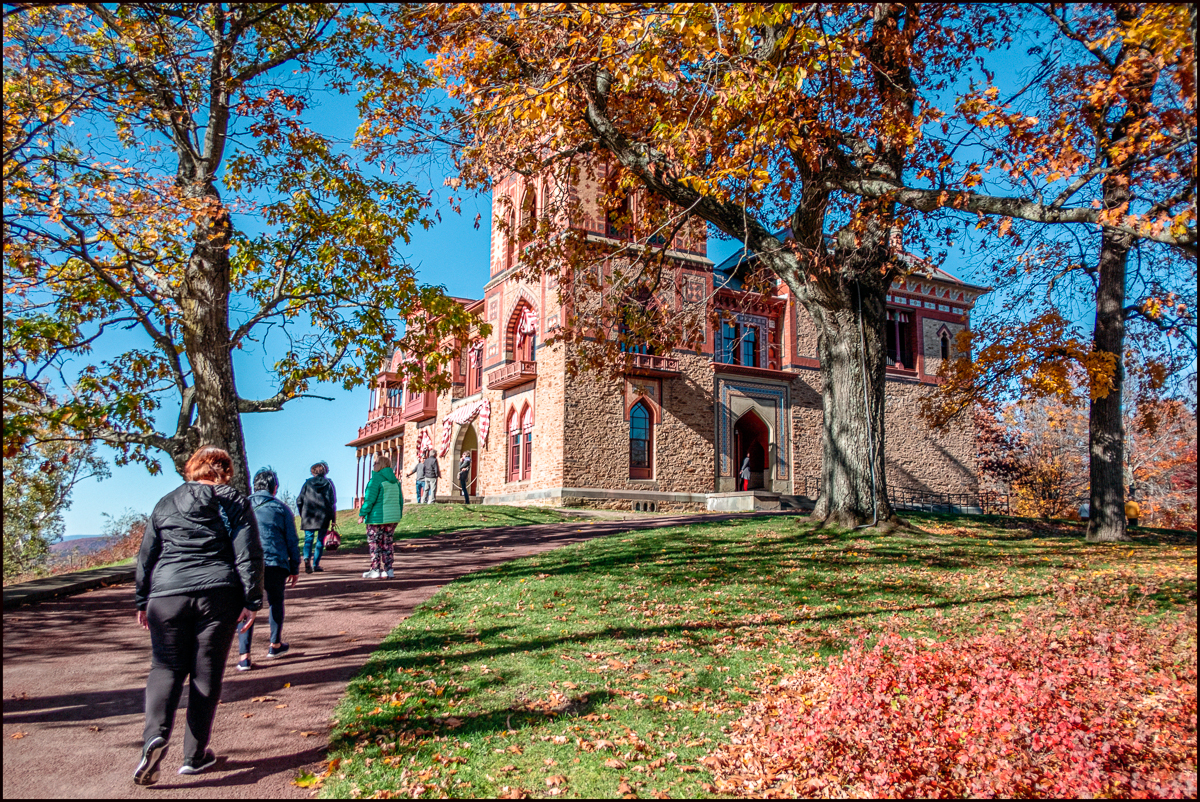
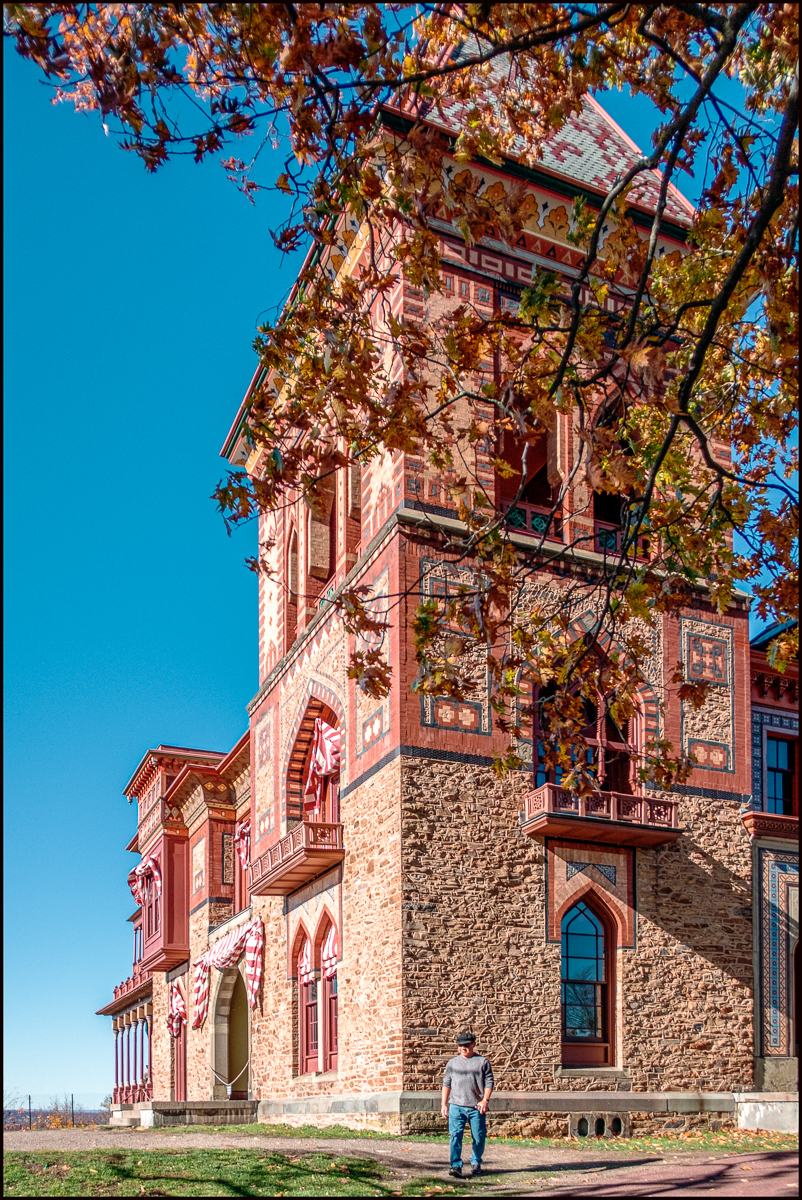
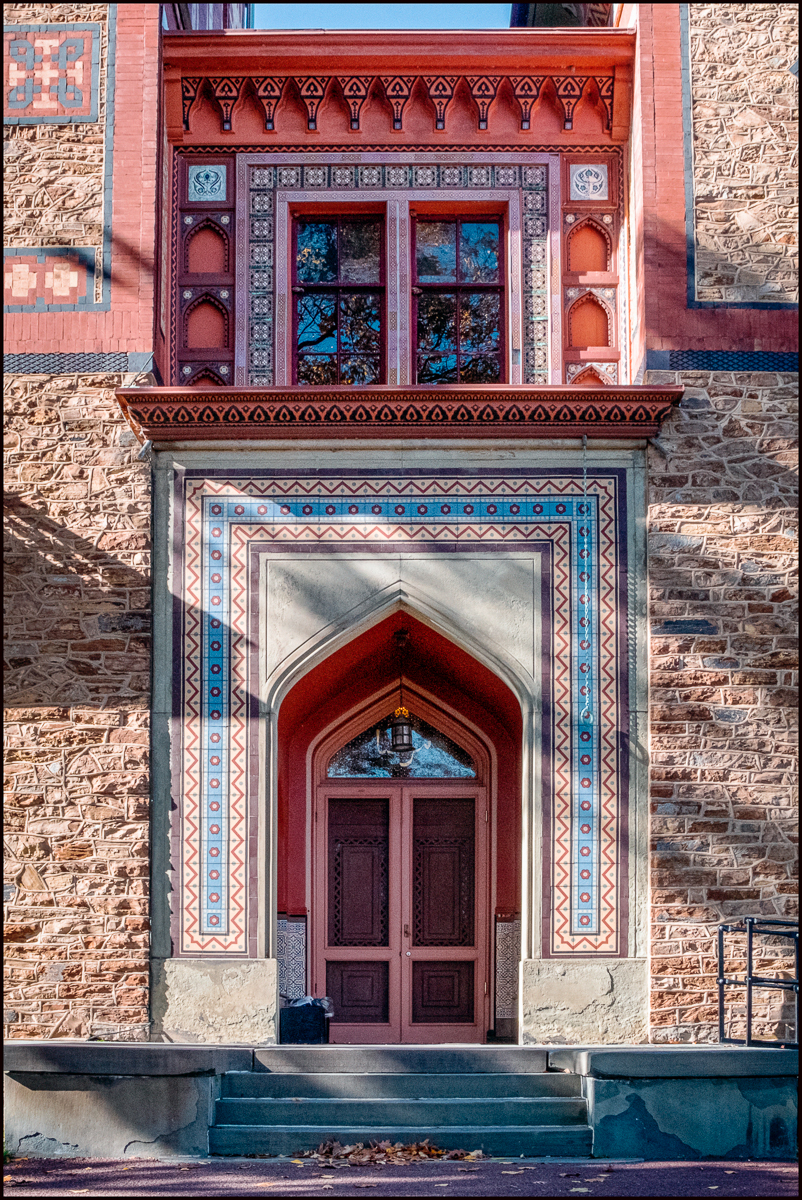
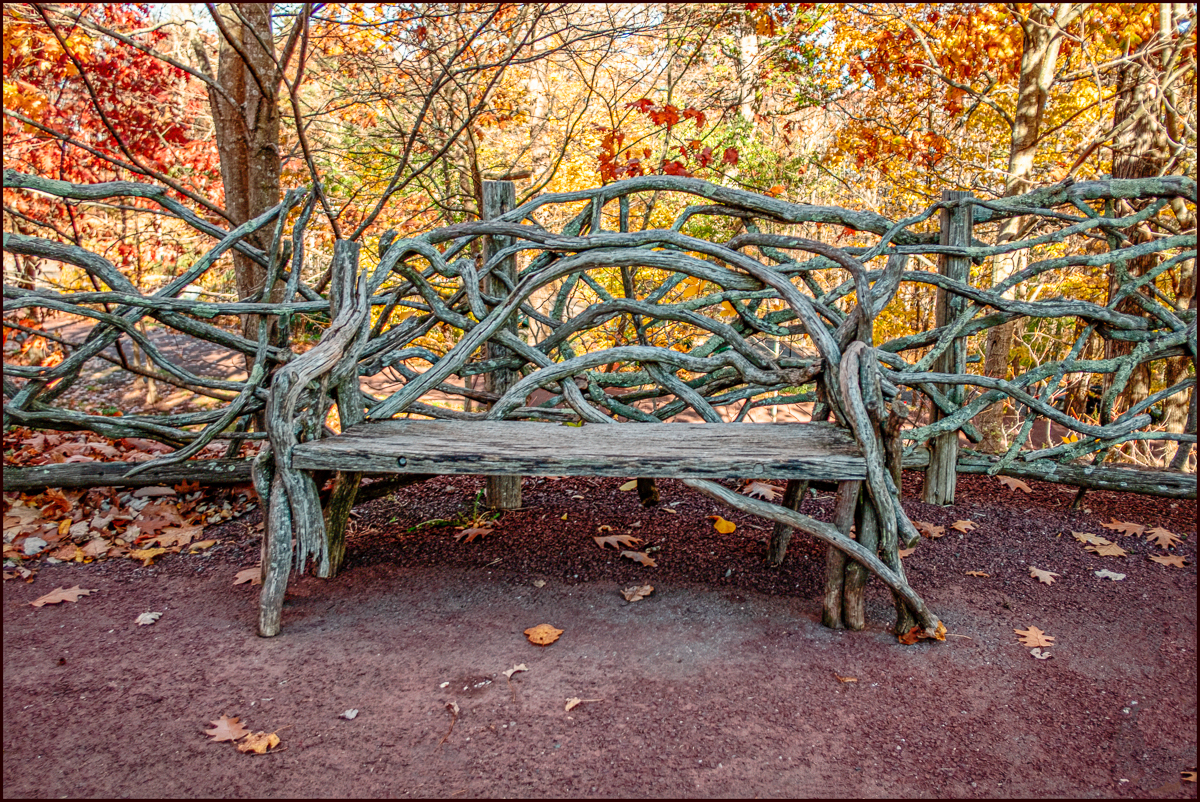
Taken with a Fuji X-E3 and Fuji XC 16-50mm f3.5-5.6 OSS II