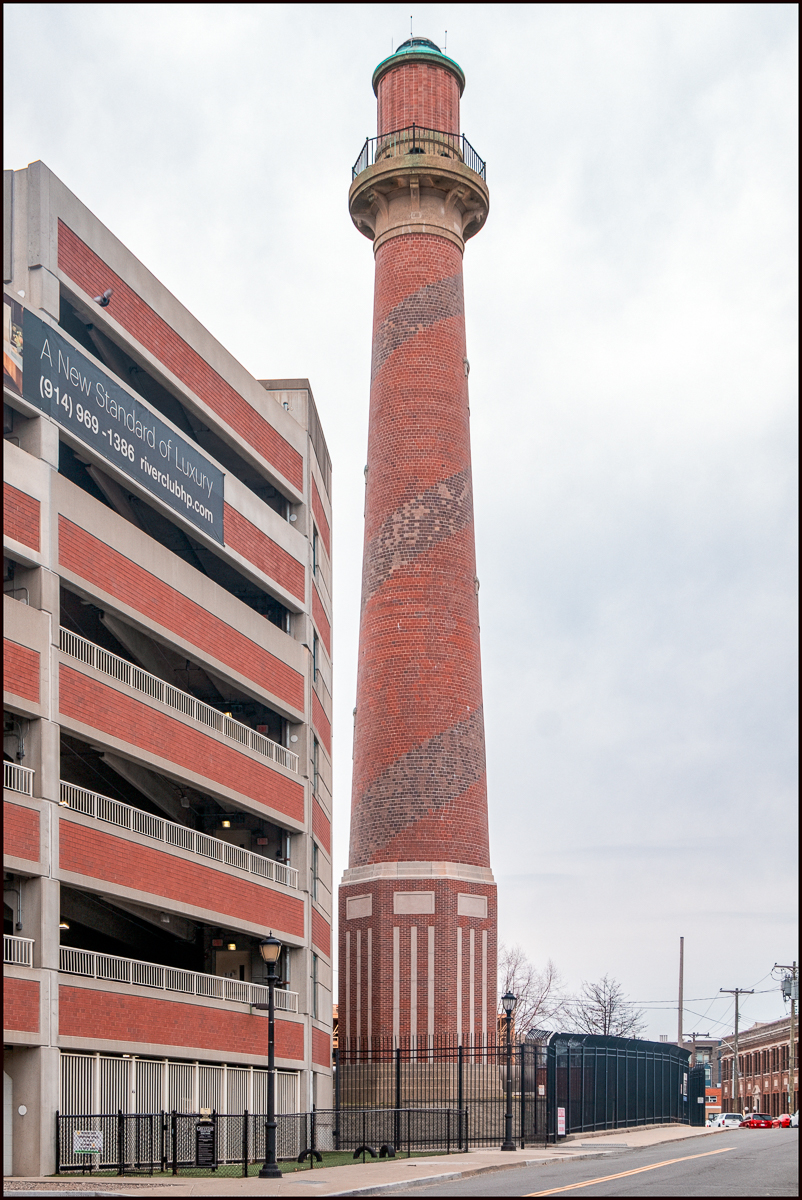
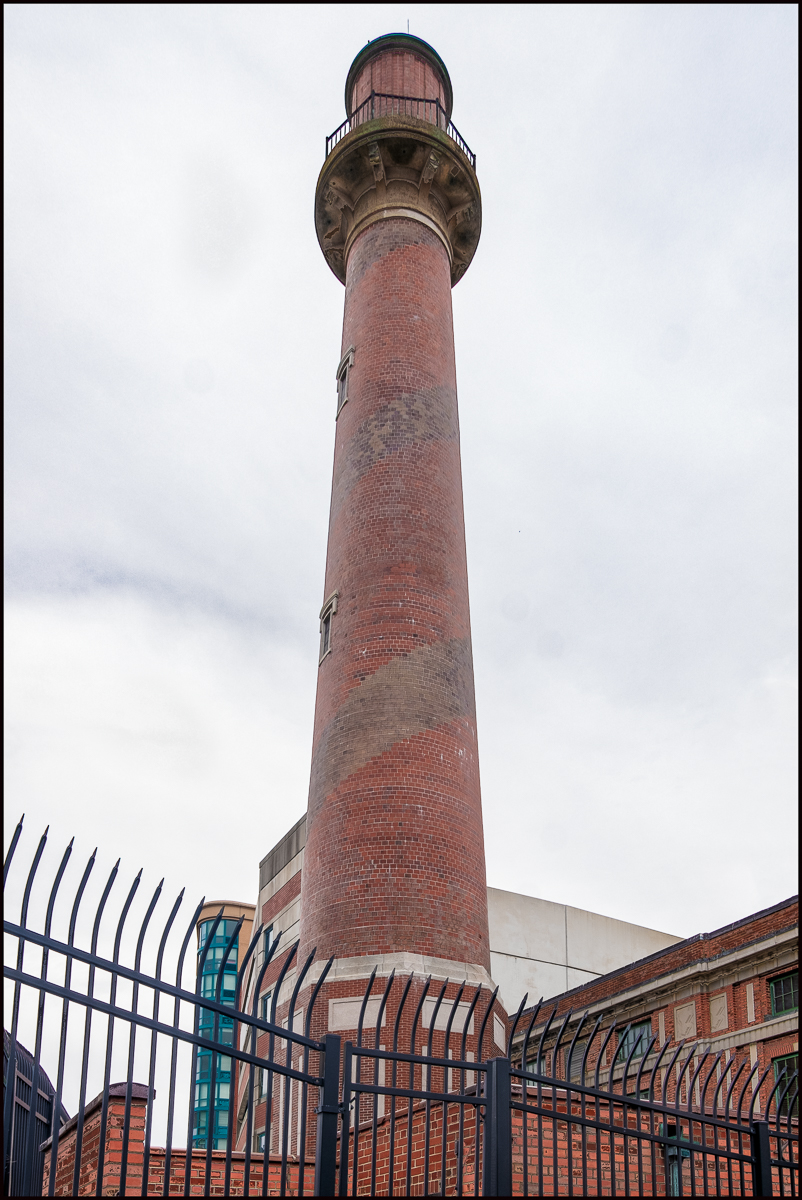
Lunch in Yonkers, NY – North Yonkers Pump Station

The Art Deco North Yonkers Pump Station (S/NR-eligible) at 19 Alexander Street is a striking brick building built around 1930 (see Figure 12-5A, Photo 1). It features a tall tower shaped like a lighthouse that is visible for some distance, a large central entrance on its north
façade that is surrounded by a stepped bay, and vast expanses of multi-paned metal windows.

Taken with a Fuji X-E3 and Fuji XC 16-50mm f3.5-5.6 OSS II

Lunch in Yonkers, NY – Mill Street Courtyard

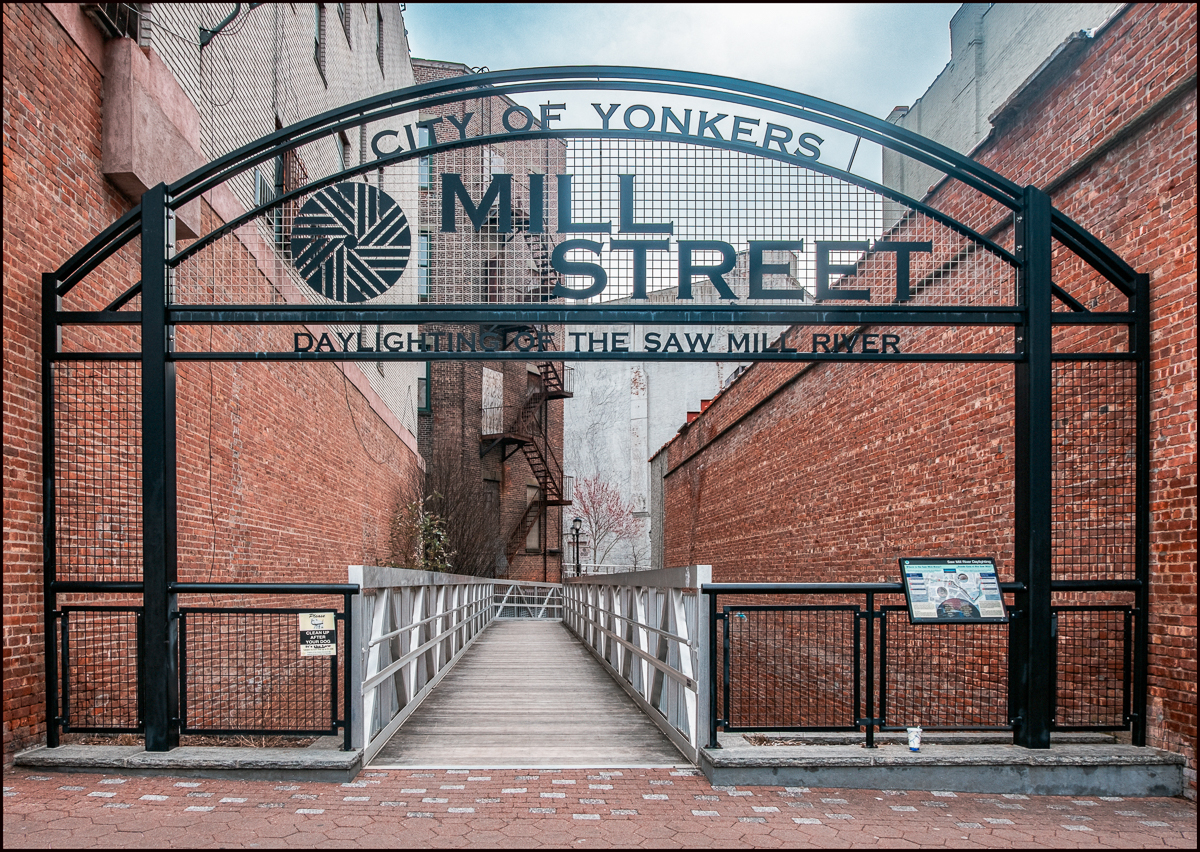
The project involved taking an inner city block in the historic Yonkers downtown and transforming it to an open pedestrian space. An underground flume of the Saw Mill River, a tributary of the Hudson River, has run within the courtyard block for 100 years. Essential to the design was the day lighting of the river in two sections to create a unique water feature.

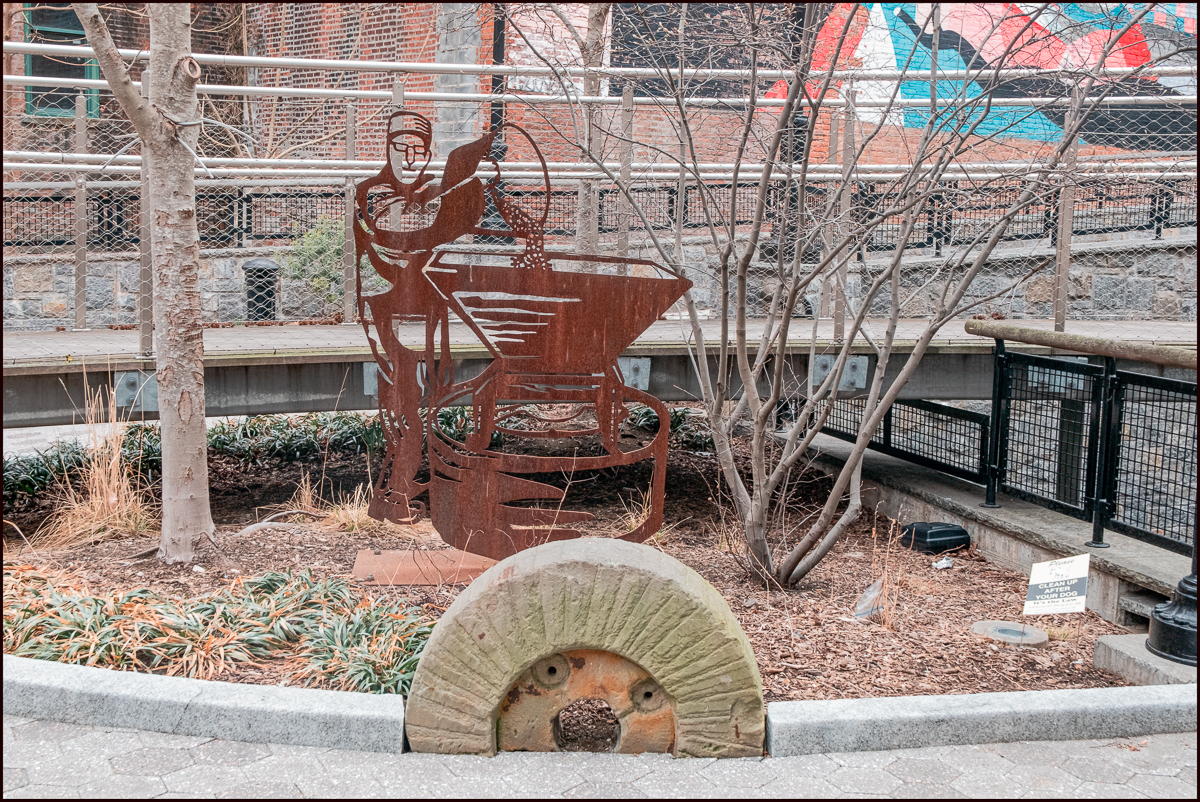
Designed as a “Woonerf”, or shared street, the new courtyard features paved walkways, extensive landscaping, rain gardens to catch storm water, and granite benches. A new mosaic column sculpture designed by a local artist Haifa Bint-kadi is centered on the plaza overlooking the river.


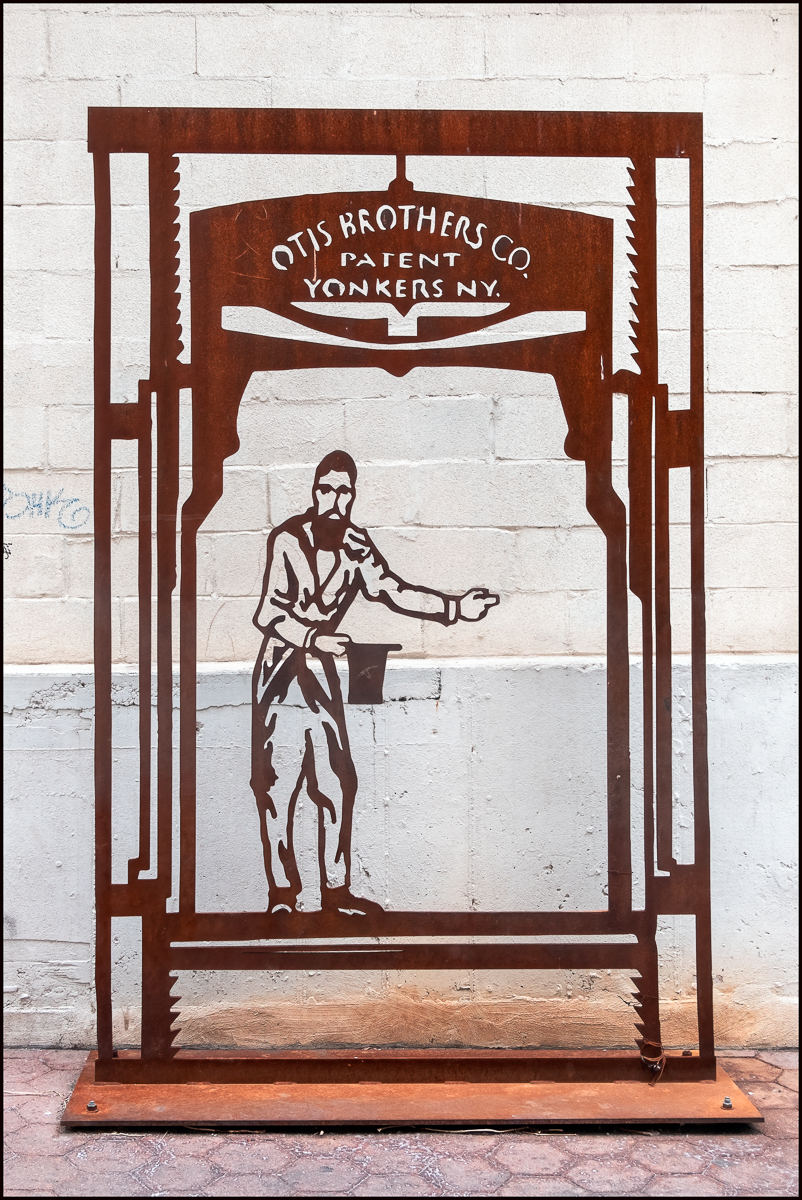
This iron sculpture recognizes Otis Brothers, founded in Yonkers where in 1852, Elisha Graves Otis introduced the first safety contrivance for elevators. Otis established a company for manufacturing elevators and went on to dominate the elevator industry. Today the Otis Elevator Factory is the world’s largest manufacturer of vertical transport systems.

The view and sounds of the river can be enjoyed from a granite and wood amphitheater and crossed over by two stunning wood and steel pedestrian accessible bridges. A new vehicular bridge allows service access.

For more pictures see here.

Taken with a Fuji X-E3 and Fuji XC 16-50mm f3.5-5.6 OSS II
Lunch in Yonkers, NY – New York Telephone Building

The building at 5 Riverdale Ave. bears one of three murals called “Gateway to the Waterfront” by Richard Haas. (Unfortunately, I failed to spot the mural and consequently didn’t take a picture of it). It was built in 1902 by the New York Telephone Company. Haas painted a second mural on an adjoining building. But that building now seems to have been demolished and, unless it’s been moved elsewhere, the mural with it.

Taken with a Fuji X-E3 and Fuji XC 16-50mm f3.5-5.6 OSS II
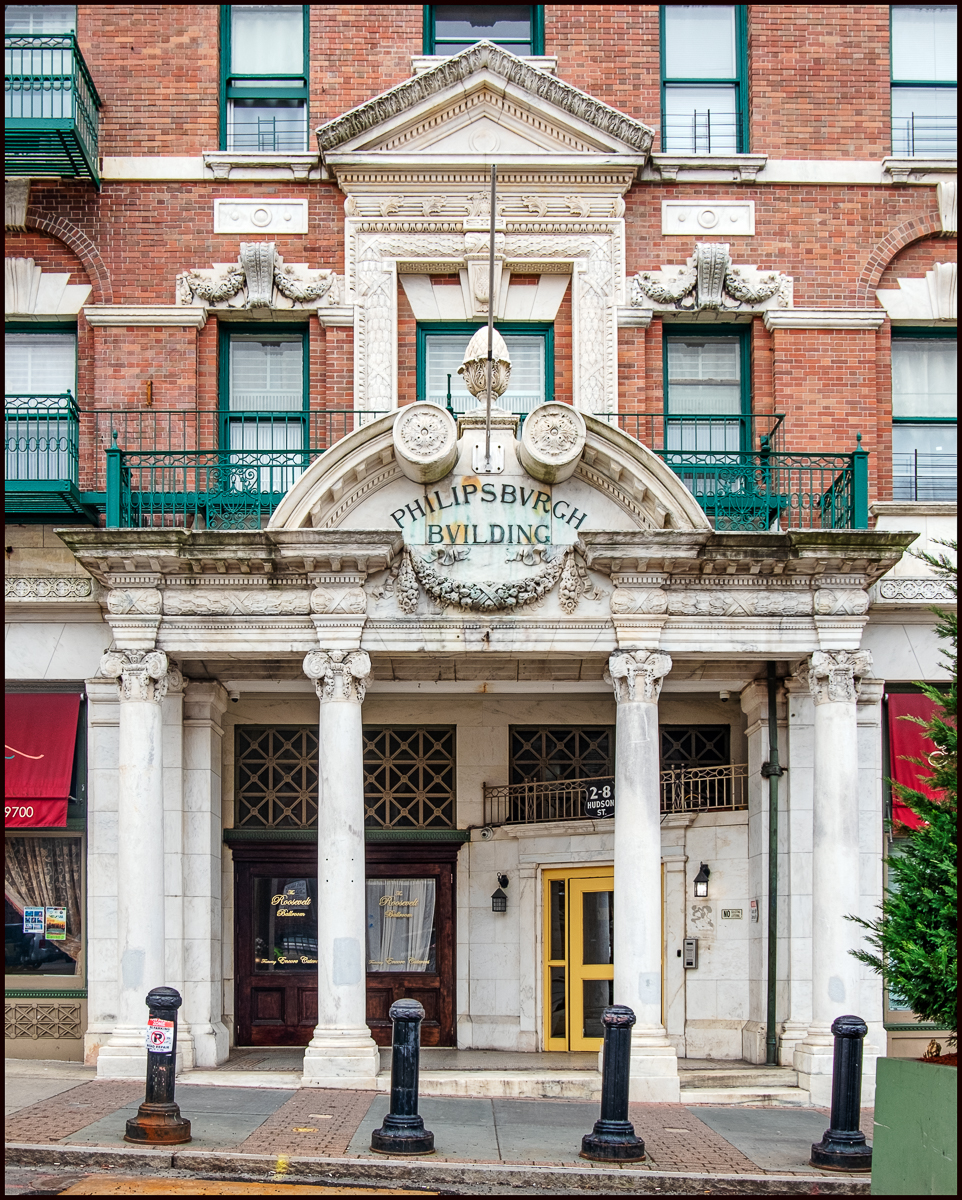
Lunch in Yonkers, NY – The Philipsburgh Building

The Philipsburgh Building, also known as Philipsburgh Hall, is an architectural landmark building in Getty Square in downtown Yonkers, New York. The grand, Beaux-Arts style structure was designed by G. Howard Chamberlin and built in 1904 using a unique all-concrete construction making it the first fireproof office building in Westchester County. For years, the enormous grand ballroom within, with its 30-foot (9.1 m) ceilings and extensive gold leaf decor, was a fixture of the social scene in Yonkers, playing host to all manner of meetings, parties and theatrical productions including speeches by Theodore and Franklin D. Roosevelt (resulting in its being named “The Roosevelt Ballroom” by Encore Caterers.

In the latter half of the 20th century, the building and the neighborhood around it fell into physical and economic disrepair. By the 1980s, most of the building had been converted to low-rent apartments, while parts of it were left entirely unoccupied. In the 1990s, the building benefited from a renewed interest in local development, and was heavily renovated and restored. The grand “Roosevelt” ballroom once again found its place as a focal point of local culture.

The building was restored and renamed the Philipsburgh Performing Arts Center (PPAC, pronounced “P-pack” locally) in 2001. The PPAC concept was short-lived, however, and by early 2005 it had ceased to be. The building’s primary occupant is a South Asian restaurant called “Nawab” and its owners are also the caterers for events at the Ballroom.

It was listed on the National Register of Historic Places in 2001.

Taken with a Fuji X-E3 and Fuji XC 16-50mm f3.5-5.6 OSS II