A Walk around Tarrytown – Baa

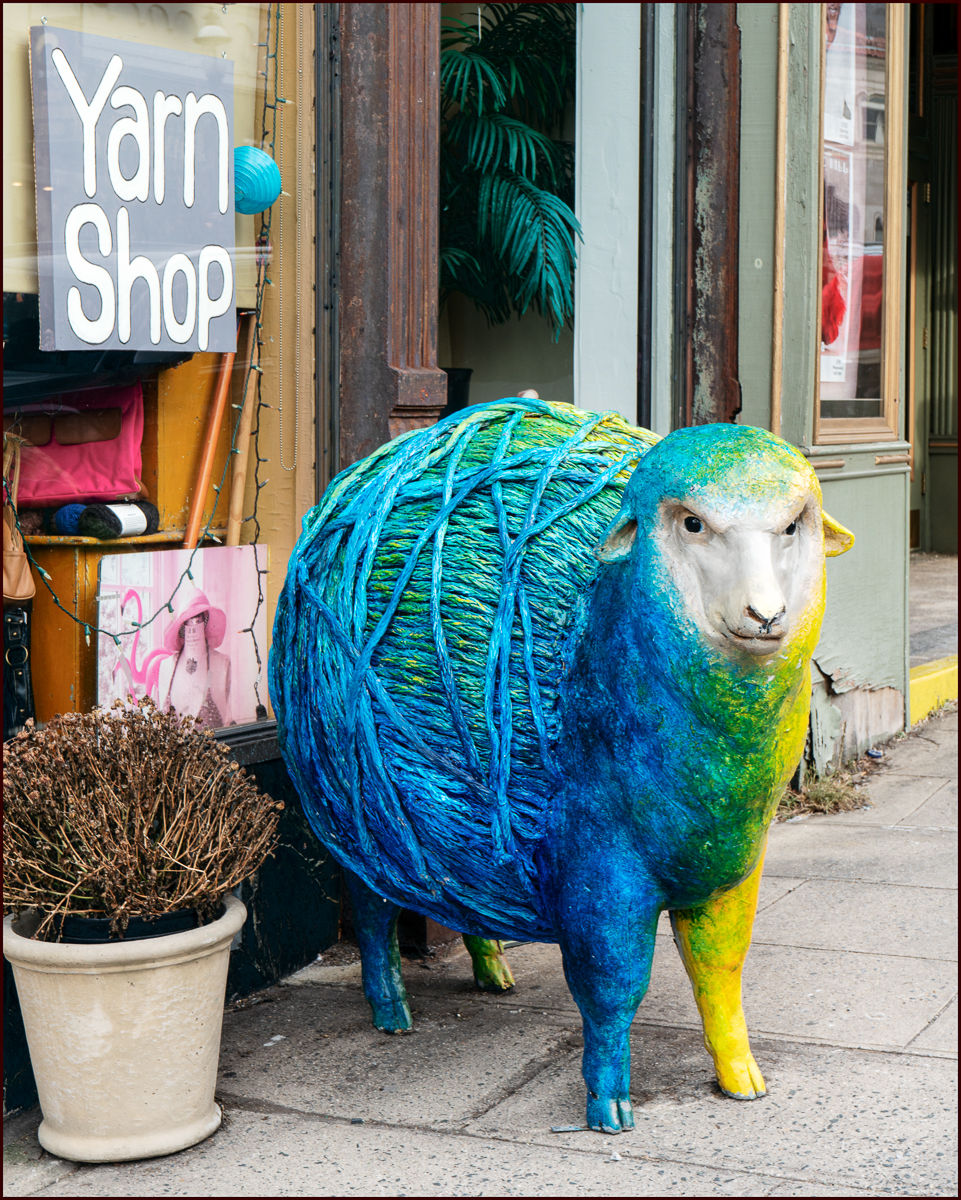
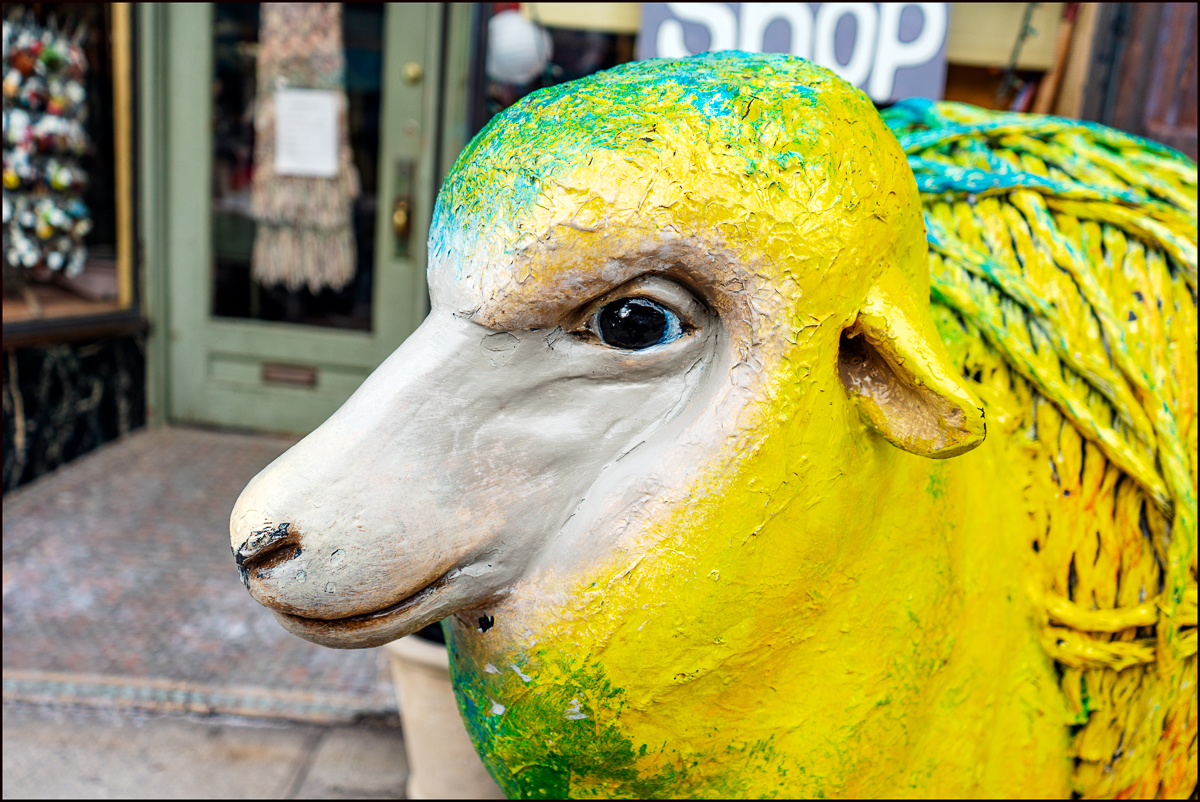
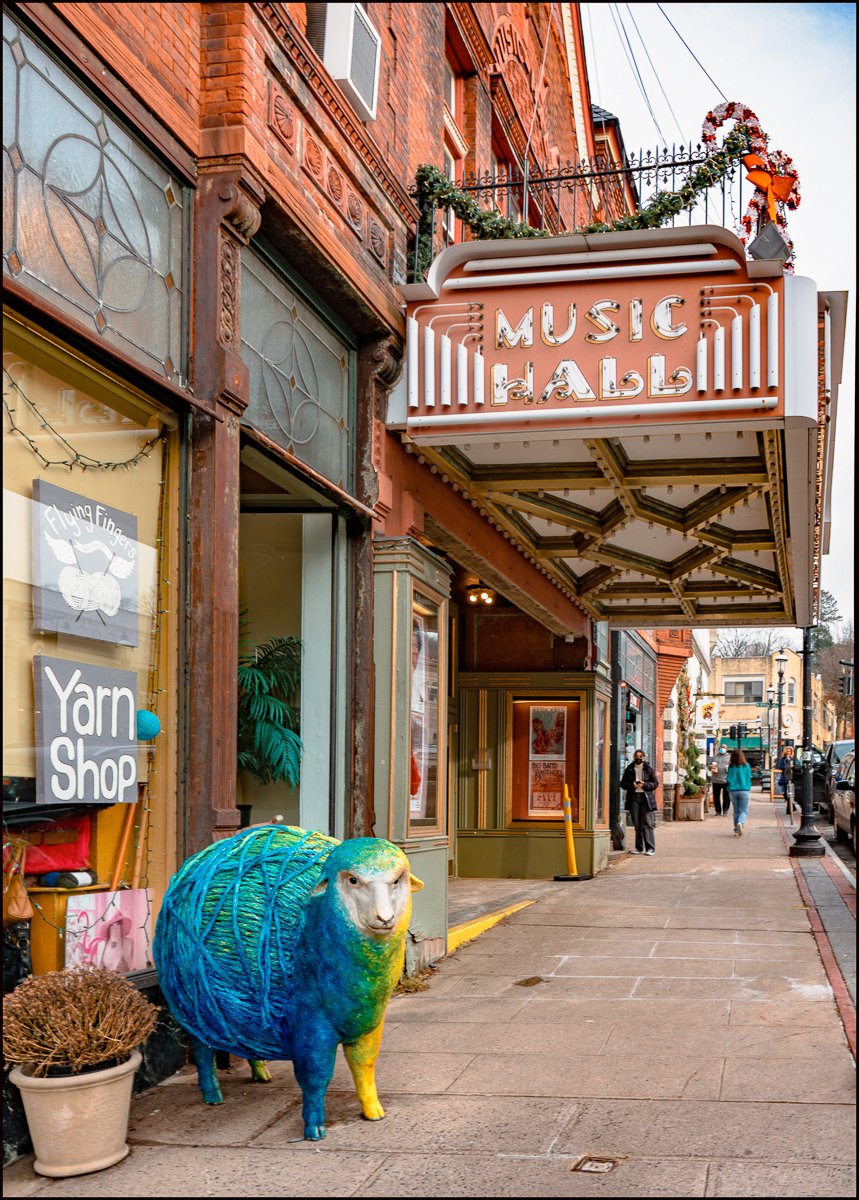
You may have noticed this brightly colored sheep in the previous post about the Tarrytown Music Hall.

As you can see in the picture, it stands outside a yarn shop situated right next to the Music Hall. It’s certainly an interesting concept and it’s pretty much impossible to miss it. The shop is actually called Flying Fingers and it describes itself as follows:

Here at Flying Fingers, we are a family, woman owned and operated yarn shop. We strive to offer the best and most interesting yarns the world has to offer, and primarily focus on natural fibers, including wool, cotton, silk, alpaca, cashmere, and soy and bamboo. Flying Fingers grew out of Elise’s passion to knit, which started when she was taught fiber arts by her Mother all the way back in 1963. Elise was always making knit items for her kids, and when they grew out of the cute sizes, she then began designing and hand knitting sweaters, hats, and accessories which she sold at craft fairs across NYC and the tristate area, and Flying Fingers was born. It was a natural progression into a space where she could teach people her craft, the retail and classroom space opened in 2003. Shortly thereafter, we opened our web shop, and invited people across the country and the globe to be a part of our knitting family.

As we opened the shop, Elise’s father, who had always worked in retail running small shops of his own, was concerned when he learned his daughter sought to do the same. His main issue was always waiting around for customers to walk through the door. Elise chuckled, and said, Dad, I’ll just go get ’em! And the seed of the Yarn Bus was planted! Not one to do things by half measures, Elise called the company who was famous for making the Oscar Mayer Wiener Mobile, and cooked up an idea to help bring the knitters straight to her door. The Yarn Bus hit with a huge splash, and brought Flying Fingers to local and national media across the country, including the Martha Stewart Show, The New Yorker, Regis Live, and more.

Over the years, our classes have continued to grow and thrive, and our website has expanded to the point where we decided to build a new one from the ground up! The timing is perfect, as the new Flying Fingers Generation is on the rise. This includes two of Elise’s children… Diana, who teaches several of our classes and is a crochet wiz, and Dillon, who’s art school background makes him the color maven, and has ventured into dying his own line, House Yarns! Our family has come to include Tina, who was Flying Fingers first employee, and is our main and most beloved teacher. As times change, so have we, and our classes are now both in person and through Zoom. We have reconfigured the shop for the time being to have individual desks, instead of a communal table. As hand crafters, we have been excited to find that there can be lots of fun fiber learning through modern means!

Our Flying Fingers Family is always growing, and we are excited for you to be a part of it!

Taken with a Sony A7IV and Sony FE 28-75 f3.5-5.6 OSS.
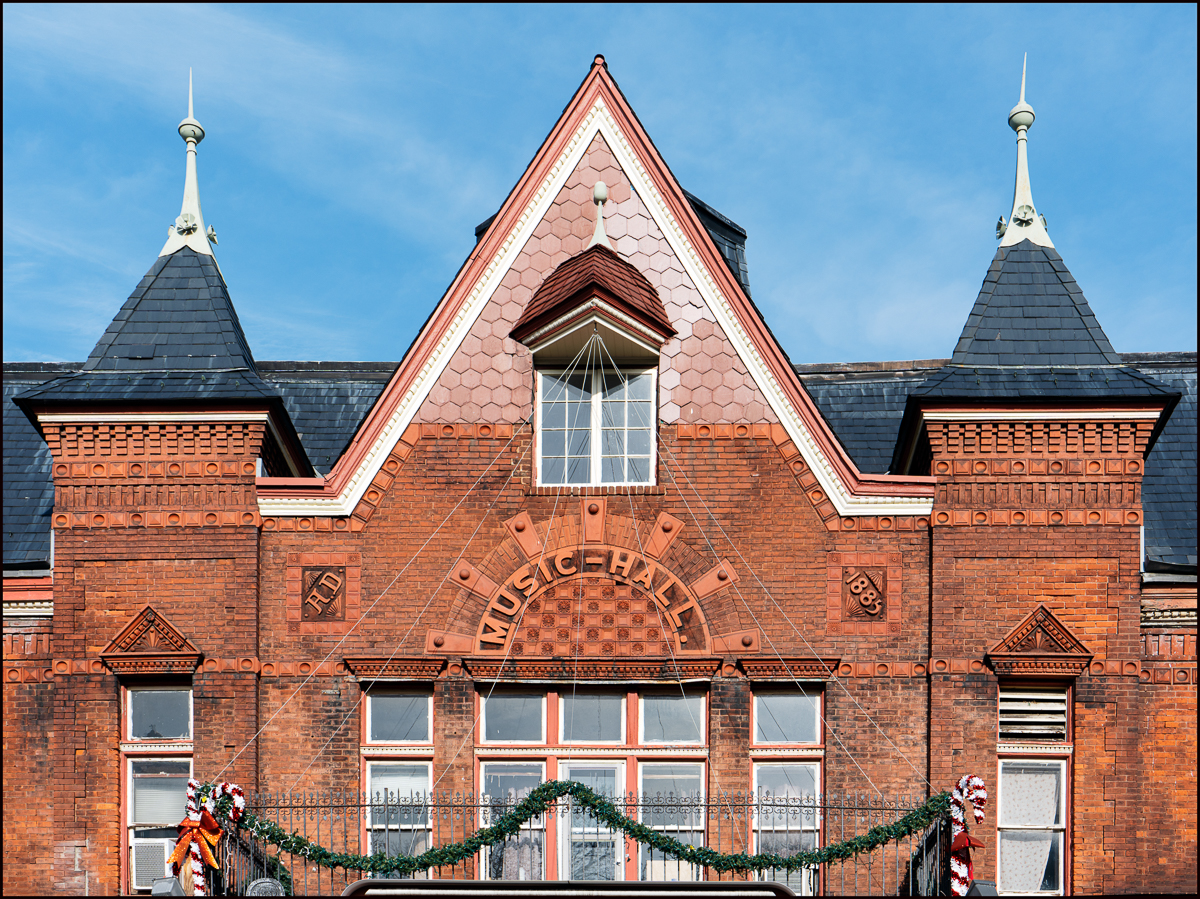
A Walk around Tarrytown – Tarrytown Music Hall

“The Music Hall, in Tarrytown, New York, United States, is located on West Main Street downtown. It is a brick structure in the Queen Anne architectural style erected in the late 19th century. In 1980, it was listed on the National Register of Historic Places.

It is the oldest theater in Westchester County still used as a theater, and considered one of the county’s finest non-residential applications of the Queen Anne Style. In 1901 it was one of the first theaters to show the new form of entertainment called motion pictures. Dave Brubeck, Louis Armstrong and Miles Davis are among the musicians who have performed there. Many classical music performances have been recorded there to take advantage of its excellent acoustics. It is one of only 6% of theaters in the United States built before 1900.

It closed in 1976 due to neglect and structural problems. Shortly after it was listed on the Register, a local not-for-profit bought it and restored it. It has remained in operation since it was reopened a few years later, with several other renovations. More notable artists have performed there since then and it has been used in several films and television commercials.” (Wikipedia).

Taken with a Sony A7IV and Sony FE 28-75 f3.5-5.6 OSS.
A Walk around Tarrytown – A short detour along Main Street

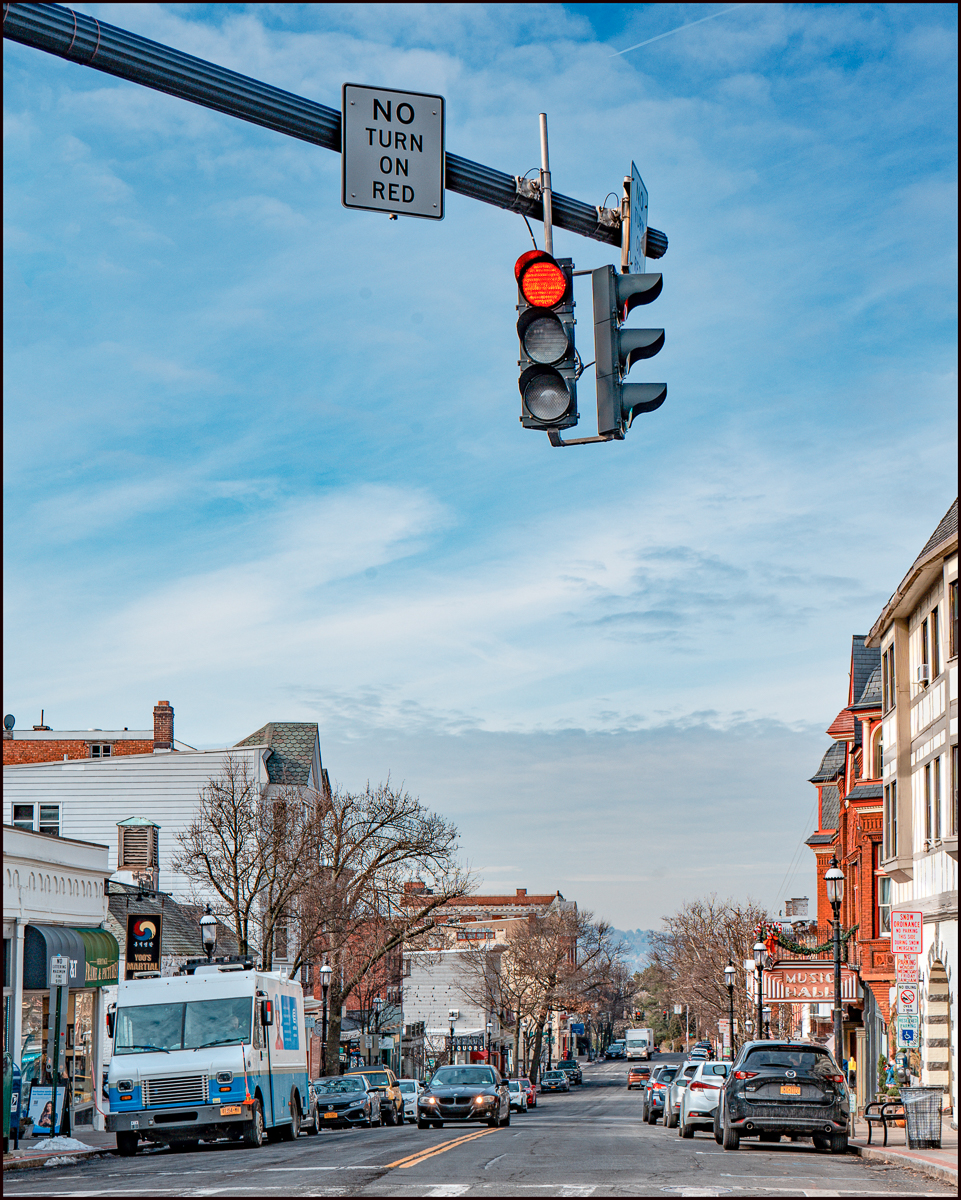
Most of my walk took me along Route 9 (Albany Post Road), but I made two short detours: first down Main Street and the second along the Grove Street Historic District. This is the view down Main Street as it makes it way downhill to the Hudson River. In the picture it looks almost as if you can see snow capped mountains in the distance. You can’t. What you see are merely cloud formations. On the right is the historic Tarrytown Music Hall of which more later.

Taken with a Sony A7IV and Sony FE 28-75 f3.5-5.6 OSS.

A Walk around Tarrytown – World War I memorial

“The bronze statue was designed and sculpted by Joseph P. Pollia, a New York Sculptor. Pollia was born in Italy in 1893 moving to America he lived in the Bronx, NY, dying in 1954. He trained at the school connected to the Boston Museum of Fine Arts. Pollia sculpted many memorials during his life. Two notable sculptures of his are the Spanish-American memorial on San Juan Hill in Cuba and a statue of Union General Philip Henry Sheridan at Sheridan Square in NYC. In 1934, Pollia made a Peace Statue which depicted a WWI soldier, in Orange, MA. It was dedicated to the residents of Orange who served in the war. A bronze plaque at the base reads: ‘It Shall Not Be Again.’ In 1935 he made a sculpture of John Brown the abolitionist, and a slave boy, for John Brown’s farm in North Elba near Lake Placid, NY. Pollia was also the sculptor of the Tarrytown NY, World War Oe Memorialfamous Stonewall Jackson Statue at the Manassas (or Bull Run) Battlefield in Manassas Virginia for the National Park Service. It seems that public reaction from veterans and members of Confederate organizations caused a bit of a situation. It was dubbed the ‘third’ battle of Manassas, as people thought Jackson looked to much like Union General Ulysses S. Grant and that Jackson’s mount, Sorrel, looked more like a plow horse than a prize mount. Pollia responded to his critics with ‘patience, fortitude and gallantry” according to a local newspaper. He was a member of the National Sculpture Society and the National Academy of Design.

The Tarrytown World War One memorial is located at 18 North Broadway, The Landmark Condominiums. The site used to be the former Elizabeth Van Tassel House. The Monument facing North Broadway looks toward the Hudson River to the west.

The statue is a 10′ tall full-length figure of a uniformed World War I soldier. He stands at a gravesite. His left foot rests on a small hill and his left hand rests on his knee. He holds his rifle and his round helmet in his right hand as he looks down at the grave.

The base is rough grey granite about 4’x3′. 3 Sides have bronze plaques. The bronze plaque on the front of the memorial has a large eagle at the top and reads:

MEMORIAL
TO THOSE WHO PAID
THE SUPREME SACRIFICE
IN OUR/WORLD WAR
UNVEILED MAY 30th 1927

Russell V Cantwell
James F Dick Jr
Stachy Montanaro
Kenneth Pollock
Lawrence G Spencer
Lester Storms
Waslaw Wolpiuk
William C Wright Jr.

LET THOSE WHO COME AFTER
SEE TO IT
THAT THEIR NAMES BE NOT
FORGOTTEN

On the north and south face of the memorial are a pair of plaques dedicated to the men of Tarrytown (A thu K (north) (L thru Z (south), Glenville and East View.

TO HONOR THOSE OF TARRYTOWN, NY
WHO SERVED THEIR COUNTRY IN
1917 – THE WORLD WAR -1919

There is a small marker for Russell V. Cantwell – US Navy located about 20 feet diagonally from the monument under a tree. Cantwell died at sea.” (Adventures in History)

Taken with a Sony A7IV and Sony FE 28-75 f3.5-5.6 OSS.

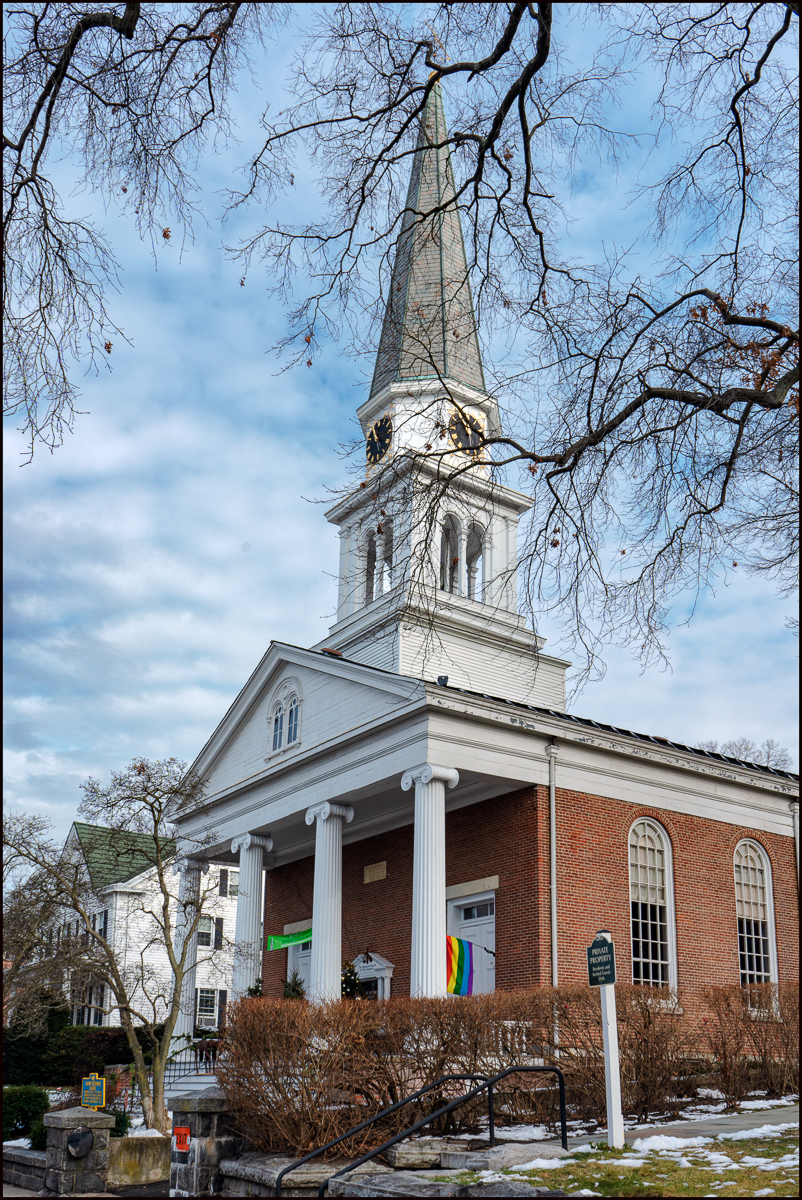
A Walk around Tarrytown – Reformed Church of the Tarrytowns

“The Reformed Church of the Tarrytowns in Tarrytown, New York, serves both Tarrytown and Sleepy Hollow, New York. It was constructed in 1837 as an extension of the Old Dutch Church of Sleepy Hollow to serve the Tarrytown community.

The new community of Dutch Reformed would have had its own Elders and Deacons and shared a minister with the Old Dutch Church of Sleepy Hollow. That church has a similar arrangement with the Dutch Reformed at Cortlandt Manor dating from 1697 when the Sleepy Hollow community was first recorded as established, though the structure had been completed in 1685 and the community had been there for long before. The Cortlandt Manor community had its own Elders and Deacons but recognized the community at Sleepy Hollow as its head, and regularly went down to the village for services and to record their births and marriages.

The community at Tarrytown became independent from Sleepy Hollow in the 1850s and soon after dropped the “Dutch” association from its name. As the Sleepy Hollow community diminished and the Old Dutch Church of Sleepy Hollow became less used, the Tarrytown community adopted the name for their landmark church the Reformed Church of the Tarrytowns, adding that it was a “continuation of the Old Dutch Church of Sleepy Hollow.”

Presenting an impressive façade on North Broadway, the structure’s steeple remains the highest point on North Broadway and the tallest physical structure in Tarrytown, despite not being built on the heights of the city. The church’s porch of four columns supporting an extended pediment offers a refined architectural addition to the business district of historic Tarrytown.” (Reformed Church of the Tarrytowns Website).

Taken with a Sony A7IV and Sony FE 28-75 f3.5-5.6 OSS.