Getting into Video

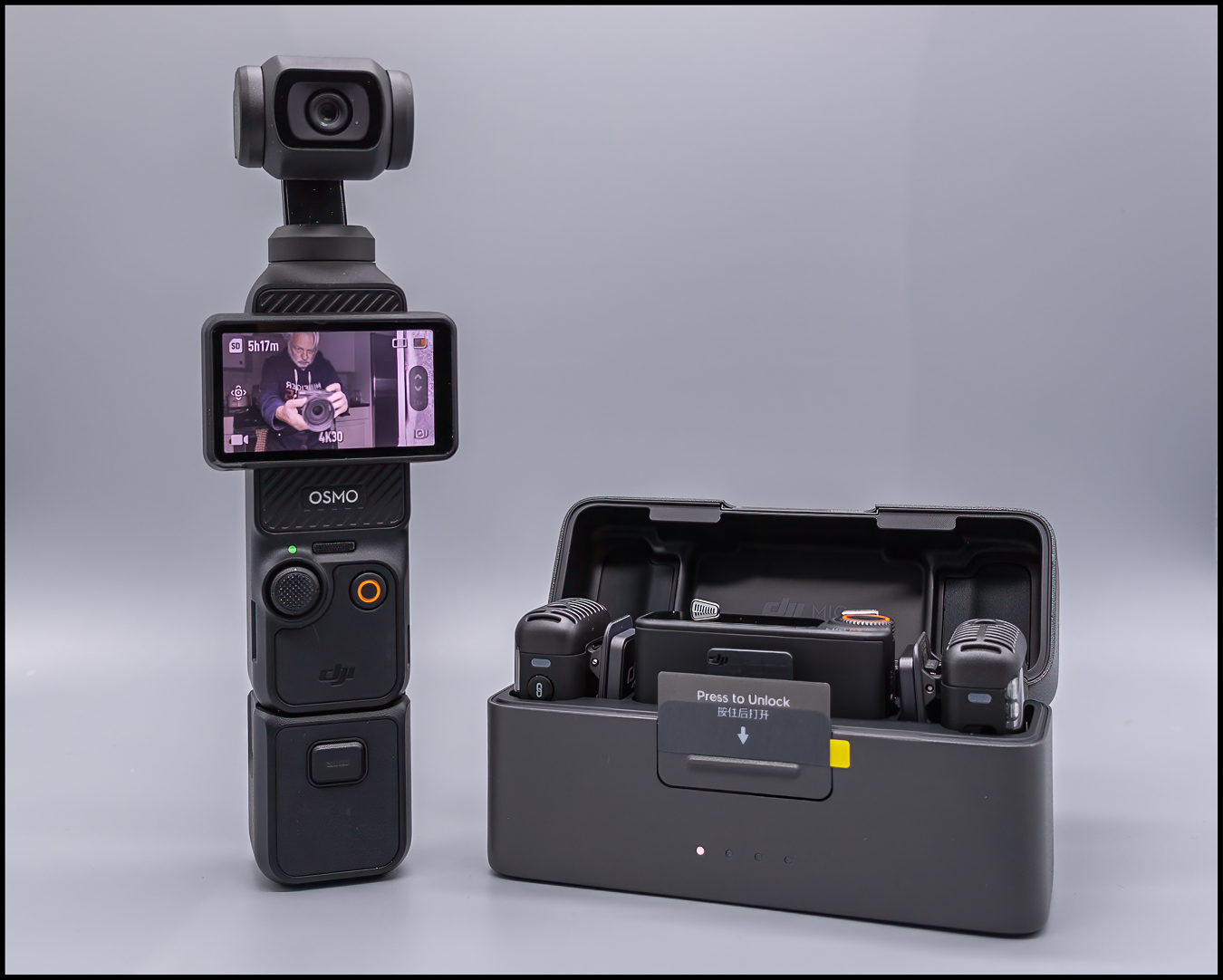
For some time now I’ve been wanted to learn more about video. When I recently bumped into a YouTube review or this combination still camera/video camera and gimbel I thought it might help me overcome whatever block I have that stops me getting into video. So I got the camera. A few months later I also acquired the DJI Mic 2. That’s what’s in the box to the right of the camera.

A review in Videomaker (See: DJI Osmo Pocket 3 review: A major step forward concludes:

The DJI Osmo Pocket 3 is a significant upgrade from its predecessor, the Pocket 2. This handheld three-axis gimbal camera boasts a one-inch sensor for improved image quality, advanced autofocus for rapid and precise focusing and enhanced low-light performance. It’s tailored for solo filmmakers seeking a portable, all-in-one solution. With a body measuring 5.5 x 1.7 x 1.3 inches and a weight of 6.3 ounces, the camera maintains its compactness while offering a two-inch rotating touchscreen for ease of use in various shooting modes.

Key features include the ability to shoot 4K video up to 120 fps and 1080p at 240 fps for slow-motion effects. The camera offers 10-bit HDR color, useful shooting modes like ActiveTrack 3.0, and panoramic capabilities without the need for a tripod. Its three-mic array captures clear audio, but there’s also support for the DJI Mic 2 for enhanced audio capture. The Osmo Pocket 3 also offers IP streaming with HD livestream capabilities and a timecode function for multi-camera synchronization. While app compatibility enhances the camera’s functionality, activation is required before use.

Overall, the DJI Osmo Pocket 3 is a worthy camera for creators who need a powerful, versatile camera that offers both high-quality imagery and professional features in a compact form factor. If you currently have the Pocket 2 and wonder if you should upgrade to the DJI Osmo Pocket 3, we’d say go for it.

I haven’t been able to use it much yet, but after a few preliminary attempts I thinks it’s something I could easily get used to. Stay tuned.

Taken with a Fuji X-E3 and Sigma 18-50mm f2.8
Film Camera 2024 -3: Fujifilm Instax Square SQ-6

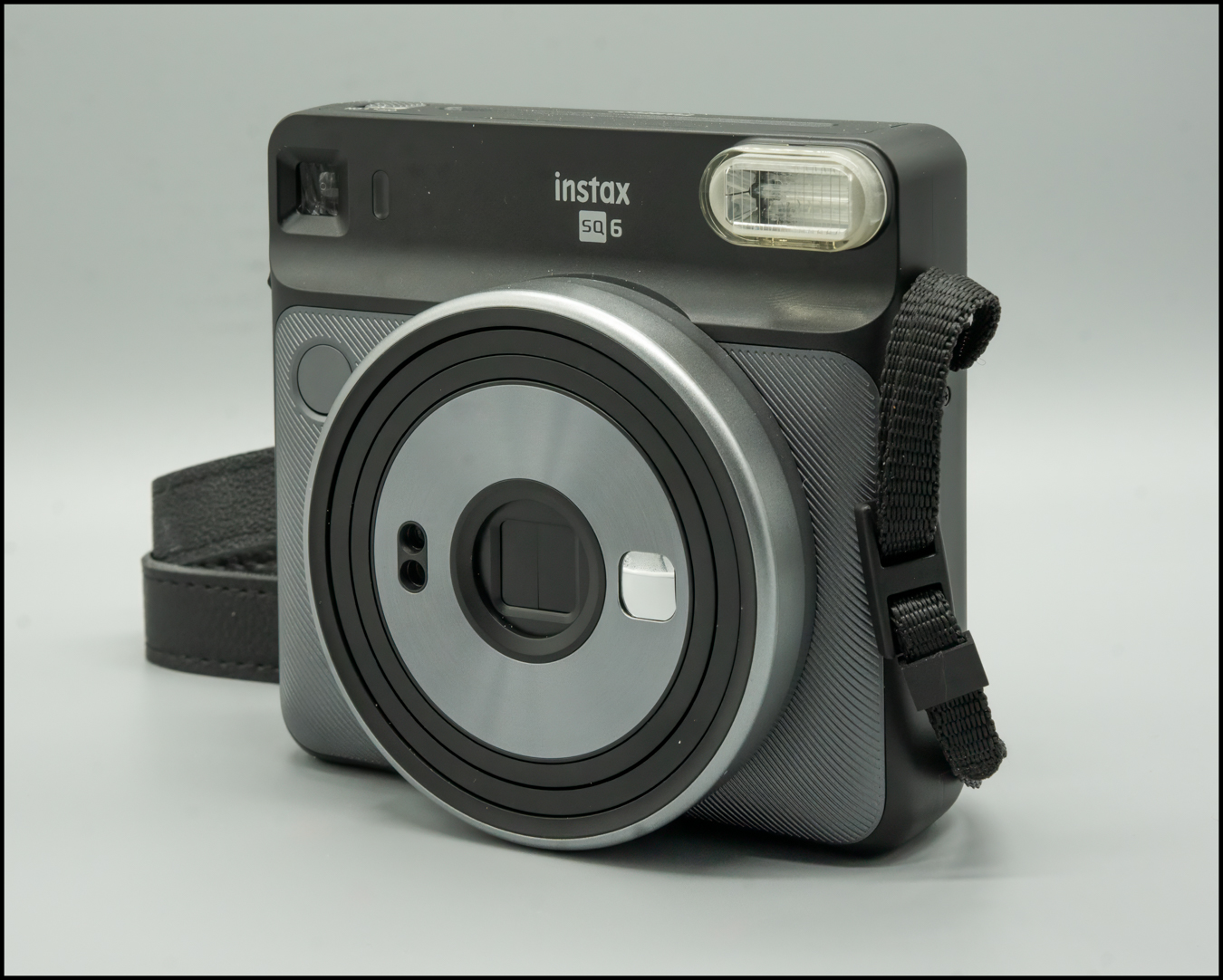
Following my efforts with a Polaroid SX-70 (See: Film Camera 2024 -1: Polaroid SX-70 and Film Camera 2024 -1: Polaroid SX-70 – Results) and a Polaroid I2 (See: Film Camera 2024 -2: Polaroid I2 and Film Camera 2024 -2: Polaroid I2 – Results) I decided I’d try camera from the only other major instant camera maker: Fujifilm.

It’s a pretty simple camera compared to the two cameras mentioned above. A review in Wired describes it well:

…it’s a straightforward Fujifilm camera. It has a few modes of note: a macro function to let you focus on closer objects, a selfie mode, a double exposure mode, and even a simple exposure compensation feature to let you lighten or darken the image. These are what I expected, although the Lomo’Instant Square also came with a multiple-exposure mode and a bulb setting, both of which can be handy if you plan on getting crazy with your shots.

Another newly acquired camera

A friend recently gave me some old cameras. There were two film cameras: a Minolta Maxxum 7000 and a Pentax MG. I already have a couple of Maxxum 7000s, and I wasn’t very interested in having another one. I was momentarily interested in the Pentax until I realized that the MG was the lowest in the line that included the much better MX, ME, ME Super, MV etc.. In any case the MG’s mirror was stuck in the up position and the film advance wouldn’t…er…advance. I might keep it as an illustration of a Pentax MG, but I don’t see ever using it.

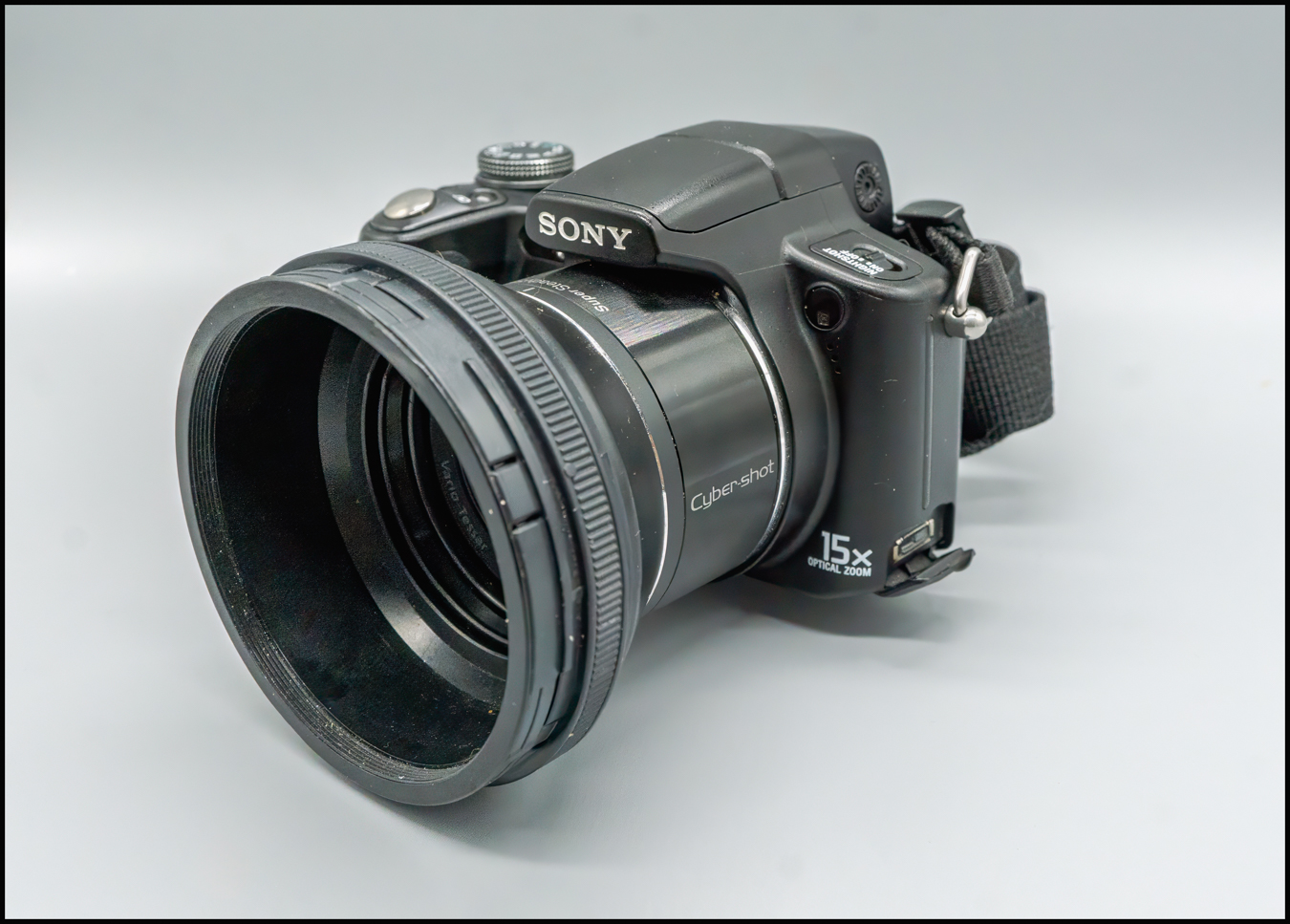
That just left the other two cameras: A Kodak P880 and this one: a Sony DSC-H50. This was fine because nowadays I’m mostly interested in trying older digital cameras.

I couldn’t use the P880 immediately because I didn’t have a memory card that was old enough, and low capacity enough to work with the camera: the smallest memory card I had was 4gb and it appears that the camera would support only up to 2gb. So off to see if I could find one.

That just left the Sony DSC-H50 to try, which I did. How did I like it? Well, actually quite a lot. For social media posts and small prints, it’s more than adequate. The things I liked most were:

  • Lots of features
  • Tilting LCD
  • The size (small) and weight (light).
  • Ease of use. I figured out how to use it quickly and with no difficulty.
  • The images are sharp.
  • The colors are pleasing.
  • The zoom lens: very broad range (31–465 mm f/2.7-4.5) for a camera this small.

What I didn’t like:

Of course, you have to bear in mind that this is a sixteen-year-old camera and as such suffers from the technological limitations of the day: low resolution, noise related problems, limited ISO, less than stellar focus etc. But I knew that would be the case.

There were a few disappoints though:

  • No RAW.
  • Terrible chromatic aberration
  • Control pad/scroll wheel combination is fiddly
  • Menu/Home options are confusingly ordered and divided up

There’s are a number of reviews around. After perusing a number of them I think I liked this one most.

For more pictures taken with this camera see here.

Film Camera 2024 -2: Polaroid I2 – Results

So how did my foray with the Polaroid I2 go.

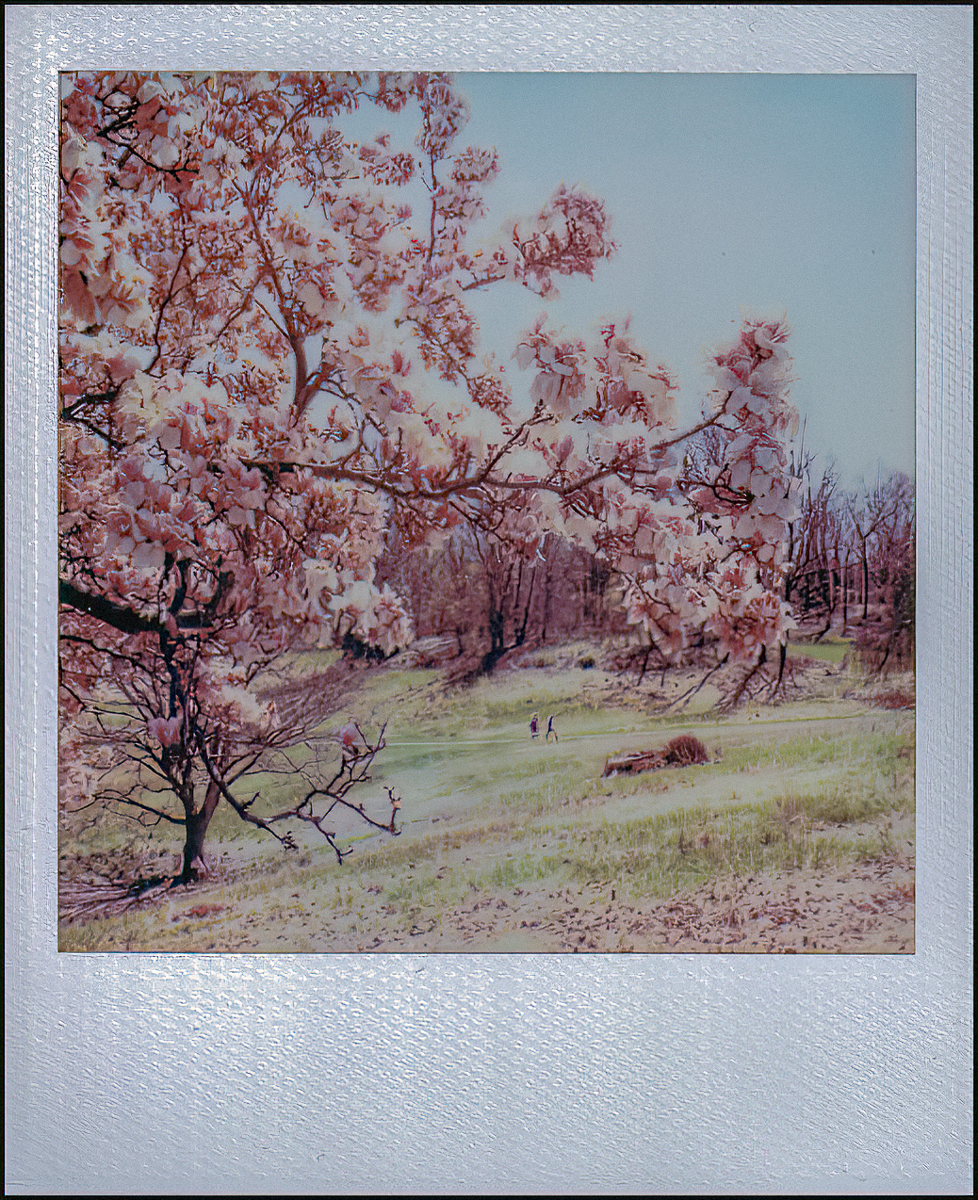
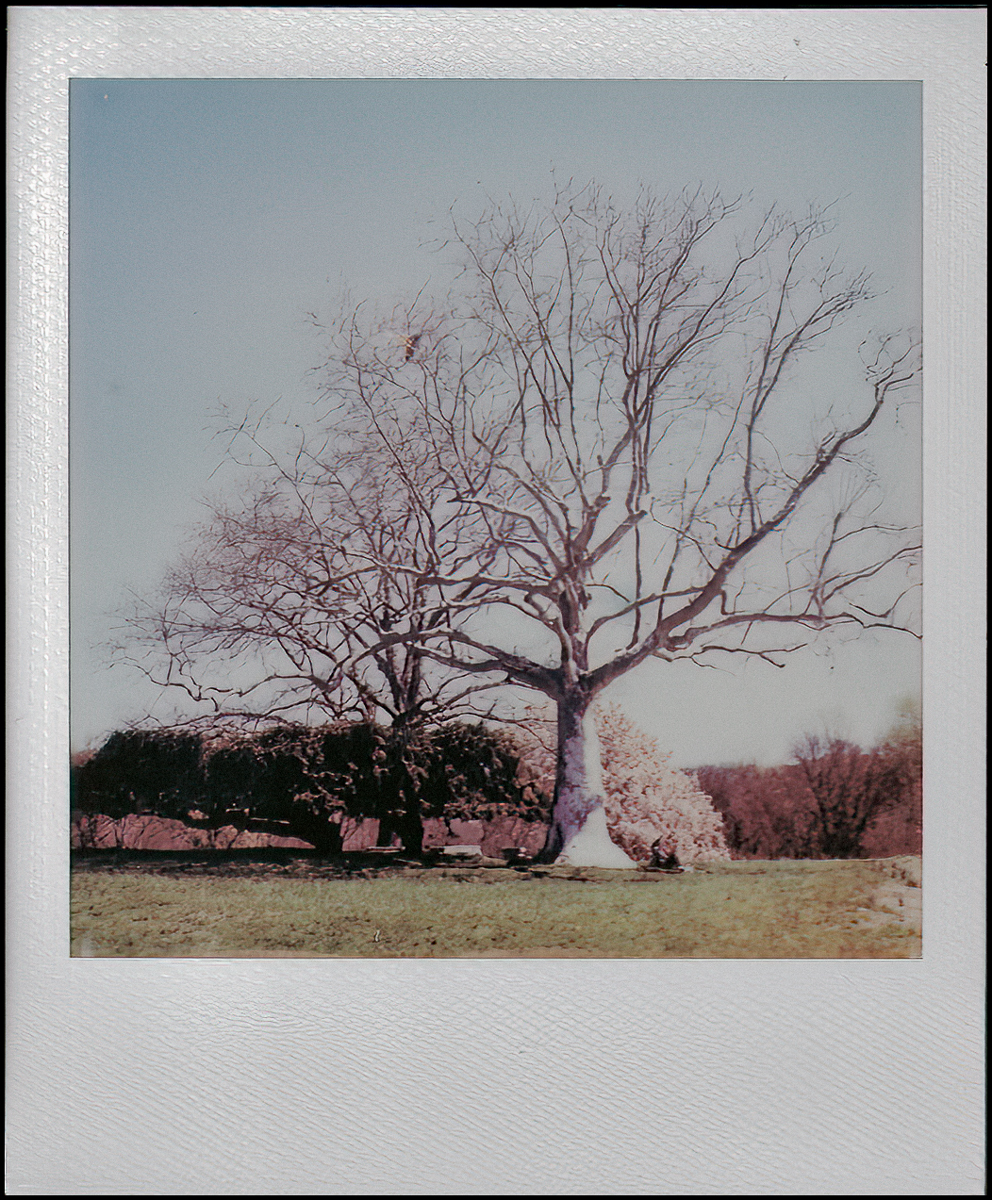
It went better than my first effort with the SX-70. The camera is clearly working as intended. The picture above, and the three below are pretty much straight out of the camera and onto the scanner.


I was a bit disappointed, but on further consideration I decided that the poor quality of the photographs is most likely the fault of the photographer (i.e. me). One of the main reasons for this is that I’m stubborn. I’d read on a number of websites that the camera didn’t work well in auto mode: i.e. it tended to overexpose and select a slow shutter speed, which introduces blur. I’d been told, but I decided to find out for myself. I can confirm that what the other sites had said was true.

Of course, after I’d scanned them, I had to fiddle around with them in Lightroom. I didn’t want to spend a lot of time on them, so they’re over sharpened in many cases. See the pictures below for how they looked after I’d “processed” them.


There were numerous constraints: Apart from the SX-70 mentioned above I’d only ever used a polaroid camera once, and that was about 50 years ago, and it was one of the “cheap and cheerful” models; This was the very first time that I was using this particular camera; I don’t know much about scanning polaroids and I’m not much good at scanning at the best of times; and I’d chosen to use a mode that everything I had read told me not to use.

So, bearing mind the constraints I was satisfied with the results. I’ll certainly use the camera again (I a paid a lot for it), but next time I won’t use the auto mode. Instead, I’ll probably use either Aperture priority (usually my preferred mode) or maybe even full manual.

Film Camera 2024 -2: Polaroid I2

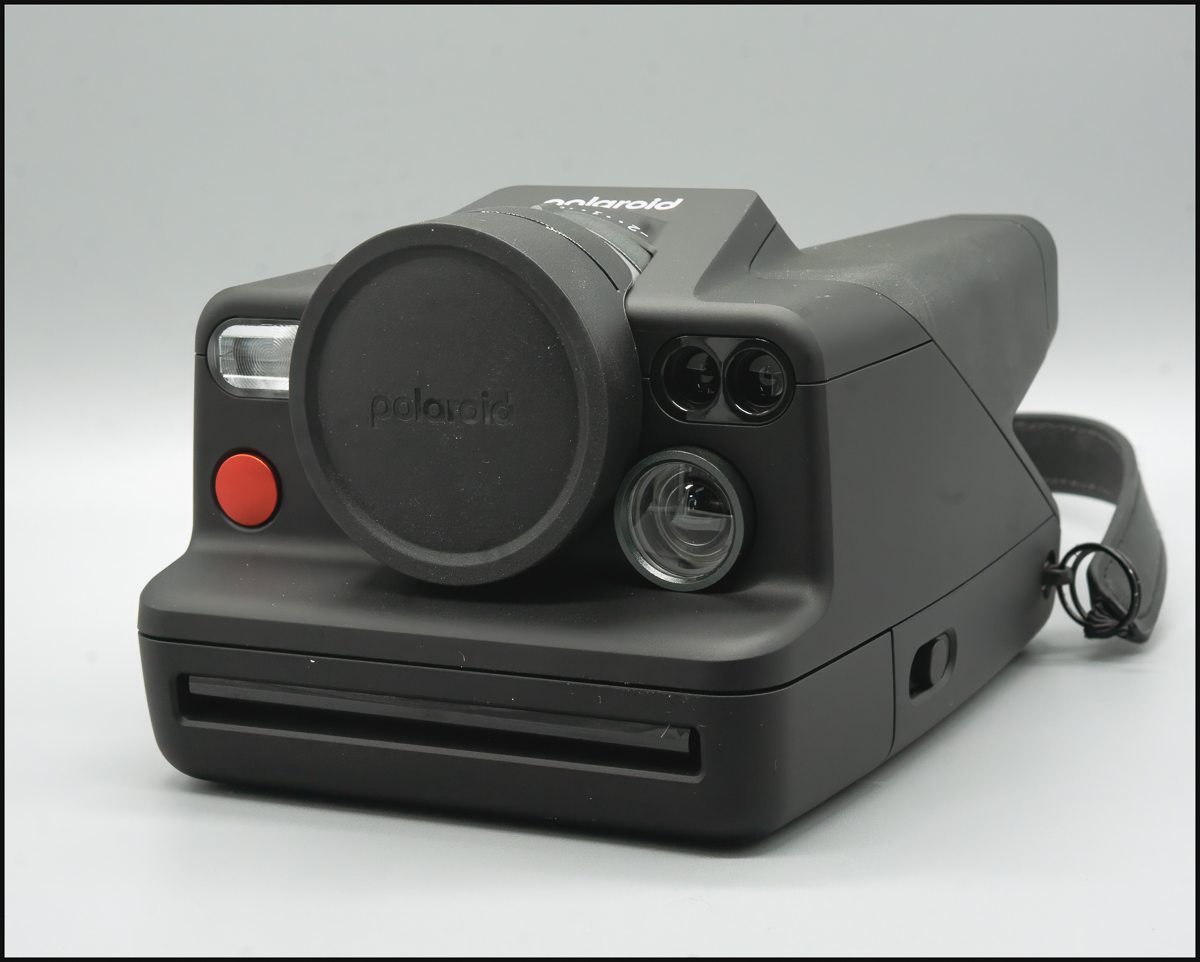
I started my adventures (or maybe misadventures) in instant photography with an old Polaroid SX-70. It didn’t altogether work out (See: Film Camera 2024 -1 and Film Camera 2024 -1: Polaroid SX-70 – Results). Determined to continue with the adventure, I considered getting the SX-70 checked out and fixed. But then it occurred to me that it is after all an old camera and might well stop working entirely in the near future. And it’s a lovely piece of industrial design that I wouldn’t mind having it as a shelf queen. So, while not entirely ruling out the possibility of getting it fixed at some point I decided to get another camera: a more recent polaroid camera. Eventually I decided to go for broke and get Polaroid’s top of the line camera: The I2, Polaroid’s most sophisticated camera of all time.

There’s a good review of it on Digital Review: Polaroid I-2 review: The best instant camera doesn’t come cheap.

According to the review the key specs are:

  • 98mm f/8 lens (∼38mm f/3.2 equiv.)
  • LiDAR autofocus
  • Manual & auto exposure modes
  • Compatible with i-Type, 600 and SX-70 film
  • Optical viewfinder with LCD info display
  • Internal battery rechargeable via USB-C
  • Rear OLED info display
  • 2.5mm flash port
  • Metal tripod mount
  • Bluetooth enabled

The review concludes:

What we like

  • Sharp 98mm lens with a fast equiv. aperture (for an instant camera)
  • Manual and auto exposure control
  • Exposure compensation wheel
  • Accurate center point AF
  • Good build quality
  • Great battery life

What we don’t like

  • Pricey
  • Viewfinder glare is distracting, worse for glasses wearers
  • Viewfinder info display is hard to read
  • Max shutter speed of 1/250 too slow for some subjects
  • No manual focus mode

Pricey but capable, the I-2 is the best Polaroid camera money can buy in 2023. Its suite of full manual, auto, and semi-auto exposure modes provides plenty of flexibility. The sharp lens outputs fantastic shots and autofocus works with solid reliability. Plus, the camera handles well and looks even cooler.

However, for a lot of folks, the core features of the Polaroid I-2 are going to be overkill. This is especially true given the point-and-shoot style Polaroid Now camera is just $95. It doesn’t have as nice a lens or manual controls but it is $500 cheaper. Just think of all the film you could buy with that savings. (Though the prints are significantly smaller.)

But the I-2 isn’t meant to appeal to the masses, rather it’s a niche product for a very specific type of diehard Polaroid shooter. These are folks clinging for dear life to their creaky, twice-rebuilt SX-70 cameras (I know a few). And I believe these are the people who are going to appreciate the I-2 and all it has to offer, even if the price is a bit much to stomach.

The Polaroid I-2 is the ultimate instant photographer’s camera, with full manual controls, accurate autofocus and a super-sharp lens. But it is pricey and the sheer number of features may overwhelm some users.

Good for: Deep-pocket instant shooters. Anyone craving total exposure control over their instant photos. Polaroid diehards.
Not good for: Those who want an affordable and easy way to snap Polaroids.