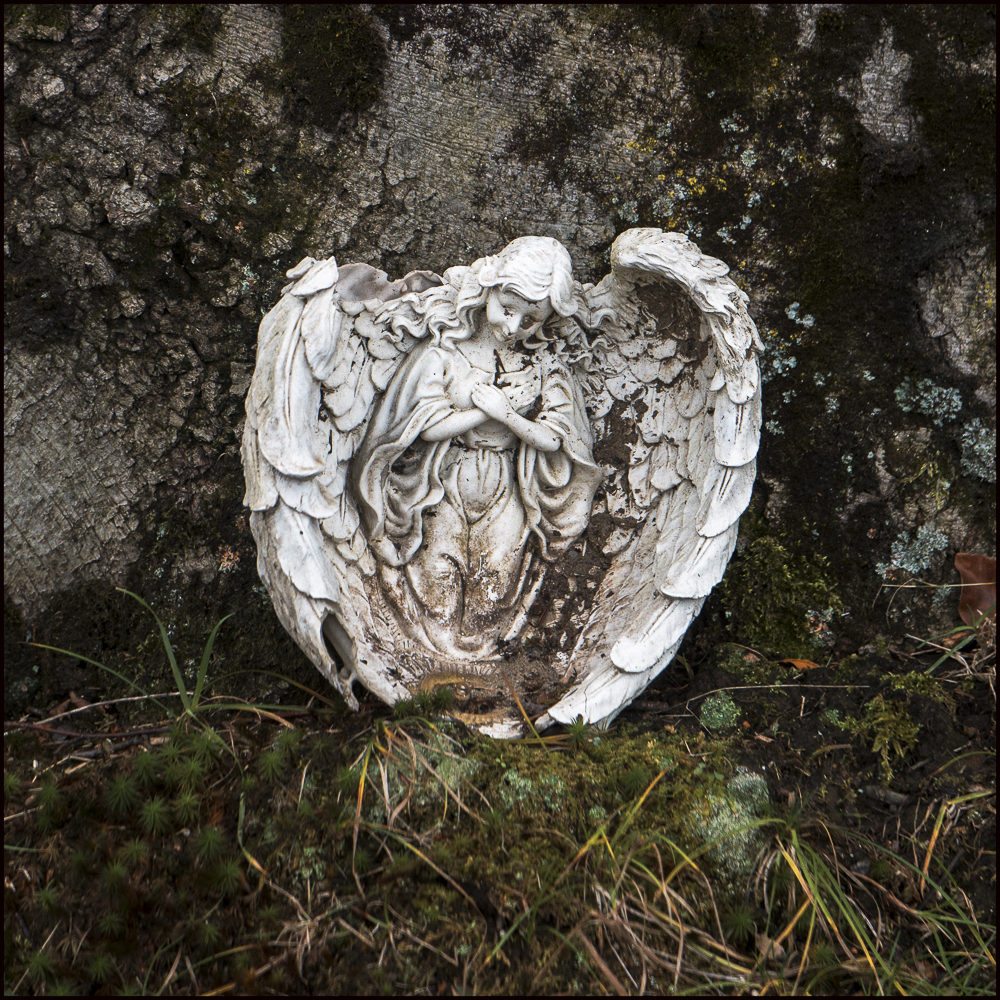
A few statues.
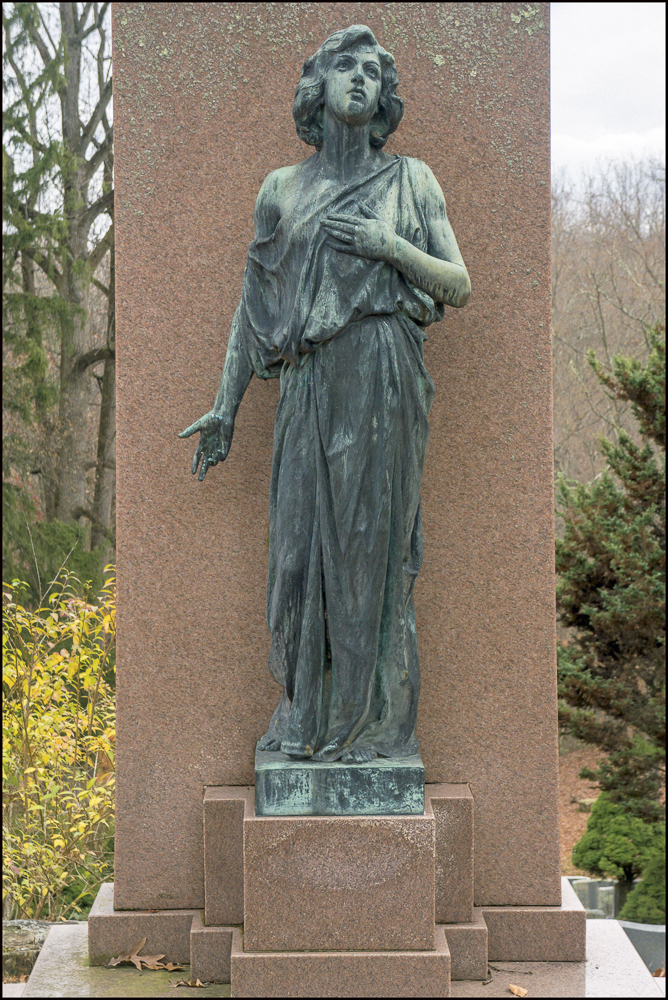
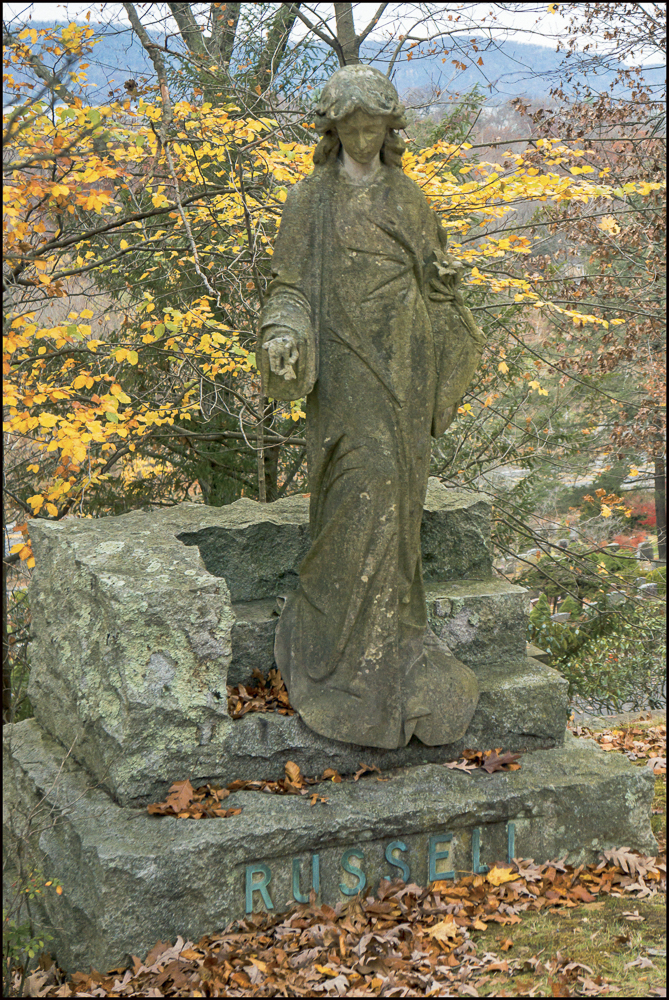
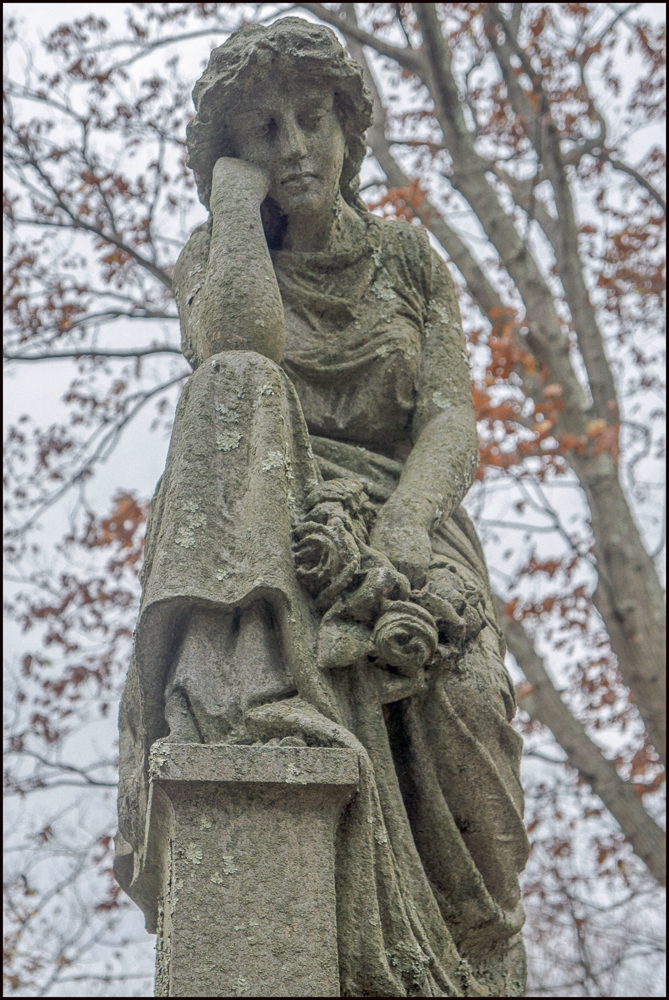
Taken with a Sony A6000 and 18-55mm f3.5-5.6 OSS kit lens.
Photographs and thoughts on photography and camera collecting

A few statues.
Taken with a Sony A6000 and 18-55mm f3.5-5.6 OSS kit lens.
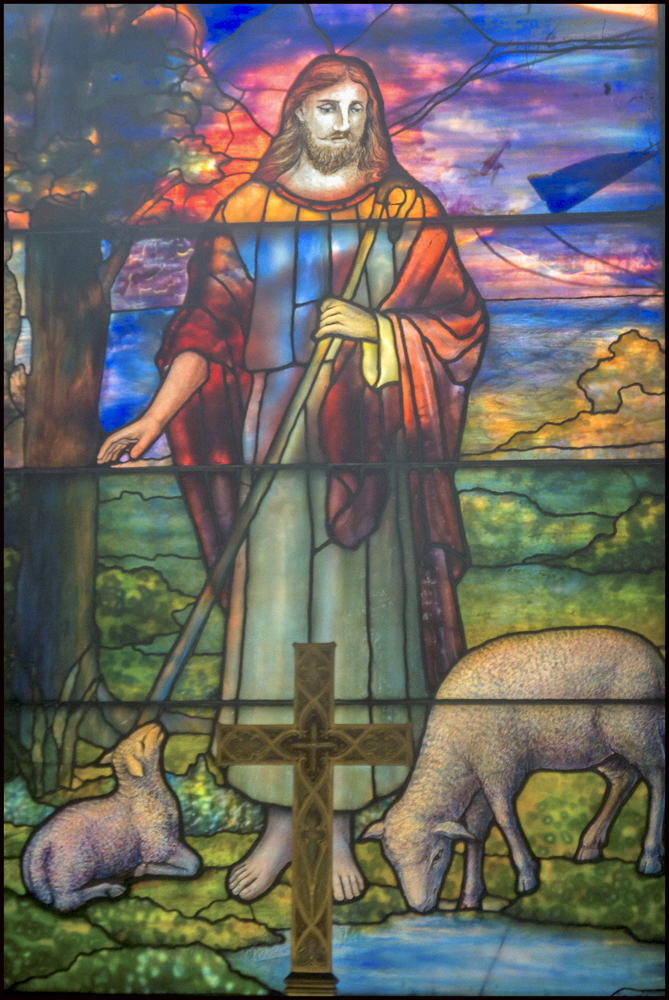
A couple of fine examples of stained glass.
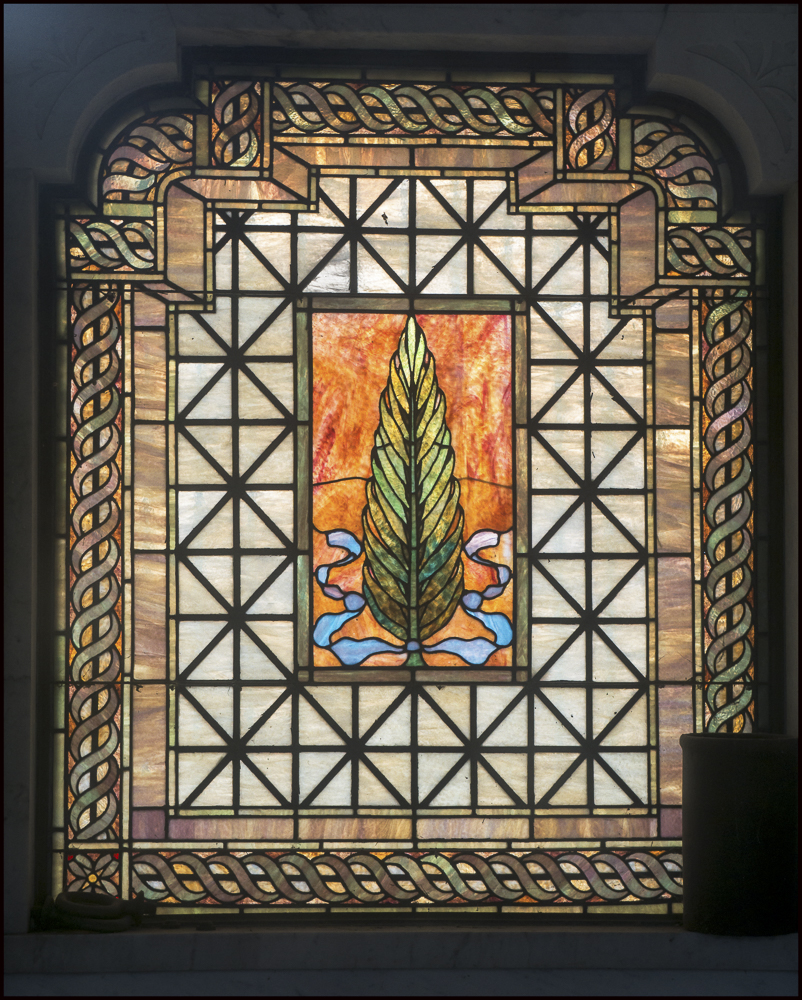
Taken with a Sony A6000 and 18-55mm f3.5-5.6 OSS kit lens.
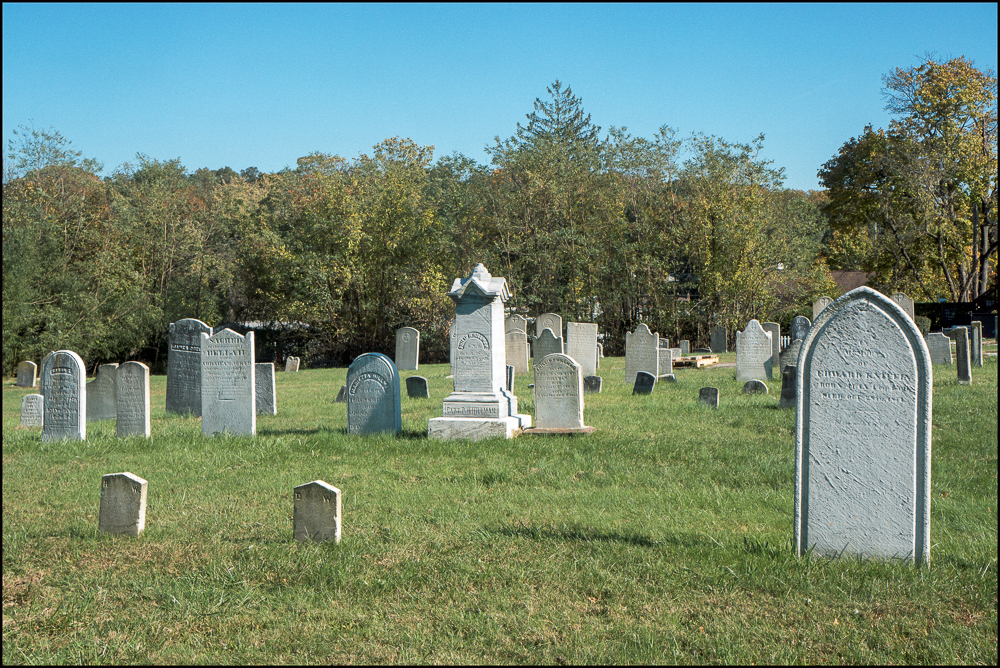
Almost directly opposite the house with the wrought iron railings described in my last post is a small and unassuming cemetery. It’s called the Little White Church Cemetery and its interesting for a number of reasons:
1. There is no little white church. “On 43 Ashford Avenue in Dobbs Ferry, on nearly 3 acres of land, stands a peculiar sight, a cemetery named for a church, yet there is no church on this ground. Even if a church stood there, the name of the cemetery would not match the name of the church, for surely, no one would actually name their church The Little White Church. The land on which this cemetery now stands once belonged to Dirck Storm, who at some point in the 1800s, sold it to Martin and Rebeccah Lefurgy. In 1823 the couple sold it to a group of Presbyterian ministers looking to form a church. Two years later, they officially founded their church. At the time of its founding the congregation consisted of only six members. The name of this church was the South Presbyterian Church of Greenburgh (I can only assume that the church was small and white and popularly known as “The Little White Church”), which still exists today, although at a different location. Its members gave it the nickname The Little White Church. In 1842, Martin and Rebeccah Lefurgy’s son, Isaac, gave the church an additional half acre. The church conducted religious services and burials on the property from the time of its founding until 1869 when it moved to a new location on 515 Broadway. The building was torn down in 1883 and the property was then sold to Dr. Champion Judson who on his death deeded it to The Village of Dobbs Ferry”.
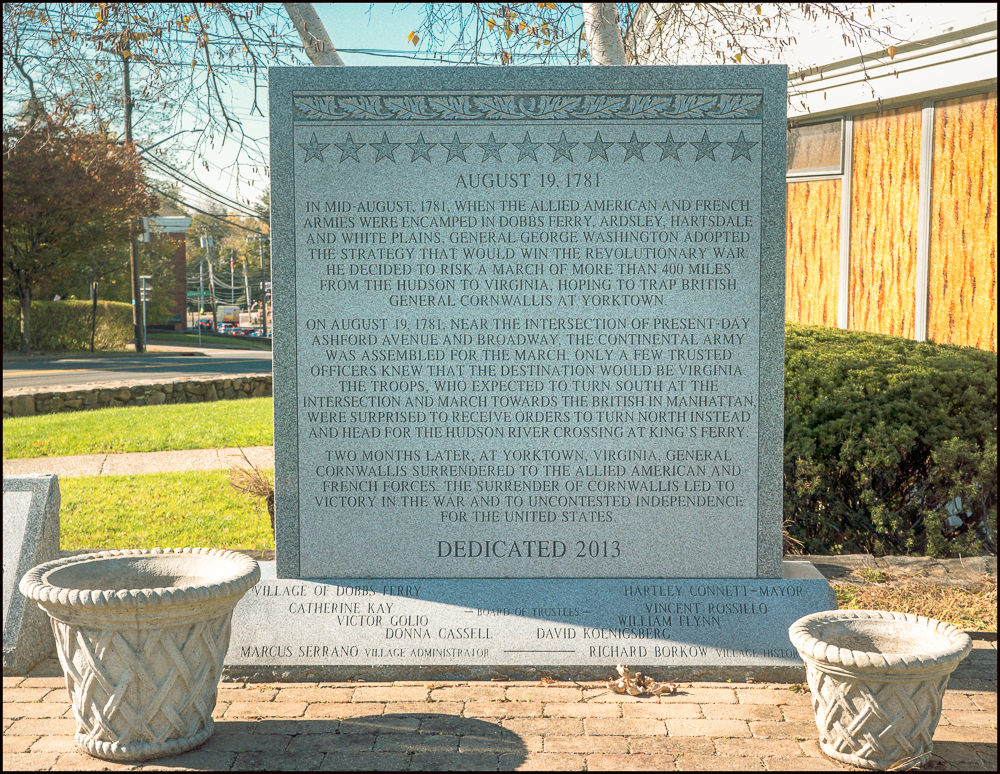
2. There is an interesting Revolutionary War connection. A monument in the cemetery reads: “August 19, 1781. In mid-August 1781, when the allied American and French armies were encamped in Dobbs Ferry, Ardsley, Hartsdale and White Plains, General George Washington adopted the strategy that would win the Revolutionary War. He decided to risk a march of more than 400 miles from the Hudson to Virginia. Hoping to trap British General Cornwallis at Yorktown.
On August 19, 1781, near the intersection of present day Ashford Avenue and Broadway, the Continental Army was assembled for the march. Only a few trusted officers knew that the destination would be Virginia. The troops, who expected to turn South at the intersection and march towards the British in Manhattan were surprised to receive orders to turn North instead and head for the Hudson River Crossing at Kings Ferry.
Two months later, at Yorktown, Virginia General Cornwallis surrendered to the allied American and French forces. The surrender of Cornwallis led to victory in the war and to uncontested independence for the United States. Dedicated 2013”.
3. A number of Civil War soldiers (including one general: Brigadier General James Bowen) are buried here.
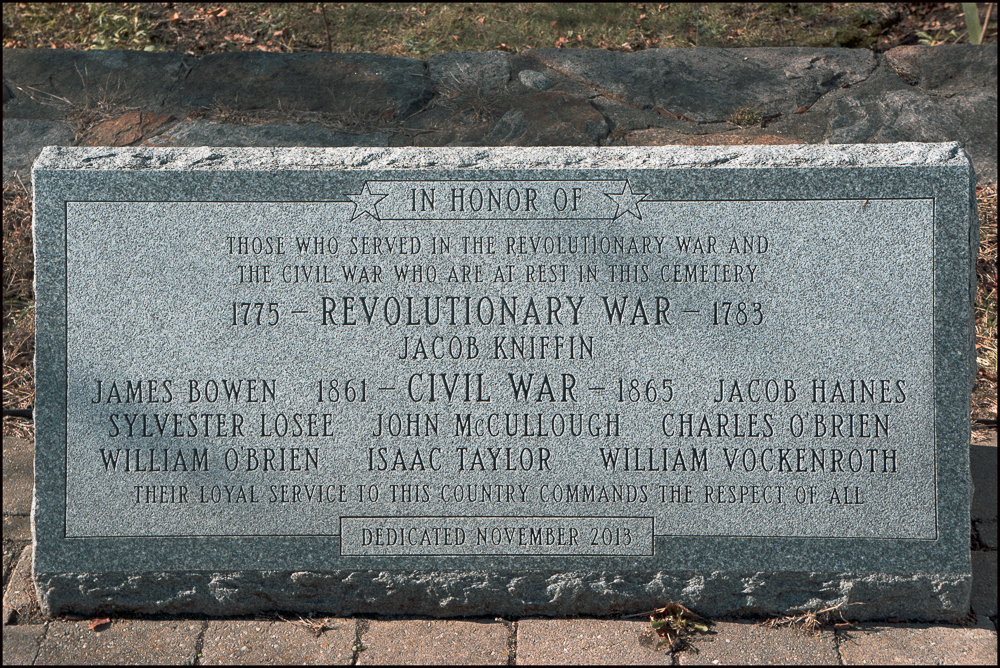
Taken with a Sony A6000 and E 18-55mm f3.5-5.6 OSS
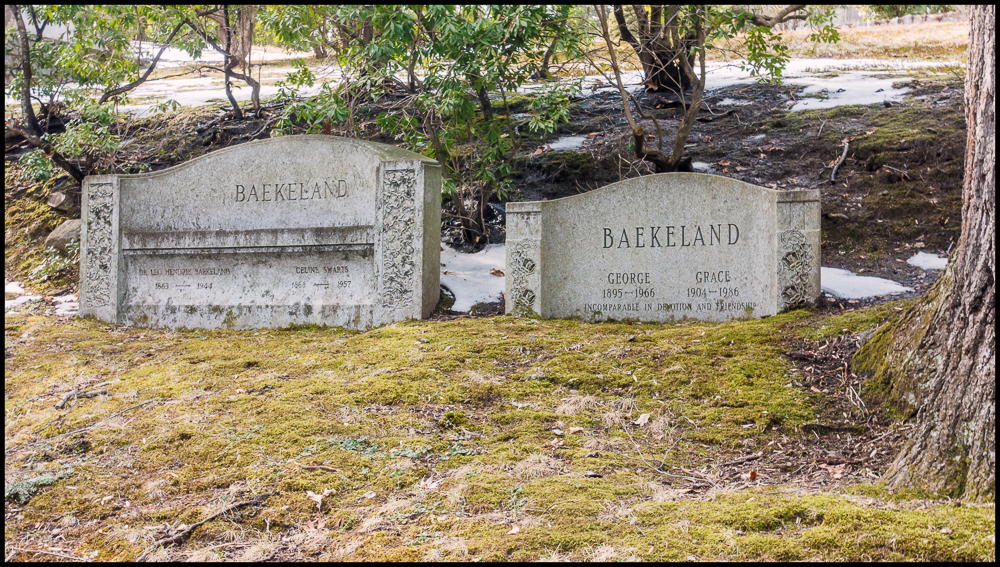
In the preceding post I mentioned that I was thinking about collecting bakelite cameras. On doing a little more research I was surprised to find that he died in Beacon, NY – quite close, about a 20 minute ride from one of our houses. I was even more surprised to discover that he was buried in Sleepy Hollow Cemetery, less than 10 minutes away from our other house. Of course I went to see his grave.
After initial success developing Velox, a photographic paper that would allow enlargements to be printed by artificial light. He turned his attention to synthetic resins:
By the 1900s, chemists had begun to recognize that many of the natural resins and fibers were polymeric, a term introduced in 1833 by Jöns Jacob Berzelius. Adolf von Baeyer had experimented with phenols and formaldehydes in 1872, particularly Pyrogallol and benzaldehyde. He created a “black guck” which he considered useless and irrelevant to his search for synthetic dyes. Baeyer’s student, Werner Kleeberg, experimented with phenol and formaldehyde in 1891, but as Baekeland noted “could not crystallize this mess, nor purify it to constant composition, nor in fact do anything with it once produced”.
Baekeland began to investigate the reactions of phenol and formaldehyde.He familiarized himself with previous work and approached the field systematically, carefully controlling and examining the effects of temperature, pressure and the types and proportions of materials used.
The first application that appeared promising was the development of a synthetic replacement for shellac (made from the secretion of lac beetles). Baekeland produced a soluble phenol-formaldehyde shellac called “Novolak” but concluded that its properties were inferior. It never became a big market success, but still exists as Novolac.
Baekeland continued to explore possible combinations of phenol and formaldehyde, intrigued by the possibility that such materials could be used in molding. By controlling the pressure and temperature applied to phenol and formaldehyde, he produced his dreamed-of hard moldable plastic: Bakelite. Bakelite was made from phenol, then known as carbolic acid, and formaldehyde. The chemical name of Bakelite is polyoxybenzylmethylenglycolanhydride. In compression molding, the resin is generally combined with fillers such as wood or asbestos, before pressing it directly into the final shape of the product. Baekeland’s process patent for making insoluble products of phenol and formaldehyde was filed in July 1907, and granted on December 7, 1909. In February 1909 Baekeland officially announced his achievement at a meeting of the New York section of the American Chemical Society.
In 1917 Baekeland became a professor by special appointment at Columbia University. The Smithsonian contains documents from the County of West Chester Court House in White Plains, NY, indicating that he was admitted to U. S. Citizenship on December 16, 1919.
In 1922, after patent litigation favorable to Baekeland, the General Bakelite Co., which he had founded in 1910, along with the Condensite Co. founded by Aylesworth, and the Redmanol Chemical Products Company founded by Lawrence V. Redman, were merged into the Bakelite Corporation.
The invention of Bakelite marks the beginning of the age of plastics. Bakelite was the first plastic invented that retained its shape after being heated. Radios, telephones and electrical insulators were made of Bakelite because of its excellent electrical insulation and heat-resistance. Soon its applications spread to most branches of industry.
Baekeland received many awards and honors, including the Perkin Medal in 1916 and the Franklin Medal in 1940. In 1978 he was posthumously inducted into the National Inventors Hall of Fame at Akron, Ohio.
At Baekeland’s death in 1944, the world production of Bakelite was ca. 175,000 tons, and it was used in over 15,000 different products. He held more than 100 patents, including processes for the separation of copper and cadmium, and for the impregnation of wood. (Leo Baekeland)
His final years were rather sad:
As Baekeland grew older he became more eccentric, entering fierce battles with his son and presumptive heir over salary and other issues. He sold the General Bakelite Company to Union Carbide in 1939 and, at his son’s prompting, he retired. He became a recluse, eating all of his meals from cans and becoming obsessed with developing an immense tropical garden on his winter estate in Coconut Grove, Florida. He died of a stroke in a sanatorium in Beacon, New York, in 1944. (Wikipedia: Leo Baekeland)
Tragedy continued to afflict the Baekeland family when Barbara Daly Baekeland, ex-wife of Brooks Baekeland, Leo’s grandson was murdered by her own son, Antony in 1972:
[She] had a complex and allegedly incestuous relationship with her son, Antony Baekeland, who was gay or bisexual. Baekeland attempted to “fix” her son by hiring prostitutes to have sex with him. After this failed, while the pair were living in Majorca in the summer of 1968 following Barbara and Brooks’s divorce, Barbara was alleged to have raped her son.
During his young adulthood, Antony displayed increasingly regular signs of schizophrenia with paranoid tendencies, and his erratic behavior caused concern among family friends. He was eventually diagnosed with schizophrenia; however, his father initially refused to allow him to be treated by psychiatrists, a profession he believed to be “amoral”.
In late July 1972, Antony tried to throw his mother under the traffic outside her penthouse on Cadogan Square in Chelsea, London. She was only saved by his physical weakness, and the intervention of her friend Susan Guinness. Although the Metropolitan Police arrested Antony for attempted murder, Barbara refused to press charges. Antony was subsequently admitted to The Priory private psychiatric hospital, but was released soon afterwards.
Antony then undertook sessions with a psychiatrist while living at home. The doctor became so concerned about Antony’s condition that on October 30, he warned Barbara that he was capable of murder. Barbara dismissed the doctor’s assertion.
Two weeks later, on November 17, 1972, Antony murdered his mother by stabbing her with a kitchen knife, killing her almost instantly. She was 51 years of age at the time, and Antony was 25. Police arrived and found Antony at the scene of the crime. He later confessed to, and was charged with, her murder.
Antony was institutionalized at Broadmoor Hospital until July 21, 1980, when, at the urging of a group of his friends, he was released. Upon his release, Antony, now aged 33, flew directly to New York City to stay with his 87-year-old maternal grandmother, Nini Daly. Only six days after his release, on July 27, he attacked her with a kitchen knife, stabbing her eight times and breaking several bones. He was then arrested by the New York City Police Department, charged with attempted murder and sent to Rikers Island prison.
After eight months of assessment by the psychiatric team at Rikers Island, he was expecting to be released on bail at a court hearing on March 20, 1981. However, the case was adjourned by the judge due to a delay in the transfer of his medical records from the UK. Antony returned to his cell at 3:30 PM on March 20, 1981, and was found dead there 30 minutes later, suffocated by a plastic bag.(Wikipedia: Barbara Daly Baekeland).
Taken with a Sony RX100-M3.
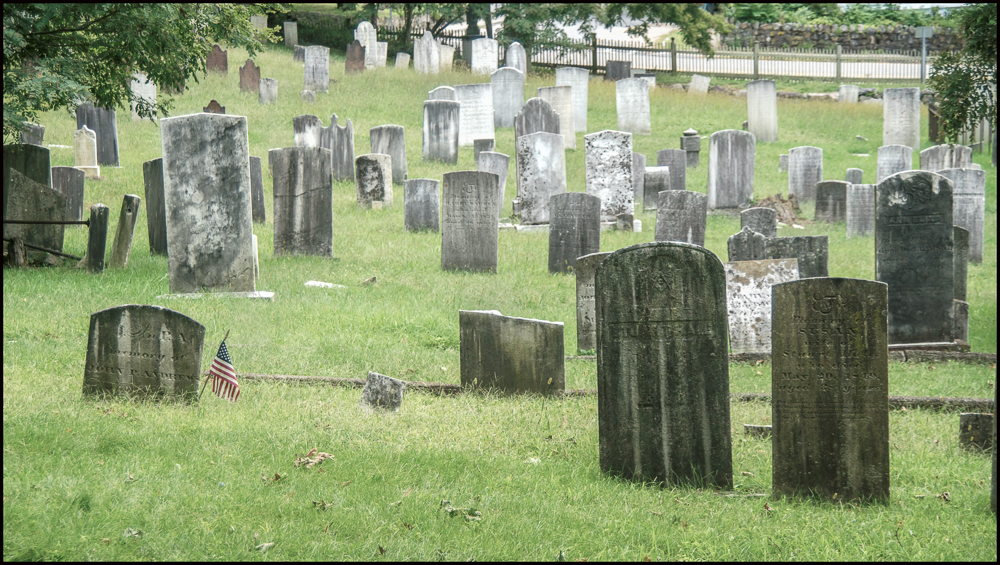
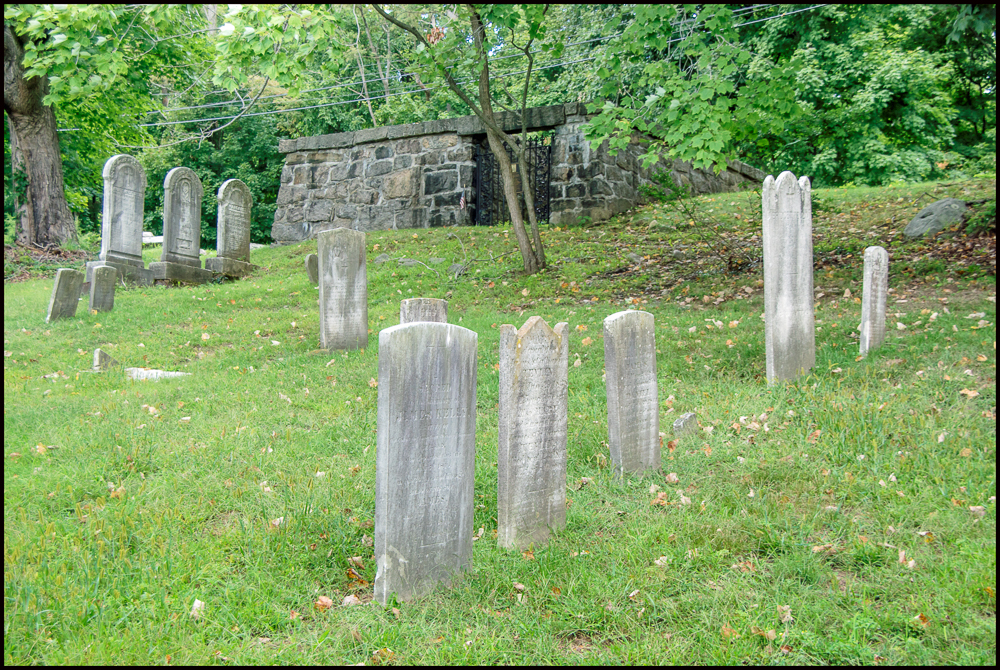
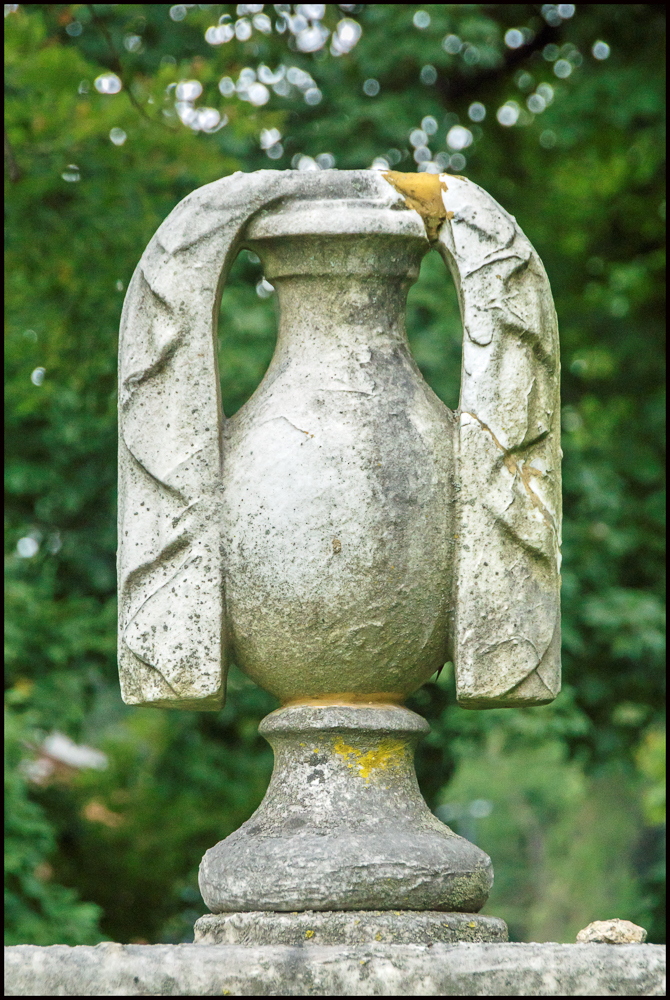
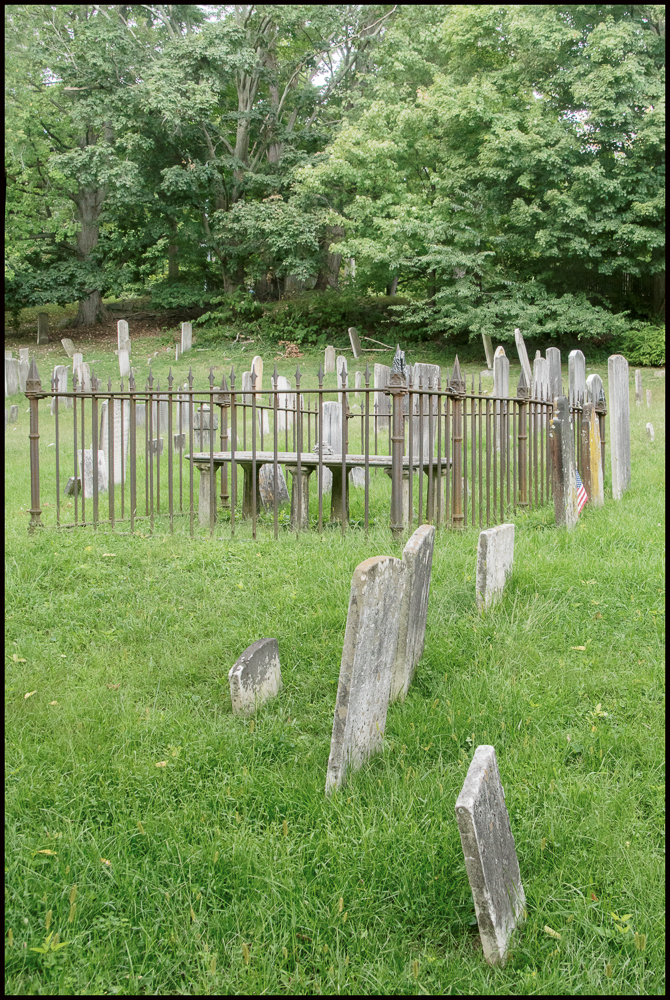
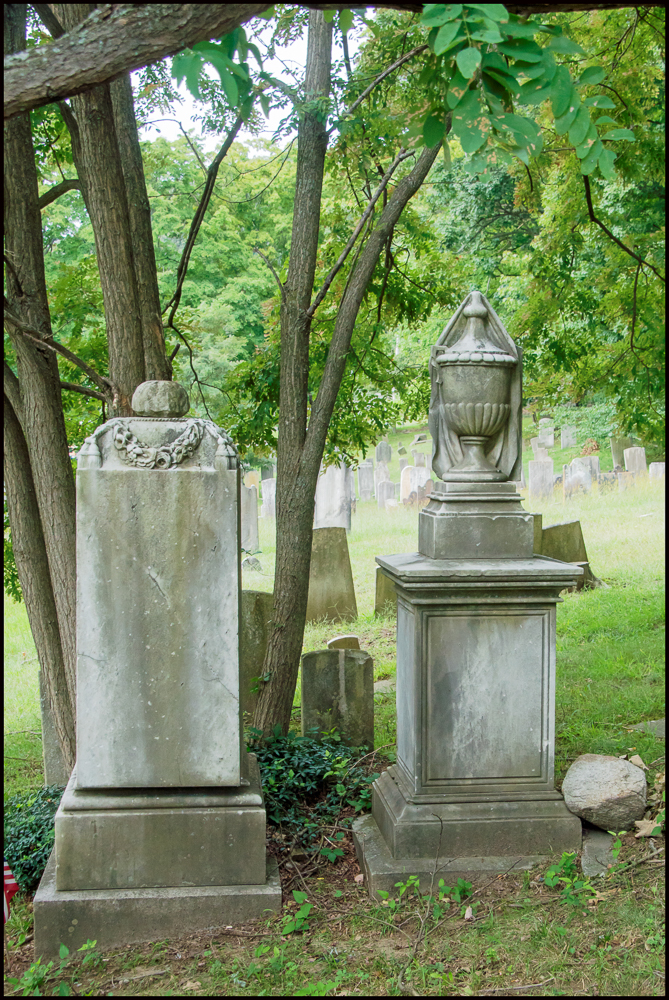
There are a number of cemeteries in Cold Spring, most of which I’ve already visited. I tried to go here once before. Unfortunately I didn’t realize that there was a smaller, less interesting cemetery almost directly opposite and I went to the wrong one. This is the oldest cemetery in Cold Spring, dating back to at least the 1750’s. Thomas Davenport, Cold Spring’s first settler, is interred here, as are several West Point Foundry personnel. Here also is George Pope Morris, noted author, newspaper man and poet.
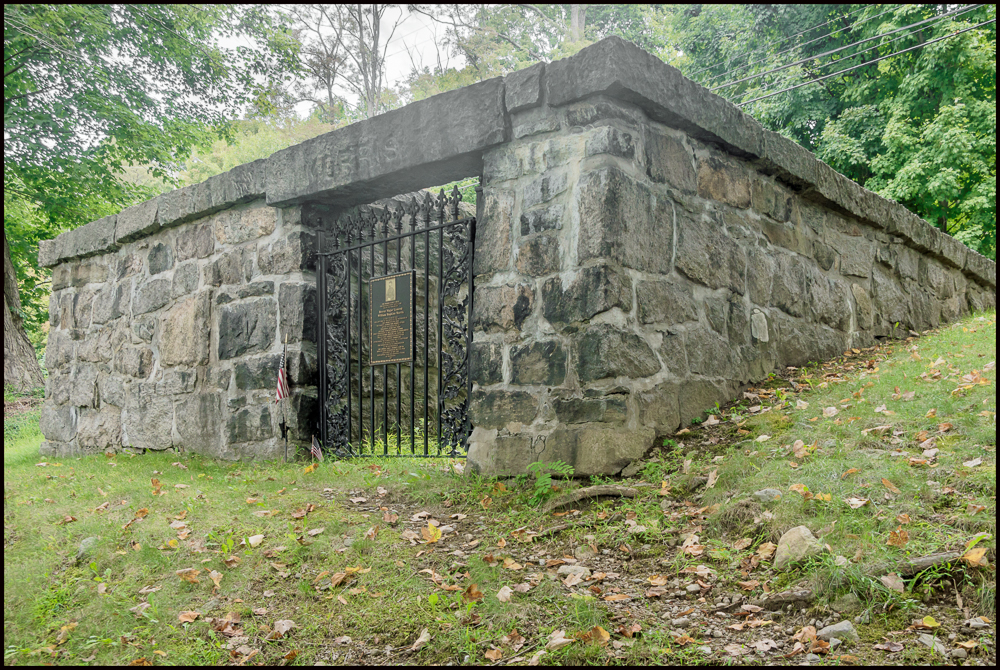
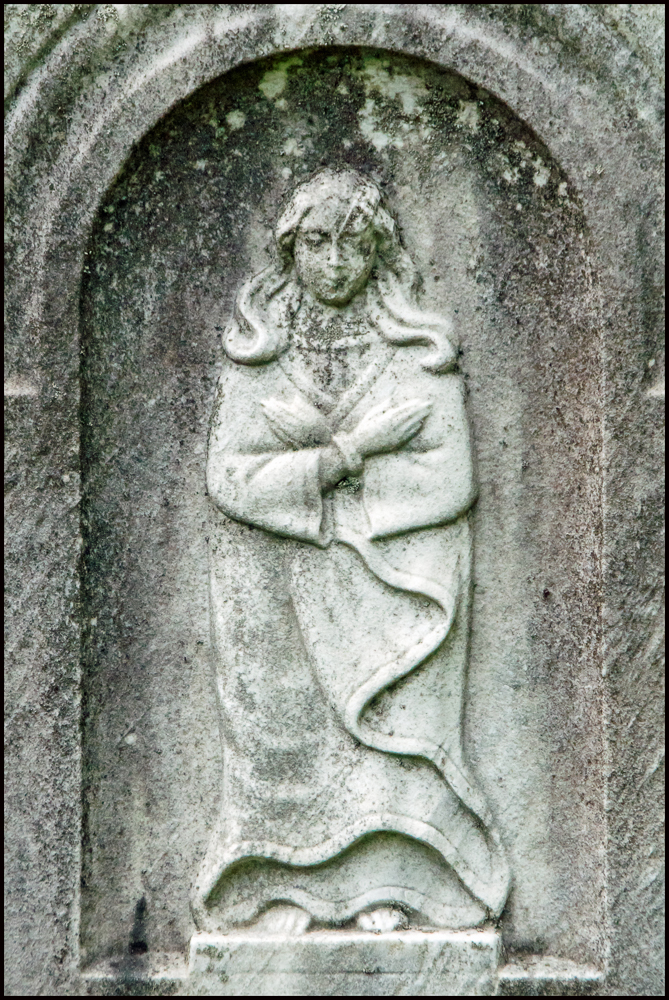
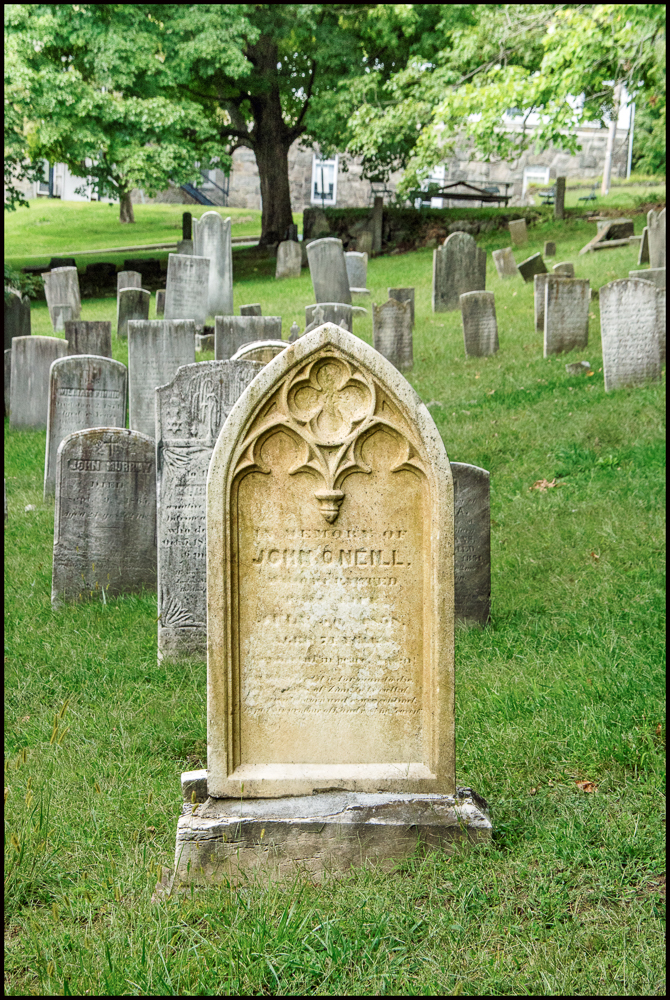
Taken with a Sony A77 II and Tamron AF 18-250mm f3.5-5.6