A visit to Fishkill – First Reformed Church of Fishkill

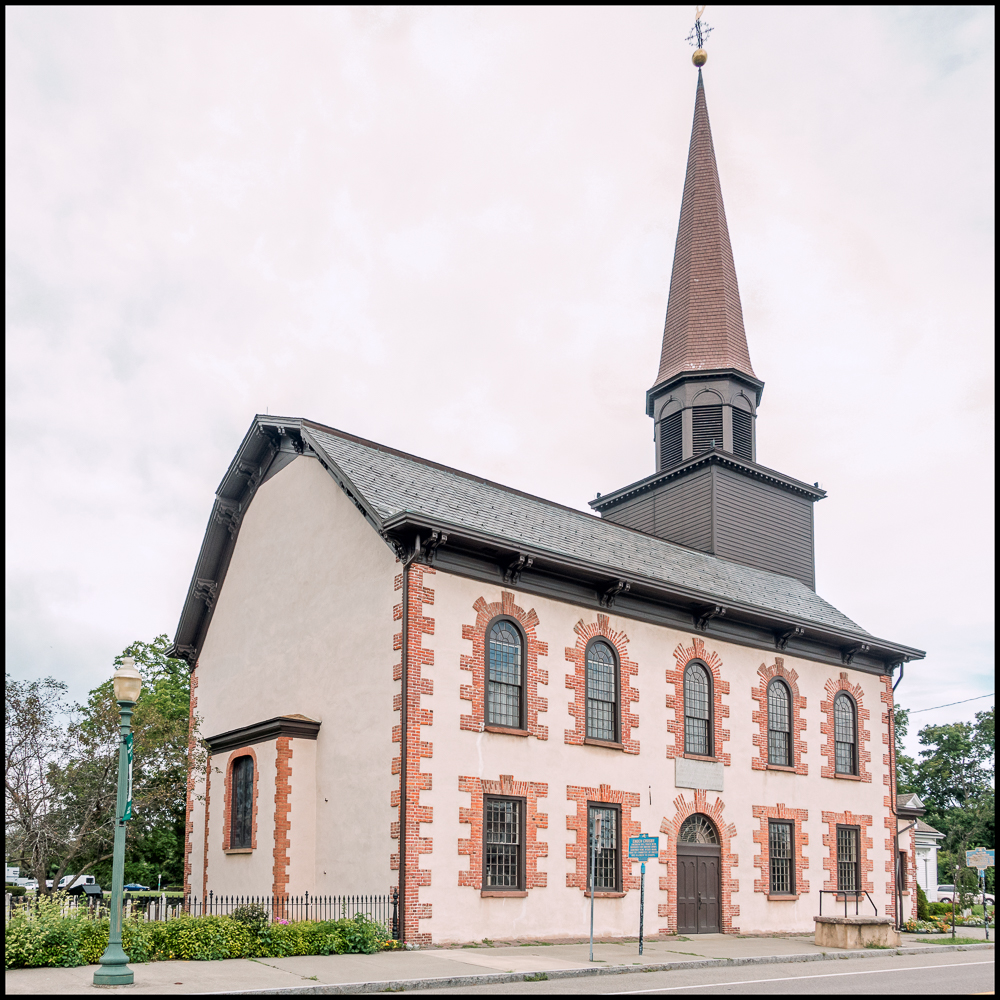
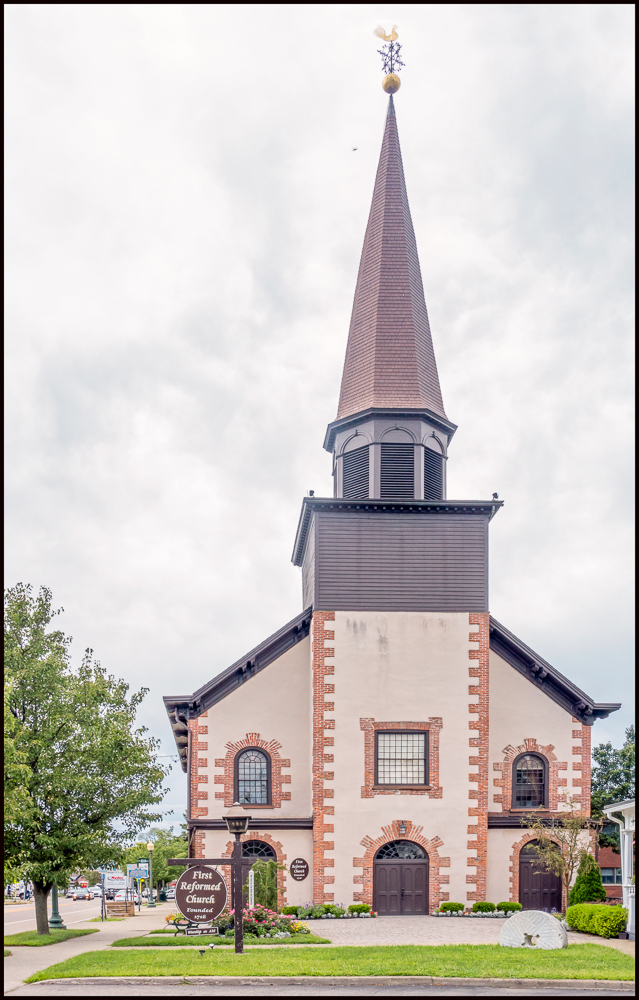
After our lunch we took a quick walk around Main Street, Peekskill. Here the First Reformed Church of Fishkill, organized 1716, built 1725 occupied 1776 by New York Provincial Congress (making Fishkill briefly the State capitol). It also served as a prison during the Revolution. One famous prisoner was the ubiquitous American spy Enoch Crosby whose trial was a sham designed to convince the British that he was not a spy.


Another view of the church.


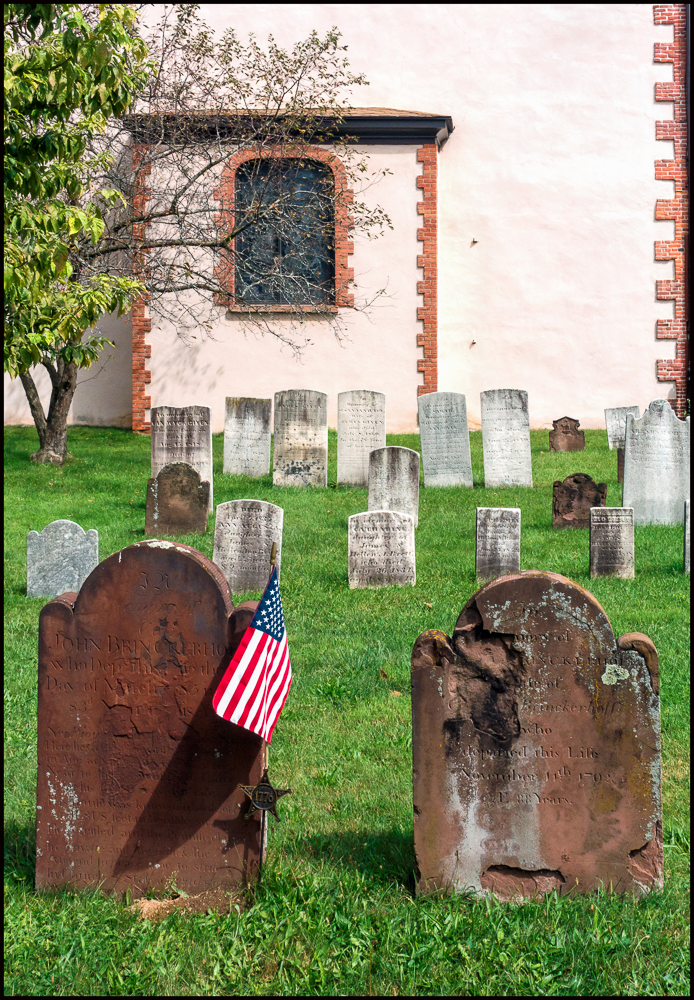
Part of the cemetery.


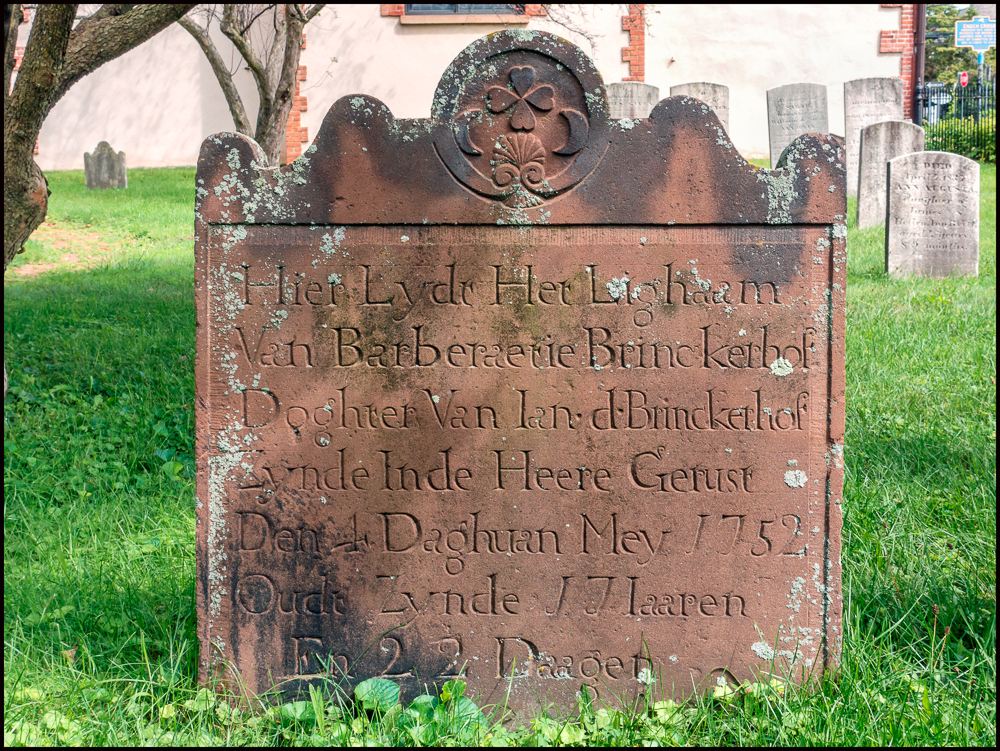
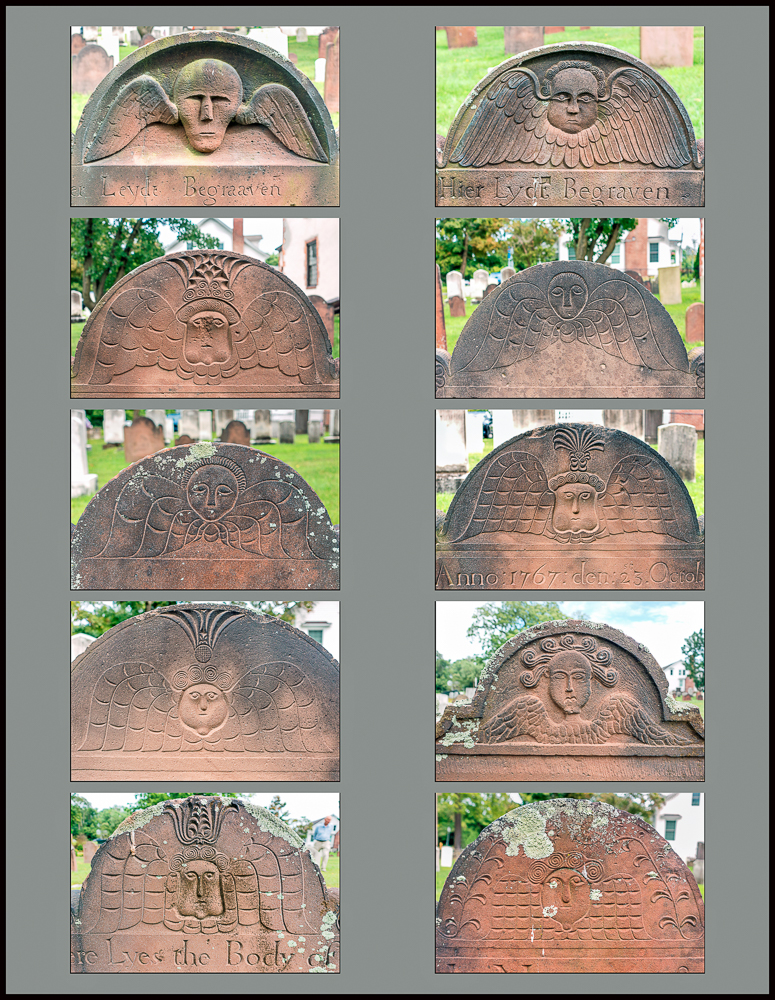
The small cemetery has a number of very old graves, many of which bear Dutch inscriptions


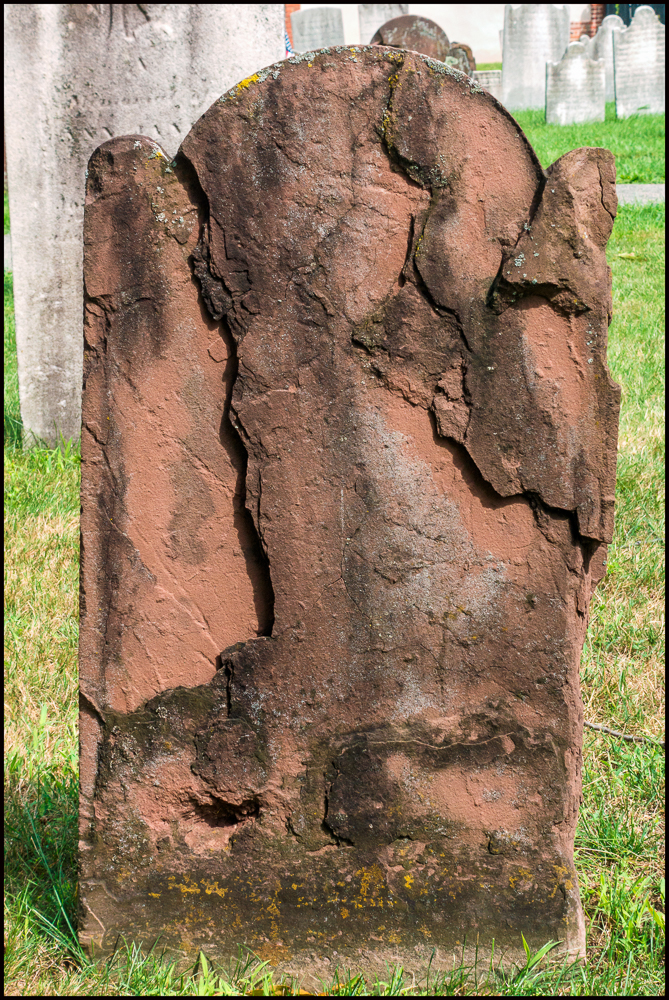
As with many of the older cemeteries around here, a lot of the earlier gravestones have deteriorated badly.

Taken with a Sony RX-100 M3.

A visit to Fishkill – Revolutionary War Cemetery

“Located in a parcel of woods on Rt 9 – Old Albany Post Road- and Van Wyck Lake Road in Fishkill, New York, (one mile South from US Interstate 84) the identified burial ground of the Fishkill Supply Depot can be seen across the road from Cafe Maya.

The Fishkill Supply Depot had the largest single burial ground of the Revolutionary War.

At its peak, the Encampment, built under orders from George Washington with its headquarters at the Van Wyck Homestead, was a small city which included extensive barracks and officer huts for thousands of soldiers, guard house and palisade, a prison, major hospital, artillery placements, storage buildings, an armory, blacksmith shops, stables, parade grounds, and a powder magazine which supplied all Northern Patriot forces. Today, the only maintained structure is the Van Wyck Homestead, a farmhouse which served as a headquarters for military operations.

The Depot was a key strategic center of the American Revolution, established by George Washington and visited repeatedly by many famous Patriots. Known as the “Military nerve center of the Continental army,” the Depot was one of three major encampments along with Morristown and Valley Forge. Hallowed history happened here – hundreds of the original soldiers who fought to found the nation died and were buried here in unmarked graves.

Reflecting the site’s importance, the Fishkill Supply Depot and Encampment was placed on the National Register for Historic Places in 1974 (Ref #74001230).

In 2007, archaeologists confirmed what local historians and others could not: the existence of a Continental Army burial ground where at least 300 soldiers lie forgotten in unmarked graves upon land once known as the Fishkill Supply Depot. Up until then, the burial ground was considered folklore, something of local legend, no solid proof had ever been discovered. Unfortunately, this single parcel of undisturbed land was found to be privately-owned and slated for commercial development. At risk was not only the soldiers’ cemetery (the largest burial ground of the Revolutionary War) but other identified ruins. Thus far through painstaking research the names of 60 soldiers remains have been identified. (Find a Grave).

The following articles add additional information.

A Revolutionary War Cemetery Reveals More Secrets

25 soldiers in Revolutionary War-era cemetery in Fishkill identified

Revolutionary War Dead Lie Forgotten Along Route 9

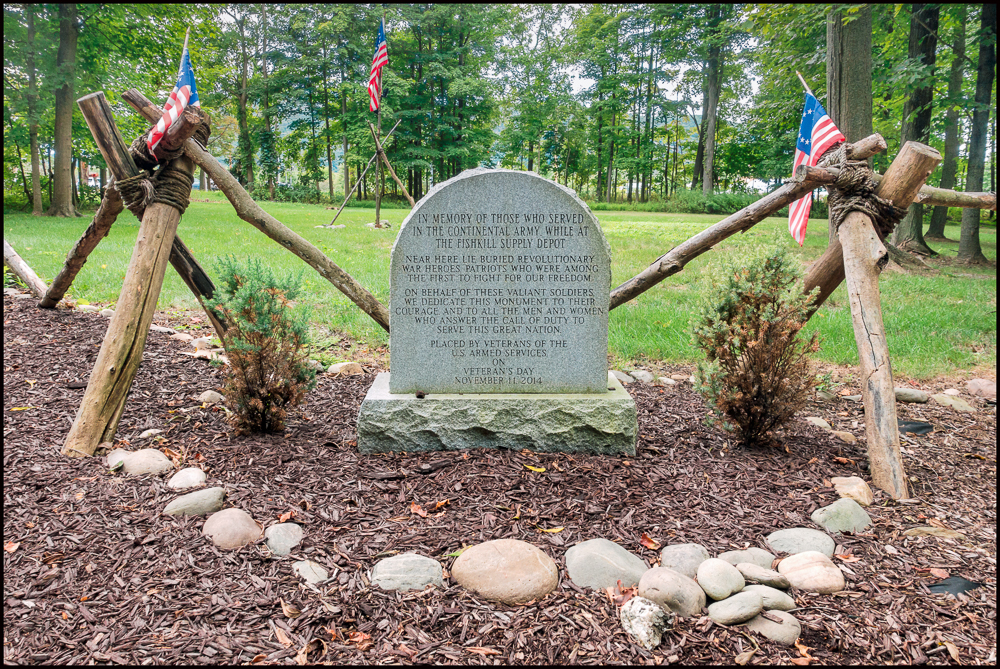
As the graves were unmarked no actual gravestones can be seen – just the single stone commemorating the cemetery. The inscription on the stone reads:

In memory of those who served in the continental army while at the Fishkill Supply Depot. Near here lie buried the Revolutionary Ware Heroes, patriots who were among the first to fight for our freedom. On behalf of these valiant soldiers we dedicate this monument to their courage and to all the men and women who answer the call of duty to serve this great nation. Placed by veterans of the US armed services on Veteran’s Day, November 11, 2014.

Taken with a Sony RX-100 M3.

In search of Sybil Ludington – A famous spy

Our final stop was to see Enoch Crosby’s grave in historic Gilead Cemetery in Carmel, NY. Crosby was a:

Revolutionary War Soldier and Spy. During the Revolutionary War, Enoch Crosby fought in Northern New York during his first enlistment and after his enlistment was up he returned to Carmel, New York, where he decided to enlist again. While en route to enlist he met up with a group of Tories who took him as one of the their own and took him to their secret meeting. After the meeting Enoch reported them to the authorities and they were arrested. He was recruited by John Jay to spy for the Continental Army and his spying uncovered many British Spys and Tories, eventually he was uncovered and beaten one time and left for dead and shot another. He lived to see the end of the War and lived out his life in Putnam County, New York. Famed author James Fenimore Cooper wrote a book titled “The Spy” believed to be about Enoch Crobsy’s war heroics. (Find a Grave).

The cemetery is quite small, but contains the graves of 24 Revolutionary War veterans.

Taken with a Sony RX100 M3.

In search of Sybil Ludington – An old cemetery

This is the cemetery Ken noticed from the road (See:In search of Sybil Ludington – Detour down Brickhouse Road).

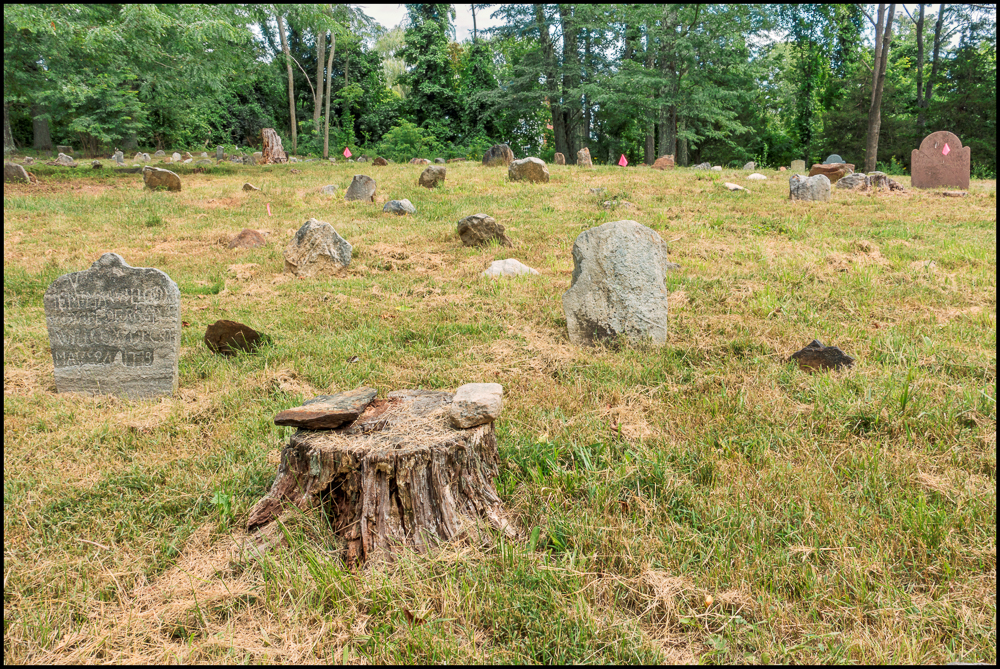
Patterson Old Burying Ground. William S Pelletreau in his History of Putnam County, New York published in 1886 wrote: ‘On Erskine’s military map, made about 1780, the Baptist meeting house is laid down near Fredericks­burg. This church, the date of whose building is unknown, stood on the north side of the road from Patterson to Carmel, about half a mile west of where the Mill Brook crosses it and about a mile and a half north of the present church at Towner’s Four Corners.’

He continues, ‘Opposite the site of this old church, on the south side of the road, is an ancient burying ground, the surface of which is thickly studded with rough stones which mark graves, the names of whose occupants have long since passed into oblivion. This is beyond doubt the oldest burying ground in the town. It is on land now owned by Mr. Isaac P. Rogers, and it would be a credit to the village to have this spot enclosed with a suitable fence and protected from desecration.’ (Patterson Historical Society).

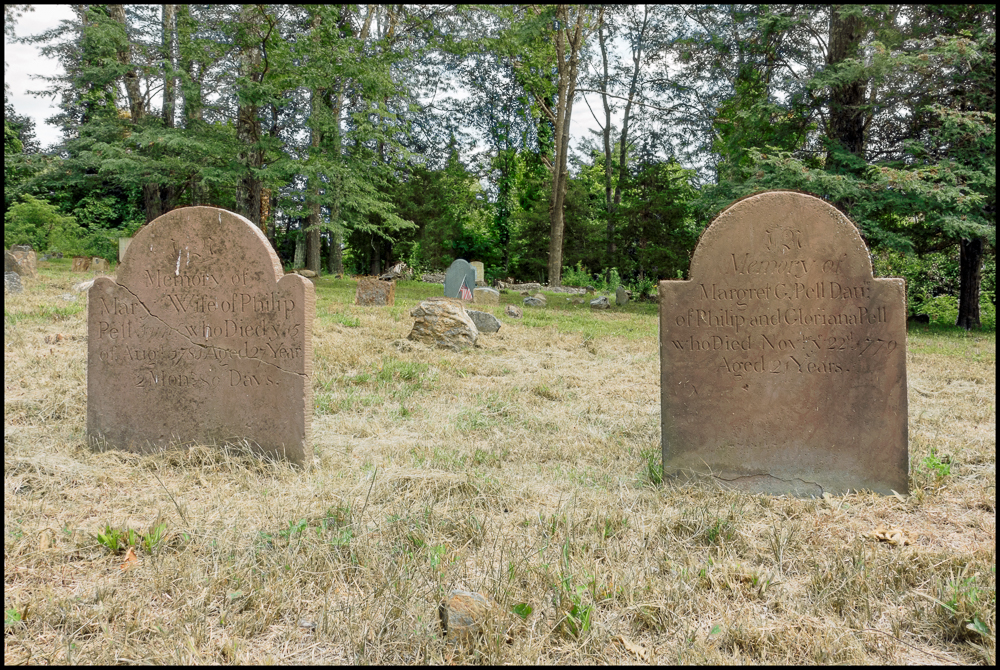
It’s presently being renovated. It’s clear that there are some very old graves there, including the two below dating to 1781 and 1779 respectively.

Taken with a Sony RX100 M3.

In search of Sybil Ludington – Final Resting Place

We start our search at the very end: with the graves of Sybil Ludington and her father. So who were these two people?

Sybil Ludington (April 5, 1761 – February 26, 1839) is celebrated as a heroine of the American Revolutionary War. She reportedly rode to alert militia forces in the towns of Putnam County, New York and Danbury, Connecticut on the night of April 26, 1777 at age 16, warning of the approach of the British regular forces. The ride was similar to those performed by William Dawes, Paul Revere (Massachusetts, April 1775), and Jack Jouett (Virginia, 1781). Ludington reportedly rode more than twice the distance attributed to Revere and was much younger than the men. However, according to one historian, there is no contemporaneous evidence that these events occurred.” (Wikipedia).

Above her grave in Patterson, NY. Note that she spelled her name many different ways.

Below her father’s grave.

Henry Ludington (May 25, 1739 – January 24, 1817) was an American businessman who ran a grist mill and owned a substantial parcel of land in New York state. He founded Ludingtonville, which later became the town of Kent, New York. He was a citizen of Patterson, New York, and was involved with its growth.

Ludington fought in the Seven Years’ War and, as captain, commanded a volunteer regiment at the Battle of Ridgefield during the American Revolutionary War. Ludington was promoted to Colonel and became an aide-de-camp to General George Washington in providing spies for espionage. He was associated with John Jay in a ring of spies. His daughter Sybil Ludington is well known to historians for her role in the American Revolution in helping the cause for independence by undertaking a nighttime horseback ride similar to that done by the patriot Paul Revere to alert the colonial militia to the approach of British forces. (Wikipedia).

Taken with a Sony RX100 M3.