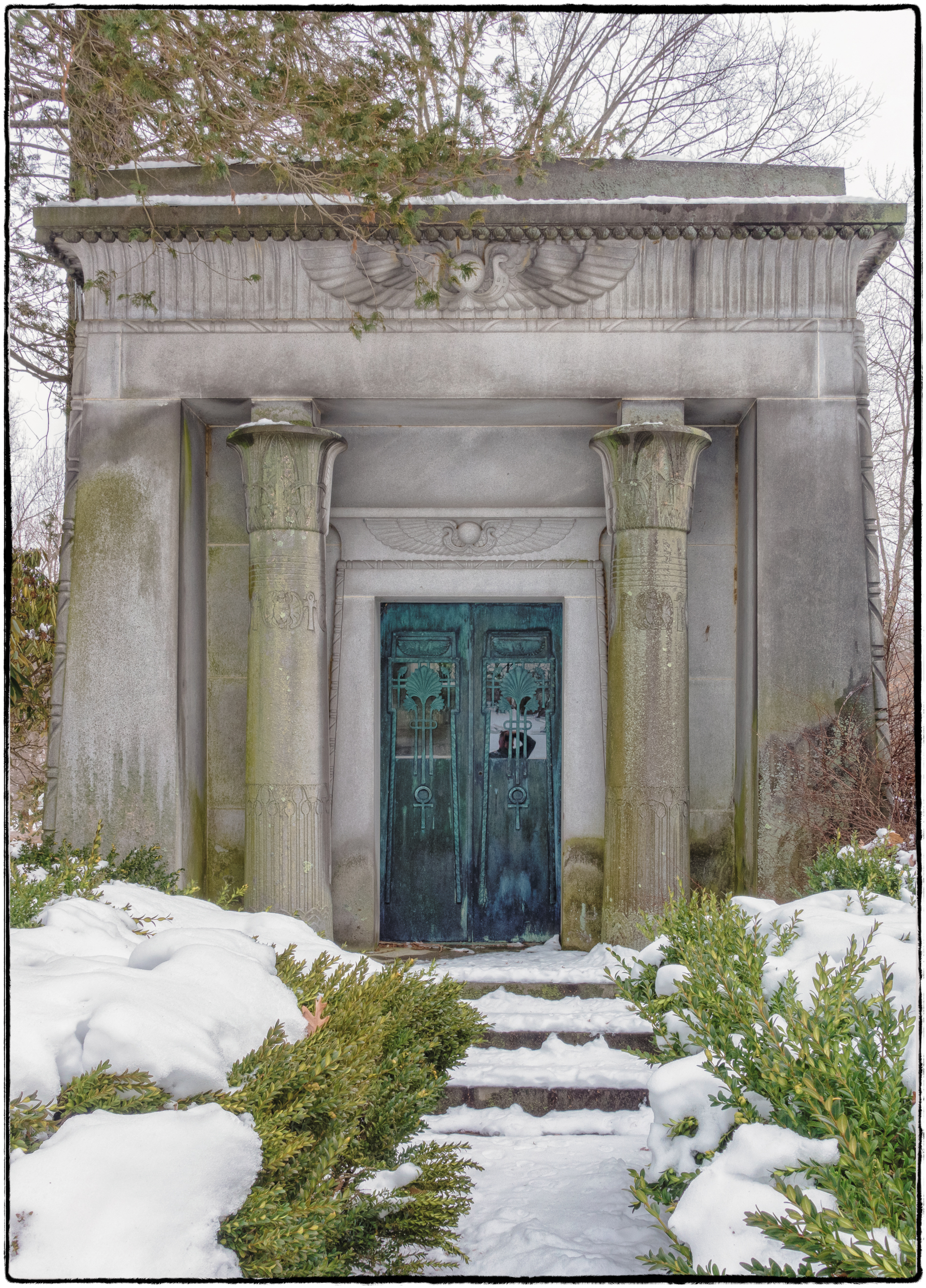
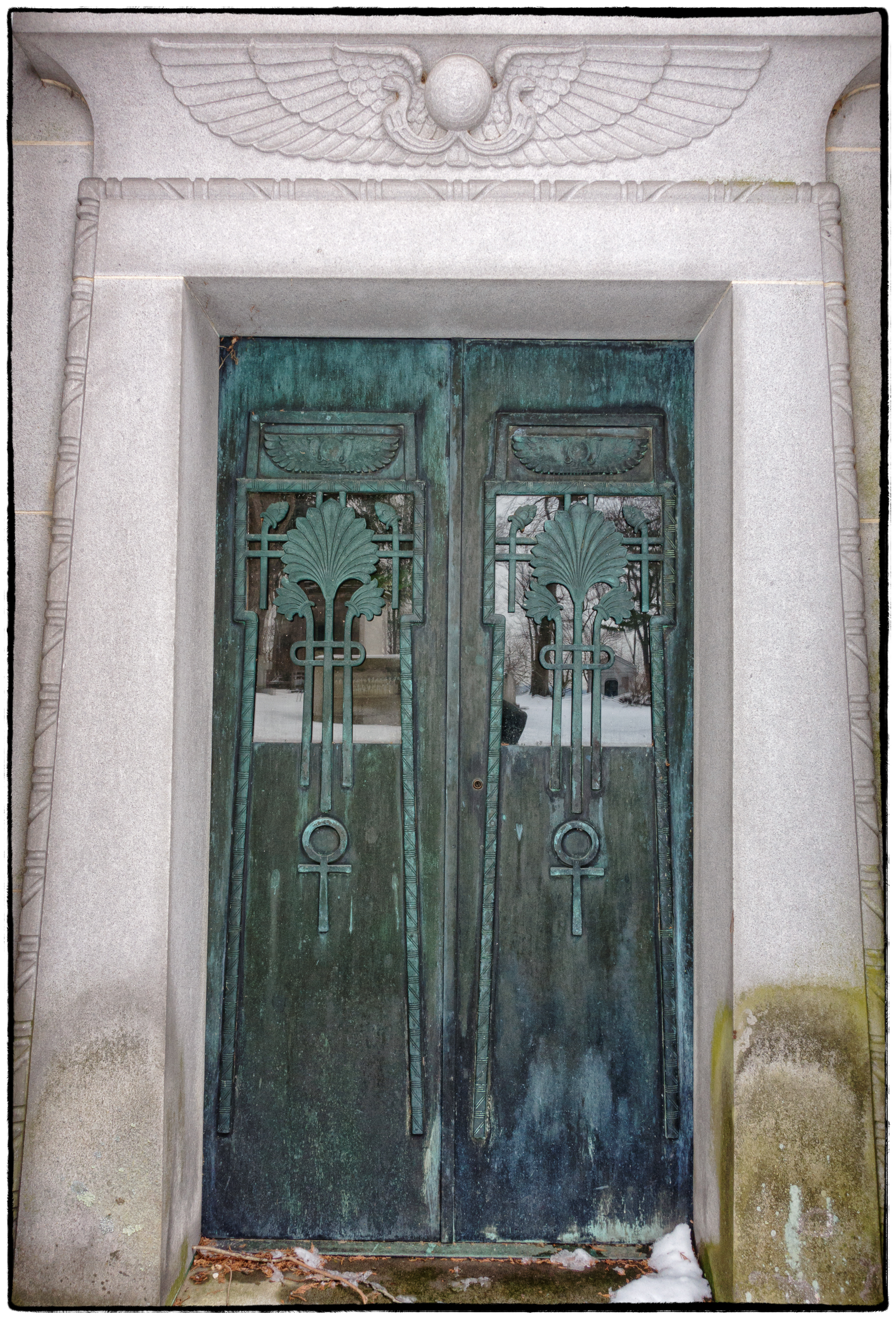
Sleepy Hollow Cemetery – Unidentified Egyptian Style Mausoleum

In an earlier post (A fascination with cemeteries?) I mentioned four criteria put forward by Bill Jay and David Hurn to help a photographer identify an appropriate subject. One of them was:

Is it a subject about which I know enough? Eliminate those subjects about which you are ignorant, at least until you have conducted a good deal of research into the topic. For example, you are not contributing anything to the issue of urban poverty by wandering back streets and snatching pictures of derelicts in doorways. That’s exploitation, not exploration.

.
To which I answered: “Yes. I already know quite a lot about cemeteries, their history and symbology and my knowledge continues to grow.” These pictures illustrate how my knowledge has been growing.

Not too long ago I would probably have walked right past this mausoleum. Compared to many others in Sleepy Hollow Cemetery it’s quite small, and from a distance, hidden behind hedges it doesn’t seem to be anything special.

However, because of my increasing knowledge I suspected that there might be more to it and so I went over to take a closer look and came across some lovely details.

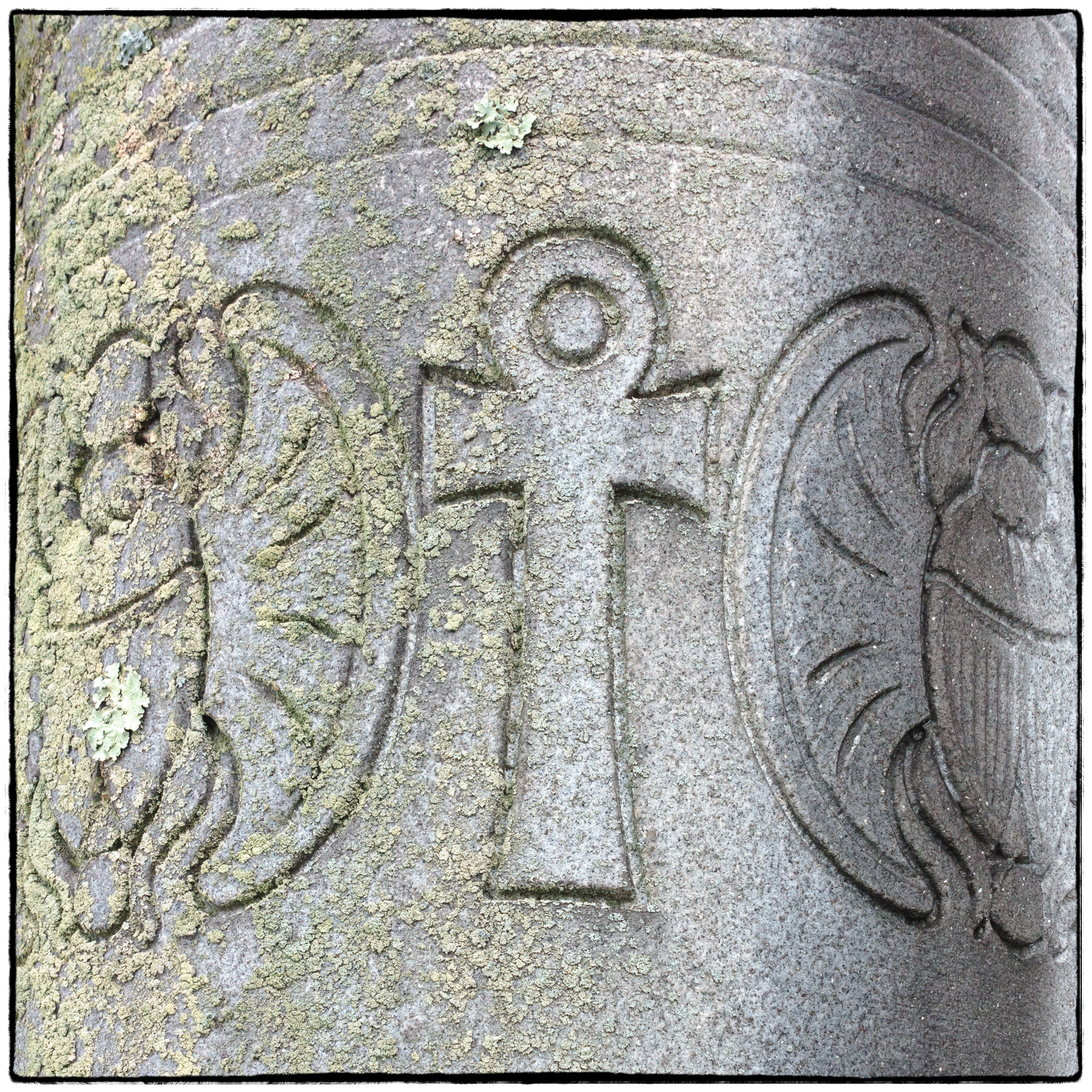
Scarabs and Ankh. The scarab symbolizes life. As for the Ankh – according to Thecemeteryclub.com:

The original meaning of this ancient Egyptian symbol is not known. One possible theory suggests that it combines the male and female symbols of Osiris (the cross) and Isis (the oval) and therefore signifies the union of heaven and earth. It is usually portrayed in ancient Egyptian art in the hands of a deity. As a hieroglyph, it likely encompassed a range of meanings depending on its associated hieroglyphs but all of these expressions centered around the concept of life or life-force. Over time, the ankh certainly came to symbolize life and immortality, the universe, power and life-giving air and water. “Its key like shape also encouraged the belief that it could unlock the gates of death”. The Coptic Christians used it as a symbol of life after death. The ankh has been used in magic and today it usually symbolizes peace and truth.
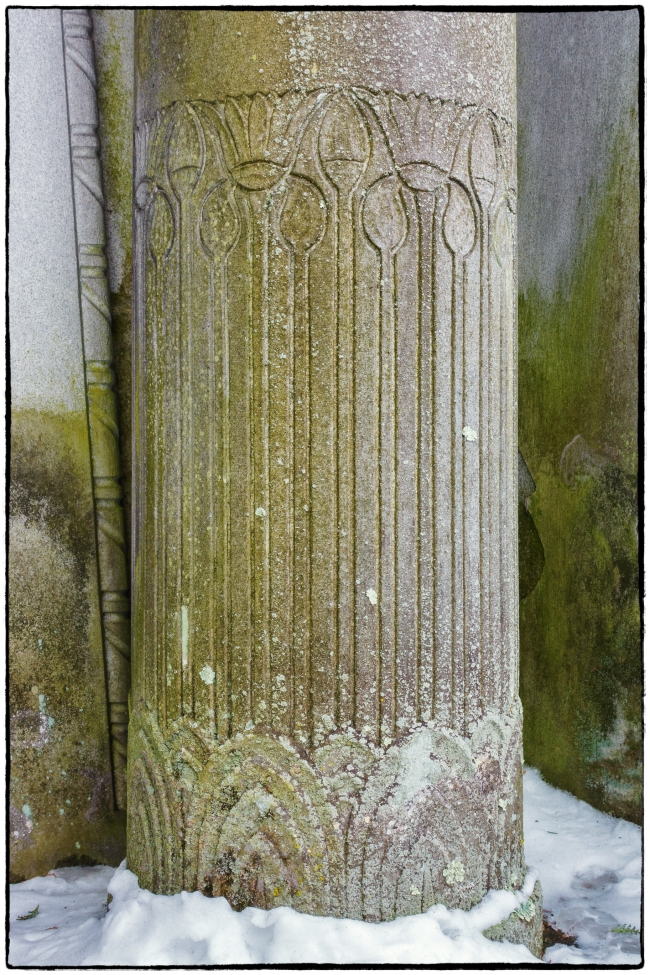
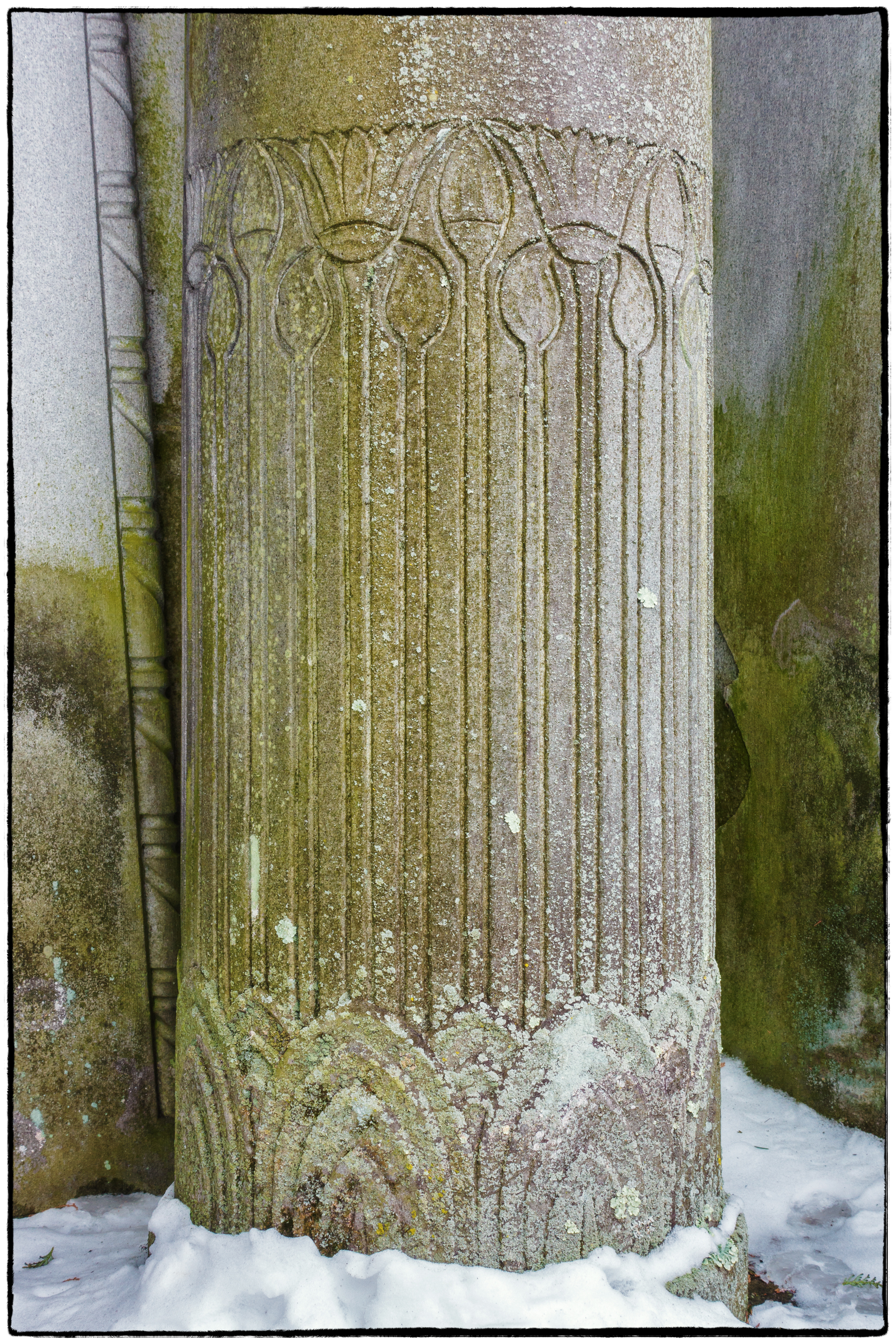
Lotus. Purity, Resurrection, Evolution, Potential. Commonly used in ancient Egypt and in Hinduism, the flower is sacred in Buddhism. It symbolizes the creation of life from the slime of the primordial waters. The closed lotus represents potential.

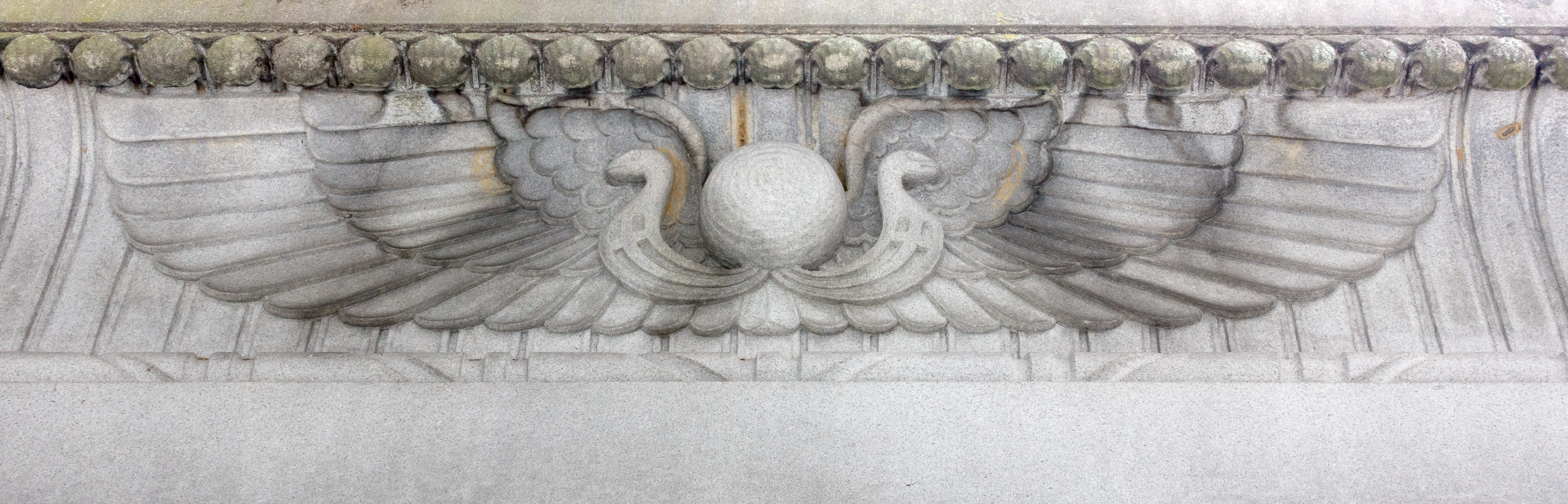
Pair of vulture wings sprouting from a circle (symbolizing the sun) and flanked by two cobras (symbolizing death). Behind the winds is a cavetto cornice (seen more clearly in the first picture above), which goes around the entire structure.

Entrance. Note that the vulture motif is repeated both on the cornice, and on each of the door panels. The door panels also repeat the lotus and ankh symbols.

I’ve come across Egyptian style mausoleums in other cemeteries and have always been surprised that such obviously pagan symbols (originating in many cases from thousands of years BCE) have been deemed acceptable in a predominantly Christian cemetery.

Sleepy Hollow Cemetery – Andrew Carnegie Memorial

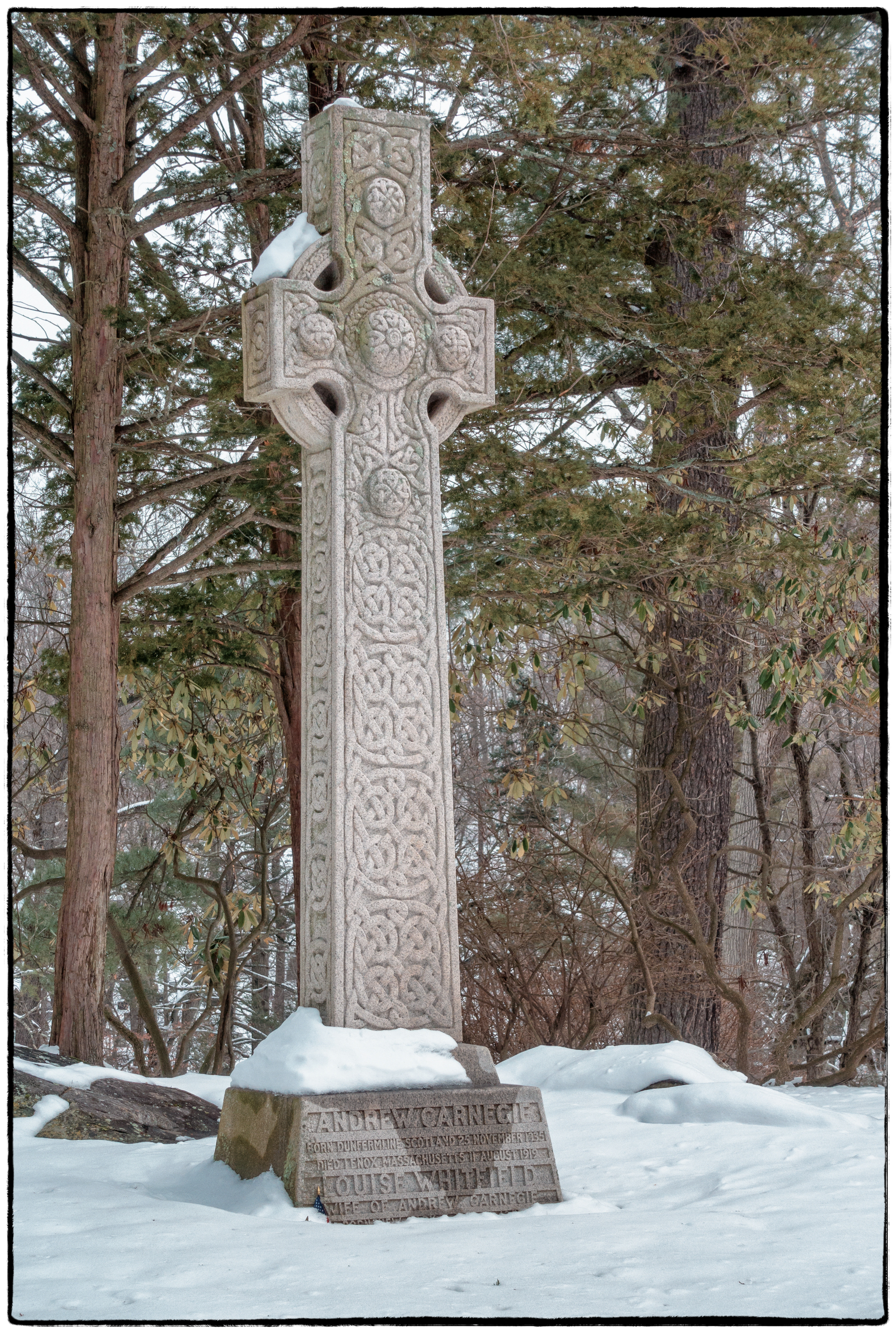
In contrast to the magnificent mausoleums of William Rockefeller and John Dustin Archbold (In the two previous posts), the simple celtic cross in the picture above marks the final resting place of Andrew Carnegie. He was for a while the richest person in America (and so probably in the World).

According to Waymarking.com:

The grave is set in a grass clearing surrounded by trees. The monument itself is an ornately carved stone cross, about six feet tall. The cross has round knobs at the center and in each direction of the cross. There is a halo connecting the cross extensions. At the bottom is the following text:

“Andrew Carnegie
Born Dunfermune (NOTE: it actually reads ‘Dunfermline’ not ‘Dunfermune’) Scotland 25 November 1835
Died Lenox Massachusetts 11 August 1919

Louise Whitfield
Wife of Andrew Carnegie
Born New York 7 March 1857
Died New York 24 June 1946”

Two simple footstones are at the base of the cross, one for Andrew and the other for Louise.

A plaque in a stone by the road has a 3-D portrait embossing of Andrew Carnegie’s face and the following text:

“Born in Scotland, Andrew Carnegie came to America in 1848 and rose from a factory bobbin boy to one of the world’s most successful industrialists. His legacy is his philanthropy and the more than 2o institutions he endowed. Their work continues in his name:

Carnegie Hall
Carnegie Institute
Carnegie Mellon University
The Carnegie Trust for the Universities of Scotland
Carnegie Institute of Washington
Carnegie Foundation
The Carnegie Dufermline Trust
Carnegie Hero Fund Commission
Carnegie Hero Funds in Europe
The Carnegie Foundation for the Advancement of Teaching
Carnegie Endowment for International Peace
Carnegie Corporation of New York
The Carnegie United Kingdom Trust
Carnegie Council on Ethics and International Affairs”

There are many biographies on Andrew Carnegie. He is one of the most studied men in the United States. The links included provide a more detailed account. Here are highlights:

He was born in Scotland to William Carnegie, a shoemaker and social reformer, and Margaret. When they emigrated to America and settled in Allegheny, PA, at the age of 13, Andrew started working as a bobbin boy (a child who changed thread bobbins on the fly on the textile looms). As a child, he read books, often from a library that a local resident had opened to working boys. Later, Andrew would work on the Pennsylvania Railroad. While working there, he started the Keystone Bridge in 1873, the first of his steel works. By the time he sold his company to J.P. Morgan, it was worth $480 million (about $13 billion today). Starting around 1870, Carnegie donated money for communities, mostly libraries across the U.S. He founded other institutions that continue to benefit people and communities today (many listed above). He is also known for his publication, “The Gospel of Wealth,” where he pushed forward the idea that the rich are only caretakers of wealth and are obligated to return it back to benefit the general public. He died in 1919.

There were controversial events associated with Carnegie. The most well known is the Homestead Strike of 1892, which involved a union strike at one of his steel works that became bloody.

I saw neither the two footstones, nor the plaque mentioned above, probably because they were covered by the 10 inches of snow that blanketed the site. The snow nearest the road was particularly deep (I know because I waded through it) as a result of ploughing and would certainly have covered the plaque).

More details can be found in a Wikipedia article on Carnegie.

Sleepy Hollow Cemetery – John Dustin Archbold Mausoleum

According to Mausoleums.com:

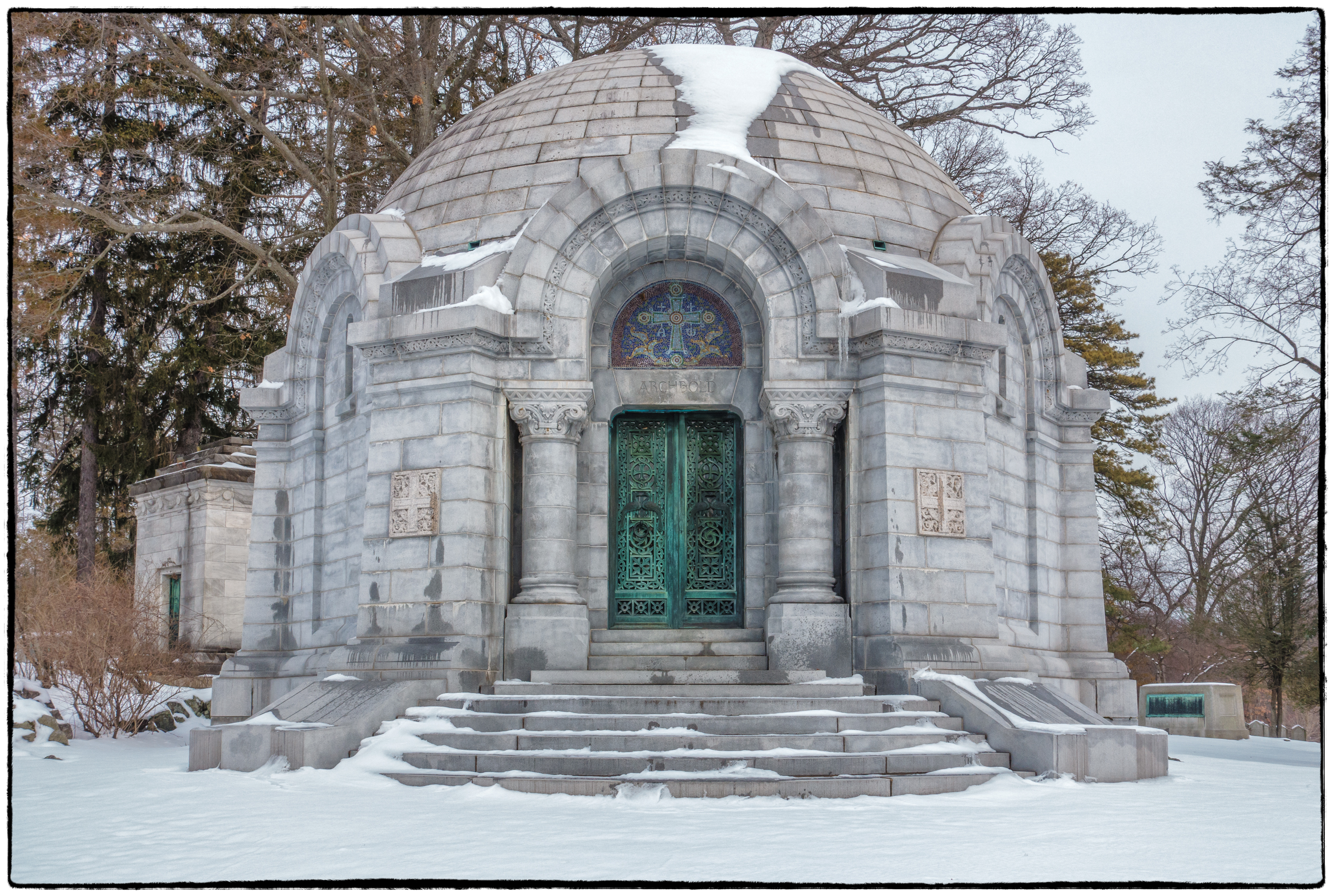
John Dustin Archbold was one of the titans of the Gilded Age. Archbold was born in Ohio, the son of Rev. Israel Archbold and his wife Frances. Israel Archbold died in 1859 and young John became the man of the family. The family moved to Salem, Pennsylvania, which was not far from the soon-to-be-developed oil fields of Pennsylvania. He saved a meager amount of money, and then in 1864 he moved to Titusville, Pennsylvania in the heart of the oilfields. By age nineteen his small investments were paying off; so much so that he was able to buy a home for his mother and send his sister to college. He worked at and invested in oil fields for the next 11 years. During that time John D. Rockefeller’s company, Standard Oil was hungrily gobbling up smaller companies and was setting its sites on Archbold’s company, Acme Oil Company of Titusville. The two men engaged in a spirited and very public battle but peace was made and Archbold was offered a position at Standard Oil. Over the years he held positions of vice president and president and served on the board of directors. In later life, Archbold devoted himself to educational and philanthropic works. His most significant donation was $6 million to Syracuse University.

The Archbold mausoleum had one very interesting temporary guest. When John D. Rockefeller’s wife Laura died, the newspapers reported that he asked his old friend John Dustin Archbold if he would house Laura’s remains for a while before transferring her to the John D. Rockefeller plot in Cleveland’s Lakeview Cemetery. “1 want to keep her with me as long as I can.” The newspapers reported. Ah, how romantic and touching. Alas, Rockefeller’s sentiments just may ring a bit hollow since something else was preventing him from going to Lake View Cemetery: as soon as he crossed the state line into Ohio he would have been served a summons for a court case he had been avoiding. Laura remained in the Archbold mausoleum for four and one half months while Rockefeller’s lawyers worked things out with tax officials in Ohio.

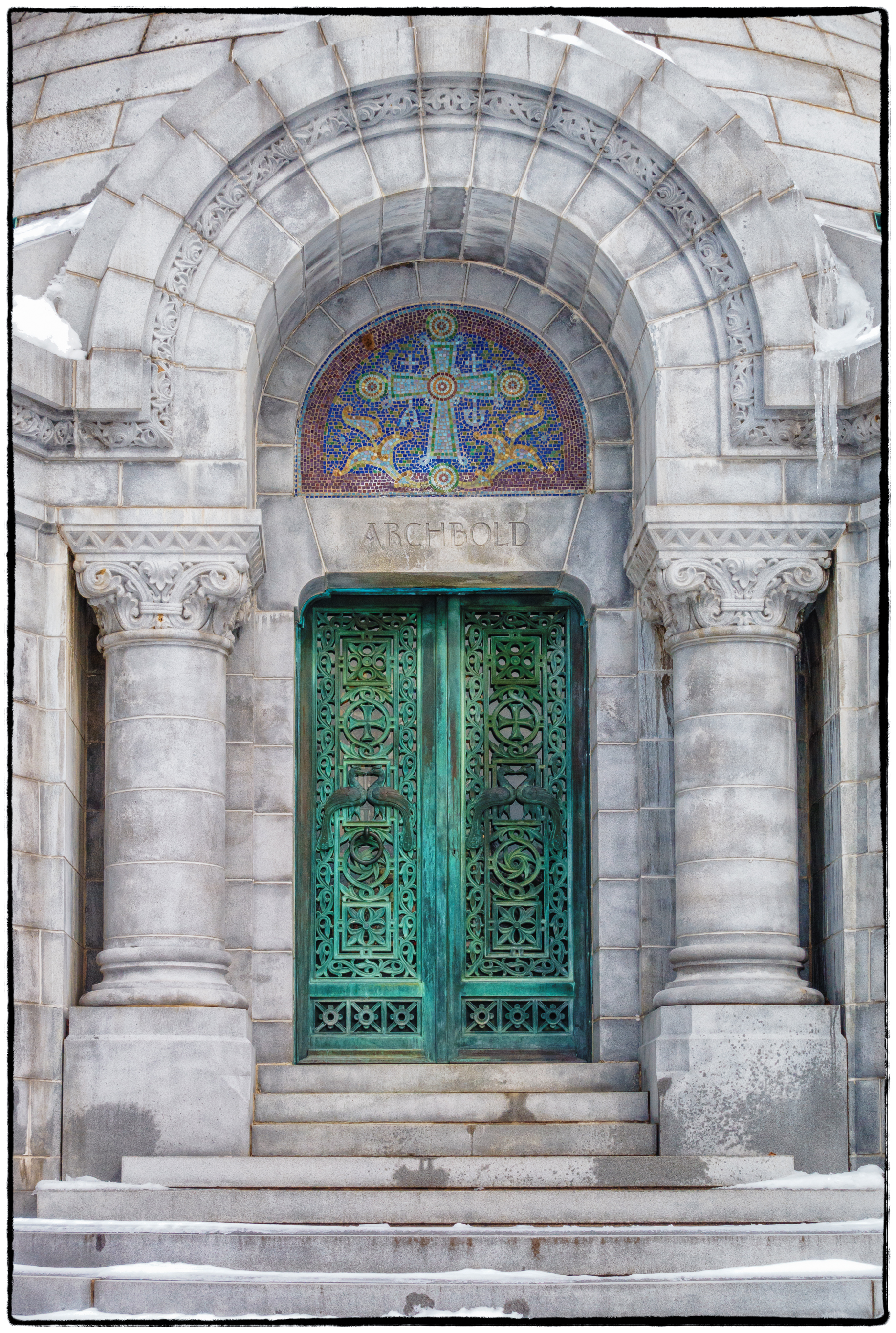
Archbold’s one-of-a-kind mausoleum was fabricated of green granite by Troy Granite in Worcester, Massachusetts. It measures 36 feet by 36 feet and is 32 feet tall. It contains 12 crypts. The contractor/builder was the Norcross Brothers, which charged $31,308 for the building. The mausoleum including the bronze doors was designed by the New York firm of Morris, Butler and Rodman Architects. The glass mosaic ceiling was crafted by Otto Heinigke (1850-1915). It contains a number of iconic Christian symbols including winged depictions of the four evangelists, the Agnes Dei (lamb of God), doves, angels and crosses.

Closer view of the rather impressive doorway.

Sleepy Hollow Cemetery – William Rockefeller Mausoleum

Within a couple of hours of writing the previous post (A fascination with cemeteries?) I found myself back in Sleepy Hollow Cemetery. Much as I like cemeteries there was a practical reason for going there this time. We had a lot (around 10 inches) of snow the other day. I try to walk our dog for at least one hour every day, but it winter it can be quite difficult. Since we’re right next to Fahnestock State Park we walk on the trails there a lot, but 10 inches of snow is a bit much for comfortable walking. Even if I could manage it (which I’m by no means sure that I could) it would be impossible for Harley. He’s a small terrier and that much snow would cover him completely.

So I have to look for alternatives. I can always walk along the road around our lake. It’s always clear of snow and there’s very little traffic, but after a while it gets a bit boring. The big cemeteries are usually a good choice: the roads are mostly clear and they’re pleasant places to walk. In fact in Winter I find them particularly pleasant. They’re usually quiet, but the snow muffles the sound and makes them even quieter. They also seem to take on an almost monochromatic feel.

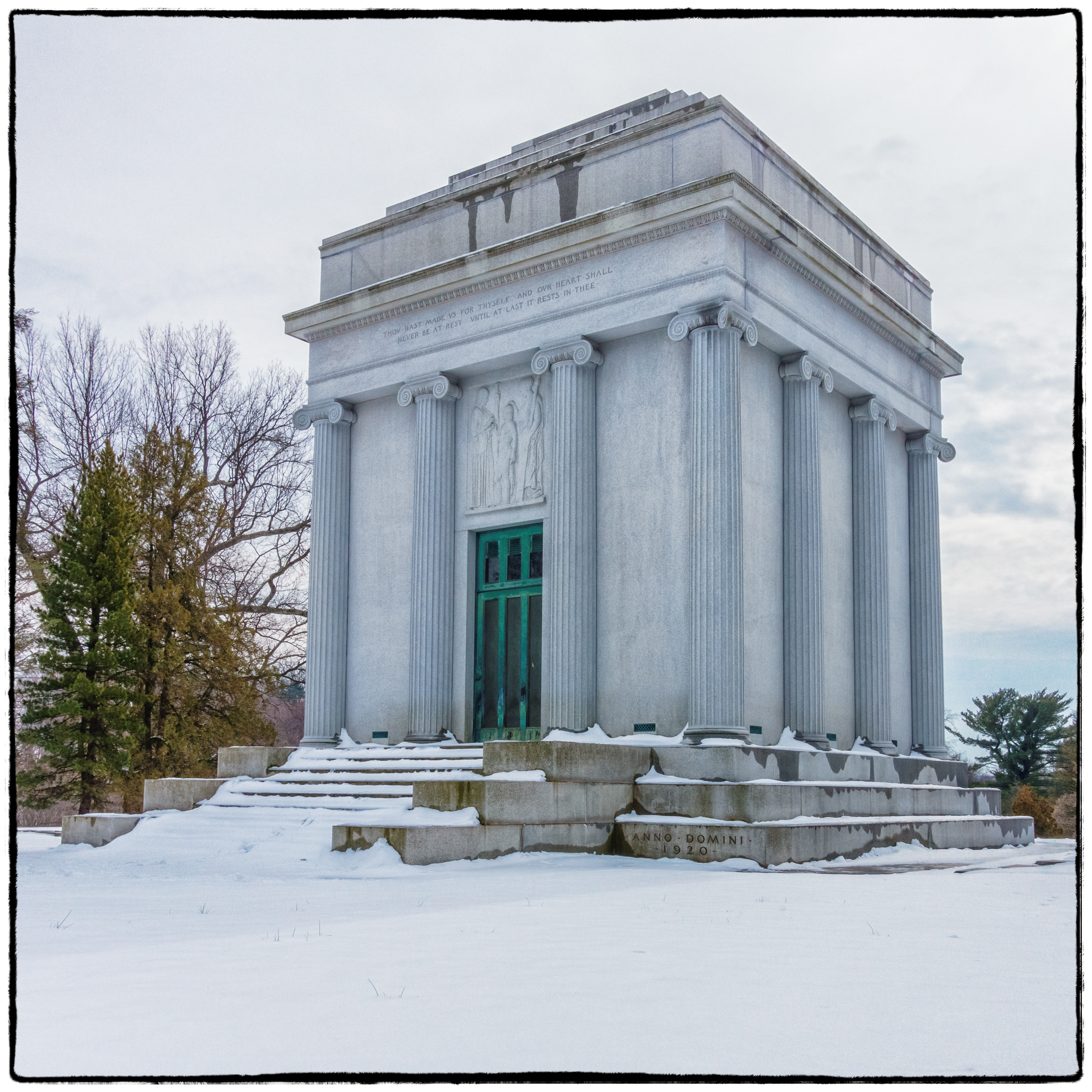
The photograph above is of William Rockefeller’s mausoleum. Mausoleums.com has this to say about it:

William Rockefeller
May 31, 1841-June 24, 1922

The largest mausoleum in Sleepy Hollow was built in 1920. It houses the remains of members of the William Rockefeller family. William Rockefeller was born in Richford, New York, and then moved with his family to Strongsville, Ohio in 1853. He started a refinery in 1865, which was acquired by his brother, John D. Rockefeller in 1867. That company became Standard Oil. William Rockefeller then became interested in the copper business and along with his business partners tried to control the copper industry. The business machinations proved successful and the Anaconda Copper Company went on to become the fourth largest company in the world. William Rockefeller kept a much lower public profile than his brother John D. Rockefeller and was considered to be much more friendly and personable than John D..; When he died, the gross value of his estate was estimated at 102 million dollars. He had requested a simple funeral, but nevertheless, the service received attention in the papers. Of special note was the number of servants that were allowed to attend the funeral including a bootblack who had served him for forty years. Next to be interred in the mausoleum was William Goodsell Rockefeller who died on December 3, 1922.

William Rockefeller was known for his ability to work with others and form a team to reach a common goal. His mausoleum was truly a group effort. His impetus for building the mausoleum was the to provide a dignified final residence for his wife of 56 years, Almira Geraldine Goodsell Rockefeller (1845-1920). Rockefeller hired Welles Bosworth (1868-1966) an Ecole de Beaux Arts trained architect. At the time, Bosworth was most noted as being the lead architect for the Pan-American Exposition held in Buffalo in 1901. John D. Rockefeller later hired Bosworth to oversee a number of Rockefeller’s projects in France including the restoration of the Palace of Versailles. Bosworth’s design for the William Rockefeller mausoleum called for a classical revival style tomb with engaged Ionic columns and a stepped pyramid-style roof. The mausoleum is 35 feet 6 inches across the front, 43 feet 8 inches deep and 38 feet 5 inches high. The walls are 16 inches think.

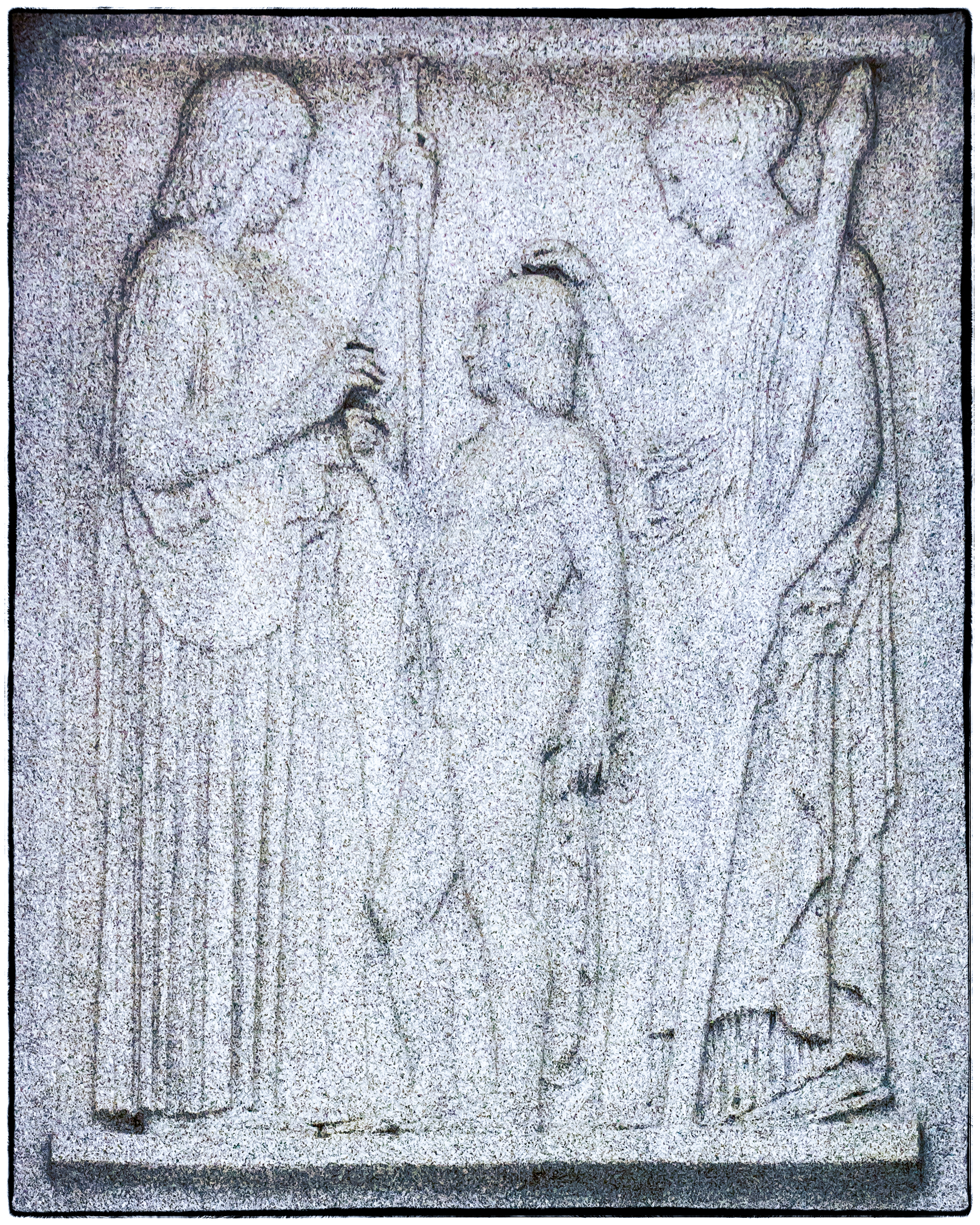
The Presbrey-Leland Company, one of the premier monument builders of the time, executed the actual construction of the mausoleum. The firm still operates today. Overseeing the project was monument builder William Crawford. Crawford chose Barre, Vermont granite for all the structural elements. Of special note is the 10-foot wide, 30-foot long 14-inch thick granite walkway that was carved from a single slab of granite. Inside the mausoleum there are 20 wall crypts. The cella (interior space of the mausoleum) is 12 feet by 18 feet 2 inches. In the cella are two marble sarcophagi for William and Almira Rockefeller. Other architectural details include a bronze door and other bronze details fashioned by the William H. Jackson Company of New York and slate crafted by the Structural Slate Company of Pen Argyl (argyl is Greek for slate rock), Pennsylvania). The bas-relief above the entry has been attributed to French born sculptor Gaston Lachaise. A number of granite-covered graves of other members of the extended Rockefeller family pepper the lawn area outside the mausoleum. Despite the mausoleum’s grand scale and prominent siting, William Rockefeller kept his name low key. Rather than have his name in bold letters in the frieze area over the entry he chose to modestly place it on the lower step of the stylobate (out of view on the far left; it echoes the anno domini 1920 on the lower step of the stylobate on the far right right).

The bas-relief mentioned above, which is thought to have been the work of French born sculptor Gaston Lachaise

The inscription above the doorway reads: “Thou hast made us for thyself and our heart shall never be at rest until at last it rests in Thee”.

I know that William’s brother, John D. Rockefeller is buried in Lake View Cemetery, Cleveland. However, the Rockefeller estate is in nearby Pocantico Hills, NY and I’ve read that the Rockefeller’s have their own, private cemetery adjacent to the Sleepy Hollow Cemetery. I wonder why Willam is not buried with the rest of them in the private cemetery?