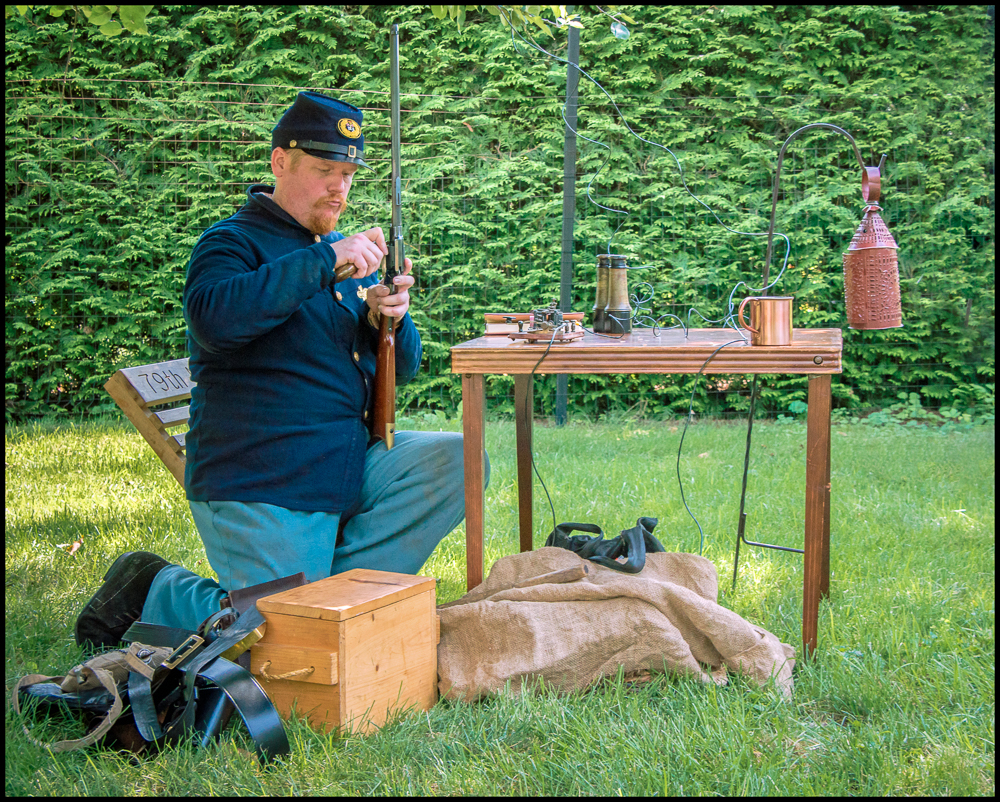
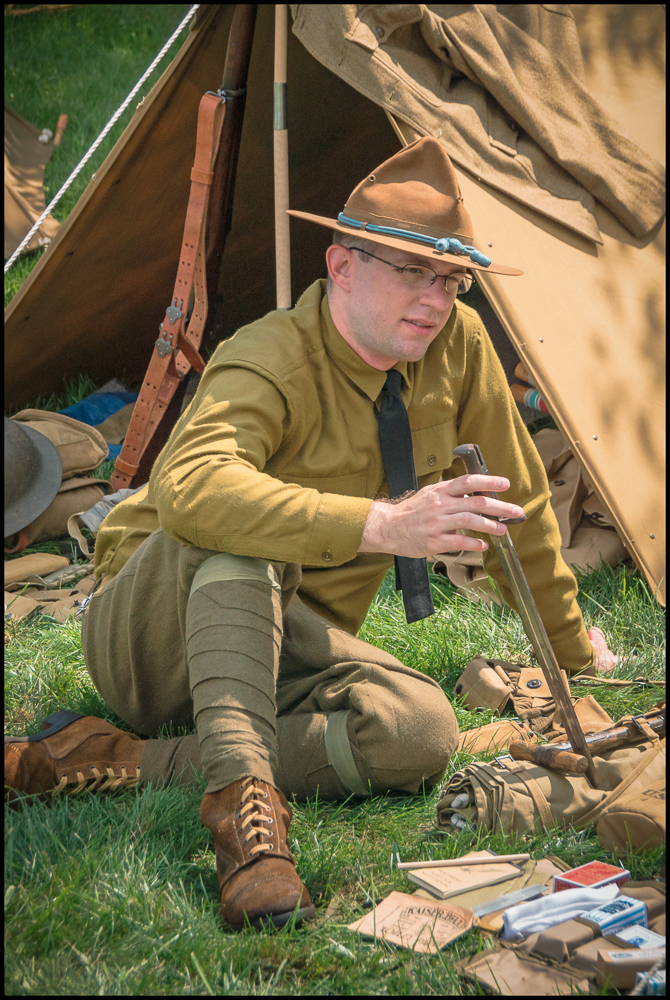
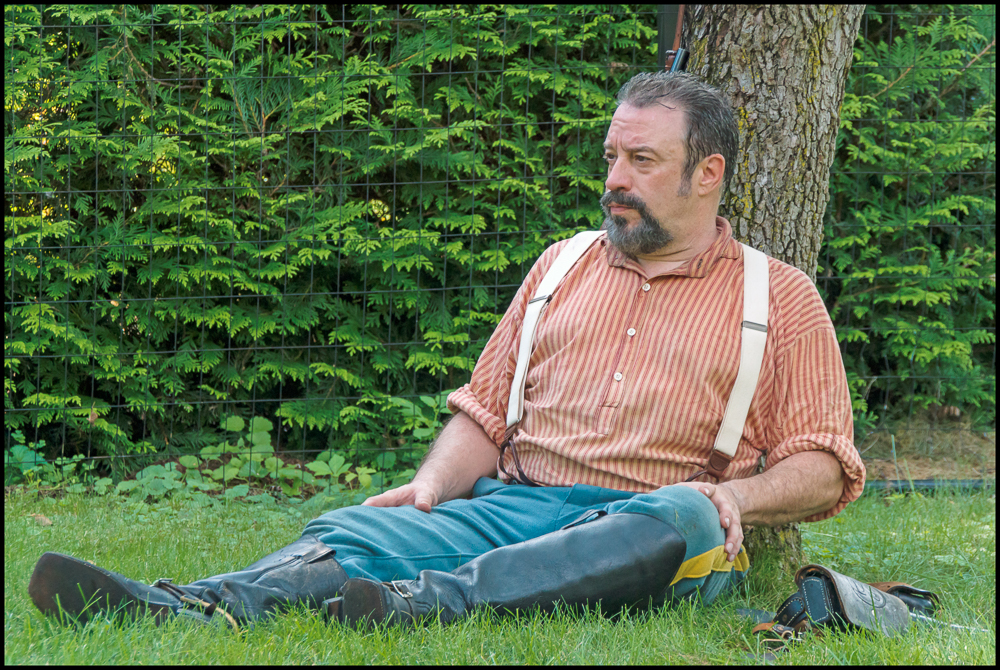
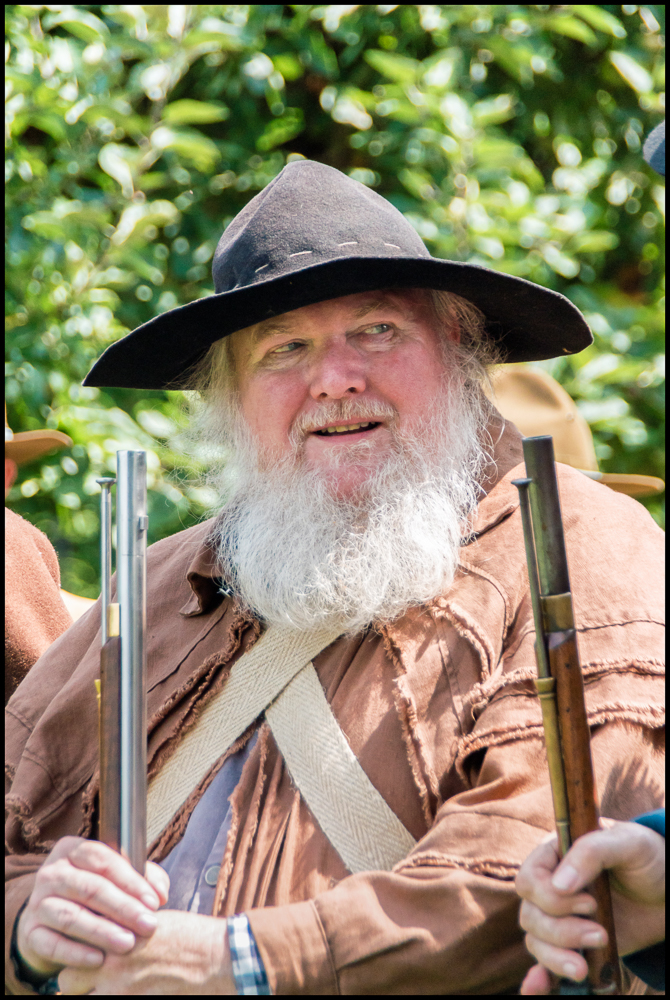
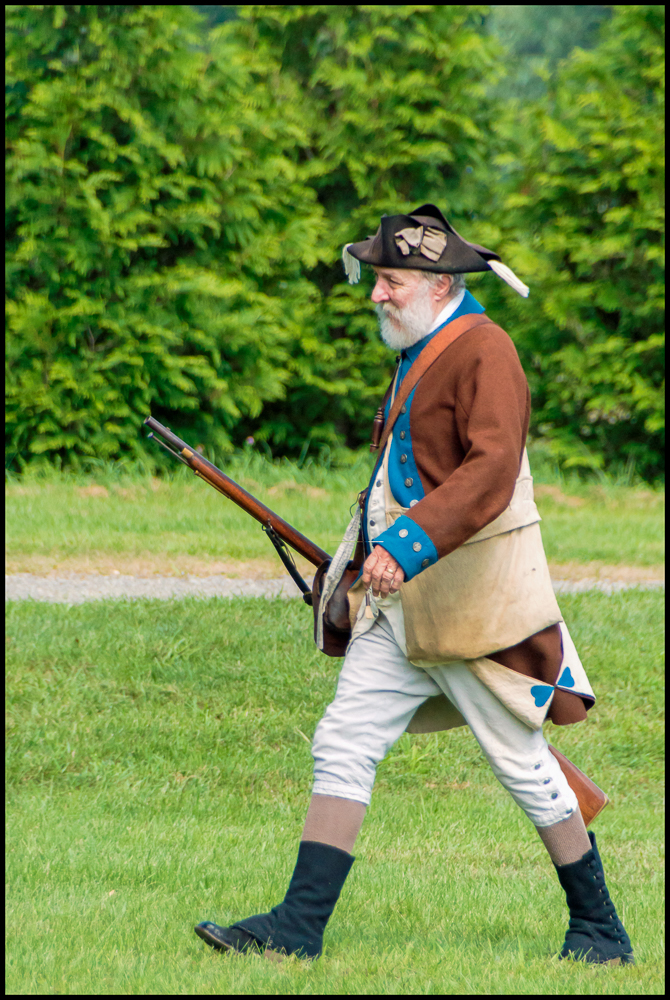
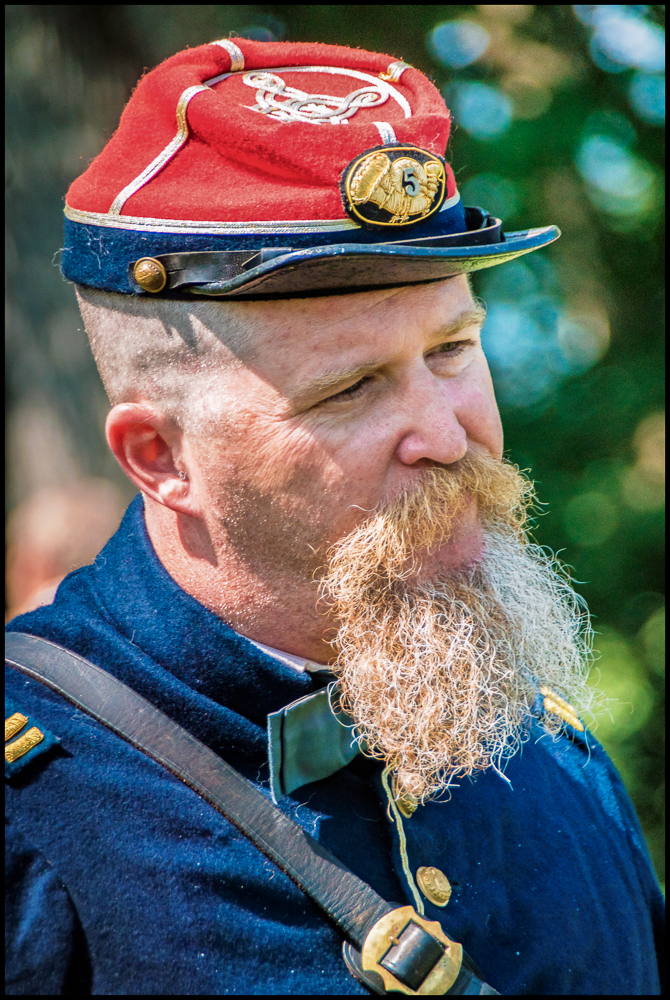
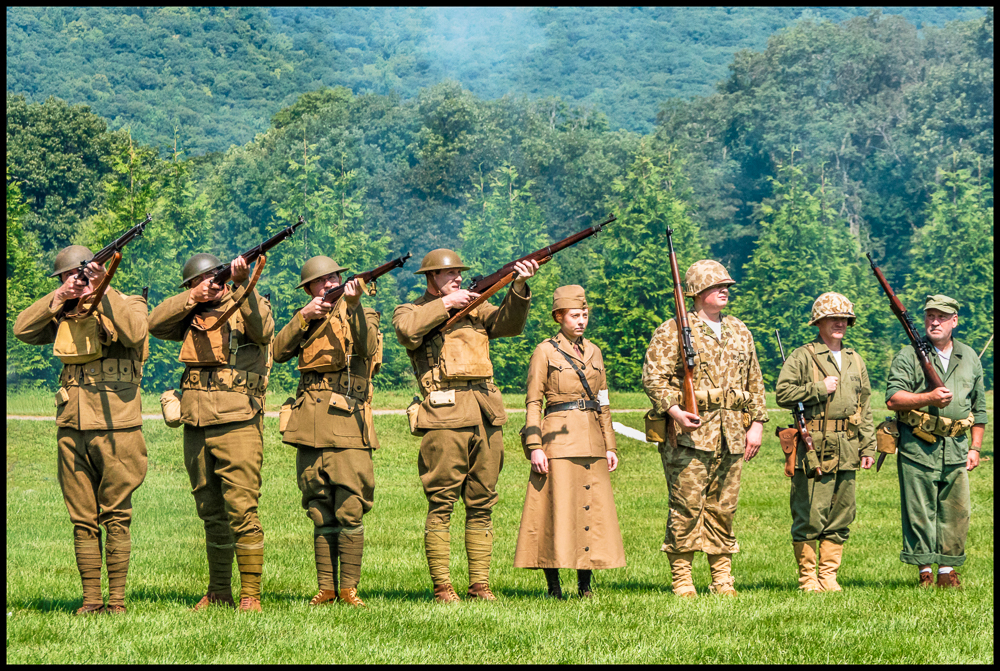
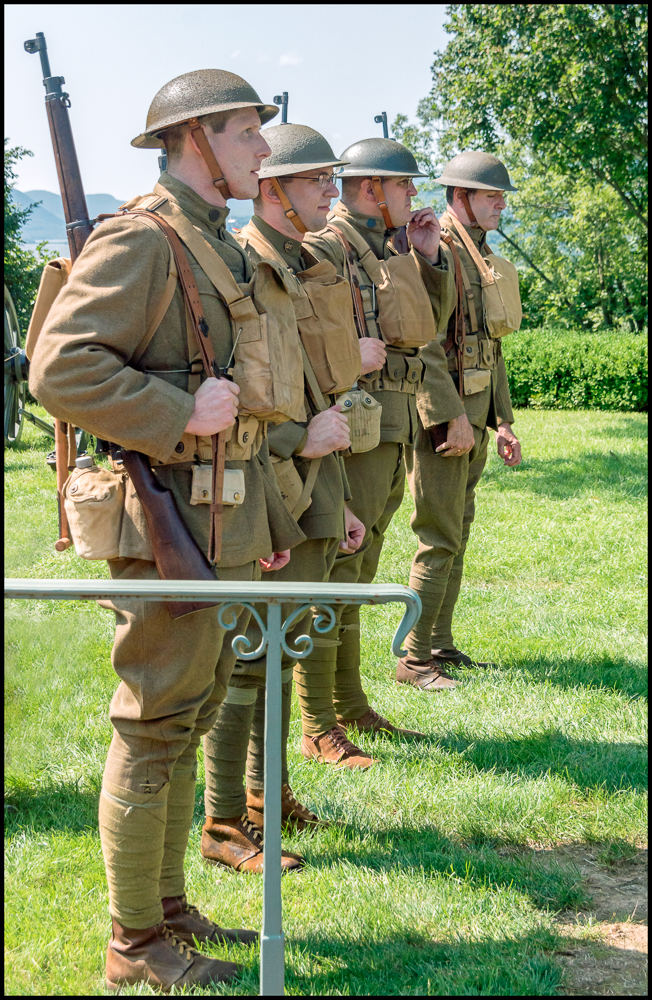
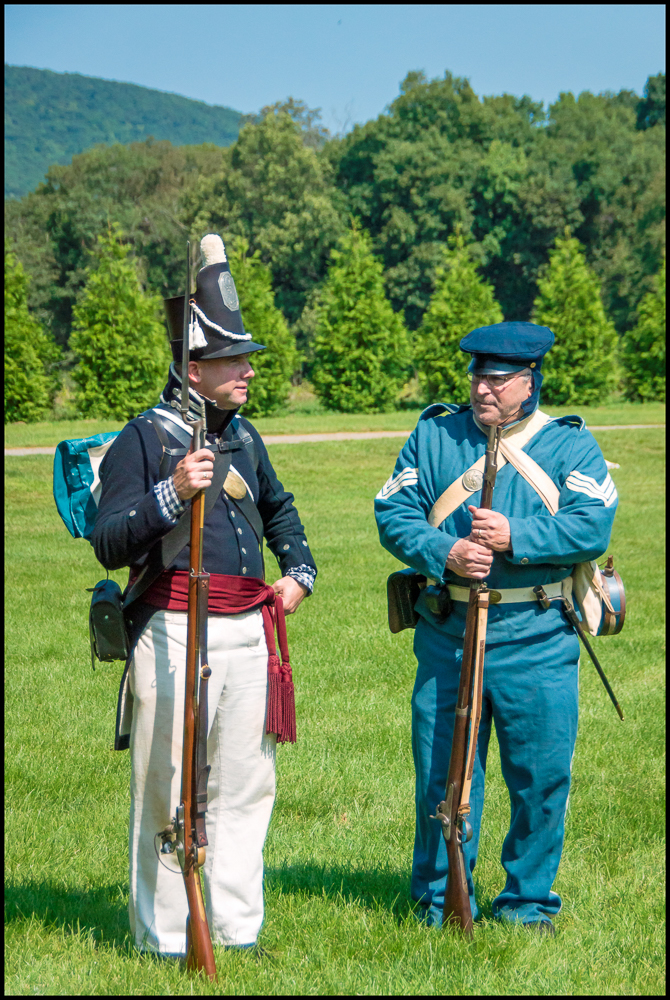
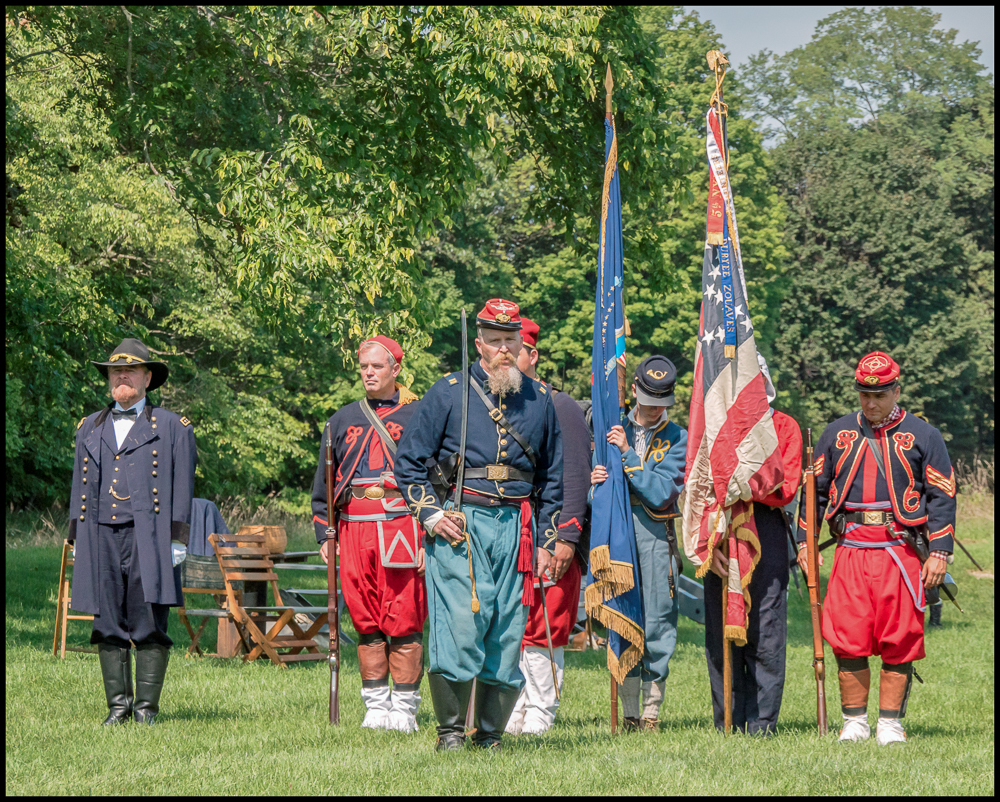
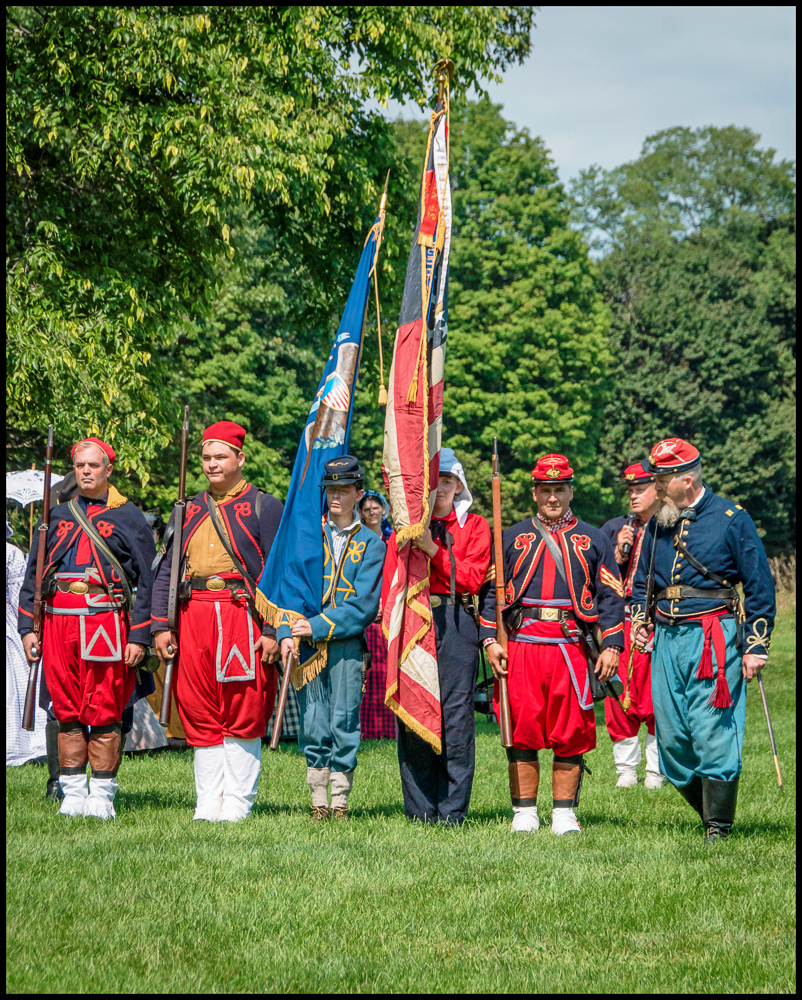
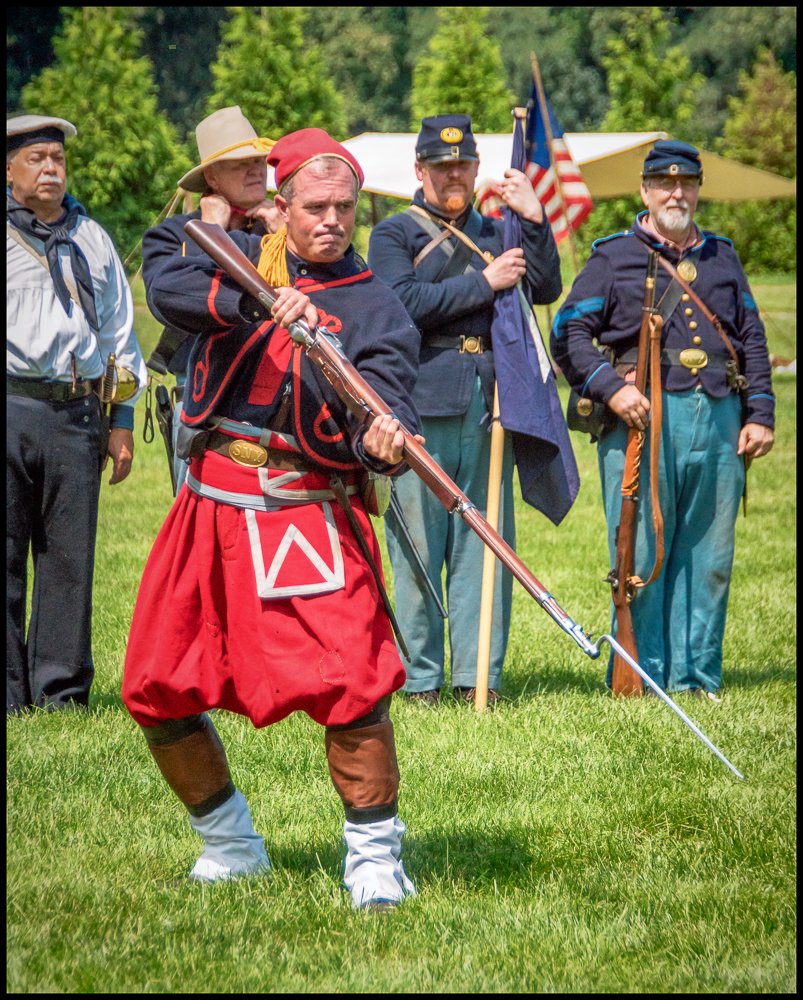
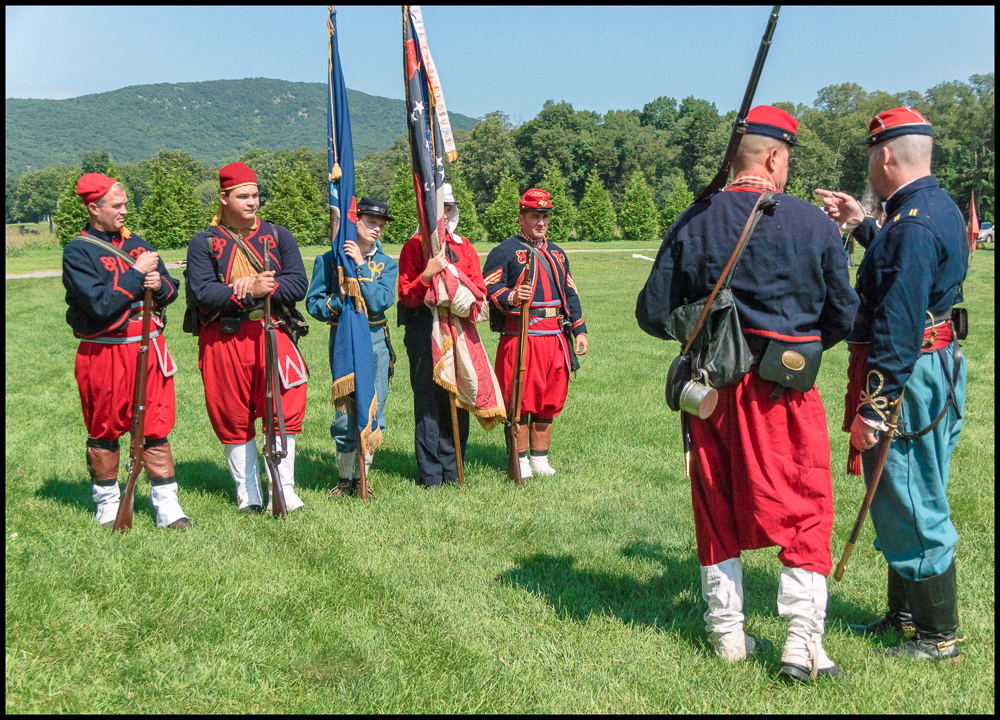
Apparently these are Zouaves. There seem to be more of them than any other type. Maybe because of the fancy uniform? Or could it be because the Zouaves have a fascinating history.
According to War History Online:
The Zouaves originally came as part of the French Army linked to French North Africa, which served between 1830 and 1962. Their uniform and tactics were based on those of the Algerian Berbers who earned a reputation for their fast moving, agile fighting style. Thus the French Zouaves originally comprised Berber, Arab, European and black volunteers.
A Zouave was distinctive in his uniform which included a pair of baggy trousers, short open jacket, a sash and an oriental headgear.
They were the among the most decorated units of the French Army, and following the Crimean War of 1854 and the Italian War of 1859, their reputation would spread beyond France, with new Zouave units being formed in several countries across the world.
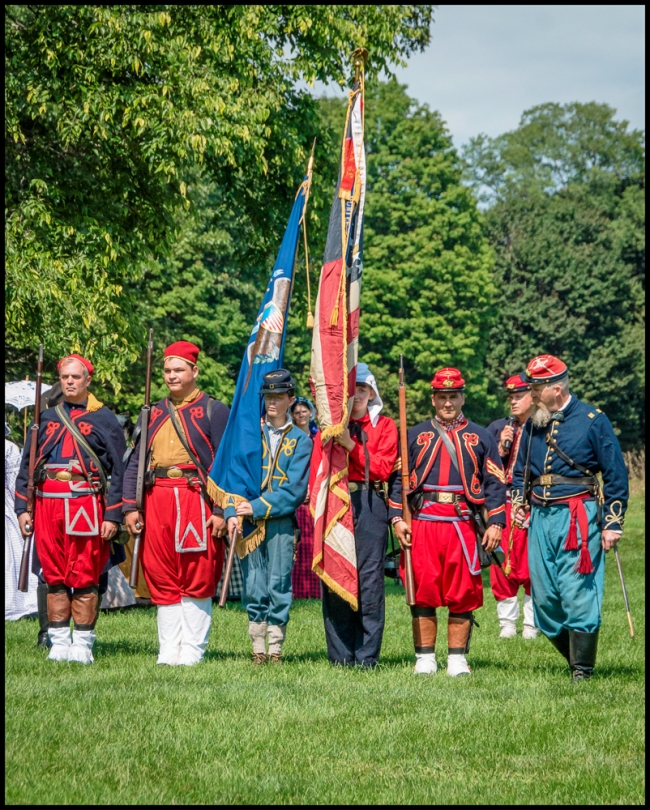
A New York clerk named Elmer Ephraim Ellsworth was the mastermind behind the first Zouave unit to be noticed in the United States. He had learned all the Zouave drills from their drill manual and had combined these with the American style military drill. He soon took over a local drilling team named the Rockford City Greys, a cadet drilling company founded in 1859, and had renamed them to the Zouave Cadets.
Not long after the cadet gained a reputation, he was offered a command of the National Guard Cadets. The obsolescent militia company was transformed under his command into the United States Zouave Cadets, and they would in 1859 go on to win the national military drilling competition in Chicago. His cadet toured around the U.S., performing light infantry drills with theatrical additions.
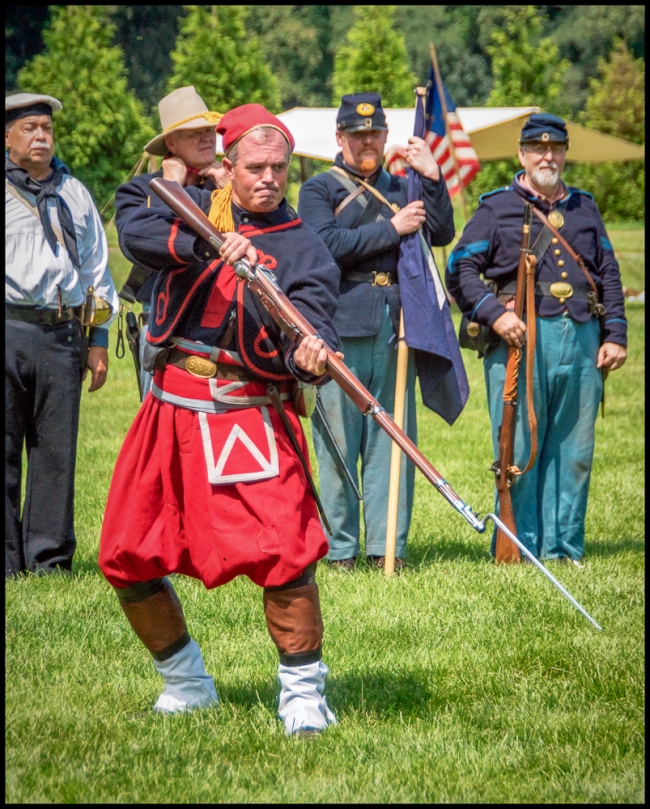
It was during one of these events that Abraham Lincoln met him and using his newly found connection with Lincoln, he would go on to assemble the 11th New York Infantry Regiment a.k.a. Fire Zouaves, which would be sworn into federal service on May 7th.
However, the 9th New York Infantry Regiment a.k.a. the Hawkins’ Zouaves, were the first Zouave Regiment to officially enter the Civil War.
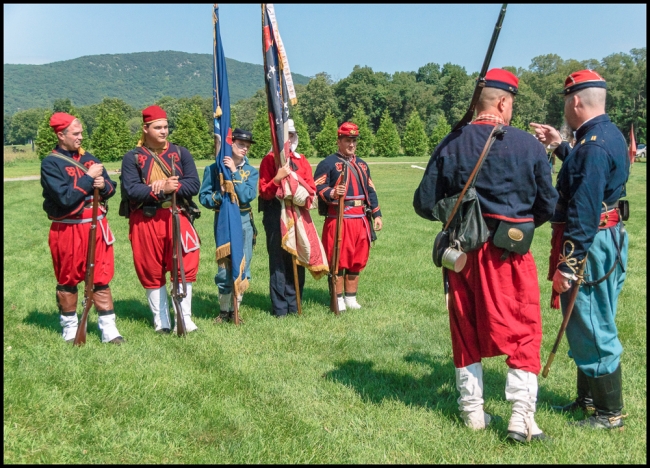
Following the outbreak of the U.S. Civil War, several units from both Union and Confederate sides adopted the name, appearance, and style of the Zouaves. The Union Army’s Zouave regiments numbered over seventy, while the Confederates had about twenty five Zouave companies throughout the conflict.
Zouaves were involved in all the major Civil War battles, from the First Manassas to Antietam, and Gettysburg to Appomattox.
Zouaves fought in open order formations comprising looser, reactive groups, rather than the close order formations common to other regular infantry units.
Acting as light infantry, they were equipped with smaller, lighter, weapons, mostly carbine-style “two band” muskets. They were known to be fast and agile, attacking in a rapid advance of 100 to 200 meters, dropping to the ground to load and fire their rifled muskets.
The Uniforms of the Zouaves were ironically a non uniform, as their outfit was not easy or cost effective to procure. Each regiment had an oriental style dressing but uniforms varied widely owing to the level of availability of fabrics and the choices of the commanders. The uniform of the Zouave regiments was generally similar to those of the French Zouaves, with some modifications, depending on availability and choice of fabrics.
The most famous Zouave regiments included the 11th New York Volunteer Infantry known as the “Fire Zouaves”, the 114th Pennsylvania Infantry known as “Collis’s Zouaves, and the 5th New York Volunteer Infantry a.k.a. “Duryee’s Zouaves”.
…
On the 9th of April 1835, one hour before General Robert E. Lee officially surrendered the Confederate Forces to General Grant of the Union Army, the last Union casualty of the Civil War occurred as a soldier of the 155th Pennsylvania which was part of the 5th Corps’ Zouave Brigade was mortally wounded.
Thus the first and last fatality of the American Civil War was a Zouave.
Taken with a Sony A77II and Tamron A18 AF 18-250mm f3.5-6.3.