According to the church’s website:
In the early 1820’s the first group of Anglicans began meeting in the “upper room,” a large space used as a pattern shop above the boring mill, one of the original buildings of the West Point Foundry. Other denominations shared the same room for their own services. In 1826 a Union Church was built at the riverfront and was used by Episcopal, Presbyterian, and Baptist congregations for several years. As the congregations grew, it became apparent that each would seek to build its own church..
In 1840 the Parish of St. Mary’s Church in the Highlands was organized and incorporated with Messrs. Gouverneur Kemble and Robert P. Parrott becoming the first wardens. It was named St. Mary-in-the-Highlands in honor of the Blessed Virgin Mary and patron saint of Mary Parrott who, it was believed, provided the money for the building of the first church of St. Mary-in-the-Highlands. This church, a handsome brick Gothic edifice, stood in the center of the village of Cold Spring. It was consecrated in November of 1841 by Bishop Benjamin T. Onderdonk and served the parish for about 25 years.
As Cold Spring prospered during and after the Civil War, so did the members of the Episcopal Church increase to the extent that the congregation exceeded the capacity of the original brick building. Robert P. Parrott realized the situation and offered the Wardens and Vestry the present site together with substantial aid for building a second St. Mary’s Church. His offer was gratefully accepted and Gouverneur Kemble, Gouverneur Paulding and Frederick Plummer James in turn provided generous contributions to the project as well.
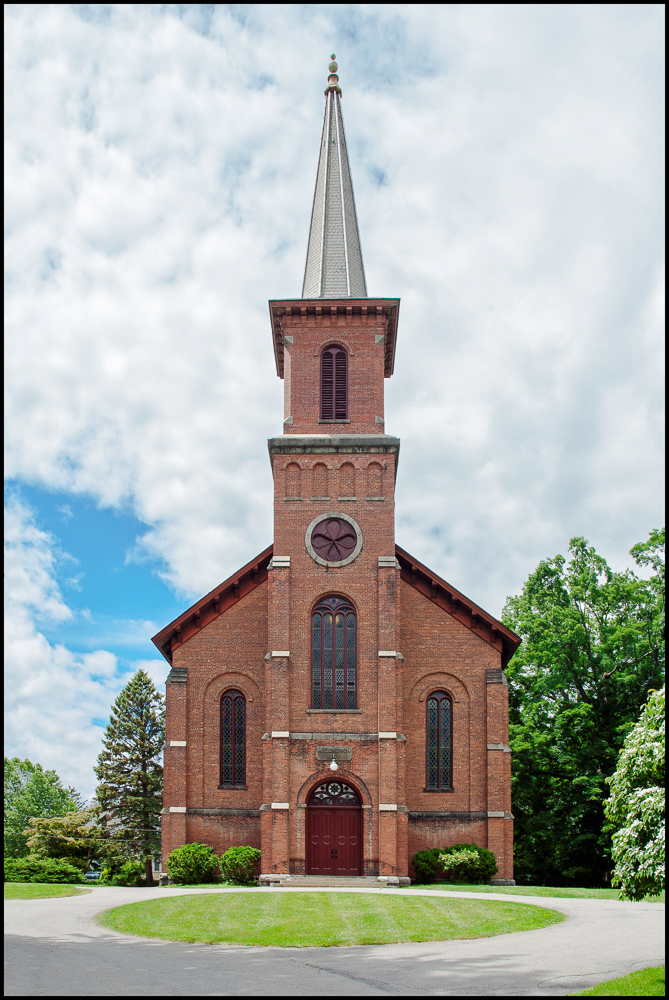
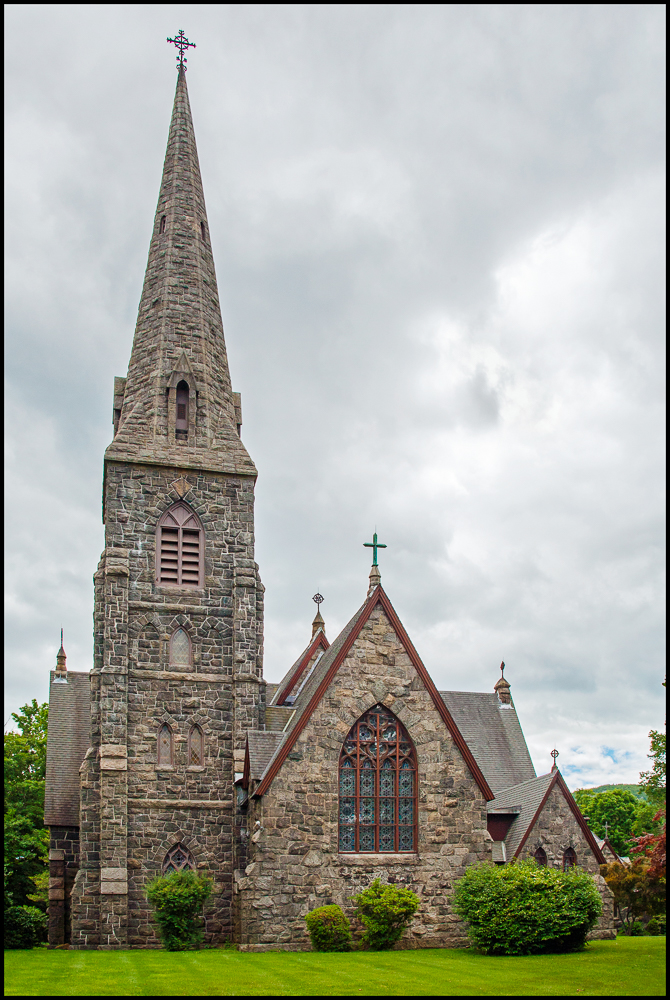
Architect and vestry member George Edward Harney was instructed to design the second church of St. Mary-in-the-Highlands. Building began in late 1867 under the direction of Sylvanus Ferris, “a clever builder of Cold Spring,” and was completed the following year. Constructed of gray granite taken as a donation from the estate of F.P. James, the church was built in cruciform shape. Its length is 100 feet and its breadth at the transepts is 68 feet; the roof is 40 feet high and is made of timber. The church spire rises to a height of 128 feet above the ground. Situated the top of the hill the church has a commanding view overlooking the village and river. The consecration of the church took place in a ceremony led by Bishop Horatio Potter on July 23, 1869. On that day the great bell in the tower, weighing 1,100 pounds, rang out for the first time, clearly and easily heard over the countryside.
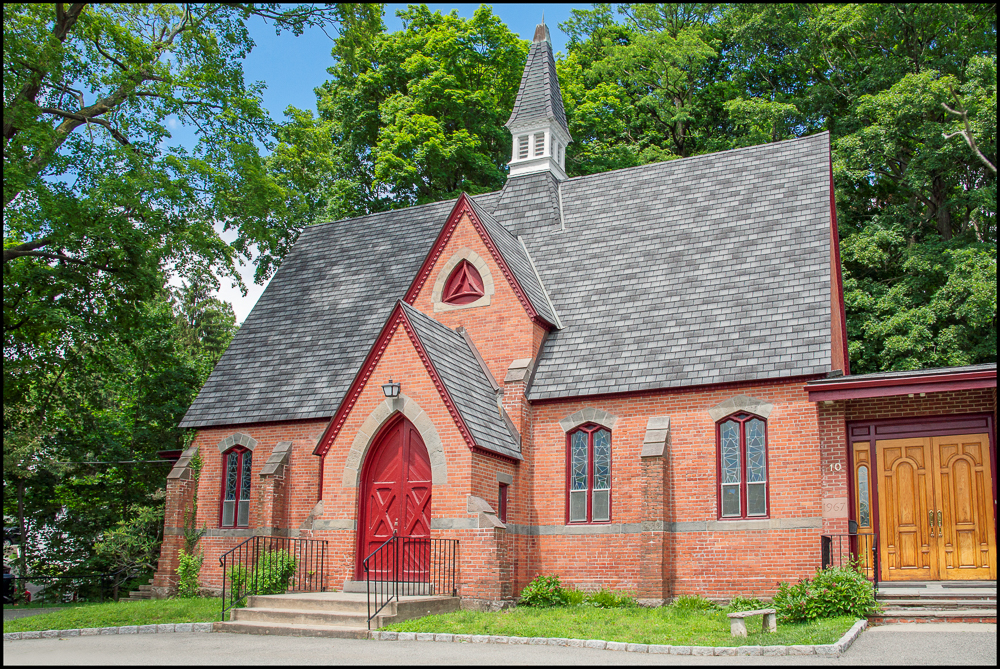
In addition to the services held in the new church, Sunday school classes were at first conducted in the basement of the building, but conditions proved too dark, damp and cold for the children. The vestry soon decided a second building should be erected for the purpose of Sunday school. Once again Harney and Ferris went to work and the St. Mary’s Parish Hall was completed by 1874. The handsome structure was the gift of Frederick and Julia James, a donation that honors the memory of their sons Frederick and Julian, who both served with gallantry in the Union army during the Civil War. The first class was held in the new hall on Sunday, August 2, 1874. The hall has gone on to serve the parish well in many different ways including lectures, celebrations, tag sales and fairs.
Tragedy struck on one early July morning in 1961 when a fire broke out in the north transept causing significant damage to the church’s roof and interior. The chancel roof was completely destroyed and the transept roofs were badly burned. The original organ and most of the stained glass were lost while the furniture fortunately survived with little damage.
By the grace of God, the tireless effort of the devoted congregation, and the generous gifts of townspeople and friends up and down the Hudson Valley, the church was restored within a year and rededicated in 1962 by Bishop Horace W. B. Donegan. The appearance of the church was changed somewhat with the restoration; the organ console was moved to the opposite side of its original place in the chancel, the native stone and brick around the window behind the altar and within the chancel was left exposed, and with the replacement of the roof, which was the most extensively damaged part of the church in the fire, the slate roof and its picturesque vents were lost. Stained glass windows damaged in the fire were repaired and some of the original windows have been replaced by memorial stained glass from various studios. Mr. Walter Jago of Sleepy Hollow Restoration, the restoration architect, donated the “Christ Window” above the Floyd-Jones altar in the south transept.
Taken with a Canon 5D and Canon EF 28-105mm f3.5-4.5 USM.