RIP Robert Frank

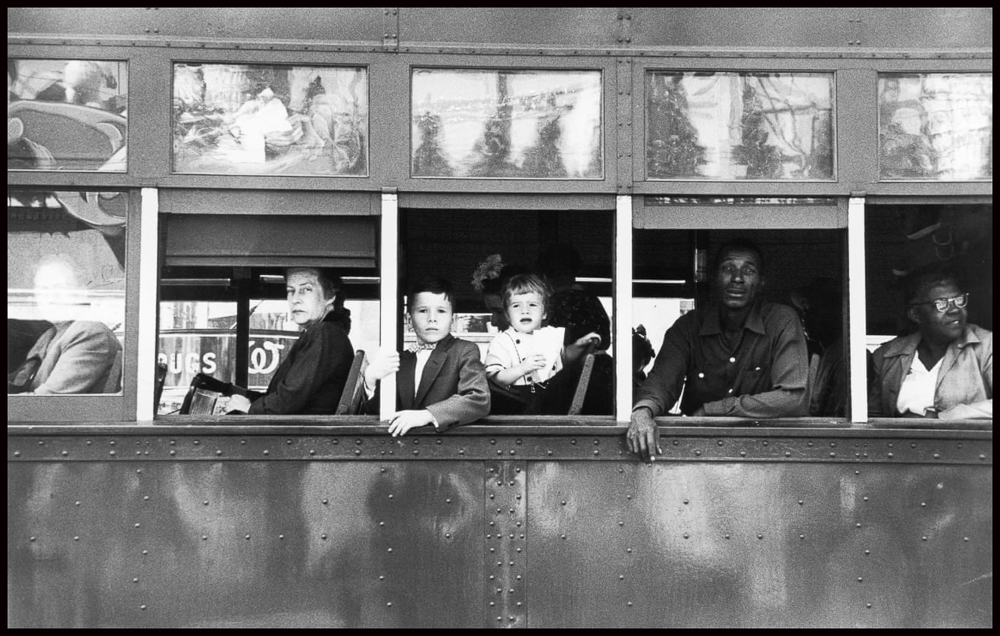
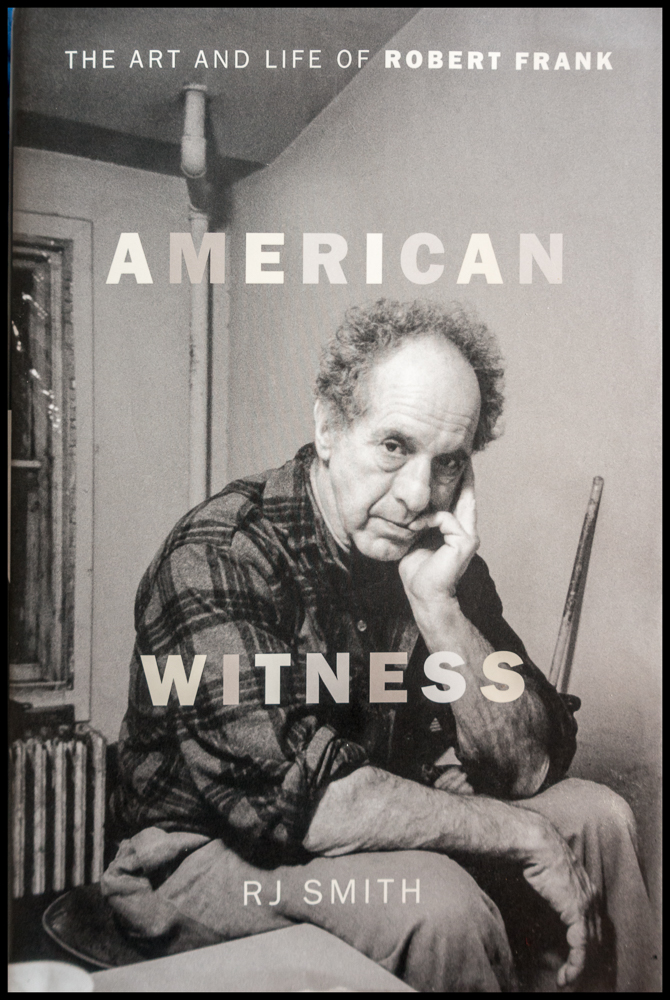
It was with great sadness that I heard of the death of Robert Frank (See: Robert Frank, revolutionary American photographer, dies aged 94). For some time I didn’t really “get” his photographs. However, after reading the book “American Witness. The Art and Life of Robert Frank” I’ve since warmed to his work even if I still can’t quite understand why he’s so high in the pantheon of great photographers – particularly since his reputation is based almost entirely on one work: “The Americans”.

No-one can doubt his significance, however.

As the obituary states:

The Swiss-born photographer’s seminal book The Americans, which had an introduction from Jack Kerouac, beat generation author of On the Road, helped to change the direction of photography with its 83 pictures rejecting many conventions of the art form up to that point.

The Swiss-born photographer’s seminal book The Americans, which had an introduction from Jack Kerouac, beat generation author of On the Road, helped to change the direction of photography with its 83 pictures rejecting many conventions of the art form up to that point.

Shot on a Leica 35mm camera, the black-and-white images are considered Frank’s masterwork and focused on figures from the overlooked margins of American life – from teenage couples and factory workers to bikers. Dubbed the “Manet of the new photography” by the New Yorker critic Janet Malcolm, Frank was considered the father of “the snapshot aesthetic”, which captures a spontaneous moment taken on the fly.

I love the quote in the final paragraph of the obituary:

“The kind of photography I did is gone. It’s old,” Frank told the Guardian in 2004. “There’s no point in it any more for me, and I get no satisfaction from trying to do it. There are too many pictures now. It’s overwhelming.”

Ara Güler considered on Casual Photophile

Ara Güler, people sitting talking beside a coffee bar in Beyoglu, 1958. Ara Güler/Magnum Photos via Ajam Media Collective

Very interesting, detailed and lavishly illustrated piece by Drew Chambers on Ara Güler, the Turkish photojournalist who passed away last October: “Everything starts with light” – An Oral History of Ara Güler.

I had not known his name and was not familiar with his work.

The Great Showman

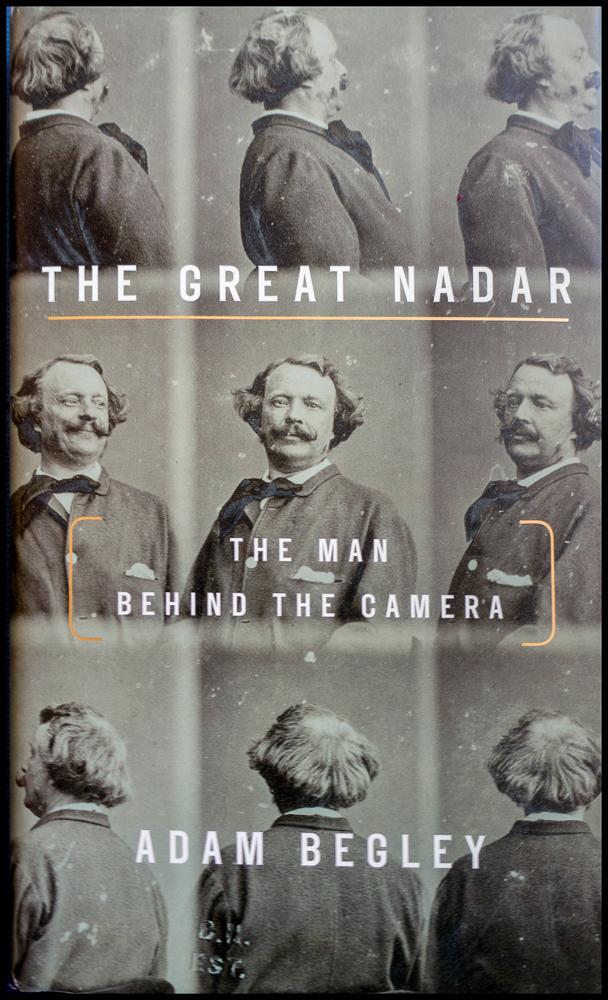
This is another of my Christmas presents: The Great Nadar. The Man Behind the Camera. By Adam Begley.

Possibly the greatest photographer of his age Gaspard-Félix Tournachon (brand name Nadar) was a friend of numerous celebrities many of whom he photographed including: Alexandre Dumas , Théophile Gautier, Gérard de Nerval, Charles Baudelaire, Victor Hugo, George Sand, Honoré Daumier, Jules Verne, Sarah Bernhardt and scores of others. His portraits are superb – definitely on the same level as other famous portrait photographers e.g. Julia Margaret Cameron; Richard Avedon; Yousuf Karsch; Arnold Newman etc. He was the first to photograph from the air (i.e. from a balloon) and the first to photograph underground (e.g. in the catacombs of Paris).

But Nadar was much more than that. Before he turned to photography he had lived a bohemian life and had become a famous illustrator. He’d also written novels and plays. Later he turned to aeronautics becoming a strong advocate of heavier than air flight and, curiously a renowned baloonist. He flew in one of the largest balloons of the time: and almost died (along with his wife who was also a passenger) when “Le Géant (Giant)” eventually crashed (See: Flight of the Giant).

It’s a great read and is filled with numerous wonderful examples of Nadar’s work. I thoroughly enjoyed it.

American Witness. The Art and Life of Robert Frank

In earlier posts I’ve noted my difficulties with Robert Frank.

Initially I had some problems with “The Americans“. It seemed to me that it deliberately painted a negative picture of the USA in the 1950s.
Then, after further study I decided that I was wrong and have since become a fan.

So, I thought, the problem must be with Frank, himself. It seemed to me that he was one of these self-absorbed, very “artsy” types who thought being unpleasant was something that they should be allowed because they were special. He was, after all, a part of the beat generation, most of whom displayed these characteristics.

I couldn’t see what was so special about Frank. He’s certainly a first rate photographer, and “The Americans” is possibly the best photobook ever made. But, after that it seemed to me that he didn’t achieve much else. He made movies. I watched one of them and didn’t much care for it. And he eventually returned to still photography but without achieving his earlier fame.

So why is he always placed high on a pedestal, almost god-like. What makes him so much better than other famous photographers e.g. Paul Strand, Edward Weston, Walker Evans etc? I still don’t have an answer to that question.

Then I came across this documentary: Leaving Home, Coming Home: A Portrait of Robert Frank (2005), which made Frank more human. At times he could be a bit “curmudgeonly”, but he wasn’t the self-obsessed artist that I thought he would be.

So I think I’ve finally come to terms with Robert Frank: a great photographer who produced one of the greatest photographic works of our time. Does he deserve to be up on the pedestal? I’m not convinced that he does. But he didn’t put himself on the pedestal. His acolytes did so I can hardly blame him can I?

To me Frank is definitely high up in the pantheon of great photographers, but he’s not the only one up there and there may be some who are higher.

I’ve read the book twice and can heartily recommend it.

A few Christmas Presents

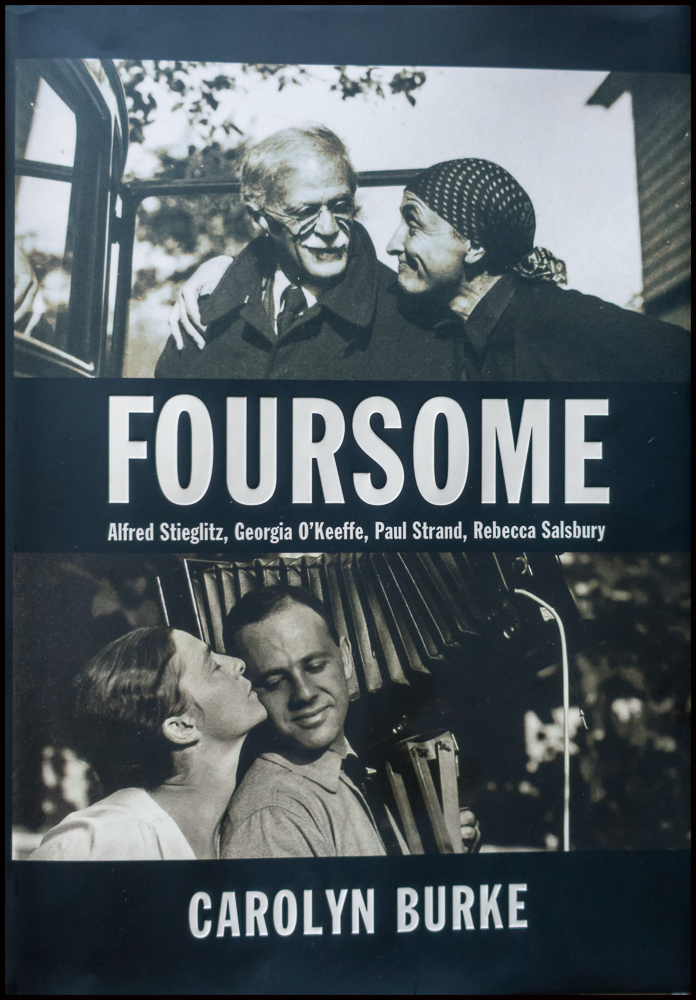
I got a few photography related books as Christmas presents. They
Andreas Feininger: Photographer by Andreas Feininger (1986-10-03)
Feininger, Andreas.

Arnold Newman
by Philip Brookman, Arnold Newman

A History of Pictures: From the Cave to the Computer Screen. by David Hockney, Martin Gayford

Retro Cameras: The Collector’s Guide to Vintage Film Photography
by John Wade

The Great Nadar: The Man Behind the Camera
by Adam Begley

Absence/Presence: Richard Pousette-Dart as Photographer. by Charles Duncan, Richard Pousette-Dart

Ansel Adams in Color
by Andrea G. Stillman, John P. Schaefer

More on each of them individually as I get around to reading them.