Happy Birthday, M. Daguerre

Louis-Jacques-Mandé Daguerre was born on 18 November 1787 in Cormeilles-en-Parisis, Val-d’Oise, France. Best known as one of the first pioneers of photography he was also an accomplished painter, businessman and advocate of the diorama.

His positive daguerrotype process for a while dominated photography until ultimately supplanted by William Henry Fox Talbot‘s, negative calotype process.

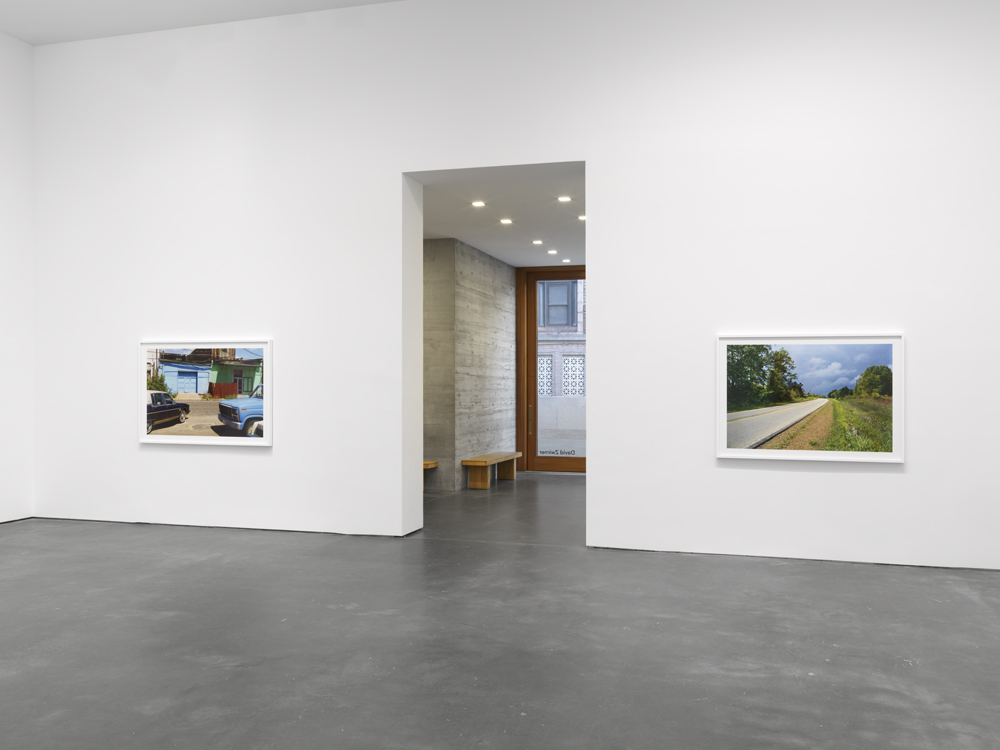
William Eggleston exhibition in New York City

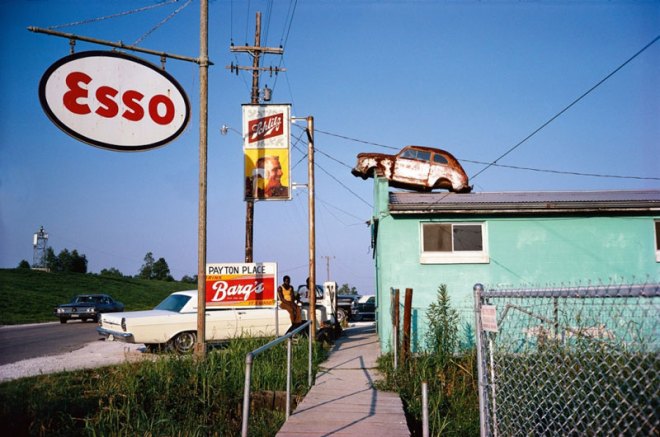
Above: Untitled from The Democratic Forest, c. 1983-1986. Pigment print, 44 x 60 inches (111.8 x 152.4 cm)

At the David Zwirner gallery:

Over the course of nearly six decades, William Eggleston—often referred to as the “father of color photography”—has established a singular pictorial style that deftly combines vernacular subject matter with an innate and sophisticated understanding of color, form, and composition.

Eggleston has said, “I am at war with the obvious.” His photographs transform the ordinary into distinctive, poetic images that eschew fixed meaning. Though criticized at the time, his now legendary 1976 solo exhibition, organized by the visionary curator John Szarkowski at The Museum of Modern Art, New York—the first presentation of color photography at the museum—heralded an important moment in the medium’s acceptance within the art-historical canon and solidified Eggleston’s position in the pantheon of the greats alongside Henri Cartier-Bresson, Robert Frank, and Walker Evans.

Published on the occasion of David Zwirner’s New York exhibition of selections from The Democratic Forest in the fall of 2016, this new catalogue highlights over sixty exceptional images from Eggleston’s epic project. His photography is “democratic” in its resistance to hierarchy where, as noted by the artist, “no particular subject is more or less important than another.”

Featuring original scholarship by Alexander Nemerov, this notable presentation of The Democratic Forest provides historical context for a monumental body of work, while offering newcomers a foothold in Eggleston’s photographic practice.

Source: The Democratic Forest » David Zwirner

There’s also an accompanying book: William Eggleston: The Democratic Forest, Selected Works.

Sir Arthur Conan Doyle and photography

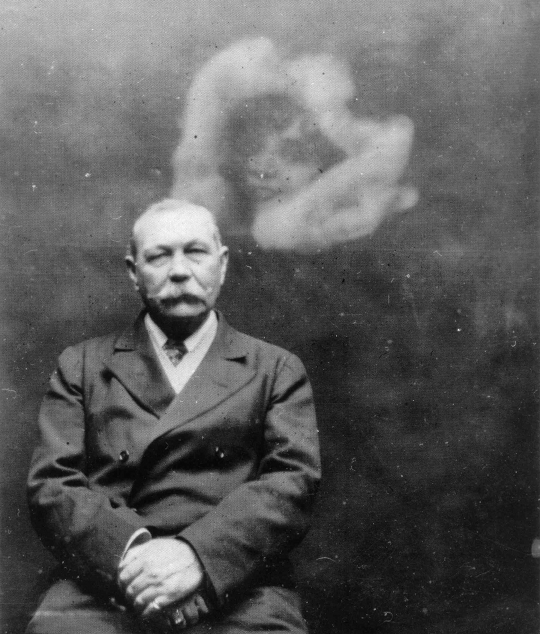
Spirit photograph of Arthur Conan Doyle taken by the ‘spirit photographer’ Ada Deane in 1922, the same year in which Conan Doyle’s The Coming of the Fairies was published via The Public Domain Review

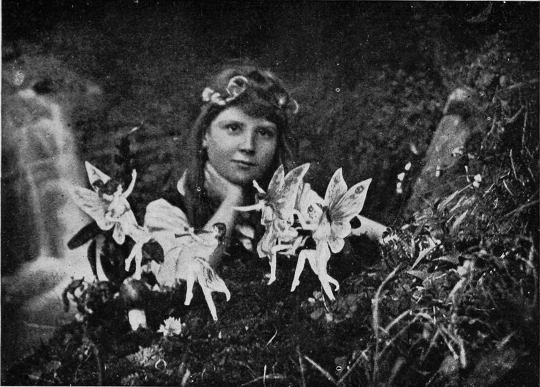
In the winter of 1920, readers of the popular British magazine the Strand found a curious headline on the cover of their Christmas issues. “FAIRIES PHOTOGRAPHED,” it said. “AN EPOCH-MAKING EVENT DESCRIBED BY A. CONAN DOYLE.” The Strand’s readership was well acquainted with Sir Arthur Conan Doyle; most of his wildly popular Sherlock Holmes stories had appeared for the first time in its pages. The great man’s claim that fairies –real fairies – had been photographed in the north of England by two young girls wa

Source: Sir Arthur and the Fairies | The Public Domain Review

The first fairy photograph, featured in Conan Doyle’s The Coming of the Fairies (1922) Via The Public Domain Review

The fairy pictures seem to me to be obvious fakes, but perhaps when photography was young this was not quite so obvious. Maybe in those days people we more willing to accept the veracity of photographs than they are today when we all know how easy it is to manipulate a photograph. Although he doesn’t seem to have been a very active photographer himself, Doyle had 13 articles on photography published by the British Journal of Photography. He also wrote a book called “The Case for Spirit Photography”.

And now to the real reason for this post. I’m feeling quite pleased with myself at the moment. Of course I’ve seen Sherlock Holmes movies and the various TV series. And I have a vague memory of having to read some Holmes in High School (as I recall I didn’t enjoy it much at the time). I can’t remember ever reading Sherlock Holmes just for the fun of it. So I’ve just worked myself through the complete Sherlock Holmes: 4 novels and 56 short stories. Phew!! For the most part I enjoyed the experience even though some of the stories were fairly ordinary.

On William Eggleston

A couple of recent articles related to William Eggleston.

The first is from the New York Times: William Eggleston,the Pioneer of Color Photography

The second is from Eric Kim. I share his initial thinking about Eggleston:

I didn’t “get” the photographs. What was Eggleston photographing a bunch of random stuff for? His photos seemed to be like a bunch of random snapshots, photographed without much thought or conviction. Just the ordinary and banal things of everyday life. I wanted to punch myself in the gut for spending 300 USD for a photographic book collection that I had no interest in.I then sent Charlie a message and asked him why he enjoyed Chromes, and that I was a bit disappointed. I remember him telling me simply, “The colors are just lovely.” He didn’t say much after that. Source: 10 Lessons William Eggleston Has Taught Me About Street Photography

.
I’ve not quite come to terms with Eggleston yet. I bought a copy of William Eggleston’s Guide to see if that would help. It did to a certain extent. There’s certainly something about his photographs that makes me want to look at them again, even though I’m not entirely sure why. I’m not yet a fan, but I’m starting to warm to his work.

Wonderful photographs of soviet era relics

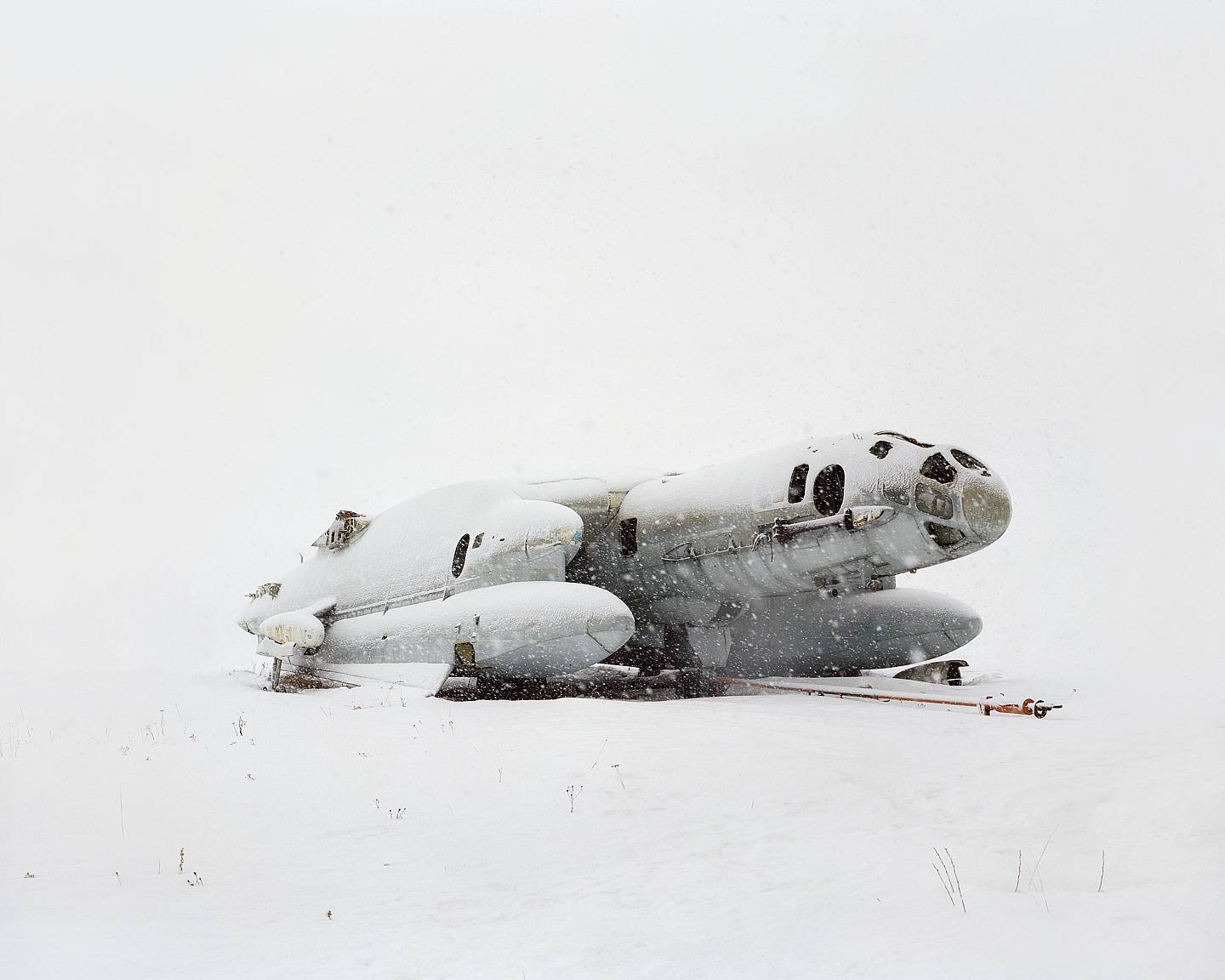
Contemporary Russian artist and documentary photographer Danila Tkachenko brings a new landscape of the former Soviet Union through his photographs of unfinished and restricted areas, all once deemed significant by the Union. The places in Tkachenko’s “Restricted Areas”, along with its utopian ideology and endeavors, have become obselete by the end of the 20th century. The multiple award-winning photographic series Restricted Areas by Tkachenko can be currently viewed at the Fotogalerie Friedrichshain in Berlin

Fascinating photographs of Soviet era installations and equipment. Although in color the colors are so muted that at first I thought they were black and white. I particularly liked the shot above – looks like something from “Star Wars”. I was curious about how he’d made the photographs and gained some insights from an interesting National Geographic Article (Remnants of a Failed Utopia in the Former Soviet Union) which Tkachenko states: “I needed a lot of snow falling, This created a special atmosphere in the photographs, a kind of … very diffused light.”

According to Wikipedia:

Danila Tkachenko (born 1989) is a Russian visual artist working in the field of documentary photography.

Tkachenko won a World Press Photo first prize for his series Escape. Another series, Restricted areas, won the European Publishers Award for Photography. His work has been exhibited in Russia, Europe and north America.

Tkachenko was born in Moscow in 1989. In 2014 he gained a degree in documentary photography from Rodchenko School of Photography and Multimedia.

In 2014 Tkachenko won a World Press Photo first prize in the Staged portraits stories category for his series called Escape, about people who have withdrawn from society to live as hermits in nature.

His series Restricted areas, documenting Russia’s abandoned secret military cities, won the European Publishers Award for Photography in 2015.

Tkachenko’s works are included in Salsali Private Museum permanent collection.