Want to print more?

I’d like to print more and have in the past done a few photobooks (see “Print on Demand Books” below) and have generally been satisfied with the results. I’ve also printed and framed a number of my pictures, but have been a bit limited by 1) a lack of wall space; and 2) the cost involved (that’s true of the print on demand books too). So I was very pleased to come across this interesting and extremely useful series of articles on Andrew Molitor’s Photos and Stuff. In all there are five articles

Introduction
Wall-Mounting
Hand Made Books
Print on Demand Books
Why?

They offer practical, and usually low cost options for printing and displaying photographs.

David Hockney Photographer

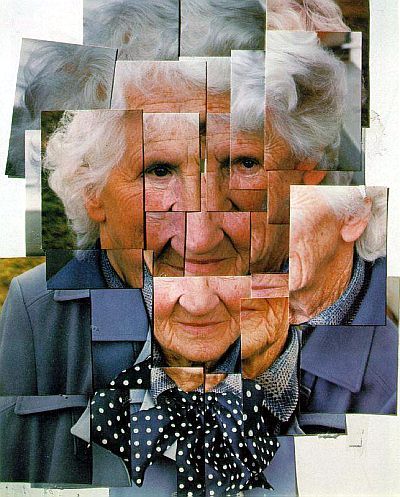
Mother – Hockney

I didn’t know that David Hockney was a photographer. Actually after seeing some of his photography I suspect that he is, like many other contemporary photographers, less of a photographer than an artist who sometimes uses photography in his works.

David Hockney is a great painter,but he has also known fame through photography, although he does not mince his words when he says ‘Photography will never equal painting!’

Source: David Hockney – Photography will never equal painting! | Photography and Music

Below he talks a little about lost knowledge and photography.

Museum of Modern Art offers free photography course

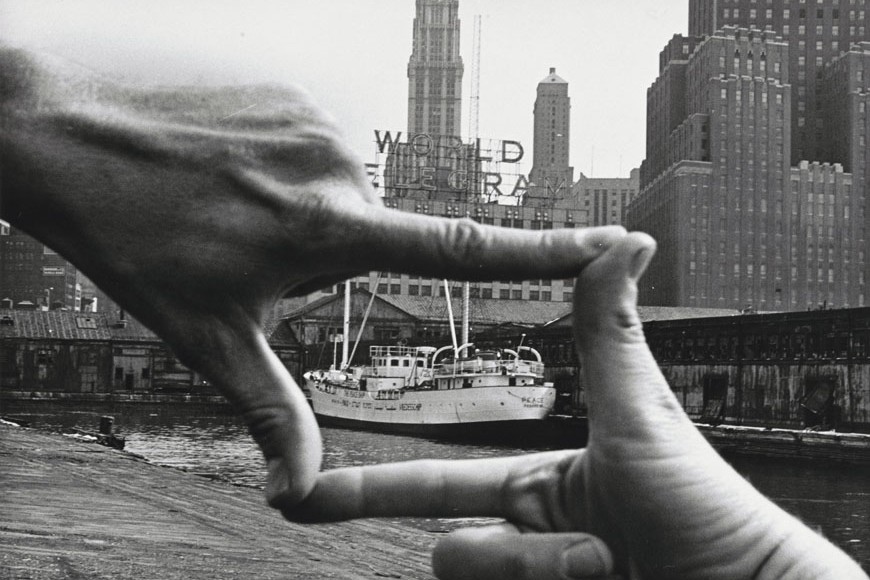
John Baldessari. Hands Framing New York Harbor from Pier 18. 1971. Photograph by Shunk-Kender, from the exhibition “Art on Camera: Photographs by Shunk-Kender, 1960–1971”, MoMA, May-October 2015

I registered, but haven’t yet tried the course. A few comments from someone who has can be found be found in What I Learned By Taking MoMA’s New Photography Course on Petapixel.

Continuing its remarkable activity in organizing open learning activities on creativity and arts, beginning February 10th, the Museum of Modern Art of New York starts an exciting new free online course focused on photography, running on the e-learning platform Coursera.The course, entitled Seeing Through Photographs, is led by Sarah Meister, curator of the MoMA department of photography, and is supported by Volkswagen of America.Open to a general audience and divided into 6 sessions, Seeing Through Photographs will provide a comprehensive view on the art of photography and “about what a photograph is and the many ways in which photography has been used throughout history and into the present day: as a means of personal artistic expression; a tool for science and exploration; a method for documenting people, places, and events; a way of telling stories and recording histories; and a mode of communication and critique in our increasingly visual culture”.

Source: Want to learn photography? MoMA launches free online course

There are no rules of photography – merely guidelines

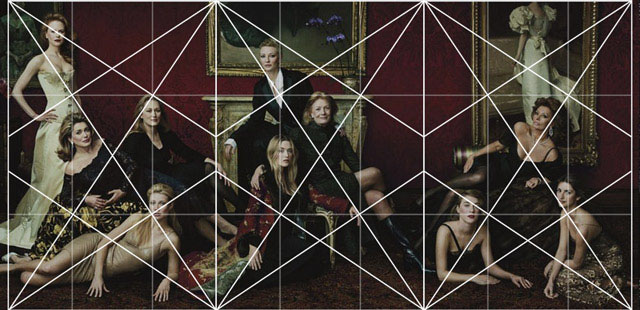
Source: 10 Myths About the Rule of Thirds. Photograph by Annie Leibovitz.

If what the the author of this post is trying to say is that there’s more to composition that blindly following the rule of thirds then I’d agree with him. I too have tended to over-rely on this rule. It’s a simple concept to follow and I believe can improve your photographs if you are just starting. The problem is, as the author suggests, that you for ever afterwards tend to see the world through rule of thirds gridlines and never get beyond that.

The difficulty I have with this article though is that the author attempts to replace the rule of thirds with yet another rule: dynamic symmetry, which seems infinitely more complex than the rule of thirds itself.

I would have thought that the message should have been “don’t rely on rules – they’re only suggestions” not “Ditch the rule of thirds and use DYNAMIC SYMMETRY”.

I very much agree with one of the comments: “Interesting article. One of the things i notice most is, if you draw enough lines everything is bound to line up with something.”

There is, indeed, more to composition that following rules. I’m still trying to understand what it is.

My name is Tavis Leaf Glover, and I’m an artist just like you, trying to create art that I can be proud of and share with the world. Though, something really hindered me in the beginning… the Rule of Thirds.

I want to shed some light on the Rule of Thirds Myths we’ve all been forcefully spoon fed during our creative infancy, which continues to linger as our compositions mature.

Perhaps we can change the future of art together if we help other artists abandon the rule of thirds and introduce them to the invaluable design techniques demonstrated throughout this article. I need your help because I can’t do it alone!

Like many other artists, I was brainwashed into thinking that the rule of thirds is an acceptable method of composing an image. I guess that depends on the standard of art you’d like to produce. Art at the Master Level, like Da Vinci, Bouguereau, Degas, Rubens, or art like a Sunday painter whose goal is to hang their painting in the local antique store… not the prestigious gallery or museum.

 

Alvin Langdon Coburn

Geoff Wittig with a photograph of Alvin Langdon Coburn. Photograph by Mike Johnston (I think?). The Online Photographer: Alvin Langdon Coburn

Great article on Alvin Langdon Coburn on The Online Photographer. It’s nice to see someone who doesn’t dismiss pictorialism out of hand.

Alvin Langdon Coburn, if you don’t know the name, born 1882, was a pictorialist enfant terrible (nevertheless dominated by his strong-willed mother) who did his best work before the First World War—he gained substantial fame and reputation while still in his teens and twenties. But speaking of sharpness, it was pretty amusing to see Coburn’s strongly pictorialist photographic style in light of today’s torrid discussions of resolution and sharpness. Everyone who was anyone in his day considered an impressionistic unsharpness to be the mark of artistic interpretation, and photographers across the Western world prized “diffusion.” The public now, not knowing any better, thinks that old lenses from around the turn of the 20th century were not sharp because the technology simply hadn’t progressed far enough. Not so. Lensmakers vied with each other to make lenses deliberately designed to be unsharp, first for portraits, then for everything. Photographers went to great lengths to seek out lenses with just the proper degree and type of blurriness. And, at clubs and salons and in photographic journals, they argued about just which lenses were the most perfectly unsharp. (I know it appears that I’m kidding, but I am not.) I recall reading about one photographer who kept the identity of his prized portrait lens a secret so his competitors would find it harder to mimic him.

I particularly liked this bit:

Lensmakers vied with each other to make lenses deliberately designed to be unsharp, first for portraits, then for everything. Photographers went to great lengths to seek out lenses with just the proper degree and type of blurriness. And, at clubs and salons and in photographic journals, they argued about just which lenses were the most perfectly unsharp.

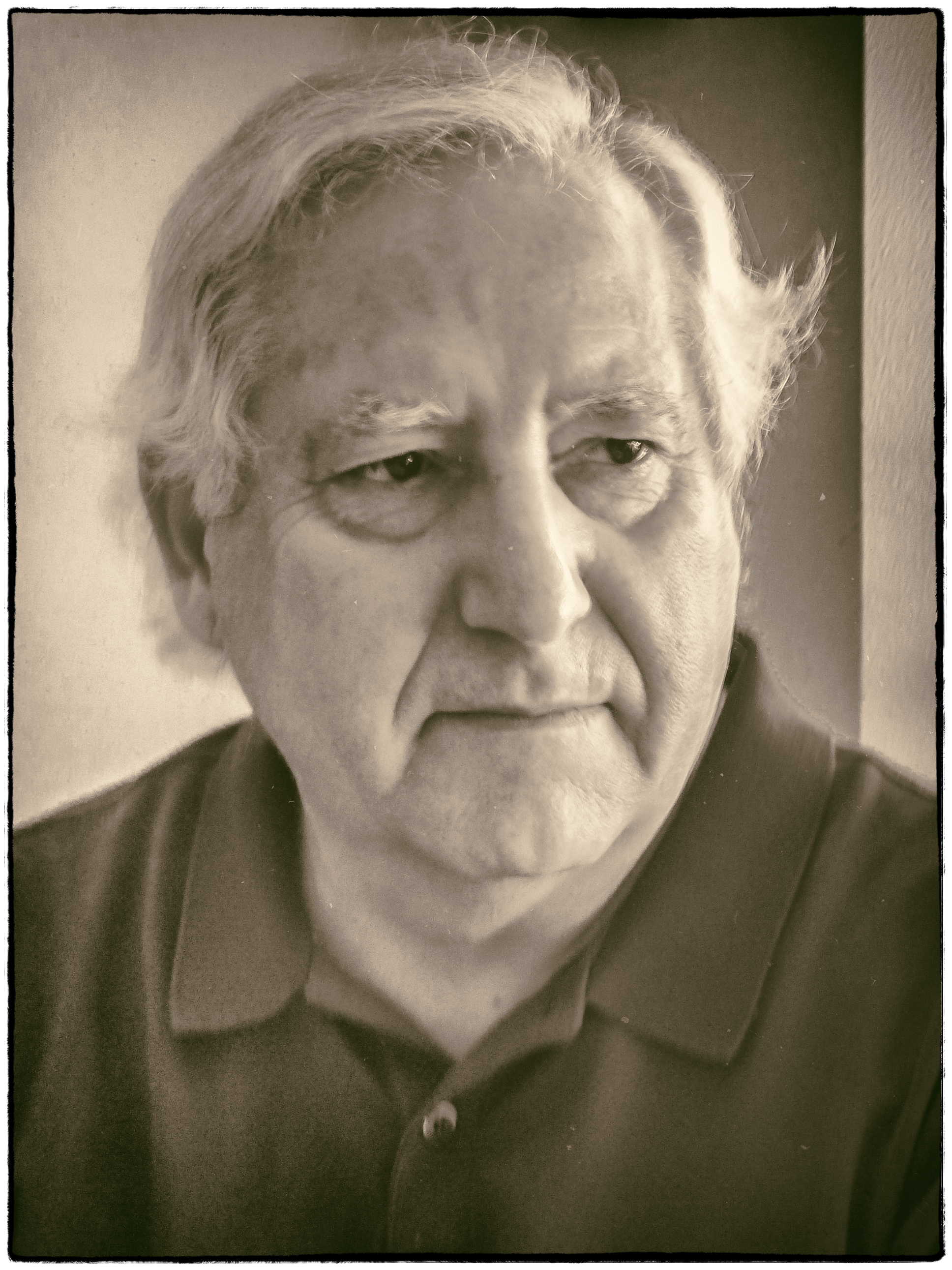
I recently posted a picture of my friend Andres and in it I bemoaned the fact that it wasn’t very sharp (because of my ineptitude in letting the shutter speed get too low). It’s good to see that there were once photographers who valued less than sharp images. So in a salute to Alvin Langdon Coburn I’ve reworked my picture of Andres to give it more of a pictorialist feel (see below).