Chicago Museum of Contemporary Photography (MoCP) at 40

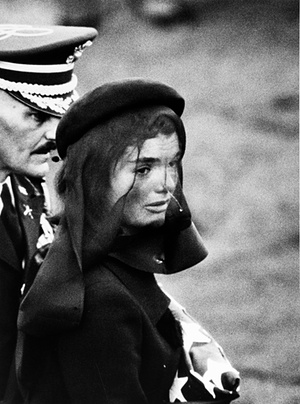
Elliott Erwitt, Jackie Kennedy at Funeral, 1963, portfolio 1980

The greatest names in American photography are to be exhibited in one place as the Museum of Contemporary Photography in Chicago turns 40. Over 100 pictures will be on show from its permanent collection including Dorothea Lange, Diane Arbus, Walker Evans and Robert Frank. It opens 28 January 2016 and runs until 10 April

The Guardian piece provides examples of 15 of the works.

Source: The very best of American photography – in pictures | Culture | The Guardian

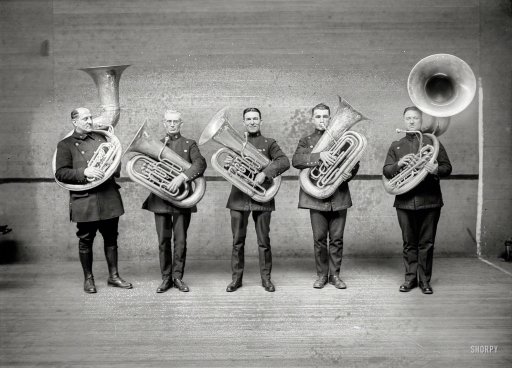
Tuba Quintet

New York circa 1915. “Police tuba players.” HALT OR WE’LL TOOT. 5×7 inch glass negative, George Grantham Bain Collection.

About 45 years ago I was a semi-professional trumpet player. By semi-professional I mean that I was paid, but not an awful lot. It did give me an opportunity to travel around the UK quite a bit and to play in some nice venues (e.g. York Minister; the Royal Albert Hall). I thoroughly enjoyed it, but then real life crept in and I moved on to other things – specifically working with the United Nations for 38 years. I’ve always retained a love of brass instruments and music that features them so I was excited to come across the wonderful picture. Look at the expressions on their faces: the guy in the middle seems to really be enjoying himself; the one on the left looks as if he’s supervising; the one second from right looks as if he’s been told to pretend that he’s playing. I found myself wondering what they might be playing: maybe Berlioz March to the Scaffold arranged for five tubas as seen in this video (thus proving that tuba quintets do actually exist. If you ‘google’ ‘tube quintet’ a surprising amount comes up):

Source: Brass Coppers: 1915 | Shorpy Historic Picture Archive


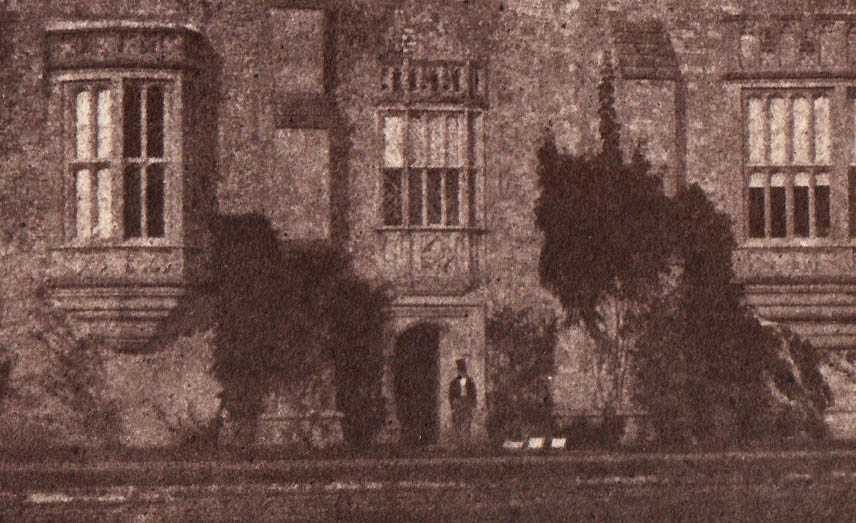
What a Treasure: William Henry Fox Talbot Catalogue Raisonné

The image is a detail from a salt print made from a calotype negative, early 1840s. Photographic History Collection, Smithsonian’s National Museum of American History, 3864.E. Schaaf 1262.

I love the clarity of daguerreotypes, but as far as photography is concerned they were an evolutionary dead end as they would not allow copies to be easily made. Fox Talbot’s invention changed that. The calotype process developed by Talbot produced negatives from which copies could readily be made.  This negative based approach would rule photography for around 150 years (i.e. until the arrival of digital photography).  Although he came up with his process before Daguerre, he didn’t make it generally known and with typical modesty he named his process ‘calotype’ rather than something like ‘talbotype’. Where Daguerre was a showman and entrepreneur, Talbot was a dedicated scientist. It’s wonderful to see that so much of his work remains.  I found the blog to be particularly interesting.

There are very few arts, indeed very few human endeavours, so well documented as is William Henry Fox Talbot’s invention of photography. Talbot (1800-1877) conceived of the art of photography in 1833, achieved his first images by 1834 and revealed the art to the public in 1839. By the time he ceased taking photographs in 1846, Talbot and his close associates had created more than 4500 distinct images. Miraculously, much of this prodigious output still survives. Collectively, they map out the technical and aesthetic progress of the new art from the first days of its infancy to the eve of its maturity. Equally, they dramatically document the emergence of Talbot himself as the first photographic artist. Trapped in silver are cities that have changed, people long since passed on, objects of virtue and those of everyday utility, timeless scenes of light and shade and much more.

Over a span of four decades, Professor Schaaf has examined more than 25,000 original Talbot negatives and prints in collections worldwide. The Catalogue Raisonné project seeks to make this corpus of material freely available to scholars and to the general public. The Catalogue will be the image-based cousin to The Correspondence of William Henry Fox Talbot, which has already mounted full searchable transcriptions of more than 10,000 Talbot letters online. Founded and directed by Schaaf, this resource is widely used in both academia and by the general public and is a highly successful completed project.

Viewed as physical artifacts, many of Talbot’s photographs are objects of beauty and mystery and promise. Each was made by hand on a sheet of paper, exposed to objects under sunlight or in improvised cameras. Negatives were the natural output of this process and many of them were printed, again on a hand-coated sheet of paper, producing a total known surviving output of more than 25,000 prints and negatives.

Much of Talbot’s research was done at his Wiltshire home of Lacock Abbey, itself a rich source of photographic subject matter. The productions at Lacock were often group efforts, usually defying attempts to assign specific authorship. While his wife Constance helped with some of the preparations, it was his formidable mother, Lady Elisabeth Feilding who was most outspoken about his choice of subjects and how to handle them. She also saw that his original photographs got a wide circulation in high society. Talbot’s valet, Nicolaas Henneman, became so involved in the new art that in 1843 he left service to set up the first comprehensive photographic operation, in the bustling railway and market town of Reading. By the mid-1840s, Talbot was collecting and purchasing negatives from his cousin Christopher Rice Mansel Talbot, his artist friend the Rev Calvert R Jones and his travelling friend, the Rev George Bridges. The work of Jones and Bridges has so often been confused with that of Talbot that it is necessary to incorporate these as well. The period covered by this catalogue is from the first successes in 1834 until the late 1840s. It will encompass work known to be by Talbot or photographs traditionally associated with him.

Source: William Henry Fox Talbot Catalogue Raisonné

Alex Luyckx Blog

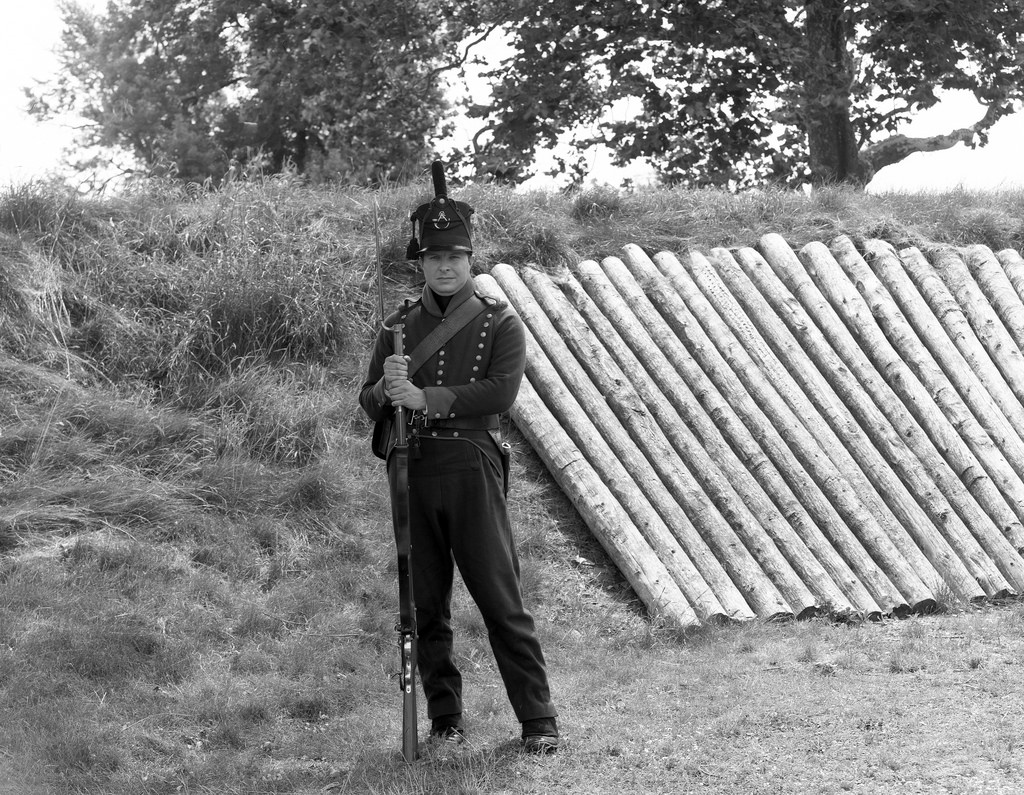
[The author of the blog] “Dressed in the uniform of the 7th Battalion, 60th Royal American Regiment of Foot, No. 6 Company. My other hobby that involves shooting”.

Interesting blog! The “About” page describes it as follows:

Art and creativity has always run strong in my family. My mother writes, my father creates stained glass, and my brother creates music. All through school I took the usual art classes, learning drawing, painting, and sculpture, all through elementary school and into high school. Sure I was okay at them, but there never was any passion, and drawing anything beyond spaceships, I was fairly hopeless. But it did give me a base to express my creativity in a physical sense, beyond my Lego creations. But my artistic expression lay outside of the traditional forms of art. I was introduced to photography, beyond the snapshot, in an English class. A roll of black and white film, and a Pentax K1000 from the school’s photography lab was all it took. I was hooked, this was exactly what I had been looking for, so at a garage sale I found an old Minolta rangefinder and started shooting, playing with aperture, shutter speed, and of course teaching myself how everything worked. Film was my medium of choice, digital wasn’t yet an option, as most consumer grade digital cameras were still just entering the market and the costs were still high, especially for a high school student going into college and working at McDonalds. I scored a good deal on a digital camera, and soon found my film work falling by the wayside, drawn into the ease of use and near instant options that it brings. But what I didn’t expect was that it would be a detriment to my photography, losing my artistic flare, I became obsessed with the technical aspects of photography, noise, sharpness, and perfect exposure. It wasn’t really a bad thing, in fact I feel it was again a good foundation building for my work, because when I returned to film I was a much stronger photography, and the film simply brought me back to the creative aspect of the medium. I was able to create stronger images knowing the technical details and the rules, and being able to bend and break them to get my image how I imaged it, the first time. And of course remembering to slow down, take my time, and most importantly, have fun.

The simple answer to why I shoot film is because its fun, but you’re probably not here looking for a simple answer. Have you ever seen an 8×10 image made on slide film? I have never seen such depth, colour reproduction, or sharpness on any digital images, and it was something that I could hold in my hands. Now don’t get me wrong, I’m not knocking digital in anyways, it still holds a place within the photographic community and space, but for me, digital never really cut it. There was no tangible connection to my photos. It was an image on a screen. I feel I can create stronger images with film than I ever could with digital. It just makes me slow down, make sure everything is right, the first time, and to actually enjoy shooting and creating. It also has to do with a level of control over your images, from choosing the film, camera, lens, based on what I have already pictured in my mind first, and then choosing the things needed to create that. It becomes more than just applying filters and sliders in a computer program, but being able to do it physically, choosing the right film, then matching it with the right chemistry to process it in. It’s the perfect blend of science and art. There’s just something special about loading this thin piece of plastic into a tank, pouring in chemicals, in sequence, sloshing them around and pulling it out, and having images appear, or watching an image show up on a piece of paper that you just exposed to light behind one of those negatives. It is something that I created, starting first with my heart and mind, and then setting about creating it. That’s why I shoot film.

Source: About | alex luyckx | blog

Frances Frith

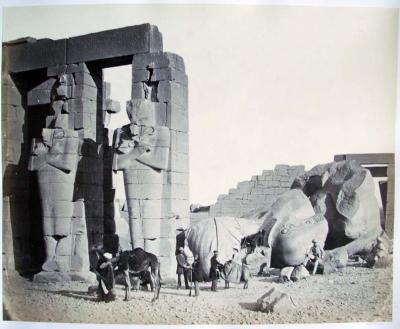
Francis Frith (1822-1898), Egypt, Sinai, and Jerusalem: a Series of Twenty Photographic Views;

Francis Frith collaborated with a lecturer and scholar of antiquities at the British Museum, Reginald Poole, and with Poole’s mother, Sophia, to produce this mammoth album of photographs. It is interesting that at the same time, Sophia’s brother Edward W. Lane (1801-1876), a scholar of Oriental linguistics, was working with Reginald on an illustrated edition of the Arabian Nights (The Thousand and One Nights, a new translation from the Arabic, with copious notes by Edward William Lane; illustrated … by William Harvey; edited by his nephew Edward Stanley Poole, 1859. Rare Books (Ex) 2263.2869).

Source: Egypt, Sinai, and Jerusalem – Graphic Arts

Interesting photographs from the late 1800s. It was photographs like these that first got me interested in exotic places and ruined buildings. I doubt, however, that they have the same impact nowadays that they had when they first saw the light of day. In those days only a privileged few would ever have viewed such sights.

Nowadays with relatively cheap air travel, the ubiquity of cameras, movies etc. pretty much everyone knows what these countries look like. This in turn raises the question: are these truly good photographs, or did their fame come largely from their novelty? Such photographs had such an influence on me when I was young that I am certainly biased and can’t give an objective opinion on this.