St. Luke’s Episcopal Church, Beacon, NY – Interior

One of the priests told me that this quite beautiful stained glass window was done by Tiffany. Some additional digging around on the internet confirmed that the stained glass was indeed done by Louis Comfort Tiffany’s firm and the British glaziers Bell & Almond.

Interior view. Unfortunately this exceeded the dynamic range of the camera and it was possible to properly recover the highlights which are overexposed. I include the picture anyway because it gives a fairly good sense of what the interior looked like.

St. Luke’s Episcopal Church, Beacon, NY – Exterior

I came across this lovely church while driving through Beacon and stopped to take a closer look. According to Wikipedia:

St. Luke’s Episcopal Church is located in Beacon, New York, United States. The church complex of four buildings and a cemetery takes up a 12-acre (4.9 ha) parcel between Wolcott (NY 9D), Rector, Phillips and Union Streets. It was founded in 1832 as a religious school that soon became St. Anna’s Church of Fishkill Landing.

The church and rectory were built in 1869 from a design by Frederick Clarke Withers, who later on considered the former one of his best buildings. The Gothic Revival-styled building strongly reflects contemporary Ecclesiological theories of appropriate church architecture. Despite some modifications and restoration, the buildings and grounds have remained largely as they were when first built. The church was listed on the National Register of Historic Places in 2008 as “St. Luke’s Episcopal Church Complex”.

Withers designed a number of building in and around Beacon and all of them are well worth a look: Tioronda (Craig House); Tioronda School; Reformed Church of Beacon

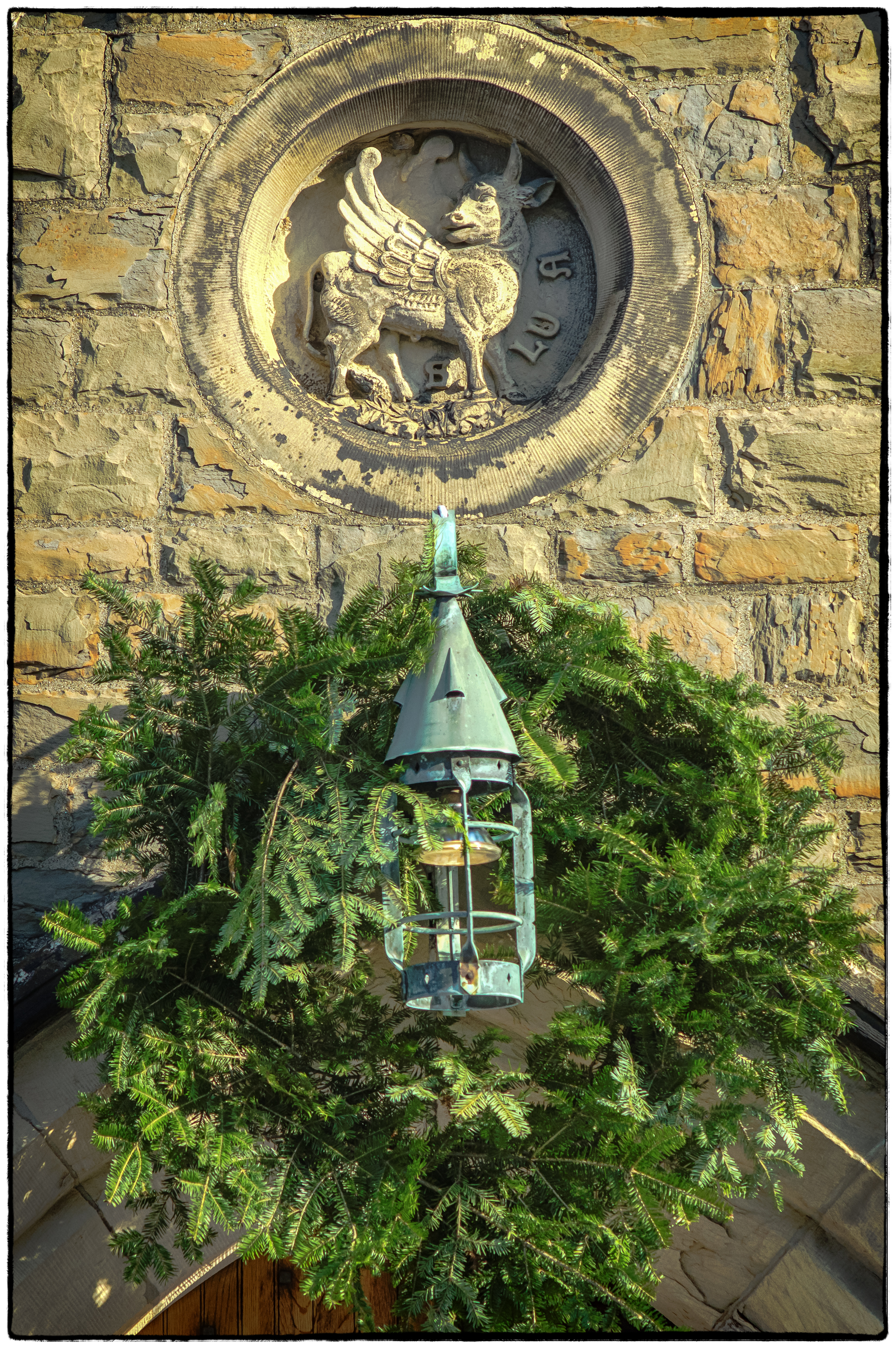
Dedication over the front porch.

Crucifix and graveyard (designed by Henry Winthrop Sargent who also laid out the church buildings)

I arrived just before a service and chatted with one of the priests. He told me that this medallion over the front porch depicts a winged bull, the symbol of St. Luke.

Modern addition to the Parish House. I liked the geometrical shapes. It’s almost abstract.

Madame Brett Homestead, Beacon, NY

According to the Hudson Valley National Heritage Area website:

In 1709, Roger and Catheryna Brett, with their children and slaves, emigrated from New York to Dutchess County and hired a Long Island architect to build this Dutch-style house. Over the next seven generations, until 1954, the home remained in the family.

Today, the Madam Brett Homestead is the oldest house in Dutchess County and is maintained by the Daughters of the American Revolution. Architectural features include original scalloped shingles, Dutch doors, and sloping dormers. The home’s interior is decorated with original Georgian, Empire, and Victorian furniture; a collection of 18th-century Chinese porcelain; silver tea sets; displays of early doll collections, textiles, and tools; a copy of Houdon’s bust of Robert Fulton; a punch bowl presented by Lafayette; plus items belonging to Catheryna Brett.

The remaining five acres surrounding the home feature a perennial garden, brook, and one of New York State’s Big Trees dating to the time of Catheryna Brett.

According to an article on the Madame Brett Homestead in Wikipedia it was, like the not too far distant Van Wyck Homestead, almost demolished – in this case to make way for a supermarket. Once again this attempt failed – thanks to the Melzingah Chapter of the Daughters of the American Revolution who were able to purchase it.

Rear view with well.

Rear View.

Rear Porch.


Wagon Wheel in the Woods (actually in the garden but I couldn’t resist the alliteration.)

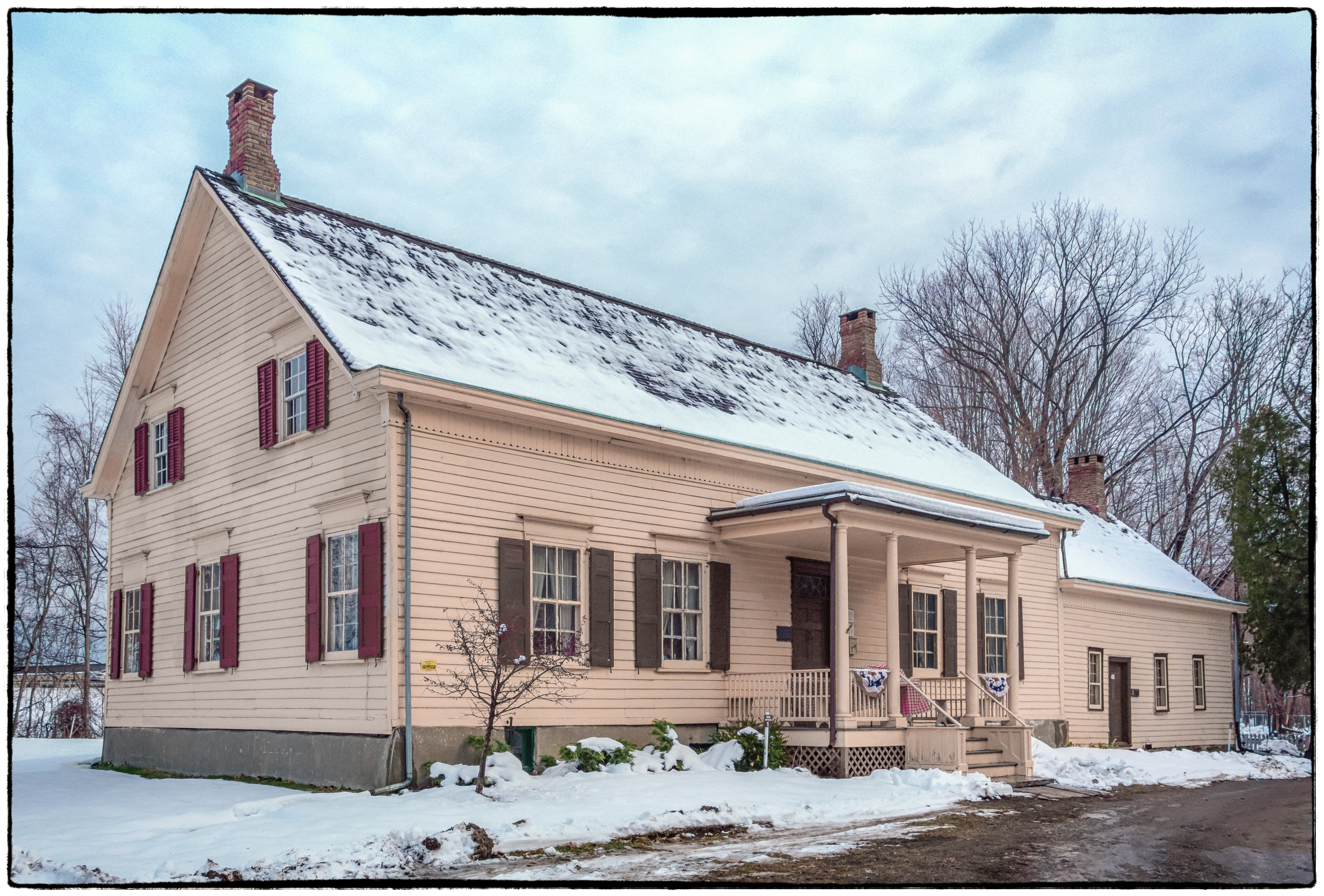
Van Wyck Homestead, Fishkill, NY

Rear view from garden.

The Hudson Valley Heritage Area website describes it as follows:

This Dutch Colonial house was built by farmer Cornelius Van Wyck in multiple phases, beginning with a simple one- to three-room dwelling in 1732 and ending with an elaborate addition sometime before 1757. When Fishkill was chosen as the site of a supply depot to serve the northern branch of the Continental Army during the Revolutionary War, the home became the headquarters of the sprawling complex. It was visited by numerous dignitaries, including George Washington, the Marquis de Lafayette, Alexander Hamilton, and John Jay. Here also occurred the mock trial of Continental spy Enoch Crosby, upon whose exploits James Fenimore Cooper allegedly based protagonist Harvey Birch in his novel, The Spy.

Today, the home contains original woodwork, archaeological relics from the depot, 18th- and 19thcentury furniture, and portraits by noted itinerant painter Ammi Phillips. Displays also highlight various Colonial crafts, including woodworking and weaving. A self-guided trail takes visitors past historic monuments and the foundations of farm outbuildings.

Wood chopping anyone?

Axe and chopping block

Front view.

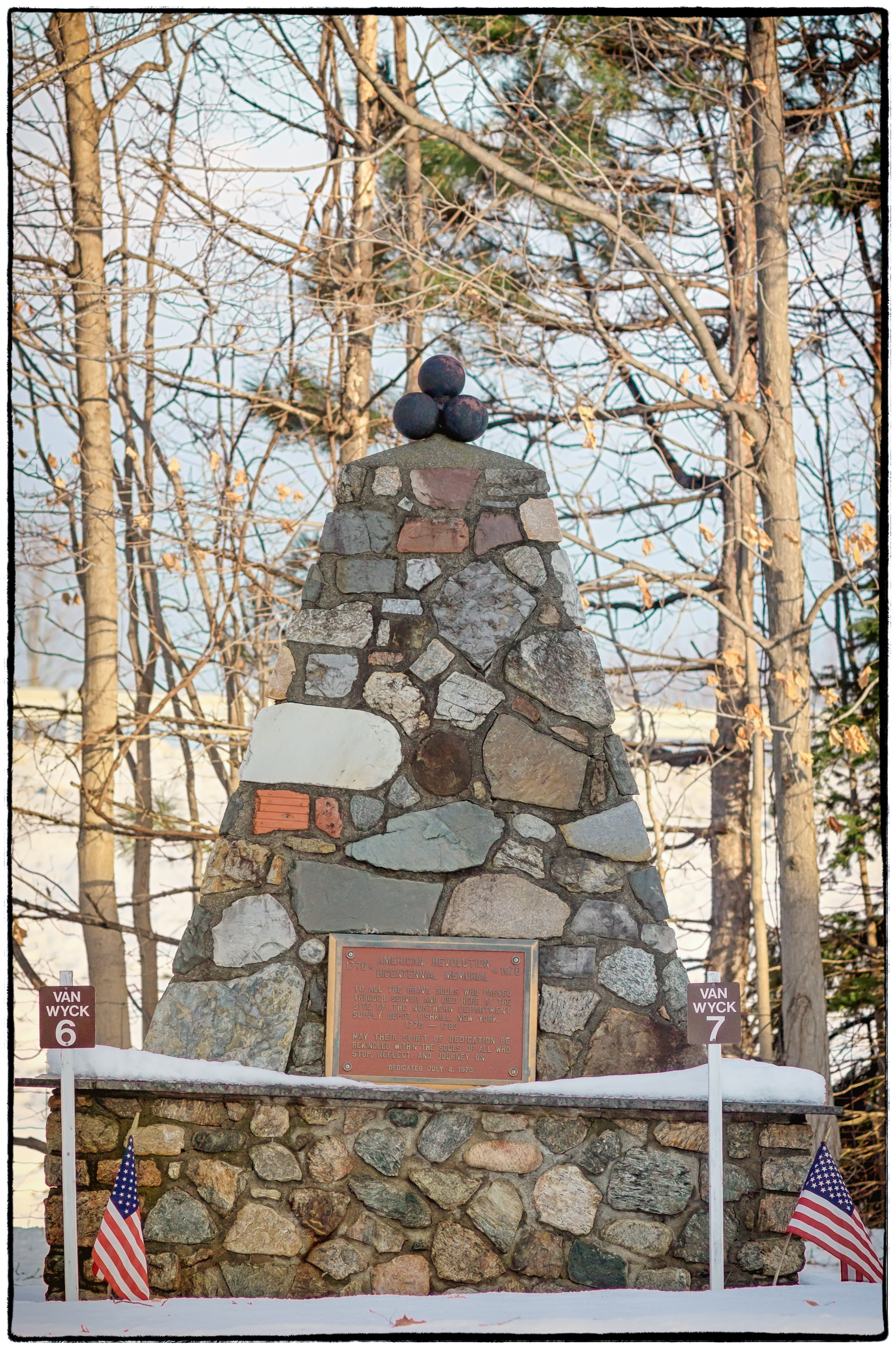
According to the self-guided tour brochure this is the Bicentennial Monument in celebration of which the Historical Society: “…erected this pyramid consisting of stones donated by over 50 historic sites. Among these are stones from Saratoga, Yorktown, Bennington and Fort Ticonderoga. The museum has a guide to which stones came from where.” Continuing with the brochure: A road crew digging a trench on Jackson Street in Fishkill discovered a skeleton that was determined to be that of an Indian Maiden in her late teens.” She was laid to rest under this pyramid.

I arrived early in the morning expecting everything to be closed, but it seemed that there was a craft show later in the day and someone was there tidying and cleaning in preparation. The told me that the house was almost demolished to make way for the I84 intersection. The guided tour brochure elaborates: “In the 1960’s the Van Wyck Homestead was going to be torn down to make a cloverleaf. The Fishkill Historical Society was formed in 1962 and was able to save the structure. Across Route 9 in the center of the cloverleaf is where remains of the Revolutionary blacksmith shop were found. Facing Route 9 and looking to the right you can see the I84 entrance ramp that runs parallel to the property. This change is what saved the house.”

Thank God they didn’t destroy this beautiful and historic house to make way for a highway access point.

Abandoned Cemetery, Beacon, NY

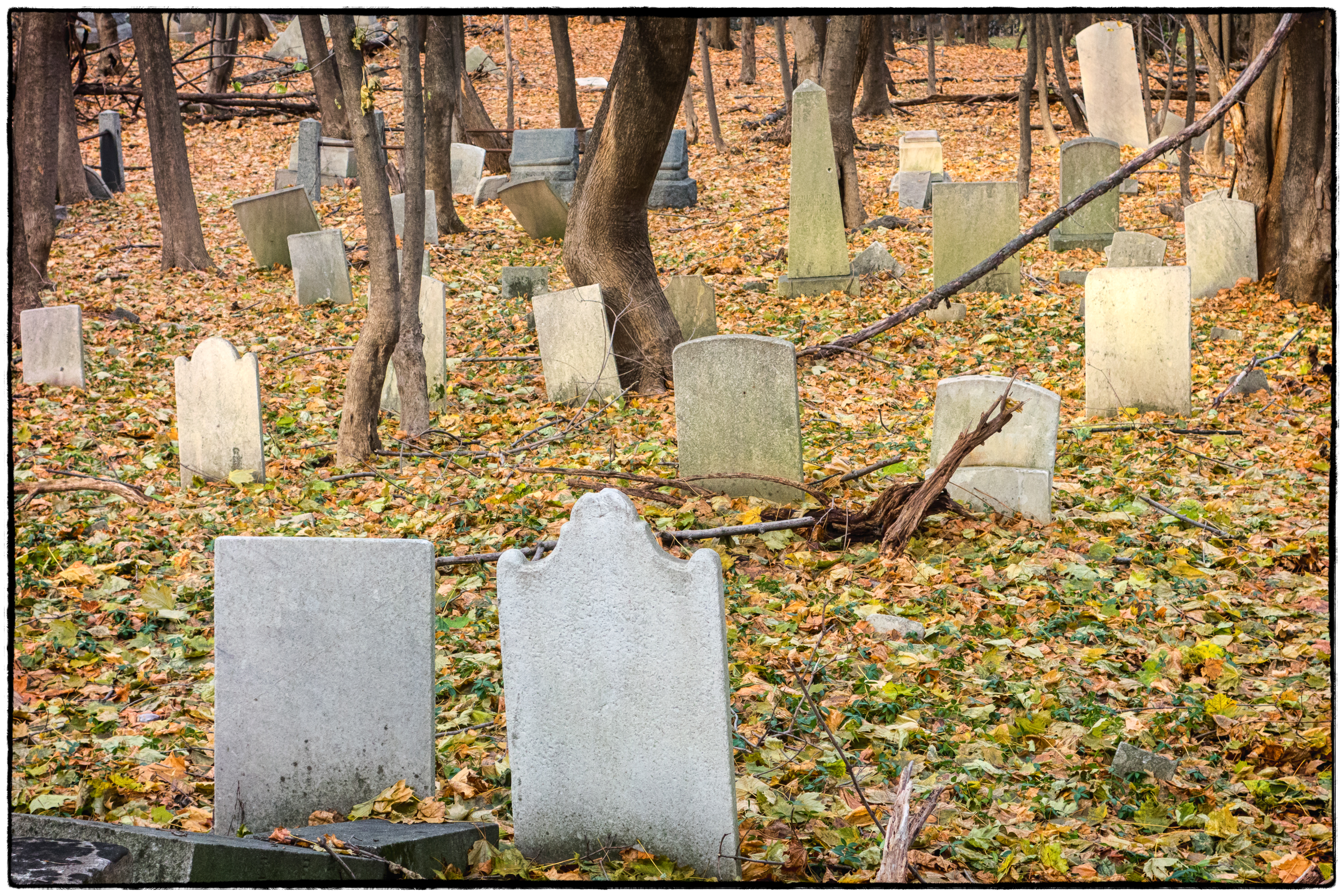
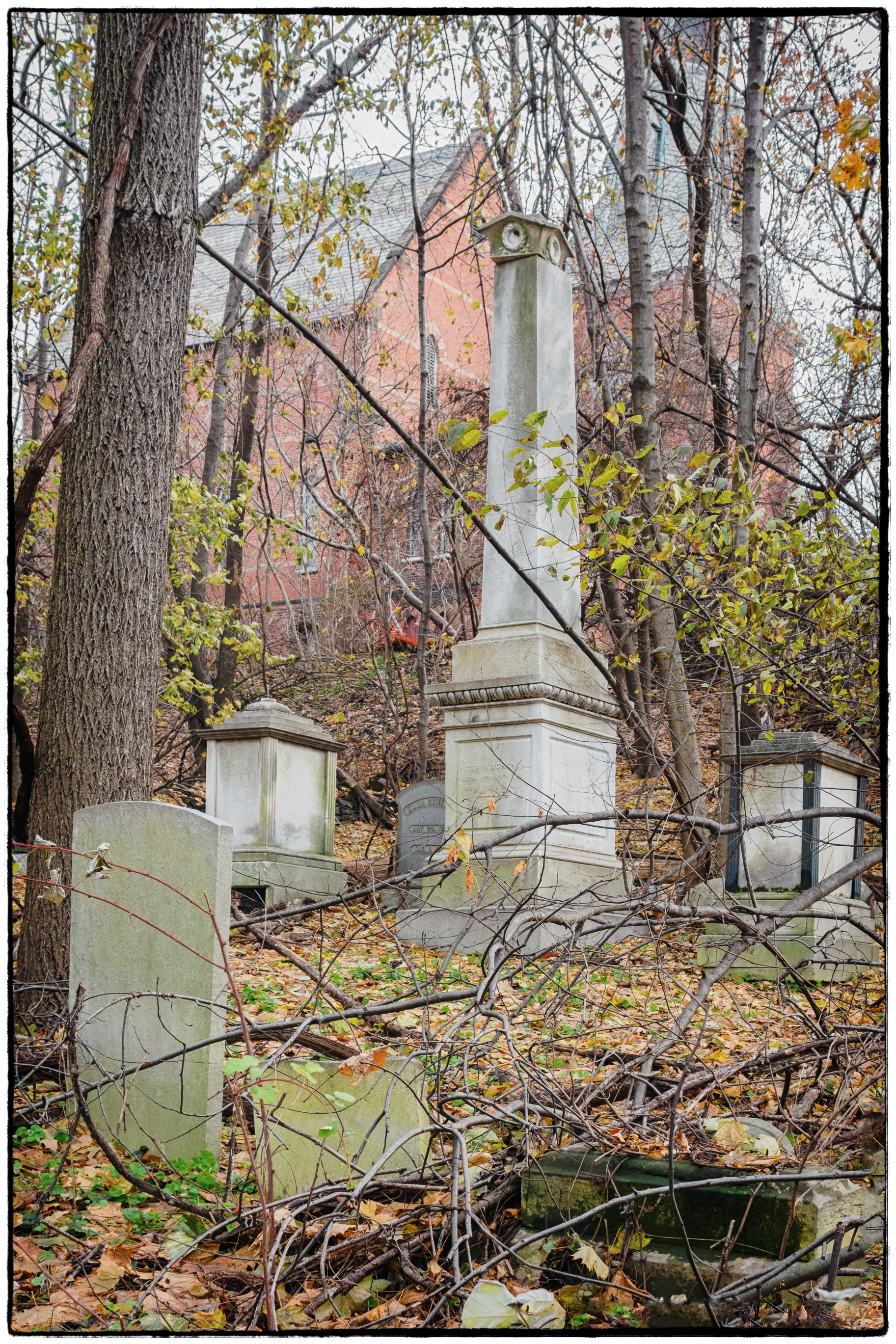
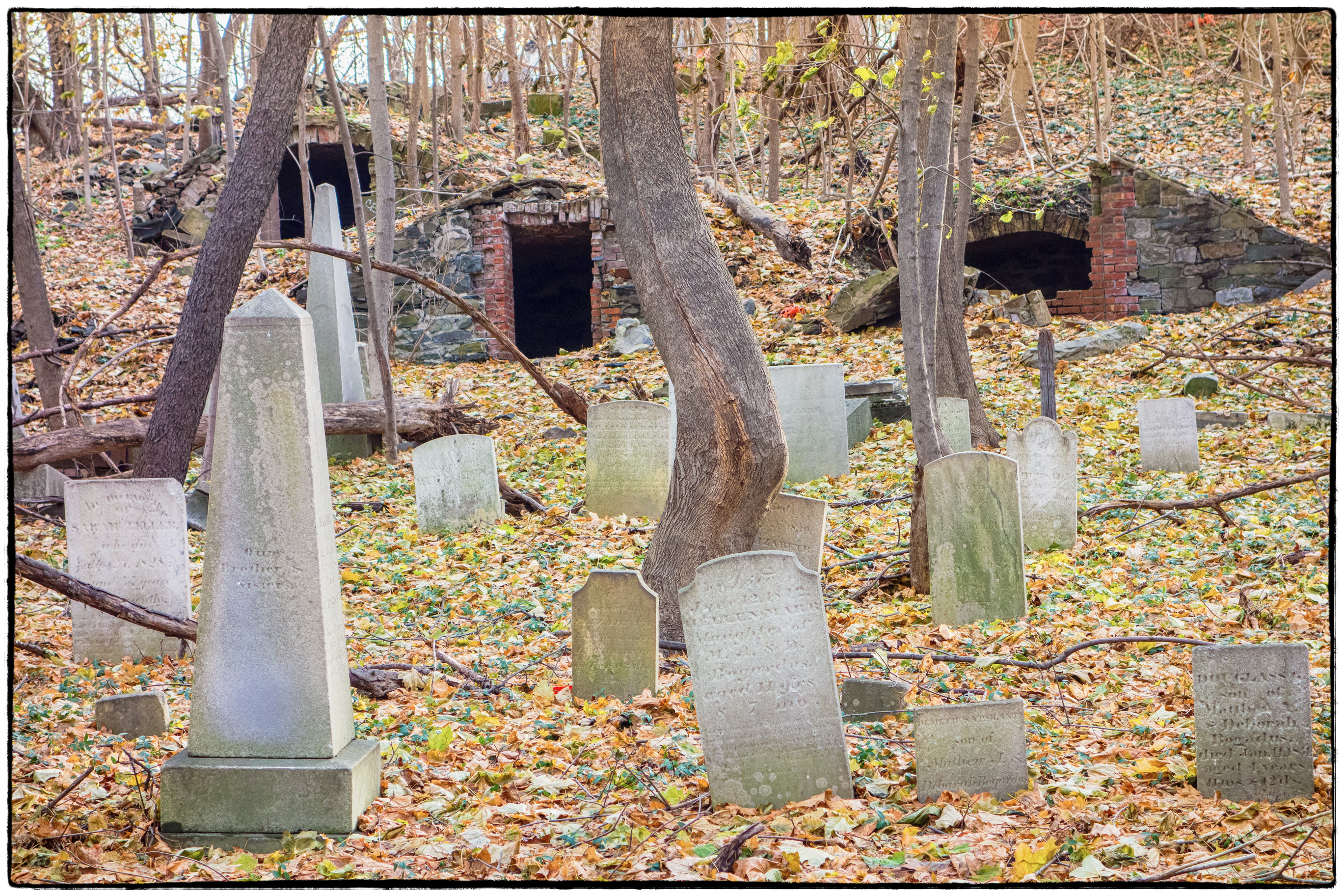
Once the graveyard of the Reformed Church of Beacon this has been long abandoned. I’ve seen a number of abandoned graveyards before: completely overgrown and with tilted and broken gravestones, but I’ve never seen one quite like this. To me what makes this one different are the abandoned vaults, from which the remains have been removed and re-interred elsewhere. According to a marker in front of the Reformed Church one of the more famous re-interrments was Colonel William Few. Few signed the US Constitution for the state of Georgia. He was interred in the Chrystie family vault, but was later removed to his home state, Georgia.

One of the more impressive memorials with the Reformed Church in the background .

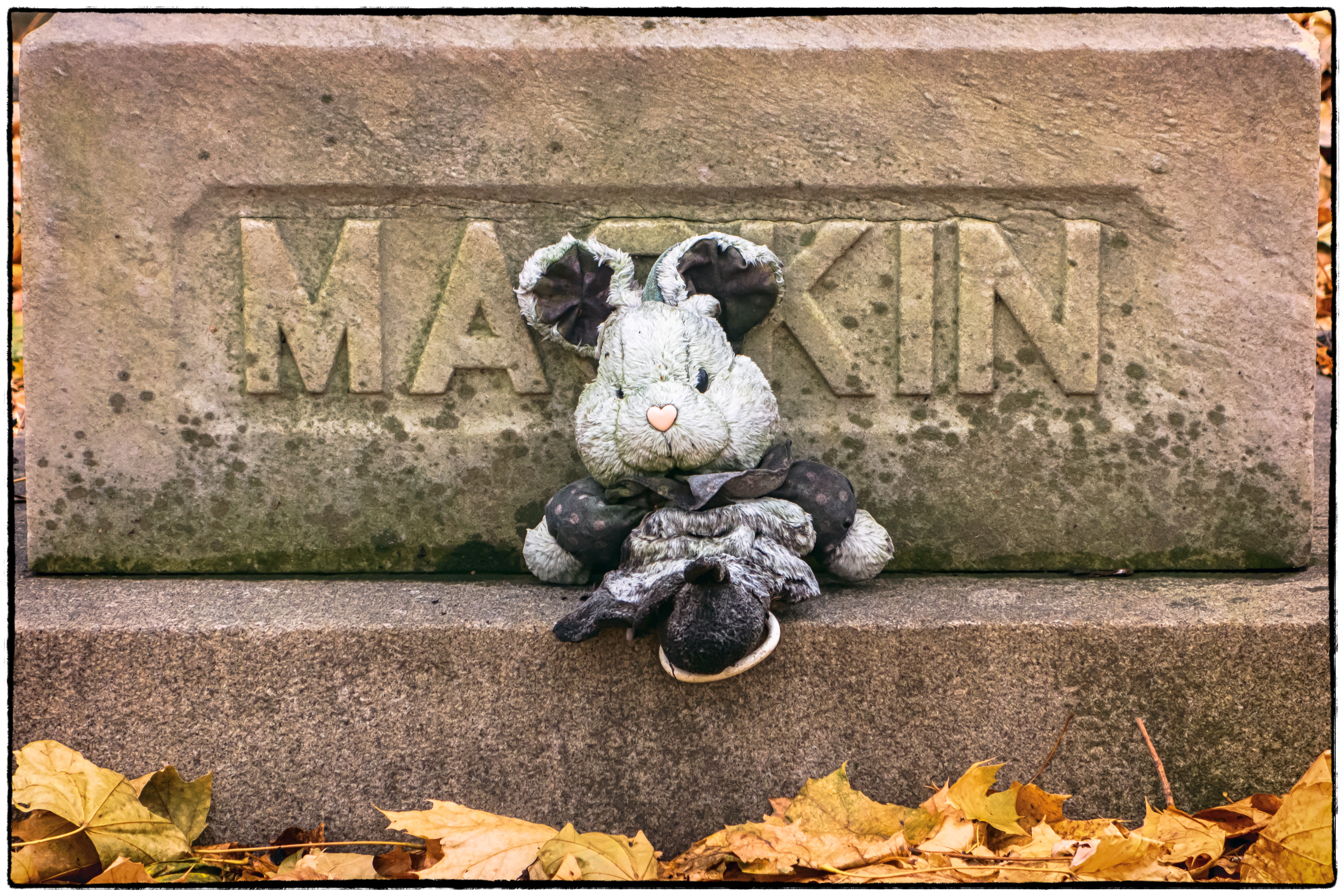
I’ve seen toys left on graves before, usually graves of children who died young and at first I thought this might be the case here. However, it’s clear that nobody has been buried here for a very long time. Moreover, the gravestone on which the toy had been placed read “James Mackin. Died March 1, 1862 aged 37 years, 1 month and 1 day”. So not a child and the toy was a bit of a mystery. Although wet and bedraggled it still worked though: if you pulled a ring on the side it played a tune.

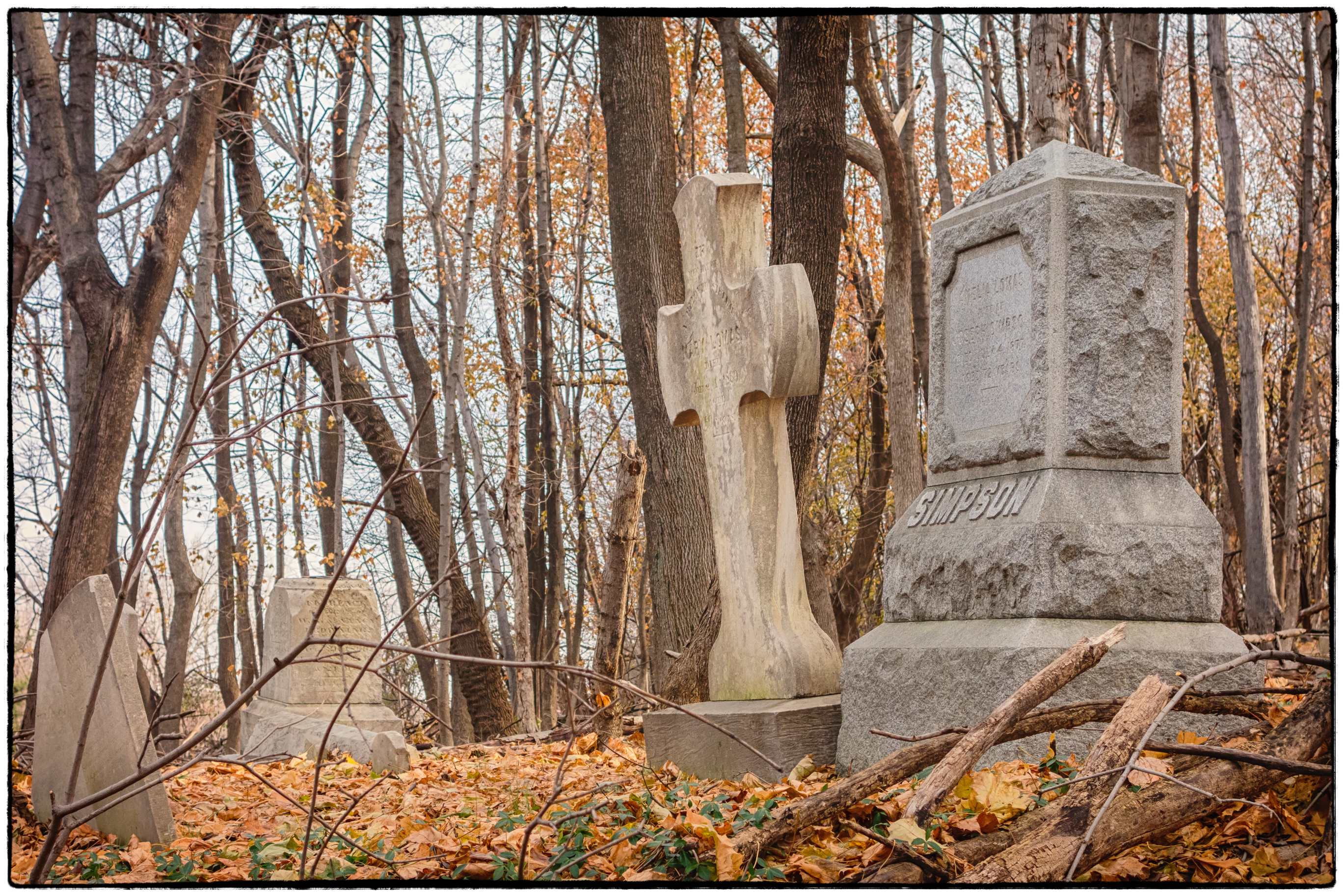
Gravestones.

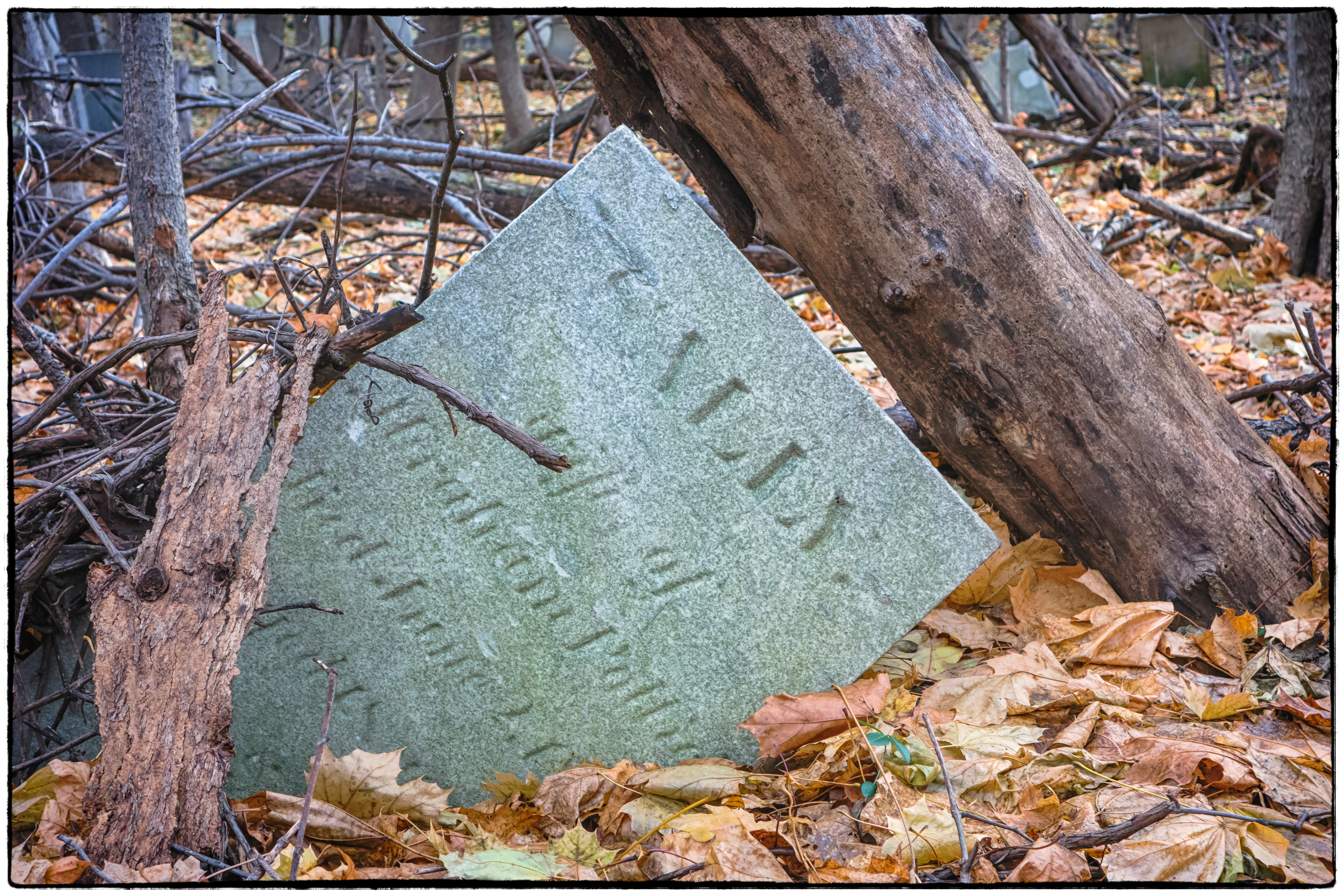
Tilted gravestone and fallen trees.

Graveyard with opened vaults in the background. At first glance they look like the stone chambers which abound in Putnam County but they are built of brick and clearly of much more recent vintage. They are obviously abandoned – or are they….

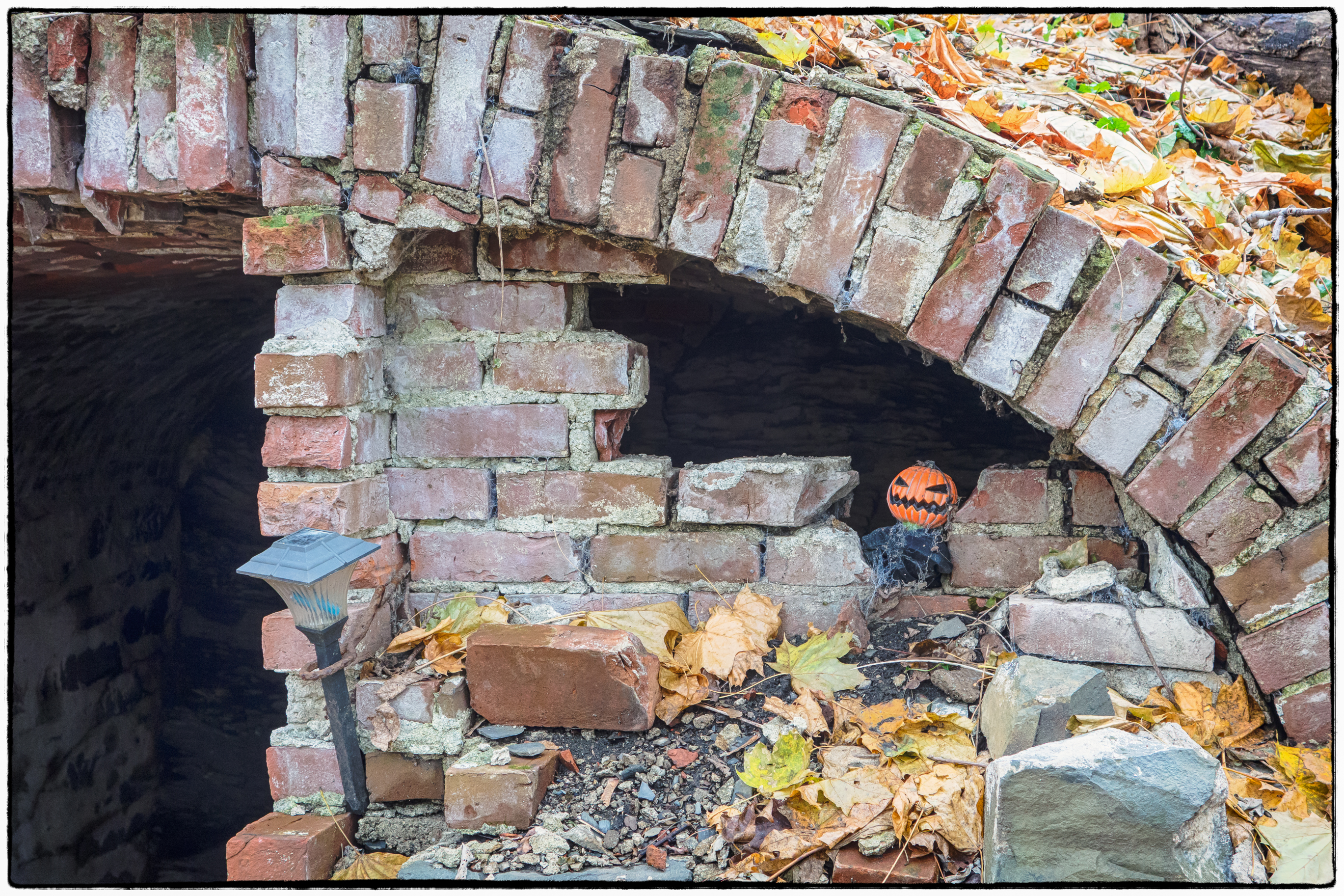
One of the “abandoned” vaults had a chair inside and, as this picture shows, a solar powered light outside. There were also other signs of occupation e.g. the Pumpkin. Someone is, at least from time to time, using this vault – perhaps the same person who left the toy?