Yeah, Yeah, Yeah!!!

Source: Rebloggy

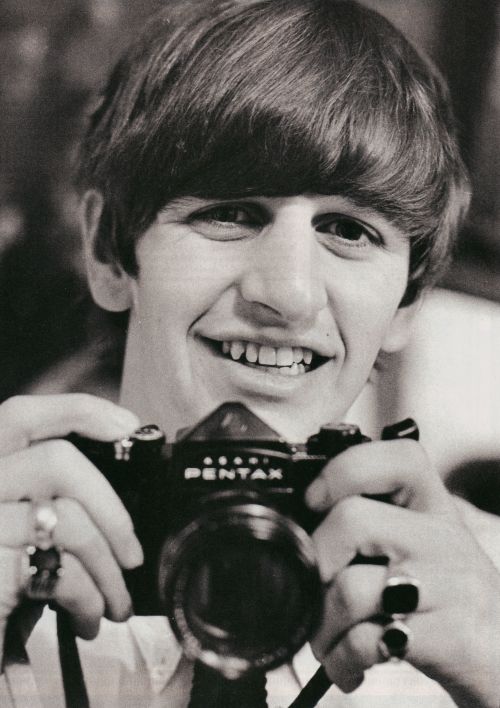
“Every time I see your face it reminds me of the places we used to go…” sings Ringo Starr in his song Photograph, co-written with George Harrison on a yacht in the south of France in 1971. Much of the world may not be aware that Ringo is also a photographer who chronicled the frequent travels of The Beatles during their heyday in the 1960s.

via The Photography of Ringo Starr: Capturing the World of the Beatles as the Ultimate Insider | Shutterbug.

Another celebrity photographer. Interesting, but I think he should keep the day job.

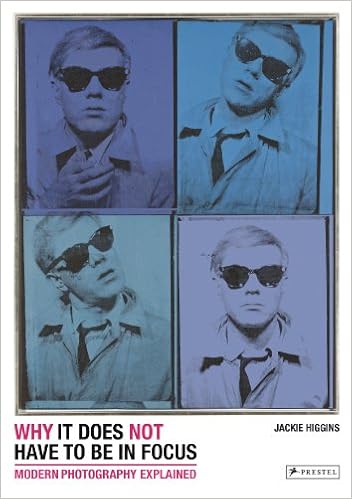
Why It Does Not Have to be In Focus: Modern Photography Explained

Why it does not have to be in focus. Source: Amazon.com

I suppose this book’s subtitle should really be “Modern art using a camera as a tool”. I’m strangely fascinated by this book. I bought it some time ago and I find that I often pick it up and browse throught it. If you’re looking for a book on photographic technique then this book isn’t for you. It doesn’t talk about ISO, shutter speeds, f-stops, rule of thirds or any of the other things commonly found it photography “how to” books. Instead about 100 images are organized according to the following categories: portraits/smile; document/snap; still lifes/frieze; narrative/action; landscapes/look; and abstracts/dissolve. Each picture is from a different photographer and for each one the author: “Describes the artist’s approach, process and technique; Locates the image in its historic and artistic context;…provides additional incremental information; and lists examples of similar images by the same photographer. Quotations (both attributed and unattributed) are also scattered throughout the book.

To give a flavor of what the book’s about I’ll provide a few examples of the photographs provided:

Second Beauty Composite by Nancy Burson, 1982. A single face which is actually a composite of five famous female movie stars: Jane Fonda; Jacqueline Bisset, Diane Keaton, Brook Shields and Meryl Streep. As the book says “This face belongs to non one; it has never existed”.

Untitled [Cowboy] by Richard Price, 1989. Re-photographed ‘Marlborough Man’ photograph blown up to gallery size. Has become known as “appropriation art”. This was the first photograph to sell for more than $1 million.

Poll by John Demand, 2001. Looks like a real office, but is actually an elaborately constructed set made of card, which is then photographed subsequently destroyed.

Strip by Jemima Stehli, 1999. A series of pictures of a woman (the photographer I think) with her back to the camera. She takes off her clothing in front of a man (a different man in each picture) who sits on a chair holding a remote shutter release and who presumably decides when to take the picture.

99 Cent by Andreas Gursky, 1999. A huge 81 1/2 by 132 1/4 inch picture of the shelves in .99 store.

Damage/Drown/Canal, 168 hours, June 2003 by Catherine Yass, 2005. According to the book “Yass photographed the canal on her large-format(4×5 inch) camera. Returning to where she exposed the image, she tied a large print to the edge of the canal and floated it in water for one week”.

I think I like this book so much because it encourages you to break rules and explore boundaries – something which I find very hard to do, and probably the reason why my photographs are so conventional. It would never have occurred to me to even try to do any of these things. I guess I keep hoping that if I go back to the book often enough something will rub off. It hasn’t so far, but who knows…

This book certainly won’t teach you photographic technique, but it will hopefully give you lots of ideas.

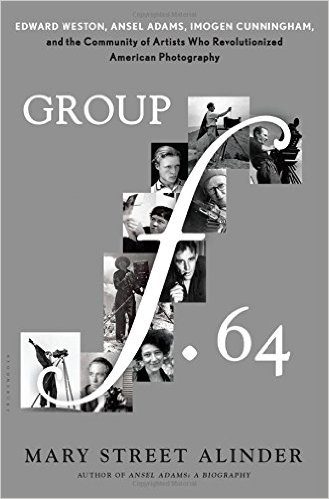
Group f.64: Edward Weston, Ansel Adams, Imogen Cunningham, and the Community of Artists Who Revolutionized American Photography

Group f.64

Group f.64 image source Amazon.com

I just finished reading this book. There’s something about the tone of it that didn’t appeal to me: “Edward said this…”; “Ansel did that…” etc. and it’s a bit rambling – could use more structure. However, I really enjoyed it: as the New York Times said “…the first comprehensive history of the movement”, a movement about which I’d heard but knew little other than the bios and works of some of the individual members. I wasn’t even that familiar with a number of the members/associates e.g. Willard Van Dyke; Alma Lavenson, Sonya Noskowiak, Consuelo Kanaga. I also enjoyed learning more about the role and personality (apparently not very pleasant) of Alfred Stieglitz; the battles between the pictorialists and Group f.64 (proponents of ‘straight’ photography). One photographer that I didn’t know all that well and who caught my attention was Imogen Cunningham whose work I really like and will explore further.

Jonathan Blaustein reviewed the book in An In-Depth History of Group f.64 on the NY Times Lens blog (December 11, 2014)

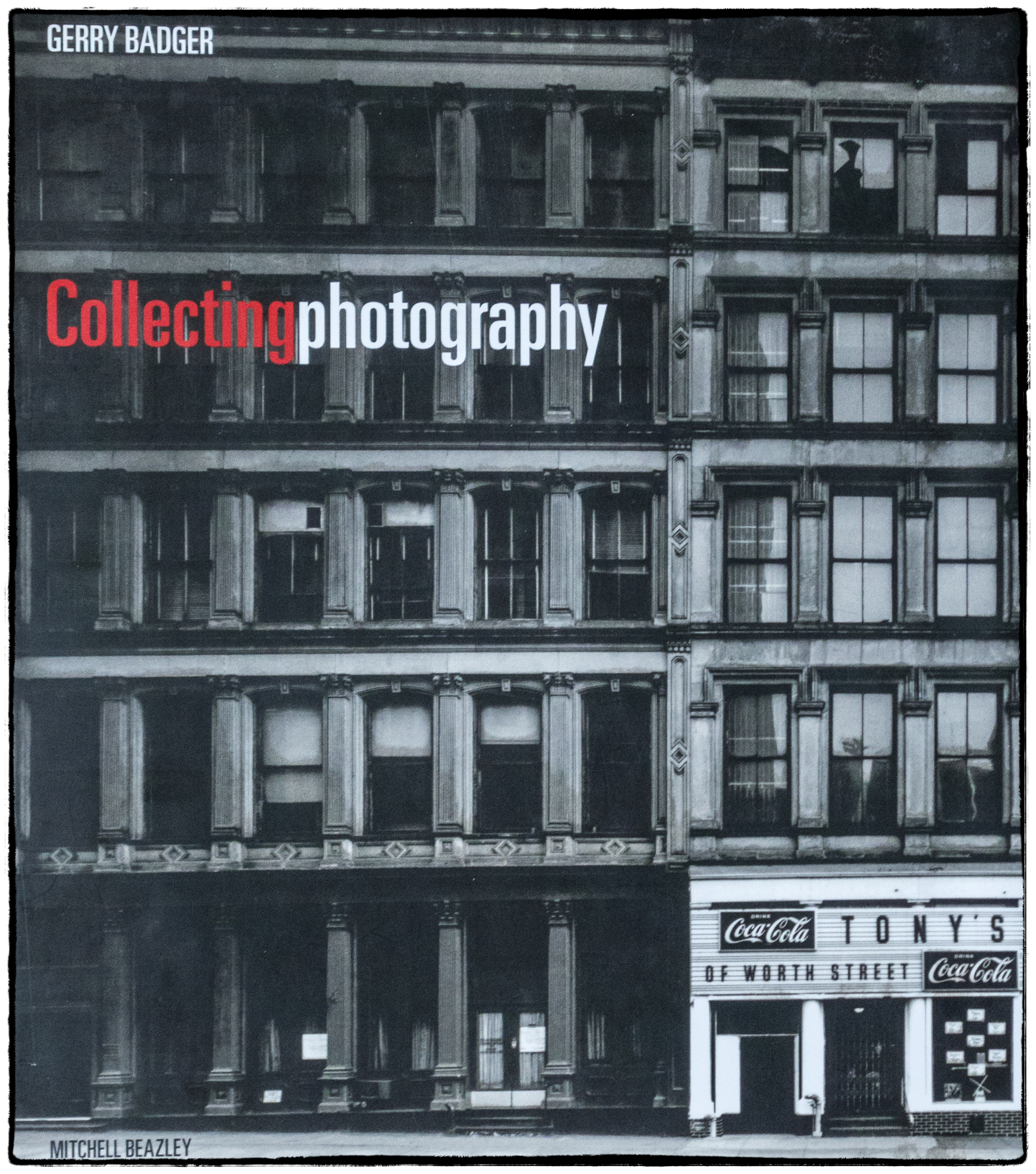
Collecting Photography

I’ve been thinking of starting collection of photographs for a while, but I didn’t really know where to start. So I picked up this book: Collecting Photography by Gerry Badger, second hand – cost about $8.00. It’s a nice hardback book in pretty good condition and I found it very useful.

The book is divided into two parts: the first part contains the introduction and five chapters dealing with the following topics:

The Art of Photography – deals with photography as an art form and discusses which photographs can be considered to be art, and which not as a guide to deciding which photographs might be worthy of collection. It ultimately concludes with the statement: “For even the most experienced professionals, an emotional response is a more accurate guide than a purely intellectual one, though one’s considered intellectual response is also important. But first of all, look for pictures that hit you in the gut, that ‘go against the grain’, because that is where the art of photography most properly resides.”

Building a Collection – Suggests several areas for collecting e.g. by subject; genre; process; school or historical period; quality; photographer or any combination of the above. Also covers collecting as an investment and concludes with the following guidelines (particularly for investors): Buy the best you can afford; Pay particular attention to condition; Check an images provenance; Avoid restored prints; Consider subject matter; Avoid ephemeral market trends; and Take the long view.

The Photographic Print – Covers issues and problems related to prints including Original prints; Vintage Prints; Later prints; Different print editions including limited editions; Print sizes. I must admit that I hadn’t realized that there were so many issues associated with prints.

Buying and Selling Photographs. Covers different places (and issues associated with each of them) to acquire pictures: Gallery or Dealer; Auctions; From a photographer; Photofairs; The Internet; Photographic archive or library. Also covers selling photographs – apparently not likely to be as fulfilling as buying. The problem of fakes and forgeries is also discussed although it’s apparently not as big a problem as you might think.

Displaying and Caring for Photographs – very useful tips on how to take care of your collection including handling; light; heat and humidity; and chemical pollution. Also deals with issues specific to colour and digital prints and includes sections on storing photographs; restoration (don’t unless you really have to and then have a professional do it); framing and record keeping.

The second part consists of a number of appendices:

An extensive Chronology covering the history of photography.
A glossary (I found the descriptions of photographic processes to be very informative).
A lengthy (almost 30 page) listing of key photographers including, for each, their nationality; dates of birth and death; subject matter they covered; types of media they used; and estimated price ranges for their work.
A listing of galleries and dealers with contact information.
A Bibliography subdivided by subject: General histories; Photography in the 19th century; Photography in the 20th Century; Books on collecting photographs; Books on Museum Collections; Books on private and corporate photographic collections; Books on photographic books; Technical books.

The book is also lavishly illustrated with many beautiful photographs, many of which I was not familiar with. Each one has a short caption with information related to collecting. For example a full page photograph of Edward Weston’s famous pepper is captioned with “Edward Weston. Pepper No. 30, 1931. Silver Gelatin Print. Private Collection. One of the icons of modern photography, which is available printed by Weston’s son, Cole for $2,500.

I enjoyed this book a great deal, but it’s worth mentioning a couple of caveats. First the book was published in 2006 and much has no doubt changed in the field since then, although I imaging basic principles will remain the same. Second I think it’s all probably a bit much for the type of collection I might build (i.e. inexpensive photographs which catch my attention). I’m not likely (at least not at the moment) to spend thousands of dollars on a photograph and consequently some of the issues related to taking care of the collection would be overkill. Having said this, however, I know from my camera collecting that once the ‘bug’ bites you can take off in unforeseen directions.

Light, Gesture, and Color. Voices That Matter

Jay Maisel. Light, Gesture & Color

Fascinating book containing about 250 of Jay Maisel’s images, each one accompanied on the opposite page with with a short comment on it. It doesn’t focus on the technical stuff as much as it focuses on how to see a compelling photograph. I found it to be a very easy read. I read fairly quickly and was able to get through almost all of it while drinking coffee at a local Barnes and Noble. I was rushing a bit though and could easily have spent more time studying the images. It’s worth buying for the images alone and the text is very tasty icing on the cake.

Amazon.com: Light, Gesture, and Color Voices That Matter 9780134032269: Jay Maisel: Books.