Lasdon Park and Arboretum – Overview

I’d been to the Lasdon Park and Arboretum a couple of times: once for an antiques fair; and once for a concert. This time I wanted to take a look at something I’d bumped into while browsing the internet: the Trail of Honor.

According to the Park’s website:

The Lasdon estate, originally called Cobbling Rock Farm, was acquired by William and Mildred Lasdon in 1939. The main house of the estate was built in 1933 by Dr. Voislawsky after the original house was destroyed by a fire. The house is modeled after George Washington’s home in Virginia.

William Lasdon is known for establishing a major pharmaceutical company and for his philanthropist endeavors. The Lasdon estate was simply used as a country retreat. The Lasdon family had great interest in horticulture and loved to travel. Along these travels, they brought back many tree specimens and planted them at the estate.

In 1976, William Lasdon created the Mildred D. Lasdon Bird and Nature Sanctuary. This is a twenty-two acre preserve which was donated to the county. There is an intricate system of trails that run through an array of wildlife habitats. Many different species of birds, and up to twenty different types of warblers can be observed there during migration.

When William Lasdon died in 1986, Westchester County purchased the estate for $4.2 million. Several companies were interested in using the 234 acres to put up condominiums. The county wanted to obtain this land in order to preserve the land and history of the area. For the most part, the formal grounds remain as they were designed initially. Westchester County has been continuously developing and embellishing the collections on the property.

The William and Lasdon Memorial Garden site was donated by their daughter, Mrs. Nanette Laitman. This is the main garden present at the front of the estate. It is a one-acre garden created in memory of Mr. and Mrs. Lasdon.
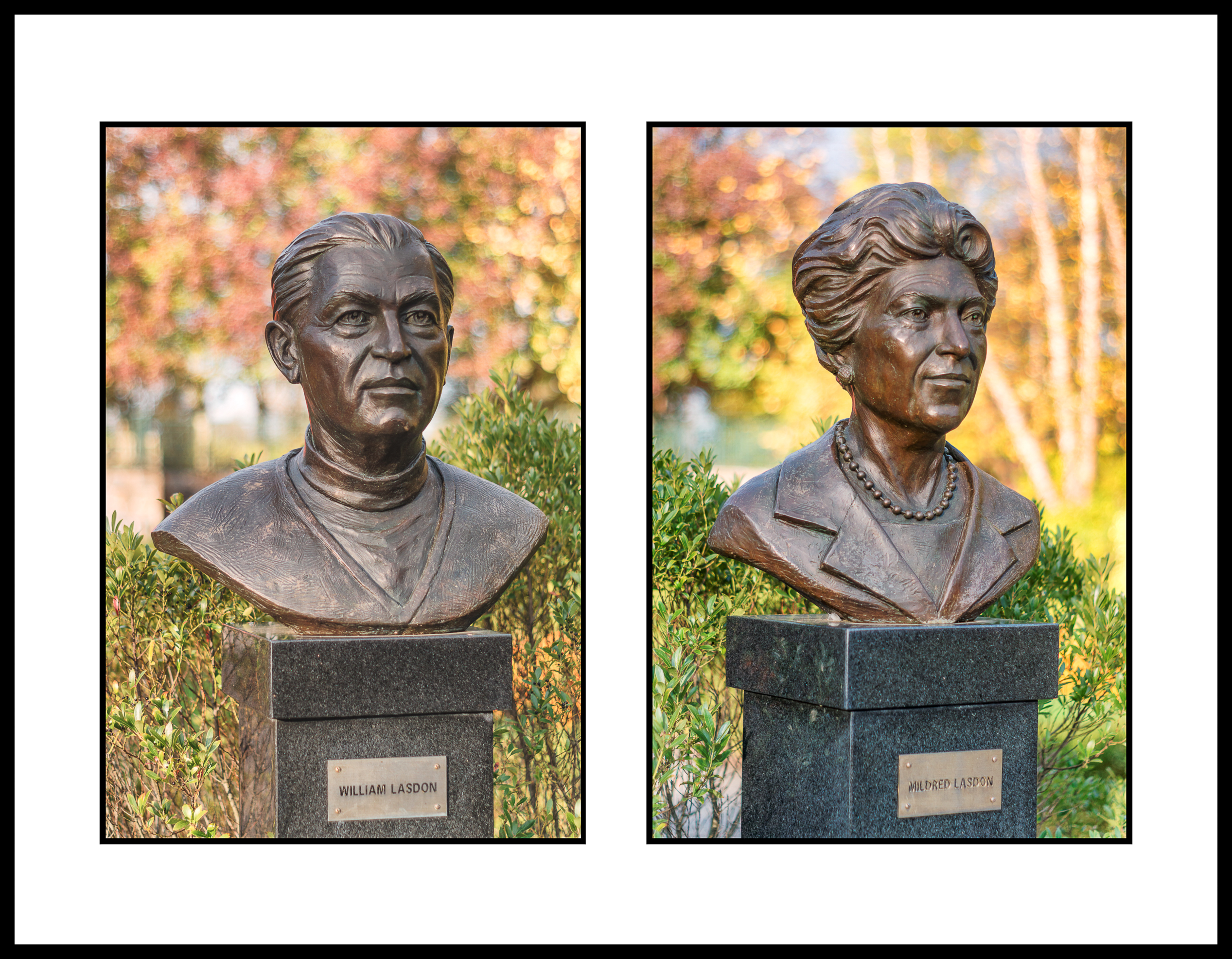
The two busts (above) of William and Mildred Lasdon stand at the entrance of the Lason Memorial Garden.

The Lasdon Garden Shop.

All pictures in this series taken with a Sony A77 II and Minolta 50mm f1.7.

More from Christies

I mentioned in an earlier post (See: Self portrait with Cindy) that we went to Christies in New York City the other day. Here are a few other items that caught my attention. Above: The star of the show.

Leonardo da Vinci (1452-1519)
Salvator Mundi
oil on panel
25 7/8 x 18 in. (65.7 x 45.7 cm.)
Painted circa 1500.
Estimate: Only available on request. Some sources (e.g. NY Times – Contemporary Art Sales: Do I Hear $100 Million?) anticipate that it will fetch $US100 million or more. UPDATE: It eventually sold for the to me obscene amount of $US450 MILLION!

Louise Bourgeois (1911-2010)
Spider II
signed with the artist’s initials and stamped with the edition number ‘LB 5/6’ (on underside)
bronze
73 x 73 x 22 1/2 in. (185.4 x 185.4 x 57.2 cm.)
Executed in 1995. This work is number five from an edition of six plus one artist’s proof.
Estimate: $US10,000,000-15,000,000.

David Smith (1906-1965)
Voltron XXIV
signed, titled and dated ‘XXIV Voltron David Smith 3-25-63’ (on the base)
steel
98 5/8 x 33 x 13 in. (230.1 x 83.8 x 33 cm.)
Executed in 1963.
Estimate: US5,000,000-$US7,000,000.

Cindy Sherman (b. 1954)
Untitled #408
signed, numbered and dated ‘Cindy Sherman 3/6 2002’ (on the backing board)
chromogenic print
54 x 36 in. (137.2 x 91.4 cm.)
Executed in 2002. This work is number three from an edition of six.
Estimate: $US80,0000-$120,000.

Richard Avedon (1923-2004)
Marilyn Monroe, actress, New York City, May 6, 1957
signed and numbered ‘Avedon 34/50’ and stamped with title, date and photographer’s copyright credit (on the reverse)
gelatin silver print flush-mounted on linen
image: 18 3/4 x 15 1/2 in. (47.6 x 39.4 cm.)
sheet: 20 x 15 7/8 in. (50.8 x 40.3 cm.)
Printed in 1980. This work is number thirty-four from an edition of fifty.
Estimate: $US70,000-$US100,000.

Geneva – Troinex, Megaliths

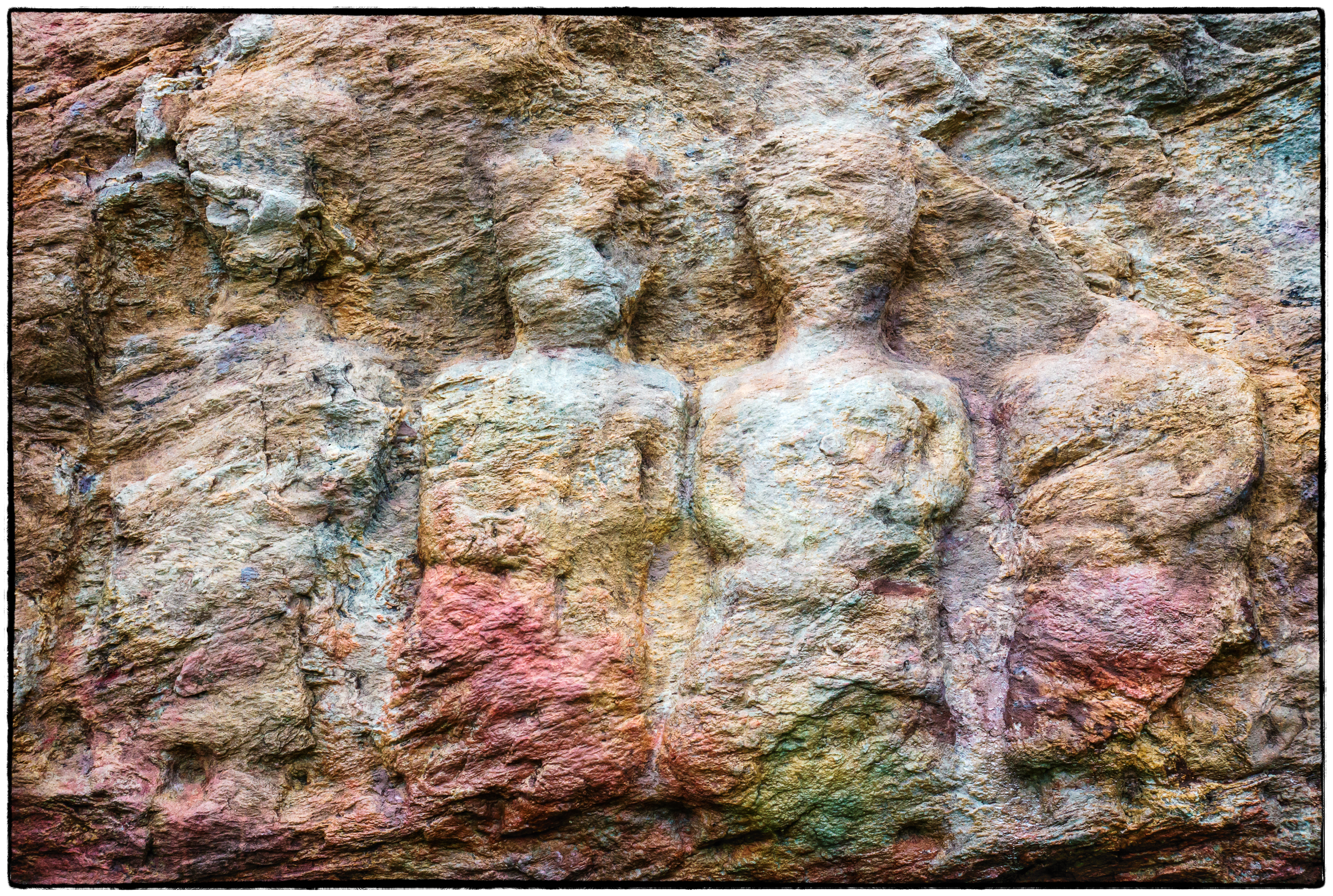
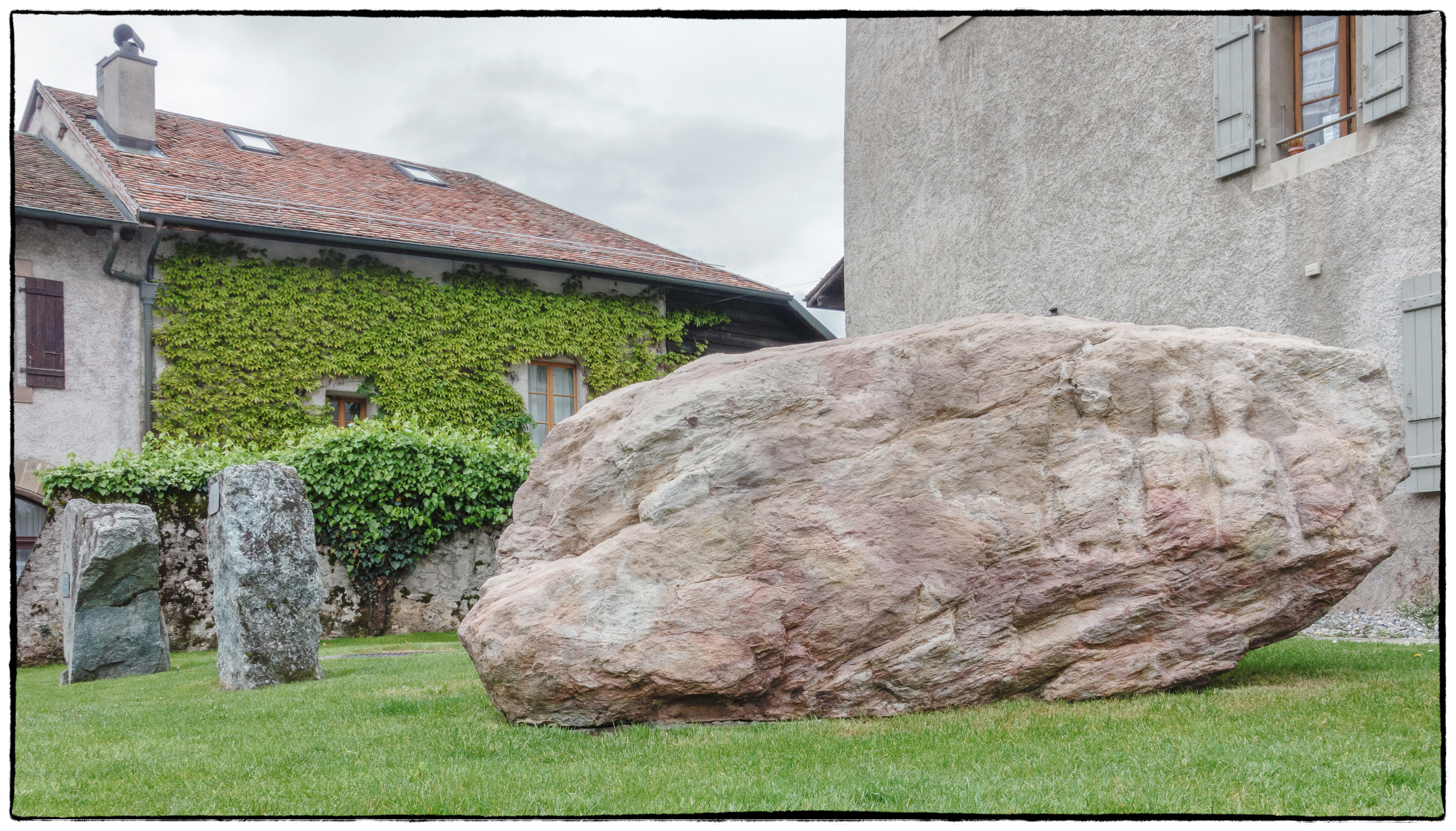
The Merriam-Webster dictionary defines “megalith” as: “a very large usually rough stone used in prehistoric cultures as a monument or building block”. While these stones are fairly large I’m not sure that I would call them “very” large (i.e.in the sense that the stones used at Stonehenge are “very” large). Somehow the word “minilith” comes to mind! At this site there are three largish standing stones (menhirs) and a large boulder carved with four female figures. The latter is a copy of the original (see below):

According to the town’s website (translated from the original French):

It is probable that the neolithic inhabitants of the region lodged in the Salève caves and pruned menhirs. One of these sacred stones was found at the beginning of the 19th century at the top of a mound at the place called Pierre-Grand. On one side are four sculptured female figures, probably dating from the Gallo-Roman period (120 BC to 400 AD), and which are at the origin of her name : The Pierre-aux-Dames. This megalith was classified as a historic monument in 1921 and has been preserved since 1942 at the Museum of Art and History of Geneva. In 1998, the municipality commissioned a large copy of it which can be admired today on the Town Hall Square.

The three small megaliths can be seen on the left.

A fascinating and unexpected find.

Pipilotti Rist: Pixel Forest 3

The artist calls this 2001 work ‘Cape Cod Chandelier’. She goes on to say:

I like to surprise people with their reactions to these chandeliers. under-trousers cover the exits for the body’s garbage, so seeing them placed centrally in a room, giving off light, causes some people to think, ugh! that’s underwear! but others find underwear sexy. the chandeliers bridge the contradictions between the things we ignore and the things we long for, the places we come from and want to go back into.

(Source: pipilotti rist: the tender room).

In case it’s not obvious from the above, the entire piece is made from underwear.

Pipilotti Rist: Pixel Forest 2

Shadow people 1.

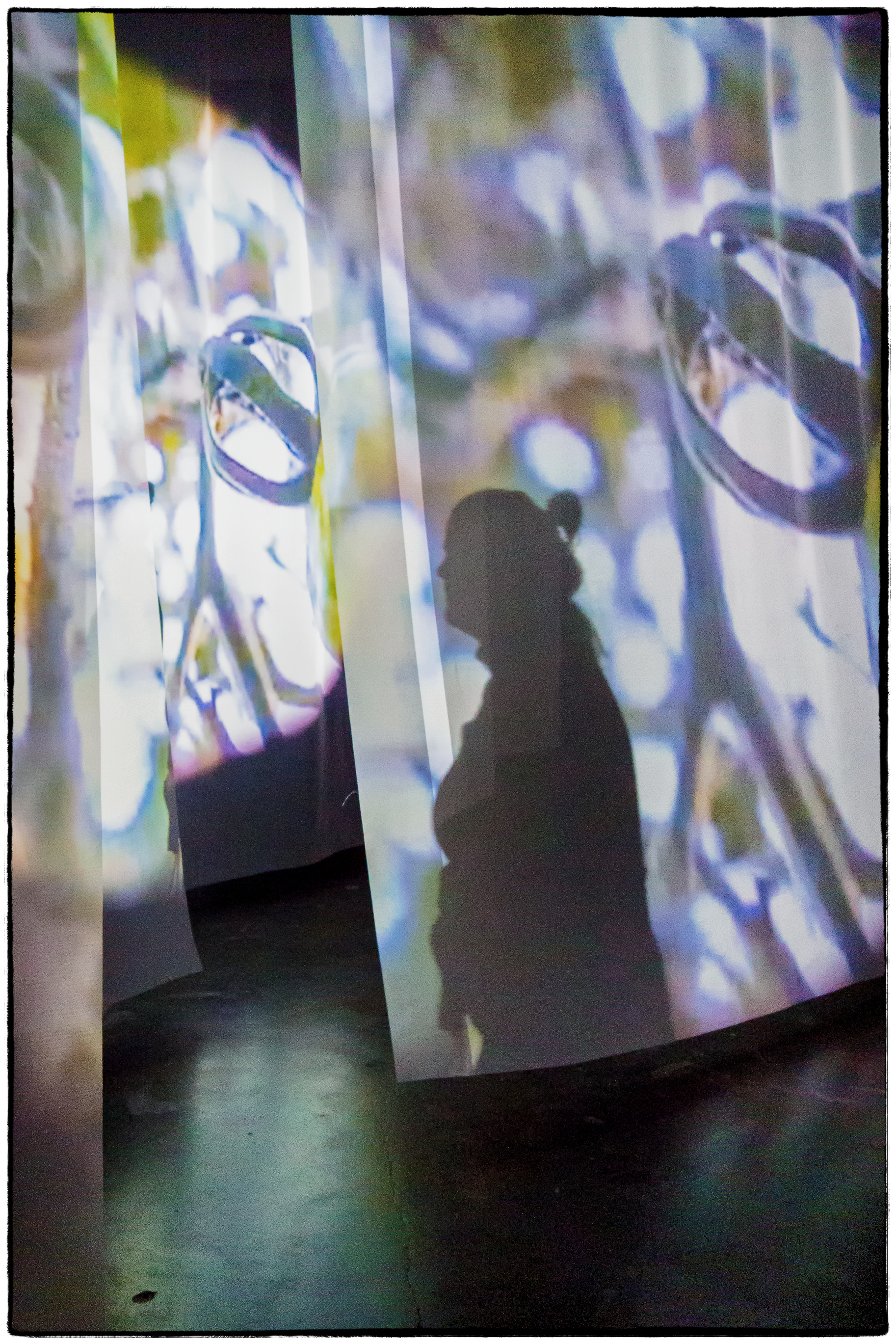
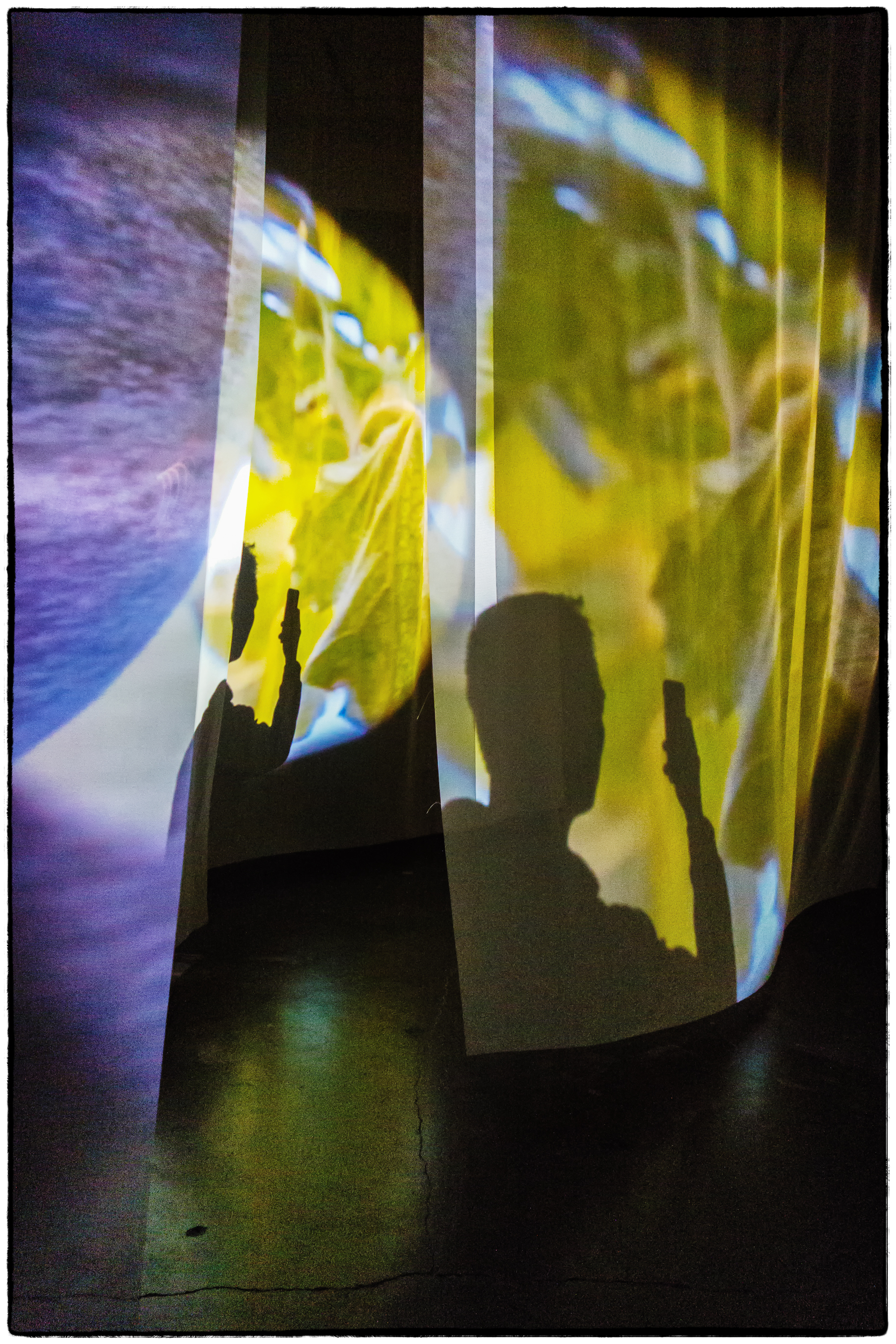
This was the second room we visited in the exhibition – on another floor and with a completely different feel. I much preferred it to the first (see: Pipilotti Rist: Pixel Forest 1). This one was full of moving lights and video projected onto walls and drapes (which also moved).

Fascinating thought it was, I was more interested in the shadows cast by the people moving through the exhibition. I’m calling this series of pictures “Shadow people”.

Shadow people 2

Shadow people 3

Shadow people 4

Shadow people 5

Shadow people 6

Although this was the first picture I took in this room, I like this picture least. I prefer the touch of mystery when you can’t actually make out the people casting the shadows.