A Jumping Spider

I was sitting, reading on my deck/balcony when this little guy hopped onto the book I was reading. You can see how tiny it was by comparing it to the page number on my book. How do I know it was a jumping spider? Well, it had jumped onto my book and after I picked up the camera to take the picture it jumped from the book onto my camera lens. Pretty impressive!

Taken with a Fuji X-E3 and Sigma 18-50mm f2.8

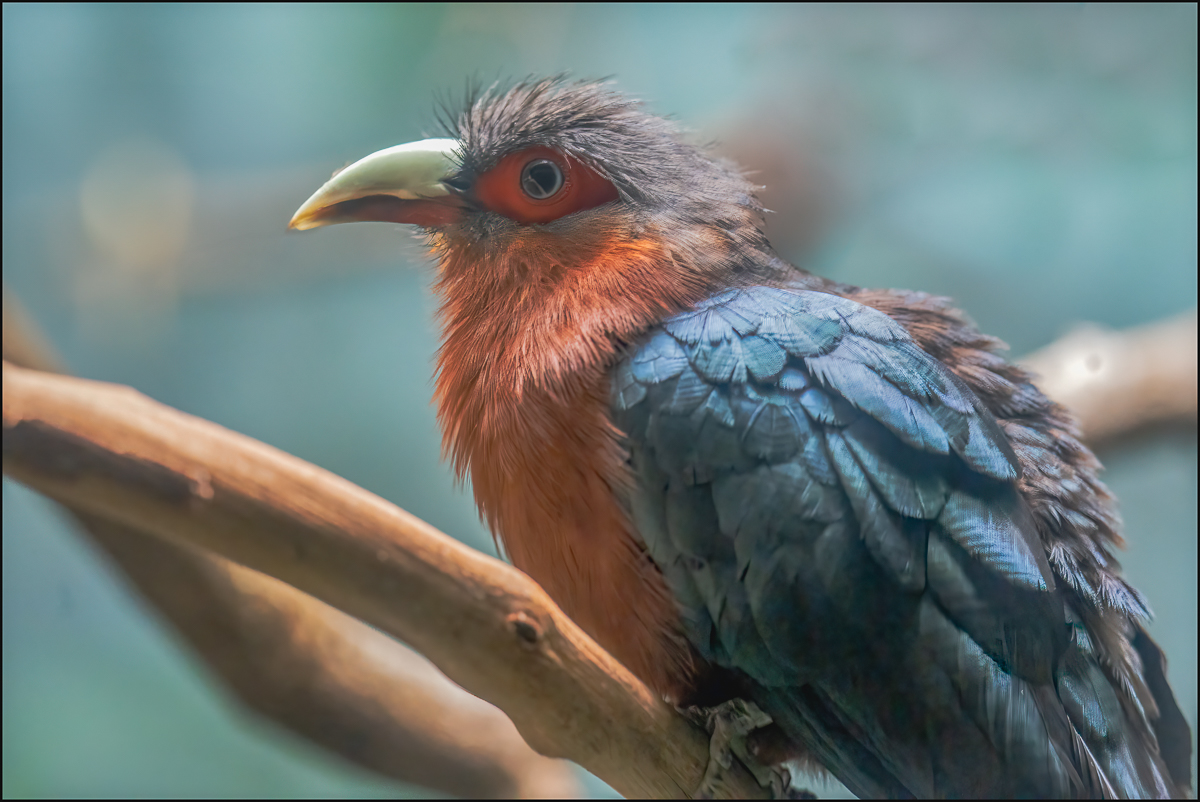
At the Bronx Zoo – Birds – Chestnut-breasted malkoha

The chestnut-breasted malkoha (Phaenicophaeus curvirostris) is a species of cuckoo in the family Cuculidae. Found in Southeast Asia from Myanmar through to eastern Java, the Philippines and Borneo, it is a large cuckoo measuring up to 49 cm (19 in) with grey and dark green upperparts and chestnut underparts, and a large curved pale upper mandible. The male and female are similar in plumage. Unlike many cuckoos, it builds its nest and raises its own young.

Measuring 42–49 cm (17–19 in) in length, the chestnut-breasted malkoha has a large, curved, pale yellow upper mandible and darker red or black lower mandible, and a bare red patch of rough skin around the eye. The head is grey and wings are dark green fading to blue with age. Its underparts and rump are chestnut, and feet are dark grey. Little sexual dimorphism is seen, as the male and female are similar in plumage, although the male has a pale blue iris and the female yellow.

Taken with a Sony A7IV and Sigma 150-600mm f/5-6.3 DG DN OS Sports Lens

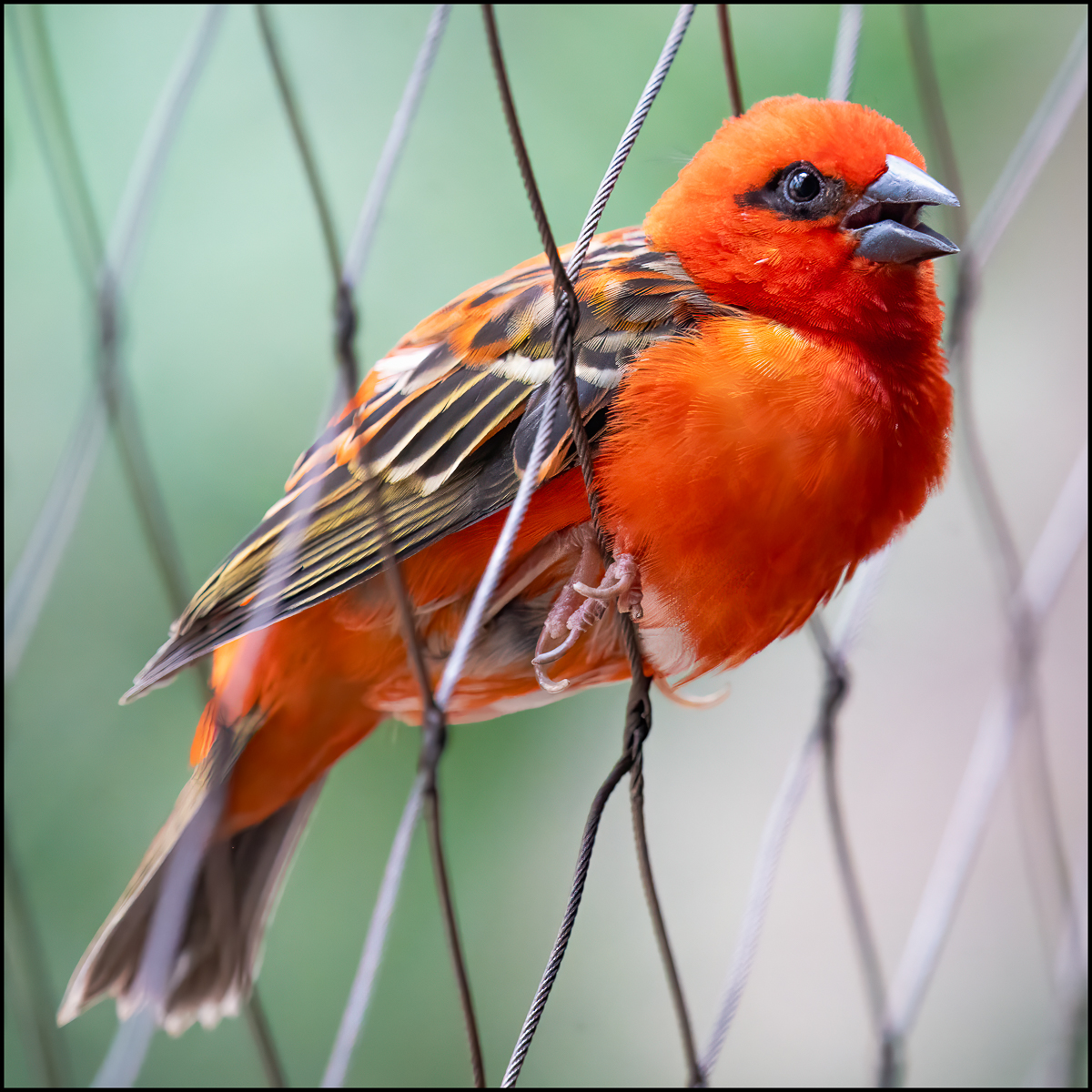
At the Bronx Zoo – Birds – Red Fody

The red fody (Foudia madagascariensis), also known as the Madagascar fody in Madagascar, red cardinal fody in Mauritius, or common fody, is a small bird native to Madagascar and introduced to various other islands in the Indian Ocean. It is a common bird within its restricted range, and the International Union for Conservation of Nature has assessed its conservation status as being of “least concern”.

In 1760 the French zoologist Mathurin Jacques Brisson included a description of the red fody in his Ornithologie based on a specimen collected in Madagascar. He used the French name Le cardinal de Madagascar and the Latin Cardinalis Madagascariensis. Although Brisson coined Latin names, these do not conform to the binomial system and are not recognised by the International Commission on Zoological Nomenclature. When in 1766 the Swedish naturalist Carl Linnaeus updated his Systema Naturae for the twelfth edition, he added 240 species that had been previously described by Brisson. One of these was the red fody. Linnaeus included a brief description, coined the binomial name Loxia madagascariensis and cited Brisson’s work. This species is now placed in the genus Foudia that was introduced by the German naturalist Ludwig Reichenbach in 1850. The type species was subsequently designated as the red fody. The species is monotypic.

The English word “fody” and the name of the genus Foudia are from the Malagasy name for the red fody Foudi or Fodi.

The red fody is about 5 inches (13 cm) in length and weighs 14–19 grams (0.49–0.67 oz). The male of the species is bright red with black markings around each eye. Its wings and tail are olive-brown. Its underparts are also red, which distinguishes it from other fodies in areas where it has been introduced. The female fody’s upper parts are olive-brown and its underparts are greyish brown. (Wikipedia)

Taken with a Sony A7IV and Sigma 150-600mm f/5-6.3 DG DN OS Sports Lens

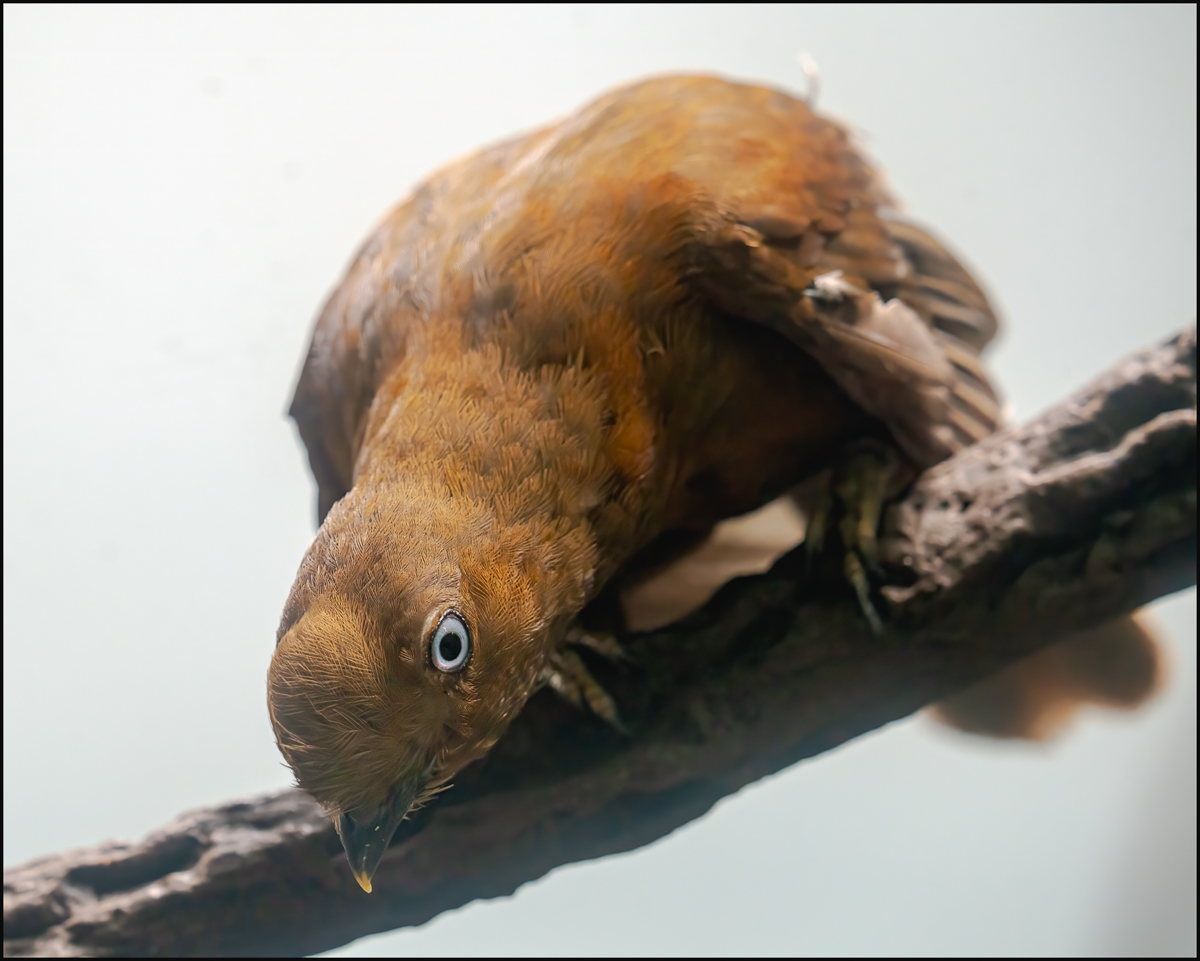
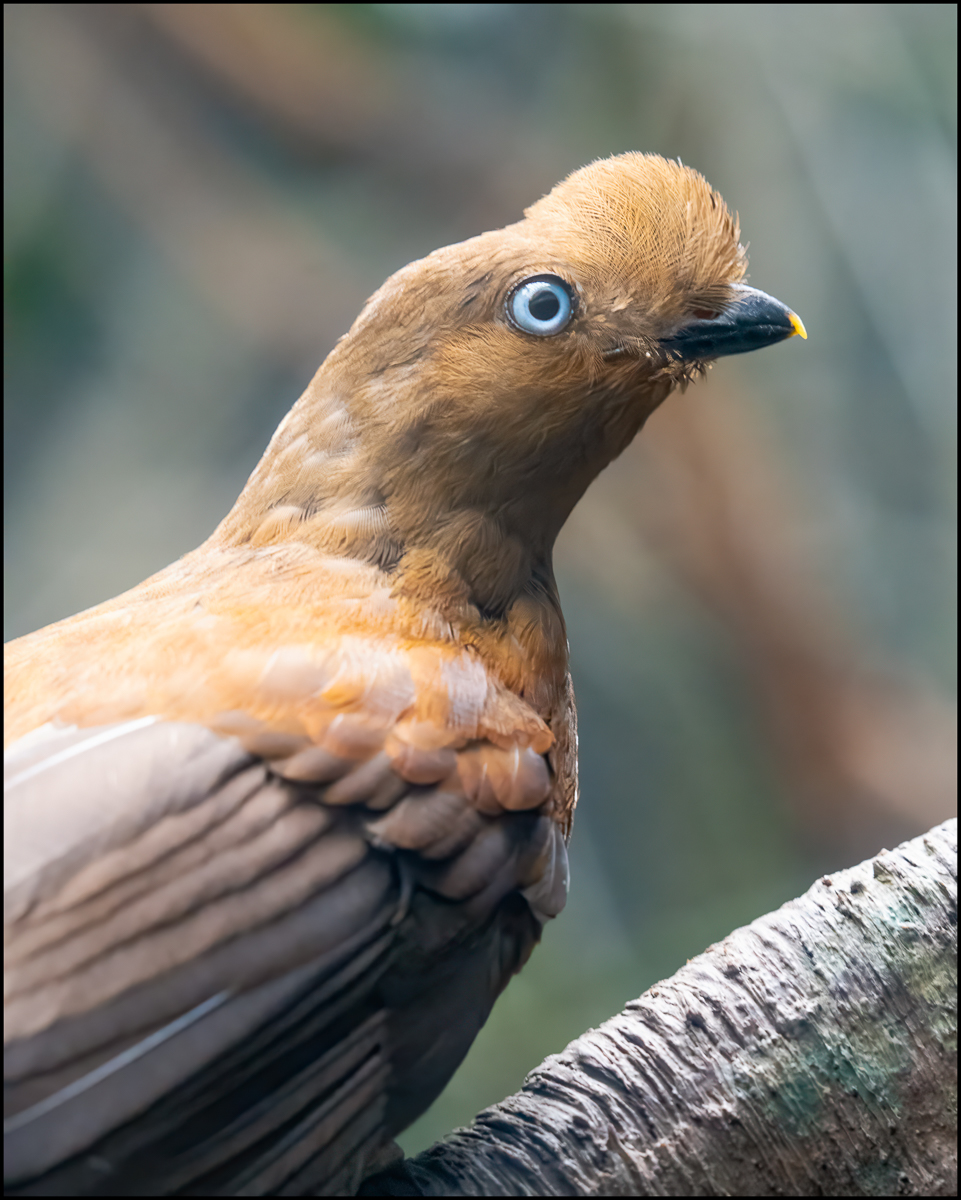
At the Bronx Zoo – Birds – Andean Cock-of-the-rock

The Andean cock-of-the-rock (Rupicola peruvianus), also known as tunki (Quechua), is a large passerine bird of the cotinga family native to Andean cloud forests in South America. It is the national bird of Peru. It has four subspecies and its closest relative is the Guianan cock-of-the-rock.

The Andean cock-of-the-rock exhibits marked sexual dimorphism; the male has a large disk-like crest and scarlet or brilliant orange plumage, while the female is significantly darker and browner. Gatherings of males compete for breeding females with each male displaying his colourful plumage, bobbing and hopping, and making a variety of calls. After mating, the female makes a nest under a rocky overhang, incubates the eggs, and rears the young by herself.

The Andean cock-of-the-rock eats a diet of fruit, supplemented by insects, amphibians, reptiles, and smaller mice. It is distributed all across the cloud forest of the Andes, having a range of around 260,000 km2 (100,000 sq mi). Even though it is being affected by the destruction of its habitat, the Andean cock-of-the-rock is not classified as threatened. (Wikipedia)

Taken with a Sony A7IV and Sigma 150-600mm f/5-6.3 DG DN OS Sports Lens

At the Bronx Zoo – Birds – Taveta weaver

The Taveta weaver (Ploceus castaneiceps), also known as the Taveta golden weaver, (or the mango bird) is a species of bird in the weaver family, Ploceidae. It is found on the African savannah in Kenya and Tanzania. The name of the bird comes from the unique markings/coloration of the bird, as well as how these birds weave intricate nests.

The male Taveta weaver is a vibrant golden yellow color; this color is duller on its back. The wings and tail are a greener color, whereas brown spots are located on the chest. The back of the head is red, and the bill, or beak, is black. The female is an olive color with paler streaks. In general, the Taveta weaver is a small bird, around the size of the finch and closely related to the sparrow.

Even though they are considered songbirds, the sounds that the bird makes is not pleasing to past human observers. Weavers often make a unique—often described as “weird”—noise to communicate. (Wikipedia)

Taken with a Sony A7IV and Sigma 150-600mm f/5-6.3 DG DN OS Sports Lens