Lunch in Yonkers, NY – Mill Street Courtyard

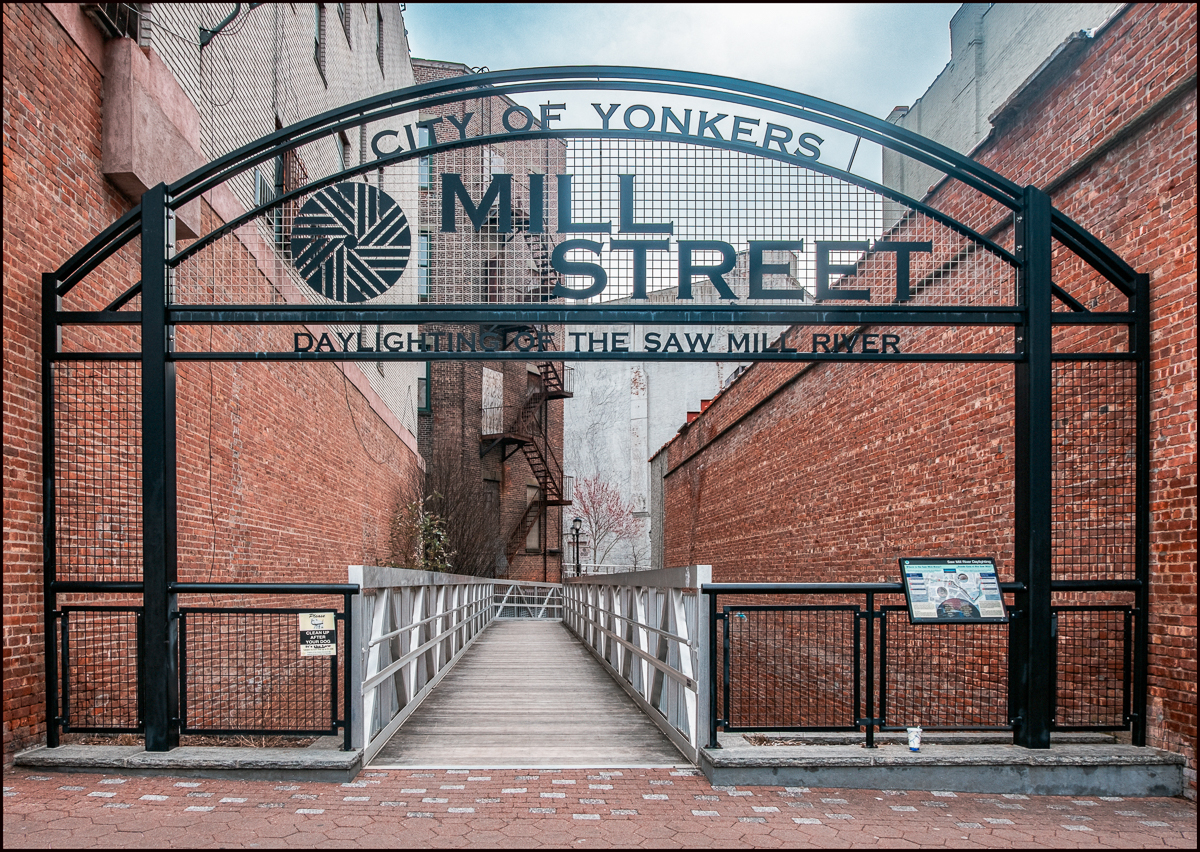
The project involved taking an inner city block in the historic Yonkers downtown and transforming it to an open pedestrian space. An underground flume of the Saw Mill River, a tributary of the Hudson River, has run within the courtyard block for 100 years. Essential to the design was the day lighting of the river in two sections to create a unique water feature.

Designed as a “Woonerf”, or shared street, the new courtyard features paved walkways, extensive landscaping, rain gardens to catch storm water, and granite benches. A new mosaic column sculpture designed by a local artist Haifa Bint-kadi is centered on the plaza overlooking the river.
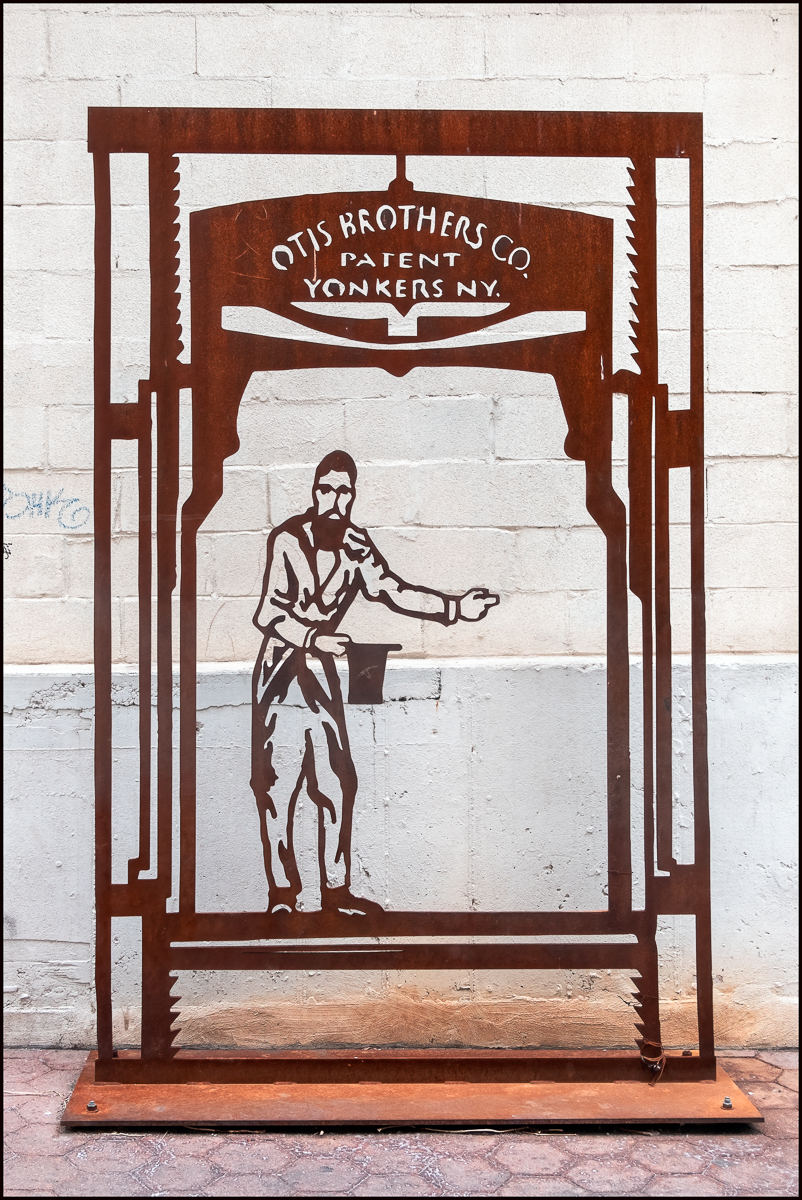

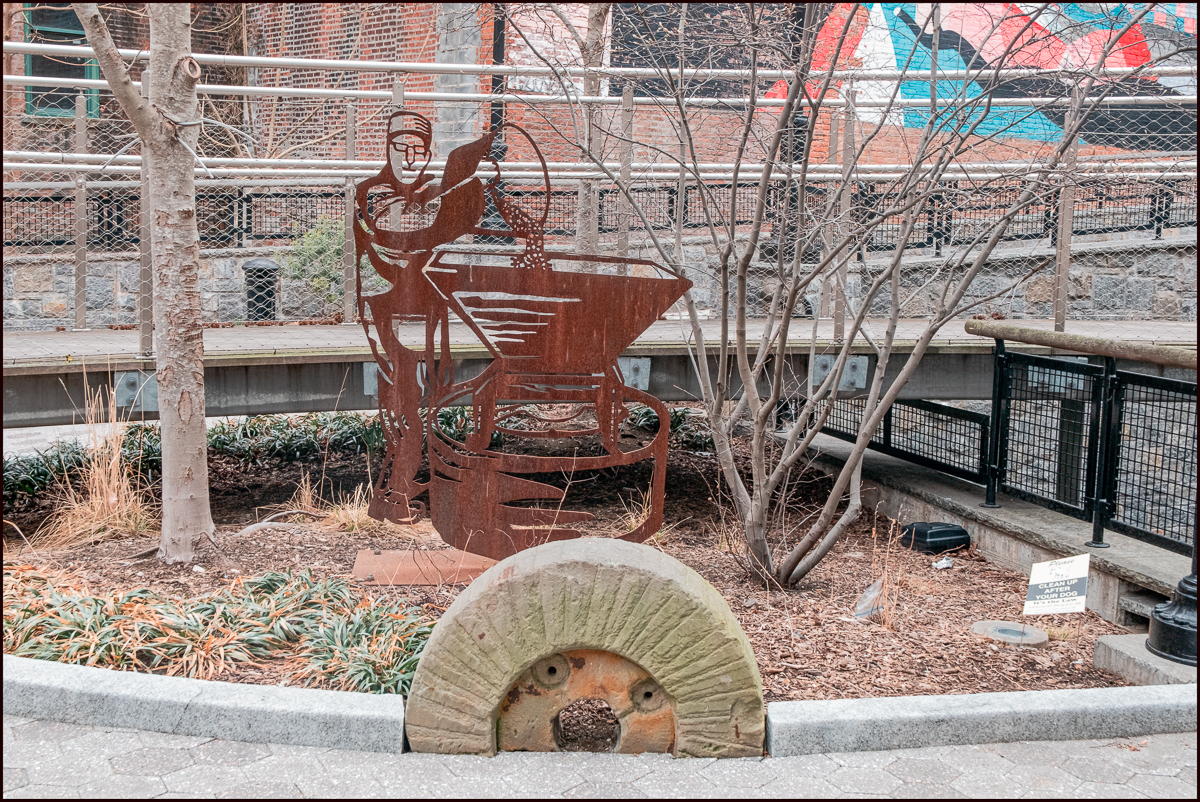
This iron sculpture recognizes Otis Brothers, founded in Yonkers where in 1852, Elisha Graves Otis introduced the first safety contrivance for elevators. Otis established a company for manufacturing elevators and went on to dominate the elevator industry. Today the Otis Elevator Factory is the world’s largest manufacturer of vertical transport systems.

The view and sounds of the river can be enjoyed from a granite and wood amphitheater and crossed over by two stunning wood and steel pedestrian accessible bridges. A new vehicular bridge allows service access.

For more pictures see here.
Taken with a Fuji X-E3 and Fuji XC 16-50mm f3.5-5.6 OSS II
Lunch in Yonkers, NY – New York Telephone Building

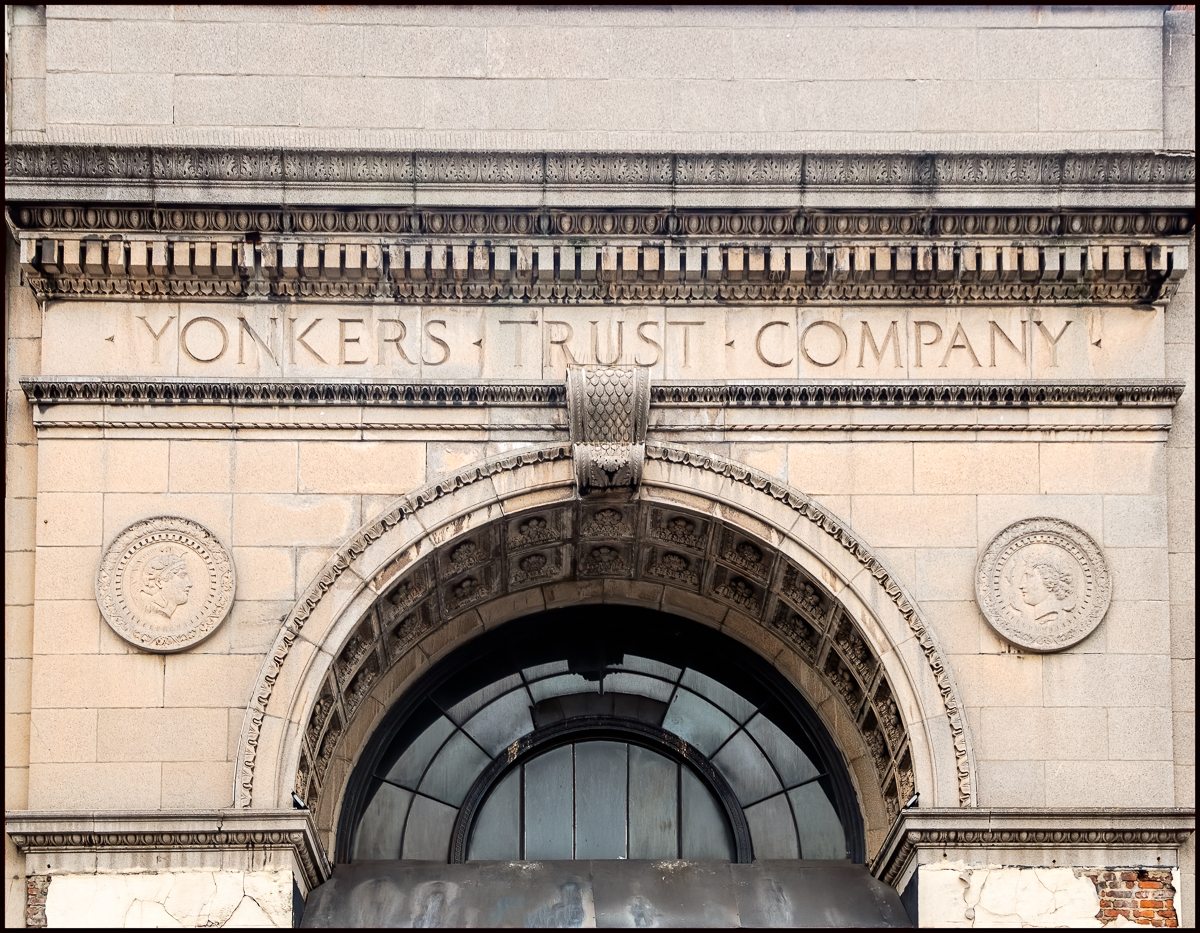
The building at 5 Riverdale Ave. bears one of three murals called “Gateway to the Waterfront” by Richard Haas. (Unfortunately, I failed to spot the mural and consequently didn’t take a picture of it). It was built in 1902 by the New York Telephone Company. Haas painted a second mural on an adjoining building. But that building now seems to have been demolished and, unless it’s been moved elsewhere, the mural with it.

Taken with a Fuji X-E3 and Fuji XC 16-50mm f3.5-5.6 OSS II

Lunch in Yonkers, NY – The Philipsburgh Building

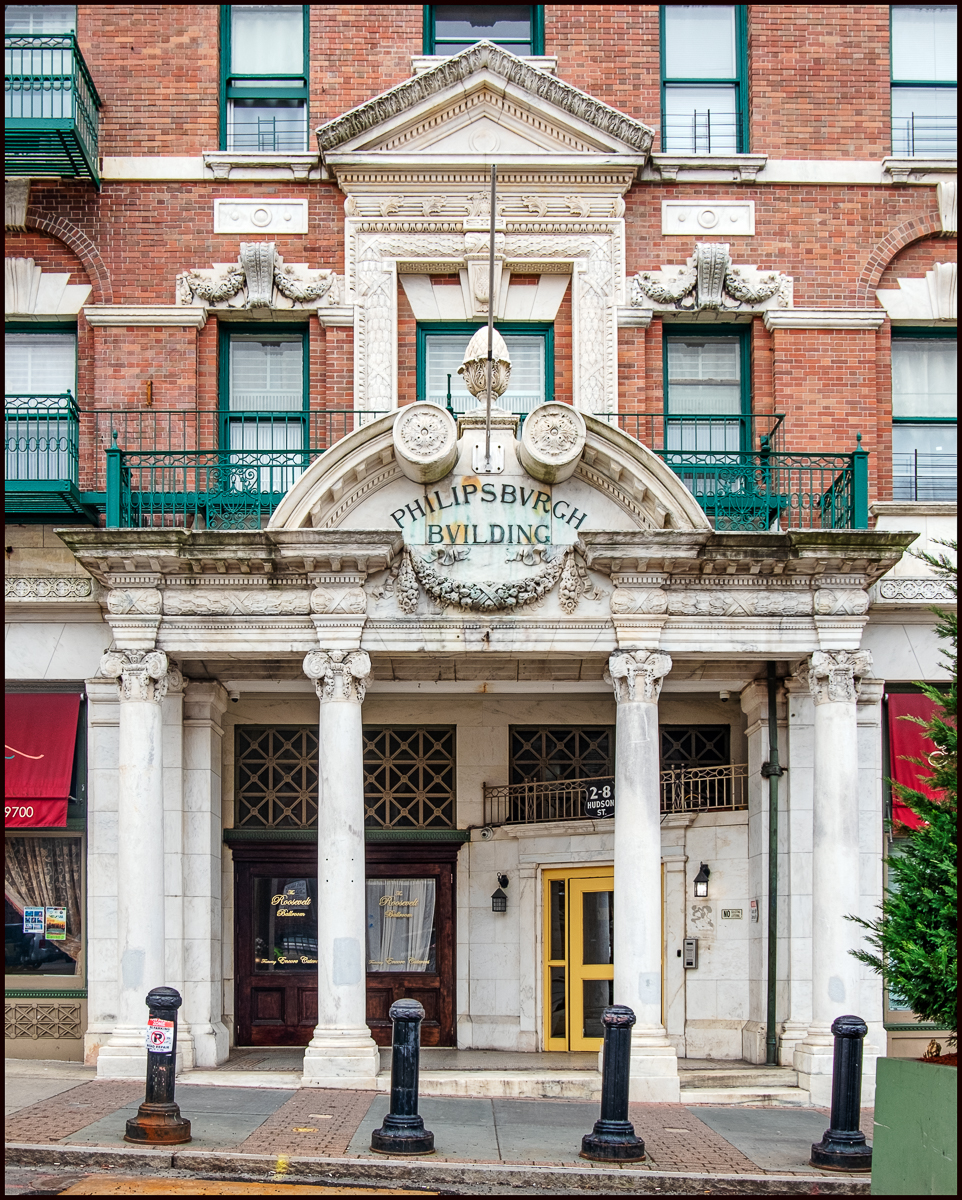
The Philipsburgh Building, also known as Philipsburgh Hall, is an architectural landmark building in Getty Square in downtown Yonkers, New York. The grand, Beaux-Arts style structure was designed by G. Howard Chamberlin and built in 1904 using a unique all-concrete construction making it the first fireproof office building in Westchester County. For years, the enormous grand ballroom within, with its 30-foot (9.1 m) ceilings and extensive gold leaf decor, was a fixture of the social scene in Yonkers, playing host to all manner of meetings, parties and theatrical productions including speeches by Theodore and Franklin D. Roosevelt (resulting in its being named “The Roosevelt Ballroom” by Encore Caterers.

In the latter half of the 20th century, the building and the neighborhood around it fell into physical and economic disrepair. By the 1980s, most of the building had been converted to low-rent apartments, while parts of it were left entirely unoccupied. In the 1990s, the building benefited from a renewed interest in local development, and was heavily renovated and restored. The grand “Roosevelt” ballroom once again found its place as a focal point of local culture.

The building was restored and renamed the Philipsburgh Performing Arts Center (PPAC, pronounced “P-pack” locally) in 2001. The PPAC concept was short-lived, however, and by early 2005 it had ceased to be. The building’s primary occupant is a South Asian restaurant called “Nawab” and its owners are also the caterers for events at the Ballroom.

It was listed on the National Register of Historic Places in 2001.

Taken with a Fuji X-E3 and Fuji XC 16-50mm f3.5-5.6 OSS II
Lunch in Yonkers, NY – St John’s Episcopal Church

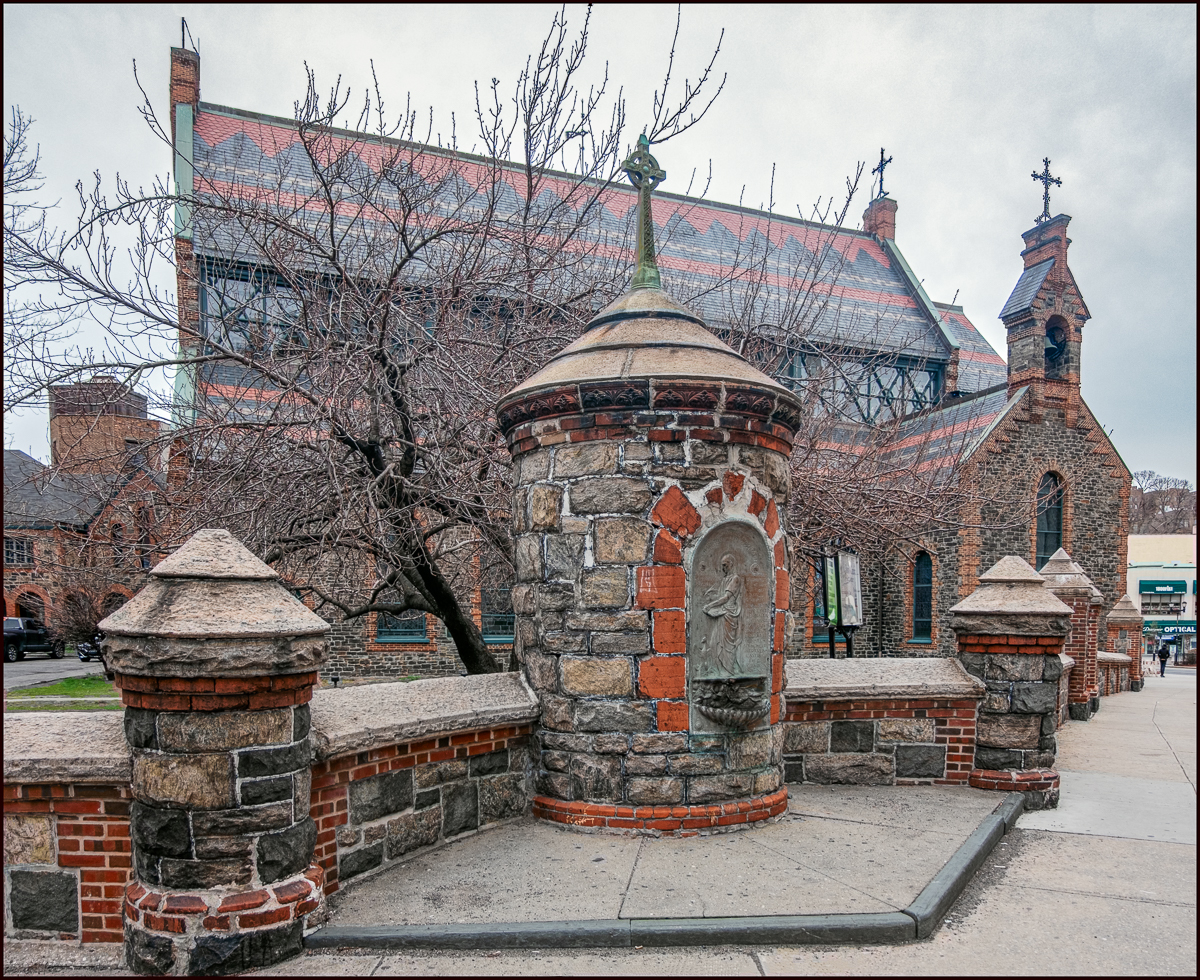
St. John’s Church is a historic Episcopal church at One Hudson Street in the Getty Square neighborhood of Yonkers, Westchester County, New York. The complex includes the church, chapel, rectory, parish house, and school. The church was originally constructed in 1752, with an addition in 1849, and modifications to the front facade in 1874 by architect Edward Tuckerman Potter (1831–1904). It is constructed of rough gray fieldstone with red brick on the corners. It is cruciform in plan, three bays wide, with a slate-covered gable roof. The front facade features a rose window and four battered buttresses. The parish house and chapel were constructed in 1890–1891 and are connected to the church. The 2+1⁄2-story, five-bay-wide rectory was also constructed in 1890–1891 and is connected to the chapel. The additions made during 1890–1891 were by architect Robert Henderson Robertson (1849–1919). A group of women from the church founded St. John’s Riverside Hospital in 1869 to care for the poor of the parish.

It was added to the National Register of Historic Places in 1982.


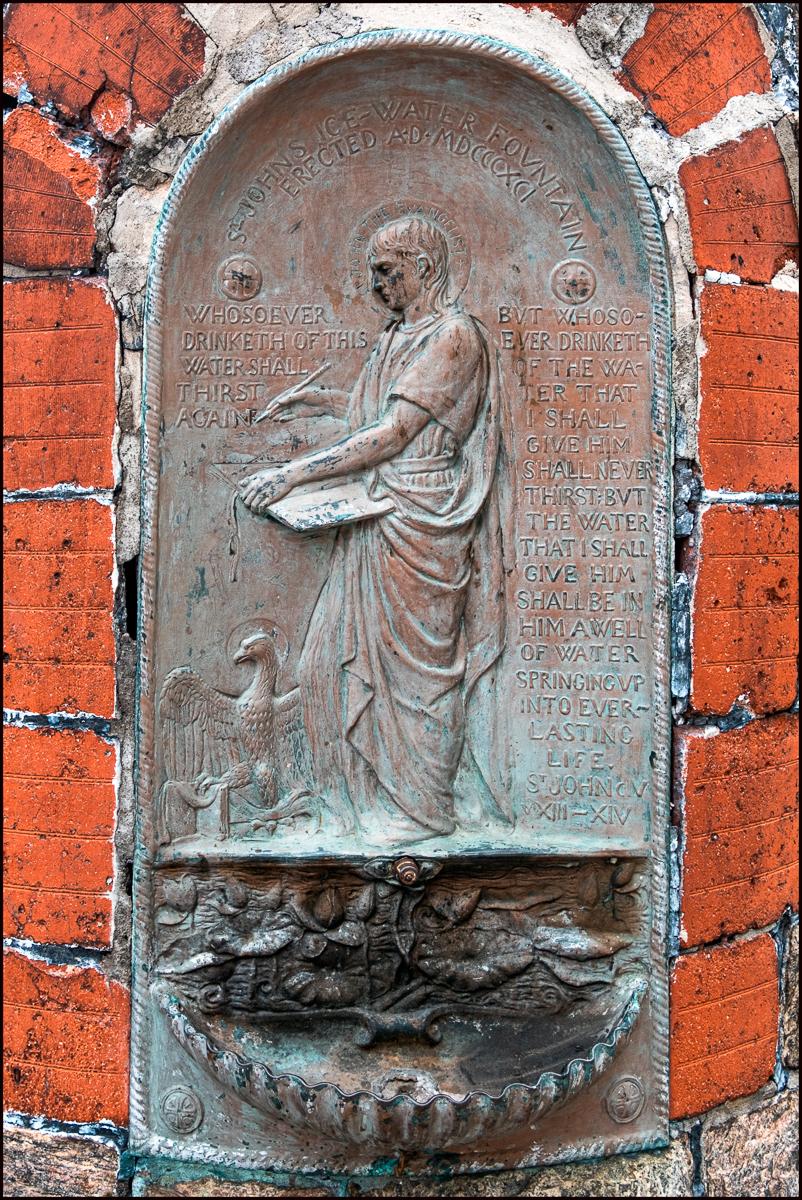
“Eva Smith Cochran was a member of St. John’s Church in the later part of the 19th Century and she left our city a shining example of vision and generosity. Her work and personal commitment were instrumental in the creation of enduring institutions in Yonkers, namely, St. John’s Riverside Hospital, The Cochran School of Nursing, Philipse Manor Hall, and St. John’s Episcopal Church. She was also instrumental in the creation of the Hollywood Working Men’s Club, which is now disbanded, and whose stunning Victorian structure has been demolished. She also built the St. Andrew’s Memorial Episcopal Church which was destroyed by fire. Her Son was also responsible for the founding of a hospital for those suffering from Tuberculosis which was located on Ridge Hill.

Her love for Yonkers and her neighbor are no better demonstrated than in her endowing the “Cool water fountain” located at the corner of Hudson Street and South Broadway, at the Southeast corner of the St. John’s Church campus. She designed this fountain to provide cool water for the many people who worked and shopped in Getty Square. It was a fitting monument for that location as the Christian faith sees refreshing water as a symbol for the spiritual support God gives to us through grace, love, forgiveness and healing. Our bodies have spirits, our spirits have bodies, and compassion honors both.” (St. John’s Church website).

Taken with a Fuji X-E3 and Fuji XC 16-50mm f3.5-5.6 OSS II