9/11 Memorial at Croton Landing revisited

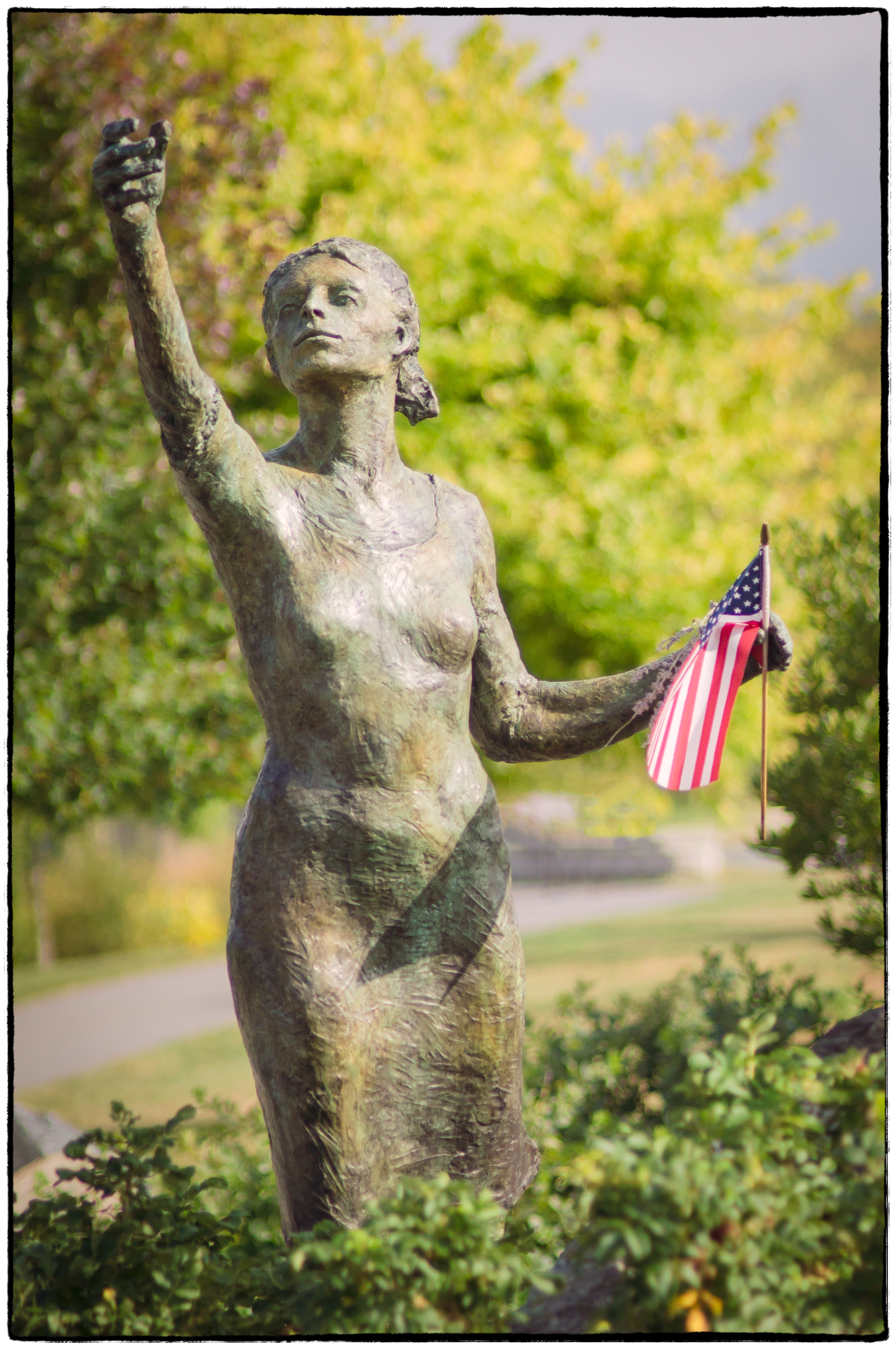
Reaching Lady Statue.

I’ve been to Croton Landing many times. I’ve even taken some pictures of the 9/11 memorial. However, this was some time ago. Since the last time I was there a new item has been added to the memorial: a statue. Apparently it’s called “Reaching Lady” and it was created by Lauren Davis – A Resident of Croton on Hudson.

I found the pre-statue version to be quite powerful: a twisted girder with bit of concrete attached to it. To me it said everything that needed to be said.

I’m not sure that the statue adds much. In fact to me it takes away from the original memorial, diluting it a little. I don’t dislike the statue. It’s just that I think the twisted girder worked fine by itself. It doesn’t need the statue to make its point.

Maybe it’s just me though.

Closeup of Statue.

American flag.

Detail of girder.

Konica Hexanon 135mm f3.2

Bush with berries

I recently acquired two Konica hexanon lenses (a 28mm f3.5 and a 135mm f3.2) complete with nice lens cases and a useful wide angle metal lens hood. I wanted the lenses and the Konica Autoreflex TC that came with them was a plus. The whole lot cost less than $50. I haven’t yet tried the 28mm, but these pictures are from the 135mm on my Sony Nex 5N.

I must say that I really like this lens. I don’t usually use this focal length but I quite liked it. It’s a fairly large (particularly with the adapter) and heavy lens, which feels well built. I really liked to colors and the out of focus areas (bokeh) are impressive. It’s also extremely sharp.

I can see myself using this focal length more.

Hudson View with Tree.

More Berries

Eirah and Jackson.

Flower.

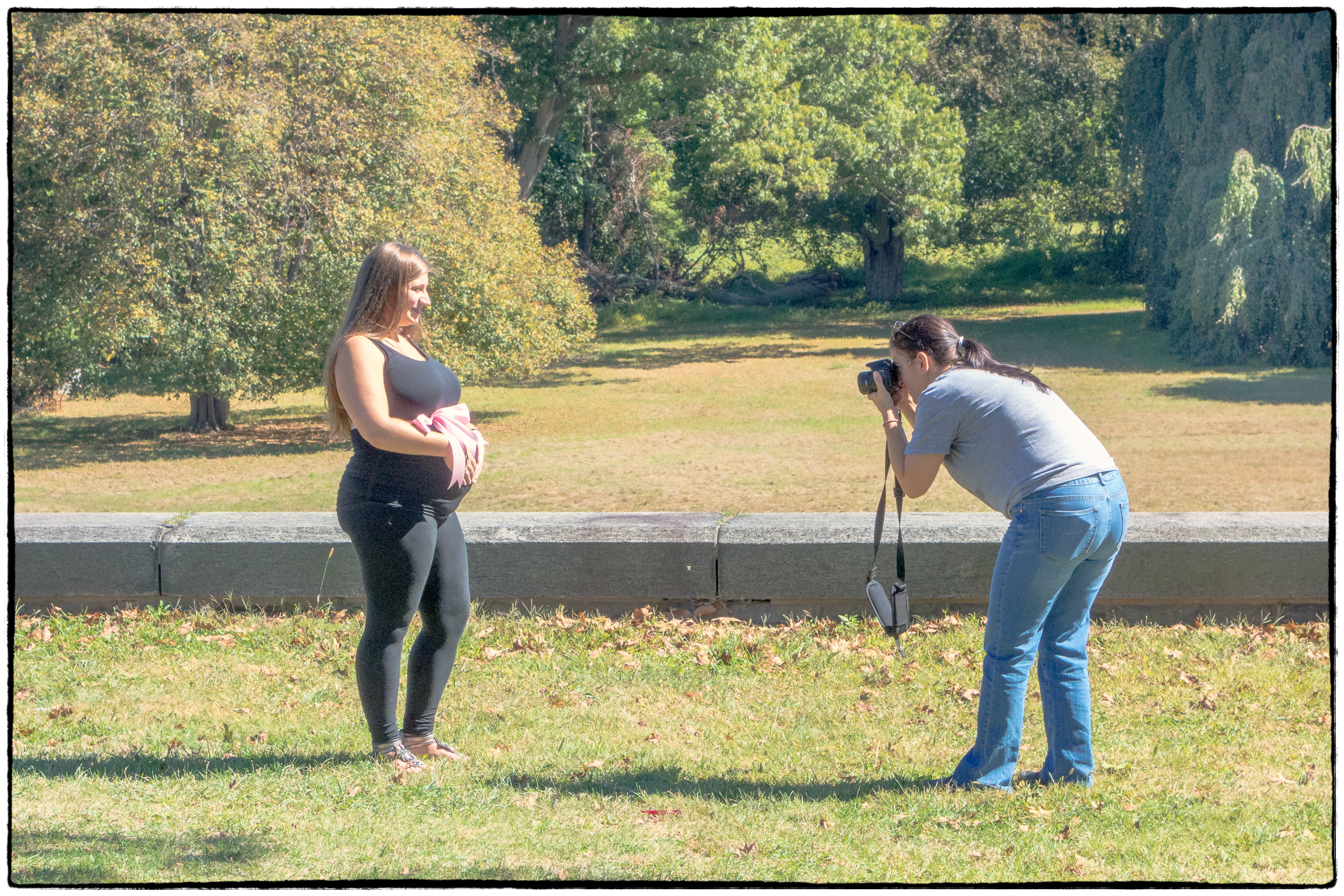
Photographing the Photographer

I came across these two young women taking pictures the other day. It wasn’t really the best time of day to be taking pictures – but then I too was taking pictures at that time. Sometimes it’s the only time you have available. Judging by the shadows the sun was directly over the photographers shoulder and straight into the face of the subject. It was quite bright at that time so I imagine the subject was squinting rather badly. Since the light was directly on the subject I doubt there was much modeling. There was lots of nice open shade around, which would have been nice for portraits. As I know all too well, however, when you’re caught up in the process of picture taking you tend not to think of these things. They always occur to me afterwards: I should have done this; I should have done that etc. Sometimes I learn and do better the next time. More often than none I repeat the same old mistakes. I have to learn more patience and to think a little more before I start taking pictures.

Capturing the Light

Capturing the Light

I’ve just finished reading “Capturing the Light”. It recounts the early history of photography through the stories of two great photographic pioneers: Luis Jacques Mande Daguerre and William Henry Fox Talbot.

Daguerre was an accomplished painter and a great showman. He initially made his name as the creator of dioramas but as that business started to wane he looked for another source of income. Not really a scientist Daguerre through experimentation, strategic partnerships (e.g. with Nicephore Niepce who is credited with producing the first photograph) managed to come up with the process which bears his name: Daguerreotype and started a photographic explosion which continues to this day.

Talbot was the complete opposite to Daguerre. Coming from the British landed gentry he was independently wealth and had the time to indulge his scientific pursuits, of which photography was one of many. He came up with his own process before Daguerre but in characteristic style did not rush to publication so Daguerre got there first. Showing his typical modesty he named his process Calotype rather than Talbottype . Most significantly the Calotype was based on prints made from negatives where the Daguerreotype was a direct positive on a metal plate. Large numbers of additional prints could be made from the Calotype negative whereas each Daguerrotype was unique and additional copies could not easily be produced. So although Daguerre got there first Fox Talbot’s process became the basis for all photography up to the digital era.

I very much enjoyed this book. It combines two of my main interests: history and photography.

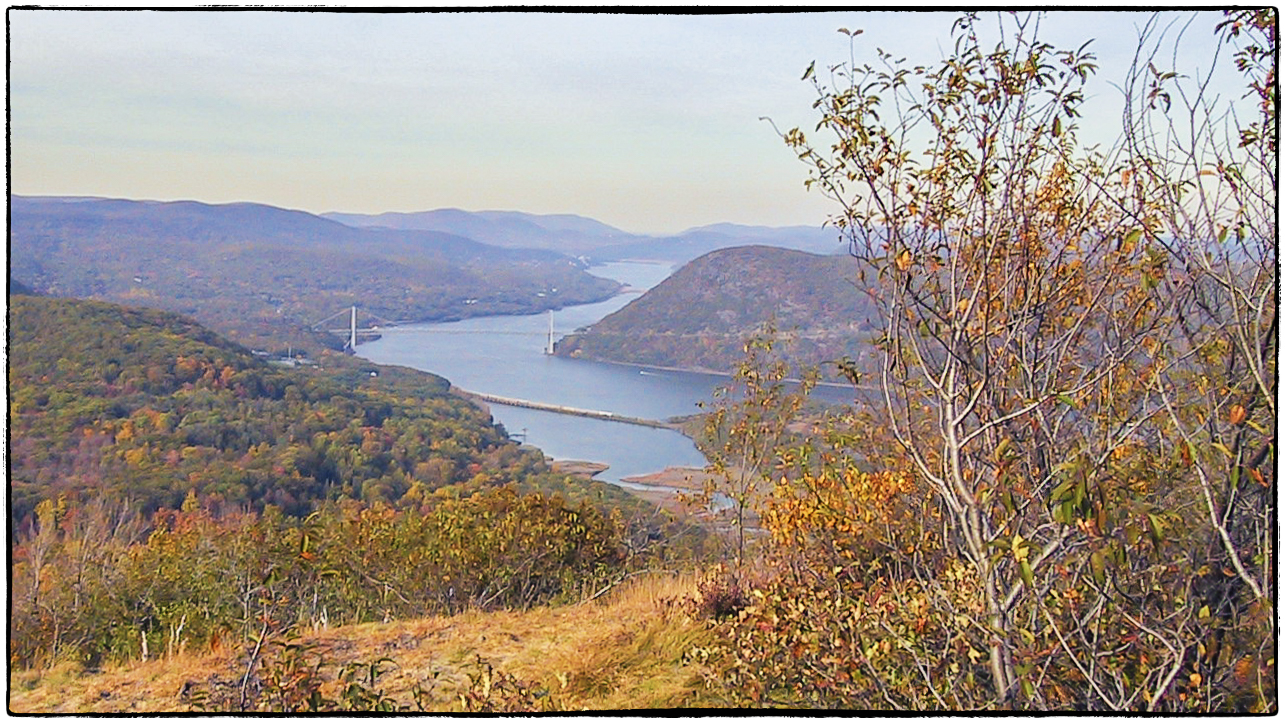
Oldie: Hudson River and Bear Mountain Bridge from Dunderberg Mountain

This was taken back in October 2000 with a Canon Powershot S10 (I still have it) – a 2.1 megapixel camera. I used to think that it was taken from somewhere north of Cold Spring (e.g. from Mount Taurus, or Breakneck Ridge or somewhere). I now realize that it can’t have been. It’s looking north towards the Bear Mountain Bridge so it must have been taken from somewhere south of the bridge. I did some browsing around using Google Maps and the most likely candidate seems to be Dunderberg Mountain, which I do remember hiking to.

You can find more on the Canon S10 – and some more pictures – in an earlier post