Abandoned Cemetery, Beacon, NY

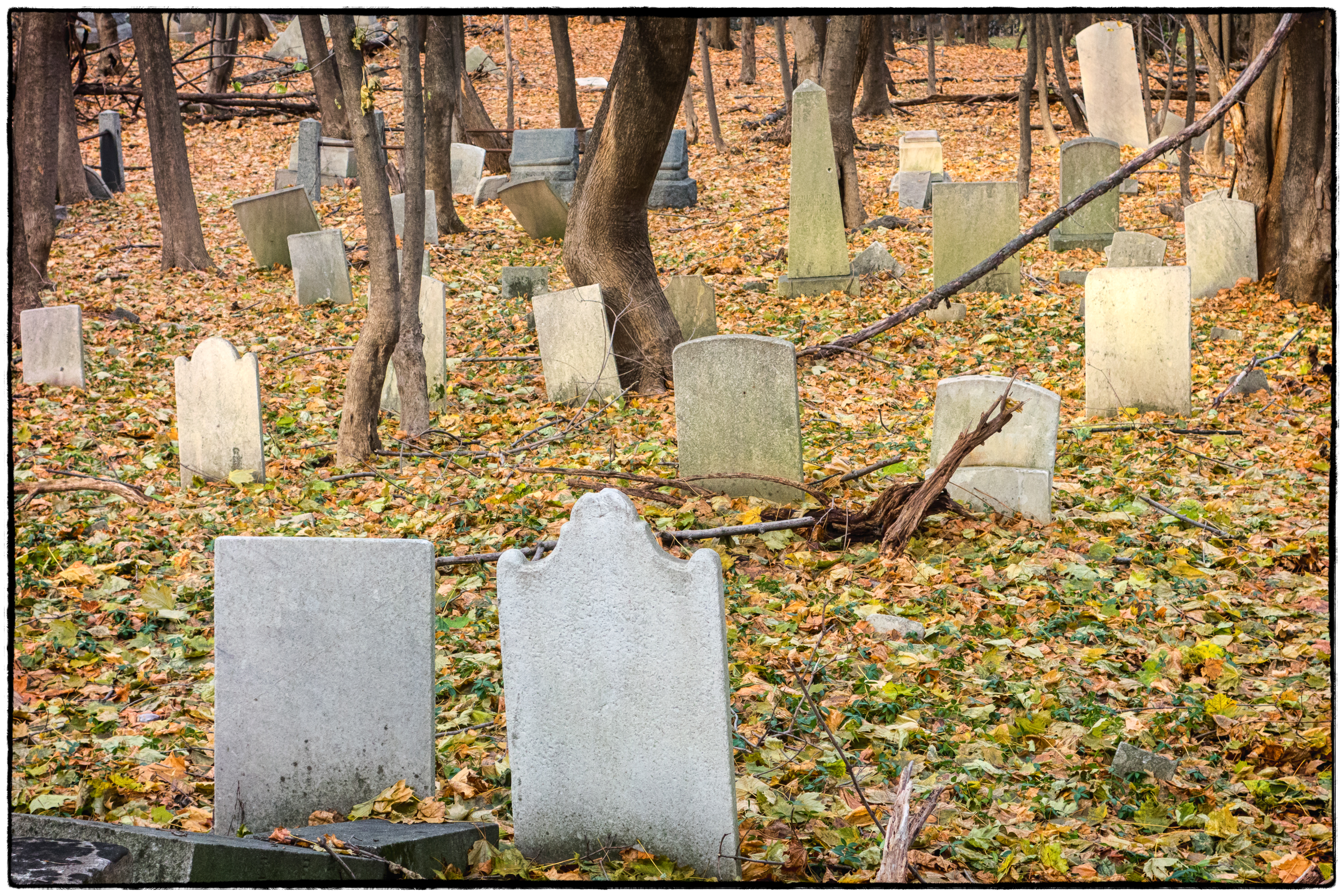
Once the graveyard of the Reformed Church of Beacon this has been long abandoned. I’ve seen a number of abandoned graveyards before: completely overgrown and with tilted and broken gravestones, but I’ve never seen one quite like this. To me what makes this one different are the abandoned vaults, from which the remains have been removed and re-interred elsewhere. According to a marker in front of the Reformed Church one of the more famous re-interrments was Colonel William Few. Few signed the US Constitution for the state of Georgia. He was interred in the Chrystie family vault, but was later removed to his home state, Georgia.
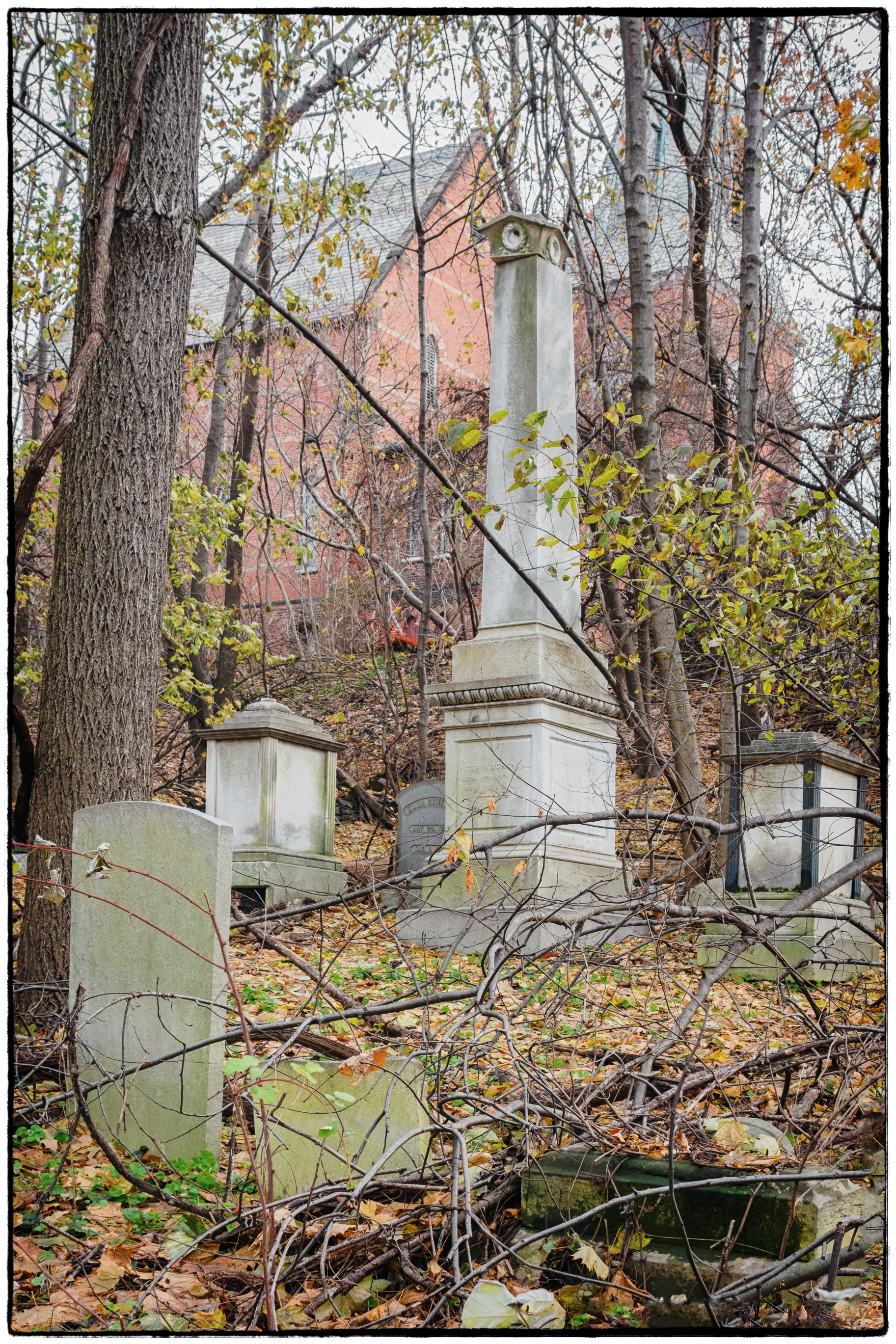
One of the more impressive memorials with the Reformed Church in the background .
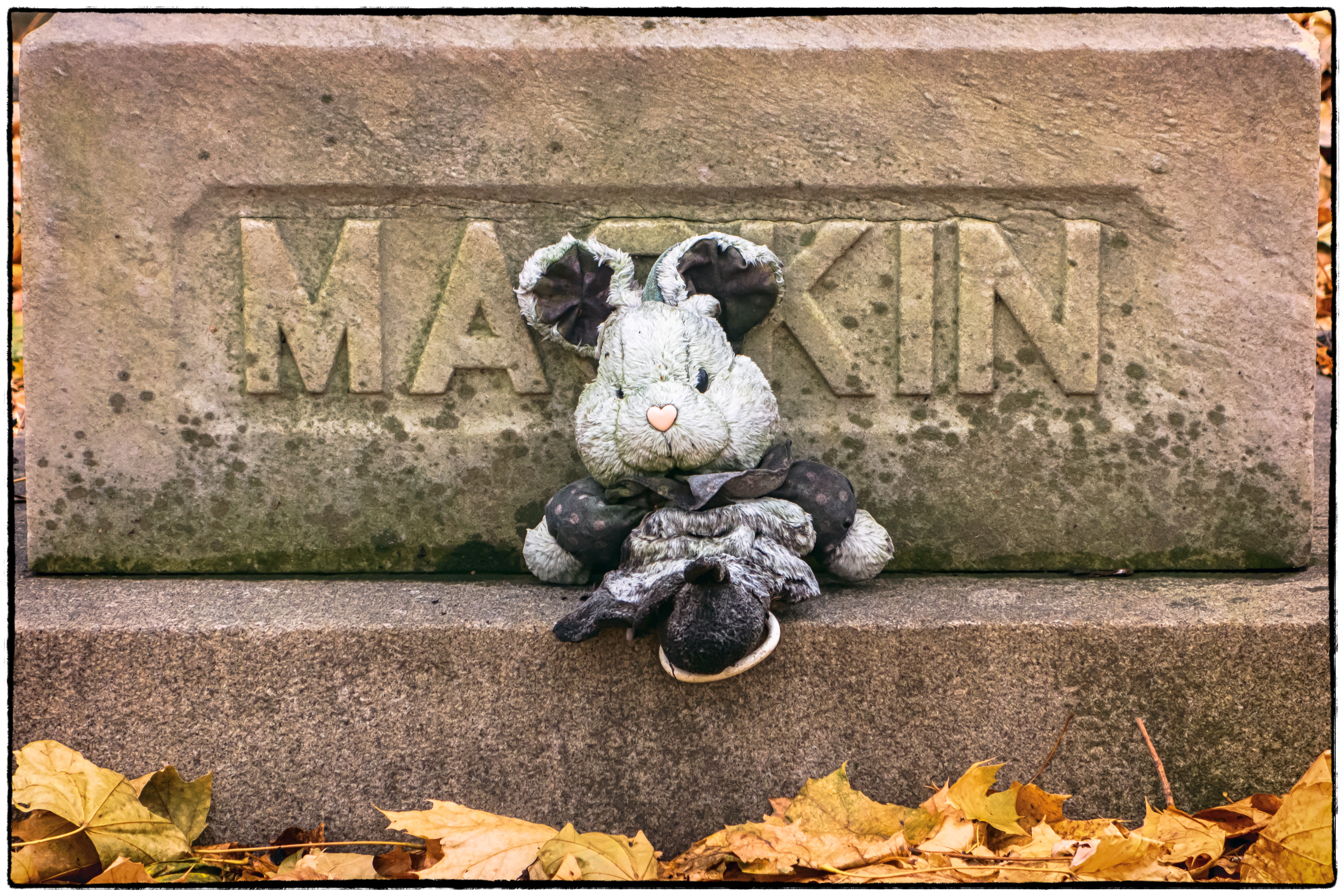
I’ve seen toys left on graves before, usually graves of children who died young and at first I thought this might be the case here. However, it’s clear that nobody has been buried here for a very long time. Moreover, the gravestone on which the toy had been placed read “James Mackin. Died March 1, 1862 aged 37 years, 1 month and 1 day”. So not a child and the toy was a bit of a mystery. Although wet and bedraggled it still worked though: if you pulled a ring on the side it played a tune.
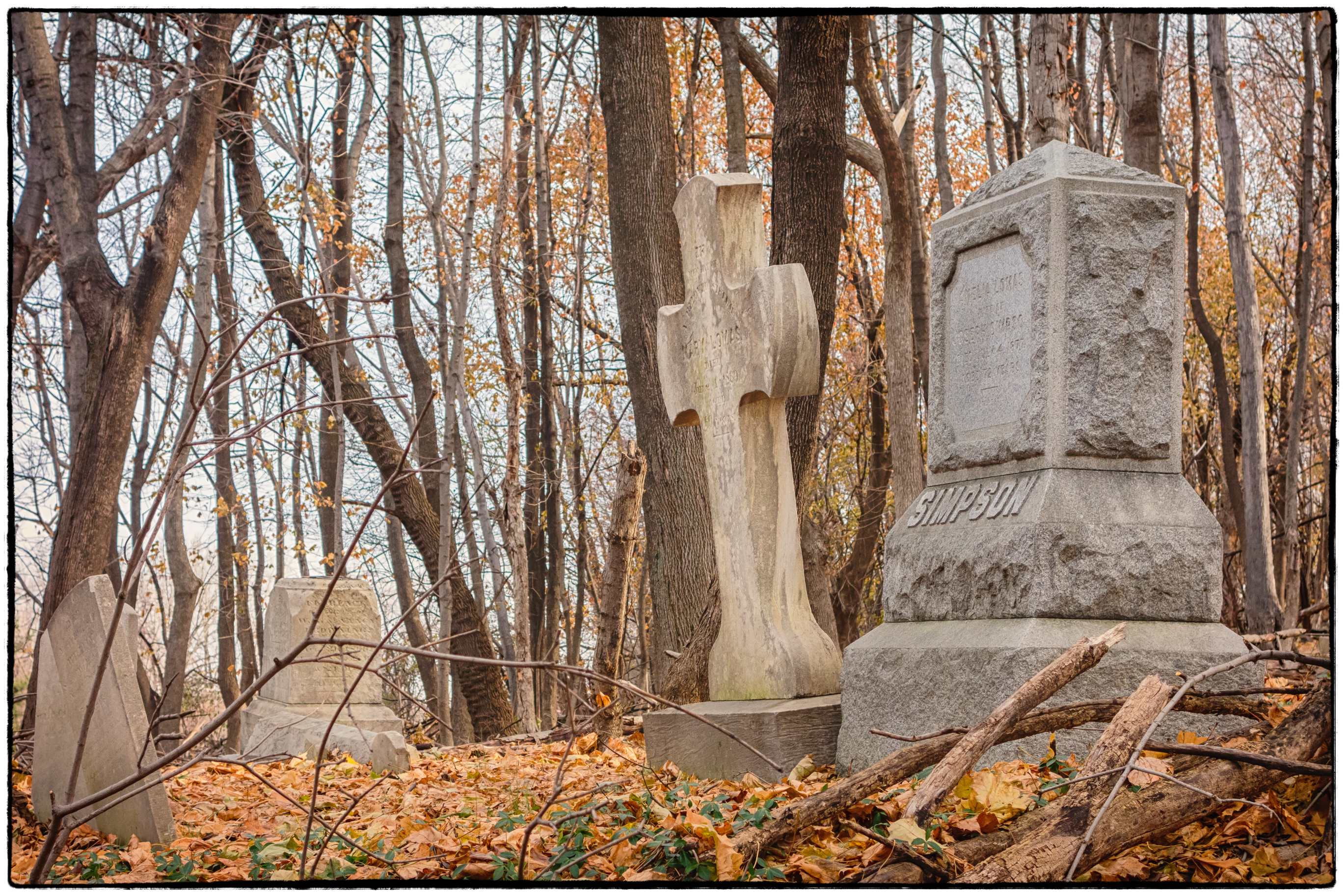
Gravestones.
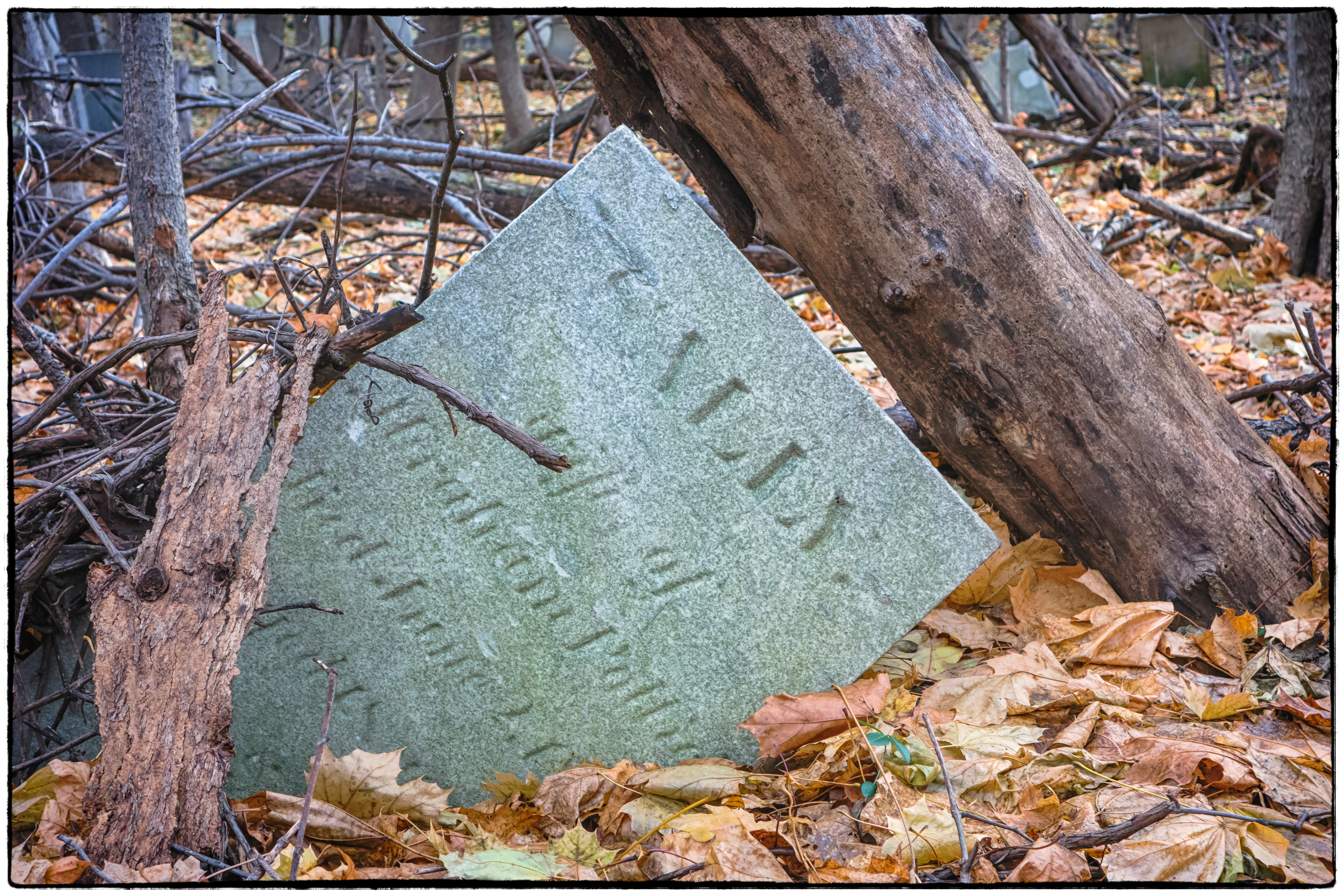
Tilted gravestone and fallen trees.
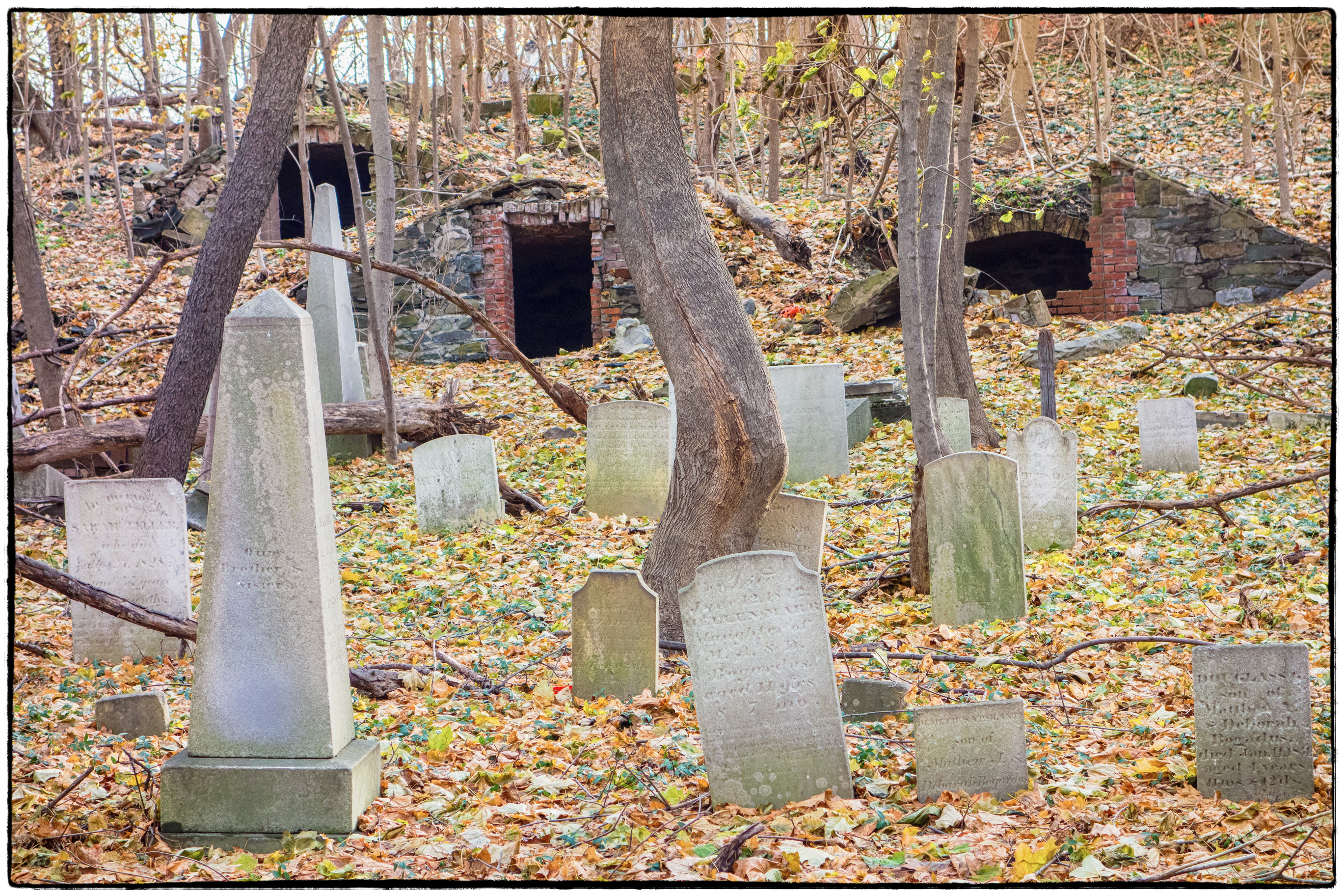
Graveyard with opened vaults in the background. At first glance they look like the stone chambers which abound in Putnam County but they are built of brick and clearly of much more recent vintage. They are obviously abandoned – or are they….
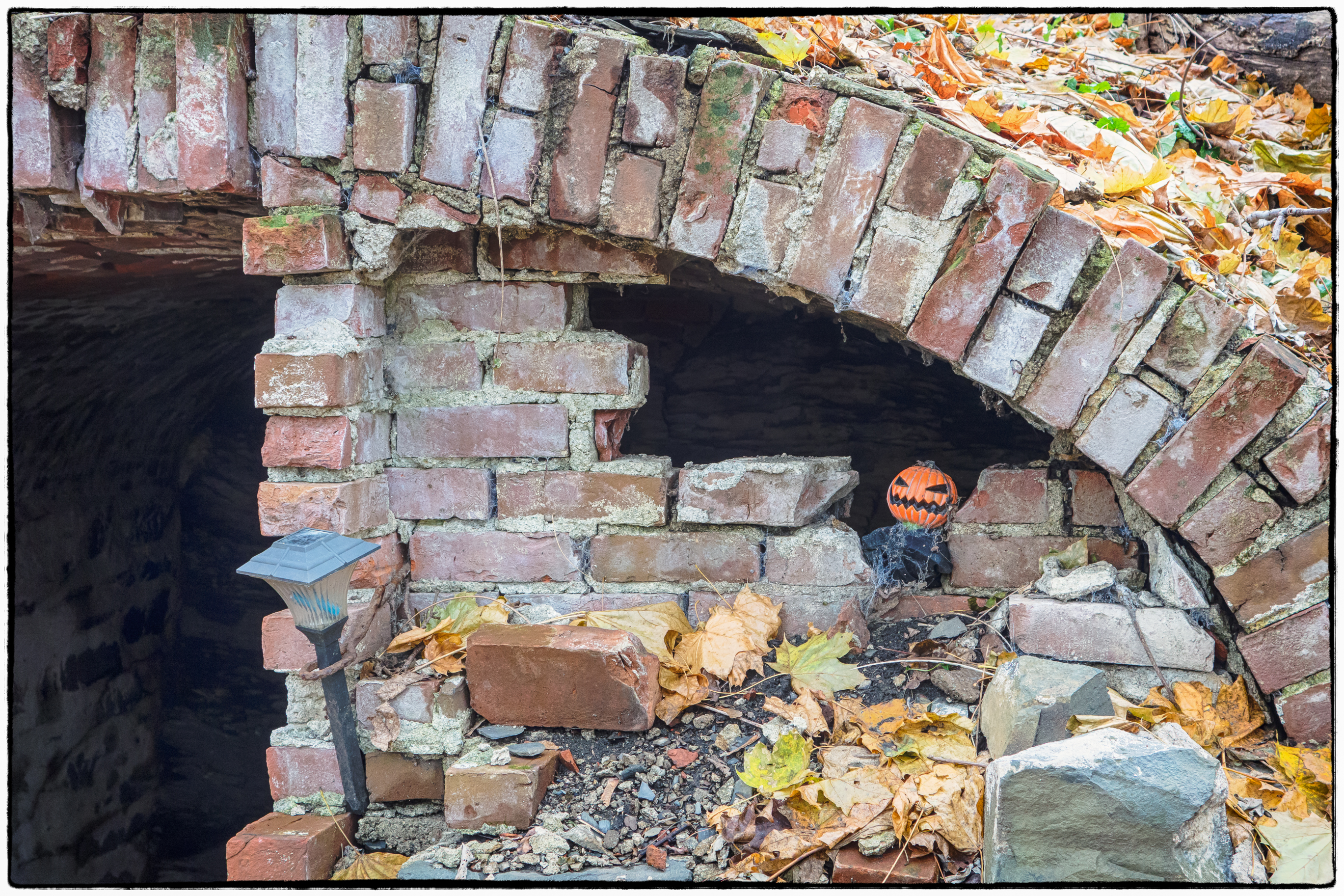
One of the “abandoned” vaults had a chair inside and, as this picture shows, a solar powered light outside. There were also other signs of occupation e.g. the Pumpkin. Someone is, at least from time to time, using this vault – perhaps the same person who left the toy?

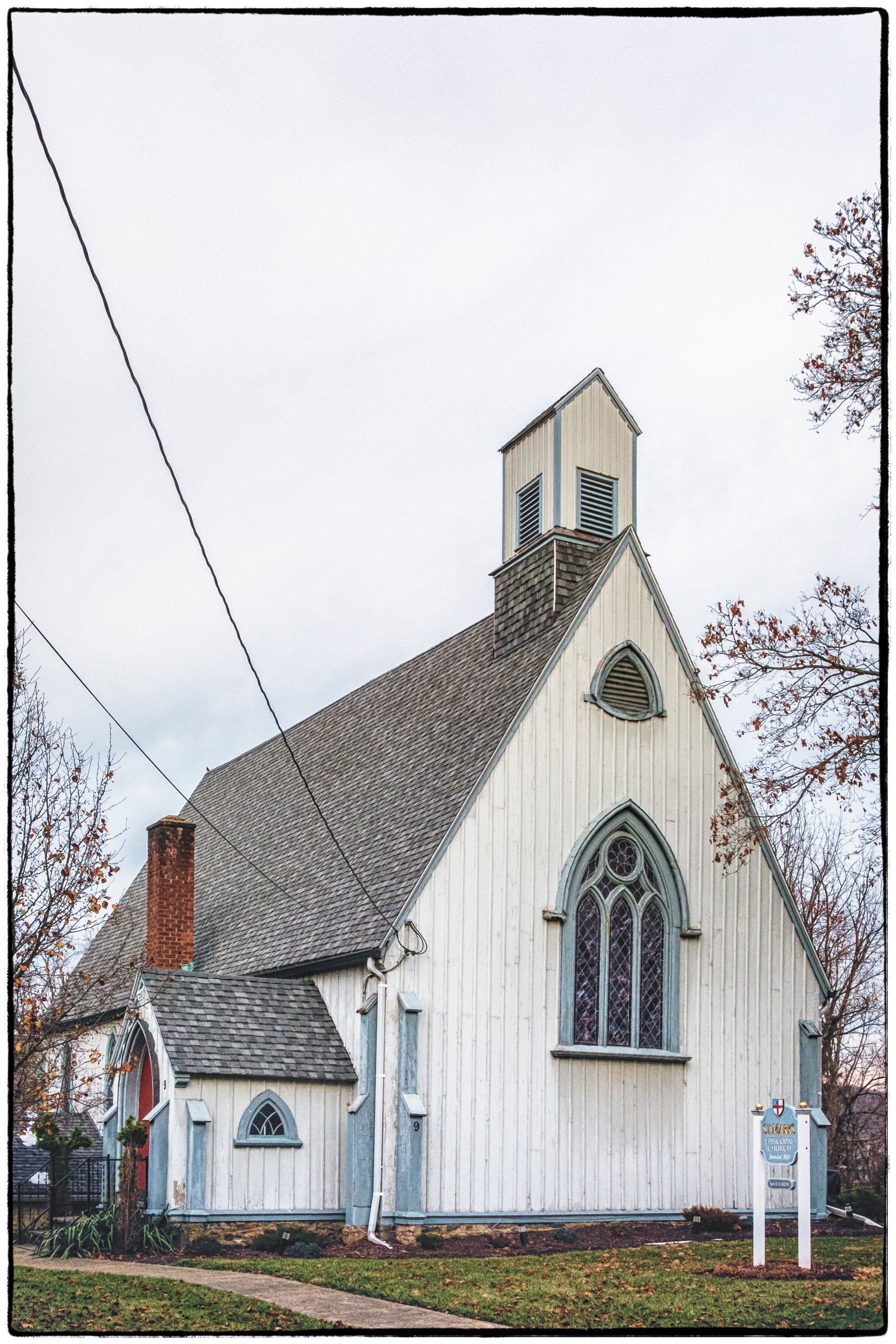
Reformed Church, Beacon, NY

According to Wikipedia:

The Reformed Church of Beacon, originally the Reformed Dutch Church of Fishkill Landing, is a congregation of the Reformed Church in America. It claims to be the oldest church in Beacon, New York, United States. It is located on NY 9D about 0.5 miles (1 km) south of Beacon’s municipal complex and downtown area. It overlooks the Hudson River from the top of a bluff.

It was designed by Frederick Clarke Withers (who also designed nearby Tioronda and the Tioronda School) and built in 1859. It is one of the rare churches he designed in the Victorian Gothic style, and one of the earlier uses of that style in the United States. The church and its cemetery were added to the National Register of Historic Places in 1988. It is one of three Withers buildings in the city on the Register.

The Church’s own website provides information on the church’s history along with some pictures of the interior (it was closed the day I went so I couldn’t get any interior shots).

Behind the church is a fascinating abandoned cemetery.

Boardwalks, Teatown Reservation

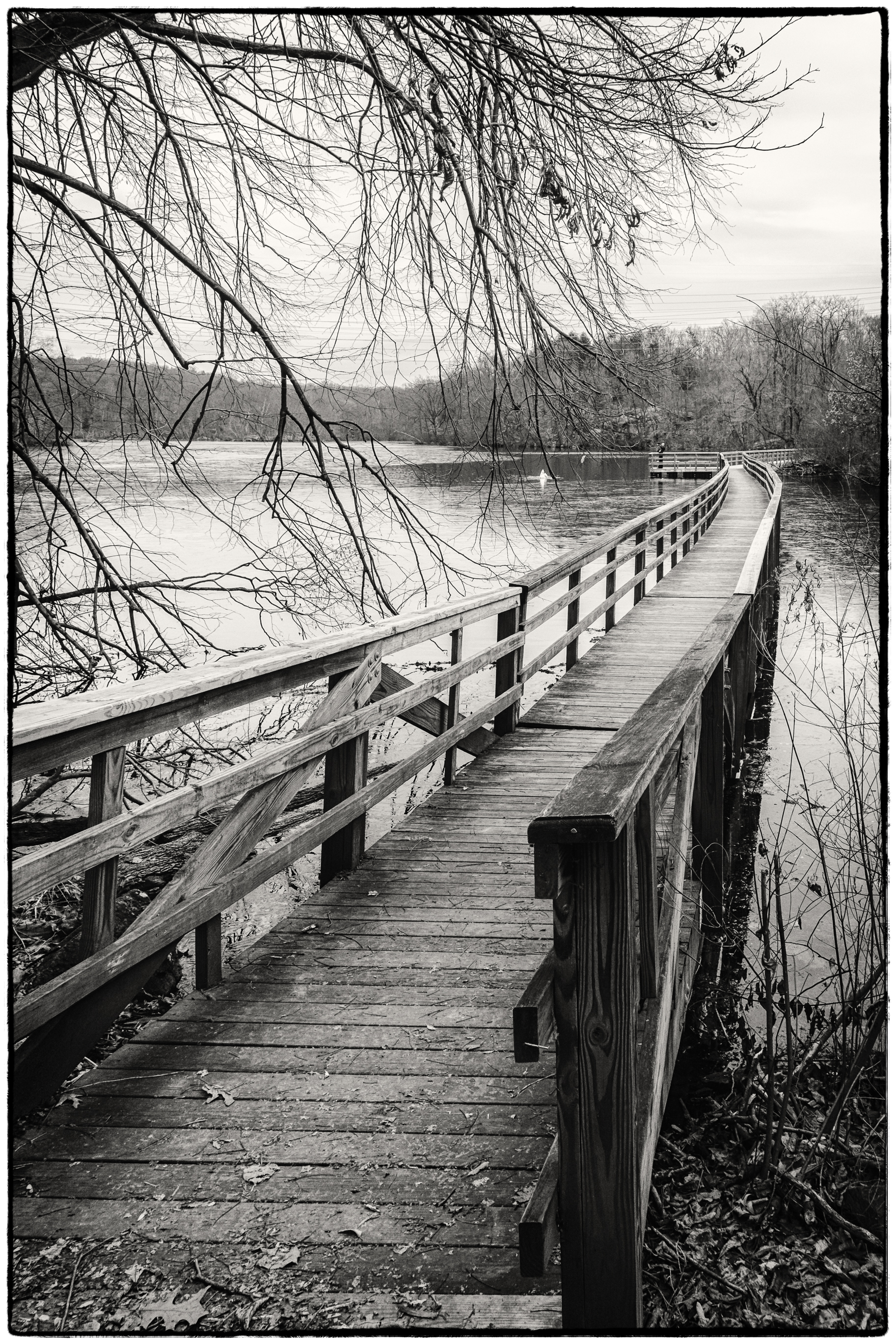
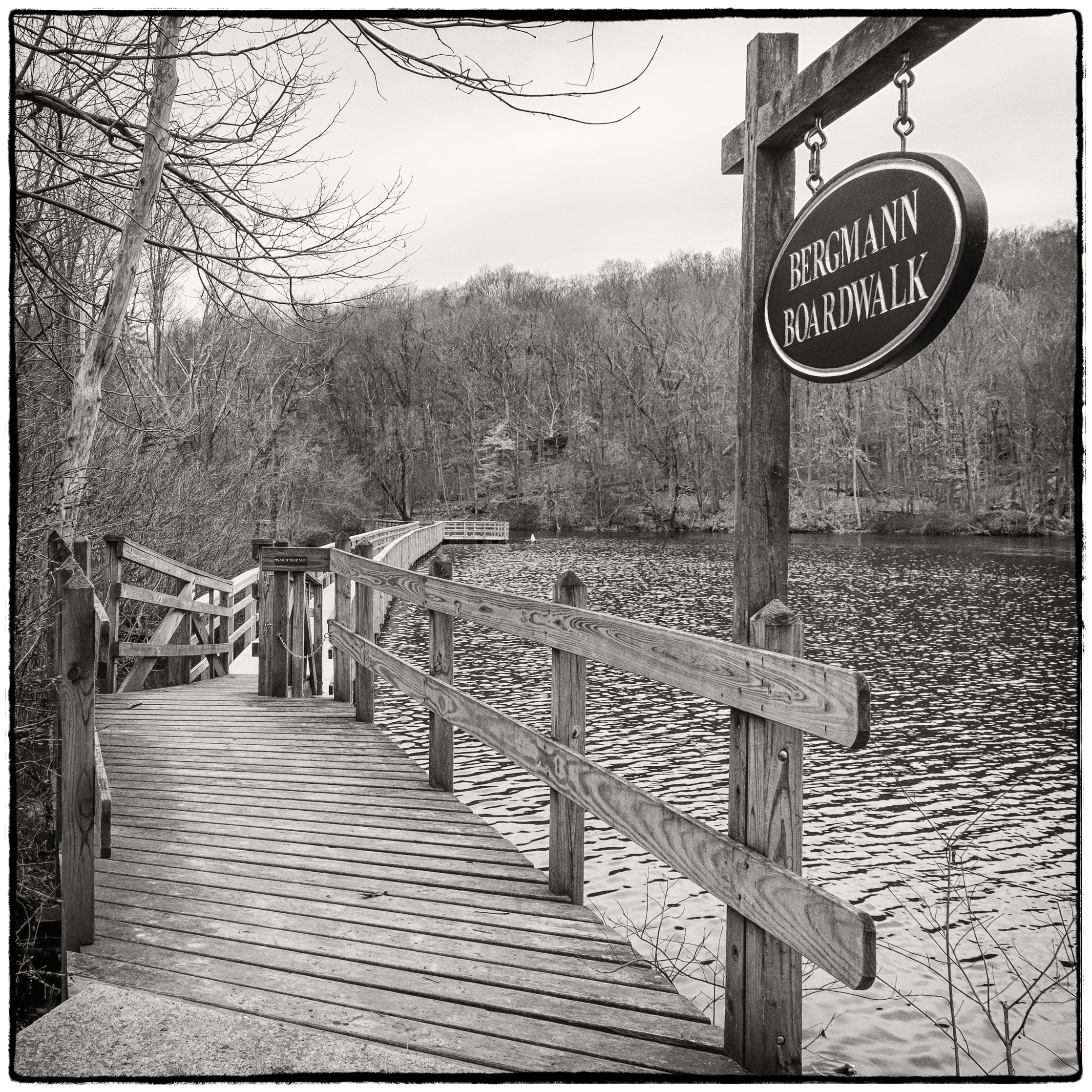
Bergmann Boardwalk.

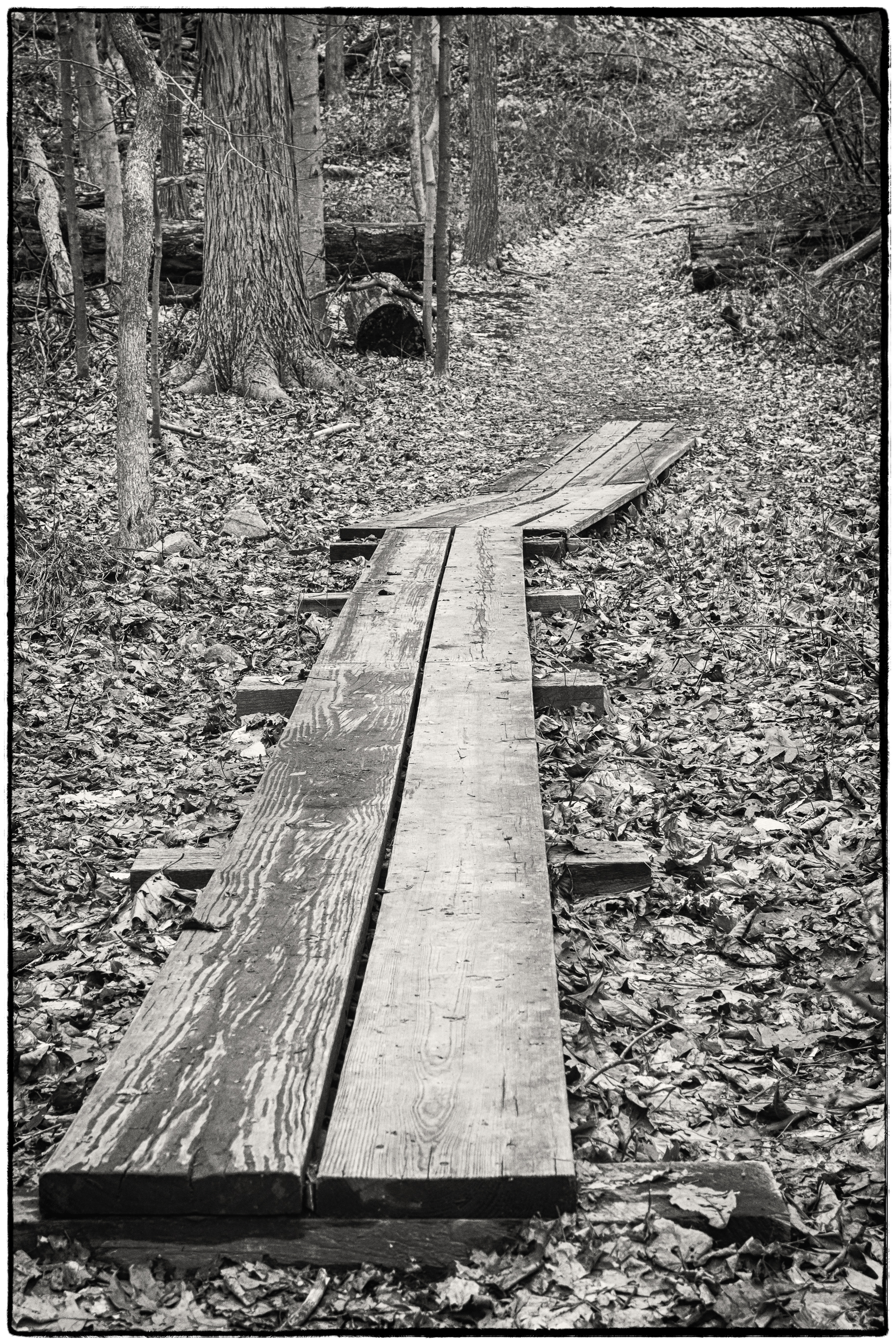
Teatown Lake Reservation has a number of trails. One of my favorites is the Lakeside Trail, a pleasant 45 minutes to one hour (depending on how quickly you walk) stroll around the lake. Along the way you come across a variety of boardwalks – from the short ones designed to cross small muddy areas to the much longer Bergmann Boardwalk seen in the first and last pictures.

Short boardwalk – maybe puncheon is a better word for it.

Liberty Street, Chelsea, Dutchess County, NY

View down Liberty Street.

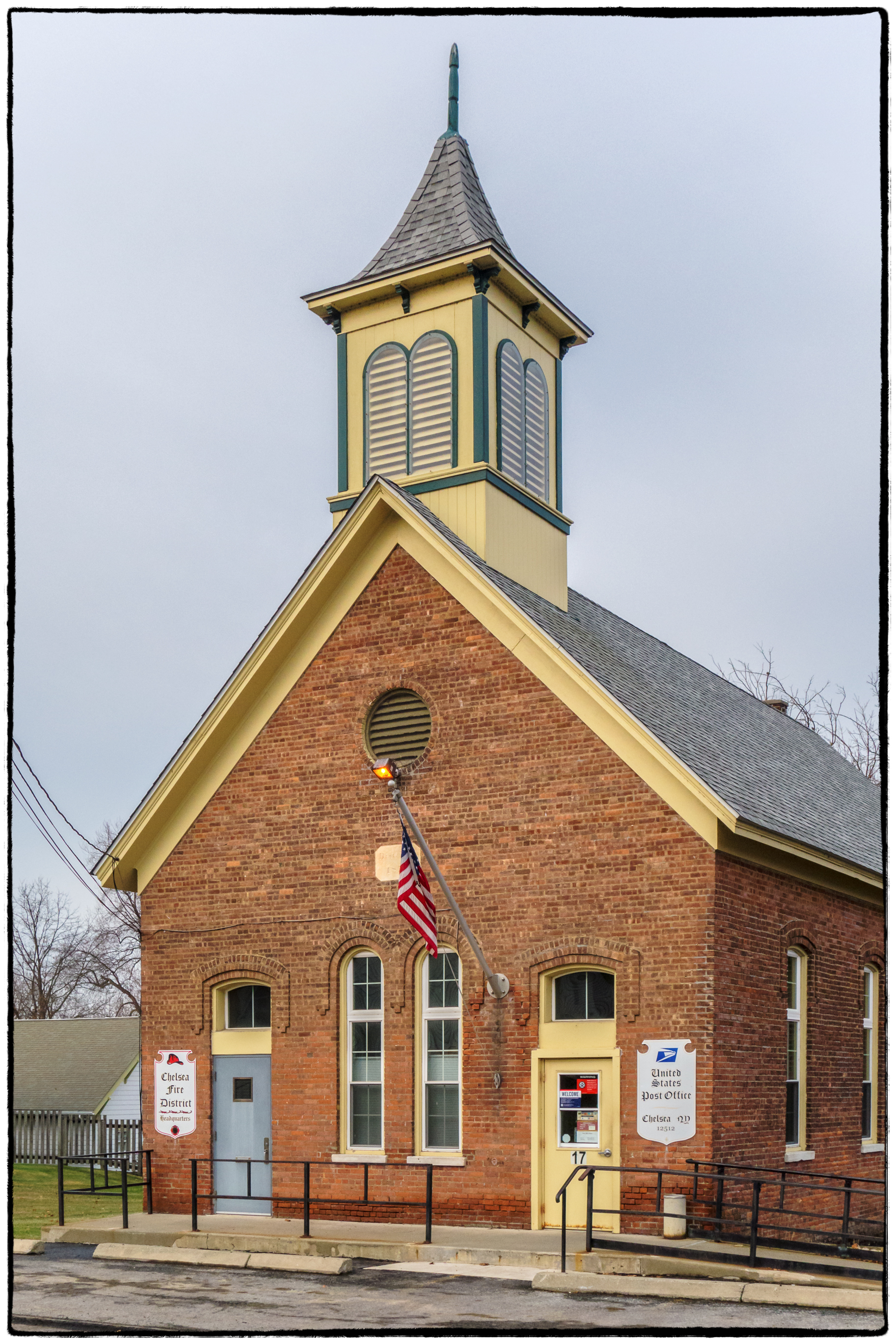
The post office – formerly a one room schoolhouse built in 1875. According to “Hidden Treasures of the Hudson Valley” by Anthony P. Musso:

A one-room brick schoolhouse with a square frame bell tower was built on Liberty Street in 1875. An 1858 map of Chelsea indicates that an earlier school occupied the same parcel of land. The current building, which features four tall windows and an inscribed date stone of marble embedded above its entrane, now serves as the community’s post office, and its fire department headquarters.

The interior still retains many of its classroom features, including original blackboards. The schoolhouse closed in 1958, when a number of smaller schools in the town were consolidated into the Wappinger Central School District.

The Gothic Revival style of the school closely resembles the steeply pitched roof of St. Mark’s Episcopal Church, located next door and dedicated in 1869.

St. Mark’s Episcopal Church. According to its website:

St. Mark’s was founded in 1865 by John A. Taplin and thirteen other residents of Carthage Landing, now known as Chelsea, NY in the Town of Wappingers Falls. In June, 1869 the Rt. Rev. Horatio Potter, Bishop of New York dedicated the new church building. It is in the style of “Carpenter Gothic”. The board and batten construction, according to Dutchess County historians, exemplifies “Upjohn inspired parish churches built from Gothic Revival pattern books.”

Throughout most of the 20th Century, lay readers and clergy from surrounding congregations served St. Mark’s Episcopal Church. In the mid-1980’s, St. Mark’s joined in ministry with St. Nicholas on the Hudson in New Hamburg, NY. In 1998, they entered the Congregational Support Plan of the Diocese of New York and the Rev. Sr. Jean Campbell, OSH became a part time priest in charge of the congregation.

View across the green with the Post Office on the left, St. Mark’s on the right and an interesting ‘church-like’ building straight ahead. It seems to be in the process of renovation. Is it a private dwelling? Or is it in some way connected to the church?

Blue doorway with star.

“Phantom”, a print by Peter Lik said to sell for $6.5 Million breaking record for the most expensive photograph.

Peter Lik Print Sells for $6.5 Million, Shattering Record for Most Expensive Photo

According to Petapixel:

Australian landscape photographer Peter Lik has taken the crown for most expensive photo ever sold. “Phantom,” the picture shown above, was sold to a private collector for a staggering $6.5 million. The record was previously held by Andreas Gursky’s “Rhein II”, which sold for $4.3 million back in 2011.

via Peter Lik Print Sells for $6.5 Million, Shattering Record for Most Expensive Photo.

The official press release reads:

LAS VEGAS, Dec. 9, 2014 /PRNewswire/ — Today, LIK USA™ announced the sale of the most expensive photograph in history by world-renowned fine art photographer, Peter Lik. “Phantom” sold to a private collector for an unprecedented $6.5 million. The purchase also included Lik’s masterworks “Illusion” for $2.4 million and “Eternal Moods” for $1.1 million. With this $10 million sale, Lik now holds four of the top 20 spots for most expensive photographs ever sold. He already has a position in the ranking with a previous $1 million sale of famed image, “One.”

“The purpose of all my photos is to capture the power of nature and convey it in a way that inspires someone to feel passionate and connected to the image,” said award-winning fine art photographer Peter Lik.

“Phantom” and “Eternal Moods” are black and white representations of Lik’s iconic images “Ghost” and “Eternal Beauty.” Lik is known for his artistic approach to landscape photography and capturing Mother Nature’s vibrant colors. His use of black and white imagery is a rare and compelling departure from his normal style.

“Certain textures and contours found in nature lend themselves beautifully to black and white photography,” said Lik. “The intensity of contrasting light and dark spaces was surprising, but made for some of the most powerful images I’ve ever created.”

The private buyer is represented by Joshua Roth of the Glaser Weil Fink Howard Avchen & Shapiro, LLP firm, 10250 Constellation Blvd., 19th Floor, Los Angeles, Calif. 90067, who indicated his client preferred not to be publicly identified for security and privacy reasons. Peter Lik and LIK USA™ are represented by their attorney, Mark G. Tratos of Greenberg Traurig, LLP.

“It is noteworthy that the sales of these photographic works denote another milestone in the development of fine art photography, as well as a new benchmark for the value of Peter Lik works,” said Tratos.

These sales may be confirmed through the buyer’s counsel, Joshua Roth.

“Our client is a long-time collector of Lik’s works and is delighted to add these one-of-a-kind photographs to his impressive collection,” said Roth.

Jonathan Jones of The Guardian didn’t care for it much: “The $6.5m canyon: it’s the most expensive photograph ever – but it’s like a hackneyed poster in a posh hotel“. Interestingly The Guardian’s Sean O’Hagen chose to disagree with his colleague in a follow-up article: Photography is art and always will be.

While I don’t agree with Jones’s comments about photography not being art (I thought that debate closed some time ago) I have some sympathy with some of his other thoughts. Can any photograph really be worth $6.5 million? Particularly one like this. It’s a nice picture, but doesn’t really seem to be that special. Still I suppose the fine art market works according to its own rules and if someone wishes to spend $6.5 million on something like this who am I to say that they shouldn’t.