NY Air Show – ANG 106th Rescue Wing CSRA Demo

According to the NY Air Show Website:

The 106th Rescue Wing deploys worldwide to provide combat search and rescue coverage for U.S. and allied forces. They are a World-Class Team of diverse, adaptable personnel recovery focused war fighters. The mission of the 106th Rescue Wing is to provide worldwide Personnel Recovery, Combat Search and Rescue Capability, Expeditionary Combat Support, and Civil Search and Rescue support to Federal and State authorities. They provide Personnel Recovery to the state of New York and deployed operations that they are tasked to support.

The Pararescuemen of the 106th Rescue Wing or “PJs” are among the most highly trained emergency trauma specialists in the U.S. military. They must maintain an emergency medical technician-paramedic qualification throughout their careers. With this medical and rescue expertise, along with their deployment capabilities, PJs are able to perform life-saving missions in the world’s most remote areas.

The 106th Rescue Wing utilizes HH-60G Pave Hawk helicopters and HC-130 aircraft to carry out their mission. The primary mission of the HH-60G Pave Hawk helicopter is to conduct day or night combat search and rescue, or CSAR, operations into hostile environments to recover downed aircrew or other isolated personnel during war. Because of its versatility, the HH-60G is also tasked to perform military operations other than war. These tasks include civil search and rescue, emergency aeromedical evacuation, disaster relief, international aid, counter drug activities and NASA space shuttle support.

The HC-130’s mission is to rapidly deploy to execute combatant commander directed recovery operations to austere airfields and denied territory for expeditionary, all weather personnel recovery operations to include airdrop, airland, helicopter air-to-air refueling, and forward area ground refueling missions. When tasked, the aircraft also conducts humanitarian assistance operations, disaster response, security cooperation/aviation advisory, emergency aeromedical evacuation, and noncombatant evacuation operations.
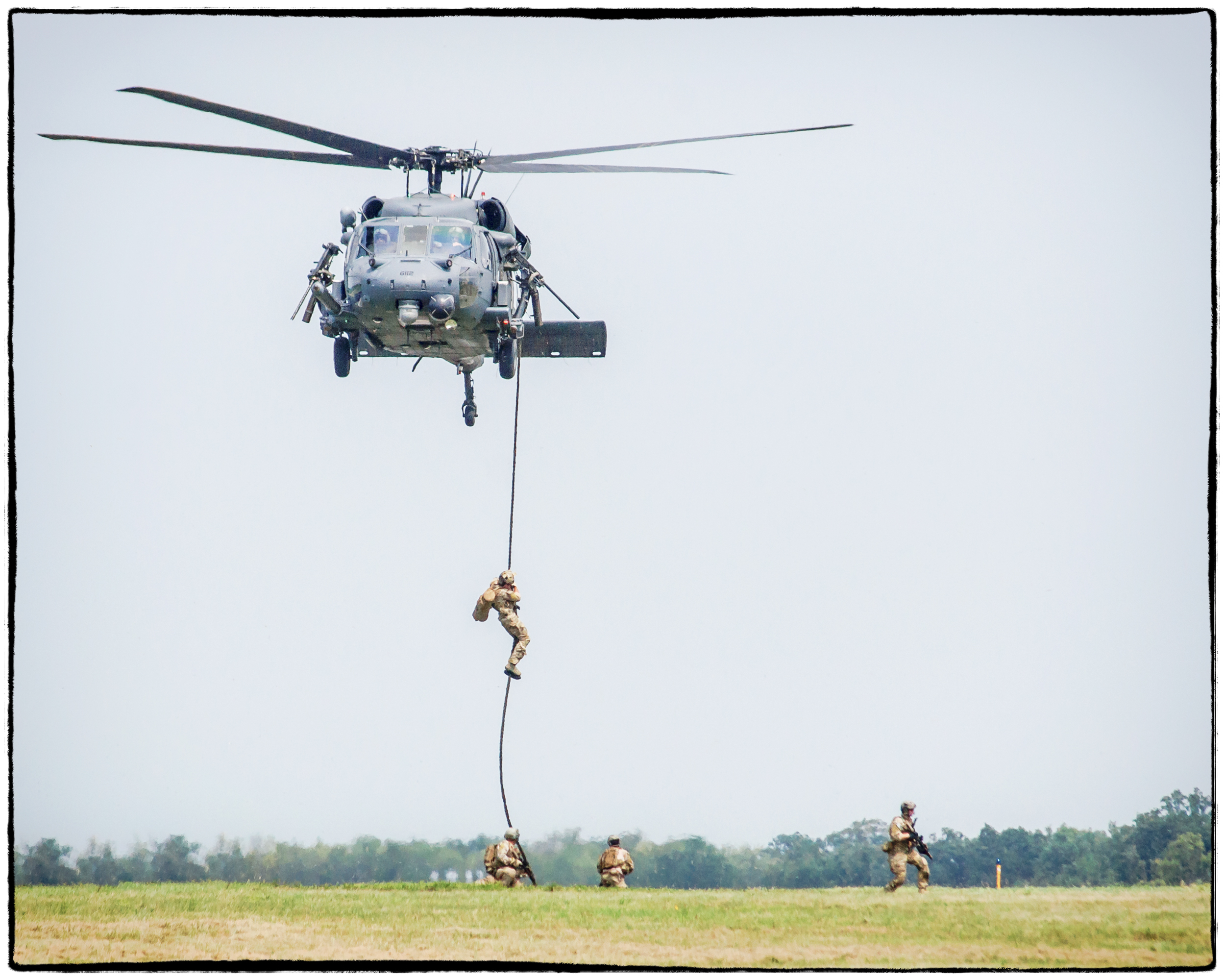
Dropping Off.
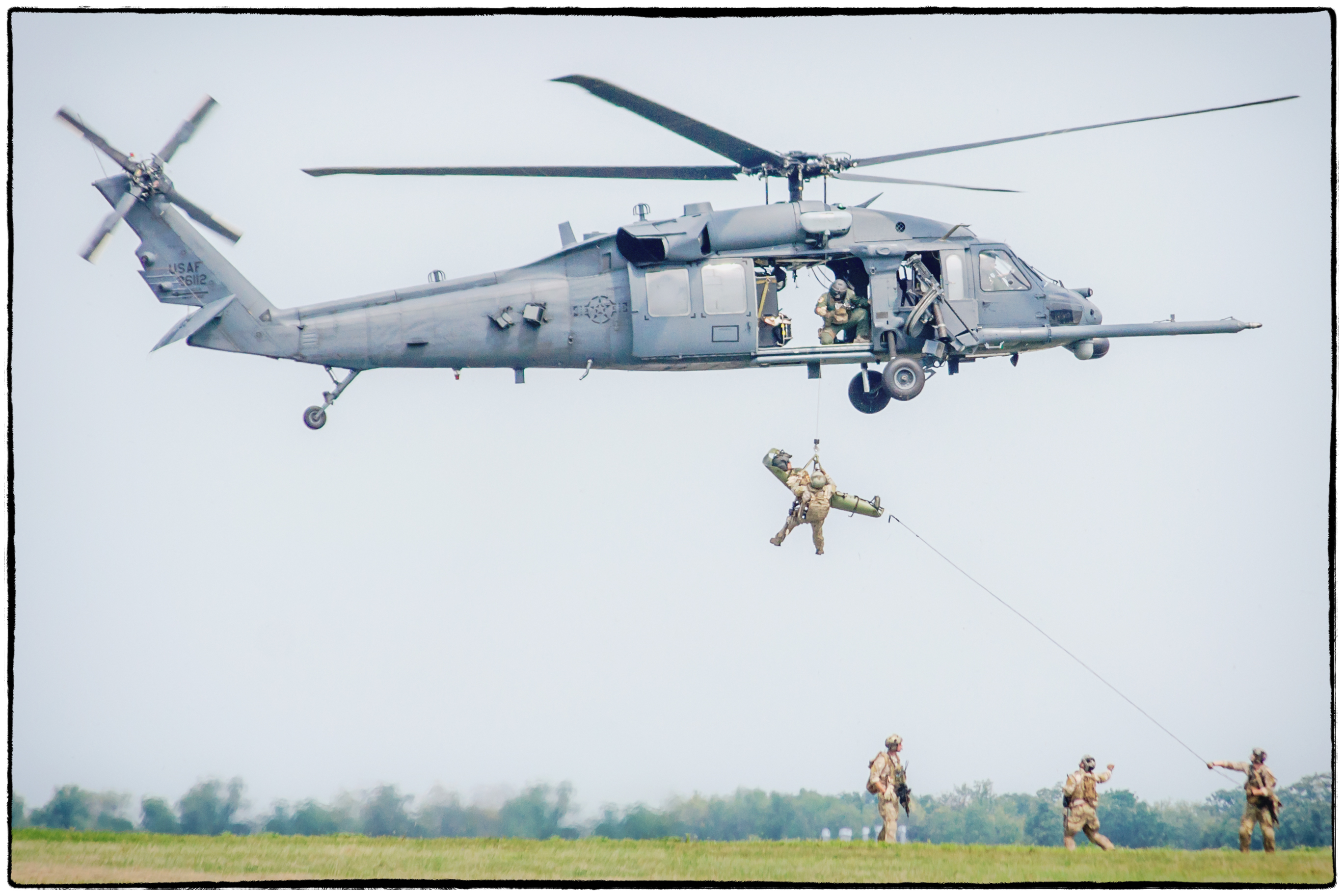
Picking Up.
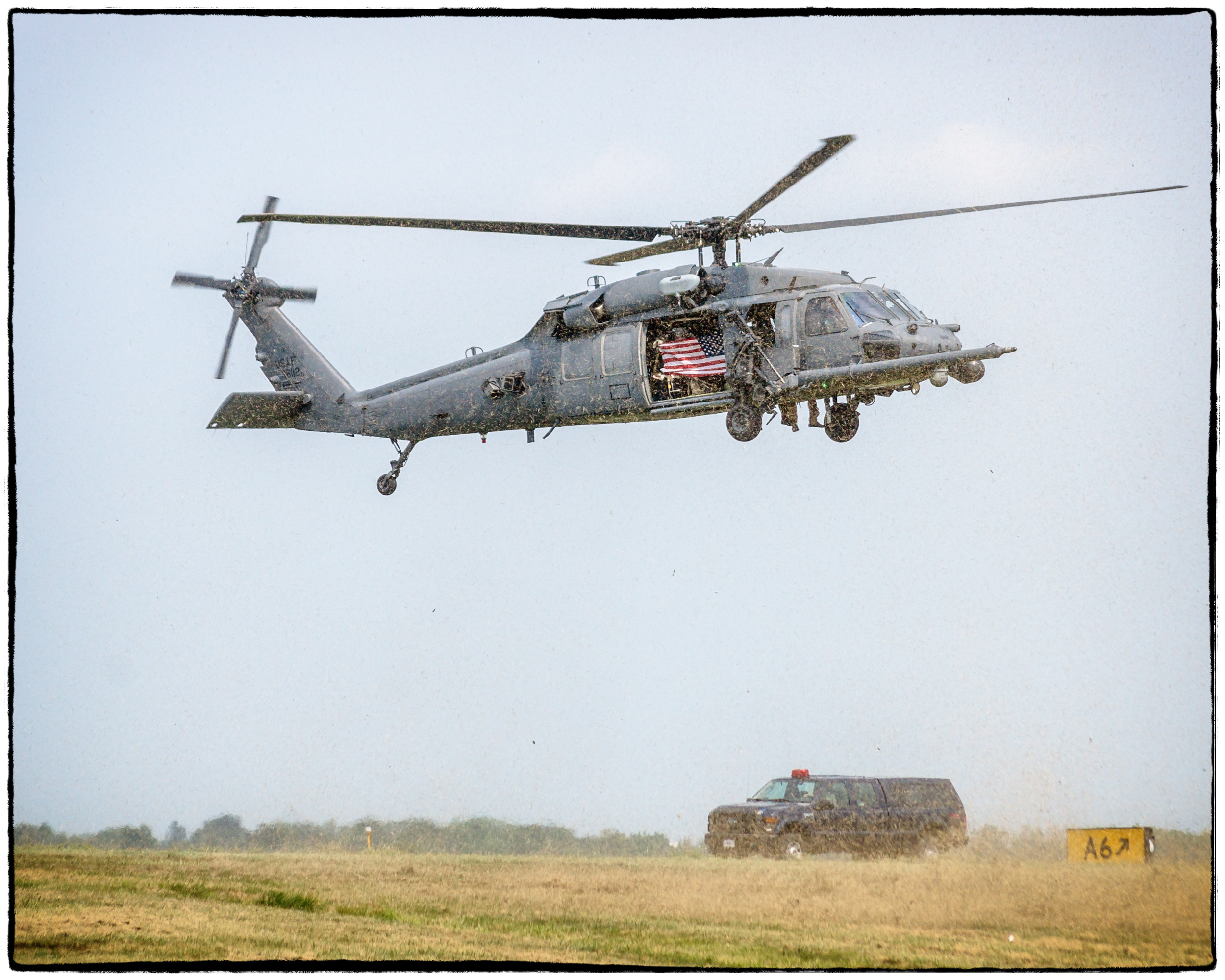
Leaving in a flurry of dust and grass clippings.


Autumn Leaves

I saw these lying on our patio. This was a bit of a surprise. I believe they are Maple leaves and if I’m correct I don’t really know where they came from as I don’t think we have any Maples on our property. Maybe they were blown over from a neighboring property? Still they were very colorful and I couldn’t resist putting a few of them together on top of one of the stones, which make up our patio. I think the colors are offset by the greys of the stone.

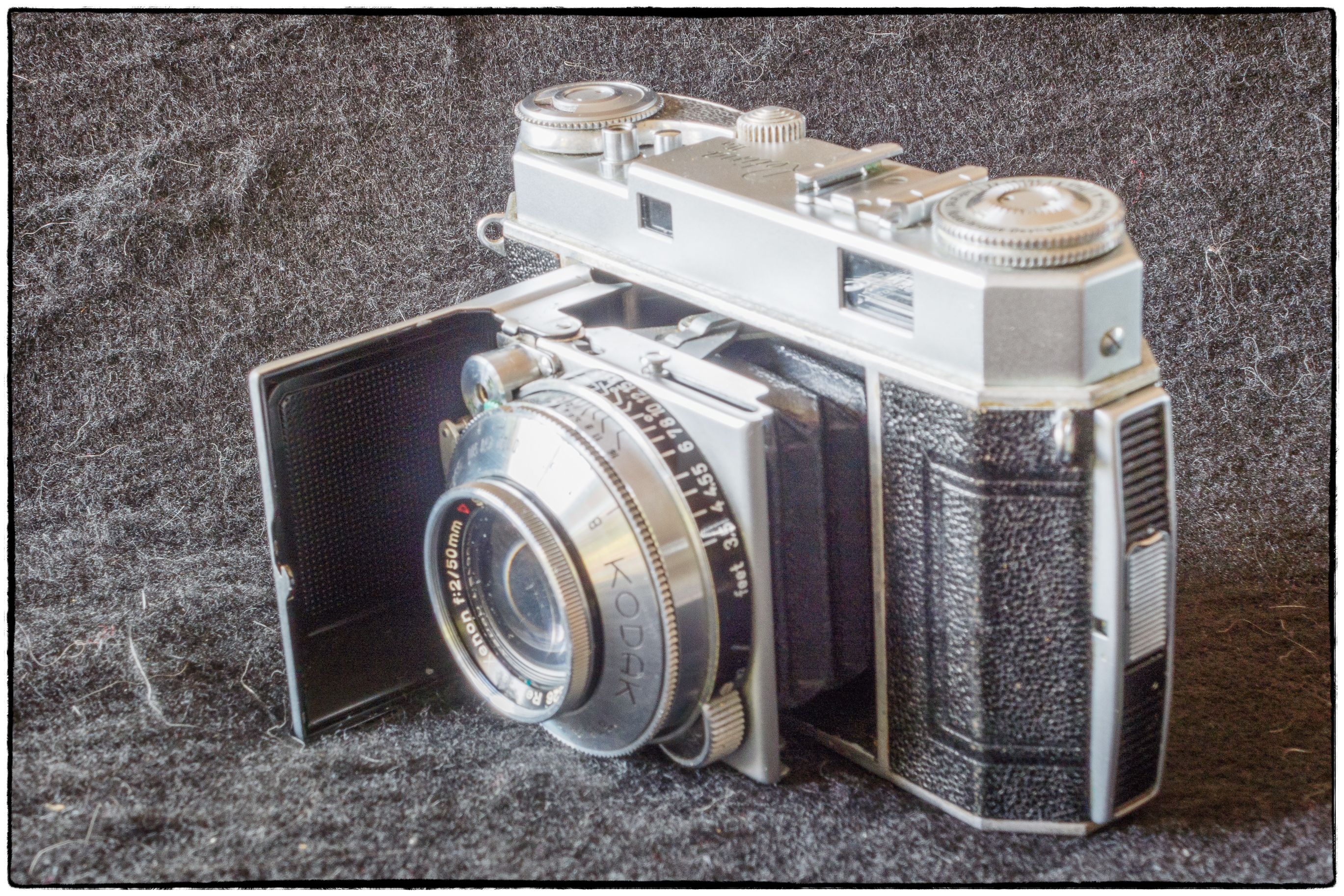
Retina IIa

I love Kodak Retina Cameras. I’ve already posted about the first one I acquired: A Gem of a folding 35mm – Retina IIc. Since then I’ve acquired three more: A IIIc, a IIa, and this one – also a IIa. The IIIc seemed to work except for the slow speeds. When I tried it today that was how it worked, but then suddenly it wouldn’t work on any of the speeds. The first IIa was a bit “beat up” and didn’t seem to be working (that’s why I bought this one), but when I tried it today to my surprise everything seemed to work so now I have two IIa’s. Apart from condition the only difference between them is the shutter. This one has a Syncho-Compur while the other one has the Compur Rapid (an earlier shutter carried over from the Retina II I believe). This one is fairly good cosmetically and everything seems to work. Of course, I won’t know for sure until I try it so we’ll have to wait and see.

Mine has the following features:

  • Combined Rangefinder Viewfinder. No brightlines. No parallax correction
  • Fixed 6 element 50/2 Schneider Xenon focusing to 2.5 ft.
  • Synchro-Compur Shutter with speeds from 1 to 1/500th, plus B. Electronic flash sync at all speeds
  • Screw threads on shutter release for manual cable release.
  • Film counter is manually reset and counts down.
  • No hot shoe but lens has flash connection on bottom.
  • Tripod socket on bottom of camera.

Stephen Gandy of Cameraquest has the following to say about the Retina II and I agree with him entirely:

The Kodak Retina IIa is my favorite of the long lived Retina series, the epitome of a classic small fast lensed 35mm folder. What makes it so good? It’s small size, superb 50/2 Xenon or Heligon lens, better than average finder, quiet leaf shutter, and the simple straightforward design which translates to pleasurable shooting. The IIa was produced only from 1951 to 1954, yet over 100,000 were produced. In a nutshell, many Retina fanatics feel the earlier Retinas had less of the desirable features, while the later Retinas sacrificed too much size and weight for additional features. The IIa is Type 016 in Retina nomenclature.

All shooting controls except f/stop are easily seen from the top, including the frame counter, shutter speed, and focused distance, and depth of field scale. The hinged back opens by pulling downward on the clasp at the rewind edge of the camera. While the Retina IIa lacks the magnificent finish of the Zeiss Contessa or Voigtlander Vitessas, the Retina is the simpler, quicker photographer intuitive camera design. The IIa was among the best sellers of its day, so they are not that hard to find. Yet, it is difficult to find one in mint condition. This sad state of affairs is due to the damn photographers out using Retinas to take pictures.