Fred Dill Wildlife Sanctuary 5: Wetland

The sanctuary’s brochure describes wetlands as:

…areas where water is the primary factor controlling the environment and the associated plant and animal life. It’s where land is flooded or saturated at or near the ground surface for varying periods of time during the year. They are invaluable in controlling floodwaters, recharging groundwater, and filtering pollutants; as a habitat for waterfowl and other wildlife and for their educational, recreational and aesthetic promise.

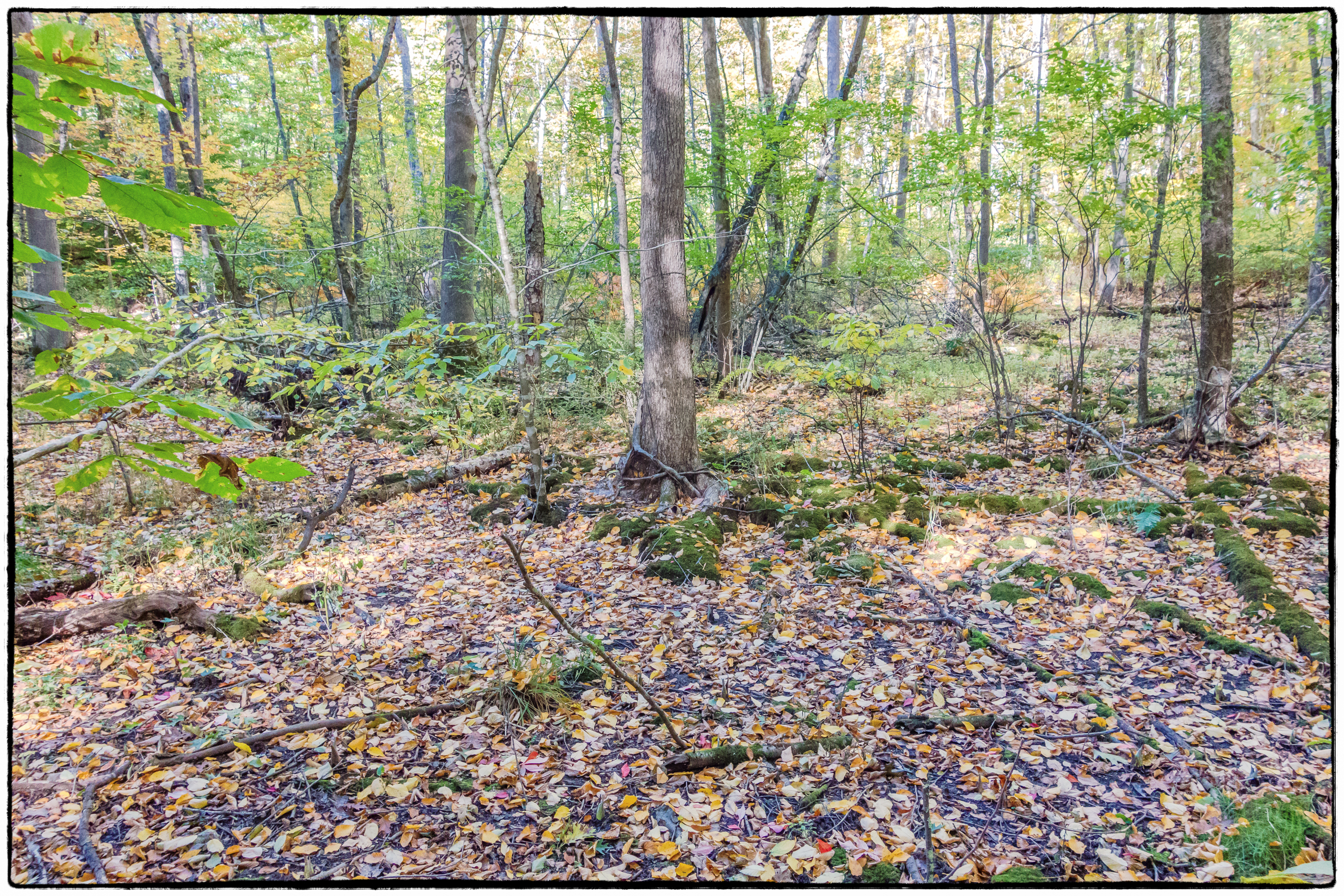
Unfortunately we haven’t had much rain for a while so this piece of wetland was not particularly wet.

Apparently this particular stretch is known as “Skunk Cabbage Heaven”:

As the days begin to lengthen in February, Skunk Cabbage begins to flower. These flowers often give off a considerable amount of heat. Flowered, large leaves develop, sometimes shading the entire forest floor. By the end of summer, the leaves wither and die, leaving room for jewelweed and other wild flowers.

Again unfortunately I was there in October rather than in February so the Skunk Cabbage was long gone. Judging from its description: “Breaking or tearing a leaf produces a pungent but not harmful odor, the source of the plant’s common name; it is also foul smelling when it blooms. The plant is not poisonous to the touch.” I’m not too sorry that I missed it.

Fred Dill Wildlife Sanctuary 4: Hand cut stone railroad abutment

According to the Sanctuary’s brochure:

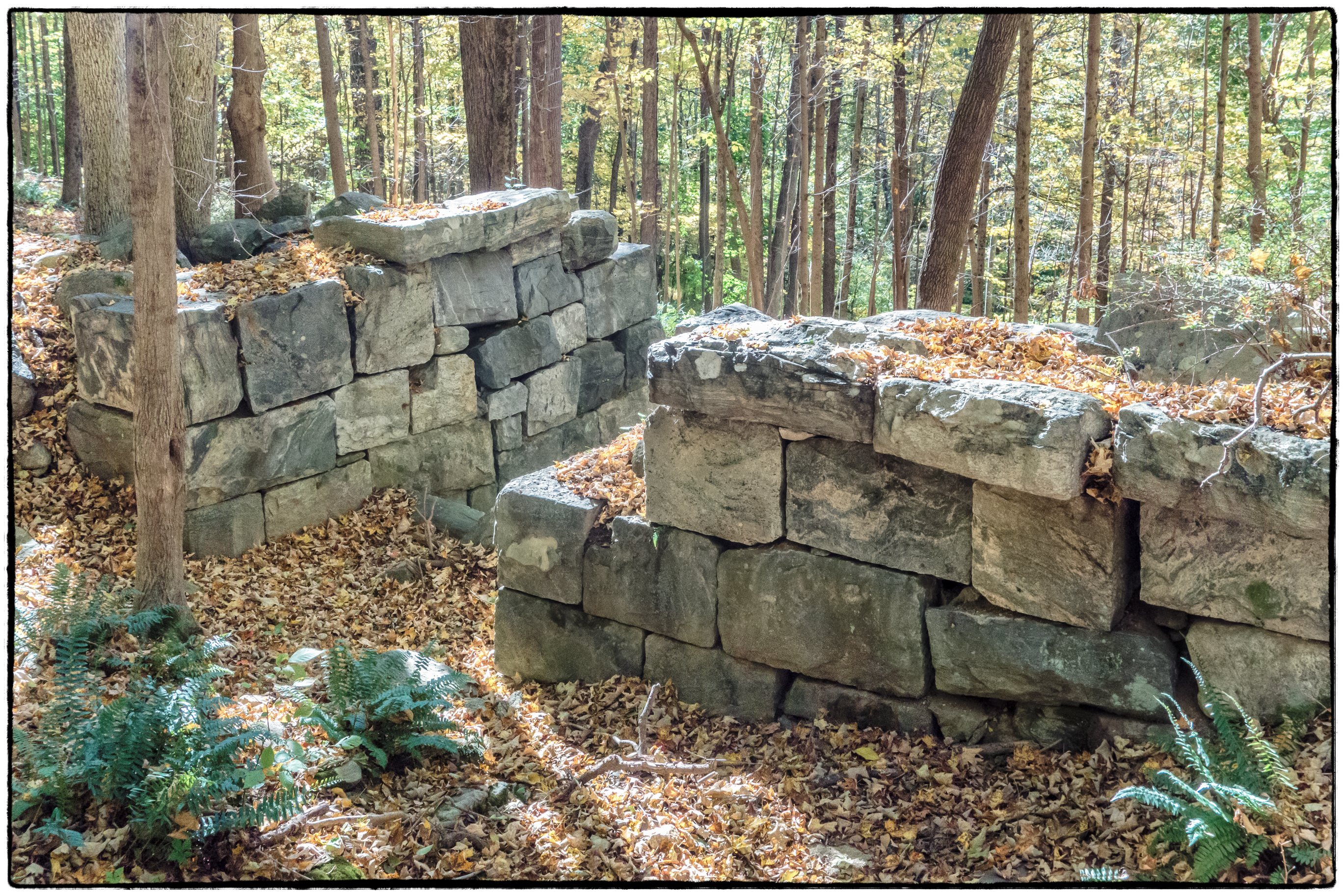
The Putnam and Dutchess Railroad had planned to split from the New York and Boston Railroad in Carmel and pass through this site. In 1873 it reorganized as the New York, Boston and Montreal Railway. However, the Panic of 1873 hit and the leases and mergers were cancelled. Construction on the Putnam and Dutchess Railroad stopped and the intended route was never completed leaving the railroad abutment abandoned in the woods.

Fred Dill Wildlife Sanctuary 3: Woodland scene

According to the sanctuary’s brochure:

The Fred Dill Wildlife Sanctuary is covered by an upland deciduous hardwood forest. This forest is dominated by oak, hickory, ash, maple, beech, birch and tulip. Native tree seedlings and shrubs are lacking the the forest understory due to being browsed by deer. Deer have not evolved to browse on invasive species such as Japanese barberry…By browsing on all of the native vegetation, deer have helped to spread invasive plants in the region. However, the forest still provides habitat, food and water that attract deer, turkey many other birds, small mammals, reptiles, amphibians and insects.

Fred Dill Wildlife Sanctuary 2: Old Oak “Wolf” Tree

According a brochure found at the trailhead:

This large 57″ diameter dominant White Oak with a spreading crown has tremendous wildlife value. A “wolf” tree is a historical remnant (equivalent to a stone wall) that is an obvious indicator of past agricultural activity. This particular tree was from the Everett Farm. The family came from Scotland in 1746, Isaac Everett (Everitt) was a mason who built blast furnaces for melting iron ore. He settled in Putnam in 1750-1760 and was one of the chain bearers who surveyed the lot lines in the Philipse Patent in 1777. His son Abraham bought the 236 acre farm in Carmel from Frederick Philipse in 1813/14. Abraham and his sons were pioneers in the western cattle trade and drove fatted steers to market on foot. One of his sons, Leonard K. Everett lived on the farm from about 1850-1880. He was treasurer of Putnam County in 1854, and a trustee in the association that built the Carmel Collegiate Institute and Drew’s Ladies Seminary (William S. Pelletreau, History of Putnam County, 1886)

Fred Dill Wildlife Sanctuary 1: Overview

While walking along the Putnam County Trailway a while ago I noticed a path going off into the woods. I followed it for a while, but at that time the trees were bare, snow was on the ground and the trails were icy so I didn’t go too far. This time I approached the sanctuary from the other end (near where the old fairgrounds and racetrack used to be). In fall it’s a very pleasant place to walk. All told we walked for about two hours, covering all of the leave trail, yellow trail, and turtle trail.

According a brochure found at the trailhead:

Fred L. Dill came to Carmel in 1933 after graduating with an Accounting Degree from Bentley College in Boston, Massachusetts. His father, Carl Dill trained and drove trotting horses and had moved his family from Goshen, NY to work at the horse racing track which was part of the Putnam County Fairgrounds located on a portion of this property. A faint outline of the old race track is still visible and is labeled “old racetrack” on the park map.

Upon completion of his first summer “swiping” horses and “mucking out” horse stalls, Fred decided the horse business was not for him. His dream was to be in business for himself. When working as office manager for American Oil in Carmel, he had the opportunity to manage Dain Supply and within 3 years was a partner in Dain and Dill. Eventually, Dain and Dill became Lloyd Lumber, a cash and carry lumber yard which grew into a chain of 21 stores in NY and CT.

Fred had achieved his dream of becoming a successful businessman, and he enjoyed using his financial success to benefit the Putnam County Community. The Fred Dill Wildlife Sanctuary and Outdoor Education Center is the last project Fred worked on before his death in 2004 at the age of 91. This property brought Fred to Putnam County and it gave him great pleasure to think of the many people who would walk the trails, enjoy the quiet, and learn about our local wildlife and history.
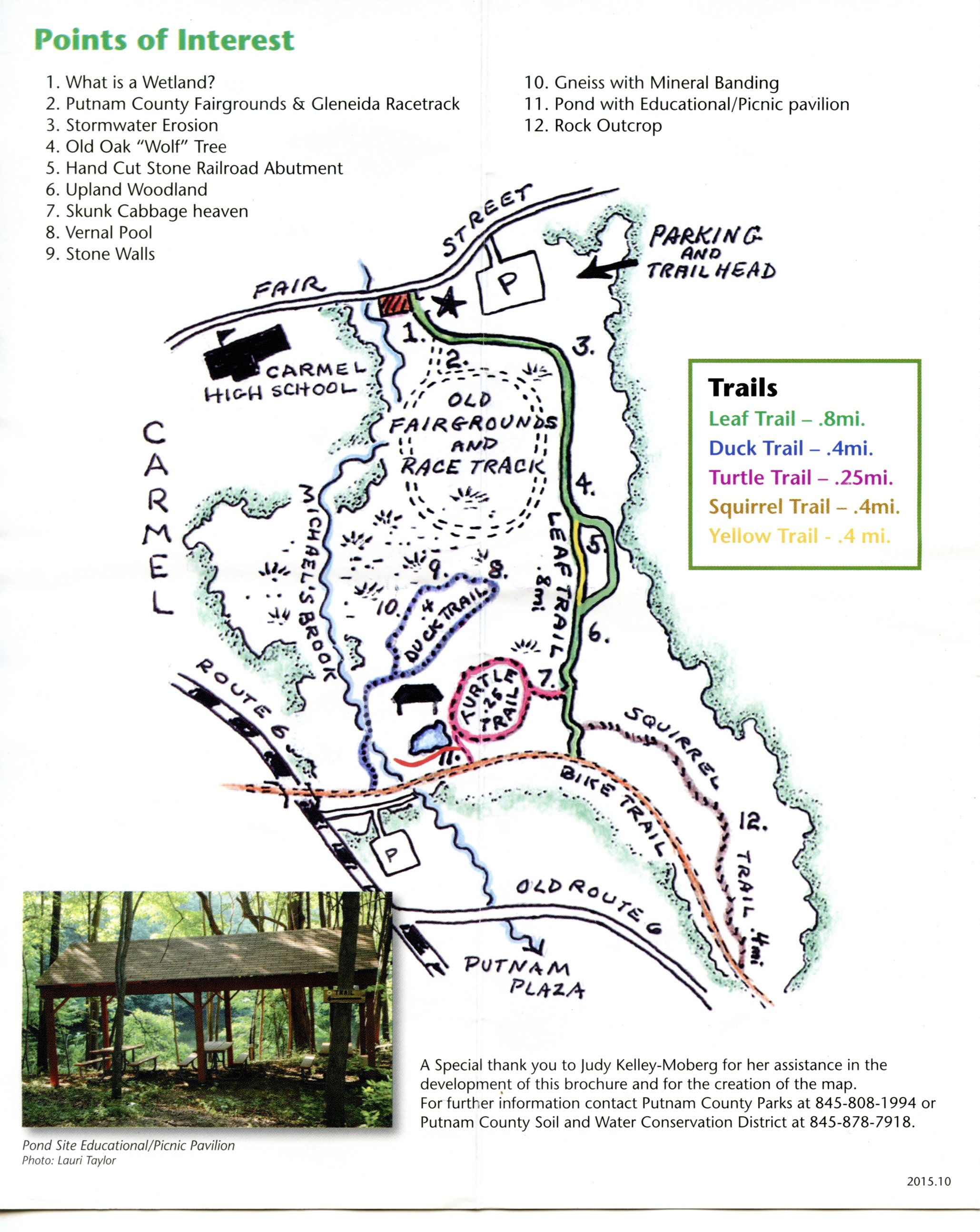
Source: Fred Dill Wildlife Sanctuary and Outdoor Education Center brochure

Source: Fred Dill Wildlife Sanctuary and Outdoor Education Center brochure

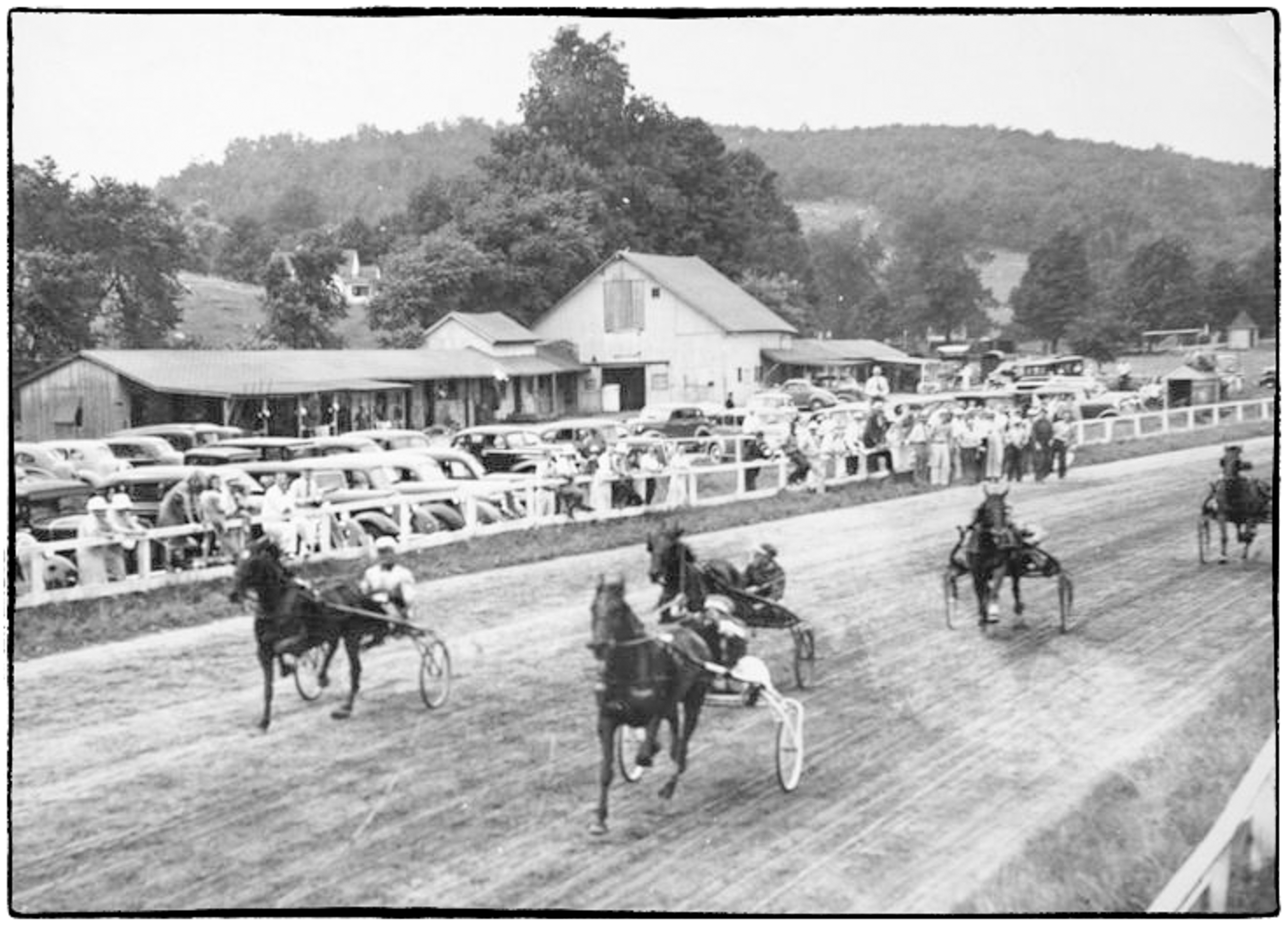
Around 1865 this property was acquired for the County Fairgrounds. A large building for exhibits was erected and a half mile race track was built on the low land directly in front of the exhibit building. A grandstand was later added. The original intent of the fair was to display prize livestock and produce. The decline of farming in the area left horse racing as the most important part of the fair. The Gleneida Racing Association held regular races at the track until 1932. Automobiles races on the track for a number of years in the 1930’s. Horses ere kept at the track and trained for harness racing until the 1960s

The fairground and racetrack have now been completely reclaimed by a marsh and other assorted brush. As mentioned above a “faint outline of the old racetrack” is still supposed to be visible, but I was unable to find it (I didn’t look all that hard though).