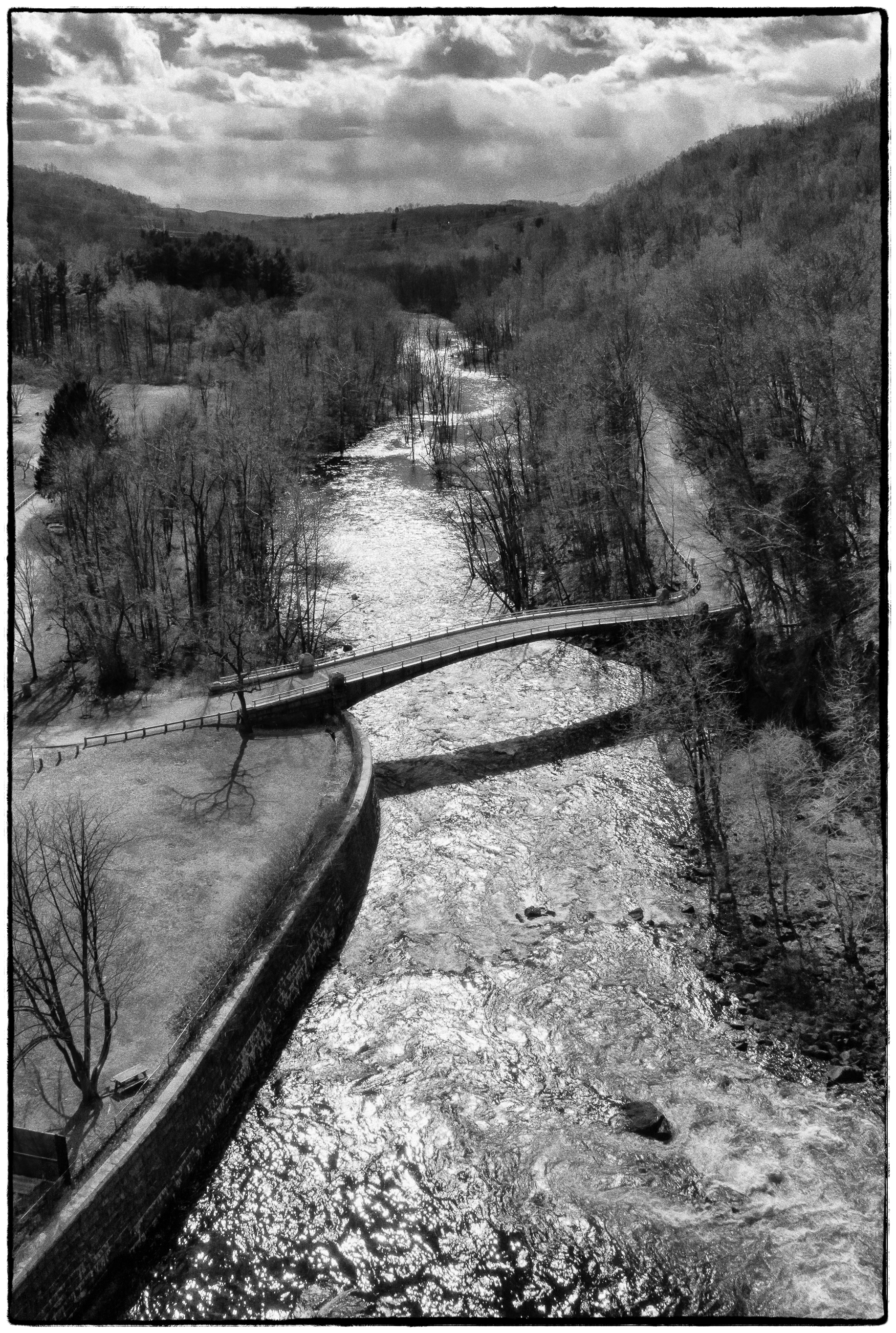
Croton Gorge – A river runs through it

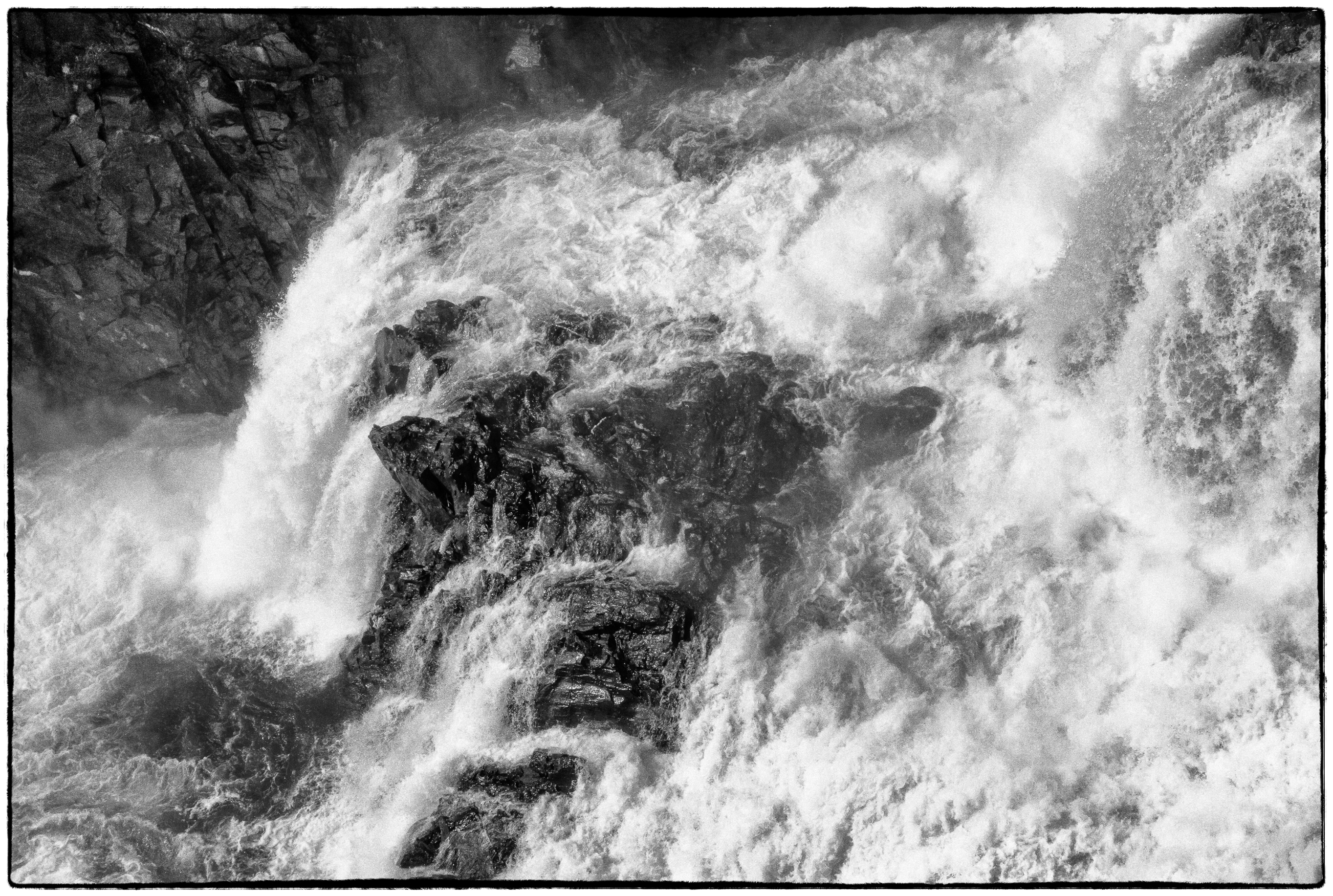
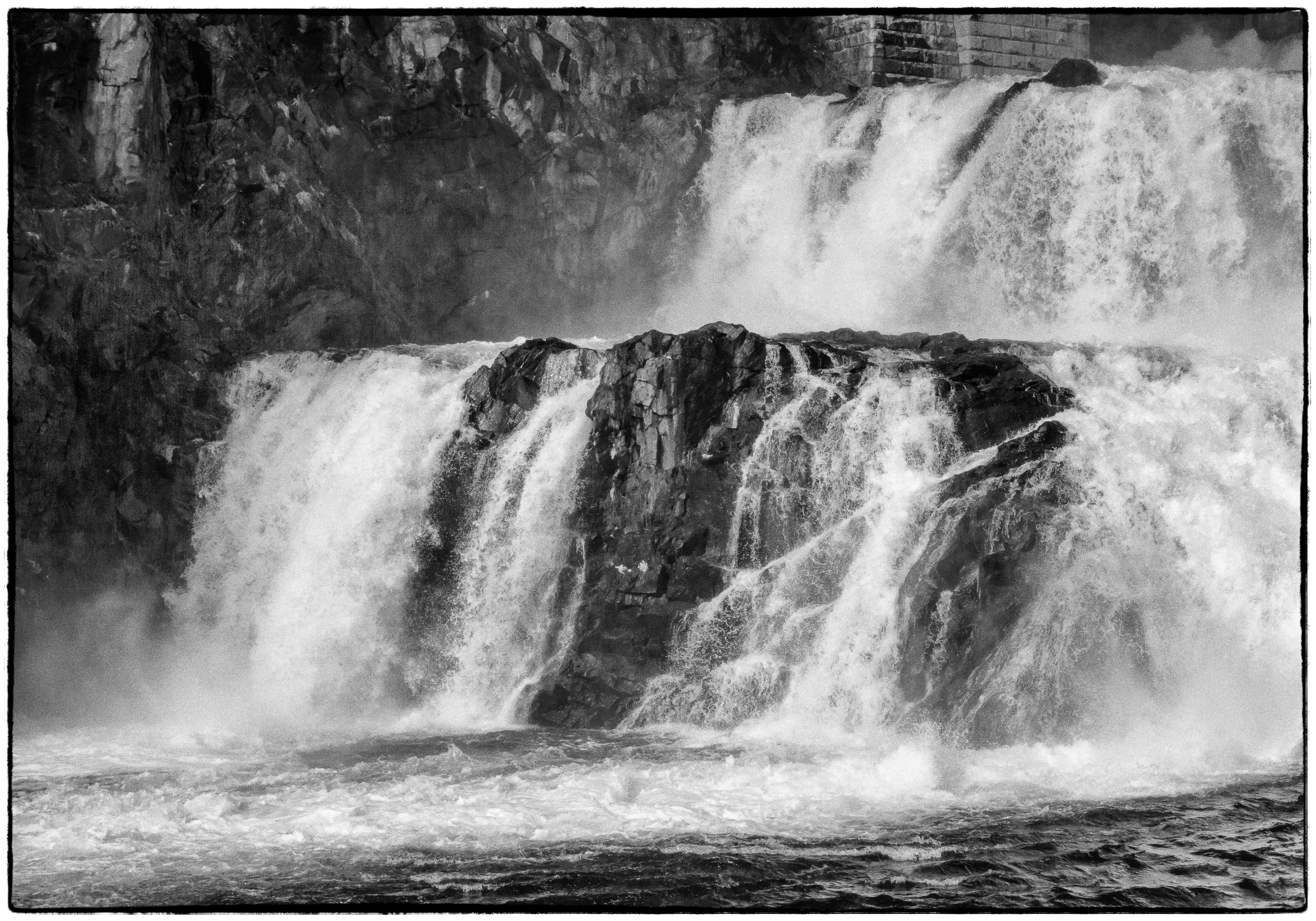
Taken from on top of the New Croton Dam, the Croton River flows from there for about four miles until it enters the Hudson near Van Cortlandt Manor

According to Wikipedia the Croton River:

…is a river in southern New York that begins where its eastern and western tributaries join downstream from the Croton Falls Reservoir. Shortly downstream, the Croton River, along with its tributary, the Muscoot River, flows into the Muscoot Reservoir, after which it empties into the New Croton Reservoir, which feeds the New Croton Aqueduct supplying water to New York City. Excess water leaves the spillway at the New Croton Dam, and finally empties into the Hudson River at Croton-on-Hudson, New York at Croton Point, about 30 miles (50 km) north of New York City.[1] The river has a watershed area of 361 square miles (930 km2).

I’ve taken pictures from this viewpoint before, but never produced one I was happy with. I rather like this one though: the way it’s mostly dark except for the silvery ribbon of water, intersected by bridge, which carries the road to the dam plaza.
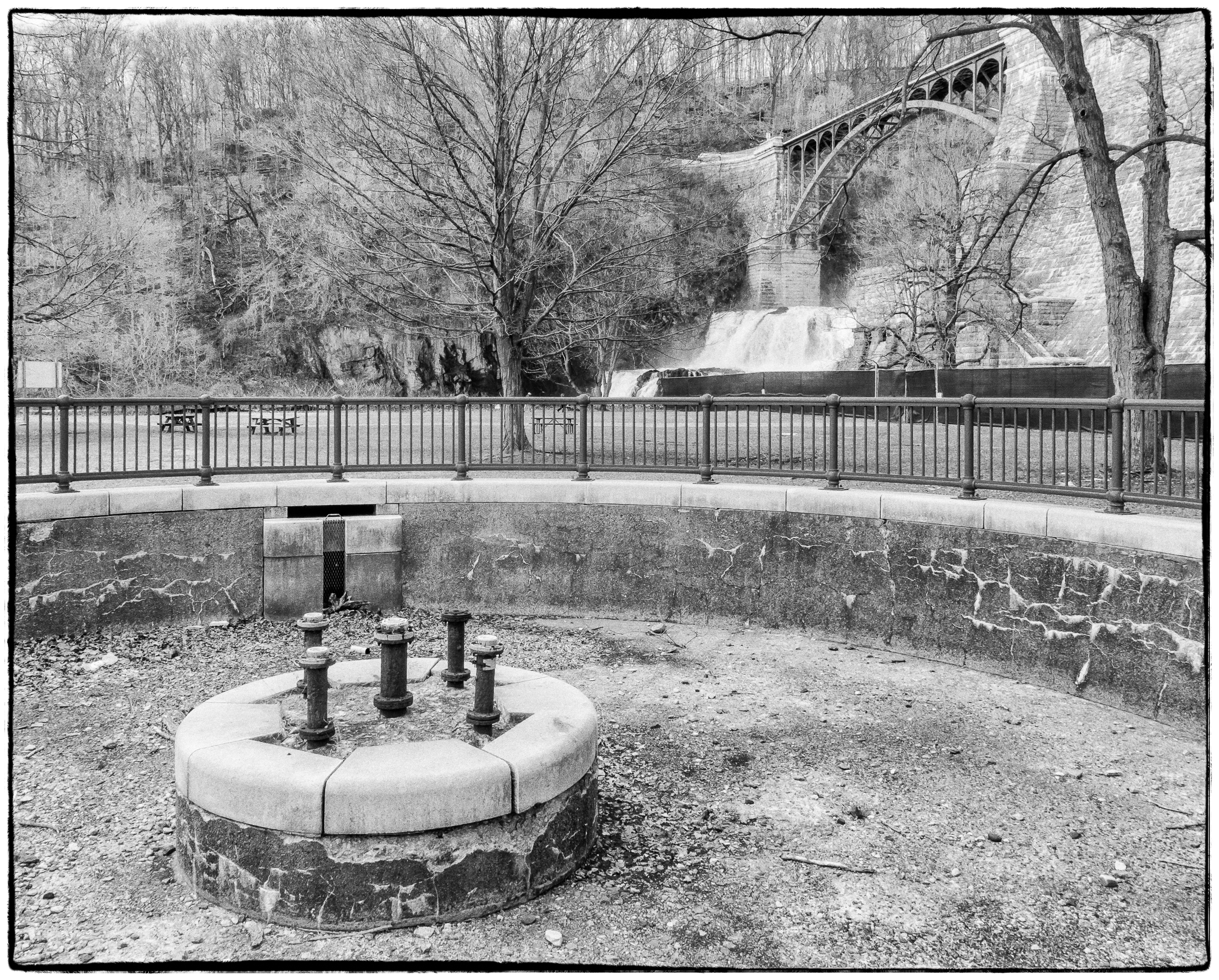
Croton Gorge – Circular structure in the dam plaza

This strange circular pit containing pipes stands in the dam plaza. It’s surrounded by an iron fence and you can see the falls in the background. I have no idea what it is, or what its use was. Perhaps it was some kind of long abandoned water feature, possibly a fountain of some kind?. Maybe the pressure of the water forced it up through the pipes, from where it cascaded down and formed a pool, which subsequently drained into the Croton River? So far I’ve been unable to discover any additional information.

If I’m right that it was formerly a fountain then it’s a shame it’s no longer working. It must have been quite spectacular in its day.

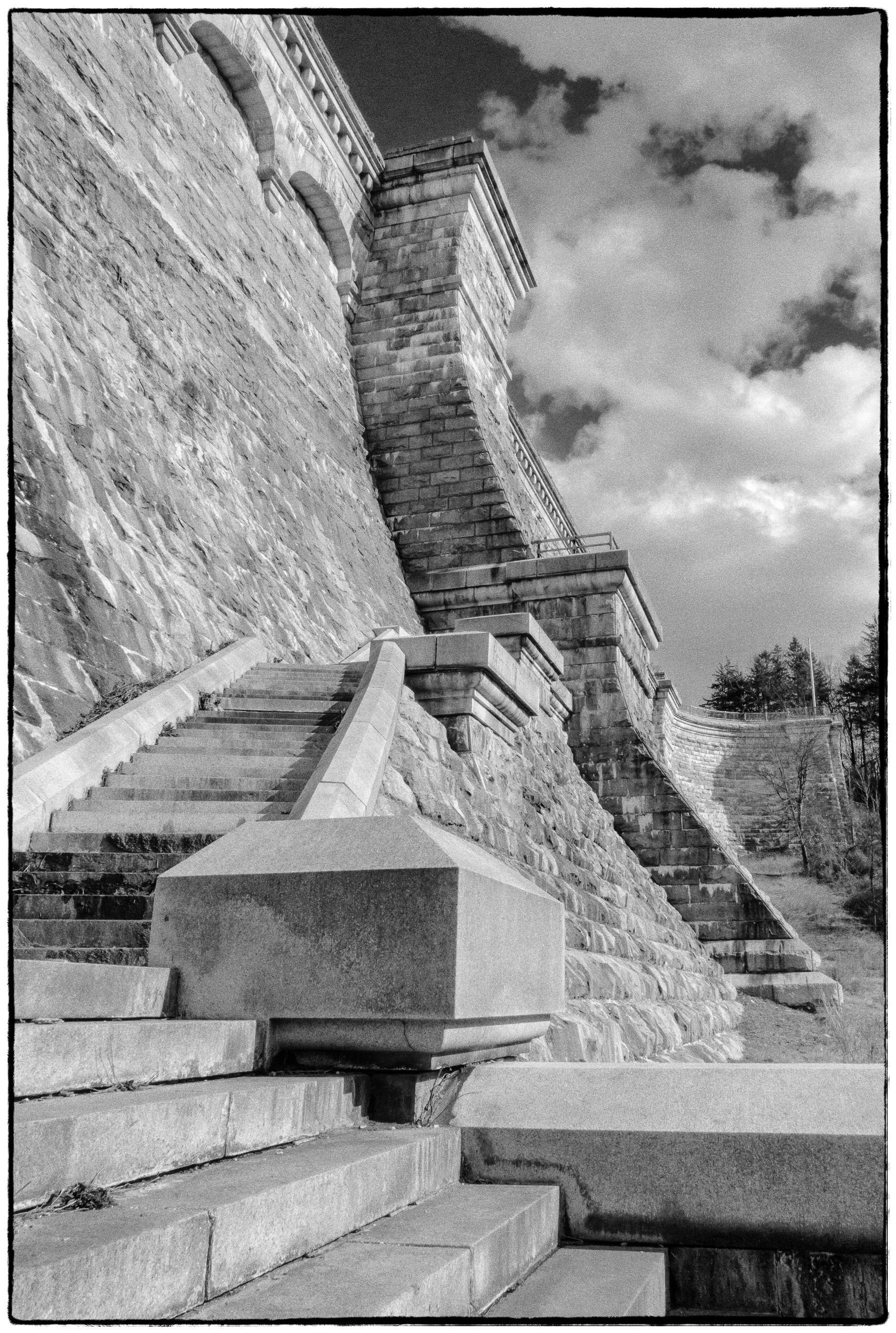
Croton Gorge – The face of the New Croton Dam

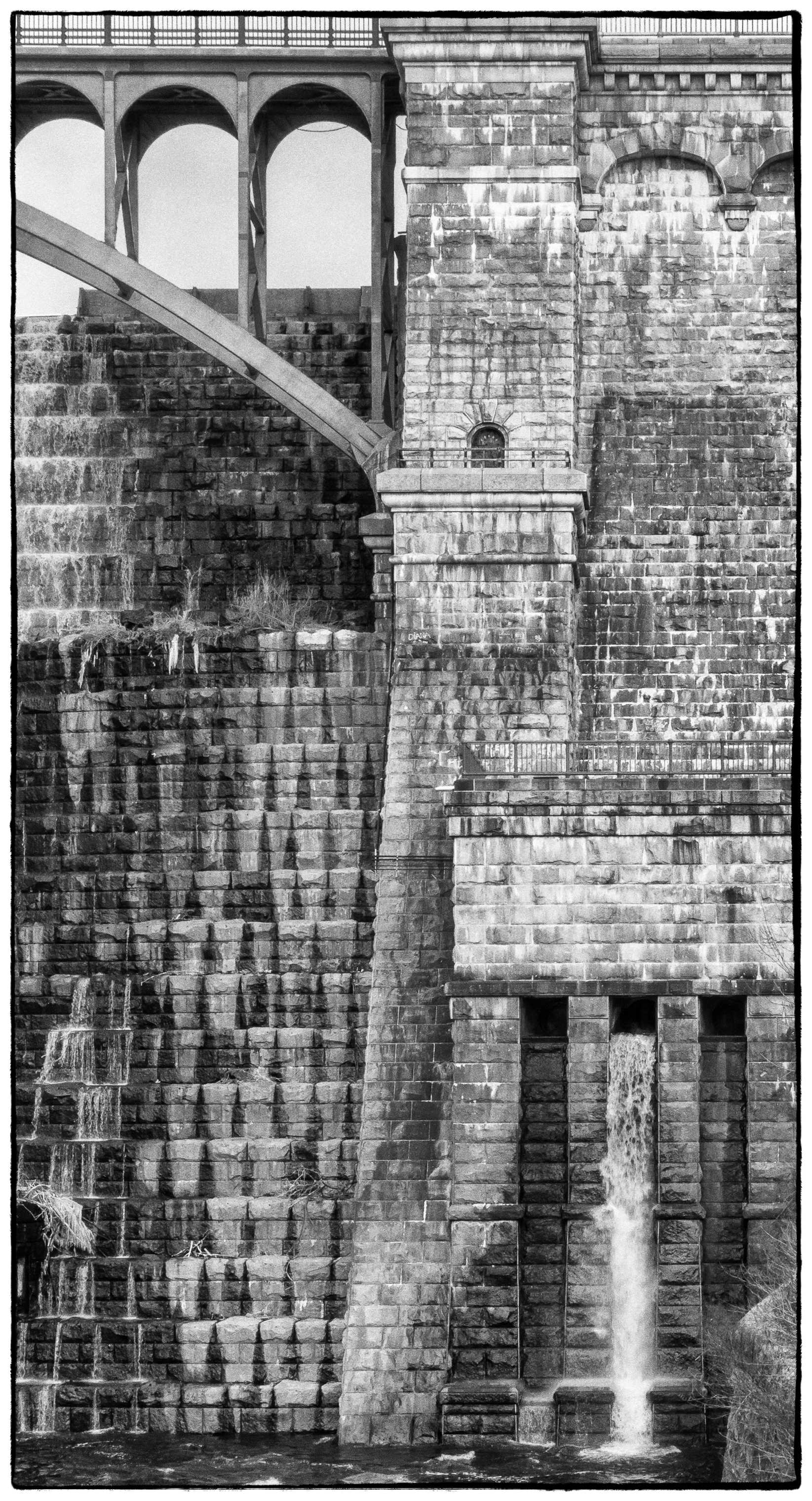
It really is very impressive. The dam is 297 feet high from bottom to top; 266 feet broad at its base. The dam’s foundation goes down 130 feet below the riverbed and contains 850,000 cubic yards of masonry. At the time of its opening (1906), it was the tallest dam in the world.

This view looking upwards from the base gives a good sense of just how massive the dam is. I like the way the stairs take the eye part of the way into the scene and then the buttress takes you up the rest of the way to the top. I also like the textures of the stone. Apart from the blue sky the composition was largely monochromatic so a black and white conversion seemed in order.

For another view see below:

Croton Gorge – A view from beneath the dam

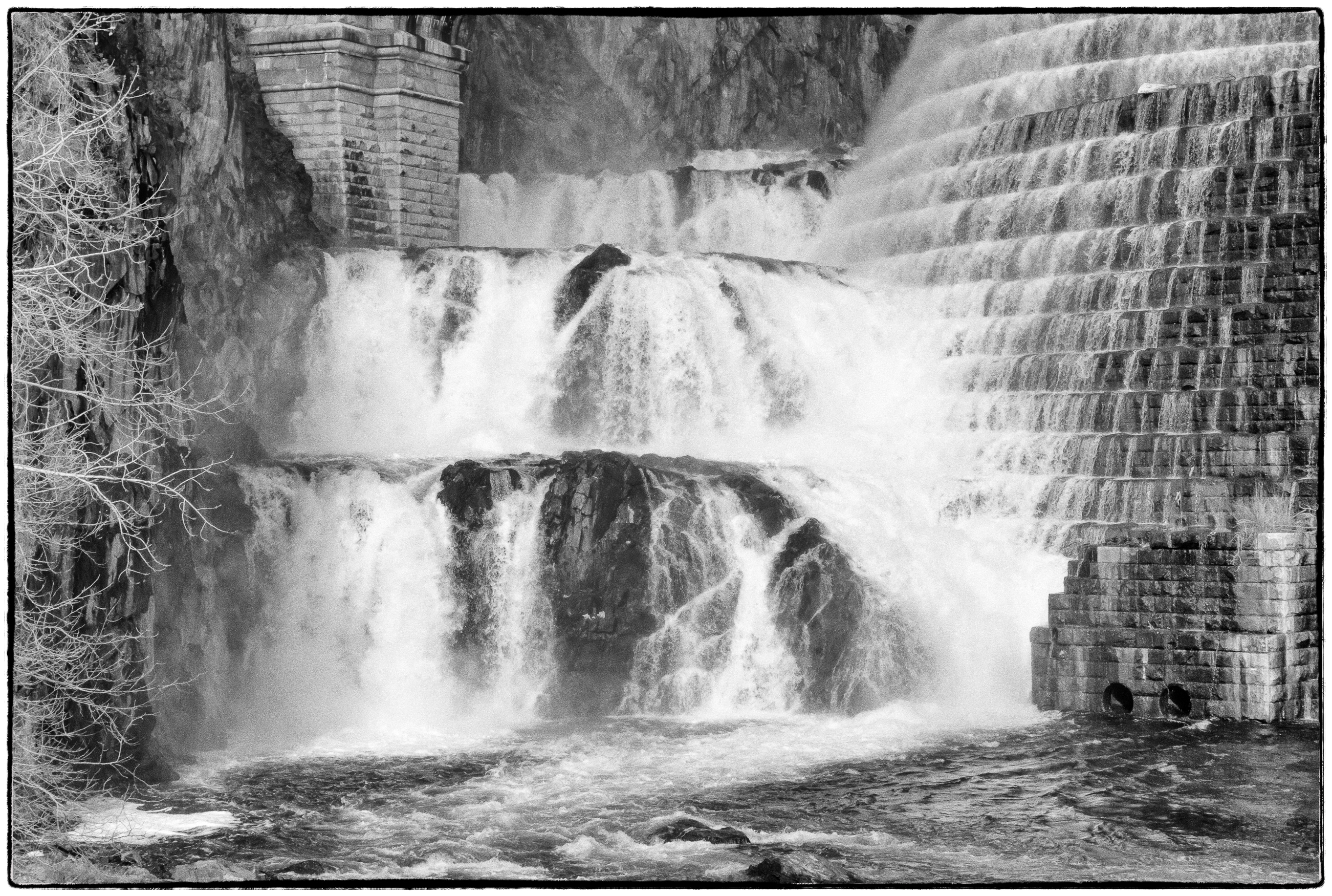
Here’s a view from the plaza at the foot of the dam. Once again you see the dual nature of the spillway – natural on the left; man made to the right.

I’ve posted about the Croton Dam before. See:

Croton Dam
Croton Dam Revisited
Croton Dam

However, although I spoken of the dam, I don’t recall saying anything about the bridge that goes over the spillway. I recently came across an interesting article on the Friends of the Old Croton Aqueduct site: New Spillway Bridge at Croton Dam To Evoke Historic Design.

Apparently this is not the original bridge, which was built in 1905. Damaged by roadway salt, and spray from the spillway that bridge had to be replaced in 1975. Structural problems required that this bridge too be replaced and work started on the replacement in 2003.

Although the 2003 bridge is similar to the original 1905 version it’s not identical. According to the article

There are differences between the 1905 bridge and the new design. Twelve columns, equally paced to echo the detailing along most of the dam’s face, will fill the spandrels – the two triangular space between the top deck of the bridge and the outer curves of its wide arch over the Croton River; the 1905 bridge had 18 of the vertical elements, with varied spacing between them. While the 1905 bridge was black and the 1975 pan was a weathered dark brown, the new bridge will be silver-gray in color to blend with the masonry of the dam. To eliminate painting and reduce maintenance costs, the final finish will be obtained through a process called metallizing. Less visible will be such improvements as a higher load capacity, stainless steel reinforcements, and seismic constraints.

Some great photos of the dam while it was under construction can be found at: New Croton Dam Construction, circa 1902