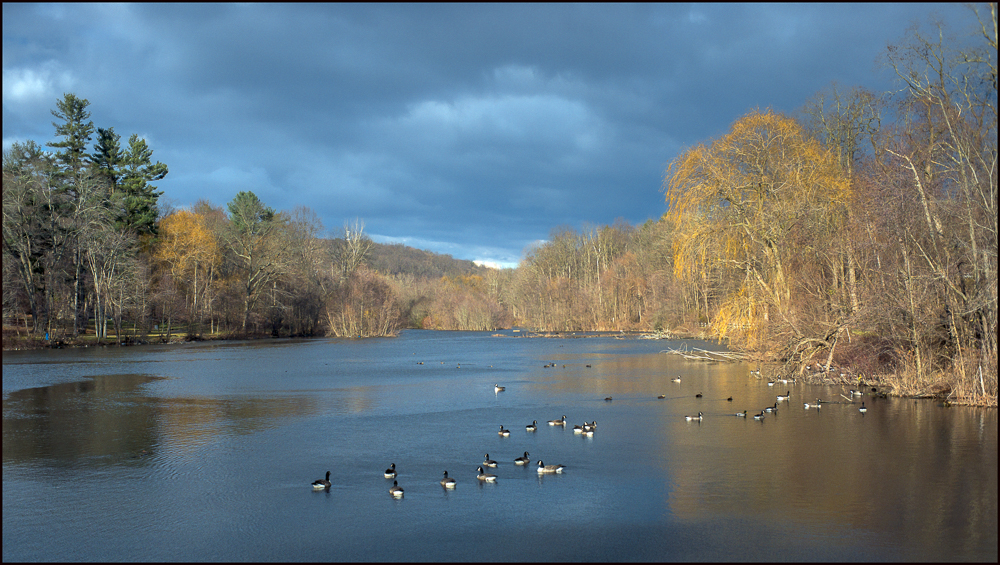
V.E. Macy Park – Overview

We’d driven past the entrance to this park on the Sawmill River Parkway many times, but had never gone inside. It’s divided into two parts: The Woodland Lake portion, sandwiched between the Sawmill and the NY State Thruway and a second portion on the other side of the thruway, which seems to consist mostly of playing fields. This and the subsequent posts in this series were taken in the Woodlands Lake area, which from descriptions I’d read seemed to be the more interesting photographically. It turned out to be more interesting than I thought it would be – with much of interest scenically and a rich past..

The lake is man-made and has a beautiful waterfall on its southern end. The waterfall now has a concrete bridge that crosses over it leading to The South County Trailway. At one time this concrete bridge was a wooden bridge that acted as an access road that crossed over the waterfall from the Saw Mill River Road to a renowned resort area in the 1920’s and 1930’s. The waterfall was created by building a dam across the Saw Mill River. In the past, the water power created by this waterfall successfully powered saw mills and grist mills along the Saw Mill River during the latter part of the 18th Century and throughout all of the 19th Century. These mills processed various grains and produced a high percentage of the finished lumber for local construction. (Greenburgh: A Glimpse Of Our Past Town Of Greenburgh Bicentennial 1788-1988).

The Woodlands Lake area was originally owned by Fredrick Philips, a royalist, and was part of Philips Manor. After the American Revolution, victorious patriot forces confiscated the land. Jonathan Odell, one of the many patriots, purchased the saw mill near the lake, plus one hundred acres of land running through the valley.

Then, in 1816, Joseph Howland purchased the mill, and the property became known as Howland’s Mill and Howland’s Mill Pond (now Woodlands Lake). Mr. Howland lived in a mansion near the pond. Thereafter, Woodlands Lake Waterfall and its surrounding area was owned by a number of financiers including Cyrus W. Field after the Civil War; and then J. P. Morgan who eventually sold, leased and donated many parcels of land from the former C. W. Field estate that he had acquired as partial settlement of debts owed to him by Cyrus Field. Eventually, in 1923 Westchester County purchased the Woodlands Lake Waterfall area and park from J.P. Morgan.
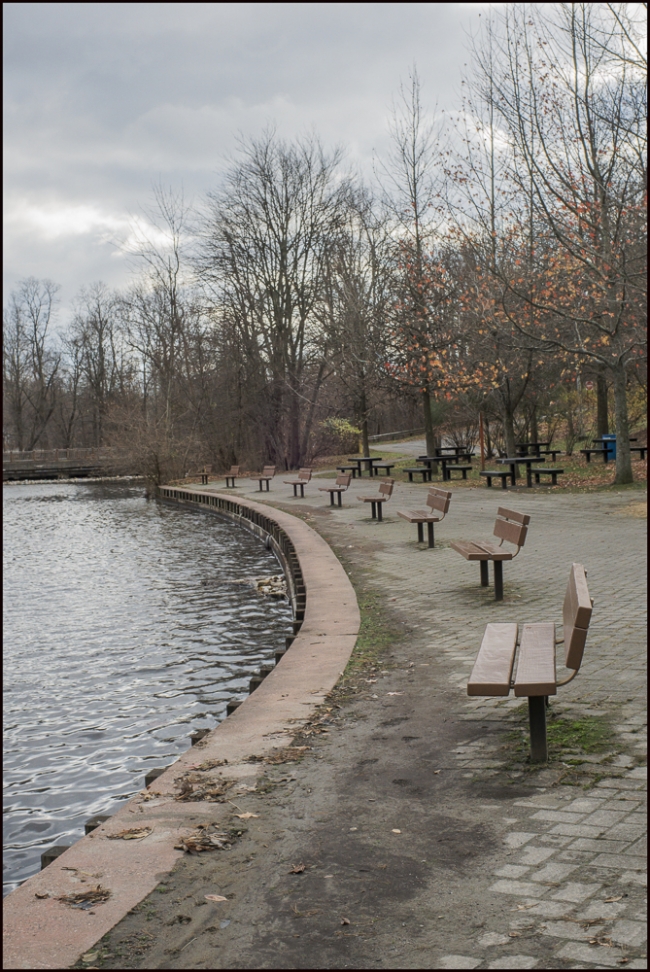
Meanwhile, during the late 1800’s and early 1900’s, Woodlands Lake Waterfall and its surrounding area, served as a popular resort area. As mentioned before, the original wooden bridge that crossed the Woodlands Lake Waterfall acted as an access road connecting the Saw Mill River Road to the Woodlands Lake Waterfall resorts in this area. To arrive at the resort hotels, local residents coming from the Saw Mill River Road area would simply cross over the wooden bridge by foot, by bicycle or by a horse drawn buggy.For those vacationers living far away, the “Put” Railroad Wood-lands Station made arriving at the Woodlands Lake Waterfall resort areas easy. For the travelers coming from the city, they would sim-ply disembark at the Woodlands Station and then use the original wooden bridge that crossed over the Woodlands Lake Waterfall to arrive at the resort hotels and areas.

In the 1920’s, the Woodlands Lake area was a place of fun: it hosted the circus when it came to town; it provided picnic areas where ladies and gentlemen could go for an outing and a barbecue; and it had a place where families could park their cars in the shade while they had a family picnic and had the accessibility of having a food van nearby to provide the food they could not supply for themselves. There was also a place where a baseball game could be played and watched. Then there was the wooden bridge over the waterfalls from which bathers could dive into the cooling waters or show off the latest bathing suit fashions.
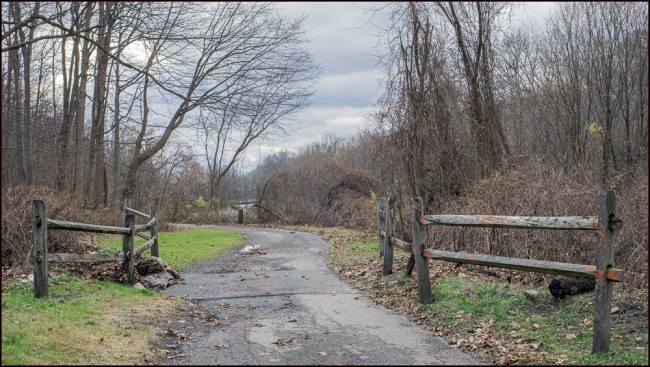
In the 1930’s, Howland’s mansion was demolished when the Saw Mill River Parkway was constructed. It was at this time that the Woodlands Lake Hotel complex and the Reinhardt Hotel were located in the Woodlands Lake Waterfall area. The hotels had bowling lanes, rowboats, canoes and foot pedal boats for guests or day excursionists to enjoy. The Reinhardt Hotel, “was a popular week-end recreation spot for the German population of New York City. The sounds of “oom pah” bands could have been heard on many a Sunday afternoon. The hotel was also a favorite gambling spot until curtailed by the county sheriff.” (Pictures Of The Past, Ardsley, N.Y. by Patricia and Fred N. Arone) It was also during the above time that a more substantial concrete and steel bridge replaced the original wooden bridge that crossed the waterfall. This new bridge now made it possible for automobiles to cross over the waterfalls and to arrive at the Woodlands Lake Waterfall resort hotels and areas. This concrete bridge continued to act as an access road between the hotels and resort areas and the Saw Mill River Road. Then when the Ardsley-Elmsford sections of the Saw Mill River Parkway were also opened in 1930, the little road over the Woodlands Lake Waterfall still provided a Woodlands Lake Waterfall still provided a convenient connection between the Saw Mill River Parkway and the Saw Mill River Road. This waterfall crossover bridge was used until 1950 when The New York Thruway construction cut off the road and the bridge thereafter saw only fishermen and strollers.

Today, Woodlands Lake, its waterfall and the surrounding park areas can still be enjoyed. The “Old Put” railroad line is now the South County Trailway which is a bicycle and foot path that travels along the Old Put’s railroad tracks, now paved over. The South County Trailway starts in the Bronx at Van Cortland Park and passes right by the eastern side of the Woodlands Lake Waterfall pretty much where the Woodlands Station used to be located. You can gain access to the South County Trailway by simply crossing over the Woodlands Lake Waterfall bridge. You can then either go south towards the Bronx or north where you can then connect with the North County Trailway. (“Woodlands Lake Waterfall Area–Ardsley’s Summer Joy For Over 150 Years!” by Theresa di Stefano).
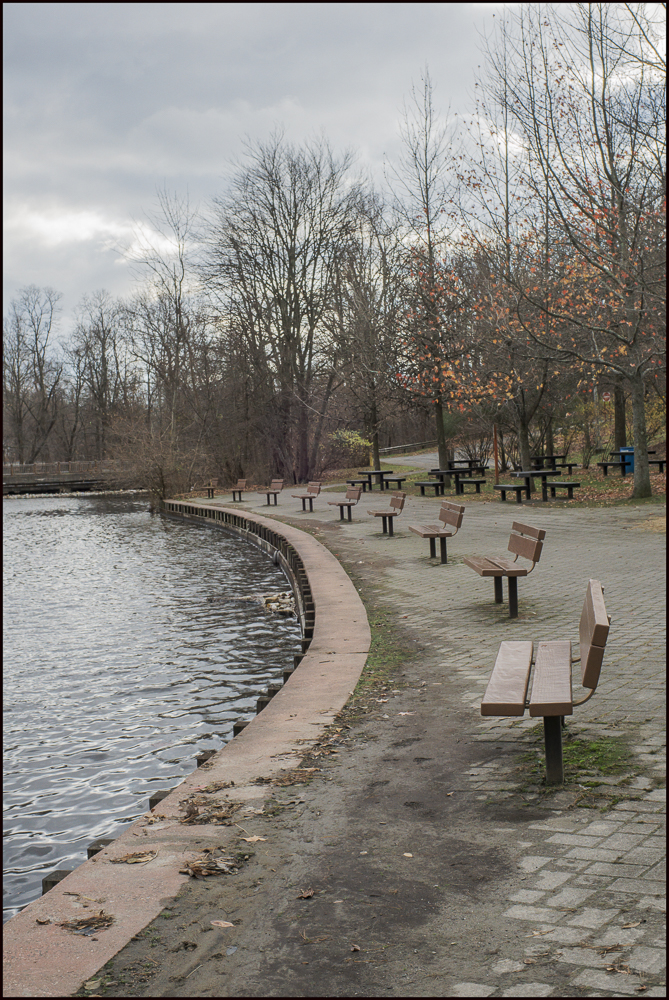
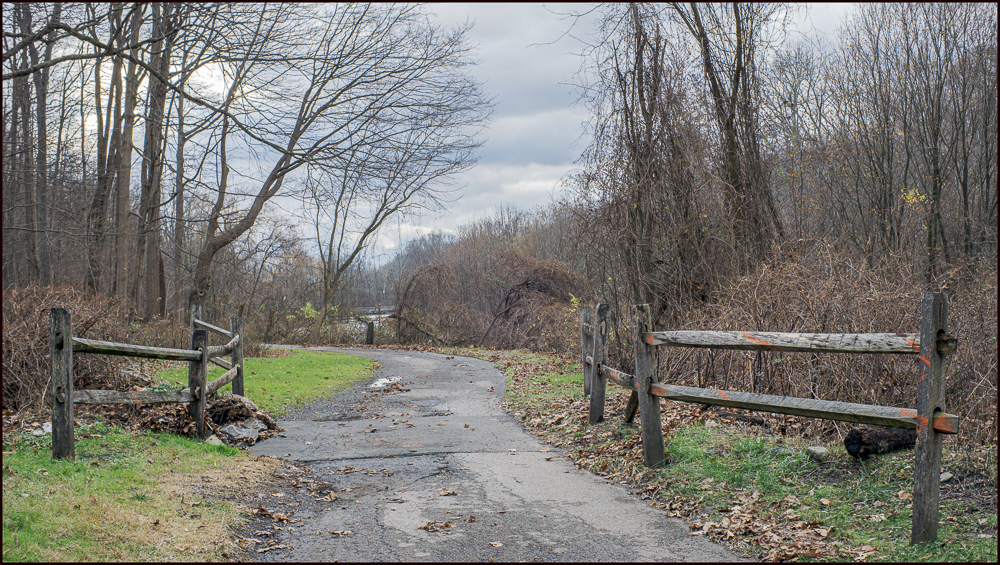
Taken with a Sony A6000 and 7artisans 25mm f1.8 lens.
A lonely Bell

In the preceding post there are a couple of lists of notables who either attended services, or contributed to the funding of St. Mary’s Episcopal Church in Briarcliff Manor, NY. However, I deliberately left out one name so I could mention him in this post.

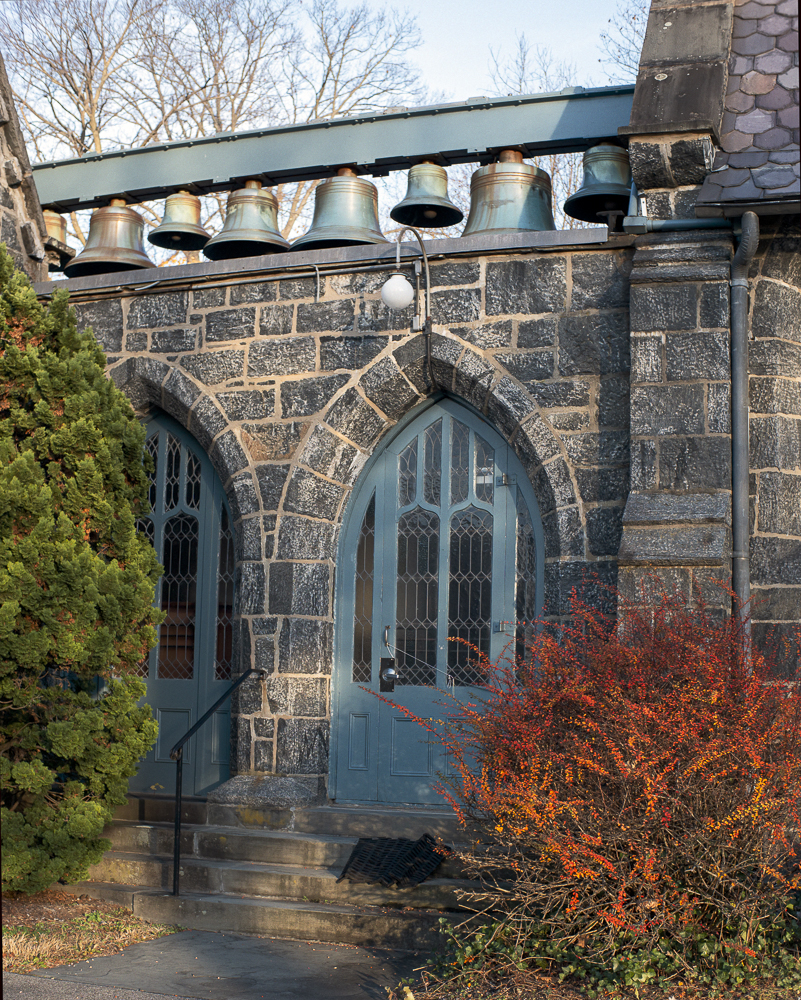
As I was leaving the church I noticed this small bell tucked away in a corner of the buildings. I thought to myself, I wonder what that is and stopped to take a look. Then I noticed a plaque over the bell. It reads: “Commodore Matthew C Perry 1794-1856 “Father of the Steam Navy” and opener of Japan who made his home here for many years in “The Moorings”. A founder of this church and donor of the bell used until 1910.” Now I didn’t know the other founders and donors listed in the earlier post, but I had heard of Commodore Perry. According to Britannica:

Matthew C. Perry, in full Matthew Calbraith Perry, (born April 10, 1794, South Kingston, R.I., U.S.—died March 4, 1858, New York City), U.S. naval officer who headed an expedition that forced Japan in 1853–54 to enter into trade and diplomatic relations with the West after more than two centuries of isolation. Through his efforts the United States became an equal power with Britain, France, and Russia in the economic exploitation of East Asia.

.

But wait…there’s more.

According to an online article entitled “The Bells of St. Mary’s. From Villahermosa, Tabasco, to Scarborough, New York: The Mysterious Journey of a Mexican Church Bell”:

One Hundred and seventy-three years ago the United States and Mexico were at war and in the end; vast amounts of Mexican territory became American property along with other things once owned by Mexicans. As happens in every war American soldiers carried home war trophies such as photographs, uniforms, medals flags, rifles, pistols and even cannons that once belonged to the former enemy. This is the story of one of those trophies, a church bell that once hung in the belfry of a Roman Catholic Church called “Iglesia de la Virgen de la Concepción” in the City of Villahermosa, the capital of the State of Tabasco, in the Republic of Mexico. It seems that this church was the successor of several church buildings (known by various names) that have stood in the central square of Villahermosa (once known as San Juan Bautista) since 1614. The “Iglesia de la Virgen de la Concepción” no longer stands as it was shelled by American naval artillery during an engagement between the American and the Mexican forces in mid June of 1847, known as the “Second battle of Tabasco.” The Iglesia was subsequently replaced by several other churches in this site since then the latest being the Catedral del Señor (Cathedral of the Lord).
During the Second Battle of Villahermosa the Americans under the personal command of Commodore Matthew C. Perry stormed ashore with a force of 1200 sailors and marines and took a defensive fortification known as Fort Acachapan manned by 600 troops under the command of Colonel Claro Hidalgo. Perry unlimbered his artillery and shelled the fort then ordered a charge. With his sword in hand, Perry personally led the troops that drove the Mexicans back and he briefly occupied the town and subsequently abandoned it when he realized that he did not have enough troops to hold it. It was probably at this time that he or one of his troops found the bell among the ruins of the bombed out church and decided that it was a worthy commemorative trophy and later took it back to the U.S. ” In those times church bells were considered legitimate prizes of war.

As it happened, Commodore Perry was a resident of the hamlet of Scarborough, NY where he built a home he called, The Moorings ” on 125 acres of land on the shores of the Hudson River near to where Rookwood Park (sic. should be Rockwood Hall) a section of Rockefeller State Park now stands.

At some point after he returned to his home, perhaps in 1851, Commodore Perry presented the bell to the church and had it inscribed as follows: ” Captured At Tobasco (sic) 1847″ and below that, “Presented by Commodore M.C. Perry, Recast.” The bronze bell is 20 inches tall and has a diameter of 18 inches at the bottom end. Most likely the bell was an alloy comprised of copper and other base metals that was locally mined and cast into bronze at a nearby forge. This historical bell was replaced by a larger modern bell in early November of 1910 , donated by the financier, August Belmont, Commodore Perry’s son-in-law. The old bell was placed on an outside corner of St Mary’s to the left of the main entrance where it can be seen today.

I’ve lived in Briarcliff Manor for 22 years and I never knew about this connection to Commodore Perry. And to think that I almost missed the bell completely…

Taken with a Sony A6000 and 7artisans 25mm f1.8 lens.

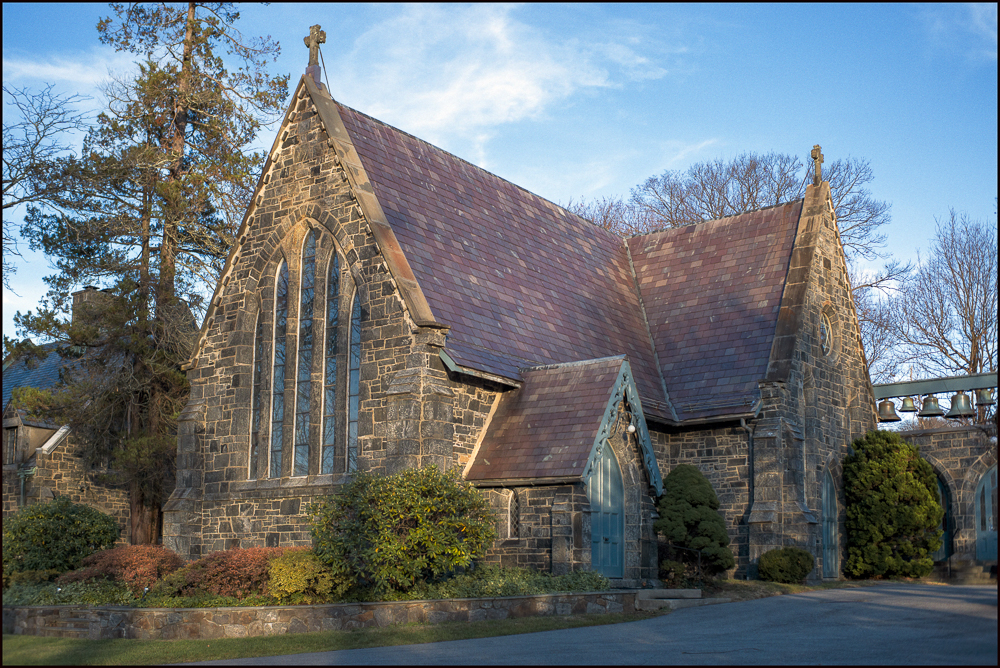
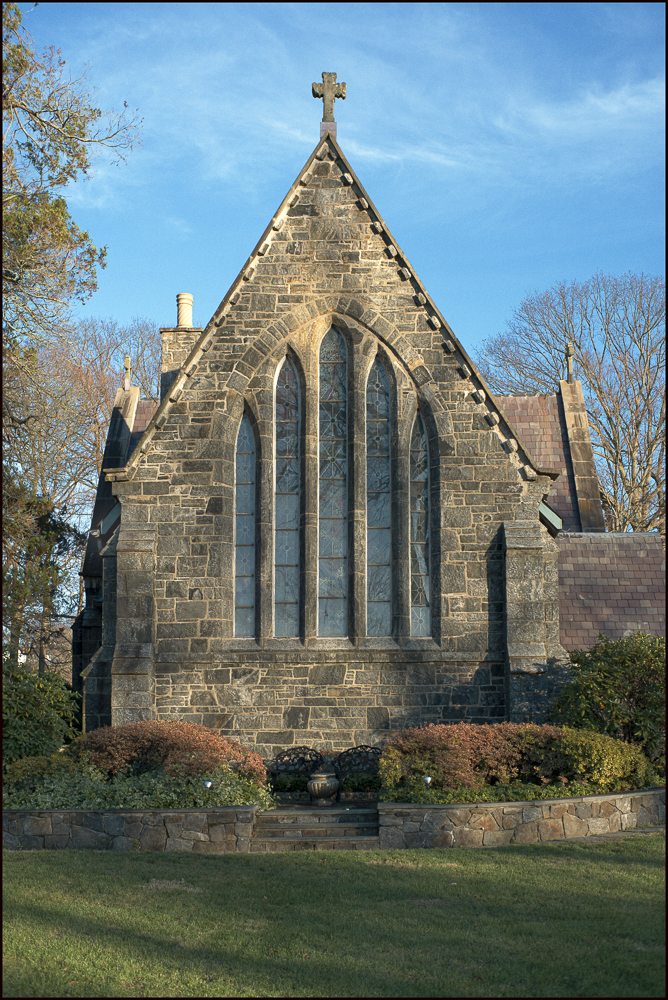
St. Mary’s Episcopal Church, Briarcliff Manor, NY

I’d often passed this church on Route 9 in the Scarborough section of Briarcliff Manor. It’s an attractive old church and I thought it might be nice to stop by and take a few pictures, but I never did. Then one day I read somewhere that the church was going to close so I thought I’d better get the pictures before someone decided to demolish it.

According to the Scarborough Historic District page on Wikipedia:

Saint Mary’s Episcopal Church, founded in 1839 by William Creighton and incorporated in 1883 as Saint Mary’s Church, Beechwood, is Briarcliff Manor’s oldest church; it was reincorporated in 1945 as Saint Mary’s Church of Scarborough. Its first service was in 1839 in a small schoolhouse on an acre of Creighton’s Beechwood property, at the corner of Albany Post and Sleepy Hollow Roads. The service was led by Creighton’s son-in-law Reverend Edward Nathaniel Meade.

The granite church was built in 1850 by local stonemasons and paid for primarily by Creighton and Meade and thier wealthy neighbors including James Watson Webb, William Aspinwall, and Ambrose Kingsland. The first services there were held on September 21, 1851. The church is in near-original condition, with a design based on the 14th-century Gothic St. Mary’s parish church in Scarborough, England and is the only church with a complete set of John Bolton (brother of William Jay Bolton) stained-glass windows.

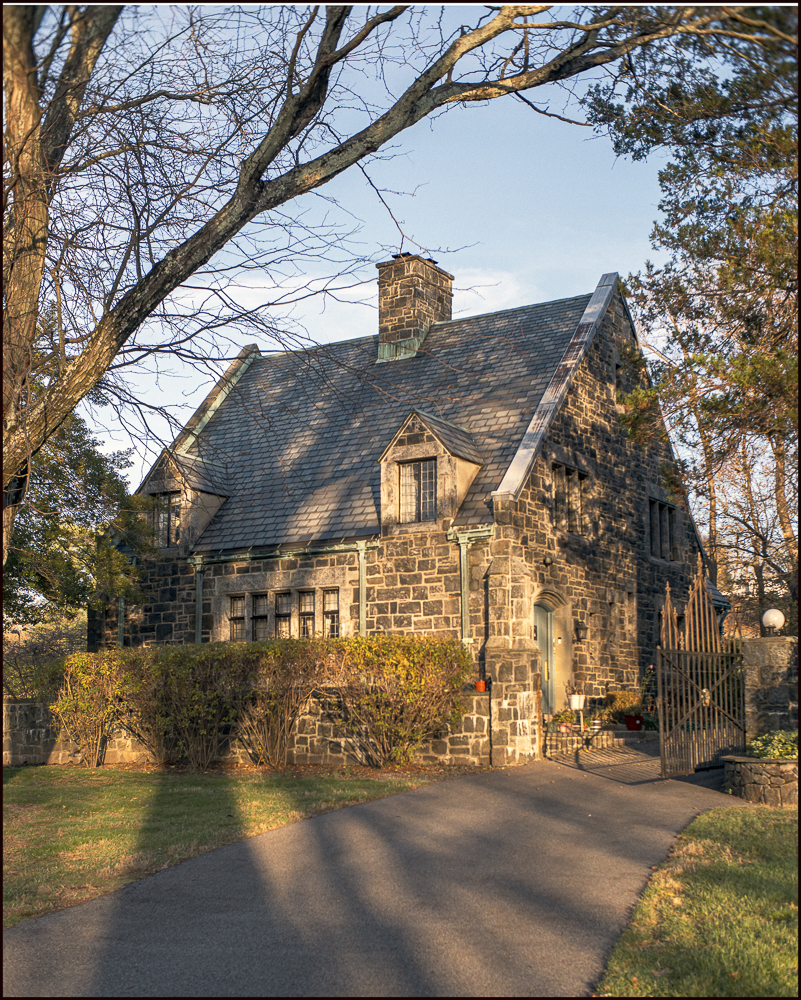
The church’s rectory was built in 1931 as a memorial to its first two rectors Creighton and Meade. Notable parishioners included Viola Allen, and Washington Irving. Irving, the author of “Rip Van Winkle” and “The Legend of Sleepy Hollow”, brought and planted the ivy surrounding the church. He had received it from Walter Scott, from Abbotsford. The ivy of the parish house was brought from the Argonne battlefield, after World War I, by Narcissa Vanderlip. The 200-acre-plus (81 ha) Sleepy Hollow Country Club surrounds the church grounds on three sides.

On July 5, 2015, Saint Mary’s Episcopal Church closed after 175 years in operation.

William Rockefeller, who lived nearby at Rockwood Hall, was a regular attendee of the church in the last few years of his life.


Taken with a Sony A6000 and 7artisans 25mm f1.8 lens.
An old waterworks revisited

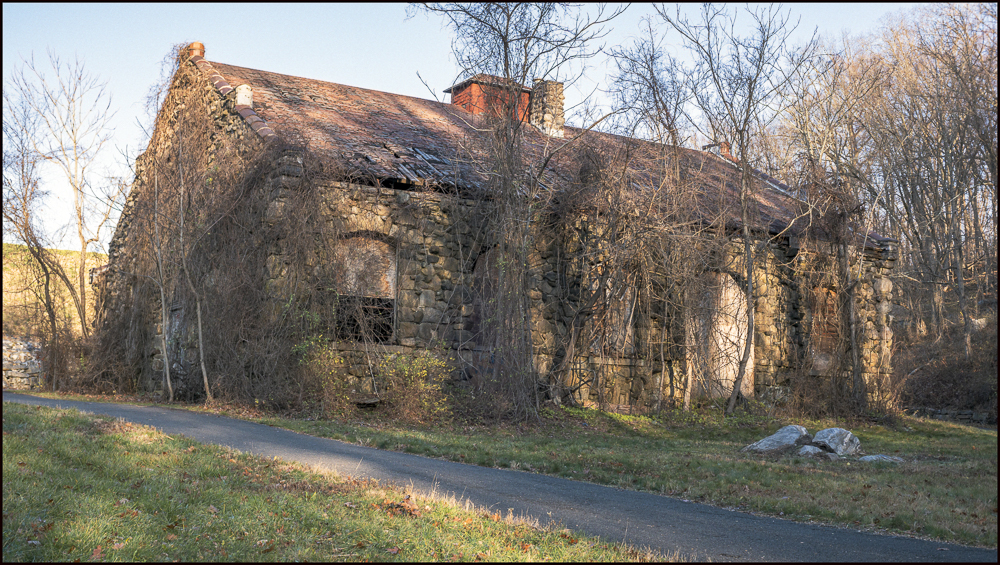
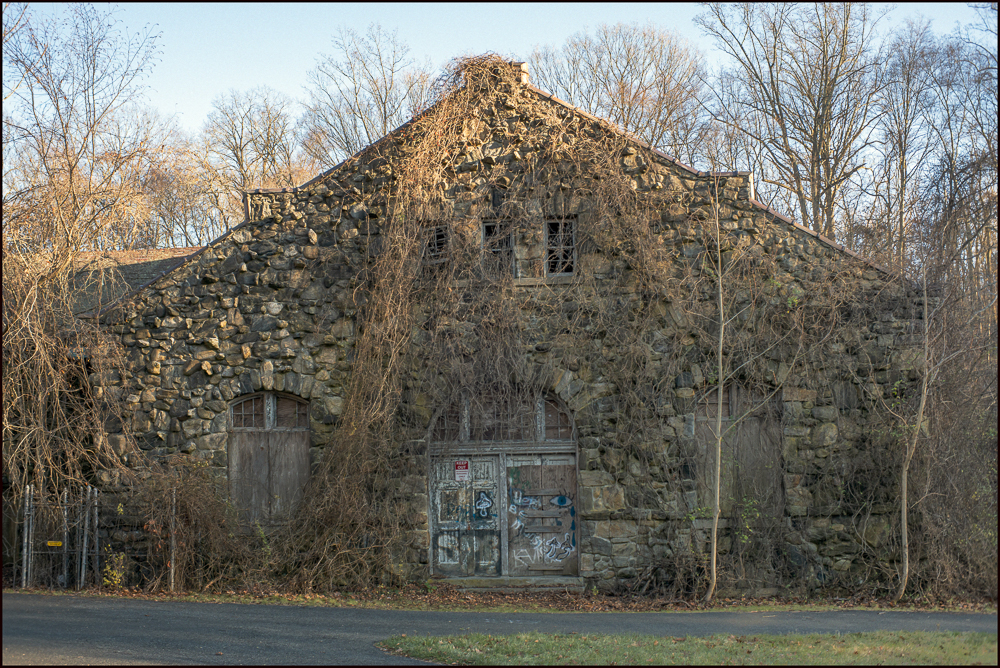
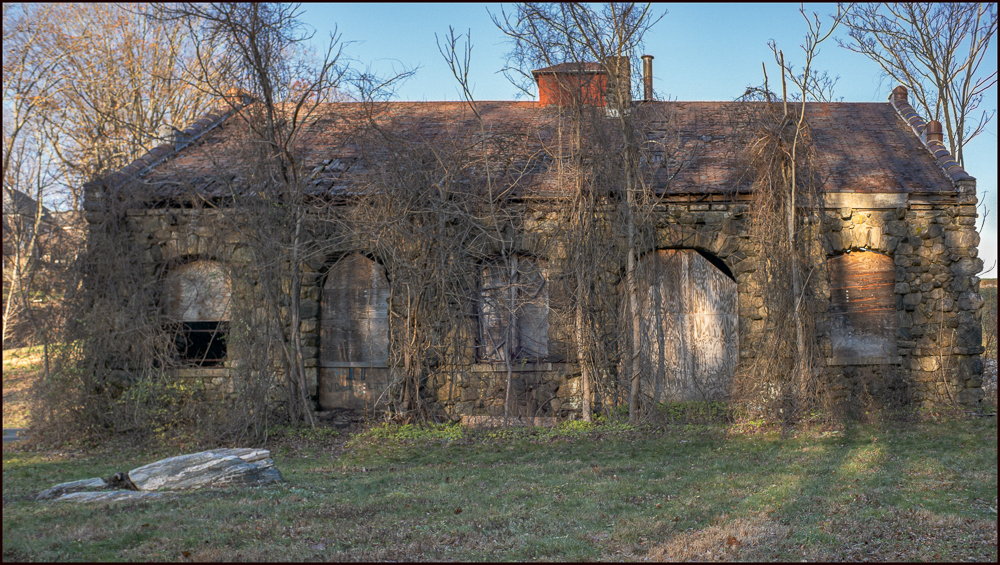
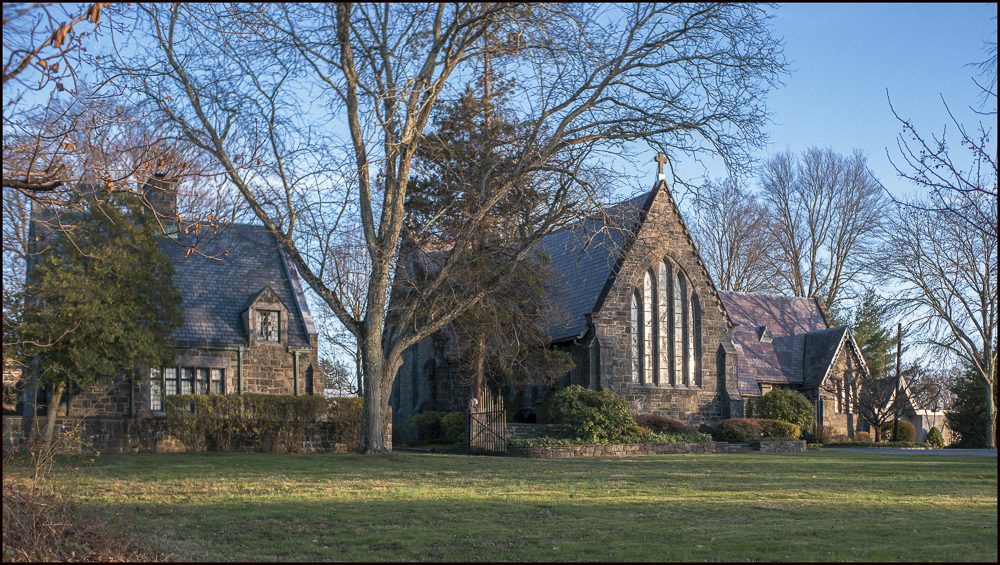
I’d recently (end October) been to this old waterworks near Pocantico Lake (see: An Old Waterworks). At that time I had difficulty taking the pictures I wanted because I had the wrong lens: a telephoto. It was a new lens and I was keen to try it. Unfortunately, I couldn’t get far enough back (I would have ended up in the river) to get the wider view of the buildings that I was looking for. So I decided to return with a more appropriate lens. Here are the results.


Taken with a Sony A6000 and 7artisans 25mm f1.8 lens.