
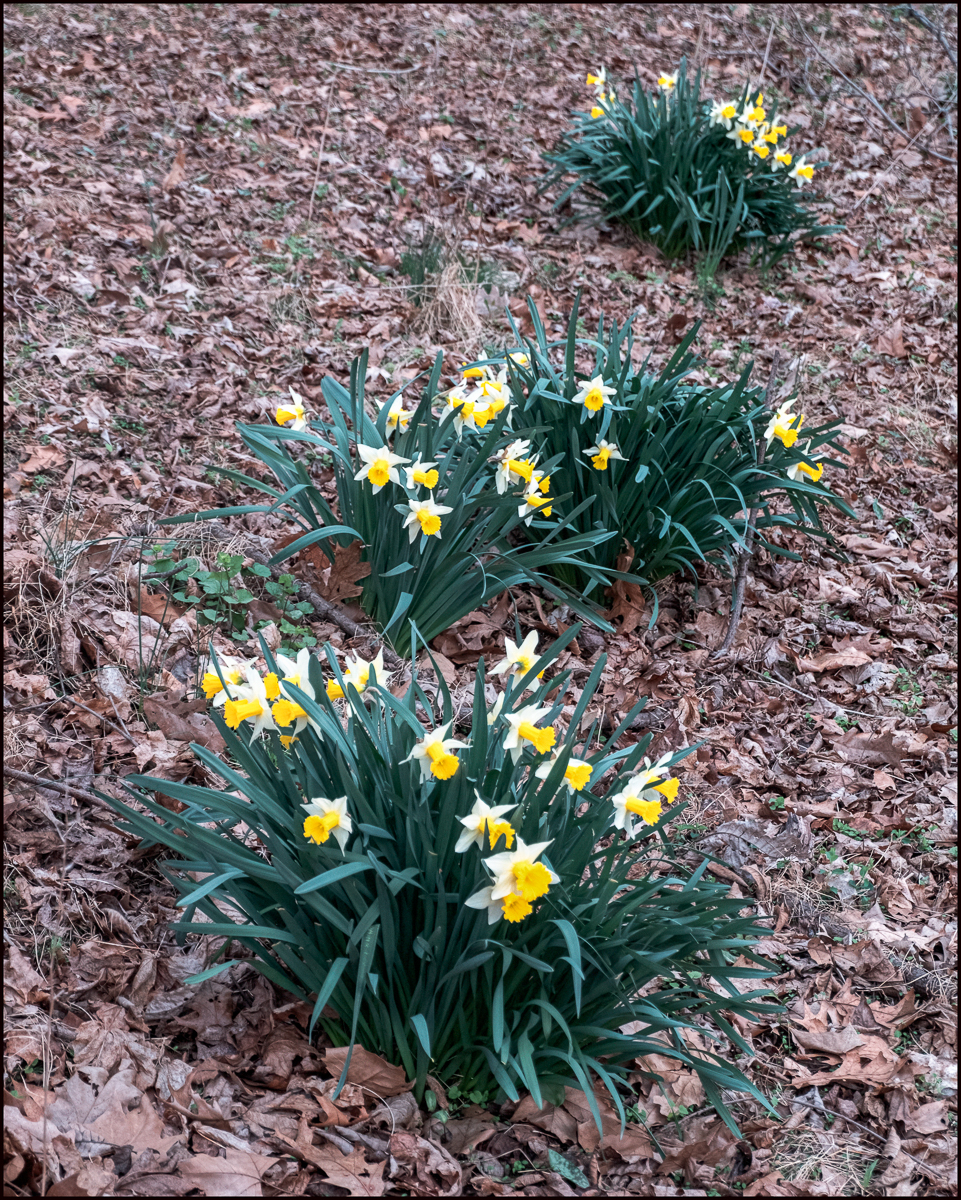
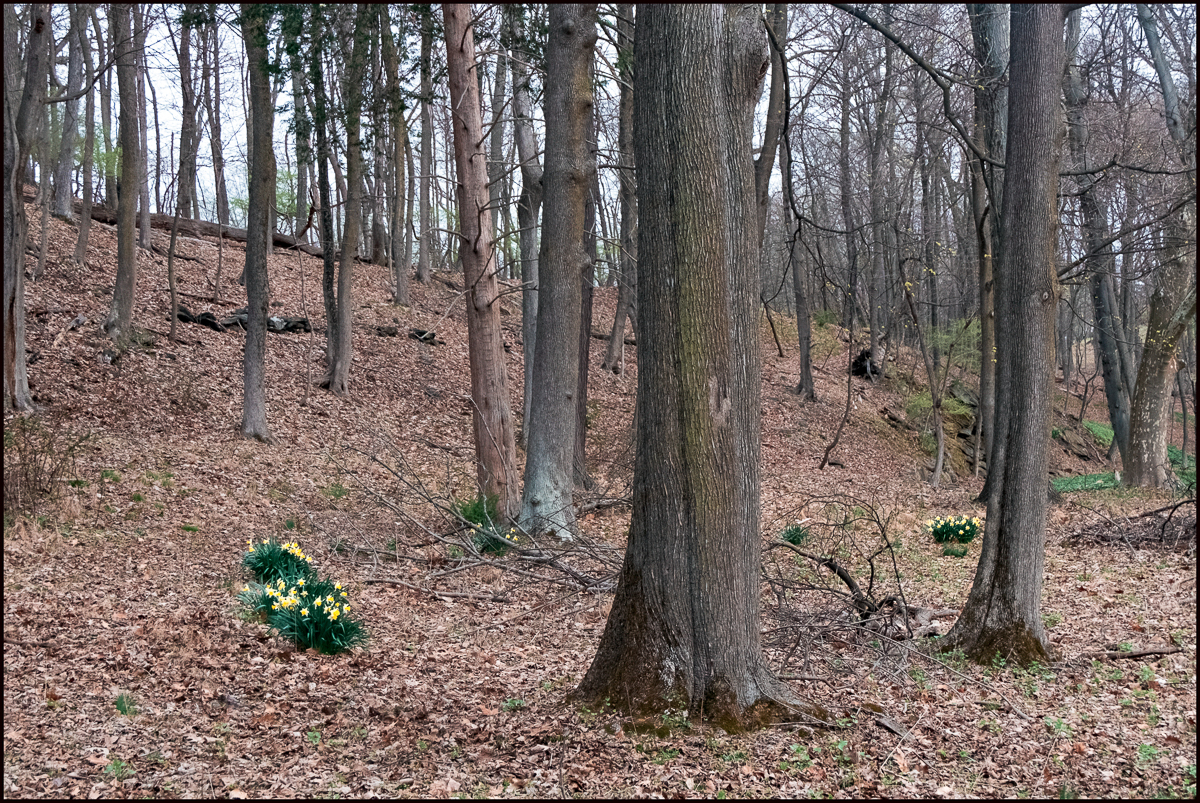
When I came across these daffodils in a nearby woodland (see photo below for context) my first reaction was to wonder how they got there. I always thought that daffodils grew from bulbs and I imagined that it would be difficult for the bulbs to easily transfer to the wild. Then I came across this:
First, the wild daffodil can reproduce by generating seeds, which is a sexual method of reproduction. The flowers must be fertilized by an outside source in order to create these seeds, and pollen is required for this process. There are two important parts to a typical plant that are necessary for this type of reproduction. The pistil contains the stigma and the female gamete, where the daffodil’s ovule is found. On the stamen of a plant, pollen is produced, which contains the male gametes. When pollen is transported from one plant to another, it drops into the stigma and fertilizes the ovules of the plant, inside its ovary. A seed then develops from the fertilized ovule. When the daffodil blooms die, the tiny black seeds are dry and ready for dispersal. The seed pod (ovary) of the daffodil cracks open, and seeds either fall to the ground or are transported by wind or animals to a new location.
Essentially any insect or organism can serve as a pollinator for the daffodil. It really doesn’t matter how the pollen gets in the stigma, it just has to come in contact with it in order to start fertilization.
From seeds, daffodils take a very long time to grow into a full plant. It can take from five to seven years for a daffodil to bloom from a planted or dispersed seed.
So there you have it: unless someone deliberately planted them in this woodland they must have grown from seeds.
Taken with a Fuji X-E1 and Fuji XC 16-50mm f3.5-5.6 OSS II