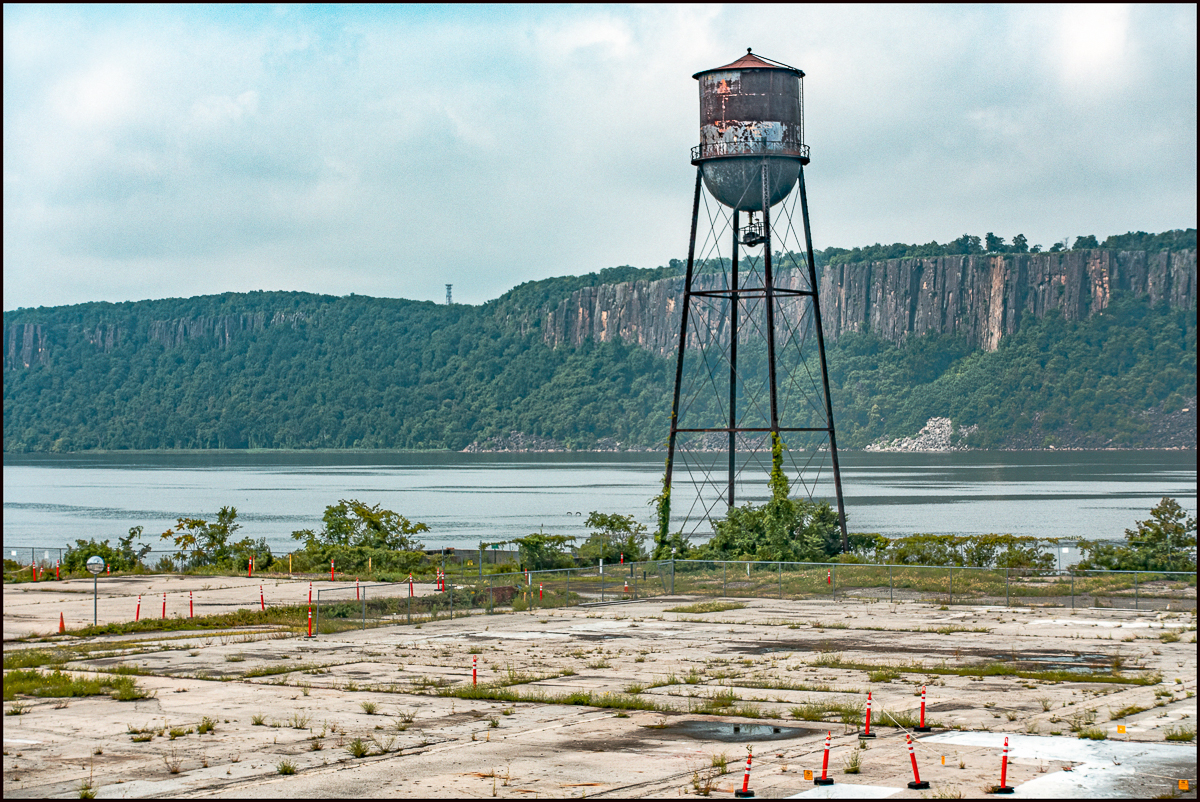
A walk around Hastings-on-Hudson. The iconic water tower

The Water Tower was constructed in 1916 for the National Conduit & Cable Company’s operations at 1 River Street in Hastings-on-Hudson, New York. The site was then transferred to Anaconda Copper and Mining Company in 1919. The company eventually merged into Anaconda Wire and Cable Company, and continued to operate until 1974 when the company ceased operations. Atlantic Richfield (AR) purchased the site in 1977 and an affiliate, ARCO, repurchased the site in 1998. AR and ARCO have since facilitated environmental investigations and remediation at the site. The site is currently under the responsibility of a 2016 Consent Order between British Petroleum (BP) and ARCO Environmental Remediation Limited (ARCO). The site has been categorized as a Superfund Site and is currently undergoing remediation. The Water Tower currently resides at the Harbor at Hastings Superfund Site.

Despite all its problems the tower has become something of an icon in the town. Although there have been plans to demolish it they have so far been resisted by local residents.

Taken with a Sony RX100 M3.

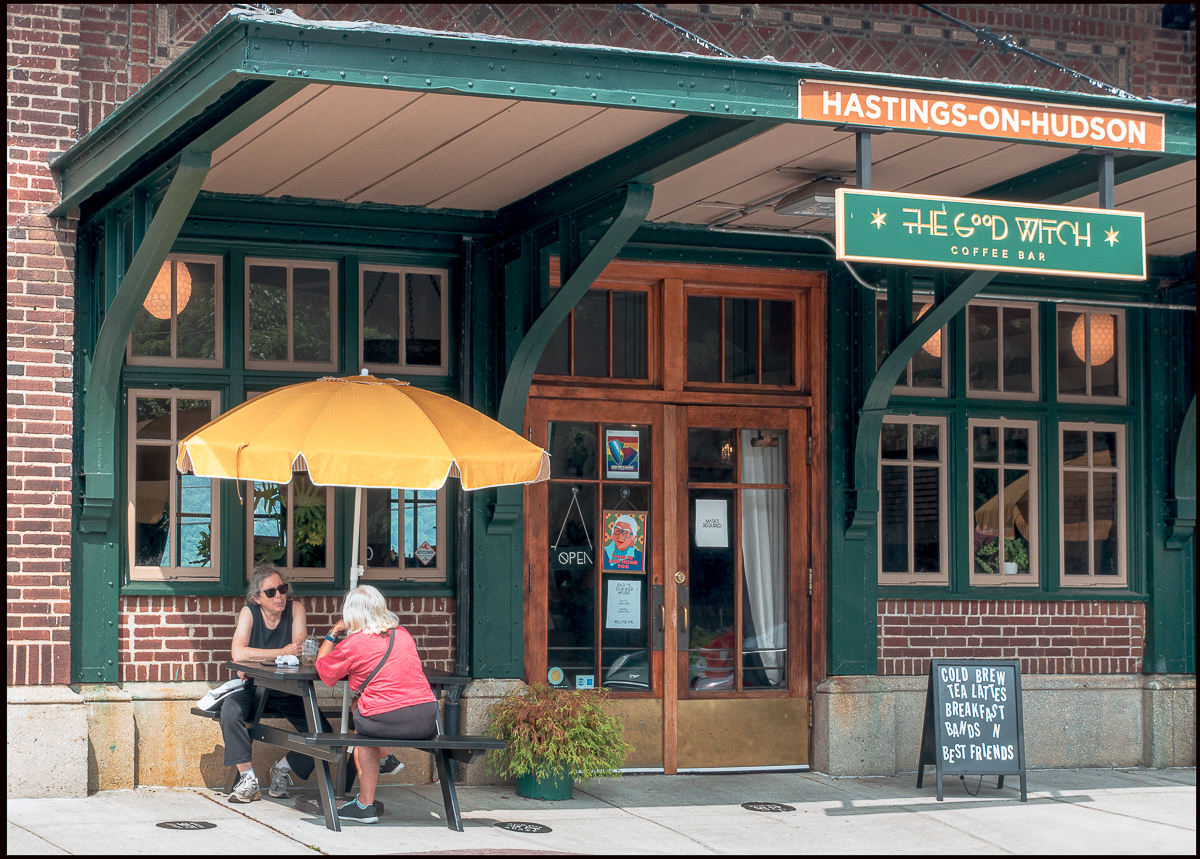
A walk around Hastings-on-Hudson. Overview

Above: Hastings-on-Hudson Metro North Hudson Line station.

“Hastings-on-Hudson is a village in Westchester County located in the southwestern part of the town of Greenburgh in the state of New York, United States. It is located on the eastern bank of the Hudson River, approximately 20 miles (32 km) north of midtown Manhattan in New York City, and is served by a stop on the Metro-North Hudson Line. To the north of Hastings-on-Hudson is the village of Dobbs Ferry, to the south, the city of Yonkers, and to the east unincorporated parts of Greenburgh. As of the 2020 US Census, it had a population of 8,590. The town lies on U.S. Route 9, “Broadway”, along with the Saw Mill River Parkway and I-287.

The area that is now Hastings-on-Hudson and Dobbs Ferry was the primary settlement of the Weckquaesgeek Algonquian people, who called the community Wysquaqua. In the summer, the Weckquaesgeeks camped at the mouth of the ravine running under the present Warburton Avenue Bridge. There they fished, swam and collected oysters and clamshells used to make wampum. On the level plain nearby (which is now Maple Avenue), they planted corn and possibly tobacco.

The findings of large numbers of artifacts have suggested that there was significant tribal activity in the confluence of Factory Brook and Scheckler’s Brook just behind what is now the Cropsey Studio, but the interest in the site failed to generate any archeological inquiry.

Pre-1920

Around 1650, a Dutch carpenter, named Frederick Philipse, arrived in New Amsterdam. In 1682, Philipse traded with the Native Americans for the area that is now Dobbs Ferry and Hastings-on-Hudson. In 1693, the English Crown granted Philipse the Manor of Philipsburg, which included what is now Hastings-on-Hudson. After dividing the area into four nearly equal-sized farms, the Philipses leased them to Dutch, English and French Huguenot settlers.

During the American Revolution, what is now Hastings-on-Hudson, lay between the lines of the warring forces and was declared neutral territory. In reality, the area became a no-man’s land and was raided repeatedly by both sides. The minor Revolutionary War skirmish known as the Battle of Edgar’s Lane was fought in Hastings. Following the Revolution, the Philipses, who had been loyal to George III, saw their vast lands confiscated and sold by the newly established American state. In 1785, the four farms comprising today’s Hastings-on-Hudson were bought by James DeClark, Jacobus Dyckman, George Fisher, and tavern keeper Peter Post.

Around the same time, Westchester County, which had been established as one of the 10 original counties in New York, was divided into towns, and the area that is now Hastings-on-Hudson became part of the town of Greenburgh. The village was incorporated in 1879 and its name changed from Hastings-Upon-Hudson to Hastings-on-Hudson.

Stone quarrying was the earliest industry in Hastings-on-Hudson. From 1865 to 1871, hundreds of Scottish and Irish laborers blasted huge quantities of dolomitic marble from a white Westchester marble quarry. An inclined railroad carried the marble down to the quarry wharf where it was dressed by skilled stonecutters and loaded onto ships bound for cities like New York and Charleston, South Carolina.

By the 1880s, Hastings Pavement was producing hexagonal paving blocks which were used extensively in Central Park and Prospect Park in Brooklyn. Between 1895 and 1900, Hastings Pavement produced 10 million such blocks and shipped them throughout the United States and to cities in Canada, Brazil and England. By 1891, the National Conduit and Cable Company had established an operation on the waterfront producing cables for utility companies here and abroad. In 1912, labor strife between striking workers and their employer, the National Cable and Conduit Company, left two striking workers and two bystanders dead. Similar labor unrest occurred in 1916, whereby the Village was put under house arrest.

During World War I, 200 National Guardsmen were stationed in Hastings-on-Hudson because of the security interests of the National Conduit plant and a chemical plant opened by Frederick G. Zinsser that produced a wood alcohol called Hastings Spirits.

1920-recent

The Anaconda Copper Company took over National Conduit in 1929, and a few years later acquired the Hastings Pavement property. By the end of World War II, Anaconda owned most of the industrial waterfront. Anaconda closed its Hastings-on-Hudson plant in 1975, bringing to an end the century-long era of heavy industry on the Hastings-on-Hudson waterfront.

The 1926-founded Hillside-on-Hastings sanitarium and hospital opened in 1926. They relocated to Glen Oaks, Queens in 1941.

Billie Burke, actress (the “Good Witch” in the Wizard of Oz) lived in Hastings-on-Hudson and left her property to the school district, which still owns it, and uses it for various sports.

Benjamin Franklin Goodrich, from Ripley, in western New York, used real estate profits to purchase the Hudson River Rubber Company, a small business in Hastings-on-Hudson. The following year, Goodrich relocated the business to Akron, Ohio.

Children’s Village, a boarding facility for children in difficult circumstances, located in neighboring Dobbs Ferry, sold about 50 acres (200,000 m2) of its property in Hastings-on-Hudson to a developer in 1986. The developer was planning to build close to 100 homes that would result in traffic on the roads adjoining Hillside Elementary School. Local residents formed a committee called “Save Hillside Woods” and raised close to $800K. As a result of the 1987 stock market crash and the subsequent receivership of the bank that held the mortgage on the property, the Village purchased this parcel from the FDIC with the funds accumulated and a bond floated by the Village of Hastings-on-Hudson to expand and maintain Hillside Woods.

The Jasper F. Cropsey House and Studio and Hastings Prototype House are listed on the National Register of Historic Places. The John William Draper House is listed as a National Historic Landmark” (Wikipedia)

Taken with a Fuji X-E3 and Fuji XF 35mm f1.4 R

Film Camera 2022 – 1 Moskva 5 – Results

As mentioned in the preceding post I had used this camera before but the results were pretty much a disaster. So how did I do this time?

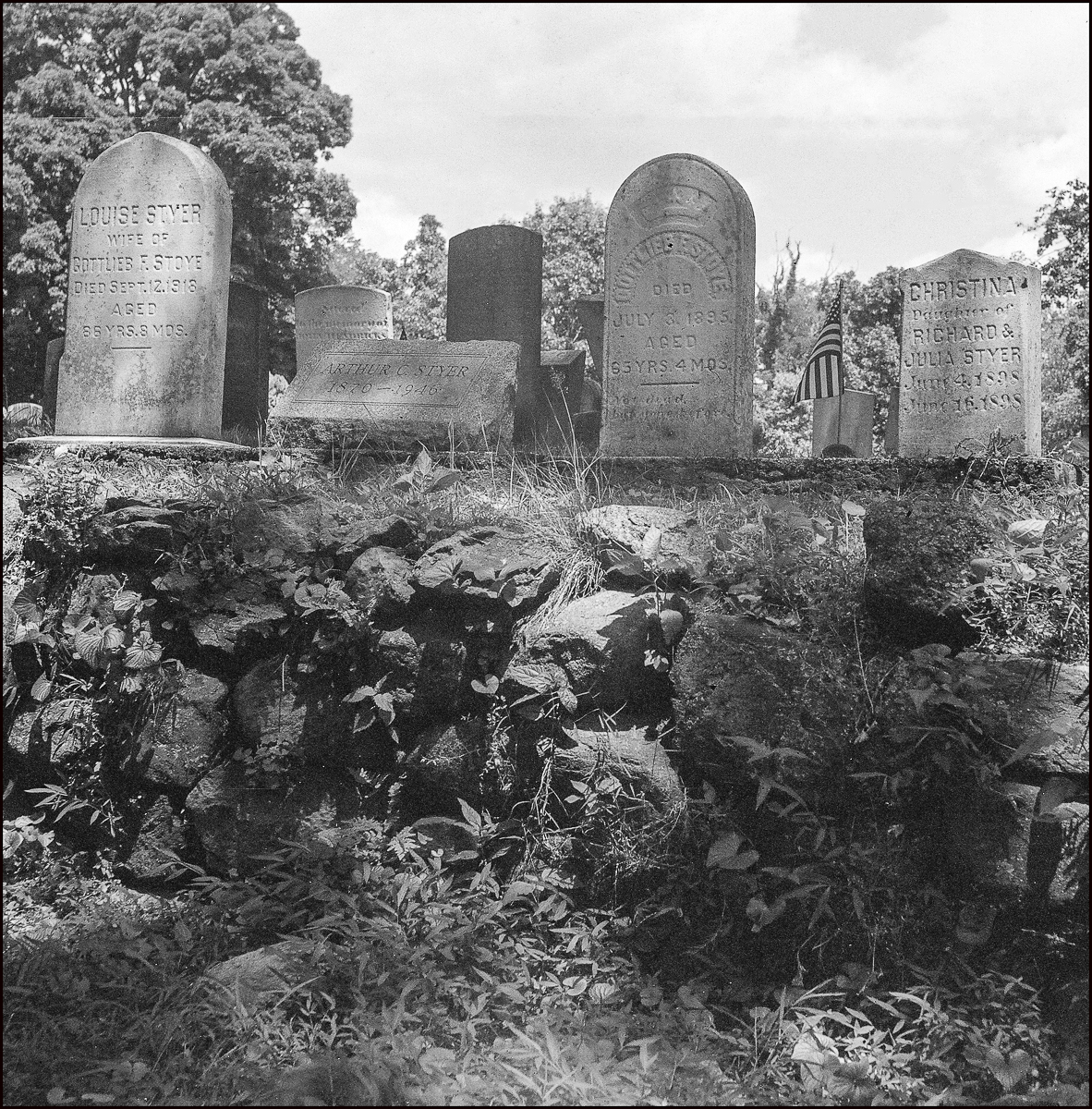
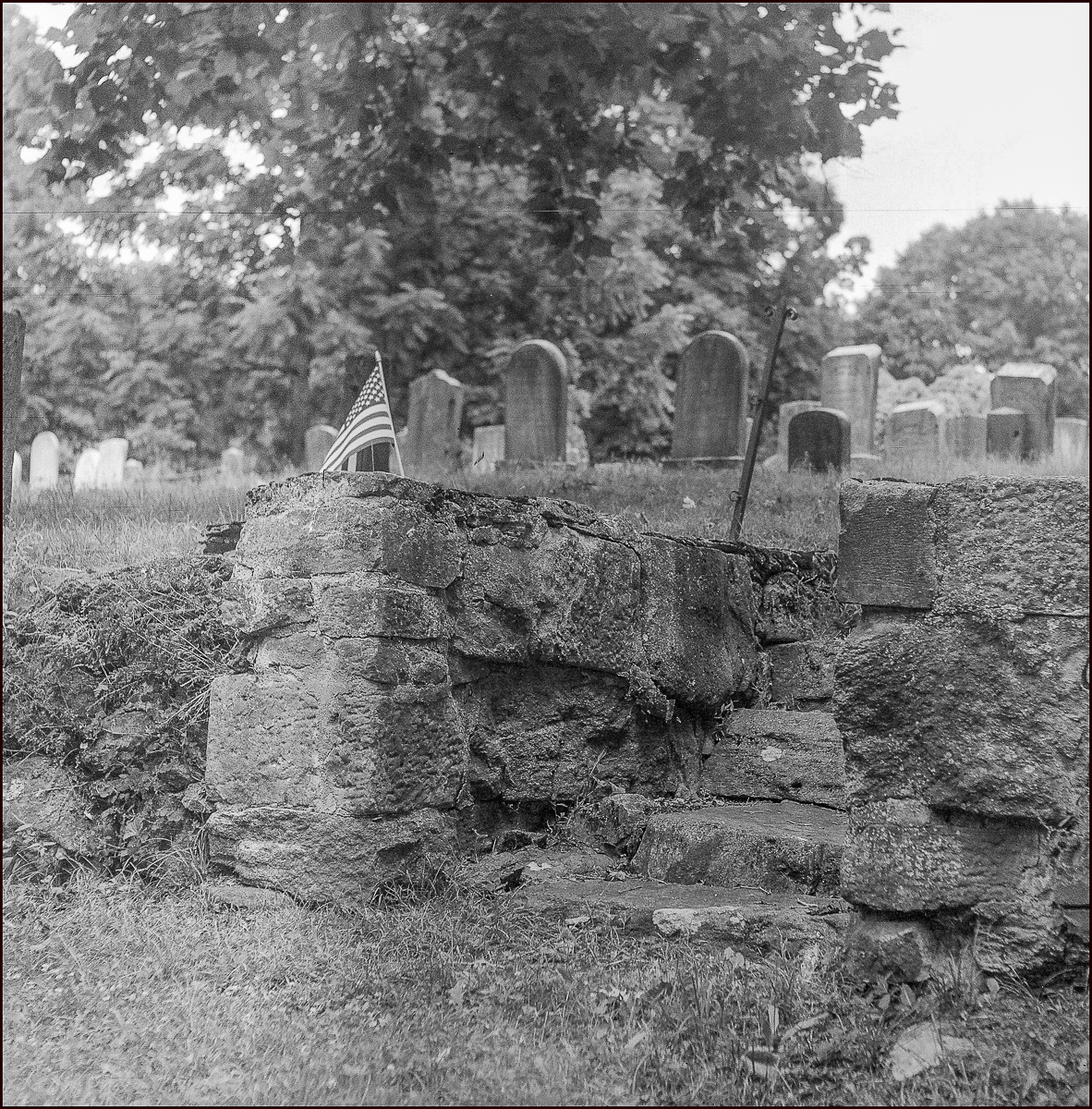
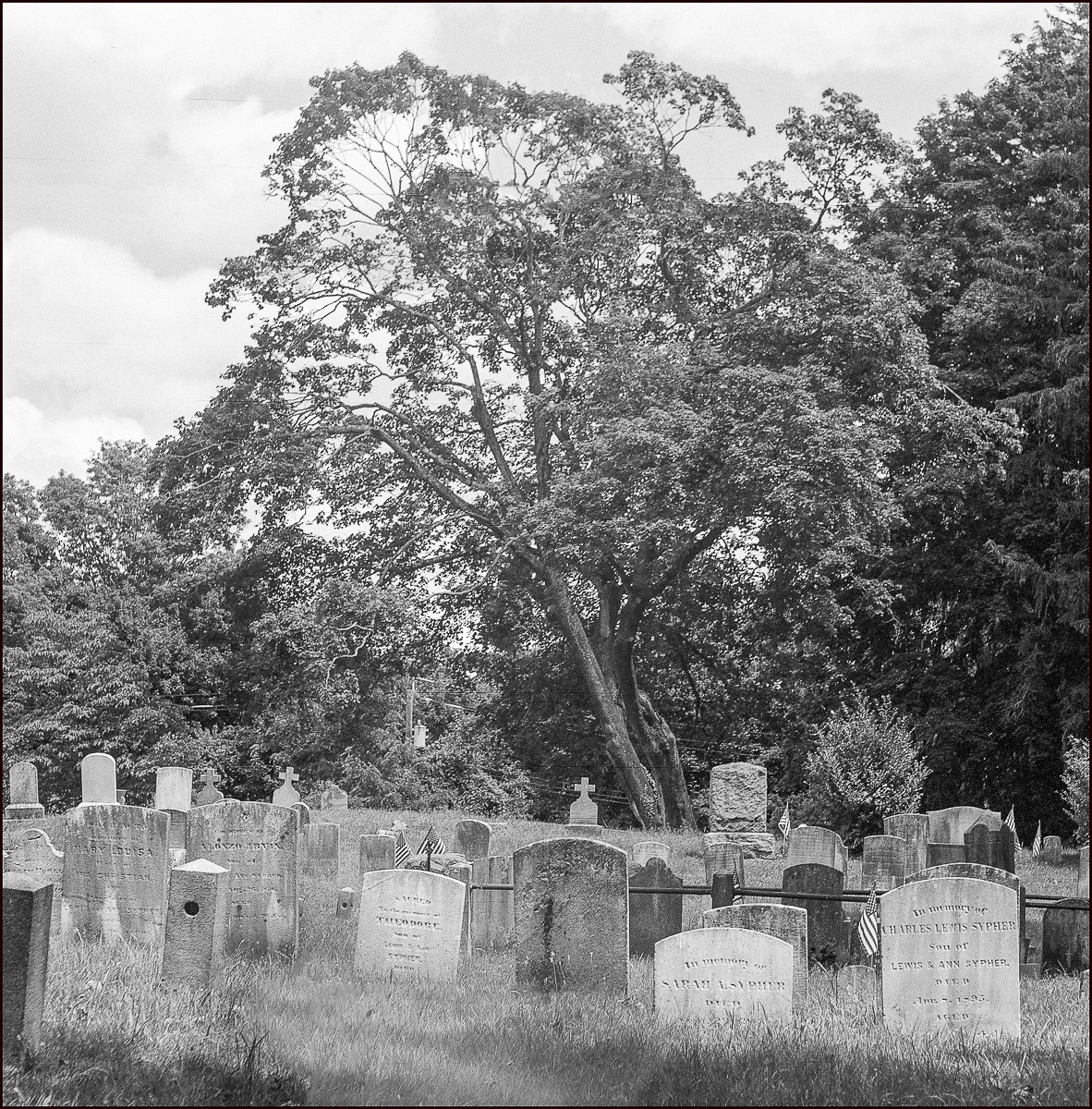
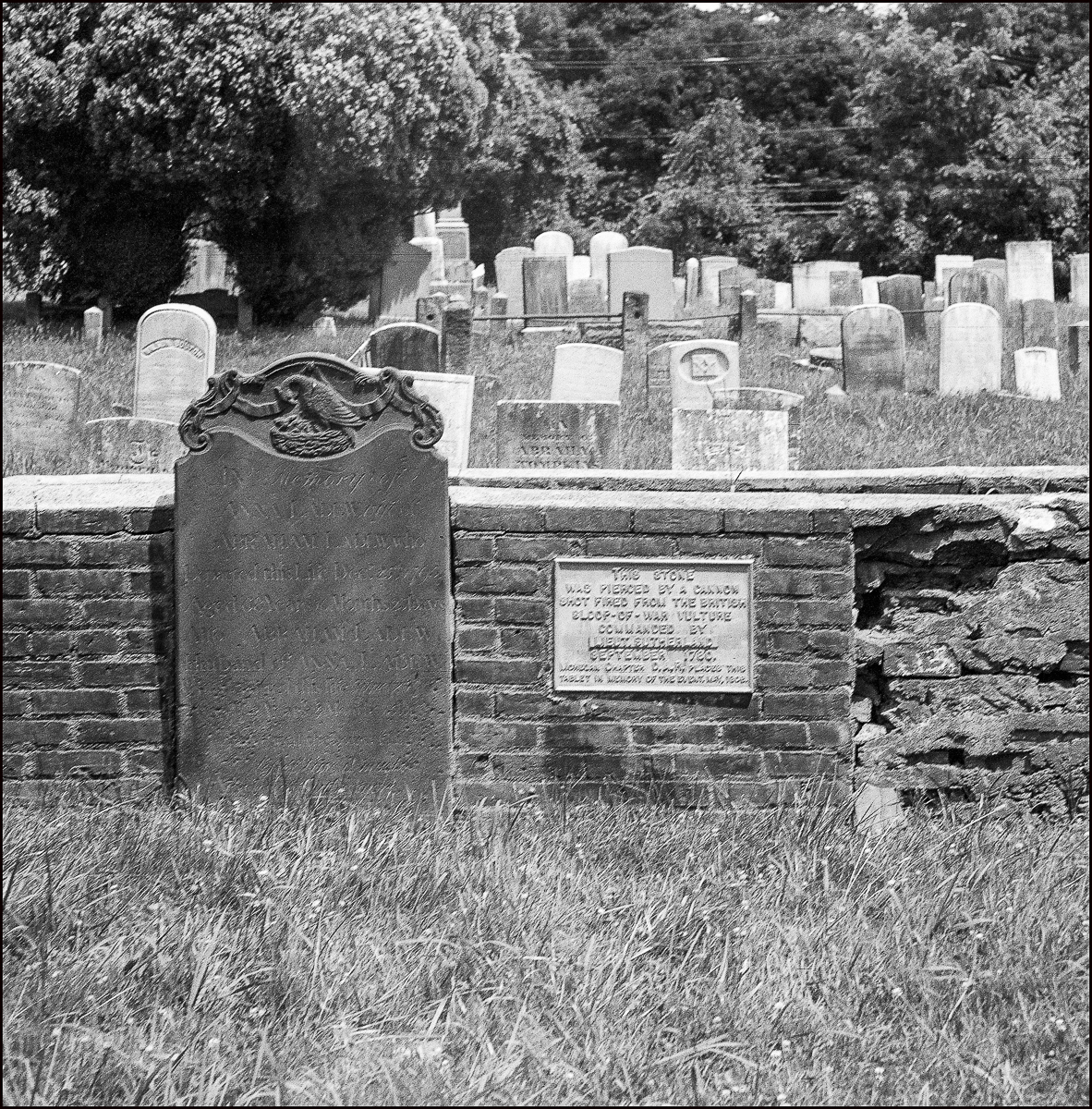
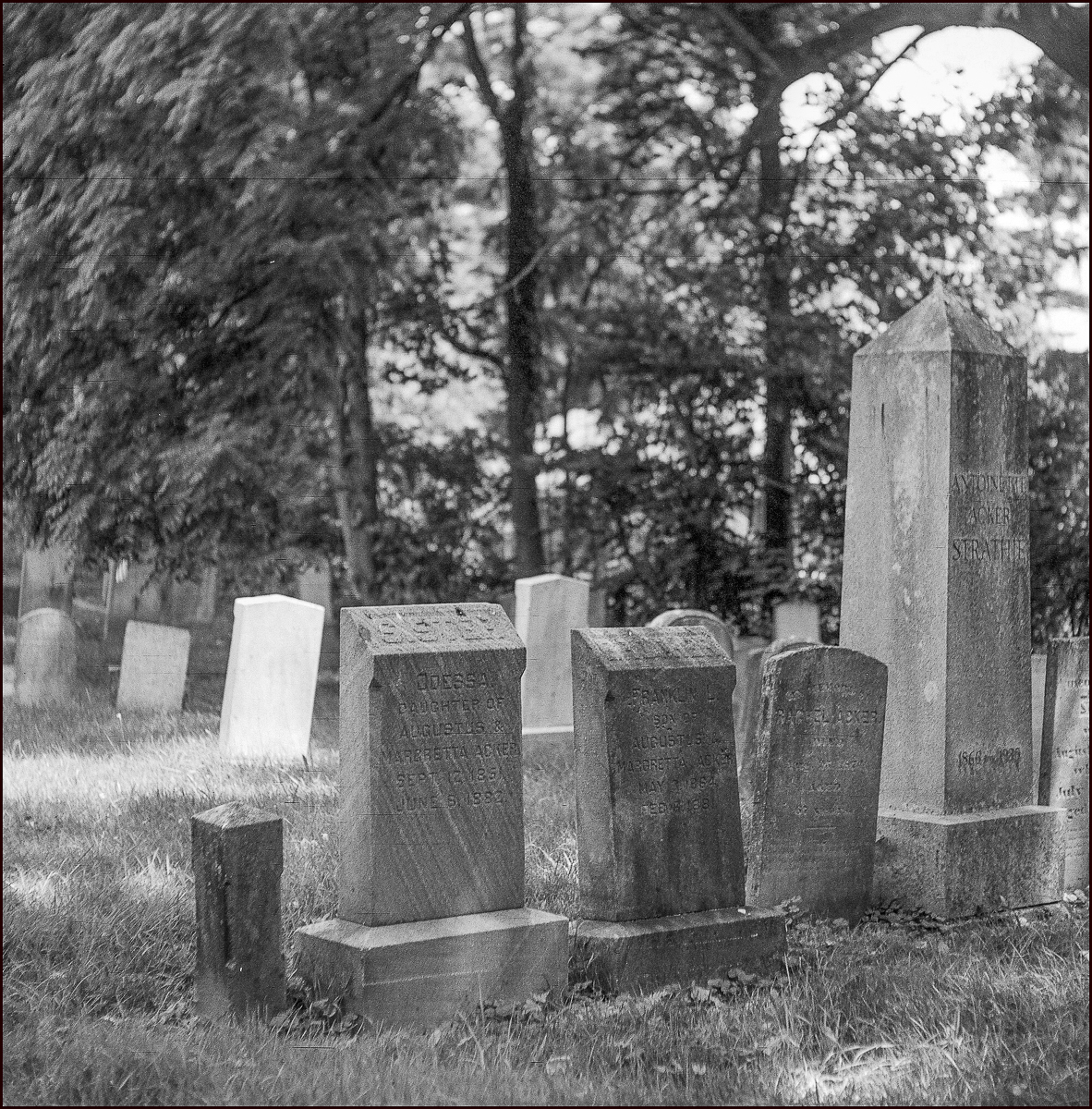
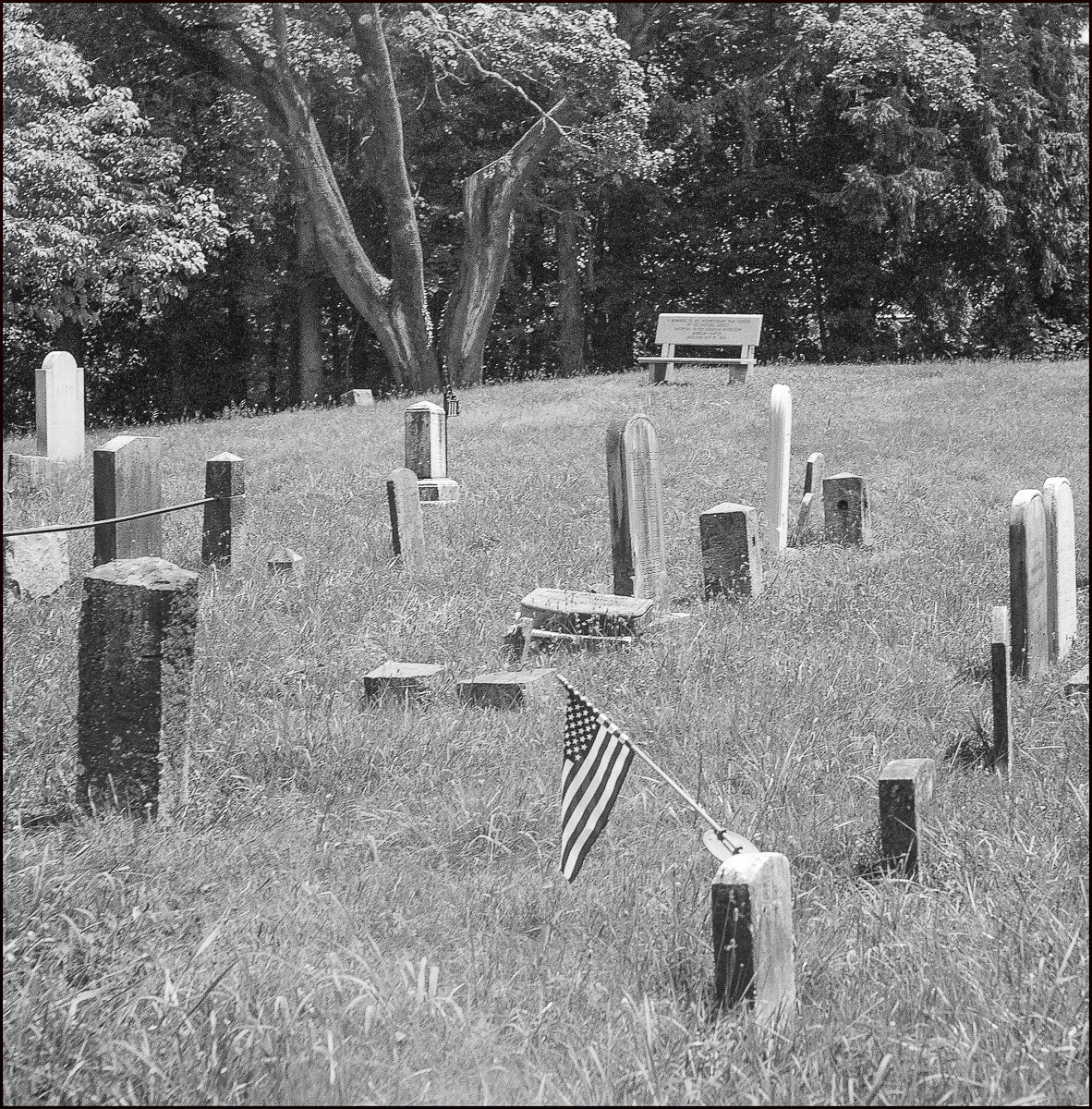
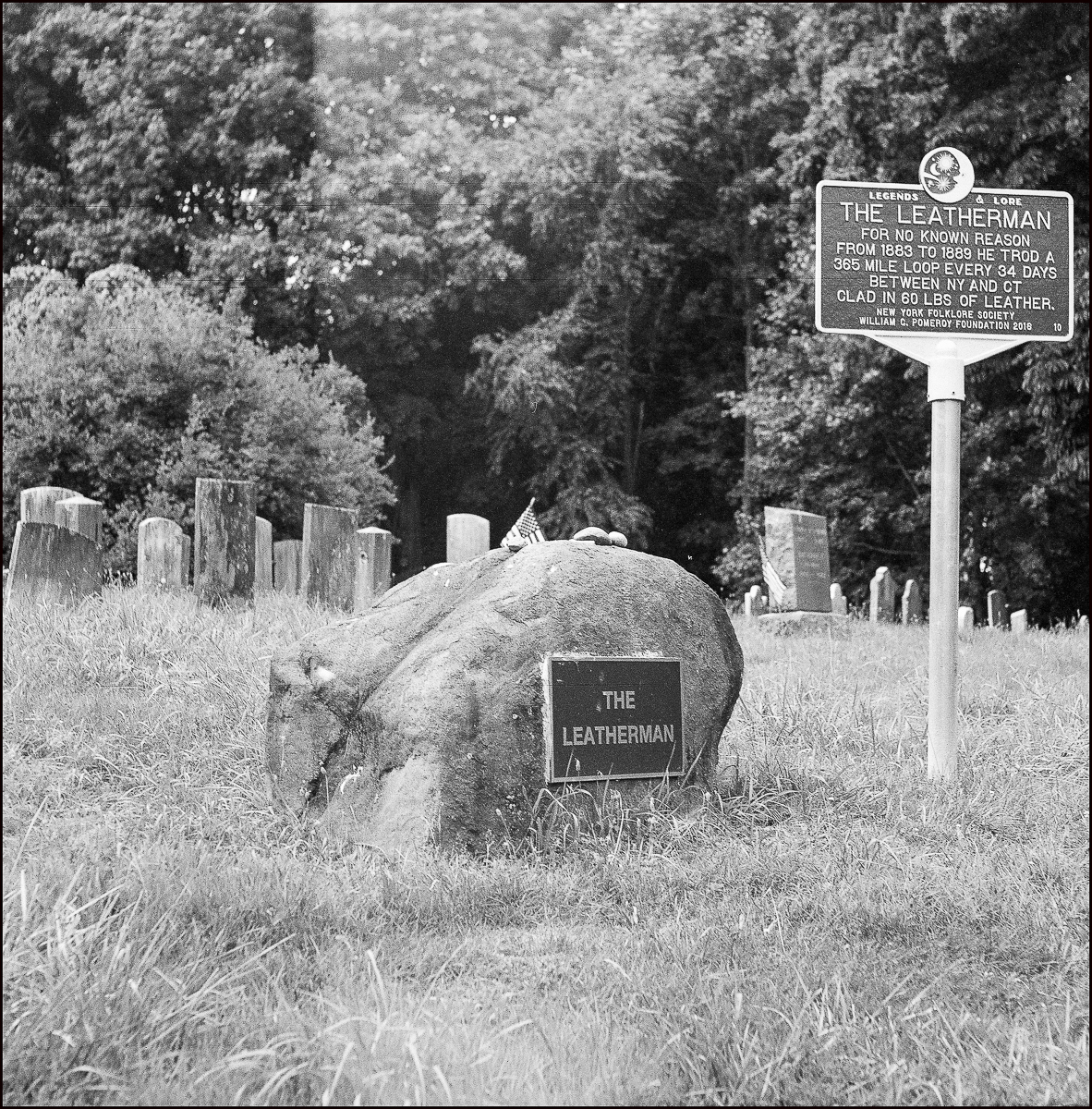
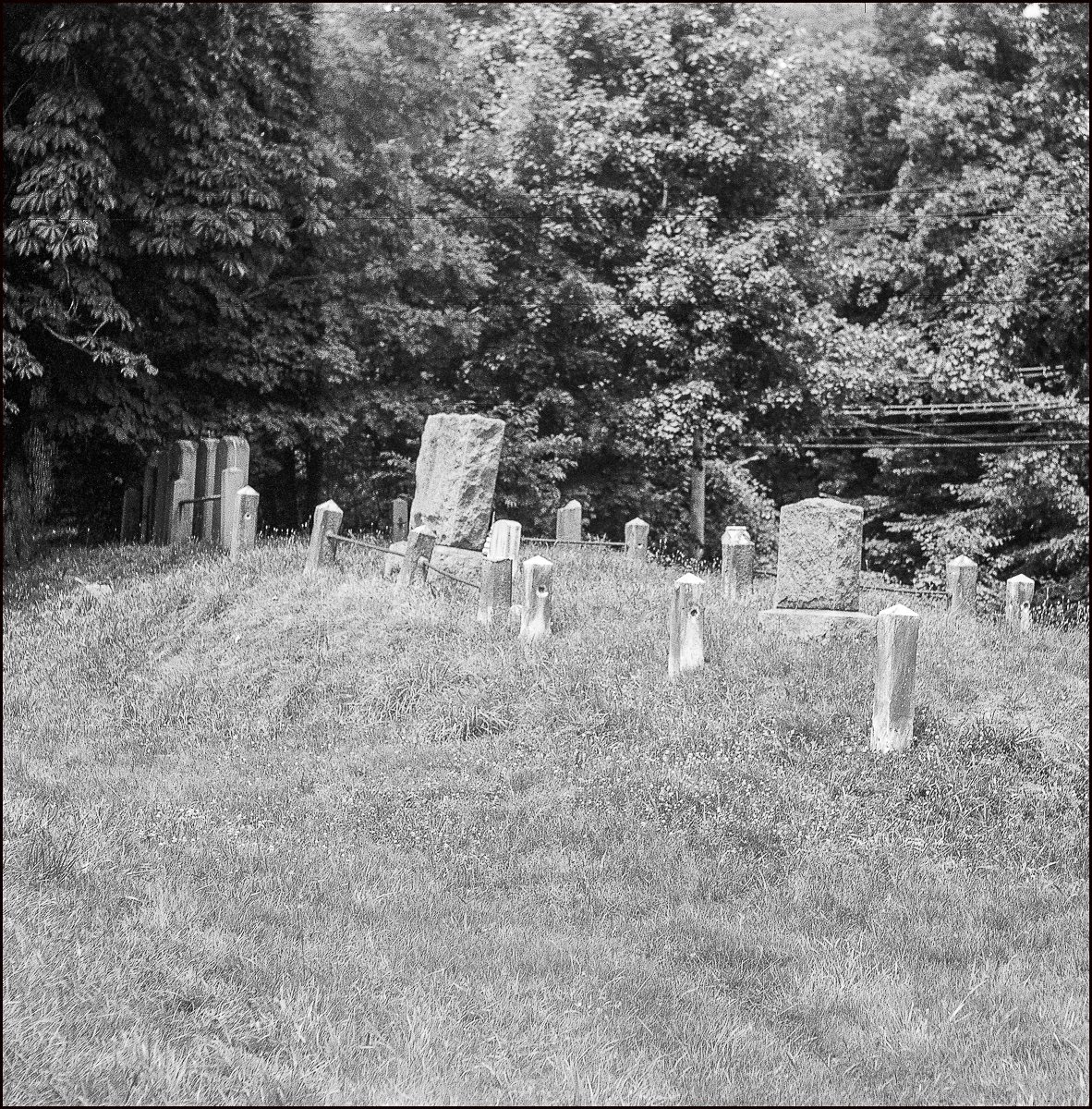
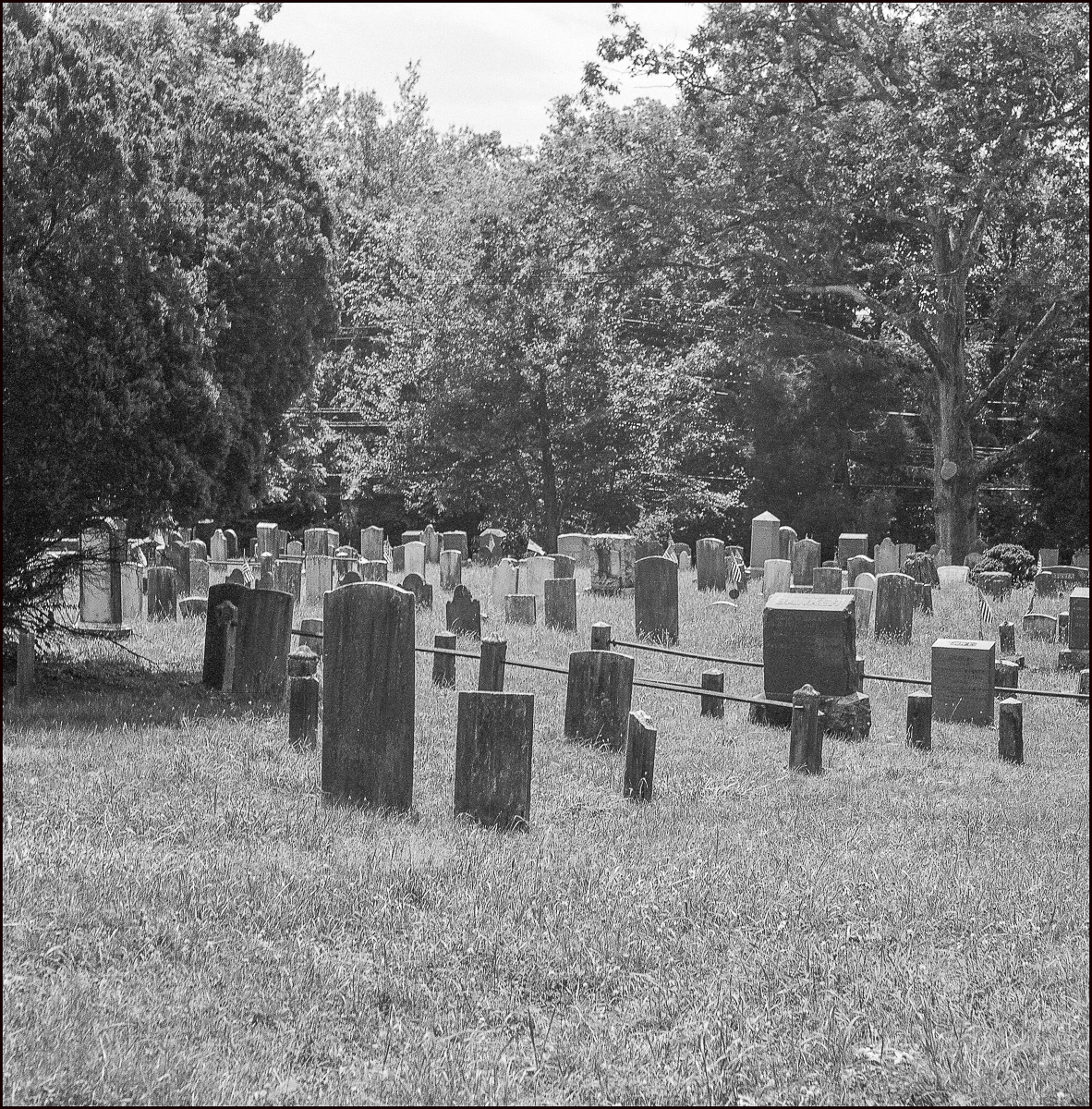
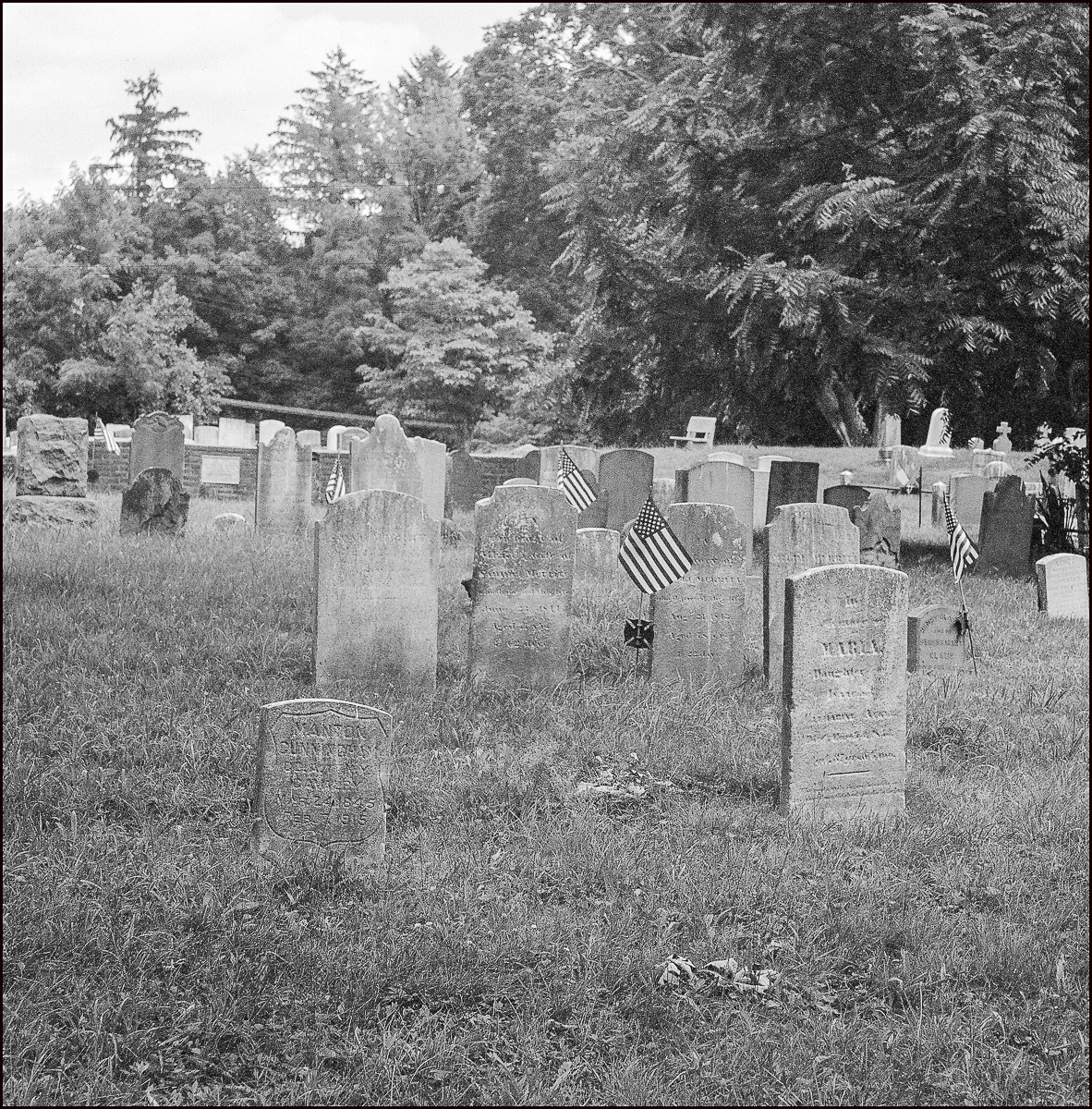
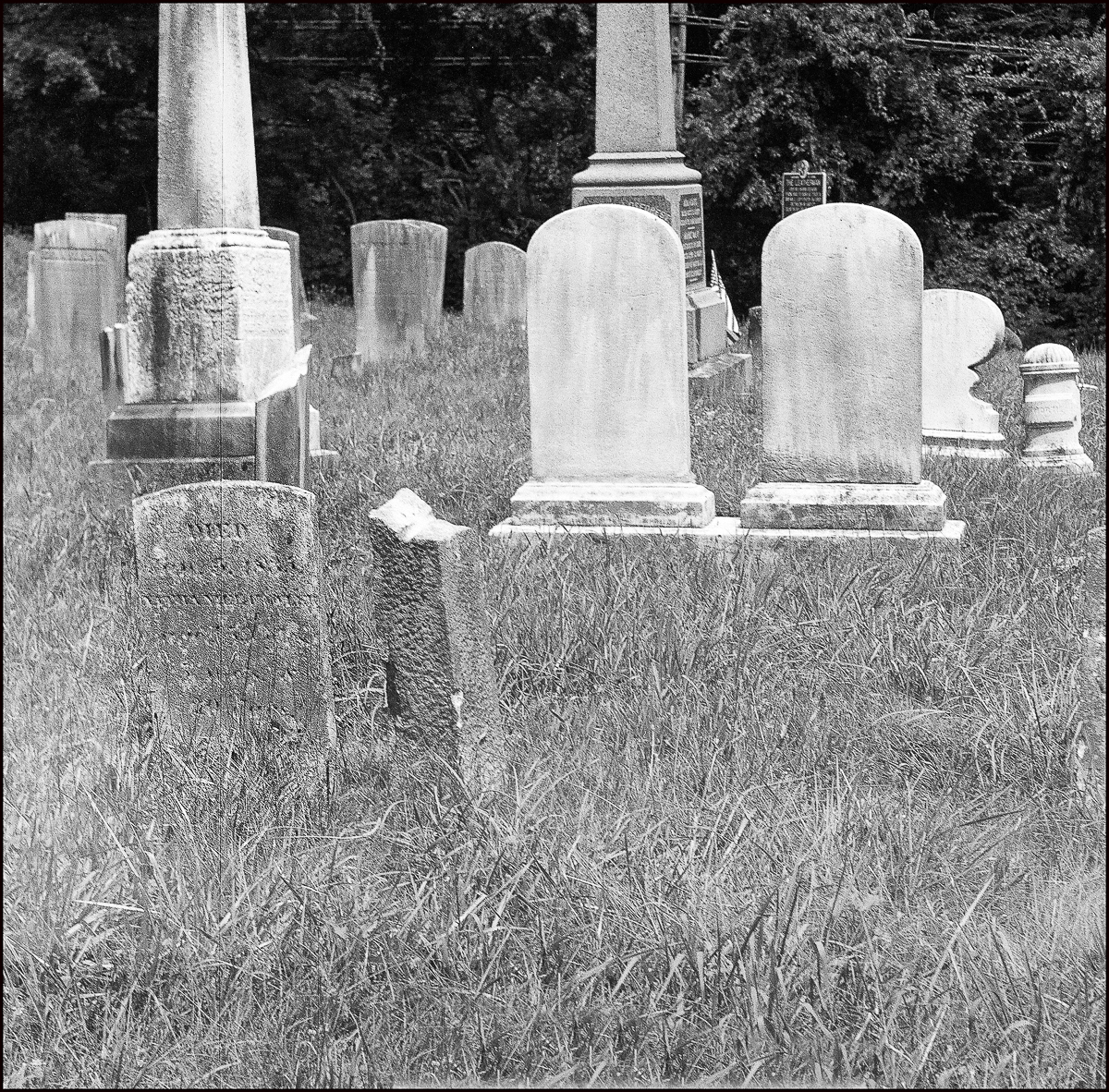
I decided to walk down to nearby Sparta Cemetery to take the pictures. Generally speaking I was satisfied with the results. I only lost one frame, the very first one on the roll. I had loaded the camera some time ago and I knew when I came to use it that I’d lost that first frame, but I can’t remember why. The other 11 frames were decently exposed despite the fact that I couldn’t remember what film I’d put in the camera. I figured that it would be either ISO 100 or ISO 400 and decided to expose at ISO 200. It turned out that it was Kodak T-Max 100 but I guess there’s enough exposure latitude that even though I was one stop off it didn’t cause much of a problem. Focusing using the small rangefinder window was difficult, but the rangefinder seemed to work well.

There were a couple of issues with the camera, however. First, there were some scratches on some of the negatives. Nothing too drastic but still…There was also a slight light leak on some of the frames. But not all, which made me wonder if it was instead flare or some kind of reflection from something I was carrying. Again nothing too serious.

The worst thing about using this camera was definitely it’s ergonomics. I find it very difficult to hold. I just didn’t know where to put my hands. The focusing rings are right at the front of the bellows requiring me to hold the camera with one hand (already difficult for me) and try to focus using the other one. I suspect that the camera was designed to be used on a tripod, where with both hands free such adjustments would have been easier. The camera has separate viewfinder and rangefinder windows, which I suppose is about par for the course in cameras from this period. The rangefinder is particularly “squinty”. It works, but it’s hardly a pleasurable experience. I found framing subjects accurately using the viewfinder to be difficult, at least in 6×6 format (although when I used the camera before in 6×9 format I don’t recall that this was a problem.

I also find that I don’t instinctively relate to the 6×6 format – at least not at the moment. Maybe with more practice I could get more comfortable with it.

So at the end of the day I don’t see me using this camera very much. I could fix or live with the scratches and the light leak/flare, but I just don’t enjoy using it. So my quest to find a medium format camera that I would really enjoy using continues.


Film Camera 2022 – 1 Moskva 5

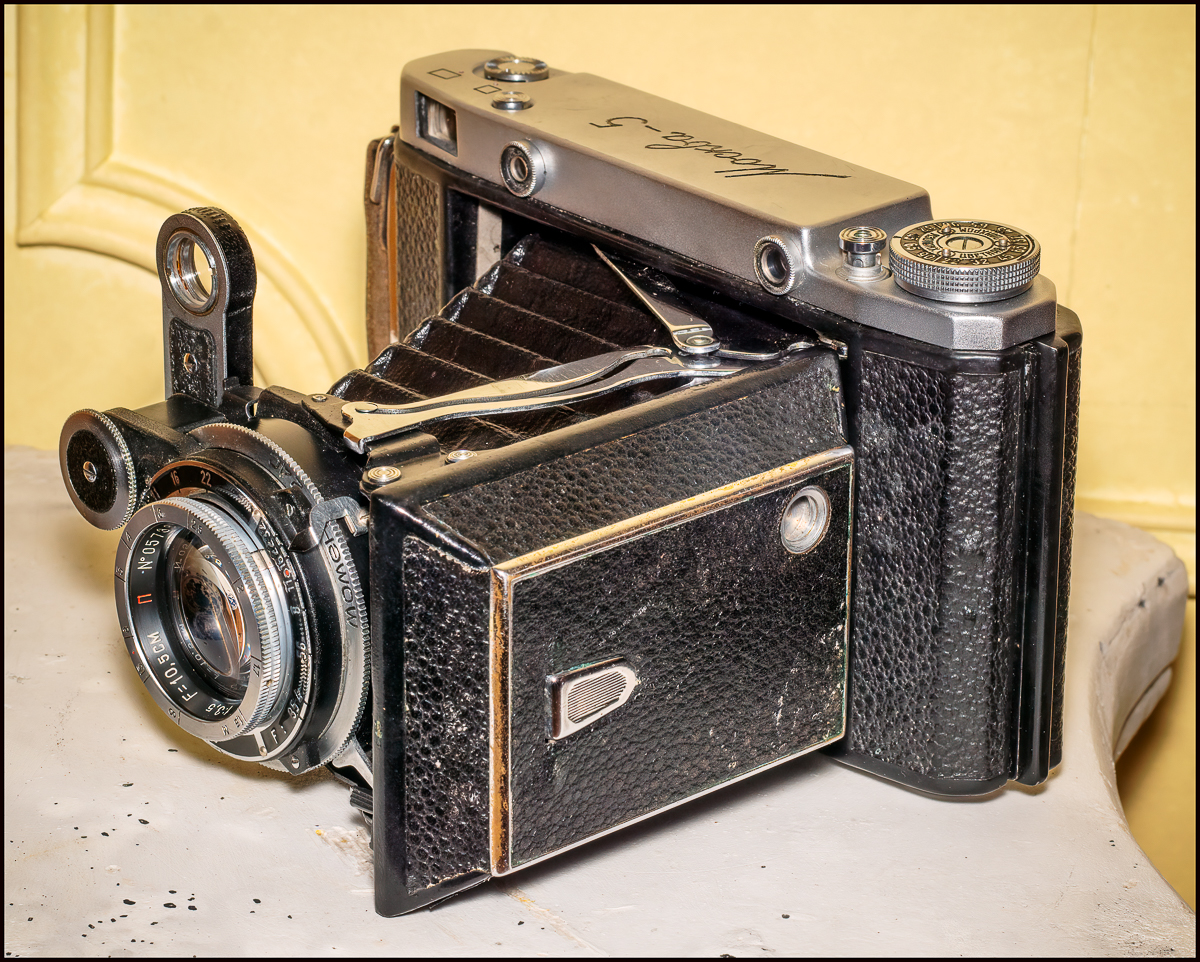
I haven’t done any film photography for quite some time so I thought I’d start again. The camera I chose was the Moskva 5.

According to Camerapedia:

The Moskva-5 (MOCKBA-5 in cyrillic) is a medium format rangefinder folding camera made by KMZ and produced between 1956-60.

Its main difference from Moskva-4 is added selftimer.

Earlier models of the Moskva were copies of the Zeiss Ikon Super Ikonta C. Unlike earlier models, this model is a Zeiss Super Ikonta adapted form, rather than a clone and unlike the Super Ikonta, its solid top plate has a built-in rangefinder and a dual-format viewfinder. Moskva-5 is the latest model in a series of cameras Moskva brand. Main difference from Moskva-4 is added self timer. The Moskva-5 was undoubtedly designed as an expensive professional camera, and not as an amateur model. It was built in an age (1956–1960) when 35mm photography was already suppressing 120-film, and only professionals still insisted on using the larger format. Its dual-format characteristics, rangefinder and excellent lens and finish indicate professional use also. Apparently these cameras were used until very late (the 1980’s?) by Moscow street photographers.

There are 2 types and 2 sub-types of the Moskva-5.

The back of the camera showing the year of production (1958), two red windows for 6×6 and 6×9 numbering, the rangefinder window (left) and the separate viewfinder window (right). The symbol to the left of the serial number is the Krasnogorsk company logo.

Dual Format

Super Ikontas were made either for the 6×9 or 6×4.5 format. The Moskva-5 is a 6×6 and 6×9 camera. Since it has a fixed 105mm Industar lens, at 6×6 you have a mild tele at your disposal. To use the 6×6 size, you need to set the viewfinder to the square format. there is a lever to select the right window so you can see the numbering on the film back. The pressure plate does not need to be removed. The 6×9 red window is now blocked, so there’s no room for confusion.

As a last step, the 6×6 mask has to be inserted. The camera locks right into its holes. Close the camera and you’re ready to shoot.

Operation

The Moment 24c is a leaf shutter with speeds of B, 1 to 1/250s. To fire it, the film needs to be transported or the release button will be blocked, indicated by a red window on the top plate. The shutter isn’t set by advancing the film; it has to be cocked at the lens by a lever. To take a picture, press the button on the left of the camera top. The button on the right is for unlocking the front plate when the camera is collapsed. Before folding the camera, you shouldn’t forget to push down the lever with the glass window.

Specifications

Lens: Industar-24 (И-24) 110mm f/3.5 four elements in three groups
Aperture: f/3.5 – f/32 setting: lever and scale on the lens
Focus range: 1.5-15m + inf
Focusing: by a thumb lever, fixed onto the lens-shutter barrel plate,rotates wedge-shaped prisms in its window, turning the knob to focus rotates the glass, thus adjusts the rangefinder images that must be matched, the rangefinder window on the middle of the top plate sees this prisms apparatus window directly, (prisms assembly is rotatable 180 degrees to the right for the bellows closing) with no mechanical linkage between the lens and the body. Focusing is possibleby directly rotating the front lens element also.
Shutter: Moment-24S (Mомент-24C) leaf shutter, speeds 1-1/250 +B; setting ring and scale on the lens-shutter barrel
Cocking lever: on the lens-shutter barrel, not depends the winding
Shutter release: left side of the top plate, beside the winding knob, releasing is also possible by a knob on the right front side of the struts. To fire the shutter, the film needs to be transported, if not, the release button will be blocked, a double exposure locking mechanismindicated by a small window beside the winding knob, before winding it is white and the shutter release is blocked and after winding it is red and shutter release works
Winding knob: left side of the top plate
Viewfinder:coupled rangefinder and dual-format separate viewfinder for larger field of view, separate windows and eye-pieces. The two rangefinder windows are 6.5 cm apart (very long) for accurate focusing. Frame view changes according to the frame size adjustment lever that points the engravings, a square (6×6) and a rectangle (6×9), on the right of the top plate, this thumb lever moves a sliding frame in the viewfinder
Memory dial: on the winding knob, you can set three film types, and with each film type, four film speeds : (in cyrilic) Tsvetnaya (colour film): 22, 32, 45, 65 GOST, Panchrom (b/w film): 32, 45, 65, 90, Izopanch (b/w film): 32, 45, 65, 90
Bellows opening button: on the right of the top plate; closing: simultaneously pressing to the two struts’ back arms
Flash PC socket: X sync, on the shutter
Self timer: knob on top of the shutter
Back cover: removable, a lever in it for controlling 6×6 and 6×9 frame red window’s lids, opens by a latch on the right side of the camera
Two red window on the back cover w/ built in lids, right lower side one is for 6×9
Engravings in the back cover: Сделано в СССР (Sdelano v SSSR = Made in USSR)
Engravings on the top plate: Mockba -5 (hand writing style), and on the back of the top plate: KMZ logo and the serial number
Serial no. the first two digit show the production year
Leather hand grip
Two tripod sockets, 3/8″, on the bottom plate and on the front cover
Body: made by injection molding, weight: 867g

According to the serial number this particular camera was made in 1957, which makes it nearly as old as I am. I used it once before, but because of my lack of familiarity with the camera I messed everything up (See: Film Camera 2019/10 Moskva 5 – Results for the whole sorry story). On that occasion I used the camera in 6×9 format. This time I decided to try it in 6×6 format.

For a more thorough review see here.