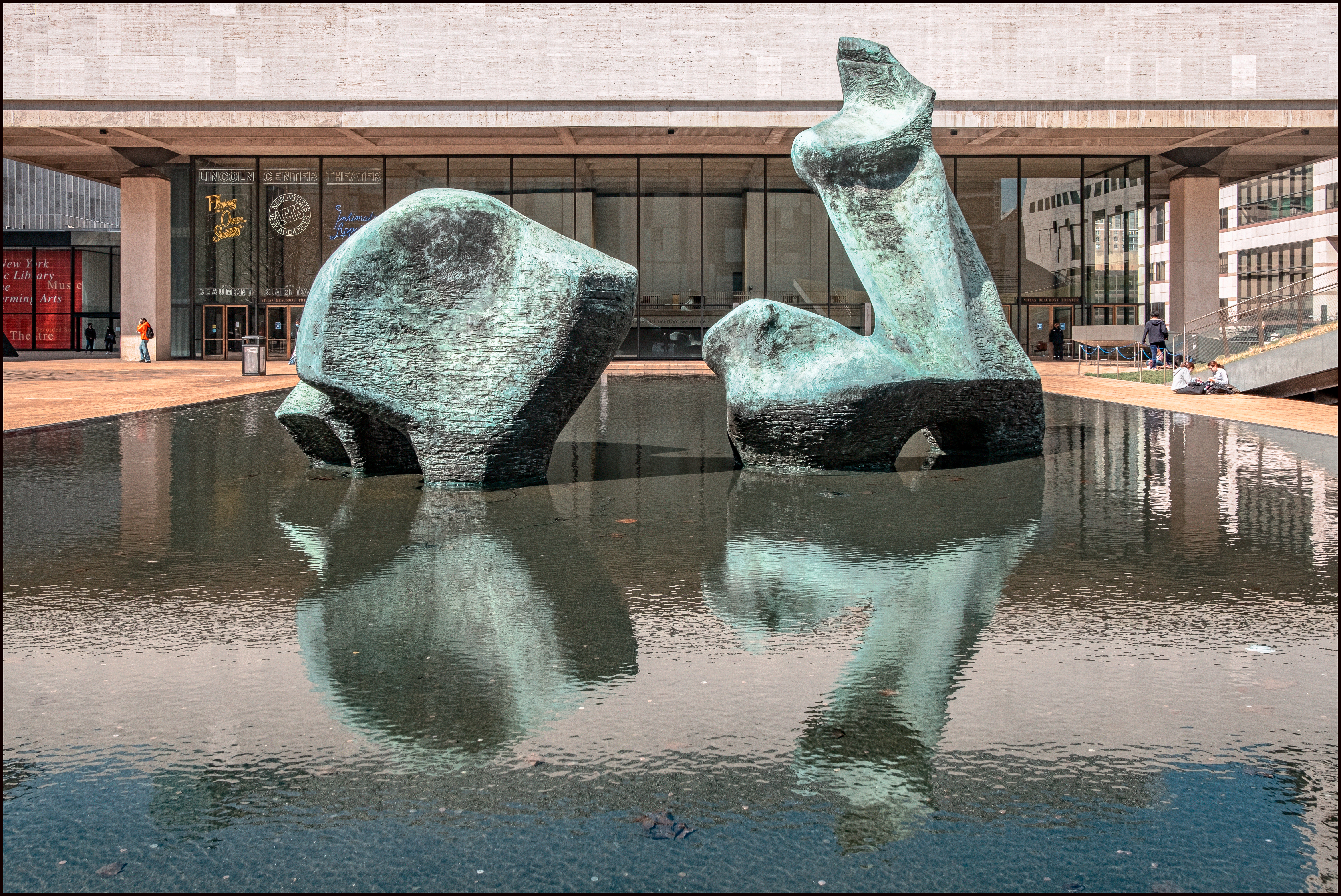
In New York City – Lincoln Center – Reclining Figure

“Reclining Figure” 1963–5 (LH 519) is a statue by Henry Moore. The original two-part bronze statue of a human figure was commissioned for the Lincoln Center for the Performing Arts in New York City, where it has been displayed outdoors since 1965 in a pool of water to the north of the new Metropolitan Opera House. Other copies in plaster or bronze exist, and are displayed in other cities.

Taken with a Fuji X-E1 and Fuji XC 16-50mm f3.5-5.6 OSS II

In New York City – Lincoln Center – Constellation of Voices

“Constellation of Voices” by George Condo, a golden sculpture that somehow evokes deities, lowly human performers and the anxiety of life in 2019 simultaneously. The figure, which resembles a head that’s been deformed by conflicting desires, is also pockmarked and pitted as though it’s been riddled with projectiles. There’s a distinct majesty to it too. “I took it out of the realm of gods and wanted it to echo the feeling of our time, with this idea of a constellation of voices—when so many people have taken to the streets and want to be heard,” Condo told the New York Times.

Taken with a Fuji X-E1 and Fuji XC 16-50mm f3.5-5.6 OSS II

In New York City – Lincoln Center – Guggenheim Bandshell in Damrosch Park

Damrosch Park is a 2.4-acre (0.97 ha) park that includes the Guggenheim Bandshell in New York City at Amsterdam Avenue and West 62nd Street on the south side of the Metropolitan Opera House and west of the David H. Koch Theater at the Lincoln Center for the Performing Arts.

The park is named after the Damrosch family, a family of musicians. Performances take place at the Daniel and Florence Guggenheim Bandshell in the western end of the park above Amsterdam Avenue. The south side has street entrances, and the northeast corner of the park connects directly to the Center’s central plaza.

The park is used for large events such as the Lincoln Center Festival in July, Lincoln Center Out of Doors in August, and the Big Apple Circus October through January. In 2013, local residents who felt that these events are inconsistent with the park’s status as a park sued to keep the park available to the public year-round. In response to the May 2013 complaint, the city of New York and Lincoln Center evicted the invitation-only, twice-yearly New York Fashion Week the following year.

Taken with a Fuji X-E1 and Fuji XC 16-50mm f3.5-5.6 OSS II

In New York City – Lincoln Center – The David H. Koch Theater

The David H. Koch Theater is a theater for ballet, modern and other forms of dance. Originally named the New York State Theater, the venue has been home to the New York City Ballet since its opening in 1964, the secondary venue for the American Ballet Theatre in the fall, and served as home to the New York City Opera from 1964 to 2011. The theater occupies the south side of the main plaza of Lincoln Center, opposite David Geffen Hall.

Taken with a Fuji X-E1 and Fuji XC 16-50mm f3.5-5.6 OSS II
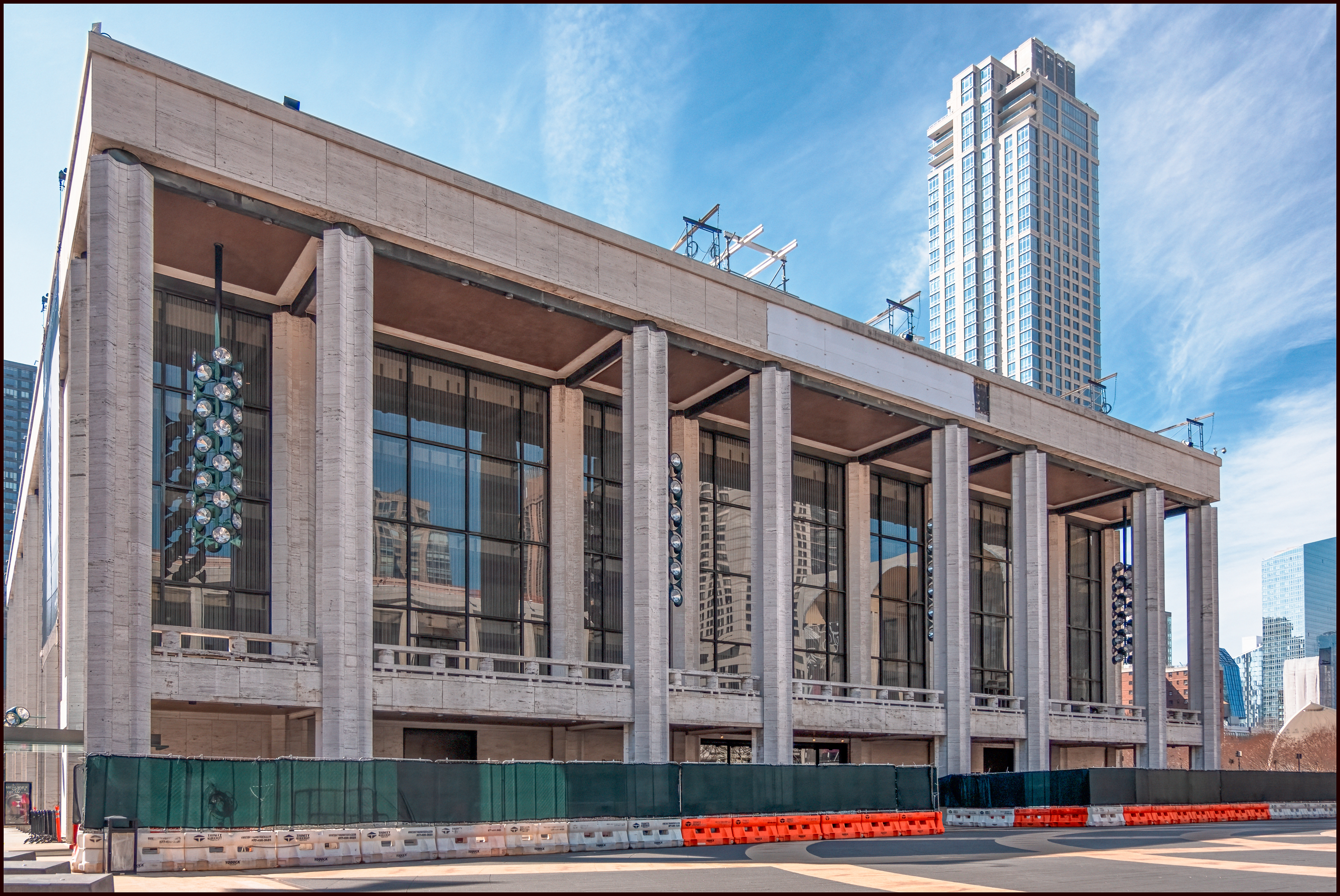
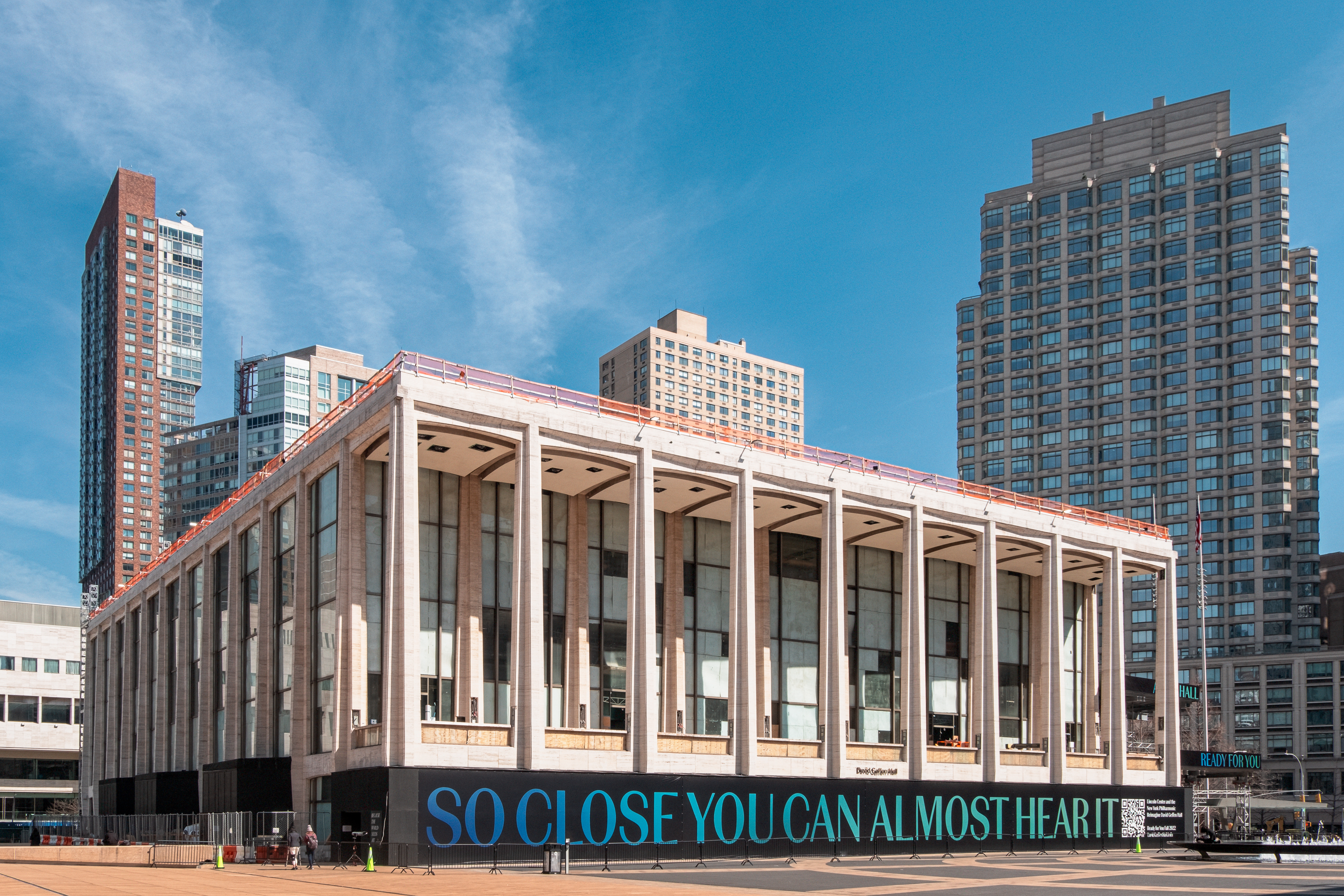
In New York City – Lincoln Center – The David Geffen Hall

The David Geffen Hall is a concert hall in New York City’s Lincoln Center for the Performing Arts complex on Manhattan’s Upper West Side. The 2,738-seat auditorium opened in 1962, and is the home of the New York Philharmonic.

The facility, designed by Max Abramovitz, was originally named Philharmonic Hall and was renamed Avery Fisher Hall in honor of philanthropist Avery Fisher, who donated $10.5 million ($61 million today) to the orchestra in 1973. In November 2014, Lincoln Center officials announced Fisher’s name would be removed from the Hall so that naming rights could be sold to the highest bidder as part of a $500 million fund-raising campaign to refurbish the Hall. In 2015, the Hall acquired its present name after David Geffen donated $100 million to the Lincoln Center.

Taken with a Fuji X-E1 and Fuji XC 16-50mm f3.5-5.6 OSS II