A Visit to Kingston, NY – Esopus Lighthouse


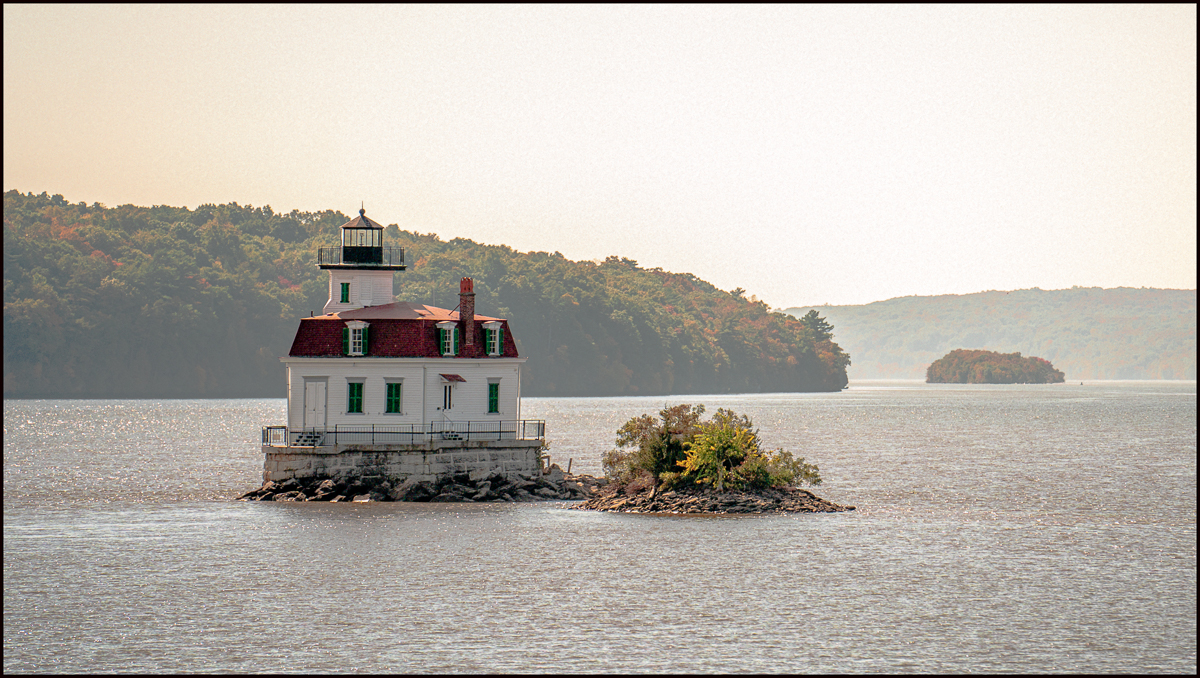
“The Esopus Meadows Lighthouse is one of the most picturesque and the only surviving wooden lighthouse on the Hudson River. Nicknamed the “Maid of the Meadows,” it was built on the edge of the mud flats south of Port Ewen, where cattle once grazed. Rising sea levels have brought the levels of the tidal Hudson up as well. (Today the submerged flats are covered with thick beds of water chestnuts sheltering young striped bass and other fish, but remain a nautical risk.) On March 3, 1837 Congress provided $3,000 (originally approved in 1831) followed by an additional $3,000 on July 7, 1838 to complete the original Esopus lighthouse, a 34 by 20-foot stone house with an octagonal tower, built on a forty-one by fifty feet angular pier. The land was purchased from George Terpenning for a dollar. Four lamps and reflectors produced a fixed light, which were replaced by a sixth-order lens in 1854. A nearly identical lighthouse was also in use at Rondout Creek. Unfortunately, flood tides and ices floes severely weakened the building, making it “unfit for occupancy in the winter” by 1869.

Consequently, on July 15, 1870 Congress authorized $25,000 to build a new lighthouse 100 feet southeast of the old site (coordinates 41°52’6.2”N 73°56’29.8”W, NOAA Chart 12347). Construction, entailing 250 40-foot-long piles driven into the river bed, topped by twelve-inch-square timbers and a round 49-foot in diameter cut granite pier supporting a French Second Empire Style, wood-framed white clapboard exterior with red mansard roof, was completed in 1871. Designed by Vermont architect Albert Dow, the square keeper’s residence contained seven rooms with a kitchen, sitting room, and equipment room on the first floor and three bedrooms and a bathroom on the second floor. A 53-foot high octagonal tower crowned the lighthouse and was originally fitted with a fifth order Fresnel light, flashing white every 2.5 seconds over a 270° arc with a range of 12 nautical miles, beginning on August 26, 1872. An automatic fog bell was added in 1891, but has subsequently been removed. Similar lighthouses are located at Rose Island Light (Newport Harbor), Sabin Point (Providence River), Pomham Rocks Providence River), and Colchester Reef (originally on Lake Champlain now at Shelburne Museum)

​Accessible only by boat, life for a keeper and his family could be very lonely and on occasion even dangerous. Polishing the Fresnel lens and brass reflectors were daily tasks. The keeper also maintained a daily log of weather, significant events, and names and classes of ships passing on the river. In winter, when the river froze, keepers often took part time jobs on shore like ice cutting in the winter months. Manny Resendes was the last civilian light keeper before the Coast Guard took over operations in 1939. The last Coast Guard keepers were there until 1965. David Bennett, was actually stalked (unsuccessfully) over the ice in January of 1961 by a pack of ravenous wild dogs. In 1965 the lighthouse was officially closed, when an automated navigation aid was established on an adjacent metal tower. Eventually the Coast Guard planned to demolish the deteriorating lighthouse, until the Hudson River Valley Commission intervened with an eye towards preservation. Boards were placed over the windows and painted to look like curtains, including a black cat in an eastern window. On May 29, 1979 the Esopus Meadows Lighthouse achieved recognition by the US National Register of Historic Places.

​In 1990 the Save Esopus Lighthouse Commission (SELC), under the direction of Arline Fitzpatrick (niece of Manny Resendes) and a number of dedicated volunteers leased the lighthouse from the United States Coast Guard to begin restoration. Having sustained major damage from vandals, flood tides, ice, and an occasional barge collision had eventually tilted the lighthouse on the deep (east) side of its granite foundation by 18 inches. The interior was cleaned, the exterior was repainted and the windows and roof were replaced. In 1997 SELC was reorganized under the leadership of Pat Ralston to continue these efforts. (It is safe to say that without the efforts of Pat, Esopus Meadows would not be standing today. She was instrumental in fighting for the right to carry on the restoration efforts when the General Services Administration wanted to pull the lease. She battled state and local naysayers who thought a woman couldn’t do it. She proved them wrong.) Large I-beams resting on hydraulic jacks were finally installed beneath the lighthouse in 2000, successfully leveling the building. A meticulous renovation has successively been completed, including recapping and repointing the stone pier, replastering the interior and repainting the interior and exterior, adding indoor trim work, refinishing interior doors, replacing missing shutters, rebuilding and restoring the staircase with polyurethane, installing indoor plumbing in the bathroom, adding period furniture, restoring the tower with a copper floor, and rewiring the lighthouse, installation of an alarm system and generator, battery bank, solar panel, and a new working light. In May, 2010, a floating dock was installed to facilitate the landing of larger tour vessels at the lighthouse.

These many accomplishments were accorded significant public recognition, when in September of 2002 ownership was formally acquire as part of a pilot program of the National Historic Lighthouse Preservation Act of 2000 and on May 31, 2003 the Coast Guard reactivated the light. The Esopus Meadows Lighthouse was recognized as a museum under the New York State Regents in July of 2001 and in September 2002 the lighthouse stewardship was authoritatively granted by the General Services Administration to the newly chartered Esopus Meadows Lighthouse.” (Hudson River Lighthouses)
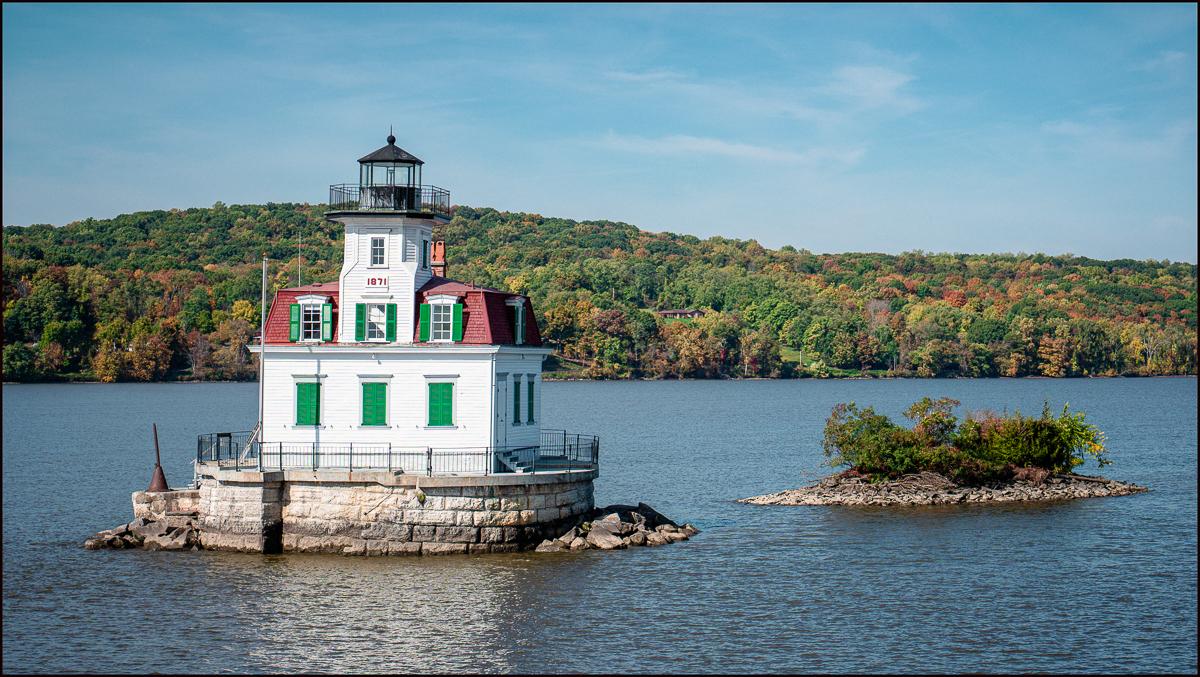
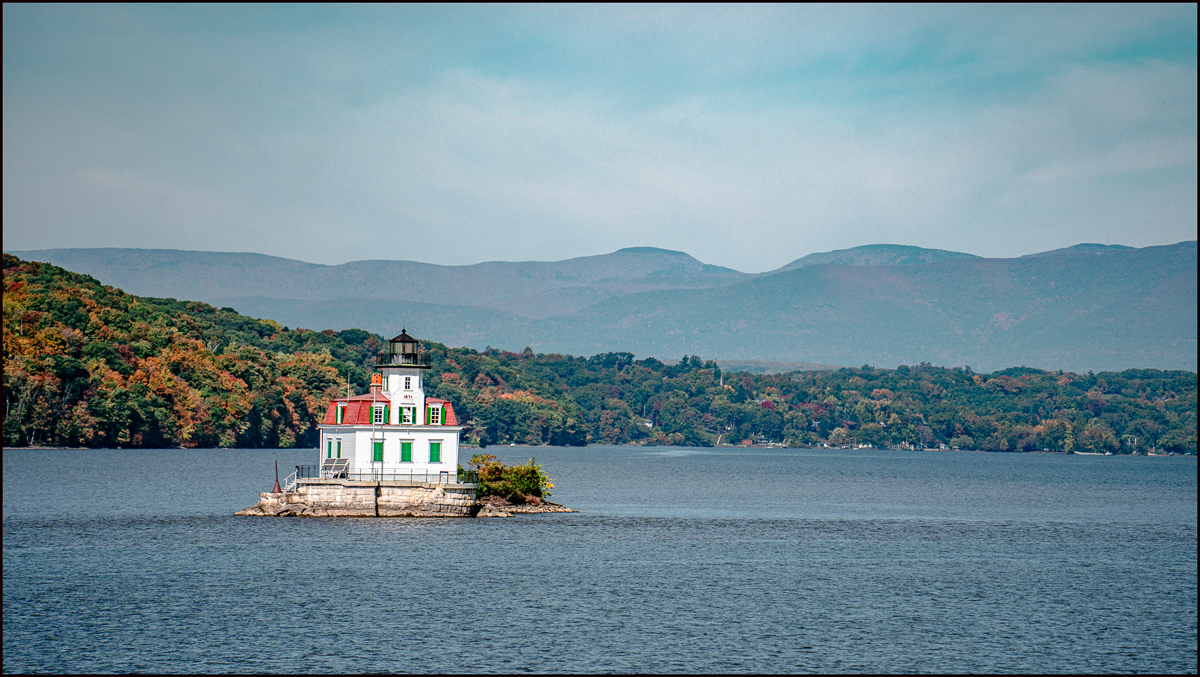

Esopus Lighthouse with the Catskills Mountains in the background.

Taken with a Sony A7IV and Tamron Di III VXD A056SF 70-180mm f2.8.
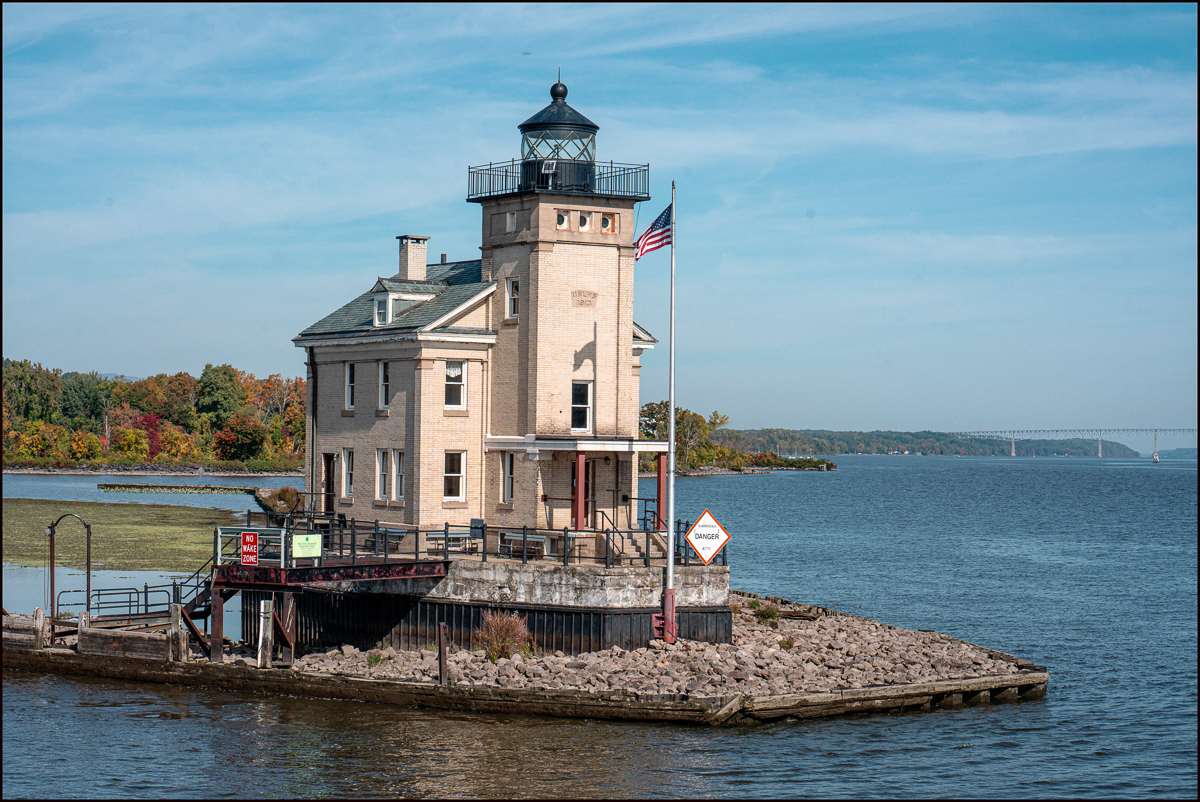
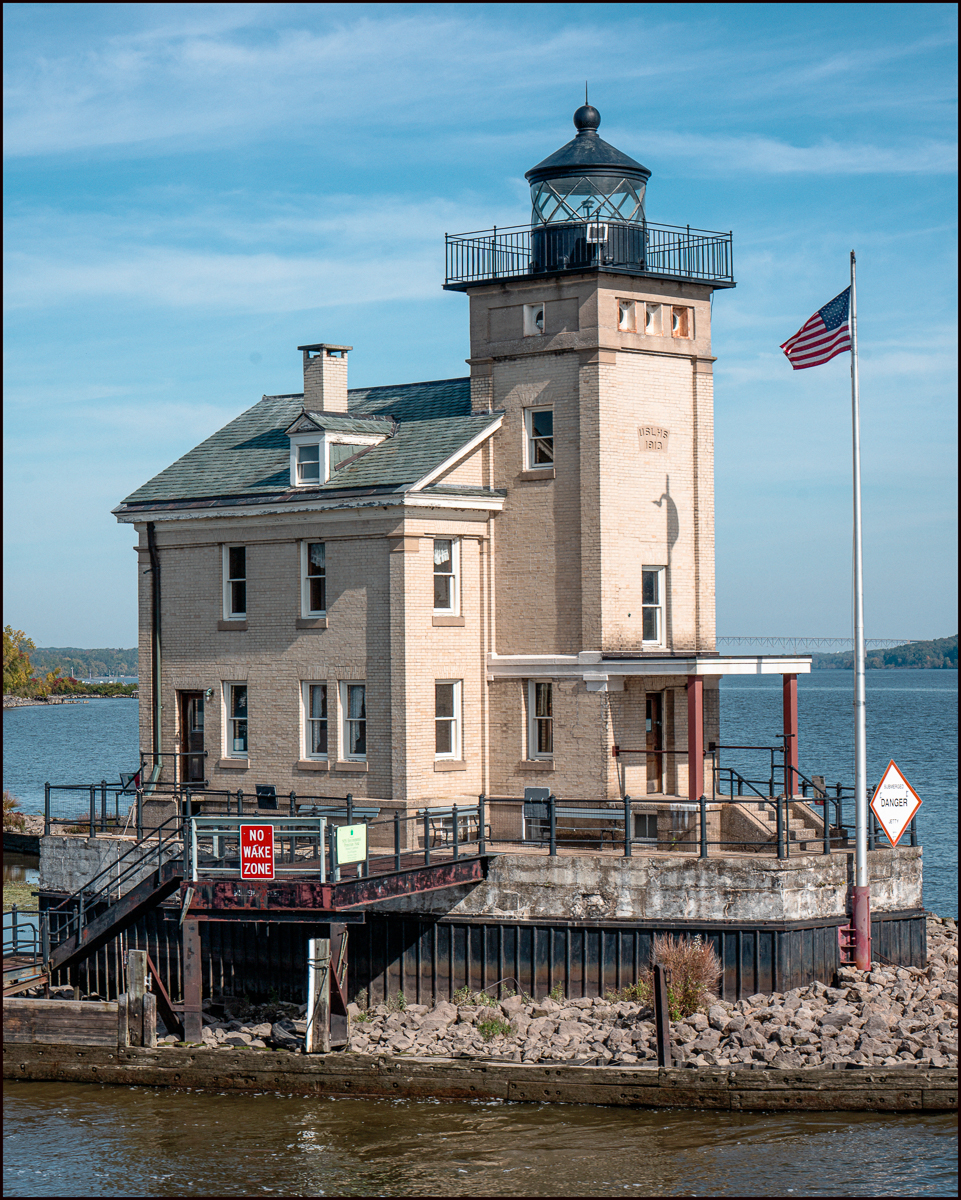
A Visit to Kingston, NY – Rondout Lighthouse

“Built in 1837 by James McEntee, the first Rondout Lighthouse was a direct response to increased traffic on Rondout Creek due to the opening of the Delaware & Hudson Canal in 1828. Built by Maurice and William Wurts to bring coal from eastern Pennsylvania to the Hudson Valley and New York City, the canal terminates at Rondout Creek in Kingston. After it opened, thousands of coal sloops and later towed barges joined the already laden sloops and barges full of bluestone, bricks, cement, and natural ice bound from Kingston to New York City and beyond. The 1837 lighthouse was a two story building made of wood and built near the center of Rondout Creek. Although the exact location of the first Rondout lighthouse is unknown, its wooden structure eventually became unstable, and a new lighthouse was needed.

In 1867 a new Rondout Lighthouse constructed of sturdy bluestone on an enormous stone base was completed on the south side of Rondout Creek off the shores of Sleightsburgh/Port Ewen. This three story stone structure had family living quarters wrapped around a central light tower. Sturdy, comfortable, and very Victorian, just one family lived in this lighthouse for its duration – lighthouse keeper Catherine Murdock (widow of lighthouse keeper George Murdock) and her sons and daughters. Her son James became assistant keeper in 1880 when the addition of breakwater jetties at the mouth of Rondout Creek meant that Rondout light now had three jetty lights in addition to the tower light to maintain. Catherine retired in 1907 after 50 years of service.

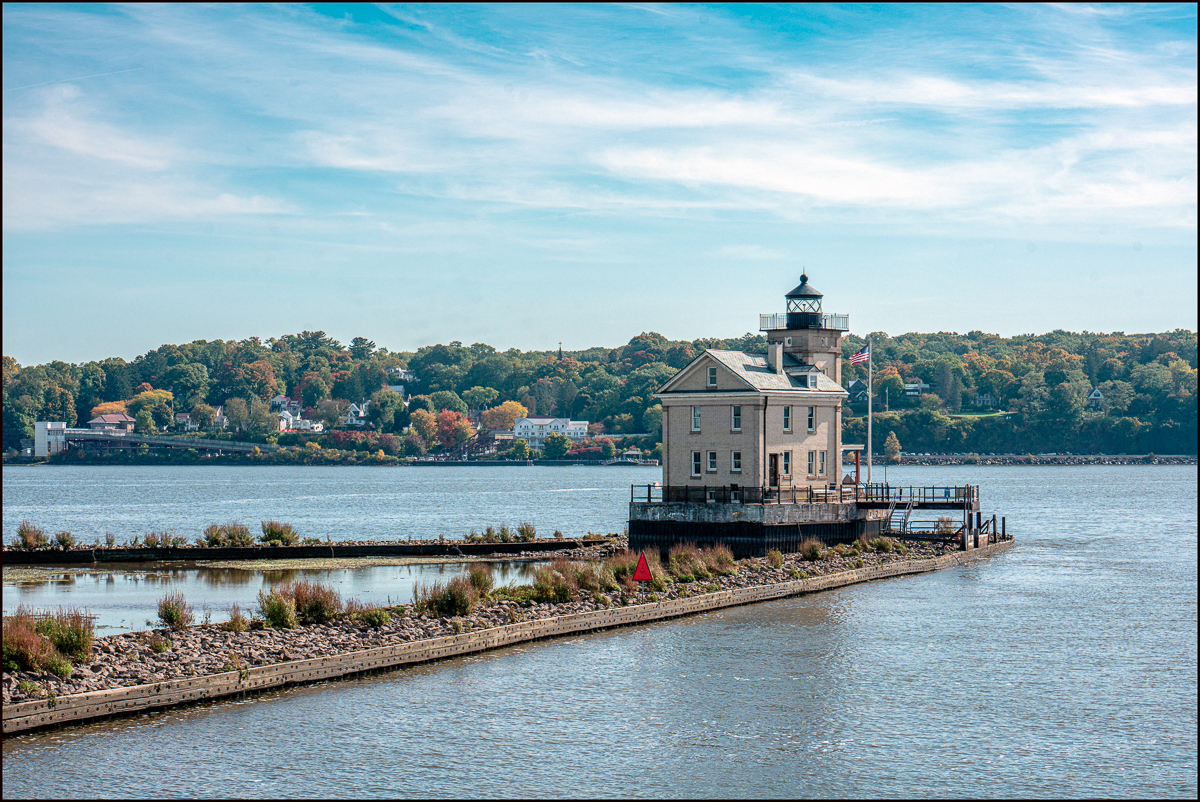
James was the first light keeper when the new lighthouse was built on the north side of the creek in 1915. The third Rondout lighthouse was built due to complaints from river boatmen about the difficulty of seeing the new entrance to the creek formed by the jetties. The little lanterns that James maintained on the dikes were insufficient, and the bluestone lighthouse too far back to see, so the new one was built from 1913 to 1915. The youngest lighthouse on the Hudson River, the Rondout Lighthouse was built on time and under budget.

For many years the two lighthouses coexisted – the Old Rondout Lighthouse (bluestone) stood boarded up and slowly deteriorating. Finally, in 1954, the roof caved in completely and the order came down to demolish it. Due to its location out on the water, it was dynamited.

In 1948 the brick Rondout Lighthouse was electrified and fully automated in 1954, although the Coast Guard employed a civilian watcher who lived in Port Ewen to ensure the light came on every night. When the last keeper moved out, the lighthouse was boarded up and largely abandoned. In the 1980s, when the Coast Guard was divesting of properties, the City of Kingston and the Hudson River Maritime Museum took ownership of the lighthouse.” (Hudson River Lighthouses).


Taken with a Sony A7IV and Tamron Di III VXD A056SF 70-180mm f2.8.
A Visit to Kingston, NY – Along Roundout Creek – Some Boats and a Crane

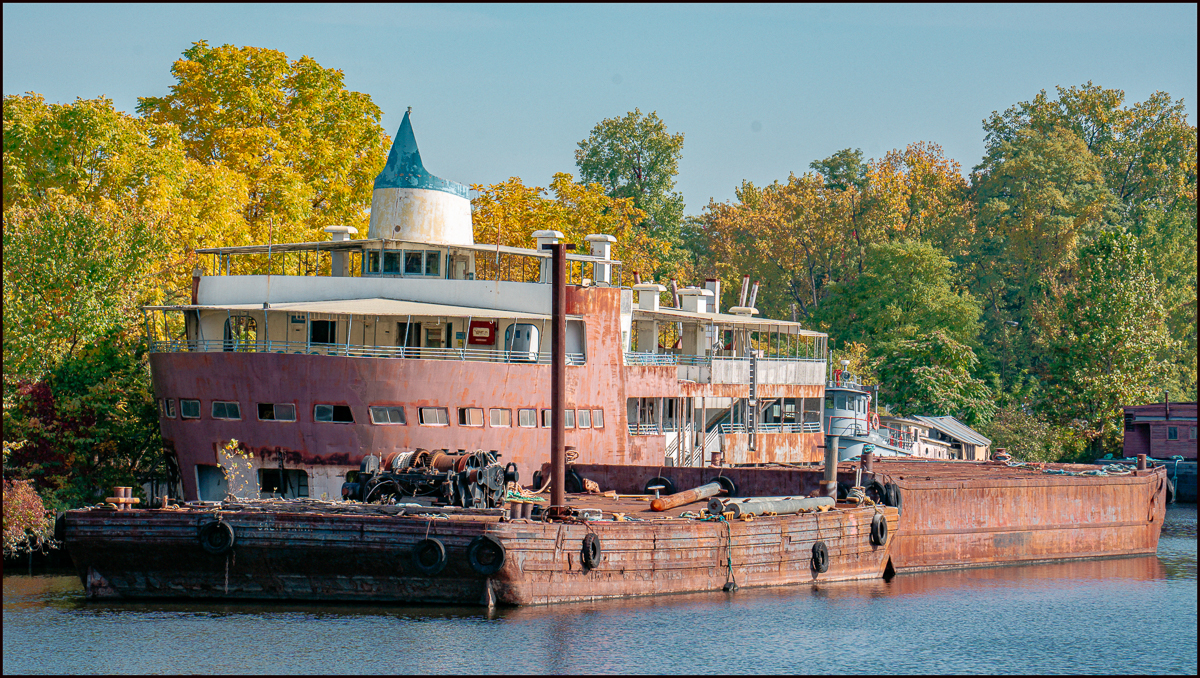
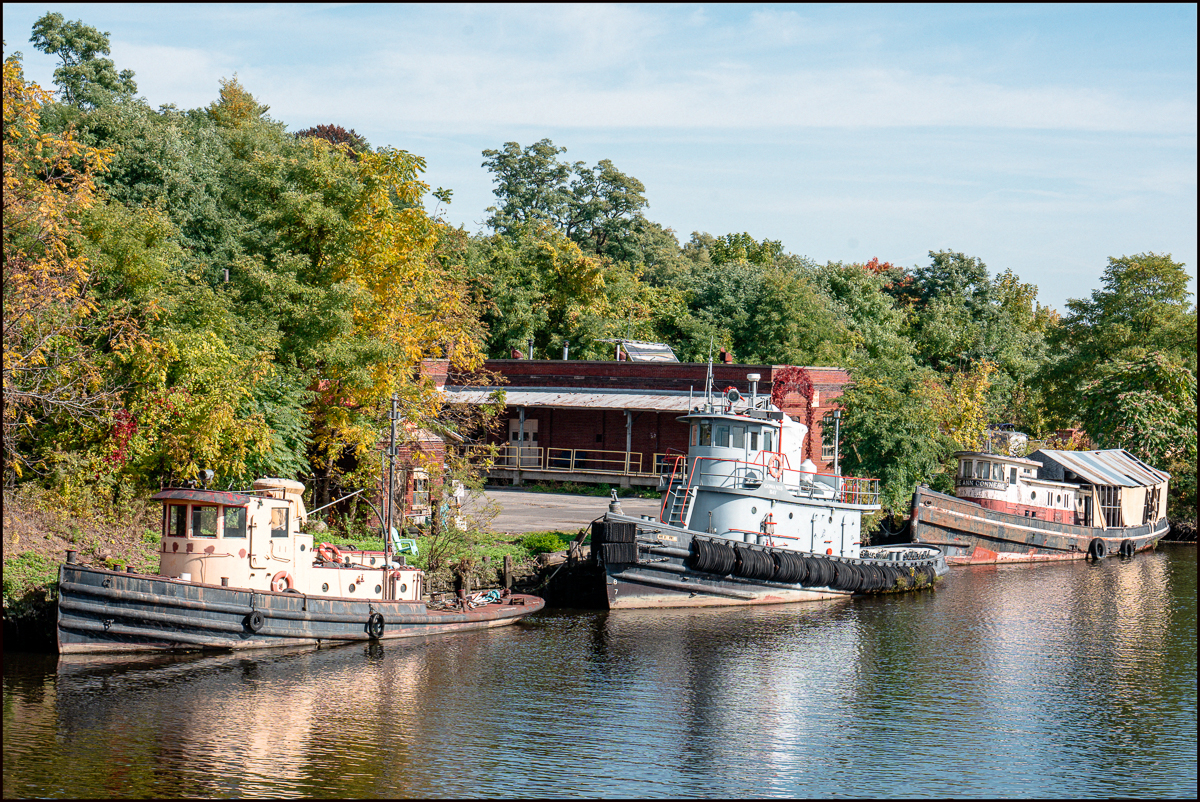
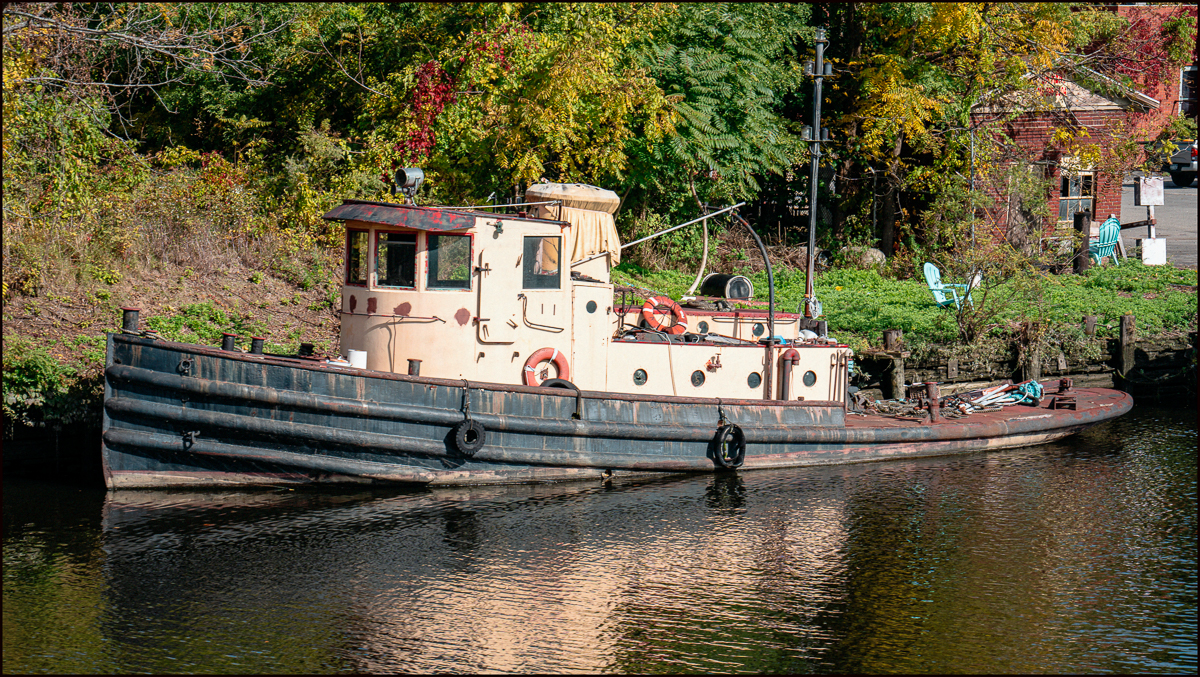
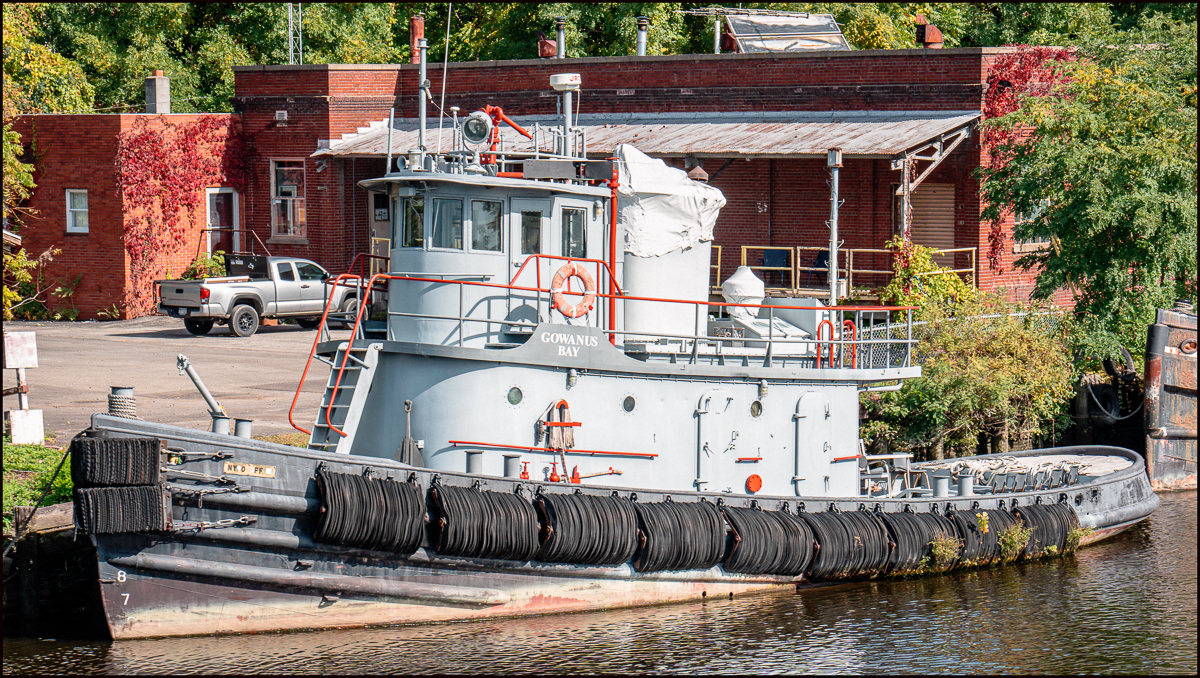
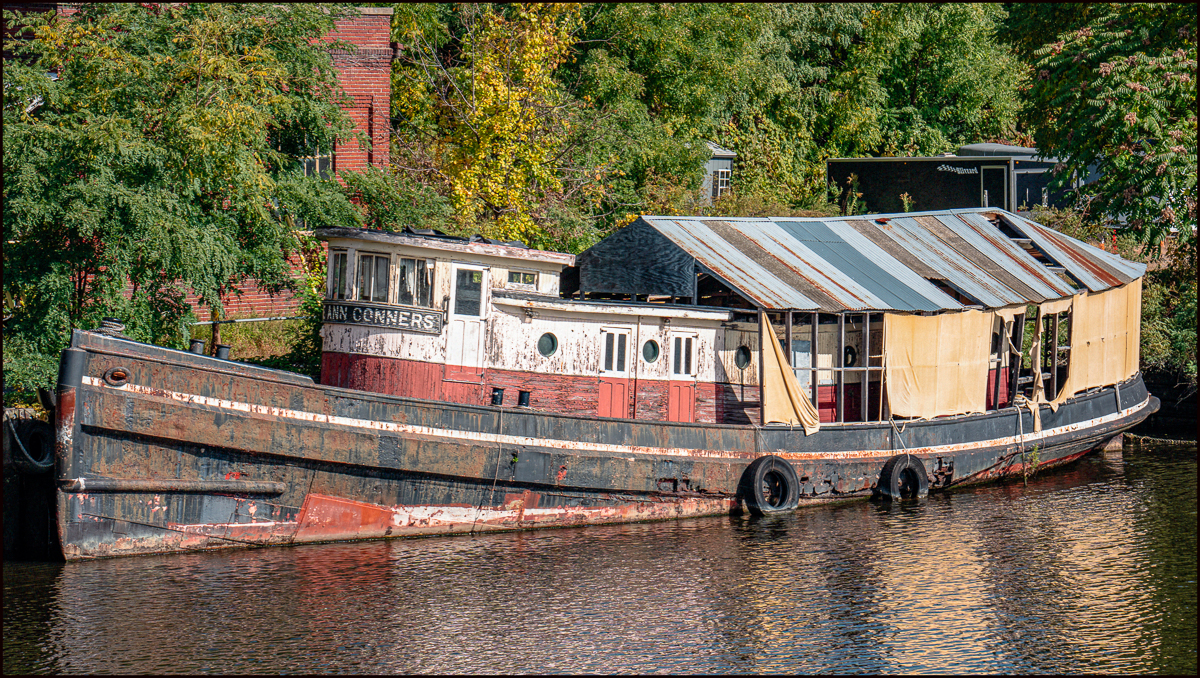
Old boats, many (perhaps all) abandoned.


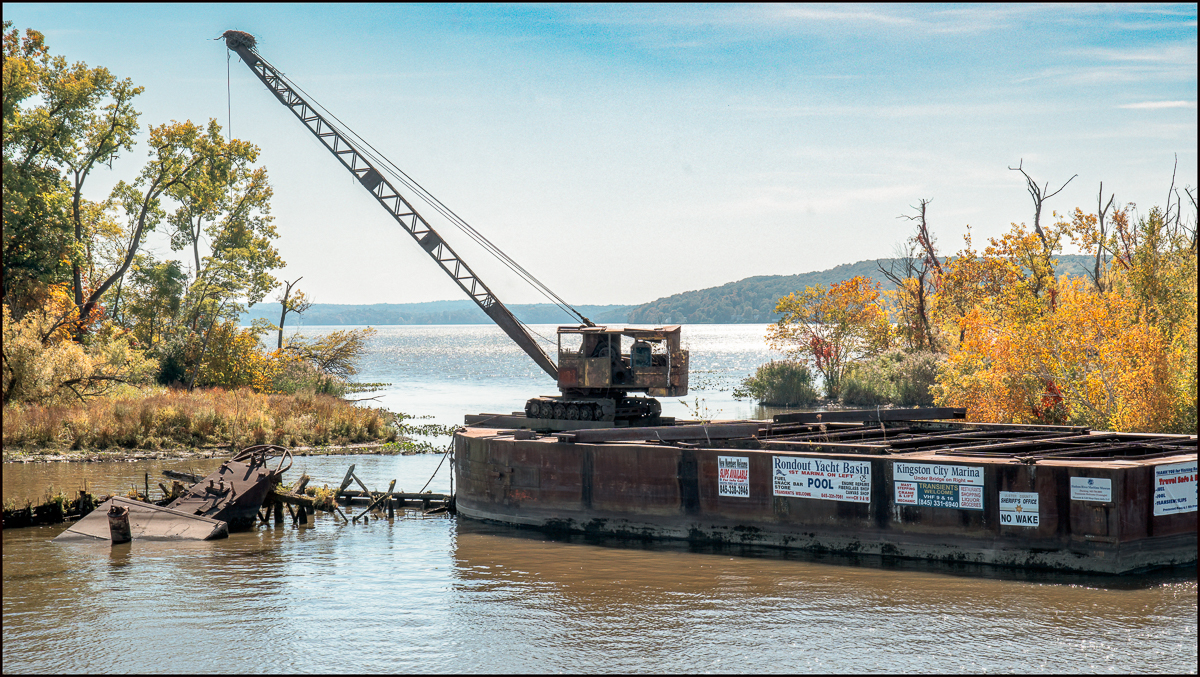
And a crane. Around the crane are the ruins of the Cornell Steamboat Co. barges that sank to the bottom of the creek from disuse in the 1960s. When the Cornell business entered bankruptcy in 1964, the barges anchored for years and eventually sank in place. There are no plans to remove them.

Taken with a Sony A7IV and Tamron Di III VXD A056SF 70-180mm f2.8.
A Visit to Kingston, NY – Along Roundout Creek – Some Buildings


Hudson River Maritime Museum with the 1898 steam tugboat Mathilda. Mathilda was built in Sorel, Quebec, and for many years worked on the St. Lawrence River and the Great Lakes. Originally, coal fueled her steam boilers. Later her engine was changed to an oil-fired, two-cylinder reciprocating unit.

​McAllister Towing bought the Mathilda and brought her to New York Harbor after using her in Montreal berthing ships. 1969 was her last year of active service. In 1970 McAllister donated Mathilda to South Street Seaport in lower Manhattan.

In January, 1976 the Mathilda sank at her pier at the Seaport. She was raised by the Century floating crane. Since the Seaport could not afford the needed repair work, Mathilda was moved to the former Cunard Line Pier 94 for dry storage.

In 1983 McAllister Towing donated the Mathilda to the Hudson River Maritime Museum, and sent her to her new home on the Rondout on the deck of the Century crane barge which placed her in the yard of the Museum.

In recent years the Mathilda has been permanently stabilized and her appearance restored with authentic McAllister paints supplied by the company. Her deck lighting has been restored and enhanced. Her interior has been cleaned out, and a window opened for viewing her engines, which are lit at night.

As one of the last tugs in existence with her original steam engine, the Mathilda is a proud survivor of the type of tugs which served on the Hudson and elsewhere for nearly 100 years.


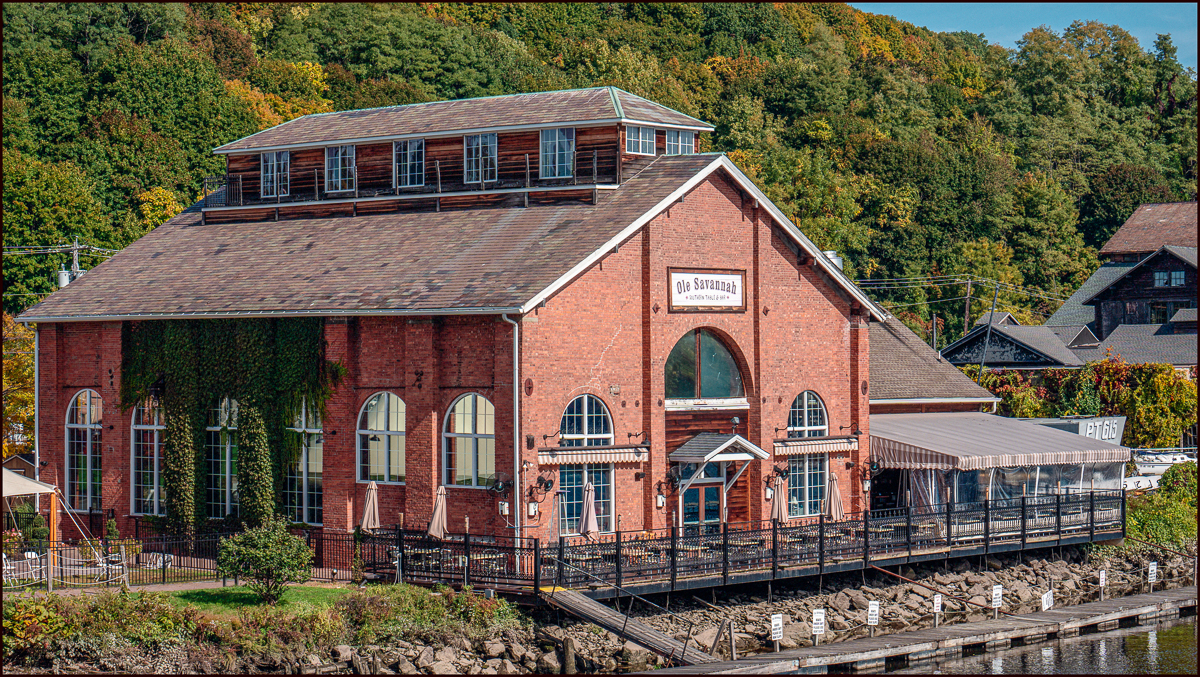
Ole Savannah Southern Table and Bar.


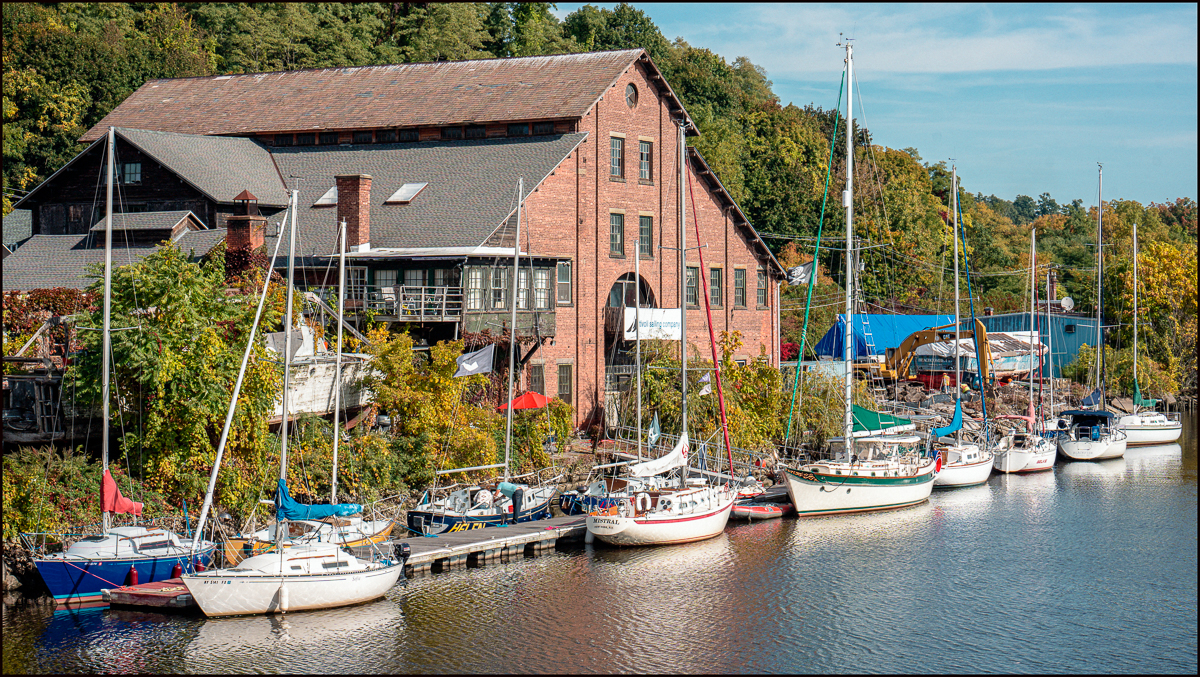
Tivoli Sailing Company. According to their website:

Sailing the Hudson River with Tivoli Sailing Company explores the joys of sailing on the mid-Hudson River valley between Kingston, Rhinecliff and Saugerties, making it possible for all to enjoy sailing the Hudson Valley!!

Young and old, beginner and experienced sailor have all enjoyed sailing the Hudson Valley with us. A unique holistic approach is what differentiates Tivoli Sailing company. This method combines the practical – how to sail, tie knots – with a wider appreciation of sailing the Hudson valley, its ecology, cultures (literary, visual, audio) and its residents – human, marine or animal.

The popularity of Tivoli Sailing as a summer program for children has grown every year since its inception, and is now the most popular summer sailing program for kids in New York!

For those looking for sailing lessons, charters, tours or cruises, Tivoli Sailing makes it easy to enjoy sailing the Hudson River as a perfect pastime or hobby right here in the Hudson Valley.

Tivoli Sailing makes It easy for New Yorkers and tourists!

Taken with a Sony A7IV and Tamron Di III VXD A056SF 70-180mm f2.8.