A Visit to Boston – Day Two – Citizens Bank Opera House

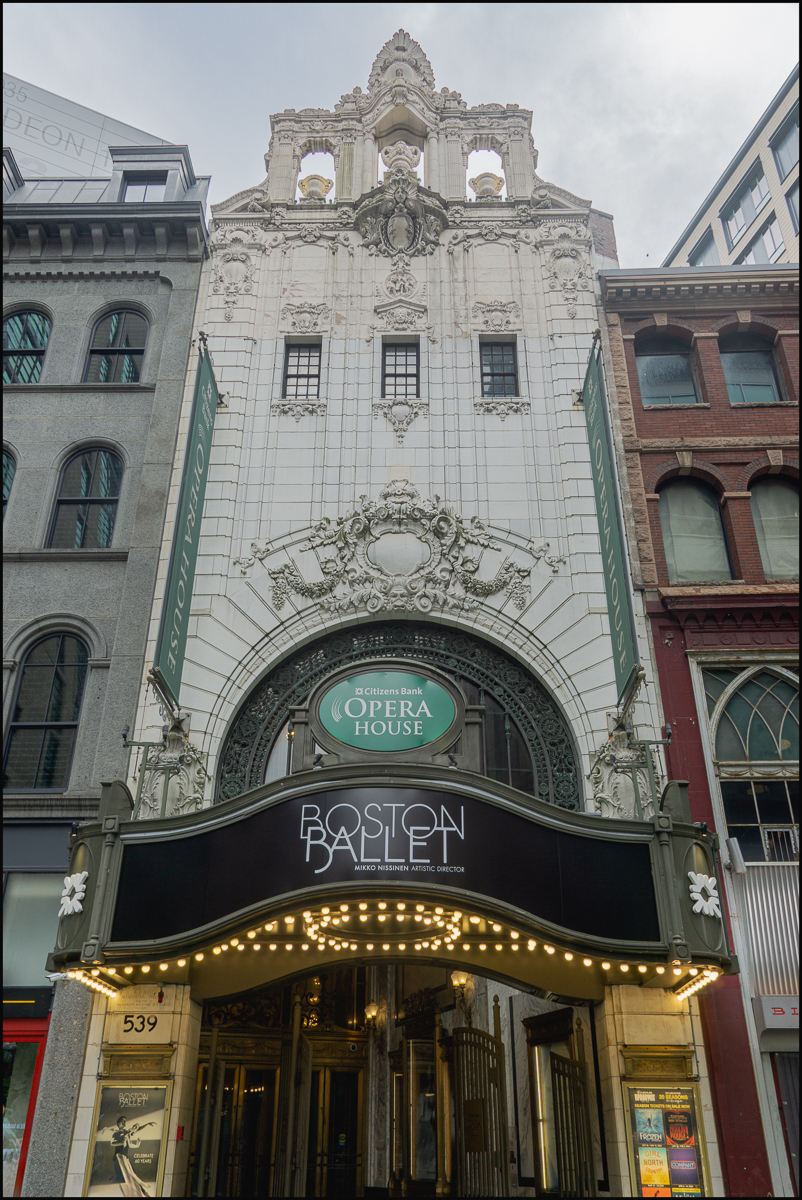
The History section of the Opera House website says:

A Historic Theatrical Masterpiece Restored to its Original Beauty.

The Citizens Bank Opera House is one of the finest examples of the vaudeville circuit palace at the pinnacle of its development. Designed in a combination of French and Italian styles by Thomas White Lamb, one of the foremost theatre architects of his day, it was erected under the close personal supervision of Edward Franklin Albee to memorialize his late partner, Benjamin Franklin Keith. Because it was constructed as a memorial and tribute to vaudeville’s greatest impresario, it was built with a degree of luxury in its appointments that is almost unrivaled.

Wikipedia has this (and much more, especially on its history) to say:

The Boston Opera House, also known as the Citizens Bank Opera House, is a performing arts and esports venue located at 539 Washington St. in Boston, Massachusetts. It was originally built as the B.F. Keith Memorial Theatre, a movie palace in the Keith-Albee chain. The chain became part of RKO when it was established just before the theater opened on October 29, 1928, and it was also known as the RKO Keith’s Theater. After operating for more than 50 years as a movie theater, it was rededicated in 1980 as a home for the Opera Company of Boston, which performed there until the opera company closed down in 1990 due to financial problems. The theater was reopened in 2004 after a major restoration, and it currently serves as the home of the Boston Ballet and also hosts touring Broadway shows.

Taken with a Sony A6000 and 18-135mm f3.5-5.6 OSS
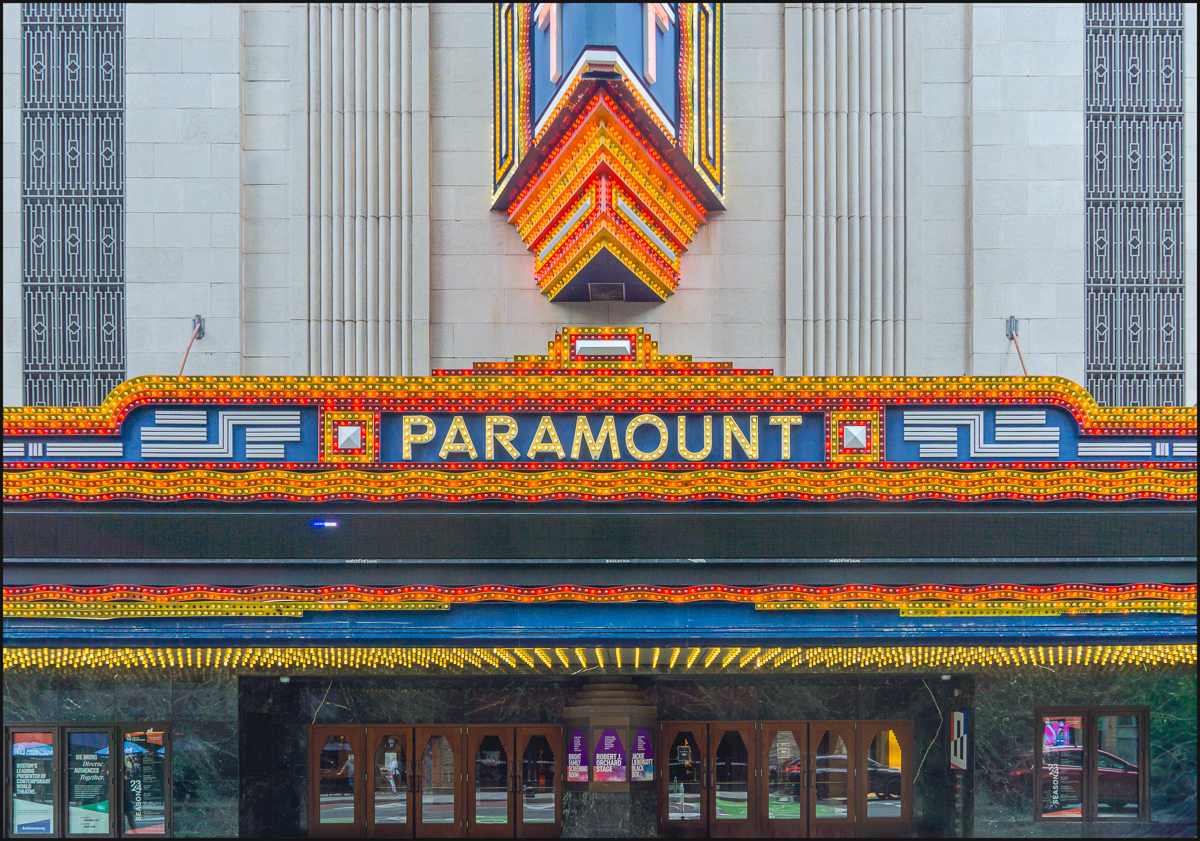
A Visit to Boston – Day Two – The Paramount

Eventually we ended up on Washington Street where my friend wanted to do a little shopping. I took this picture of The Paramount Theater.

“The Paramount opened in 1932 as a 1,700-seat, single-screen movie theatre. It was one of the first movie houses in Boston to play talking motion pictures. The theatre was named after its original owner, Paramount Pictures. It closed in 1976 and most of the Art Deco interior decoration was destroyed in the 1980s during the removal of asbestos.[2] In 1984, the building was designated a Boston Landmark by the Boston Landmarks Commission.

In 2002, Millennium Partners agreed to restore the Paramount’s facade, marquee, and vertical sign in exchange for city approval of their adjacent Ritz-Carlton Towers project. The city occasionally lighted the sign at night. The city’s hopes that the site would be developed by the Cambridge-based American Repertory Theater were not fulfilled.

In April 2005, Emerson College announced plans to renovate the Paramount Theatre and build a performing arts facility in and around the original building. The $77 million project involved the renovation of the building and adjacent parcels of land into a complex containing a 550-seat theater, a Performance Development Center, a student residence hall, a 125-seat black box theater, a 170-seat film screening room, eight rehearsal studios ranging from 700 square feet (65 m2) to 1,900 square feet (180 m2), six practice rooms for individuals and small groups, a sound stage for film production classes, a scene shop, several classrooms, a restaurant, and up to a dozen offices for faculty and staff. Design was by Elkus Manfredi Architects, Boston.[3] Acentech Incorporated consulted on the acoustical design of the facility, providing guidance on room acoustics, sound isolation between the stacked spaces on the tight urban site, and mechanical system noise control in the historic building.

The project was completed in early 2010. On March 18, 2010, Emerson College celebrated the grand re-opening of the Paramount Theater with Mayor Thomas Menino.” (Wikipedia).

Taken with a Sony A6000 and 18-135mm f3.5-5.6 OSS

A Visit to Boston – Day Two – Cows

In the background of the preceding post, you’ll see a blue cow statue. Here are a couple of closer views.

Apparently, this is only one of many. They’re part of CowParade New England 2023.

CowParade New England presented by Herb Chambers will bring 75 life-size cows, designed by a range of artists throughout New England, to high trafficked landmarks throughout Greater Boston to celebrate 75 years of progress and impact made possible by the Jimmy Fund community. All proceeds directly benefit Dana-Farber Cancer Institute’s efforts to defy cancer.

Stay tuned for our pasture map outlining where to visit the cows this summer and for more information on our virtual auction which will launch in August!

This in turn, is part of a larger effort called simply Cow Parade, which describes itself as follows:

The World’s Largest Public Art Event

CowParade is the largest and most successful public art event in the world. CowParade events have been staged in 80+ worldwide since 1999 including Chicago (1999), New York City (2000), London (2002), Tokyo (2003), and Brussels (2003). Dublin (2003), Prague (2004), and Stockholm (2004), Mexico City (2005), Sao Paulo (2005), Buenos Aires (2006), Boston (2006) Paris (2006), Milan (2007, Istanbul (2007), Taipei (2009), Rio (2011), North Carolina (2013), Hong Kong (2013) and more…

Fun Facts

Over 250 million people around the world have seen one our famous cows.
Over $30 million have been raised through worldwide charitable organizations through the auction of the cows, which take place at the conclusion of each event.
Over 10,000 artists worldwide have participated in CowParade – professional and amateur, famous and emerging, young and old.
Over 5,000 cows have been created!

The cows are all over Boston. You’ll see a couple more in upcoming posts.

Taken with a Sony A6000 and 18-135mm f3.5-5.6 OSS

A Visit to Boston – Day Two – Norman B Leventhal Park

According to the park’s website:

“In the heart of the financial district, nestled among the high-rise office buildings, lies a lush oasis of green, a testament to the ingenuity and creativity of a group of people, both public and private, who joined together to foster this unique vision. What had previously been a decrepit and unsightly garage, is now an award-winning and inviting park set above a new underground parking garage. The Norman B. Leventhal Park is supported, structurally and financially, by Garage at Post Office Square, a 1,400-space parking garage.’

The Urban Land Institute describes it as follows:

“The 1.7 acre park’s centerpiece is a walk-through sculptural fountain, so whimsically friendly that in the summertime, office workers eating lunch often kick off their shoes to dip their feet in the fountain. A few yards away is a 143-foot-long formal garden trellis, supported by granite columns, draped with seven species of vines. The jewel-like Great Lawn, raised above the walkways by a granite curb, provides a relaxed retreat. More than a hundred different species of plants, flowers, bushes and trees are within the park. It features custom wrought-iron fencing and specially designed drainage gates. Seating styles fit every posterior and mood – stately teak benches, curving steel settees, movable cast-iron café chairs with tables, hundreds of linear feet of inviting polished granite wall and half an acre of lawn, all meticulously maintained” (Urban Parks and Open Space, Urban Land Institute, 1997).

My Canadian friend had some business with a US bank so we walked around looking for it. Eventually we found it and she went in. While we were waiting, we sat in the park and talked. After a while a guy came up and spoke to us. Apparently, he was from Sudan. At first the conversation was fairly innocuous, but after a while he accused us of “not respecting” him and started hurling abuse at us. Thankfully, he walked away at that point. At that point we needed a change and moved to another part of the park, where there was a pleasant cafe (Sip Cafe) with an outdoor seated area where we waited until my friend had finished her business.


Taken with a Sony A6000 and 18-135mm f3.5-5.6 OSS

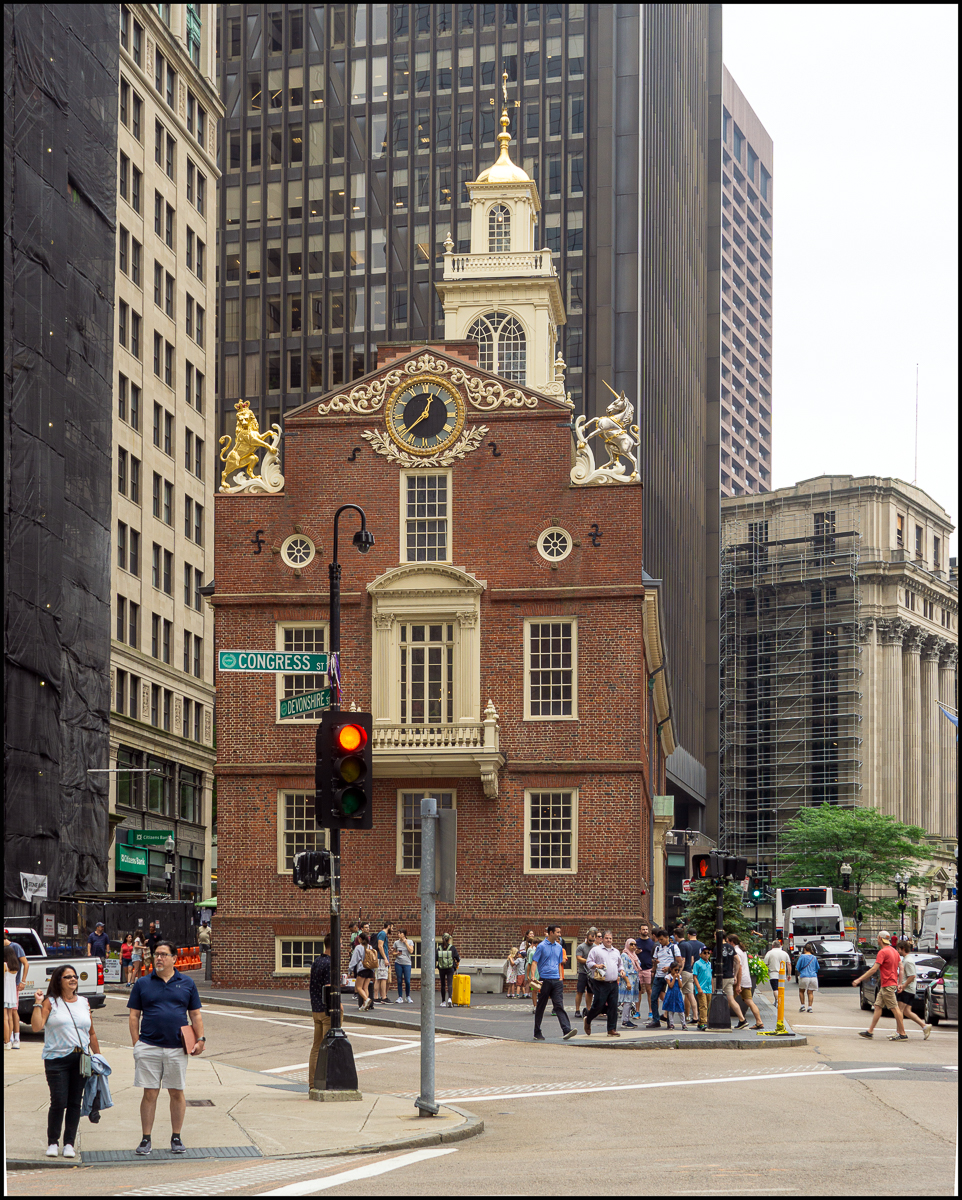
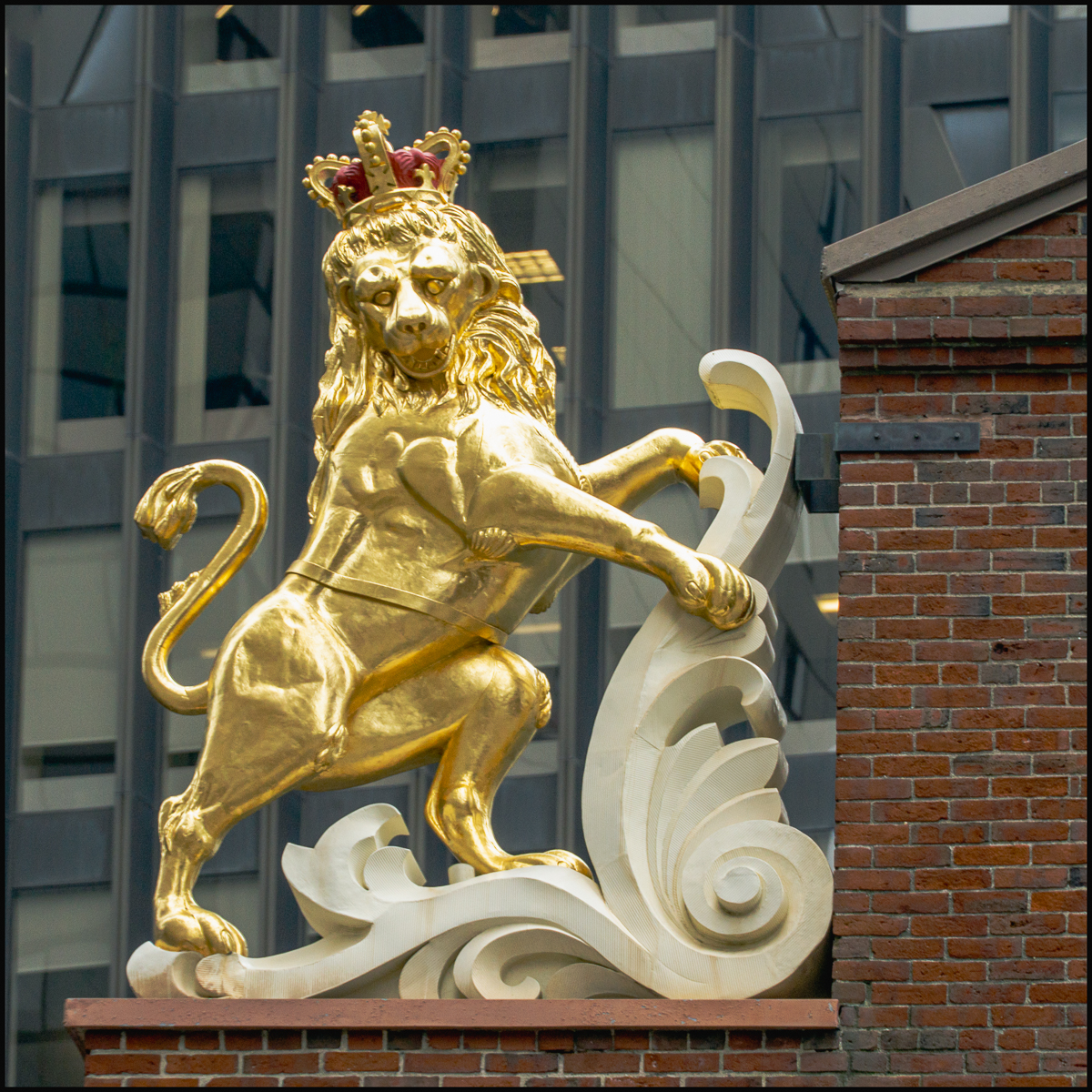
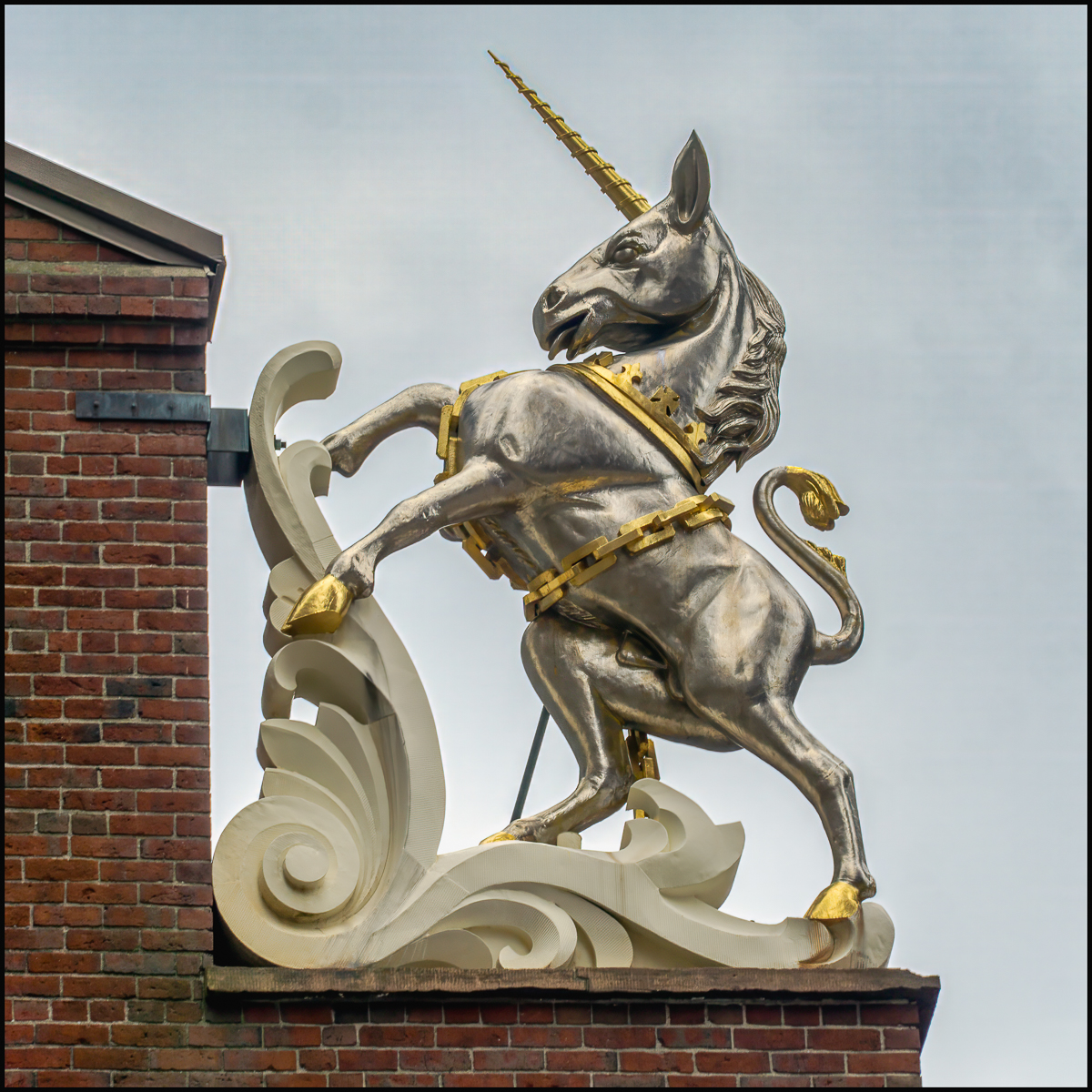
A Visit to Boston – Day Two – Old State House

The Old State House is a historic building in Boston, Massachusetts, built in 1713. It was the seat of the Massachusetts General Court until 1798. It is located at the intersection of Washington and State Streets and is one of the oldest public buildings in the United States.

“It is one of the landmarks on Boston’s Freedom Trail and is the oldest surviving public building in Boston. It now serves as a history museum that was operated by the Bostonian Society through 2019. On January 1, 2020, the Bostonian Society merged with the Old South Association in Boston to form Revolutionary Spaces. The Old State House was designated a National Historic Landmark in 1960 and a Boston Landmark by the Boston Landmarks Commission in 1994”. (Wikipedia)


Taken with a Sony A6000 and 18-135mm f3.5-5.6 OSS