In New York City – The Skylight Diner

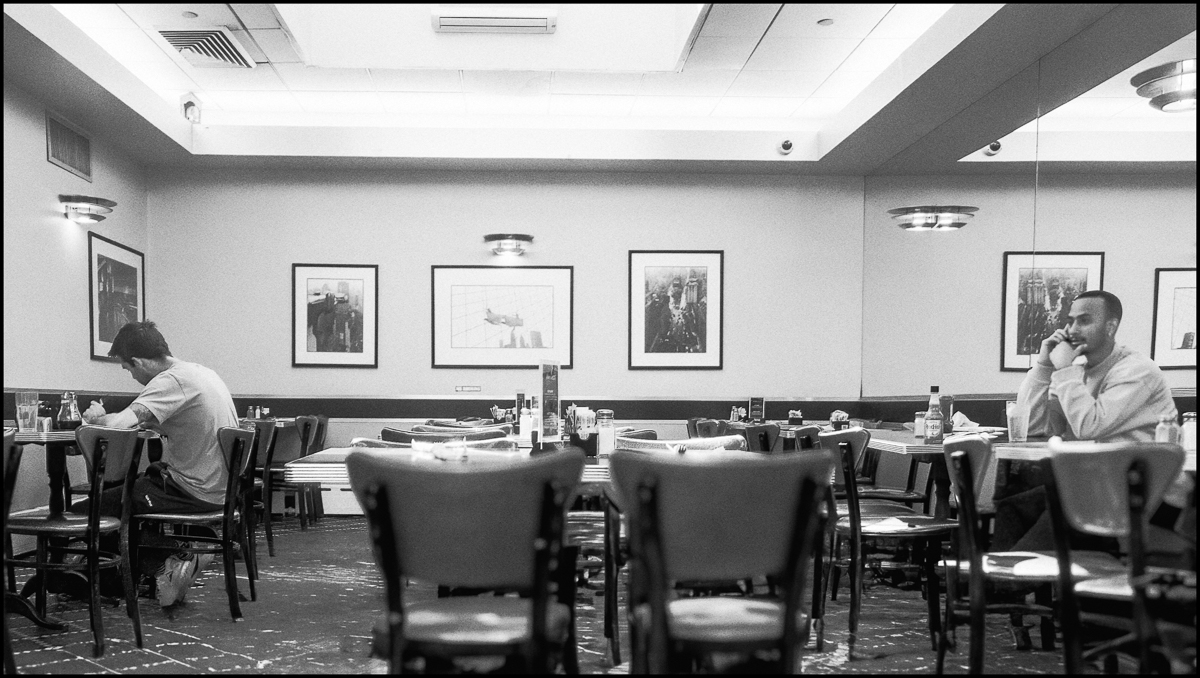
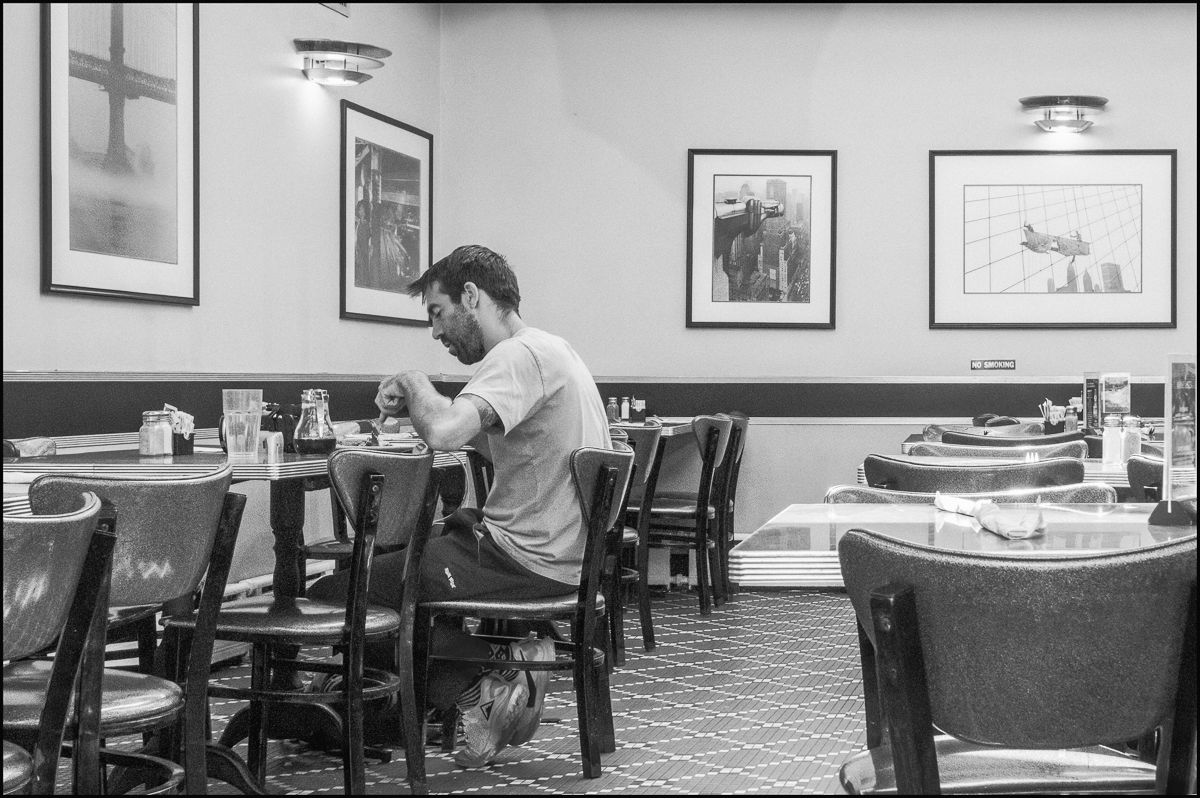
By this time in my walk I had been walking around for nearly three hours and I was feeling tired and hungry. So I looked for something/somewhere to eat. I realized that coincidentally I had walked to the largest (I think) photographic store in New York: B&H Photo. It occurred to me that I could find somewhere close by to eat and then after that have a walk around B&H. Then I could return to wherever I found and have a coffee while waiting for my granddaughter to arrive. Looking around I discovered the Skylight Diner, just across the road.

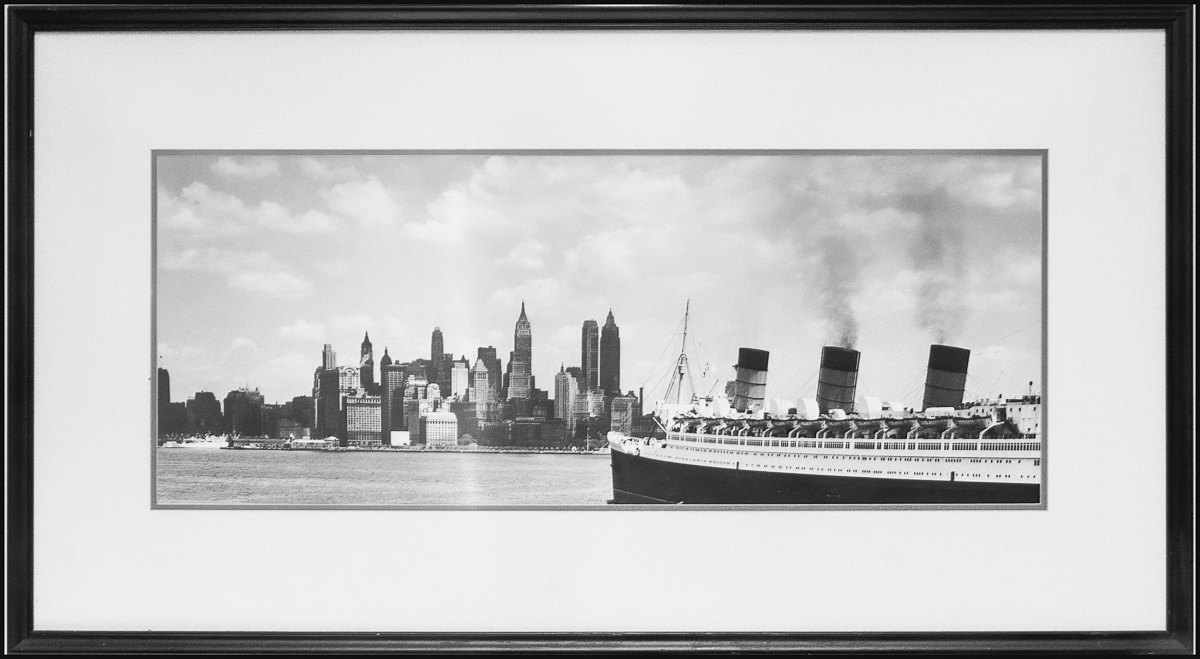
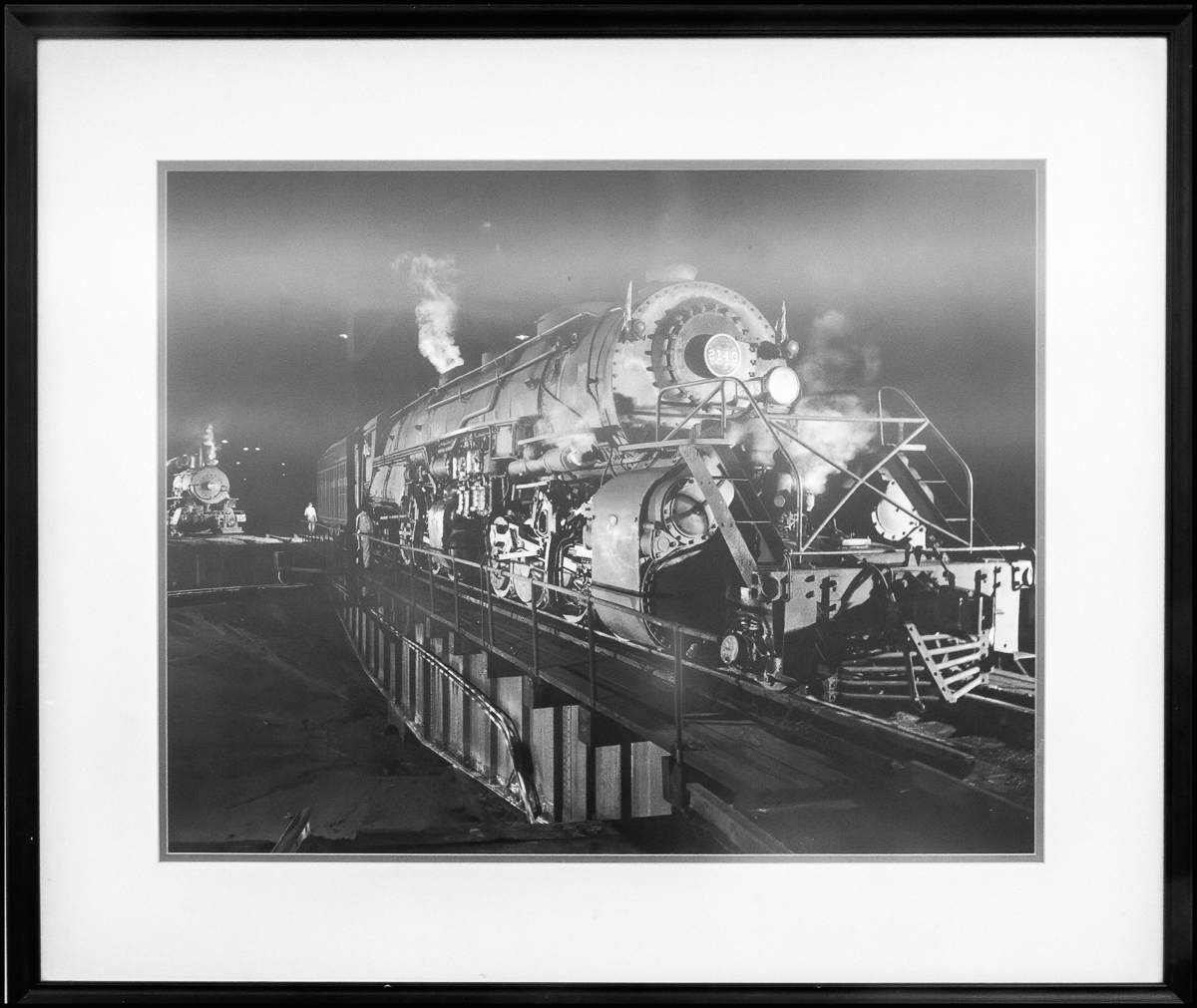
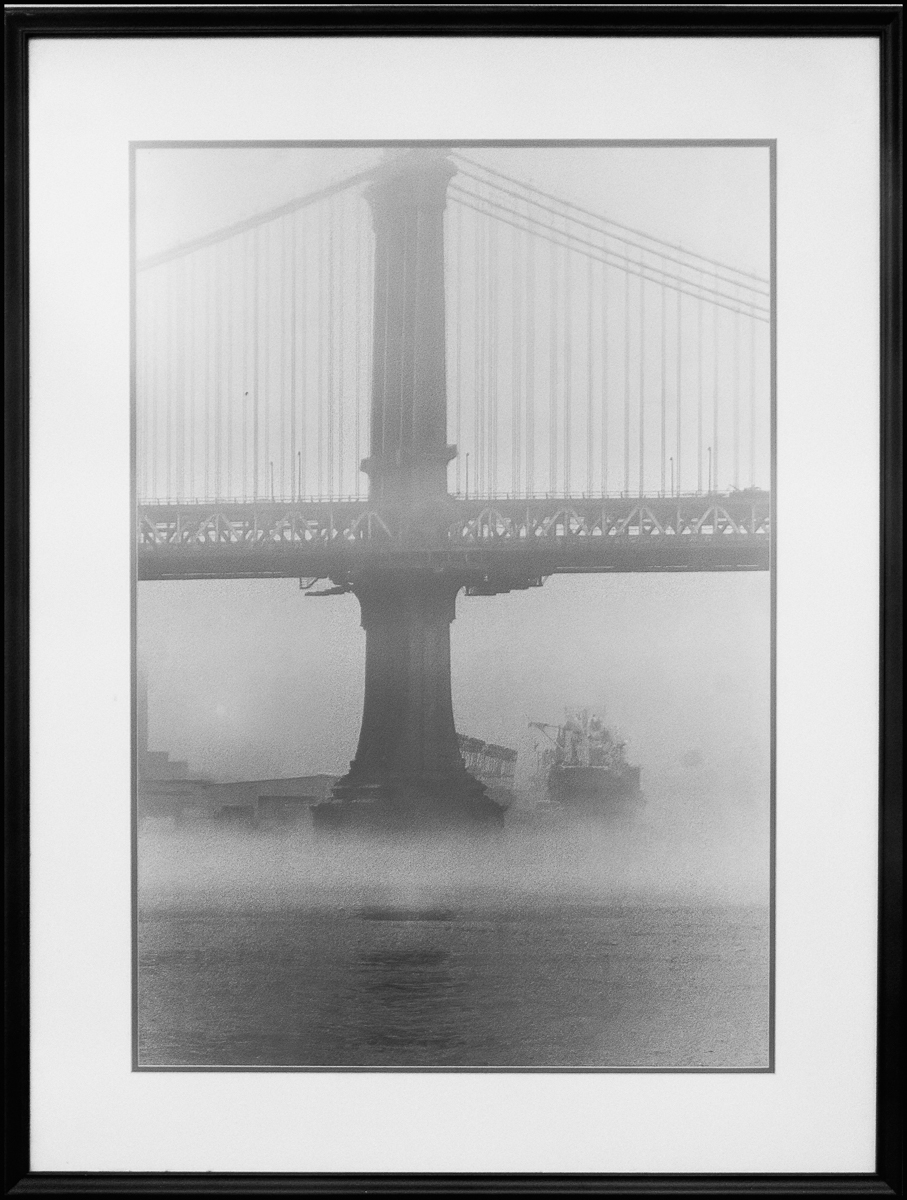
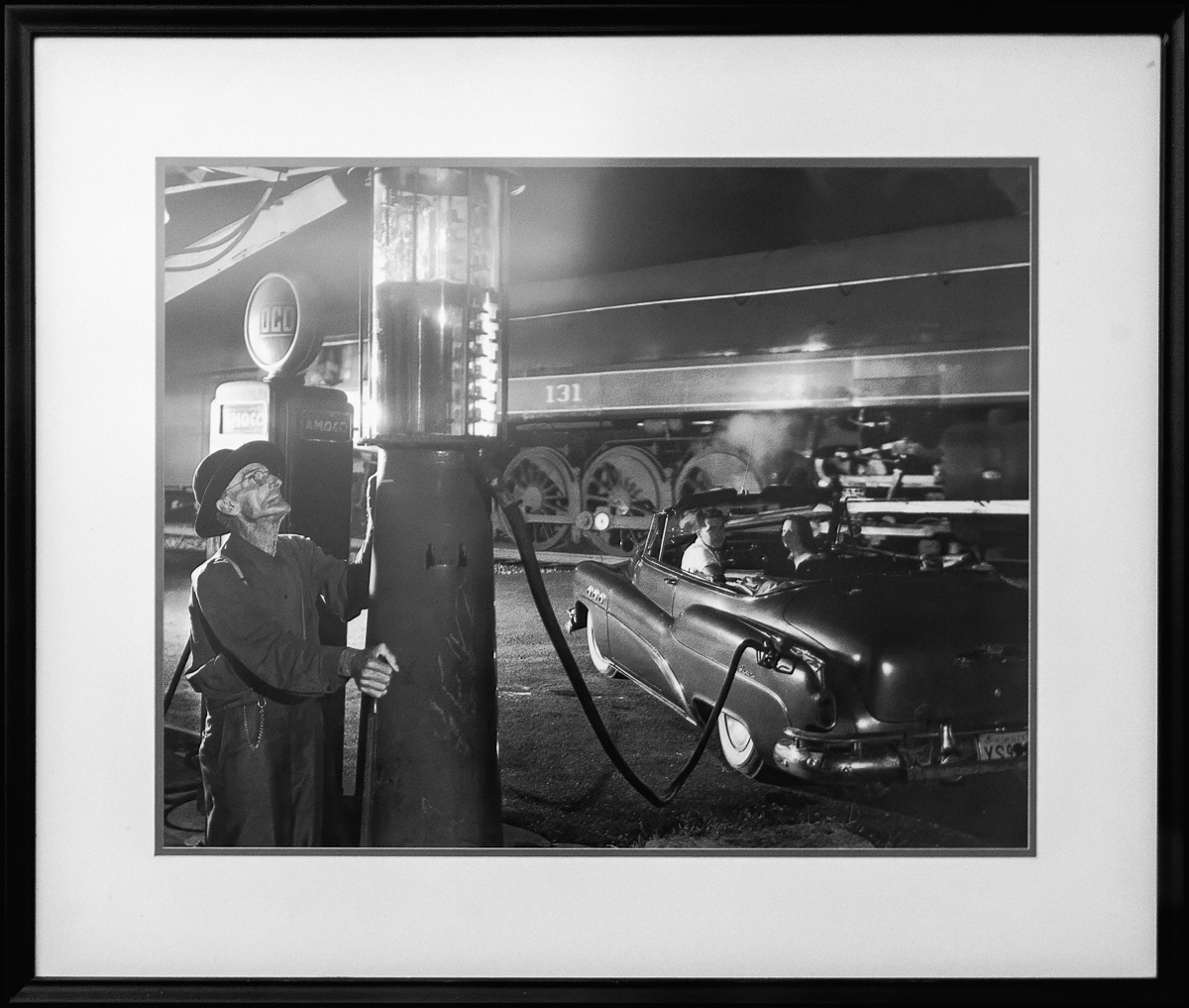
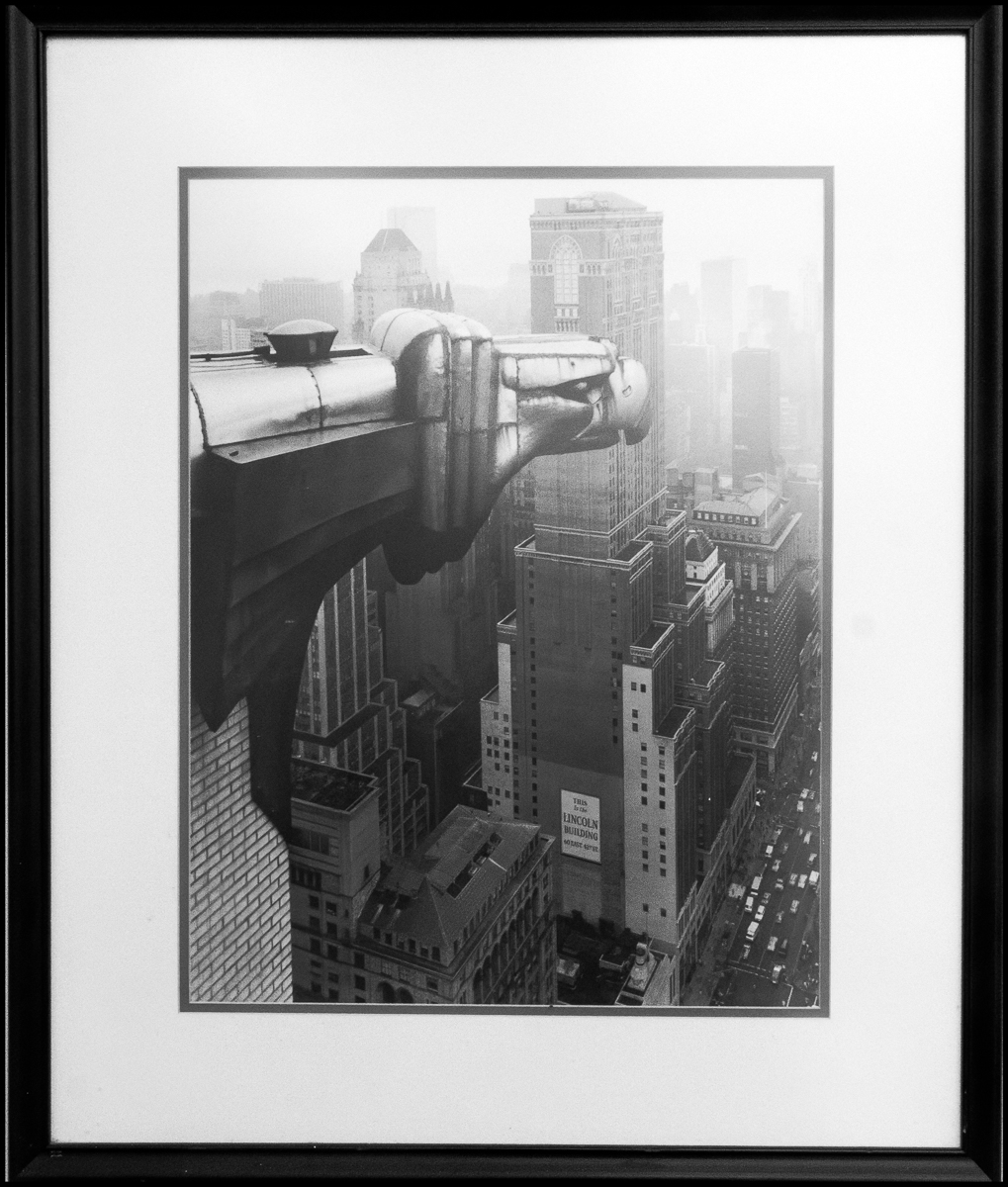
It bills itself as “The Best Diner in Manhattan”, which might be true since there aren’t many classic diners left in Manhattan. I went in and found a very pleasant diner with, to my surprise, a number of nice black and white (i.e. monochrome) prints on the wall. I ordered a full English breakfast. The bacon was American style rather than my preferred English style (less smoky, less salty and more meaty), both other than that it really hit the spot. After I’d finished I went off to B&H. Amazingly I overcame my Gear Acquisition Syndrome (GAS) and didn’t buy anything. Then, as mentioned above returned to wait for my granddaughter.


Taken with a Fuji X-E3 and Fuji XC 16-50mm f3.5-5.6 OSS II

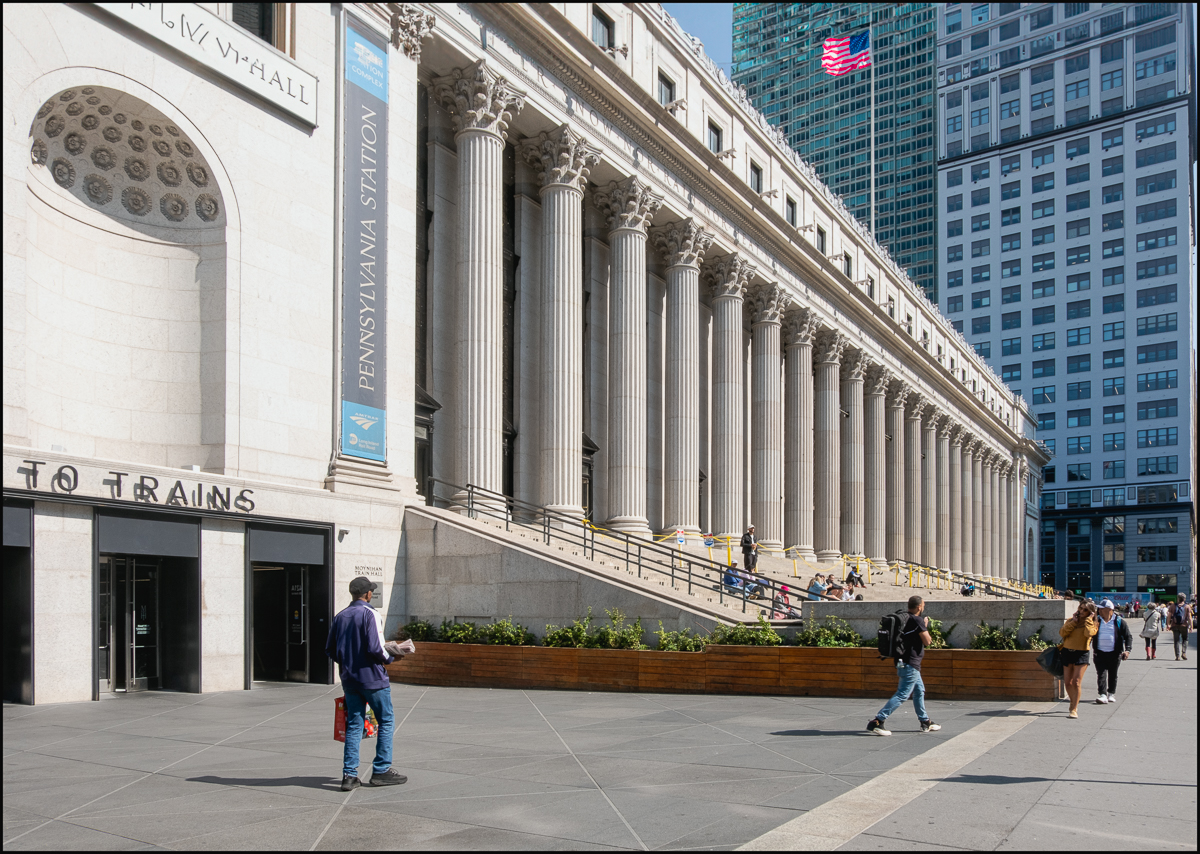
In New York City – The Moynihan Train Hall

I’ve always hated Pennsylvania Station, or at least the one under Madison Square Garden (which I also hate because it’s ugly and it caused the demolition of the beautiful old station, which preceded it). The old Pennsylvania Station was an architectural masterpiece and it was a tragedy when it was torn down in 1966 to make way for the current monstrosity.

So I was pleased to read that they were going to use a portion of the James A Farley Building as a train station. However, I hadn’t actually seen it until today.

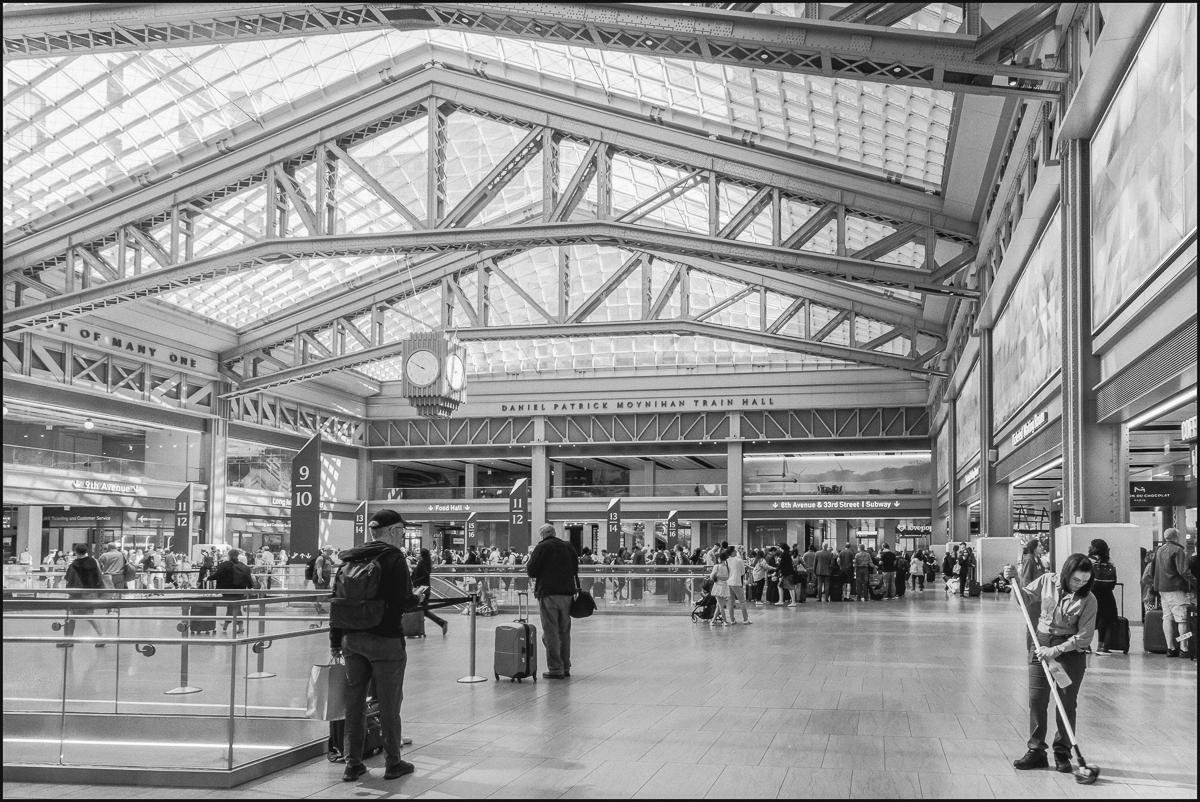
The Moynihan Train Hall is an expansion of Pennsylvania Station, the main intercity and commuter rail station in New York City, into the city’s former main post office building, the James A. Farley Building. Located between Eighth Avenue, Ninth Avenue, 31st Street, and 33rd Street in Midtown Manhattan, the annex provides new access to most of Penn Station’s platforms for Amtrak and Long Island Rail Road passengers, serving 17 of the station’s 21 tracks. The hall is named after Daniel Patrick Moynihan, the U.S. Senator who had originally championed the plan. The building’s Beaux-Arts exterior resembles that of the original Penn Station; both buildings were designed by the architectural firm of McKim, Mead & White.

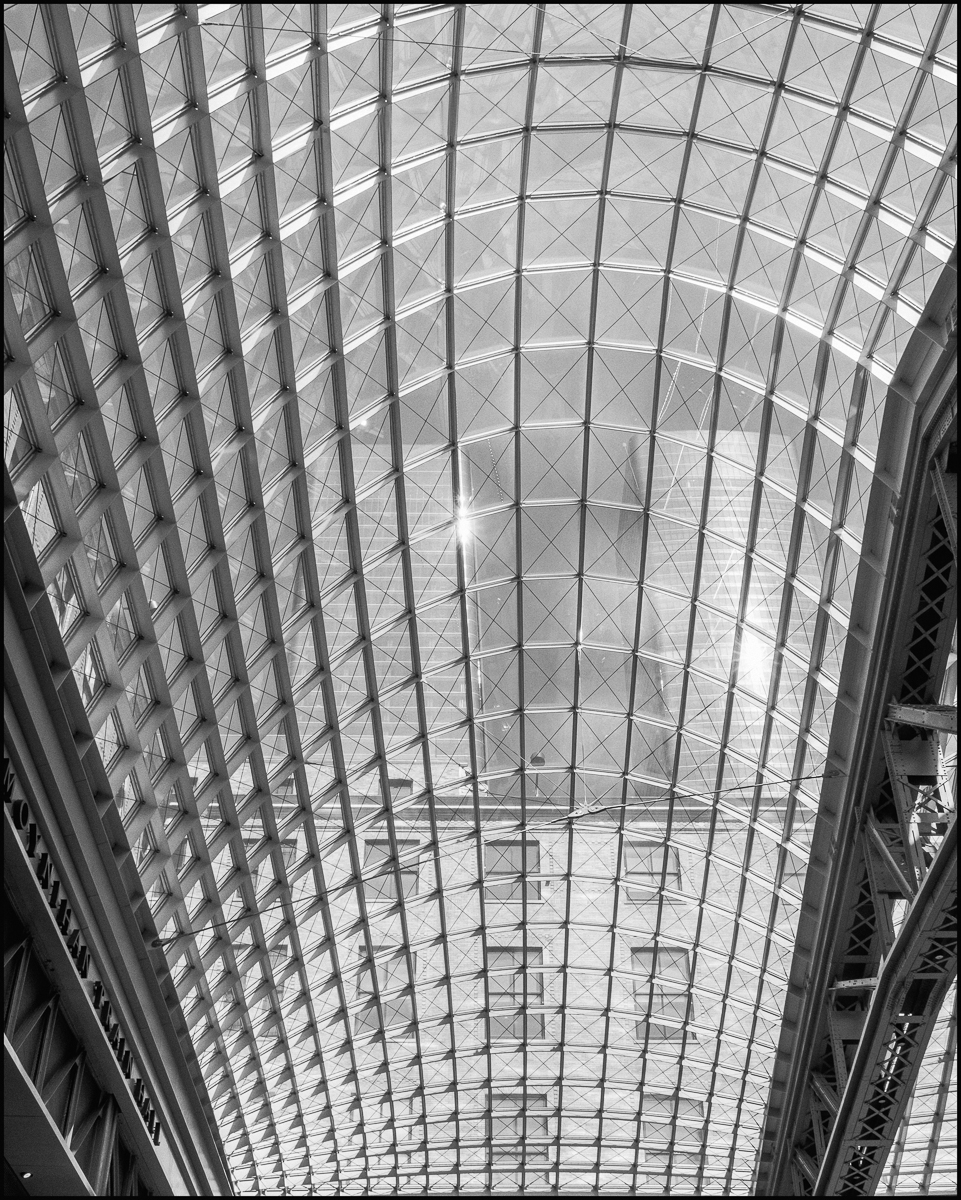
The 486,000 sq ft (45,200 m2) complex was built to alleviate congestion in Penn Station, which saw 650,000 daily riders before the COVID-19 pandemic in 2020. The $1.6 billion renovation restored the Beaux-Arts Farley Building, a designated landmark, and added a central atrium with a glass roof. Moynihan Train Hall includes retail space, a 320-seat waiting area, and public restrooms. The hall is decorated with three artworks: a ceiling triptych named Go, a group of photographic panels, and a sculptural group.

The project had been in consideration since the early 1990s, with the first blueprints made public in 1993. However, several previous plans had failed because of a lack of funding and logistical difficulties. Amtrak withdrew as a tenant in 2004, but returned after the Farley Building was sold to the New York state government in 2006. A first phase, involving an expansion of a concourse under the Farley Building, started in 2010 and was completed in June 2017. Construction of the train hall proper commenced in 2017, and it opened January 1, 2021. (Wikipedia)

While it’s not a patch on the old station, it’s a definite improvement on what preceded it.

Taken with a Fuji X-E3 and Fuji XC 16-50mm f3.5-5.6 OSS II
In New York City – James A. Farley Building

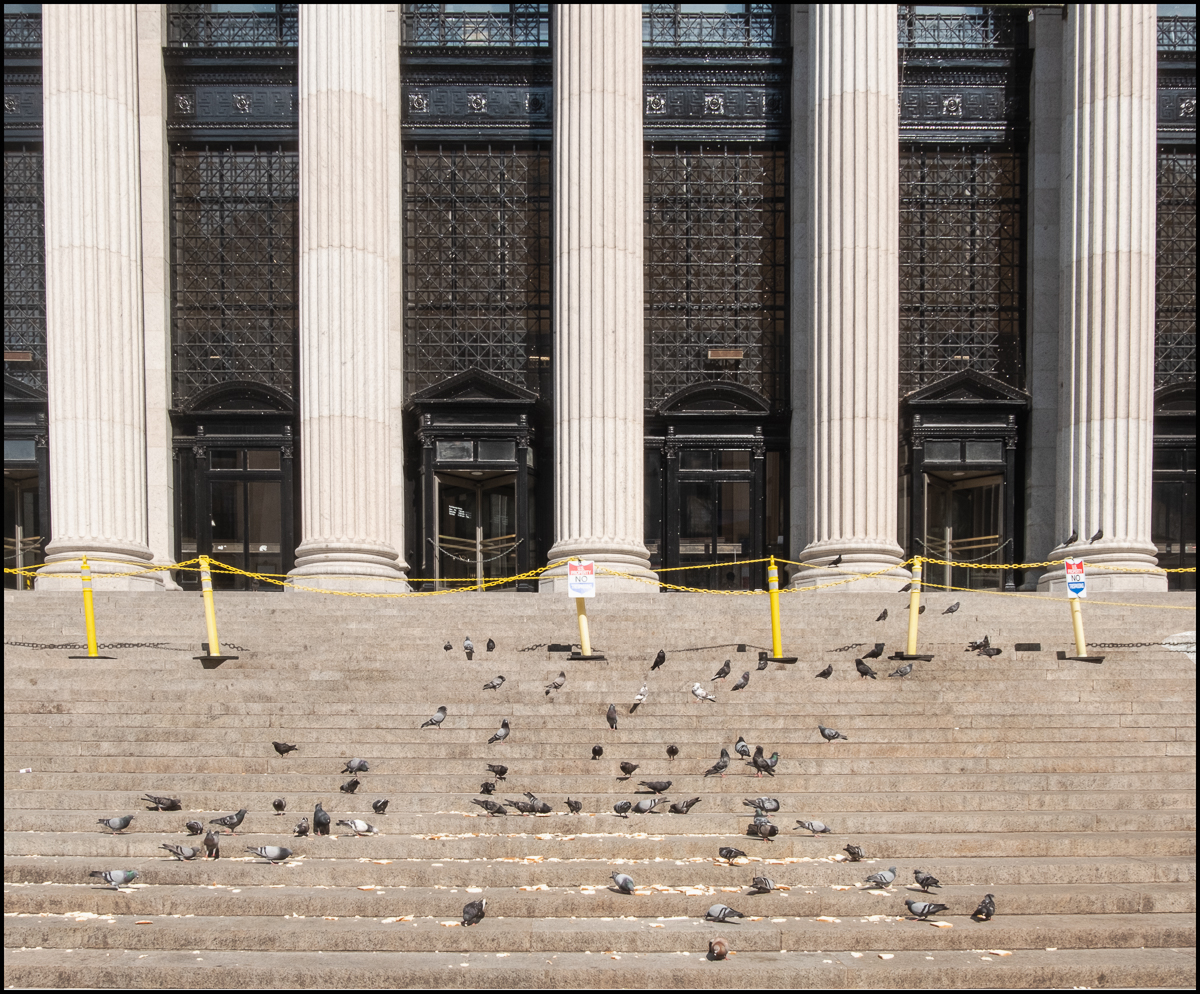
What an impressive building:

The James A. Farley Building is a mixed-use structure in Midtown Manhattan, New York City, which formerly served as the city’s main United States Postal Service (USPS) branch. Designed by McKim, Mead & White in the Beaux-Arts style, the structure was built between 1911 and 1914, with an annex constructed between 1932 and 1935. The Farley Building, at 421 Eighth Avenue between 31st Street and 33rd Street in Midtown Manhattan, faces Pennsylvania Station and Madison Square Garden to the east.

The main facade of the Farley Building (over 8th Avenue) features a Corinthian colonnade—the largest of its style in the world—finishing at a pavilion on each end. The imposing design was meant to match that of the original Pennsylvania Station across the street. An entablature above the colonnade bears the United States Postal Service creed: “Neither snow nor rain nor heat nor gloom of night stays these couriers from the swift completion of their appointed rounds.” The colonnade’s inner ceiling is decorated with the crests or emblems of ten major nations that existed at the building’s completion. The remaining three facades have a similar but simpler design.

The James A. Farley Building was known as the Pennsylvania Terminal until 1918, when it was renamed the General Post Office Building. The building was made a New York City designated landmark in 1966 and was added to the National Register of Historic Places in 1973. It was officially renamed in 1982 in honor of James Farley who was the nation’s 53rd Postmaster General and served from 1933 to 1940. The building was sold to the New York government in 2006. The interior space that once housed the main mail sorting room now houses the Moynihan Train Hall since 2021. Office space in the building was leased to Facebook in 2020 (Wikipedia).

Taken with a Fuji X-E3 and Fuji XC 16-50mm f3.5-5.6 OSS II
In New York City – Stone Medallion

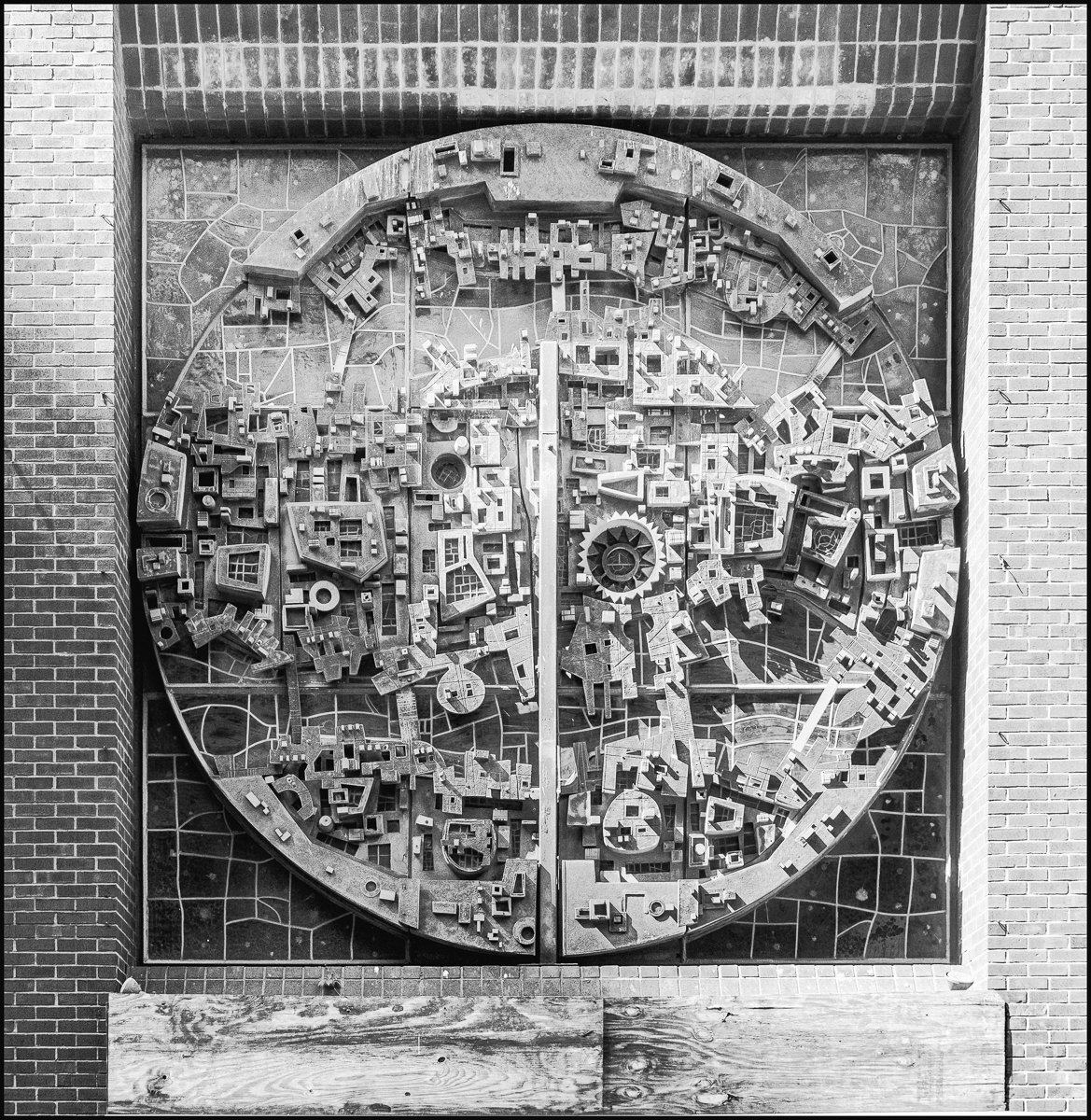
I came across this rather intricate sculpture and stained glass window on the brown brick façade of what was once the Capuchin Monastery of St. John the Baptist. It was built in 1974 in the Brutalist style and was one of the buildings associated with the St. John The Baptist church on West 31st. NYC. It was sold to a retail property developer in 2016.

Pictures of the monastery before it was sold show a standing Christ figure in front of the medallion. I believe the sculpture was called “Christ over the City” and the artist was Benoit Gilsoul.

Benoît D. Gilsoul, 1914- 2000 was Born in Namur, Belgium anld completed his primary studies and Greek-Latin humanities. He then entered the Académie Royale des Beaux Arts, the most prestigious Belgian art college from which he graduated in 1938. During the six years at the Académie, Gilsoul acquired a solid artistic training. By 1933, he had already founded the secessionist art group: “L’Esquisse,” an influential group of young artists in Belgium that developed into the group “Salon National des Jeunes Artistes”. In 1935, while still at the Académie, he collaborated in the design for the entrée Reine Astrid and the pavillon de la vie Catholique at the World’s Fair in Brussels, Belgium. During that same year, he also undertook an extensive study tour with Nicolas de Stael, a close friend and fellow student. Upon graduation from the Académie, Gilsoul traveled extensively in Italy, France and Spain painting and drawing continuously.

In 1958, he became président of the Association des Artistes Belges where he remained honorary president until his death in 2000. In 1960, he was commissioned to execute the murals in the Salle de Réception for the Belgian Line in Antwerp. Also in 1960, the Belgian government sent him to the United States on a grant to study the artists’ situation in that country. Gilsoul quickly fell in love with America and upon his return to Belgium decided to resettle in America with his family and became an American citizen in 1967. In 1960, he began to design and work extensively in the field of stained glass while continuing his work in painting, print making, tapestry, and sculpture. He operated his own studio in New York where he created, designed and executed his work. Gilsoul is regarded today as one of the foremost artists in the field of Stained Glass.

Thomas Venturella had the honor and pleasure of working with this renowned artist from 1969 through the 1980’s. He fabricated many of Gilsoul’s windows including those for St. John’s Capuchin Monastery in New York City, “Christ Over the City”. Venturella states that “Benoît Gilsoul was a major force in the field of stained glass and one of the best colorists this medium has known.” (Adapted from Venturella Studio)

According to a post on Flickr:

Above the entrance to the Capuchin Monastery Church of St. John is the largest outdoor religious statue in New York City. The eleven foot Romanesque figure, entitled “Christ in the City” is polished bronze.

The background is a stained glass-stone-and-metal window representing Manhattan island with the East River and Brooklyn above, and the Hudson River and New Jersey below. Buildings, bridges, parks, docks and ships can be seen in the stone work of the window. The dominant colors of the stained glass are red, symbolizing charity, and blue, symbolizing spirituality.

The sculptor, Benoit Gilsoul states, “The call to spirituality is the meaning of the window. This is why St. John’s Church is here, why the Capuchin Franciscans are here. The city is spiritually dark, but a deep shadow is cast only by a bright light. Christ is the light of the city. The window is a call to the spirituality.”

The statue was dedicated by Terence Cardinal Cooke Archbishop of New York, on April 19, 1975.

It’s certainly interesting, but as mentioned above, the figure is no longer there. I wonder what happened to it?

Taken with a Fuji X-E3 and Fuji XC 16-50mm f3.5-5.6 OSS II