A visit to Sterling Forest – Sterling Furnace No. 2

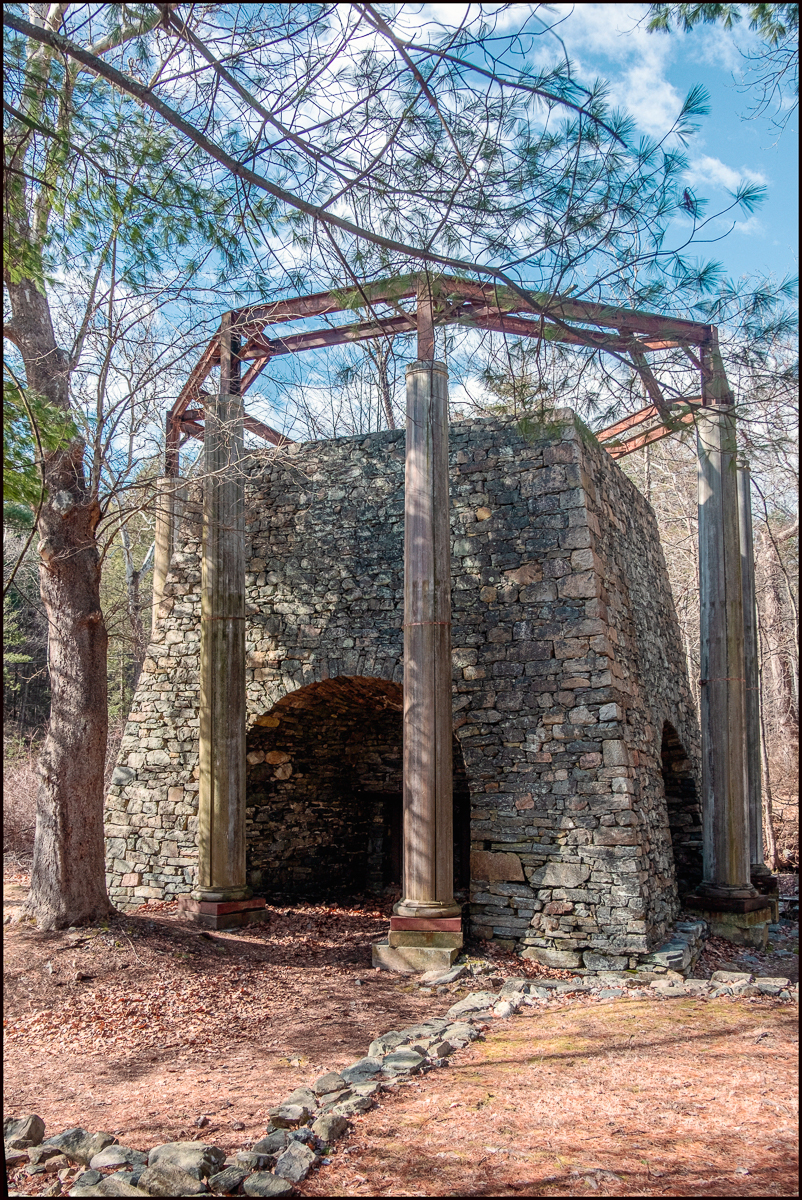
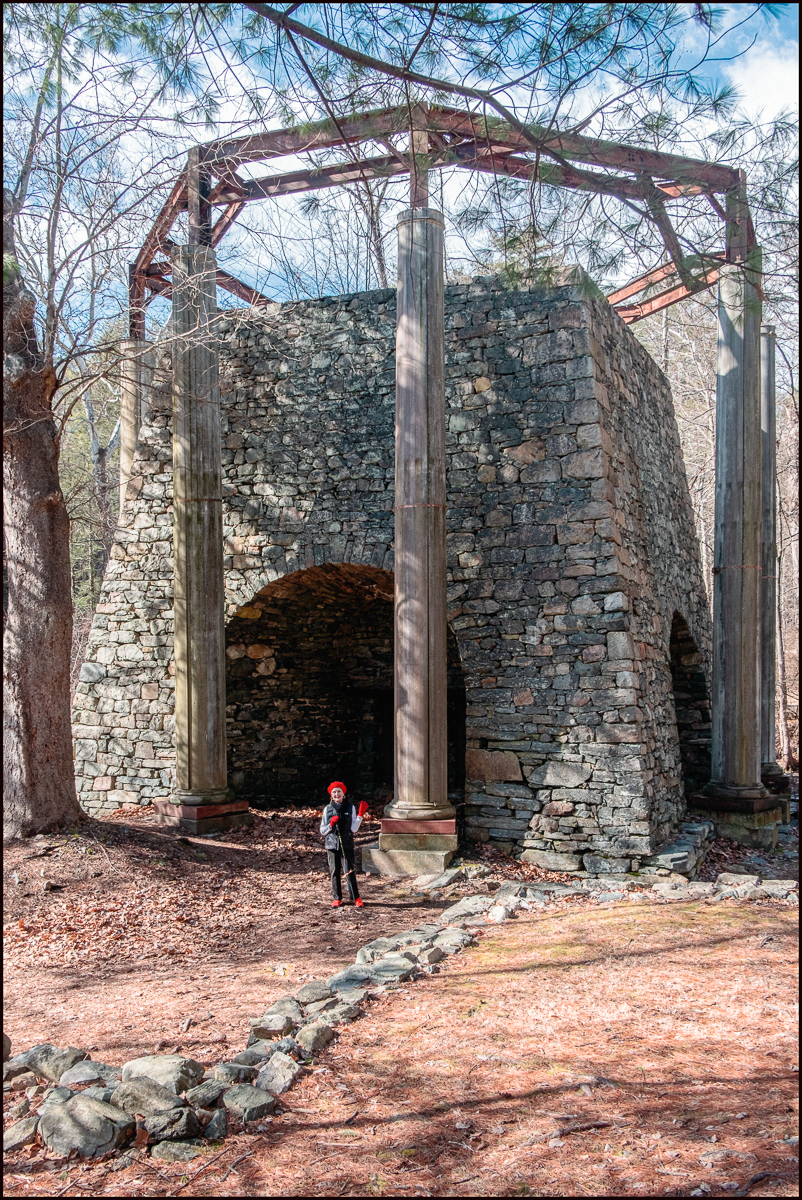
“Sterling Furnace No.2, restored to its pyramidal shape, played a major role in the production of iron for the “great chain”, cannonballs, and other weapons used in the Revolutionary War. The iron used for domestic household and farm implements and tools was also produced here. The raw concentrated iron ore was smelted with charcoal and limestone in the furnace and then the molten iron flowed into forms in the ground to be converted to “pigs” (ingots). Water power from the outfall from Sterling Lake was used to run the machinery that powered huge bellows and forced air into the furnace to raise the temperature of the mix to the iron melt point.

After its restoration in 1960 by architect Roland Robbins, a domed structure – supported by wooded neo-classical columns – was erected around the Furnace to protect it. The dome is gone but the columns remain.” (Lakeville Ironworks Trail Brochure).

I’ve seen pictures of this furnace many times before and in my mind I saw it as being rather small. Maybe you have to duck your head as you go under the arched opening? Boy was I wrong. Take a look at the picture below with my friend, Karen posing before the furnace and you get a better idea of just how big it is.
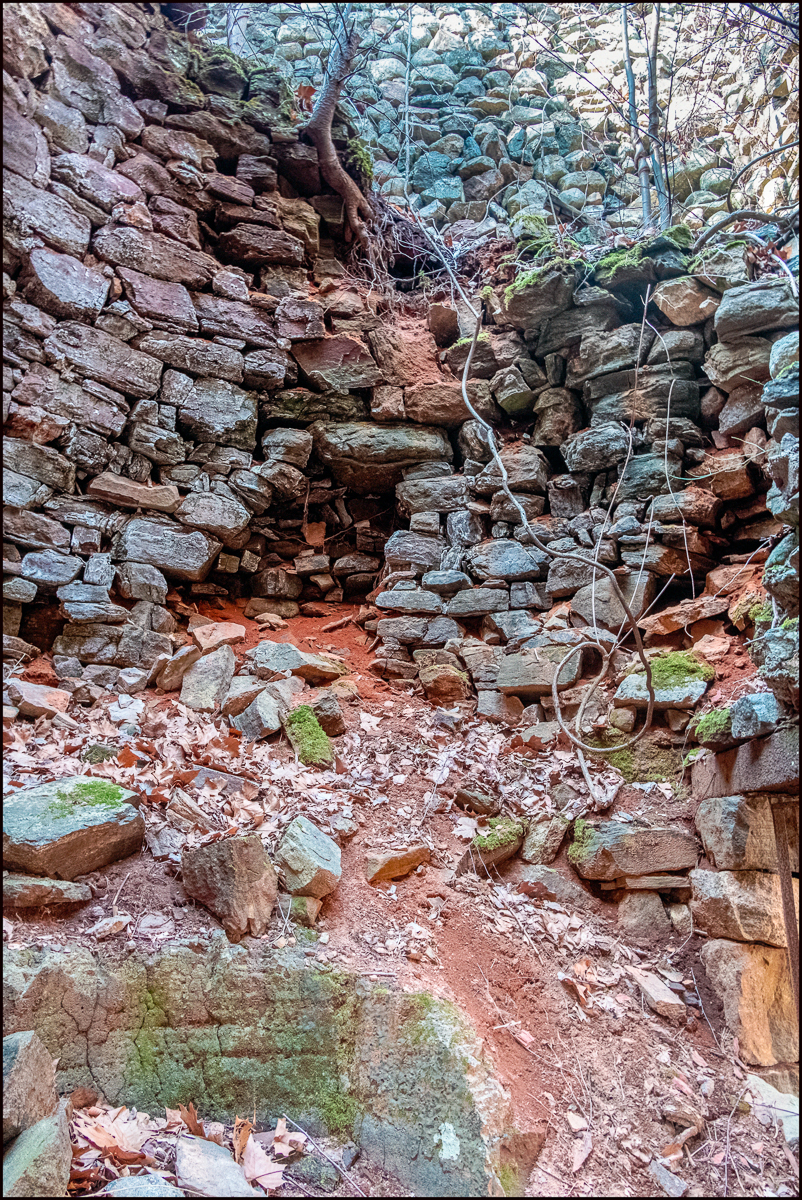
This and the next picture show the interior of the furnace.
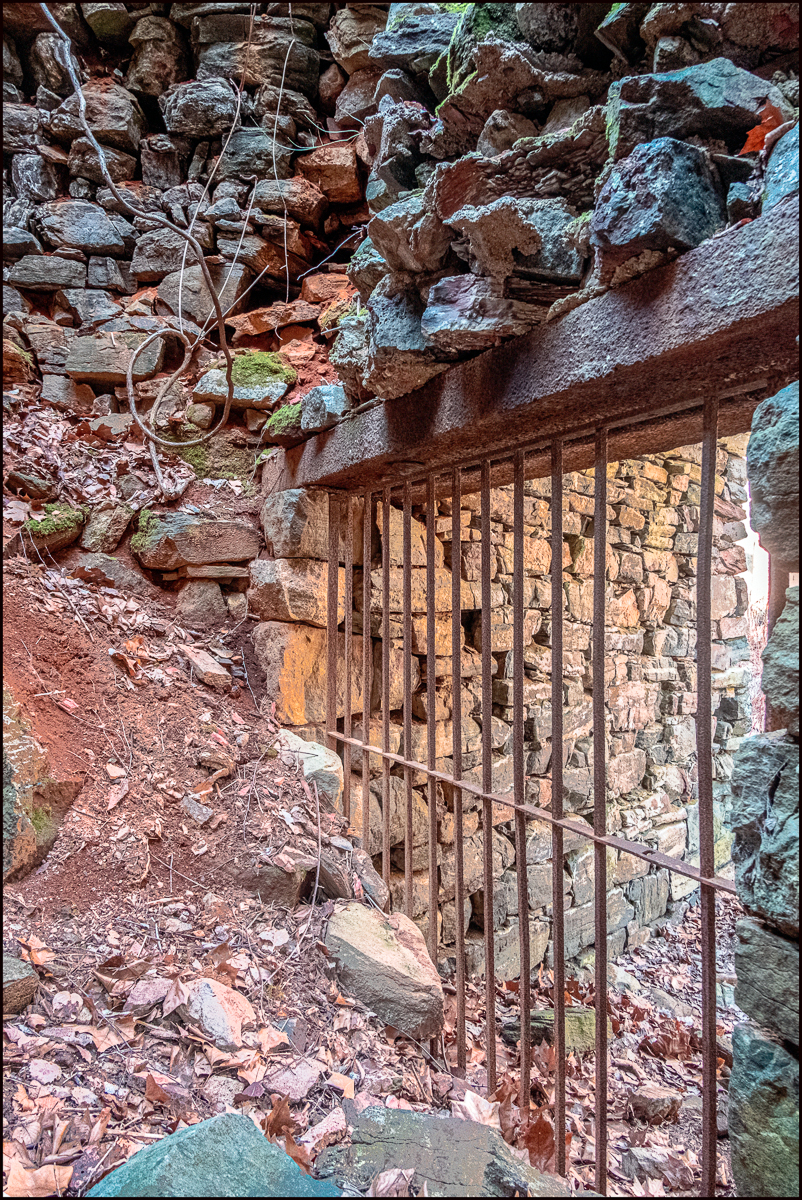
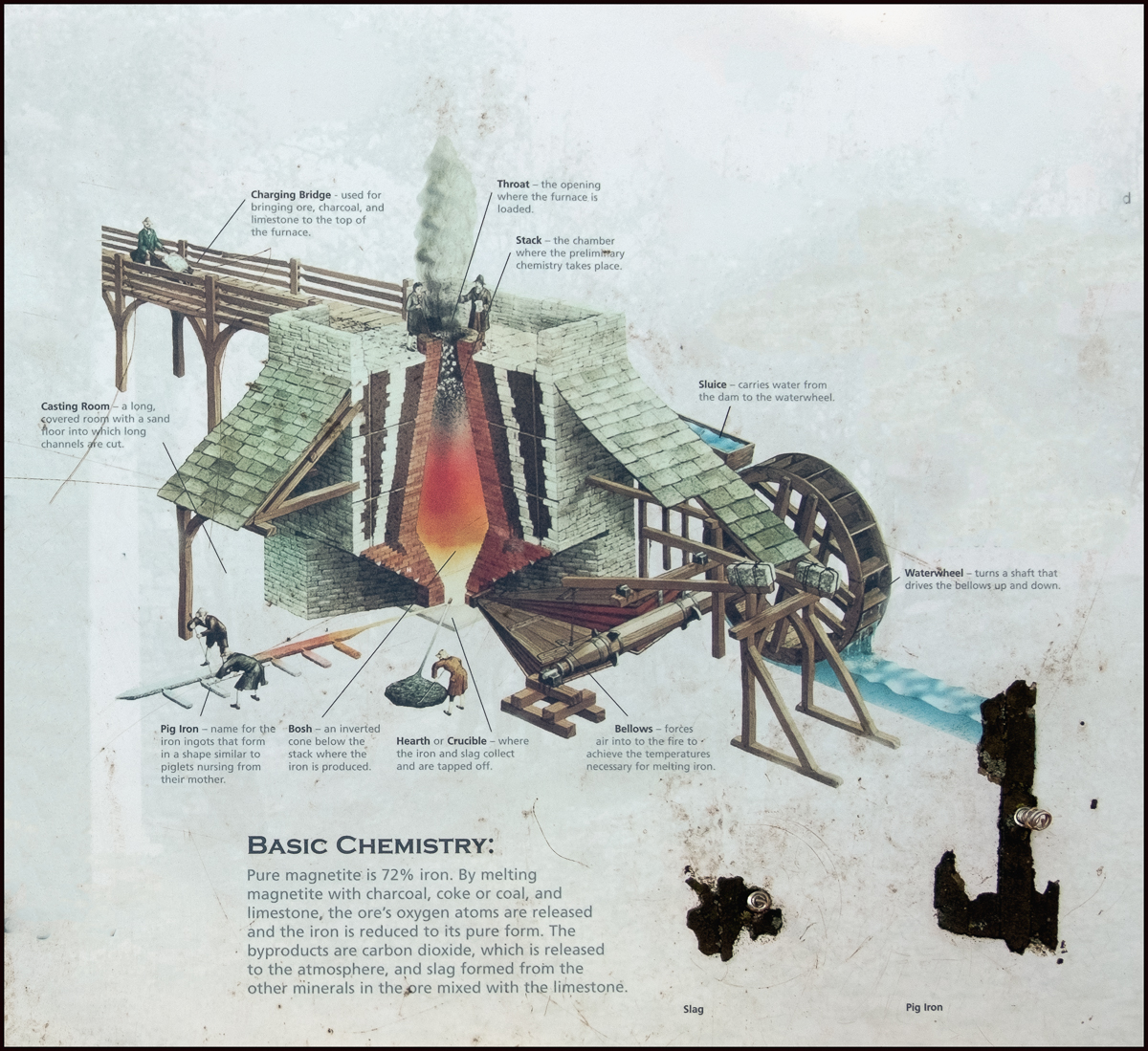
Diagram showing the workings of the furnace.

Taken with a Fuji X-E3 and Fuji XC 16-50mm f3.5-5.6 OSS II
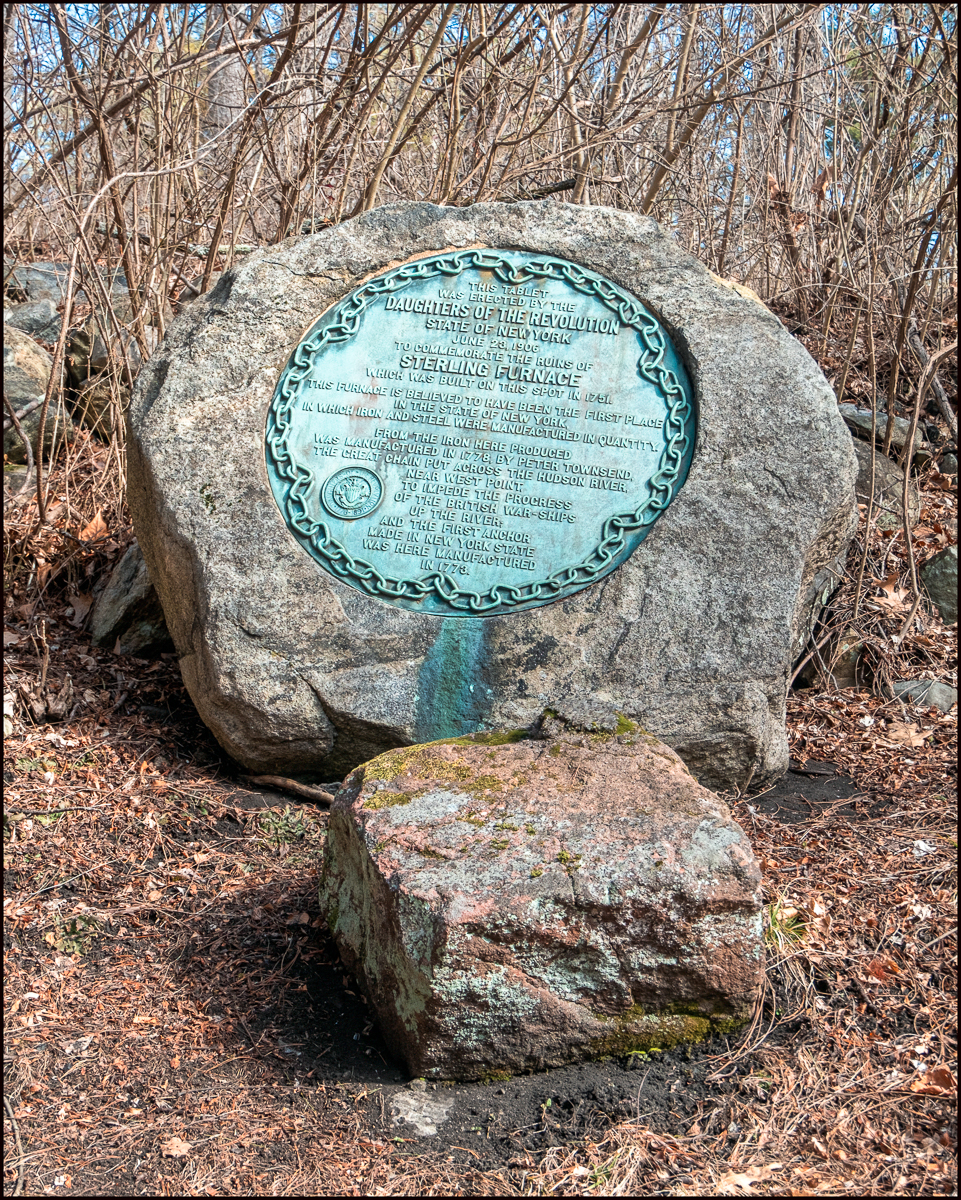
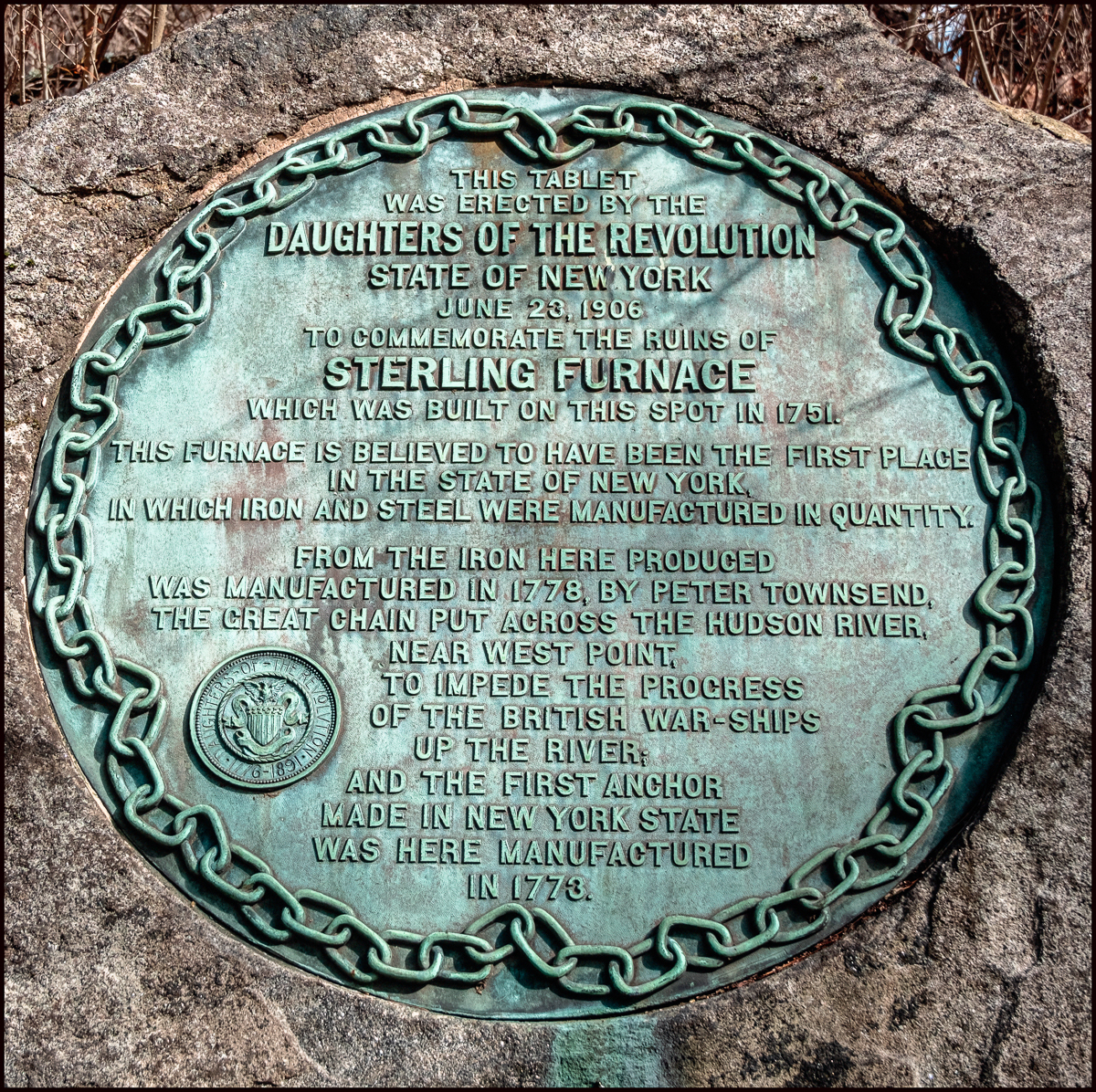
A visit to Sterling Forest – Commemorative Tablet

This Tablet by the side of the trail was placed by the Daughters of the Revolution to commemorate the Sterling Furnace and its many historic firsts including producing the iron for the first anchor made in NY State and the links of the Great Chain that stretched across the Hudson River in 1778 in hopes of stopping the British fleet.

Taken with a Fuji X-E3 and Fuji XC 16-50mm f3.5-5.6 OSS II
A visit to Sterling Forest – An old house

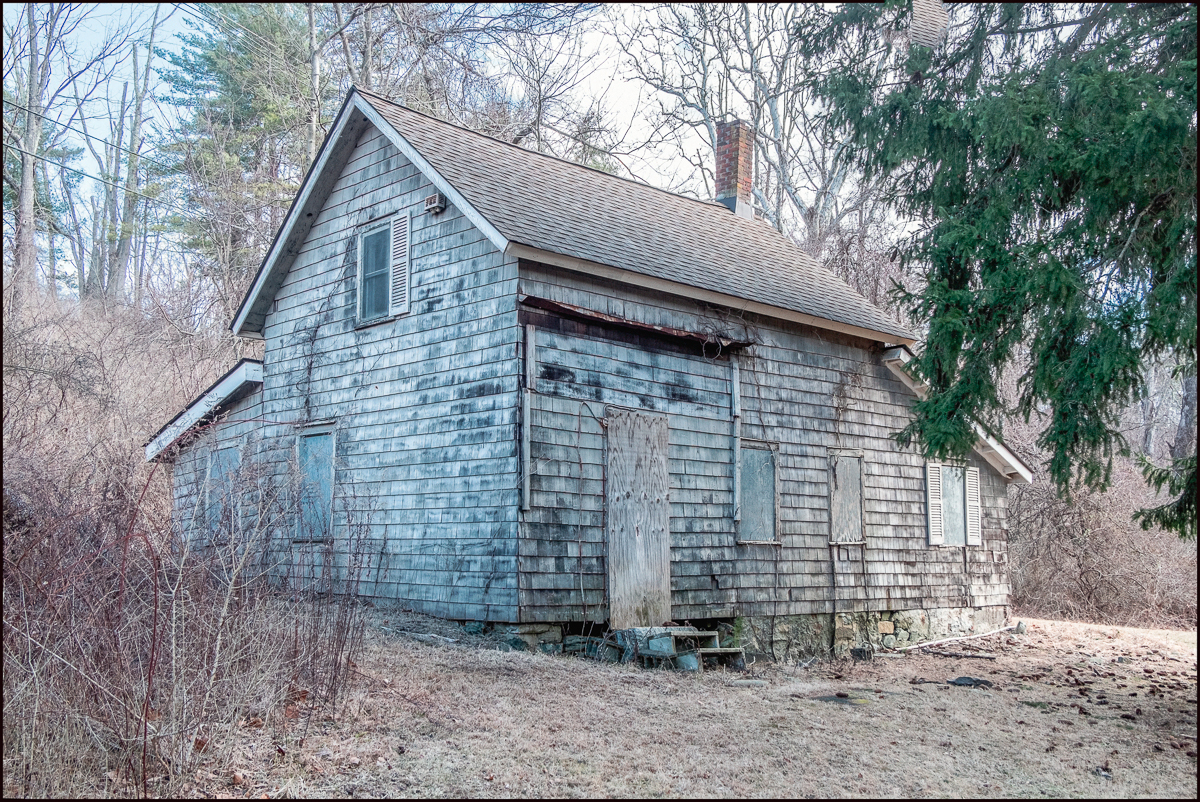
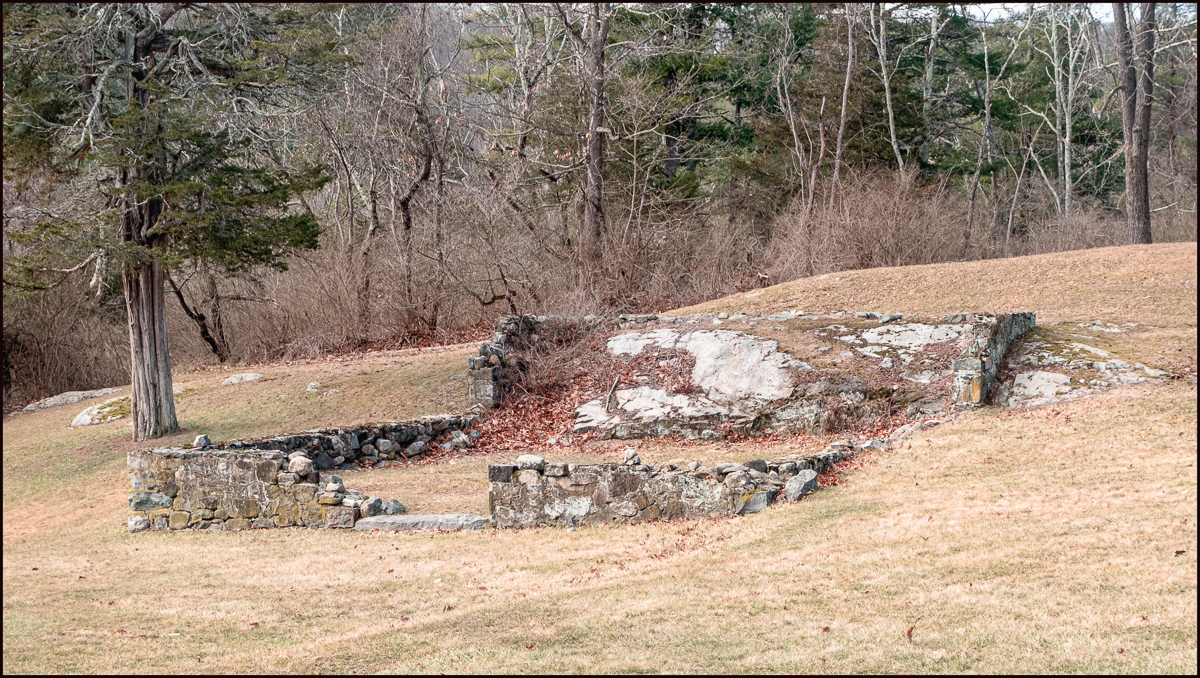
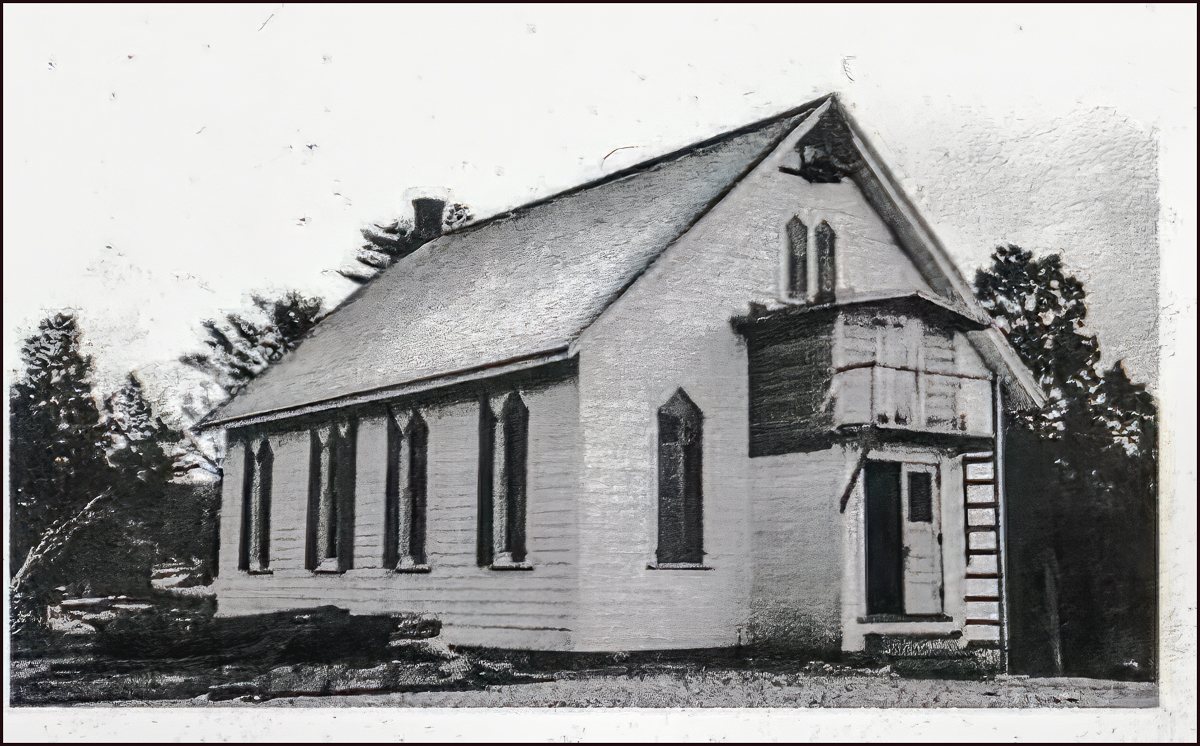
“Lakeville, a Vanished Community. At the height of production, the Sterling Ironworks employed 500 men. According to one list, they were “founders, miners, mineburners, ore pounders and furnace fillers, banksmen, and stock takers, refiners of pig iron and drawers of bar, smiths and anchor smiths, carpenters, colliers, wood cutters, and common laborers”. Some of these titles may be curiosities now, but each had an essential part in making raw iron ore into useful tools and weapons. At first, miners and other workmen lived rent free in company-owned houses, but in the 1870s, the Sterling Iron and Railway Company began renting 140 houses to the miners. In the wintertime, local farmers augmented the work force as woodcutters. Numerous foundations around the mine are reminders of the church, school, hotel, store, homes and offices that made Lakeville a busy little community. This home is one of the last remaining Lakeville houses; some of the other homes were moved to surrounding communities.” (Information Board. The pictures on this sign give some idea of the extent of this highly industrialized community that began in 1736. The wooded vista around you shows very little evidence of its former presence).

Taken with a Fuji X-E3 and Fuji XC 16-50mm f3.5-5.6 OSS II