A Visit to Boston – Day Three – Horses (and more) on Copley Place

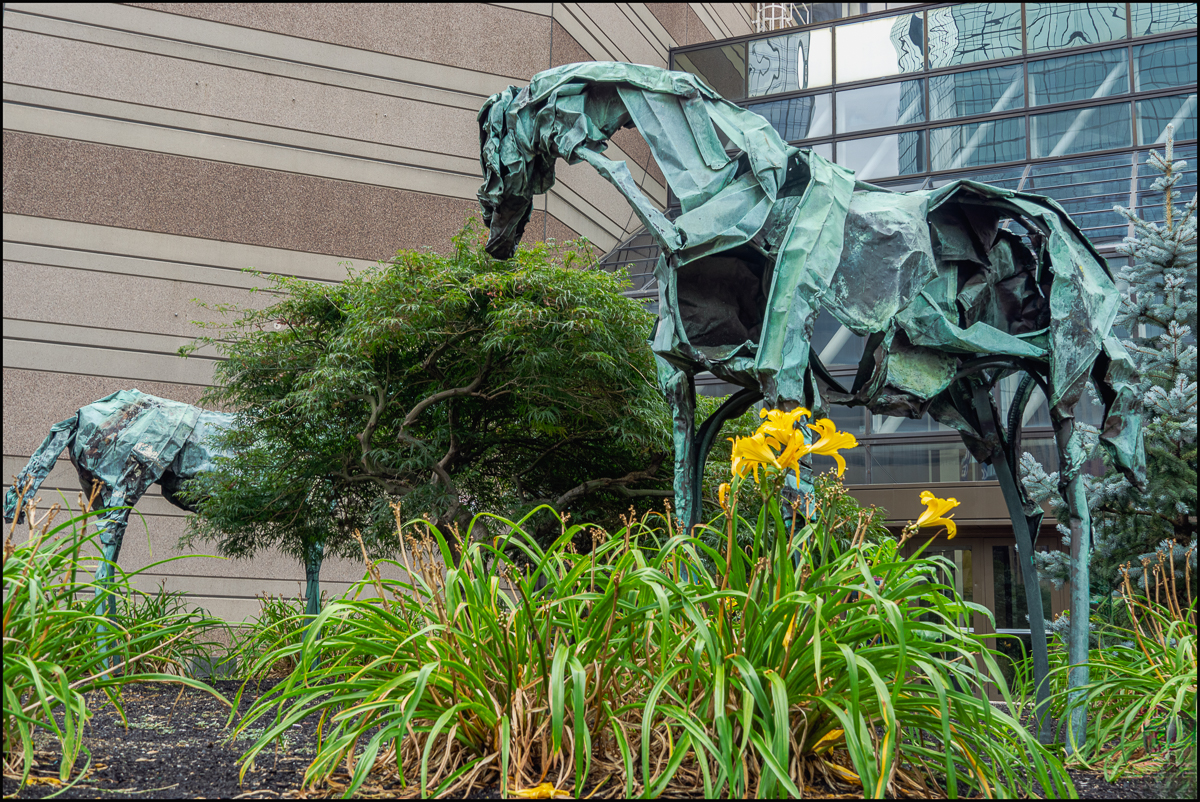
As I walked down to Copley Square, not far from Back Bay Station, I came across these two horses in a shopping area called “Copley Place“. According to the Next Phase Blog:

Like many other cities, Boston has statues of horses and, like other cities, they mostly serve as mounts for famous men, like George Washington and Paul Revere. But two horses called Paint and Henry graze in a garden outside the Copley Place mall, minus rider or tack. and Henry and they have a history that’s more retail than martial.

Like many other cities, Boston has statues of horses and, like other cities, they mostly serve as mounts for famous men, like George Washington and Paul Revere. But two horses graze in a garden outside the Copley Place mall, minus rider or tack. They are called Paint and Henry and they have a history more retail than martial.

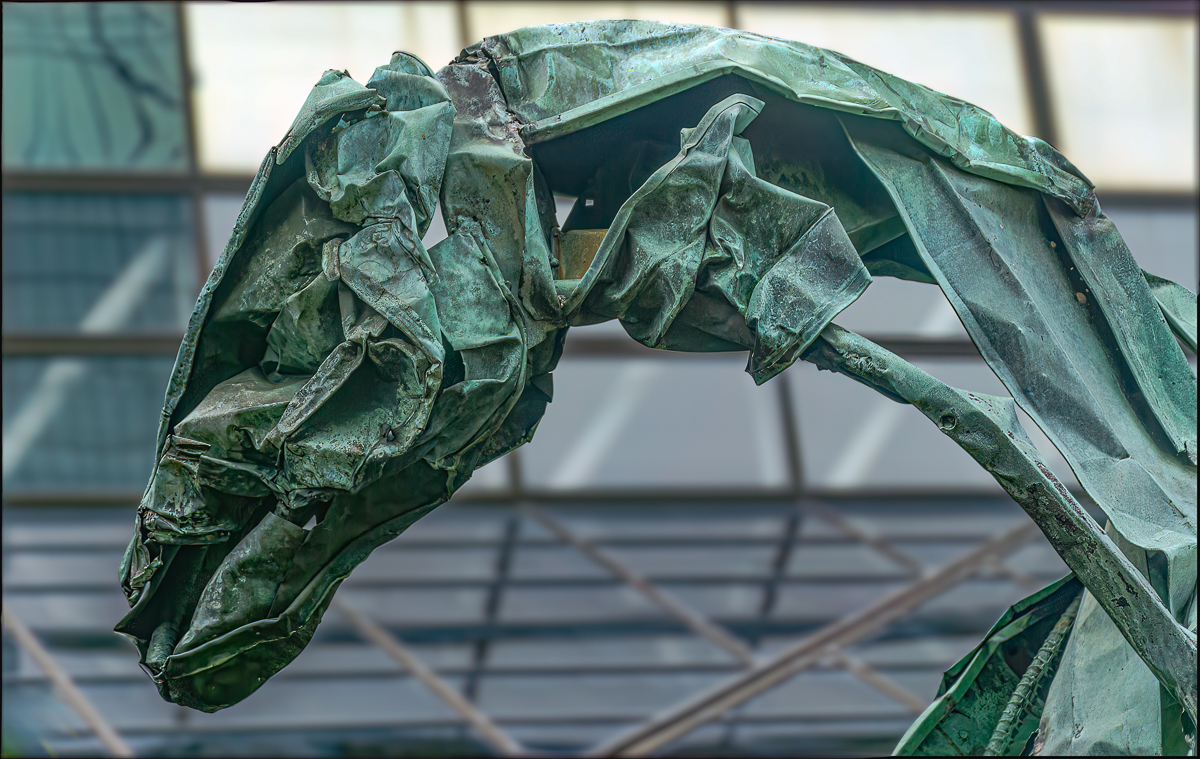
Sculpted by Deborah Butterfield, these two “semi-abstract” sculptures are a visual allegory for the establishment of the Neiman Marcus store behind them. They are made of cast bronze from an armature of bronze and copper using the “lost wax” process. Unlike their more heroic counterparts elsewhere in the city, they are not realistic representations of horses or even solid. (Boston’s Horses: Paint and Henry, which contains additional information)

. I’m afraid I don’t know which is Paint and which is Henry.

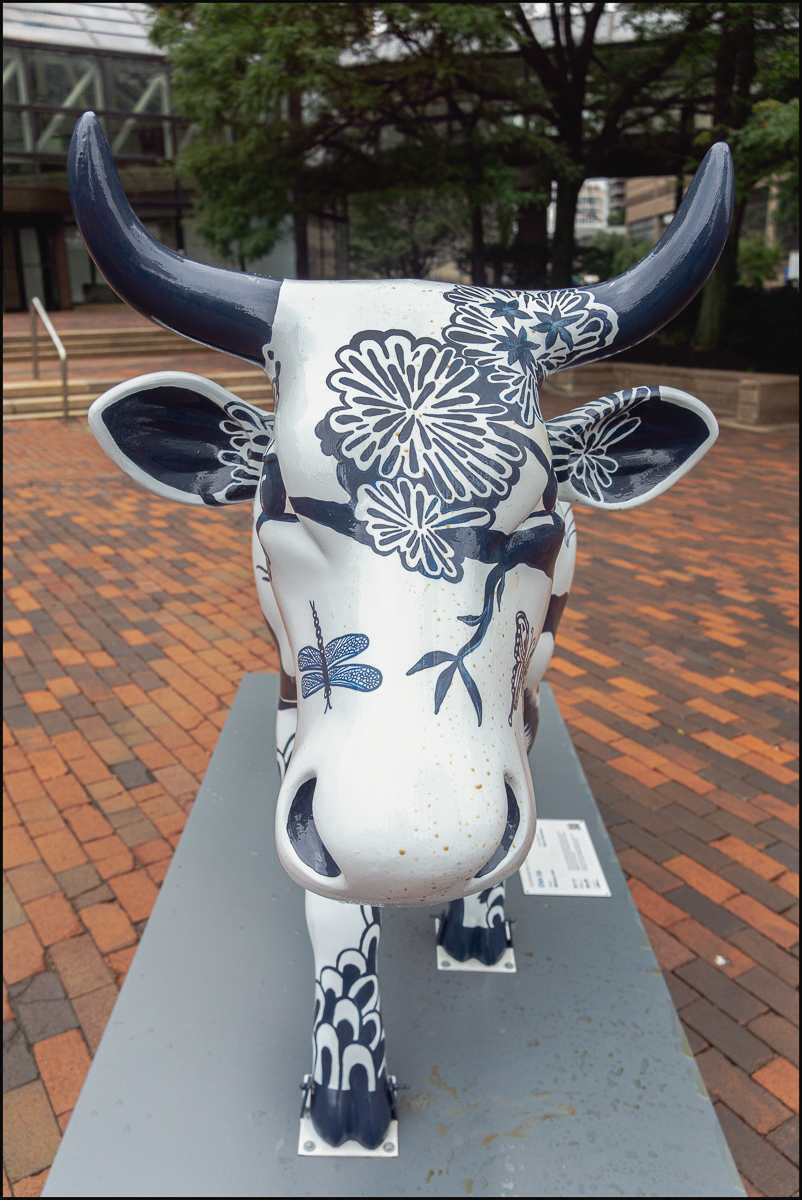
And of course, there was the inevitable cow. I told you earlier that there would be more of them.

Taken with a Sony A6000 and 18-135mm f3.5-5.6 OSS

A Visit to Boston – Day Three – Back Bay Station

Whenever I’m going somewhere I tend to get to the airport/station very early. As long as I can find somewhere to sit comfortably, read a book and maybe have a beer, I’m happy. When I left New York, the spanking new Monynihan Train Hall (See:In New York City – The Moynihan Train Hall) was a great experience: I had purchased a first-class round trip so I was escorted to the first-class lounge, where I had breakfast (I could have had drinks too, but it was far too early). Contented, I sat there reading my book until it was time to leave when I was escorted down to the train. I guess I expected something similar in Boston and so went early again.

I was wrong! Back Bay Station is a bit of a dump. Something like an old-style bus station: cramped; a bit seedy; nowhere comfortable to sit; virtually no refreshments. I couldn’t see sitting there for a couple of hours, so I checked my maps app to see where I was and realized that I was a short walk from Copley Square. We’d passed it on our bus tour, but we went through so quickly that I wasn’t able to take it in. It was time to go and take a closer look.

Incidentally the statue (about the only thing of interest in Back Bay Station) is of A. Philip Randolph. The New England Historical Society describes him as follows:

Randolph was both a great labor leader and a great civil rights leader, not coincidental when you consider racial justice means nothing without economic justice. At least that’s what Randolph – and his protégé Martin Luther King, Jr., thought. The 1963 March on Washington was, after all, the March for Jobs and Freedom.

Leaders of the 1963 March on Washington for Jobs and Freedom. A. Philip Randolph is seated in the center; John Lewis is second from right. Photo courtesy National Archives.
King called Randolph the “truly the dean of the Negro leaders.”

Randolph is credited with pushing President Franklin Roosevelt to ban discrimination in the defense industry and President Harry Truman to integrate the military. Considered the most important black leader in the 1930s and 1940s, he helped bring thousands of railroad sleeping car porters into the middle class.

Though Randolph grew up in Jacksonville, lived in New York City and made his mark on Washington, he also had an impact in Boston’s African-American community. Even today, his nine-foot sculpture in the train station may inspire commuters who take the time to read his words at the base: “Freedom is never granted; It is won. Justice is never given; it is exacted.” New England Historical Society Article: A. Philip Randolph heads the 1963 March on Washington, which contains much more information, including a video.

To be fair to Back Bay Station, I was told that there was a lounge, but that it was in the Terminal at South Station. I checked out South Station and discovered that it’s much more interesting, with more facilities than Back Bay. More like the Moynihan Station in New York, in fact. In my ignorance I had chosen the wrong station to leave from. I’ll know better next time. My apologies to Back Bay.

Taken with a Sony A6000 and 18-135mm f3.5-5.6 OSS

A Visit to Boston – Day Three – Sullivan’s Tap

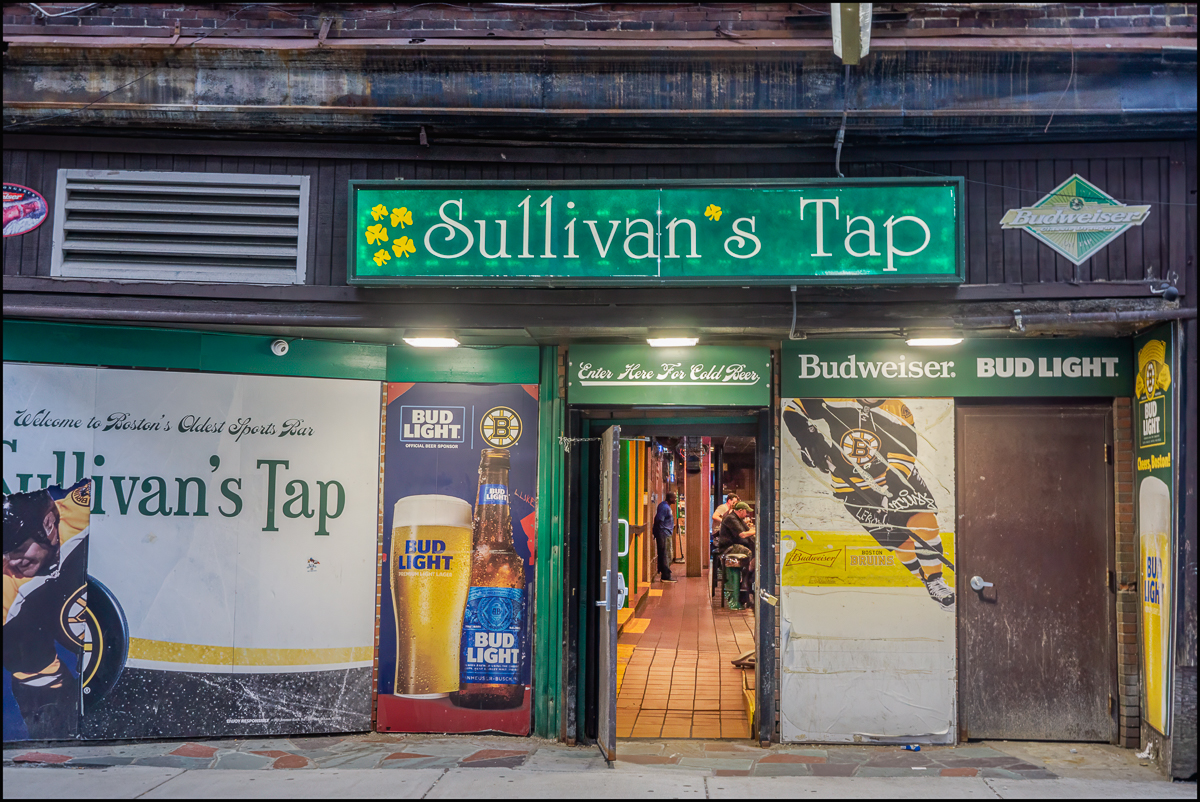
I got my stuff together and prepared to leave. But before actually leaving we planned to have breakfast, where had a long chat. After picking up my luggage from the hotel I took a picture of the bar across the road from he hotel entrance. It’s called “Sullivan’s Tap” and it bills itself as “… Boston’s Oldest Sports Bar! First opened in 1933”. Then I made my way to Back Bay to take my train back to New York.

Taken with a Sony A6000 and 18-135mm f3.5-5.6 OSS
A Visit to Boston – Day Two – Dinner at Filippos

Walking back to the Hotel at the end of the first day we bumped into an interesting looking restaurant and decided that, since we’d already had dinner we’d have dessert there (that’s when the first picture was taken). At the end of the second day, we decided to have dinner there (unfortunately we didn’t take a picture). The restaurant is called Filippo Restaurant Boston. We had a decent meal and then set of back to the hotel…and walked into a huge storm. It was raining buckets, so much so that it was impossible to cross and intersection without wading through a couple of inches of water. Thunder and Lightning all over.

Luckily the hotel was only about five blocks away, but still we were thoroughly drenched by the time we got there.

Taken with a Sony A6000 and 18-135mm f3.5-5.6 OSS
A Visit to Boston – Day Two – Across Boston Common

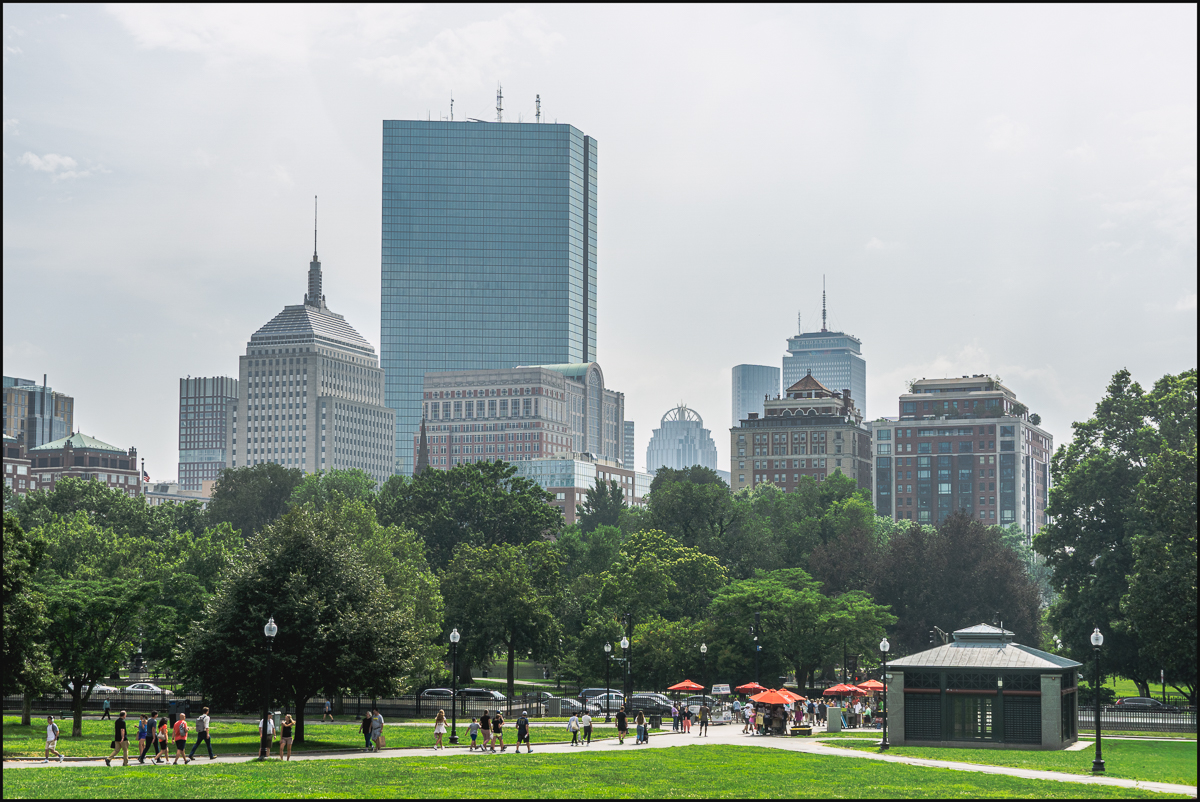
“Hear the echoes of 350 years of the most extraordinary history of America’s oldest park. Founded in 1634.

Here the Colonial militia mustered for the Revolution. In 1768, the hated British Redcoats began an eight-year encampment. George Washington, John Adams and General Lafayette came here to celebrate our nation’s independence. The 1860s saw Civil War recruitment and anti-slavery meetings. During World War I, victory gardens sprouted. For World War II, the Common gave most of its iron fencing away for scrape metal.

Boston Common continues to be a stage for free speech and public assembly. Here, during the 20th century, Charles Lindbergh promoted commercial aviation. Anti-Vietnam War and civil right rallies were held, including one led by Martin Luther King, Jr. In 1979, Pope John Paul II celebrated Mass.

Frederick Law Olmsted never touched Boston Common, but his sons did. About 1913, their firm supervised the paving of walkways, the replenishment of the soil, and the moving of 15-ton trees.

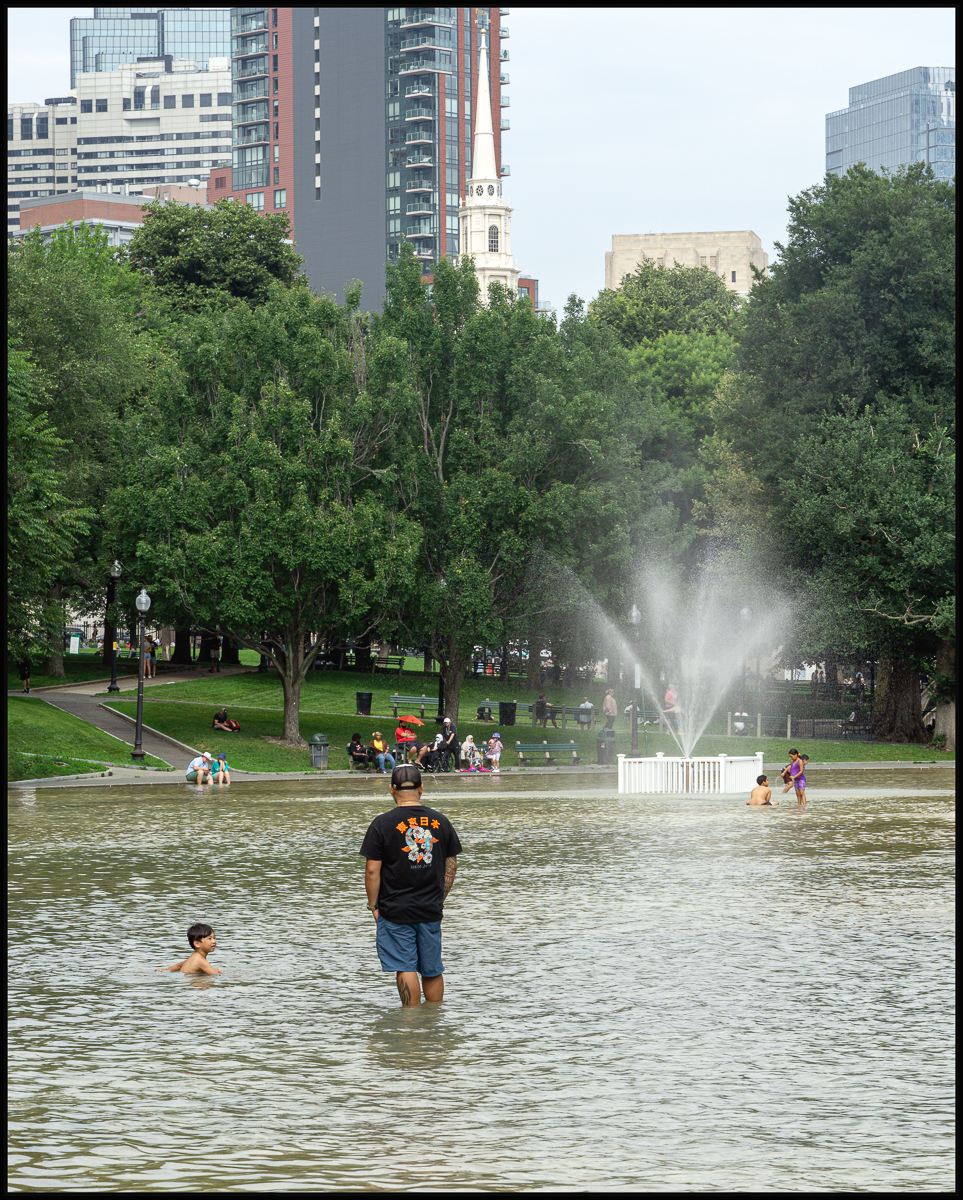
From a utilitarian common ground for activities like grazing, militia formations and public hangings, the Common evolved. Its peaks were leveled cows were banned and 19th Century Bostonians added trees, fountains and statuary. The Common became the park-like greenspace we know today. The park includes ballfields, a tot lot and the Frog Pond, which provides skating in winter and a spray pool for children in the summer.” (City of Boston Website)


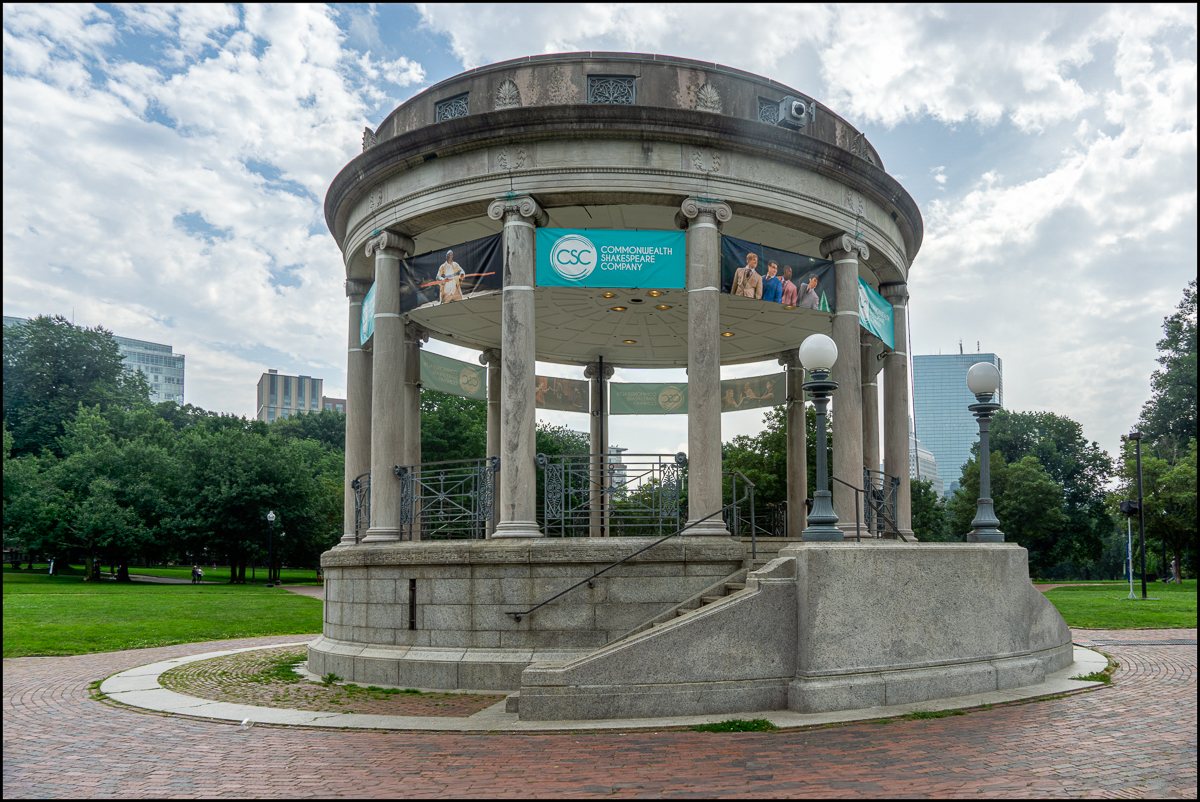
Parkman Bandstand


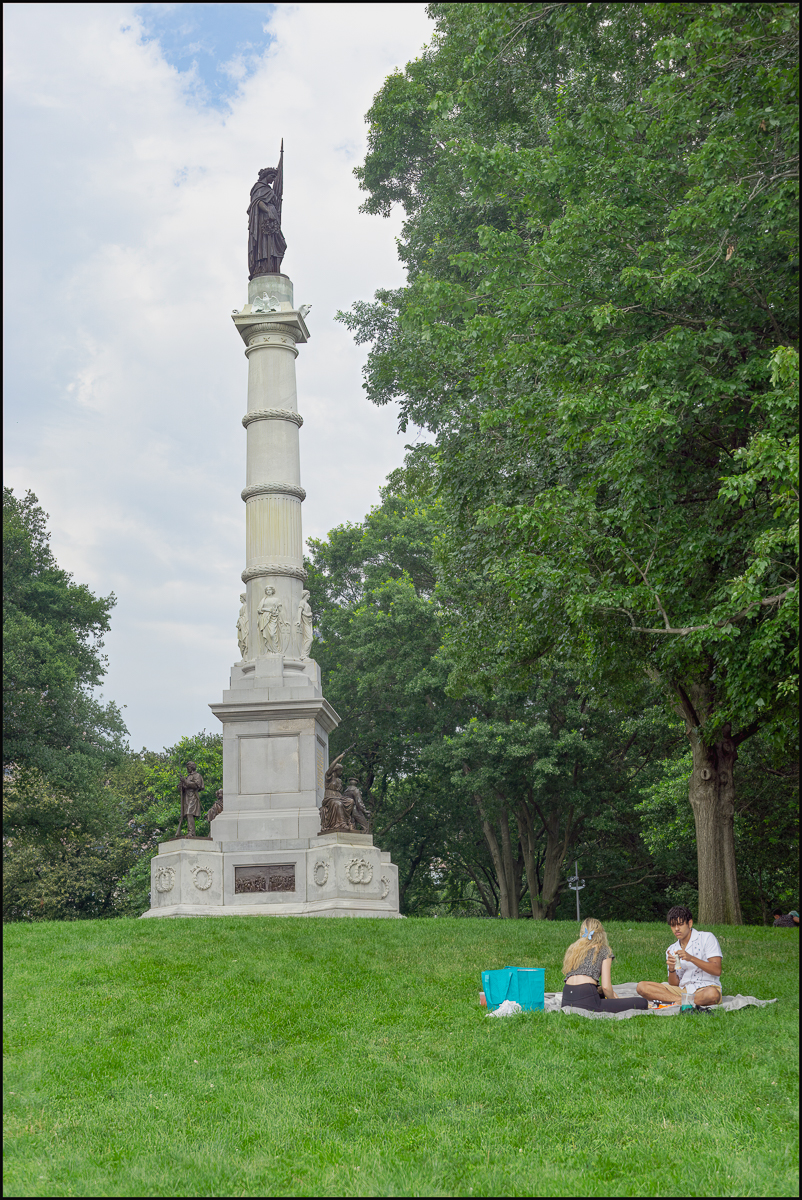
Boston Soldiers and Sailors Monument


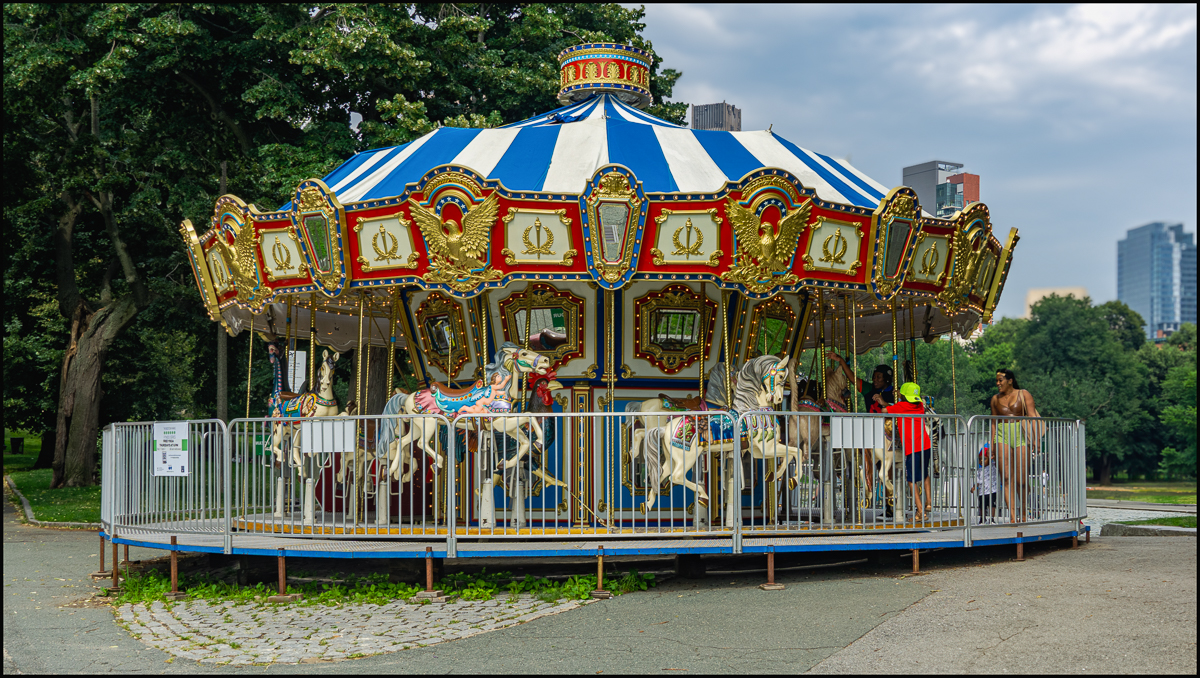
Carousel


Frogpond


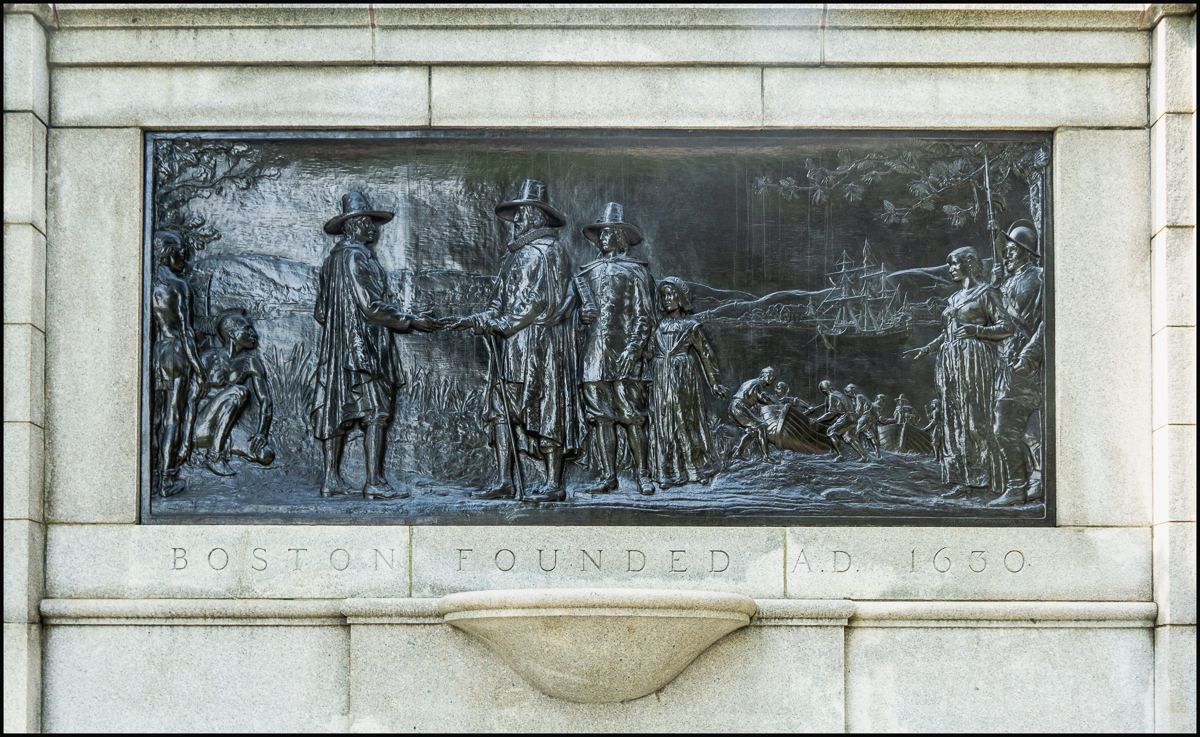
Plaque depicting the founding of Boston

Taken with a Sony A6000 and 18-135mm f3.5-5.6 OSS