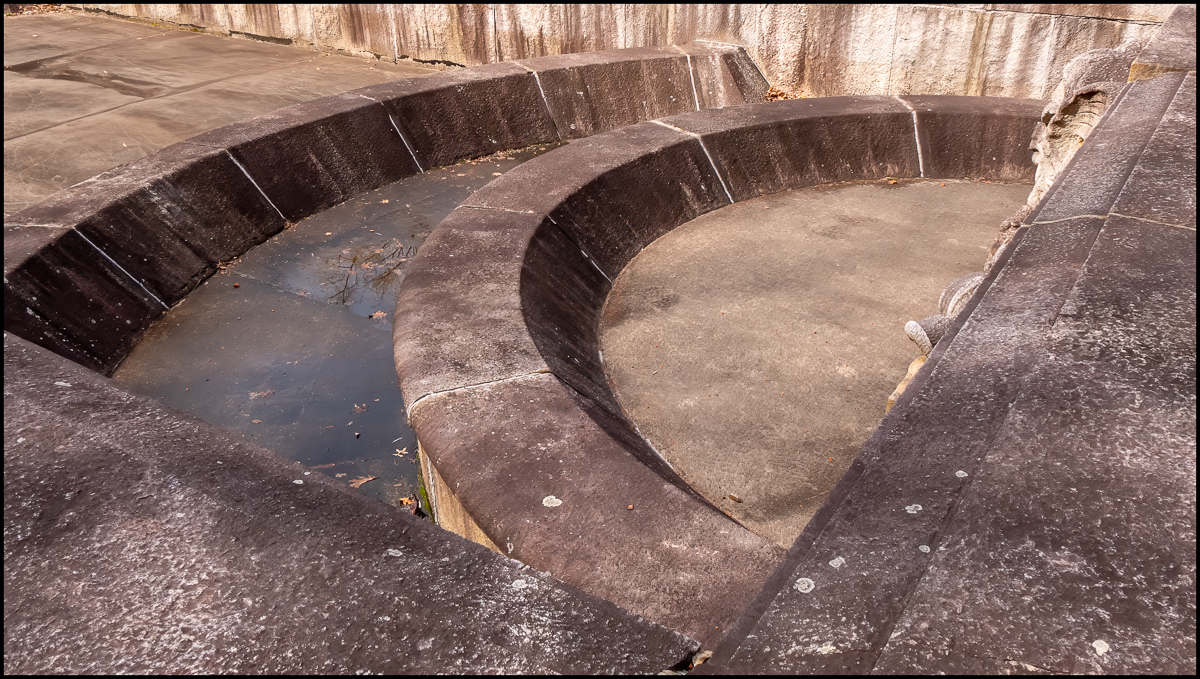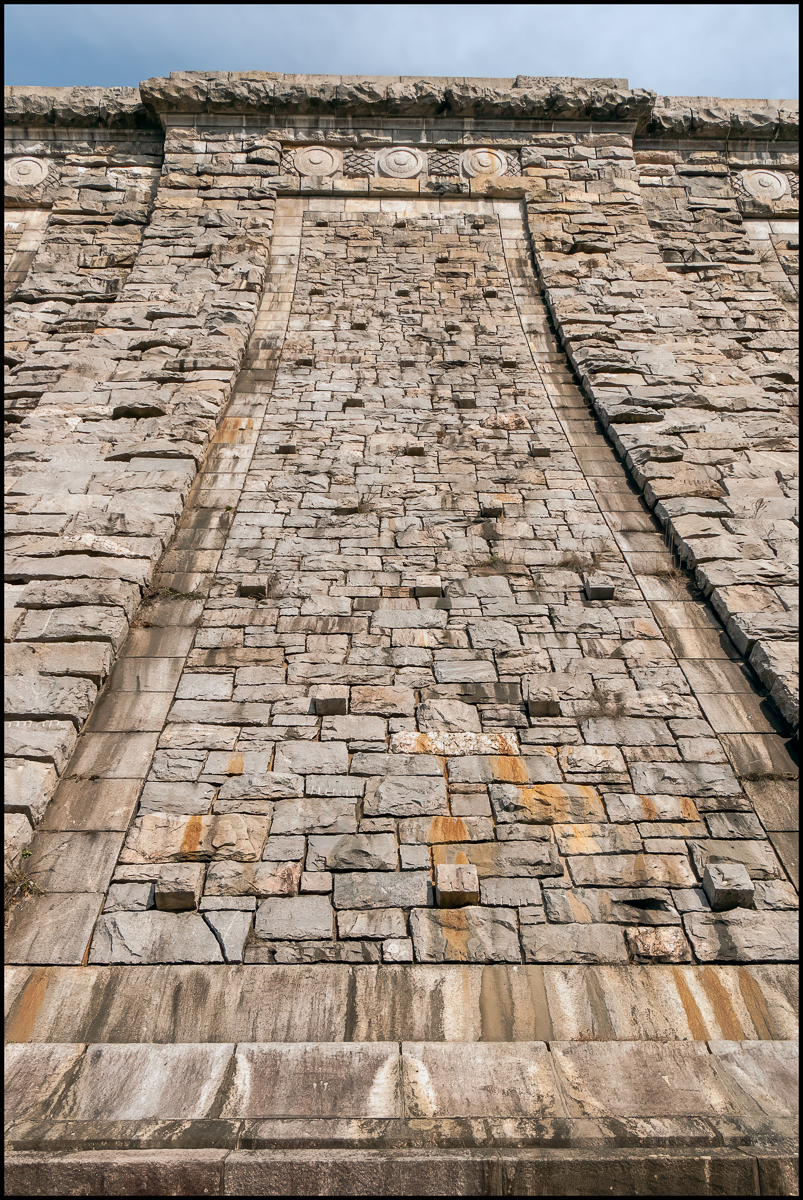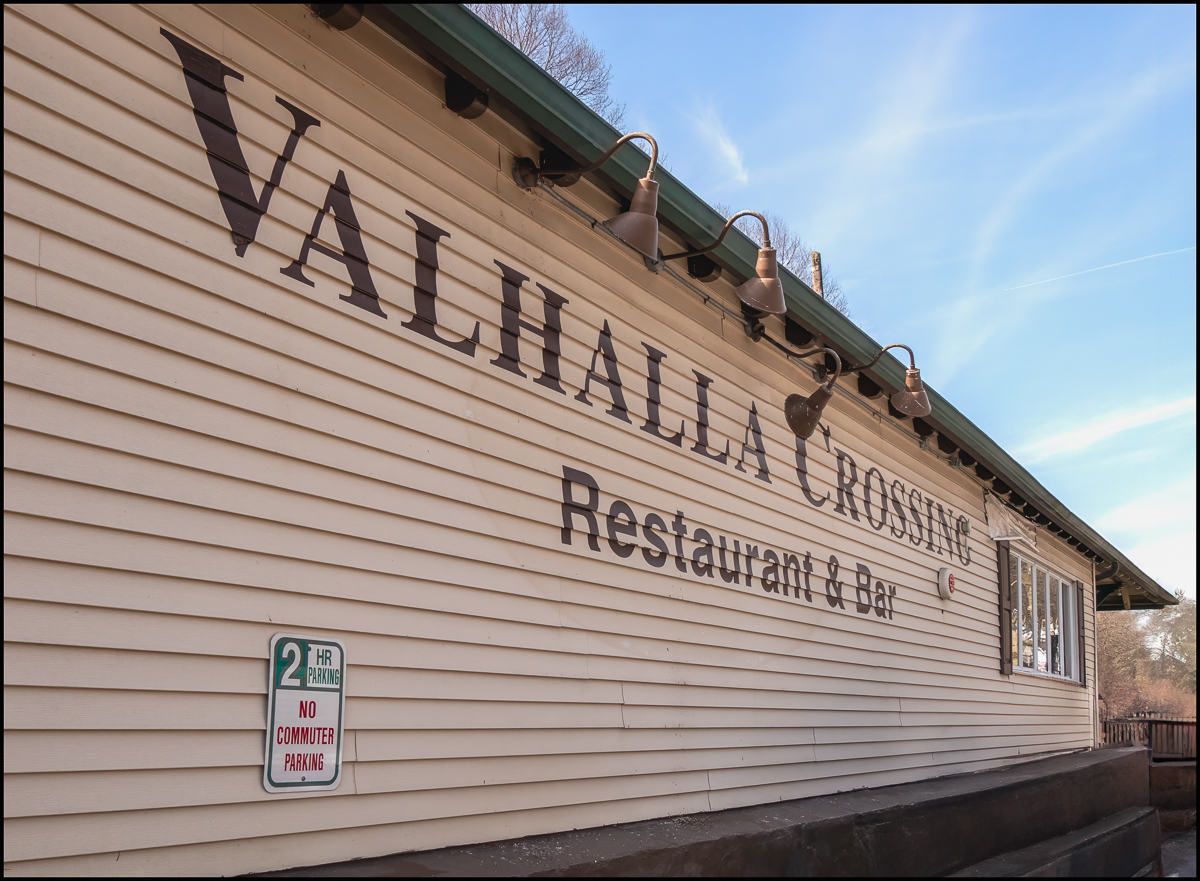
After I finished my trip to the Kensico Dam I walked the short distance back to Valhalla Station to get my train back. Unfortunately, the trains don’t run that frequently at that day/time and I just missed one so I had to wait an hour for the next one. I guess the 205 steps up to the top of the Dam and down again had given me an appetite and I was feeling hungry. Luckily that was a restaurant next the station. In fact, part of it was the old Valhalla station. I’d been driven past it many times, had always thought that, with its old station, and its two historic railroad cars, it looked interesting, but I’d never stopped to try it. Now was the time.
The restaurant is called Valhalla Crossing and according to some information on the back page of a menu:
The New York & Harlem Railroad Company extended its service north of White Plains area in 1849. The coming of the railroads up to the Mt. Pleasant area caused rapid growth of the town close to the railroad lines. Train station buildings were needed and constructed. The present Valhaila Station was originally named the Davis, Brooke Station and then the Kensico Station. The construction of the Valhalla Station was completed in 1852 In 1899 the Taylor and Stevens families sold a very large piece of land to be used for a local cemetery-the Kensico Cemetery. This huge cemetery was located just north of Kensico Train Station and its name caused much confusion on the railroad and with the mail. People were dissatisfied with the fact that both places bore the same name. So, an organization was formed to change this, and in 1904 the name Valhalla was adopted. Soon after the end of the Civil War, New York City’s thirst for water eased, and the New York Board of Water Supply built an earth dam and spillway in 1887. However, by 1898 New York City’s water supply had to be increased again which led to the construction of the Kensico Reservoir and the Valhalla Dam, both of which were completed in 1915.
William Scazzero was the guiding spirit in converting the Valhalla Train Station into a restaurant back in 1973. He brought in a 1910 B&O caboose and an 1896 Lake Shore & Michigan Southern Railway car – both to be used as dining cars. The original train station building along with its wide-planked floors is the current bar. The beautiful oak bar was built in 1903 for Bronxville’s Hotel Gramatan and is still used today.
After Mr. Scazzero completed the restoration of the two train cars and the original train station building, he and his family operated the Valhalla Station restaurant for about 25 years. New owners purchased the restaurant and briefly operated it as Pickling Station. It was then purchased by Doug Crossett of Michael’s and McArthur’s in Pleasantville and renamed Valhalla Station, once again. Four years later in May of 2005 our family purchased the restaurant and named it Valhalla Crossing. Our antique train cars are available for private parties.
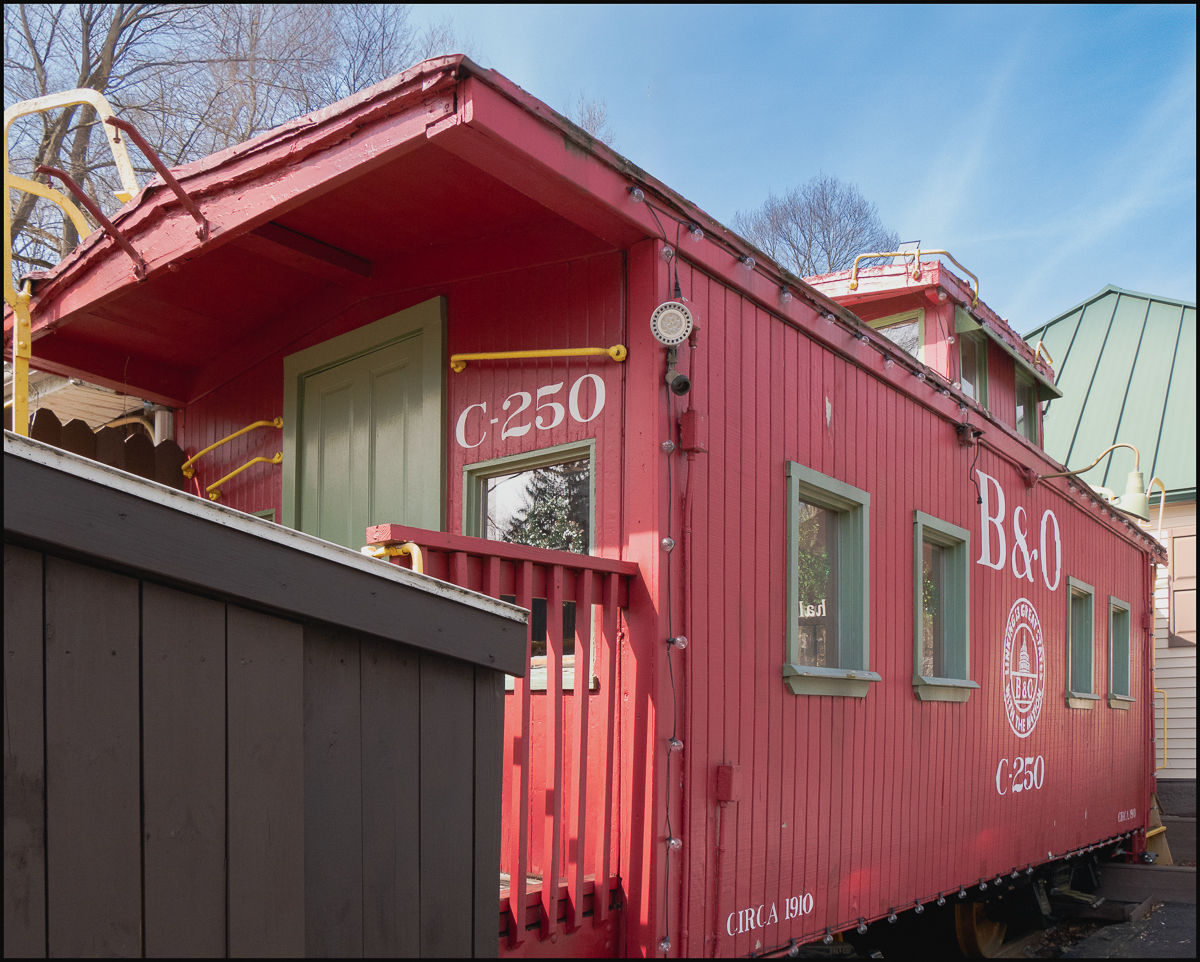
The Caboose. With only a few of its kind, the wooden caboose was built in 1910 by the Baltimore & Ohio Railway. It was in service for many years and then retired to the B&O freight yard in Chillicothe, Ohio. In 1973 it was purchased by Mr. Scazzero and moved to Valhalla for restoration.
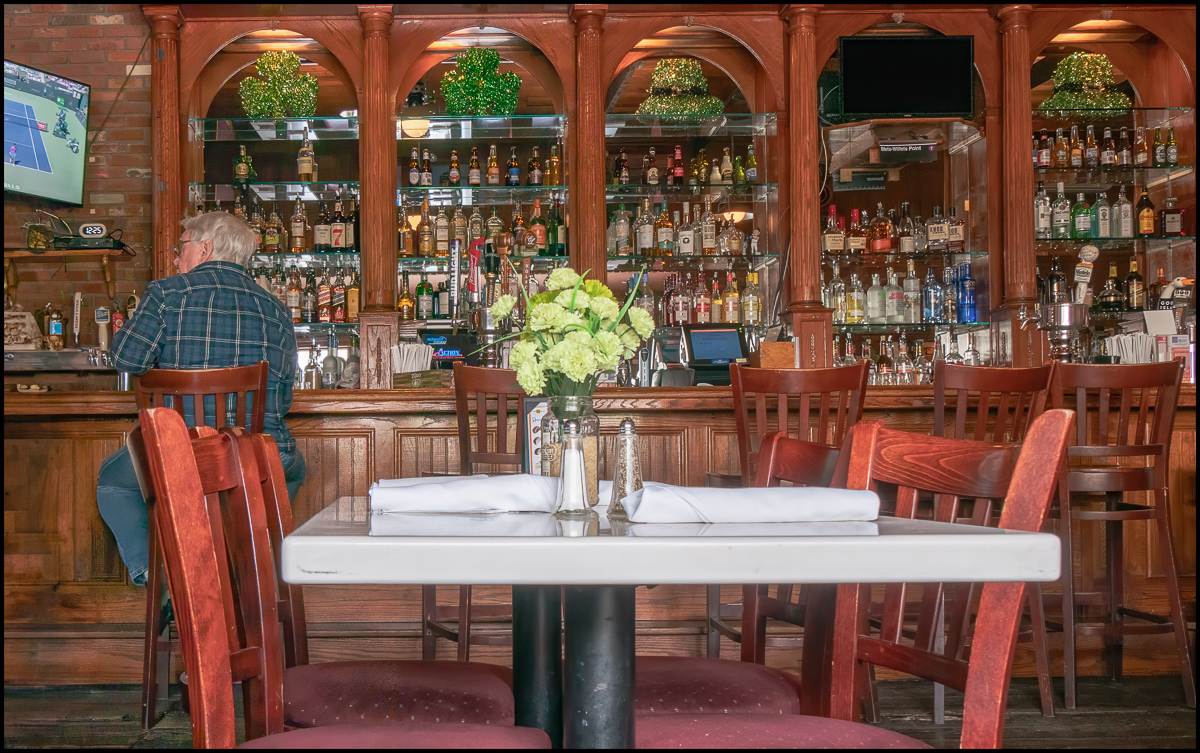
The bar.
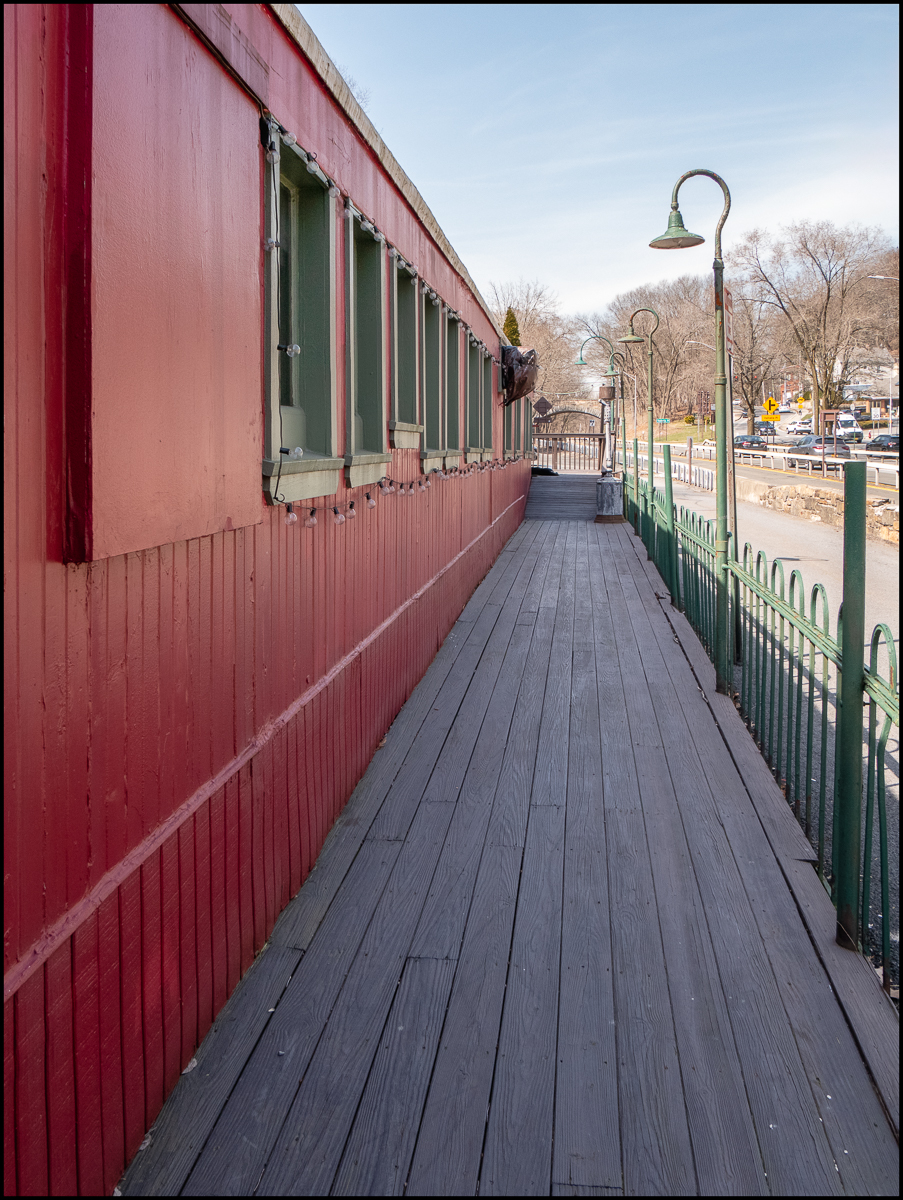
The “Presidential” car. In this case referring to the President of the Railroad, not the president of the US. This Lake Shore business car was built in February 1896 by the Wagner Palace Car Company, whose president was Dr. William Seward Webb, son-in-law of William H. Vanderbilt. The car was first assigned to Daniel W Caldwell and later W. H. Newman, both presidents of the Lake Shore & Michigan Southern Railroad, predecessor of the NY Central west of Buffalo. Still later, the car became the official car of the president of the NY Central itself. The mahogany paneling, stained-glass transom, and lamps represent the luxurious appointments and ornamentation commonplace back then. It is interesting to note that for several generations the ultimate hallmark of wealth, importance, and social achievement was private railroad cars. As Lake Shore & Michigan Southern Private Car 44, the car had two staterooms, a large kitchen, a dining room in the center of the car, and observation rooms with open platforms on both ends. In 1914 it was rebuilt adding a vestibule on one end, a third stateroom, and a porter’s room, and the car was re-lettered New York Central 44. In October 1924, the car was rebuilt again at West Albany. The interior was rearranged and a shower was added. In May 1928, the car was renumbered NYC 17, which remained until December 1940, when the car was converted to a diner for wreck train service and renumbered once more to X-928. In later years it was based in Jackson, Michigan. Finally, the car was retired and sold in March 1970 to Private Varnish Inc., a group of former New York Central employees who arranged for it to be moved to Harmon, NY. It was then purchased in January 1973 by Mr. Scazzero and moved to Valhalla for restoration.
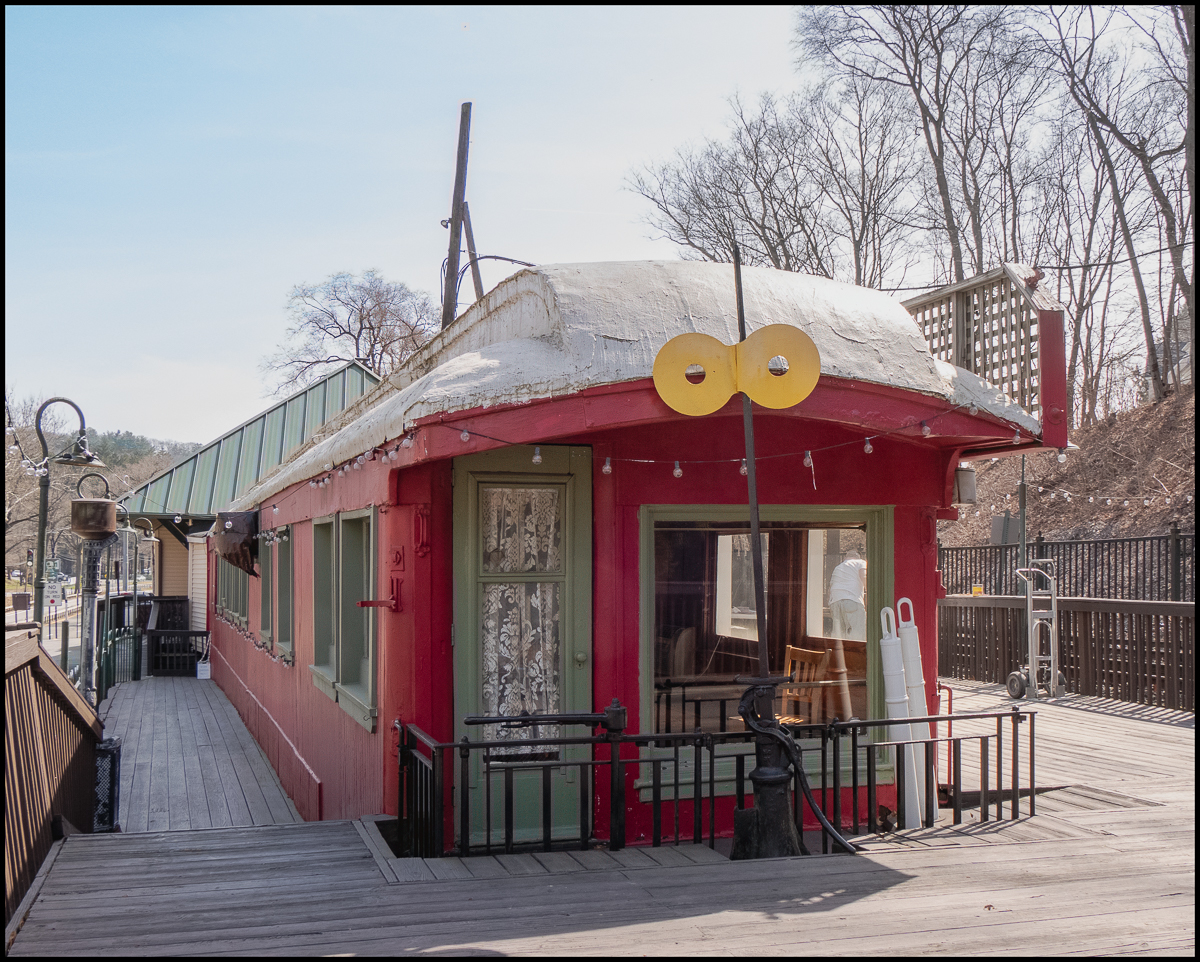
The “Presidential” car again, seen from a different angle.
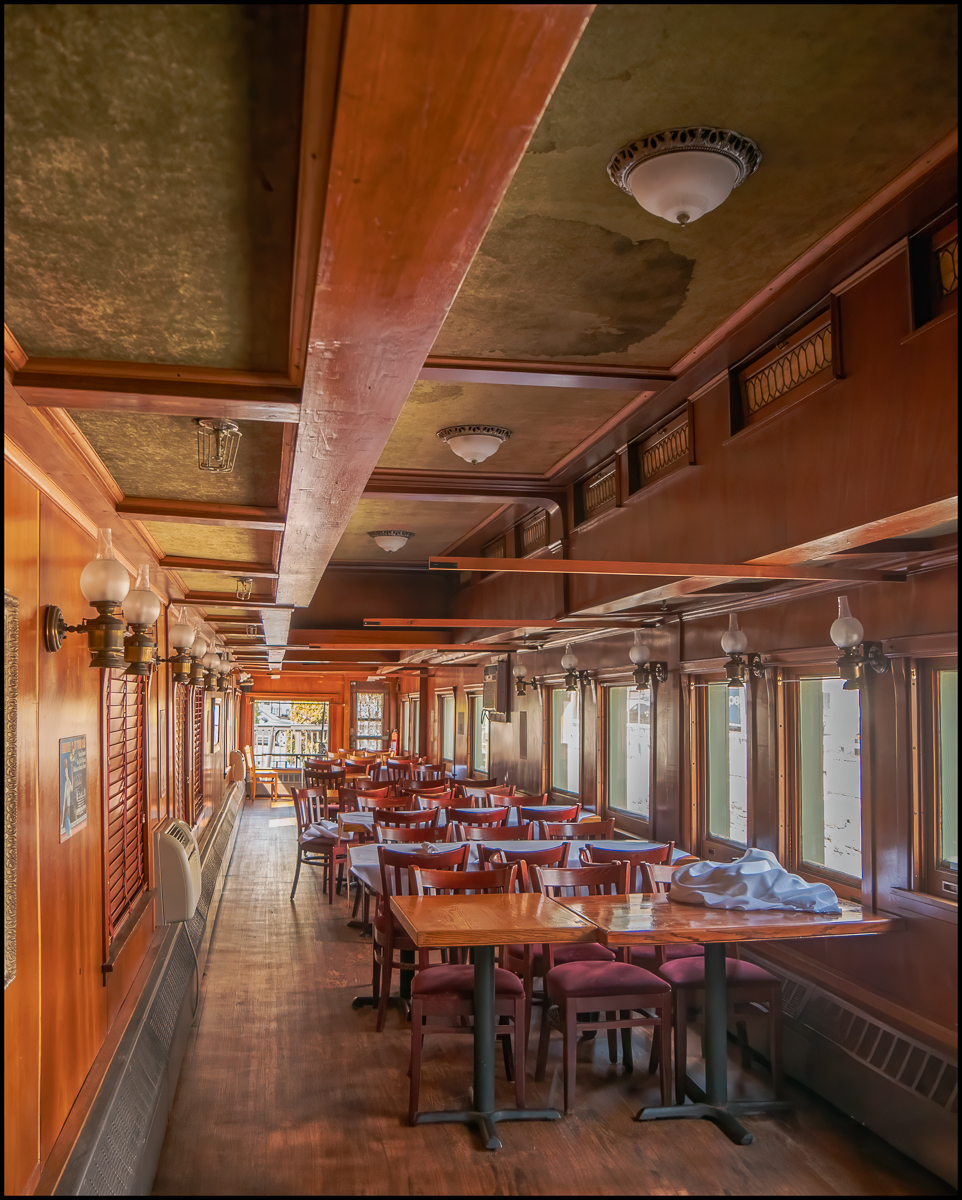
Inside the “Presidential” car.
I really liked this place. I’m British and one thing I really miss is the pubs. Valhalla Crossing has a very British pub type atmosphere. From the menu the food was pretty much what you’d expect: pub food. I only had a salad, do it was good and the portion was enormous, and I couldn’t finish it. It’s only about 8 miles from where I live. I’d like to go again.
Taken with a Panasonic Lumix GX85 and Lumix G Vario 14-140 f3.5-5.6