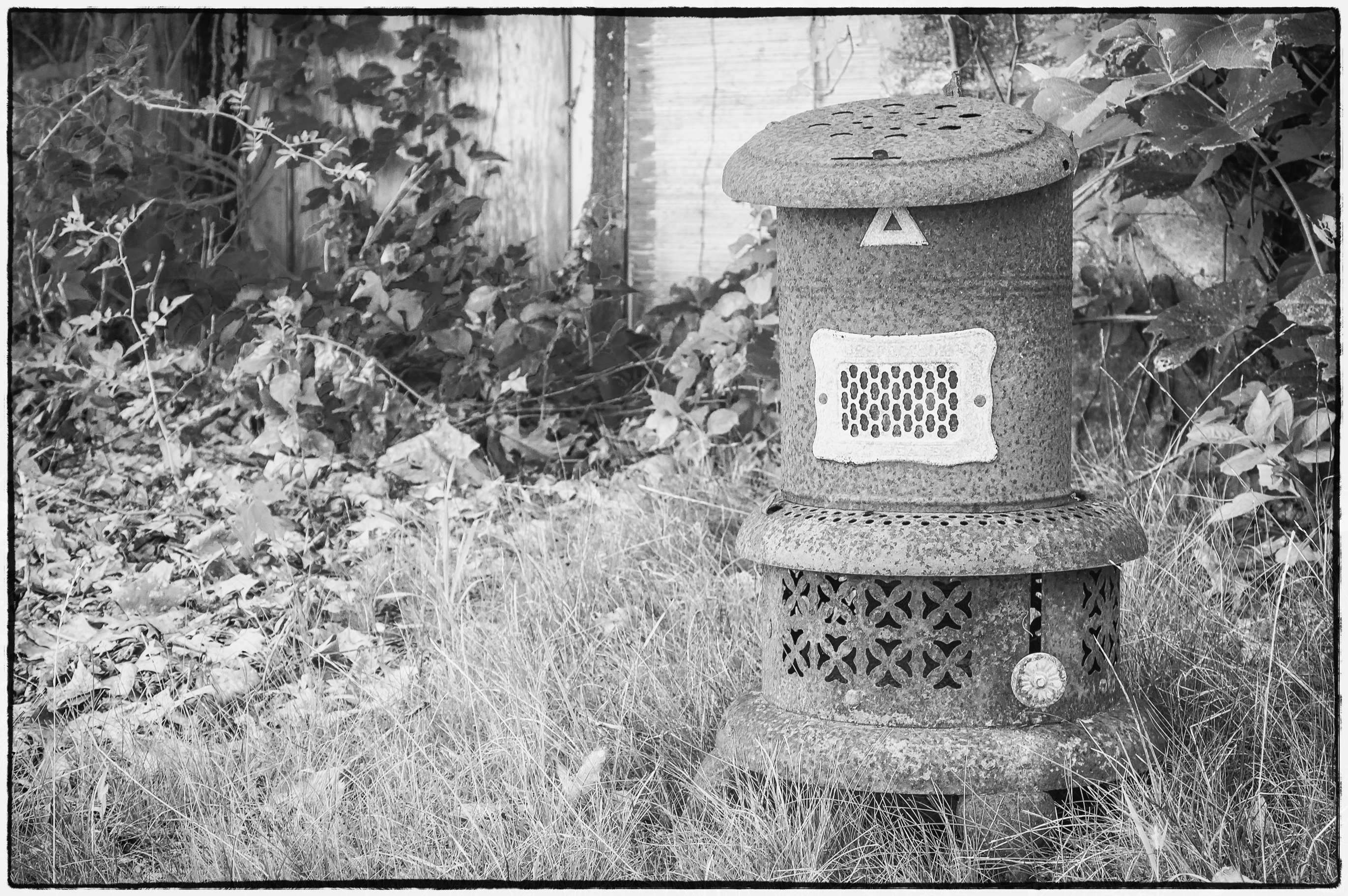
I came across this rusted old stove sitting outside an apparently abandoned waterworks on Pocantico Lake. I’ve posted about this location before in Old Waterworks at Pocantico Lake.
Photographs and thoughts on photography and camera collecting

I came across this rusted old stove sitting outside an apparently abandoned waterworks on Pocantico Lake. I’ve posted about this location before in Old Waterworks at Pocantico Lake.

Source: Photograph In print and online, photograph magazine is your #1 source for photo-based photography exhibitions, events, news, reviews, profiles and resources.
Back in June of last year I posted about photo.net’s weekly discussions – each week focusing on a single image. I enjoyed this series but after a while it seemed to “peter out”. Now it seems it’s back as version 2.0 with the first discussion on the Bill Brandt image above. Let’s hope that it continues.
WEEKLY DISCUSSION 2.0 #1 – Bill Brandt
via WEEKLY DISCUSSION 2.0 #1 – Bill Brandt – Photo.net Casual Photo Conversations Forum.
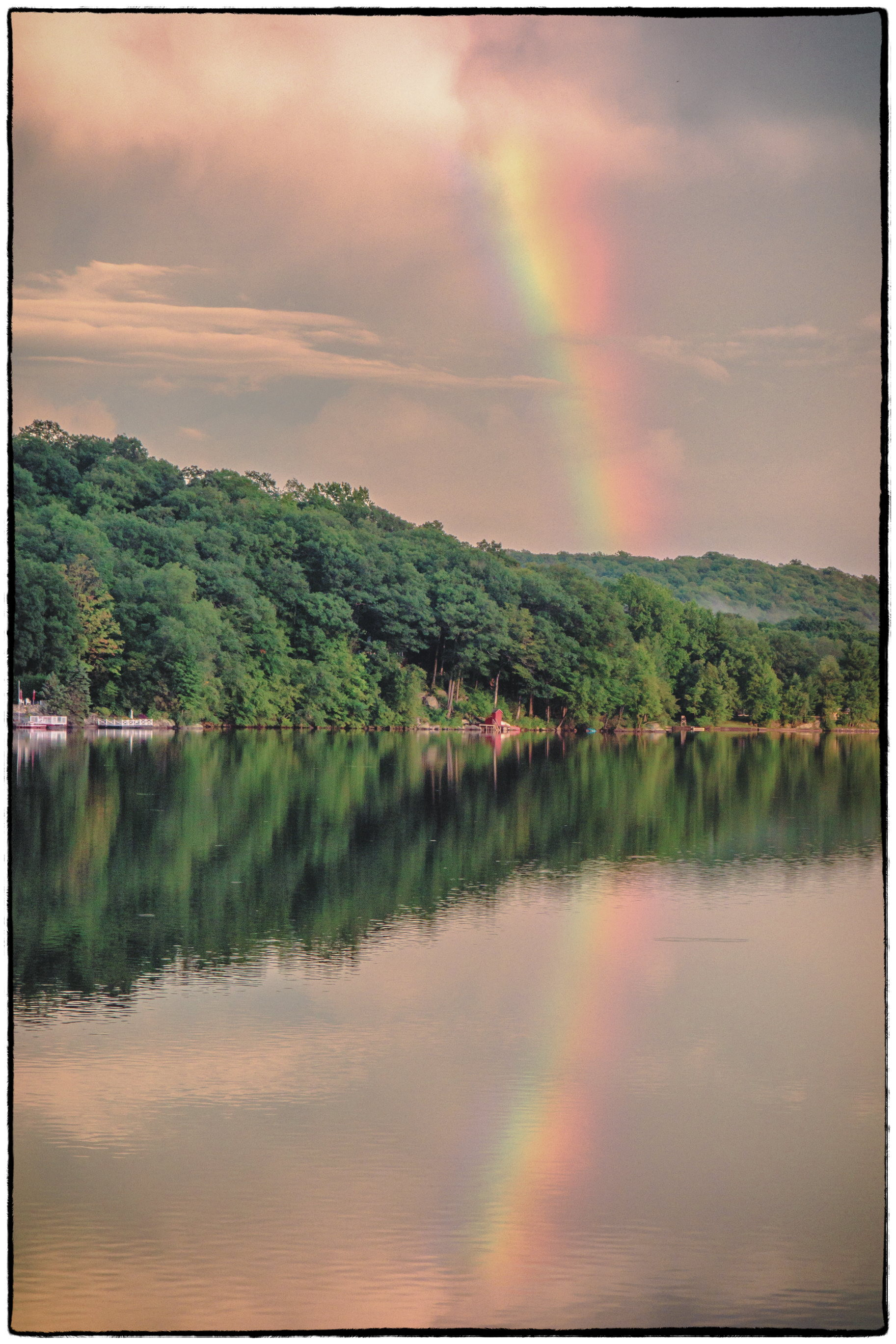
We had a rainy day yesterday: steady rain in the morning followed by thunderstorms in the afternoon. After the last downpour had stopped I took the dog into the garden to “do his business”. I looked down at the lake and noticed this rainbow. Of course I had to dash back into the house to get a picture of it before the light changed or the rainbow disappeared completely. I figure that the rainbow came down just about where one of our fellow garden club members lives so I’m getting out the shovel and going for the pot of gold.
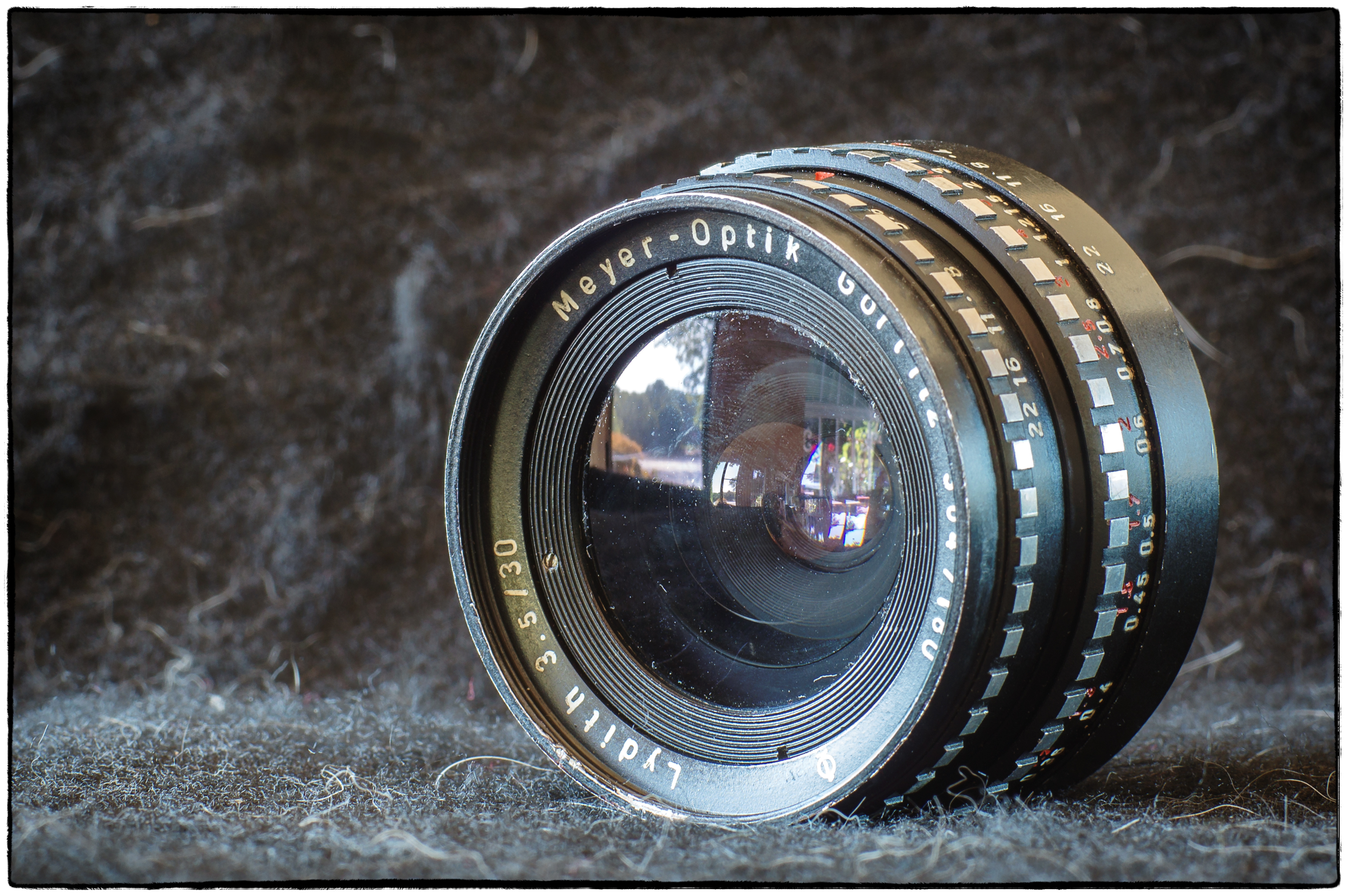
In an earlier post I mentioned that I had recently acquired an Exakta; an Exa; and three lenses. This was one of them. As always I was keen to try it and ended up with some shots of flowers in our garden(plus one of my brother-in-law Vic to add variety).
The ever interesting Rick Drawbridge (known for his fascinating illustrated reviews of classic cameras on photo.net) had this to say about the Lydith in his post, The Legendary Lydith; Simply Great :
Founded in 1896 by Hugo Meyer, his optical works in the town of Görlitz, East Germany produced many excellent and innovative lenses in the decades preceding WWII, mainly in Exacta and M42 mounts. In 1946 the business was nationalised under the title “VEB Feinoptisches Werk Görlitz”, and retained the name until 1968 when it was absorbed into the Pentacon organisation. In 1964 the Lydith appeared, apparently as a budget wide-angle alternative to the excellent but expensive Carl Zeiss Flektogon. It soon became the Pentacon 3.5/30, and it’s Meyer origins were submerged, in much the same manner as my cherished 50mm Meyer-Optik Gorlitz Oreston f/1.8’s, which became the Pentacon Auto 50/1.8.
The Lydith is a very simple lens, lightly constructed, in the pre-set manual format. It has 5 element in 5 groups, a 10-bladed iris, and focuses down to about 30cm (12 inches), giving it a semi-macro capability. With a minimum aperture of f/22, immense depth of field is attainable. Coatings are present, but appear to be minimal. I’ve been after one for a couple of years, but as awareness of the lens’s quality increased, the international prices kept pace. By a stroke of fortune this one with it’s M42 mount appeared on our local auction among some other odds and ends, and it came my way for a reasonable sum; one of the few advantages of living at the ends of the earth is the occasional lack of informed competition when such items appear.
…
The photographic community has discovered the Lydith’s exceptional sharpness, contrast and colour fidelity and it’s wonderful ability to create images with that indefinable “presence” that I find so appealing in the Oreston. It’s hard to explain the sense of depth and dimension that the lens brings to an image, and I hope the few samples I’ll post give some illustration of these qualities. I find it’s images more vibrant than those from the Flektogon, but that may just be a subjective impression.
I’d agree with everything he says. In addition I found the lens to be very small and light. I tried it on a Sony NEX-5n and it felt very comfortable, even if the adapter (my lens was of course in Exakta mount) practically doubled its length. Rick mentioned that the lens is pre-set. Mine isn’t. You have to stop down manually. I was also surprised at how narrow the depth of field was at f3.5. I’d thought that a 30mm lens would have much wider DOF. I suppose this was probably because I was taking pictures of flowers at the minimum focussing distance.
I took the lens along on our trip to Washington, D.C./Virginia and the links below show it’s use in a variety of different circumstances.
Bamboo Pots.
Chess Pieces.
Hotel Lobby.
Pirate Ship Playground.
Stone Cardinal.
Hanging Balls.
Old Ford in Cold Spring.
Gypsy.
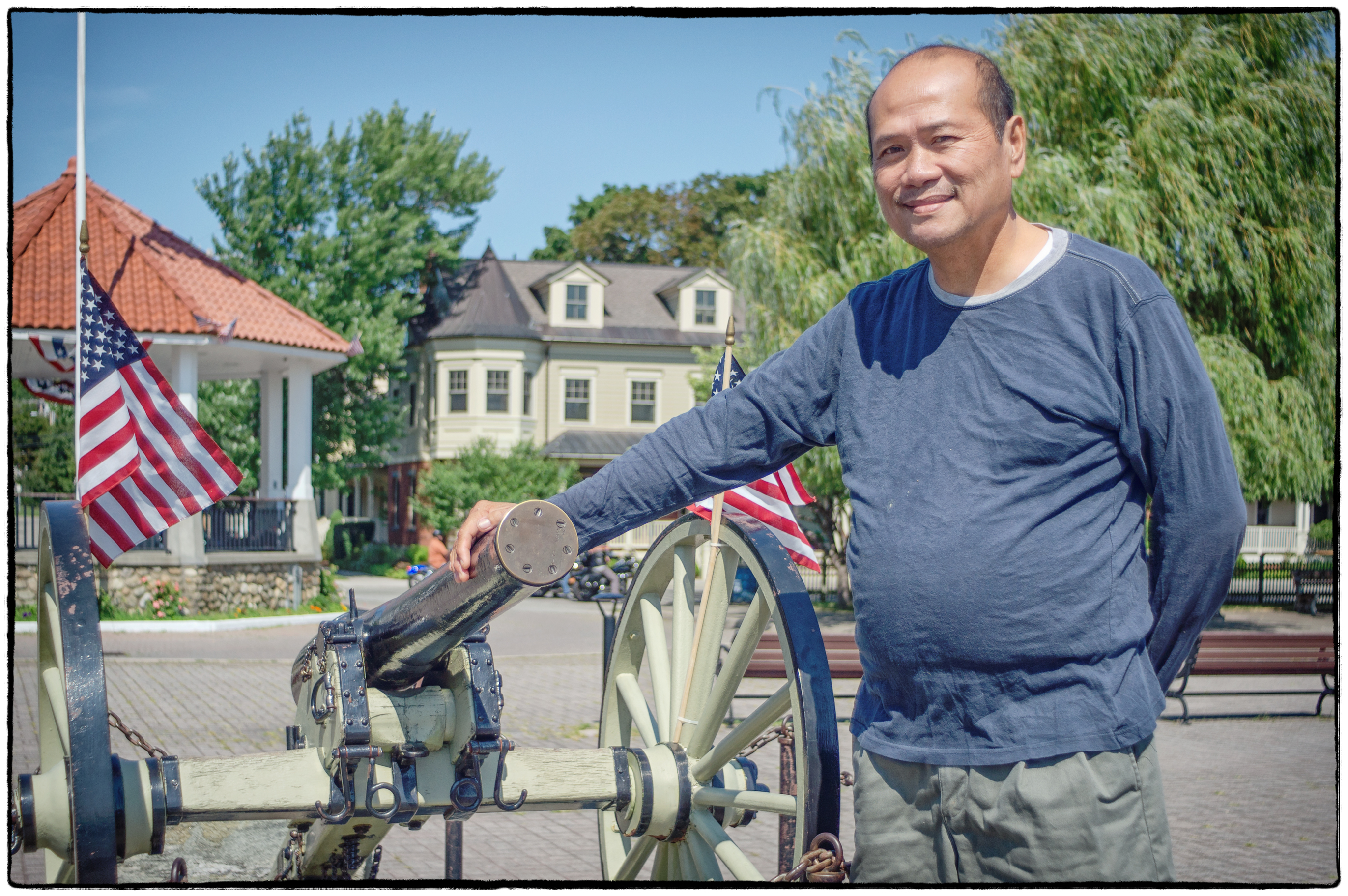
Visiting brother-in-law Vic with a replica Parrott gun on the riverfront in Cold Spring. Included here as a break from the flowers.
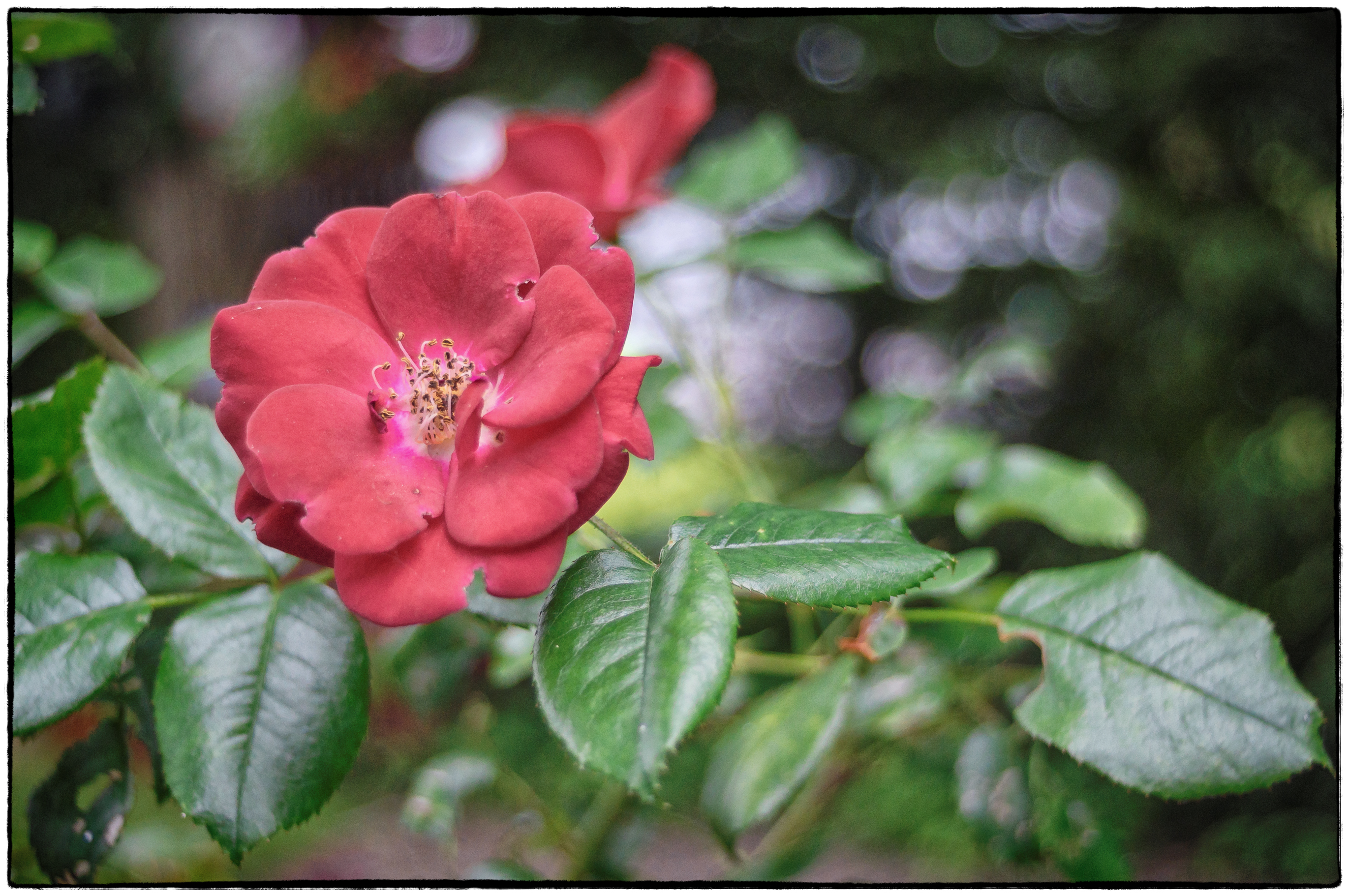
Tree Rose.
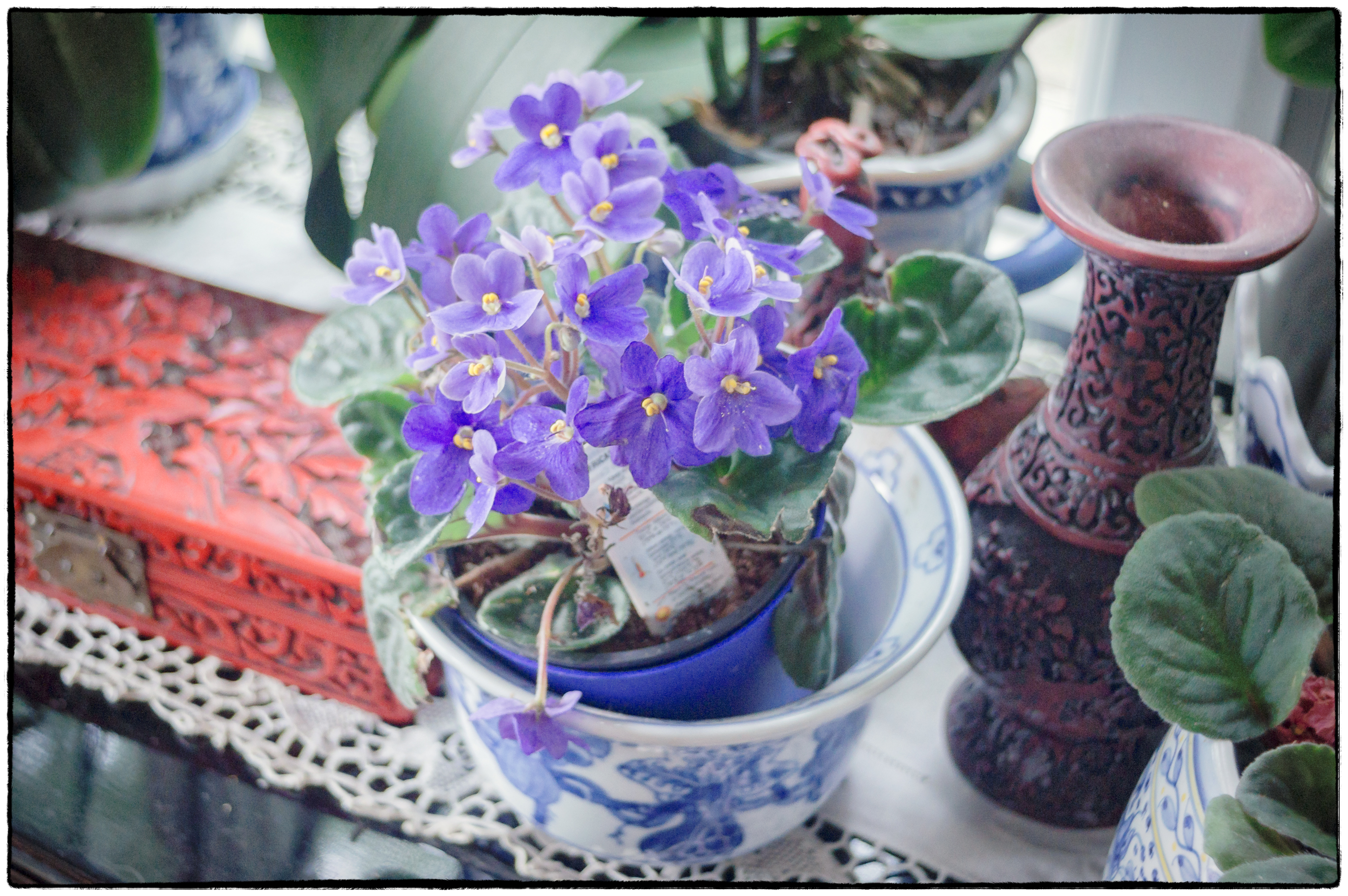
African violet and cinnabar ornaments (wish I’d thought to turn the pot around so that the label didn’t show).
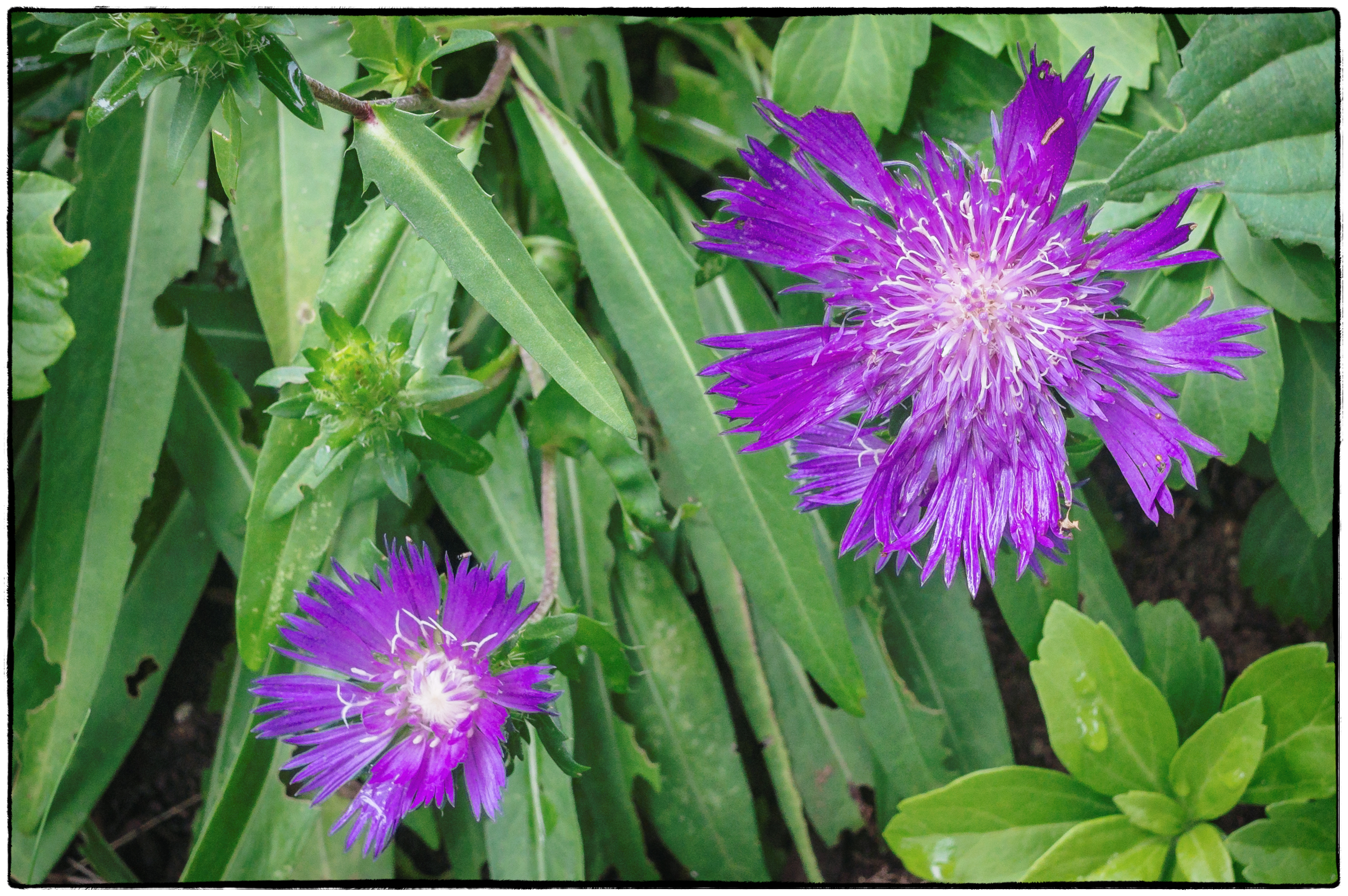
Stokes Aster.
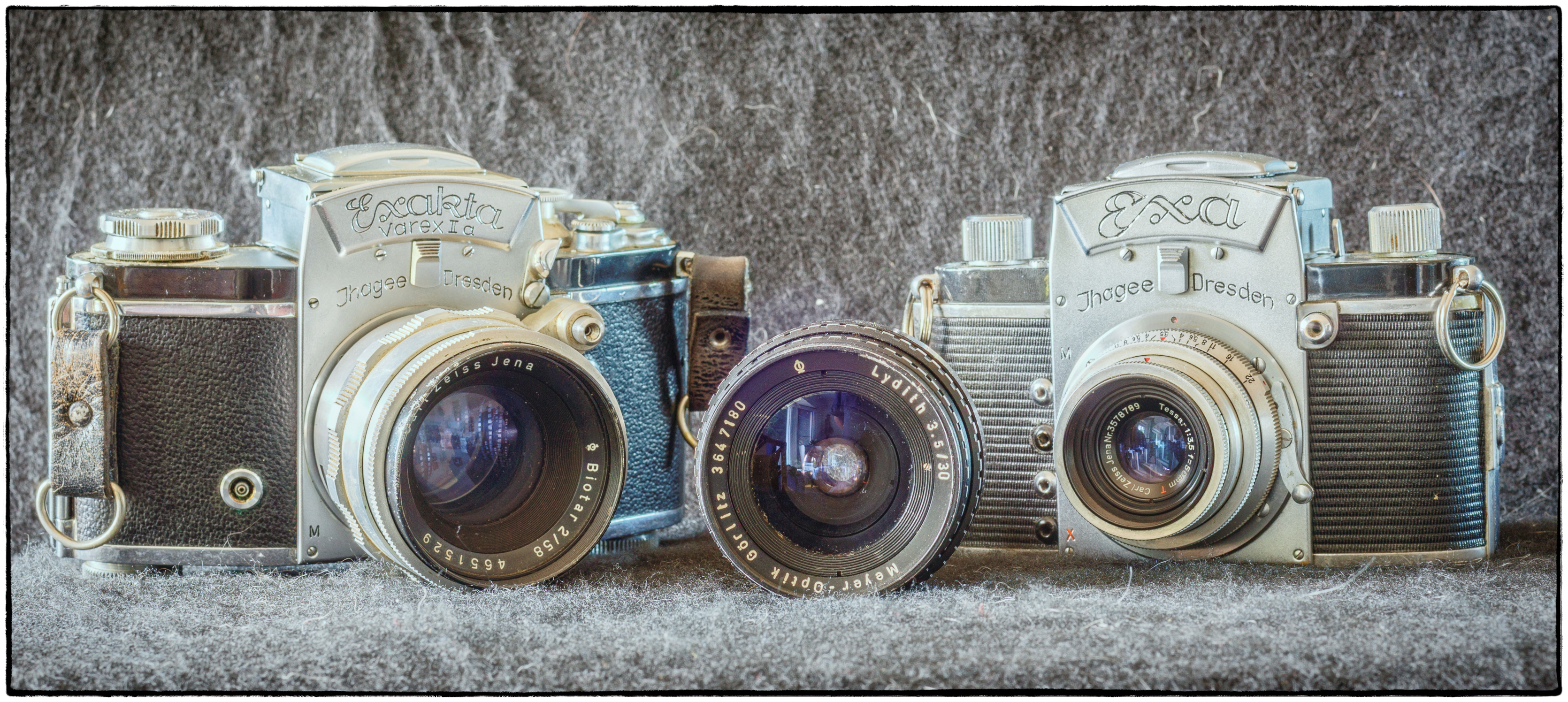
Two separate purchases landed me with an Exa (original version) with a 50mm f3.5 Carl Zeiss Jena Tessar; and an Exakta Varex/VX IIa with a 58mm f2 Carl Zeiss Jena Biotar and a 30mm f3.5 Meyer Optik Görlitz Lydith. I think I paid around $100 for the lot so I’d didn’t have very high expectations. I think that they are beautiful cameras though and figured that even if they didn’t work they’d look nice on a shelf. I was surprised to find that both cameras seem to work, although I haven’t run any film through them so I don’t know for sure. Everything definitely needs cleaning though.
The Exakta is in pretty good shape apart from a little lifting of the leather, which can easily be glued back. The Exa has a slightly wonky but functional finder, which doesn’t bother me greatly as I can use the finder from the Exakta (one of the benefits of having replaceable finders). A piece of the leather has worn on the back of the Exa. I might consider replacing it one day depending on whether or not it works.
As for the lenses – I tried out the Lydith on my Nex 5N and really like it. The Lydith and Biotar are somewhat “beat up”, particularly the Biotar, but they all seem to work, although the auto diaphragm is rather sluggish and I fear that the shutter will close long before the lens stops down. This doesn’t bother me much as I don’t mind stopping down manually so I probably won’t use the auto diaphragm. The Tessar seems to be in better condition. More to follow when I’ve tried out the Biotar and the Tessar.