RIP Mary Ellen Mark

Mary Ellen Mark. March 20 1940-May 25 2015 via Famous Photographers

Mary Ellen Mark, one of the great American social documentary photographers of the second half of the 20th century, passed away last Monday of myelodysplastic syndrome at the age of 75.

via The Online Photographer.

I’d seen the picture below, but was otherwise unfamiliar with her work. After learning of her death I spent some time reading about her and looking at her photographs. Very Impressive! I particularly liked the rapport she built up with her subjects and the way that she often stayed in touch with some of them for years afterwards. How different from many casual street photographs of homeless people that you see – often taken by people who have no real concern for their plight.

A photograph by Ms. Mark of the Damm family in Los Angeles in 1987. She used a classic documentary approach, usually working in black and white via the New York Times

The Online Photographer also has a second post containing more information in: More About the Remarkable Mary Ellen

The New York Times has an obituary: Mary Ellen Mark, Photographer Who Documented Difficult Subjects, Dies at 75

There’s also a fascinating video of a lecture given by Ms. Mark. entitled Most Influential Woman Photographer: Mary Ellen Mark.. Note that the audio is poor right at the beginning, but stick with it as it improves quickly.

Her own website can be found at http://www.maryellenmark.com/

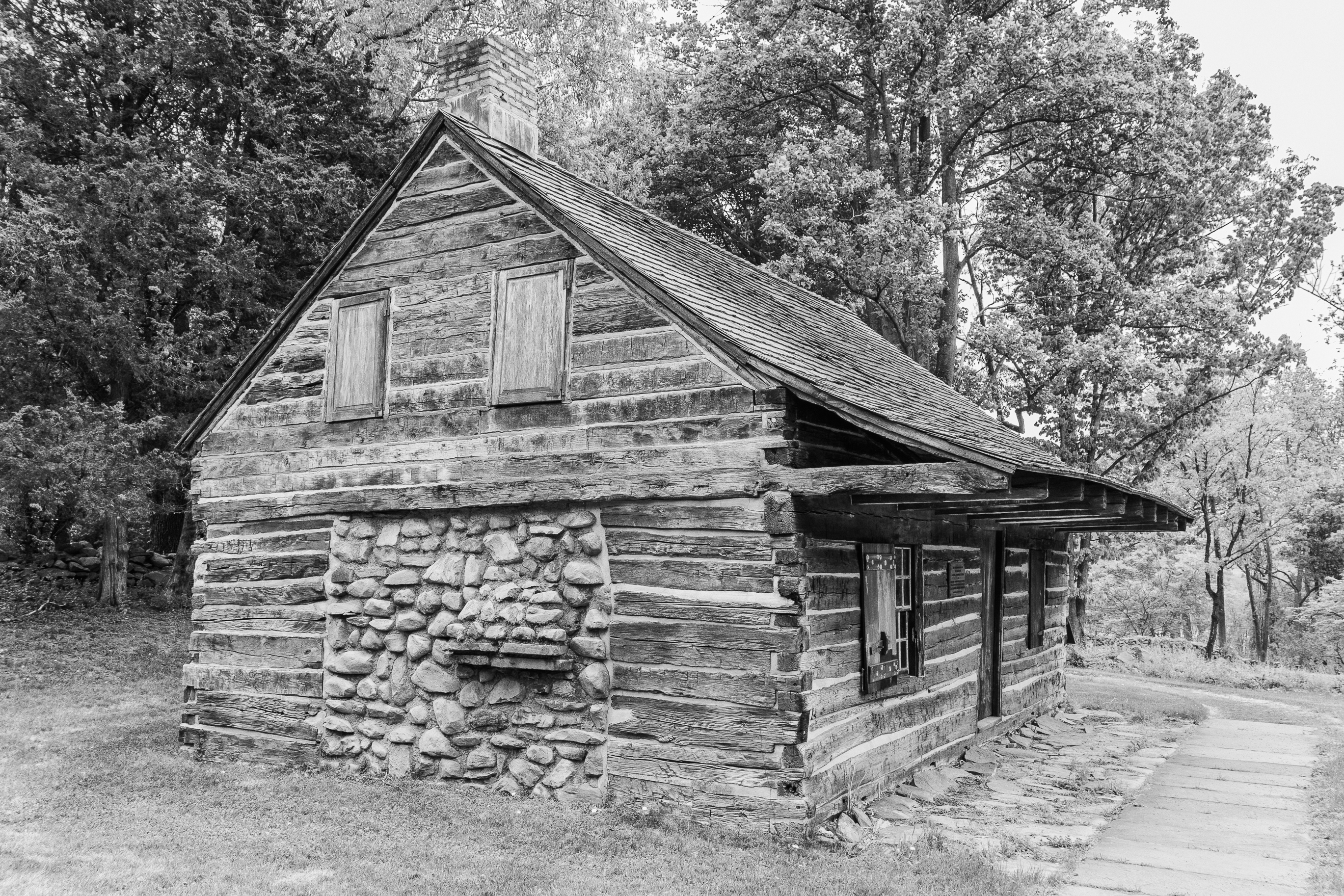
New Windsor Cantonment: The Mountainville Hut

All of the huts at the New Windsor Cantonment are reconstructions, but this one was built from original materials, which were removed and used for a building on a nearby farm. Later they were donated by the farm owners to make this hut. There were once over 600 such huts, with upwards of 32 soldiers in each. Note the reference to Nathaniel Sackett in the extract below. He’s a fascinating character in his own right: Washington’s spymaster, and later sutler (a civilian merchant who sells provisions to an army in the field, in camp, or in quarters. Sutlers sold wares from the back of a wagon or a temporary tent, traveling with an army or to remote military outposts).

According to A Revolutionary War Road Trip on US Route 9W, May 26, 2004 by Raymond C. Houghton:

After the Continental Army troops left the [New Windsor] cantonment in June 1783, the Quartermaster Department began selling buildings and equipment for which it had no further use. According to local tradition, Nathaniel Sackett, an area merchant purchased one or more of the huts. He took them to his property in nearby Mountainville, near Cornwall, where they became the wing of a private dwelling. “Rediscovered” in 1933, the structure was dismantled and reassembled here at Temple Hill.

Tables turned on Richard Prince

Richard Prince Gets a Taste of His Own Medicine; $90,000 Prints offered for $90

I must admit that when I first heard of Richard Prince and his “appropriation” art I was somewhat shocked. It’s bad enough that you can “steal” other people’s work without giving them credit. I don’t understand how it is that some can sue for the most minor copyright infringement (one hears stories of the Girl Guides being sued by a large corporation because it owns the copyright to “Happy Birthday” and they were singing it around the campfire without permission). It’s even worse when the product is then sold for very large amounts of money with the original creator getting nothing. It was then with great joy that I read the piece below. Good for them!

I also liked this video: Richard Prince Smells Bad from The Art of Photography by Ted Forbes.

Prince’s latest controversial “art” is basically a series of screenshots of various Instagram photos, along with the uploader’s name and some of the comments. In order for the work to be considered his own, Prince added a comment to the original photo – and voila! The magic of appropriation in its most embarrassing moment.

The so-called ‘face’ of the story has been blue-haired Doe Deere, but while she has stated she will not “go after him”, another party involved in this disgraceful incident has decided to take action, and in the most appropriate way.

One of the ripped-off photos belongs to SuicideGirls, and its founder Missy announced yesterday that they’re fighting back by selling prints of Prince’s appropriated work for just 0.1% of his selling price.

via Richard Prince Gets a Taste of His Own Medicine; $90,000 Prints offered for $90 – DIY Photography.

Avery Cemetery

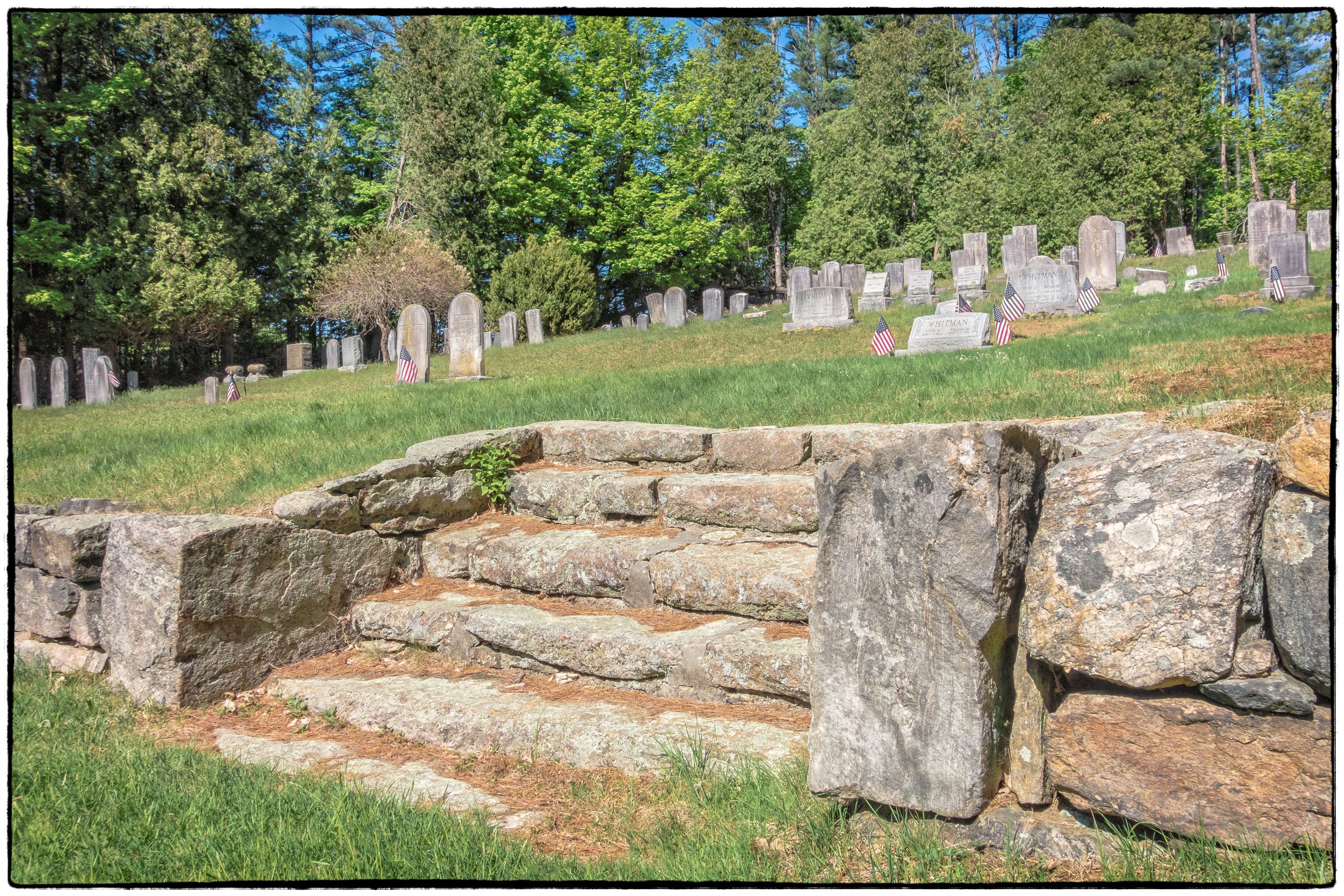
I’d taken the dog for a walk at the Ward Pound Ridge Reservation. After exploring the park for a while I was returning to the car when, looking at the map, I noticed a symbol marked ‘cemetery’. I’m fond of old cemeteries so even though I was hot and tired I made a short side trip to take a look.

A nearby panel says:

This cemetery was inventoried in 2009 by Garrett Kennedy as part of his Eagle Project. The earliest inventory on record was done in 1941 by Mrs. Sterling B. Jordan and Mrs. Frank W. Seth. In 1942 there were 187 head stones, in 2009 there were 183 headstones that could be inventoried. There were many that could only be identified by the information in the 1941 census.

The oldest head stone dates from 1790 and the most recent from 1986. 46 of the headstones are from the Avery family…33 of the headstones were considered to be in Excellent condition; 57 good; 51 fair; 32 poor; and 10 illegible.

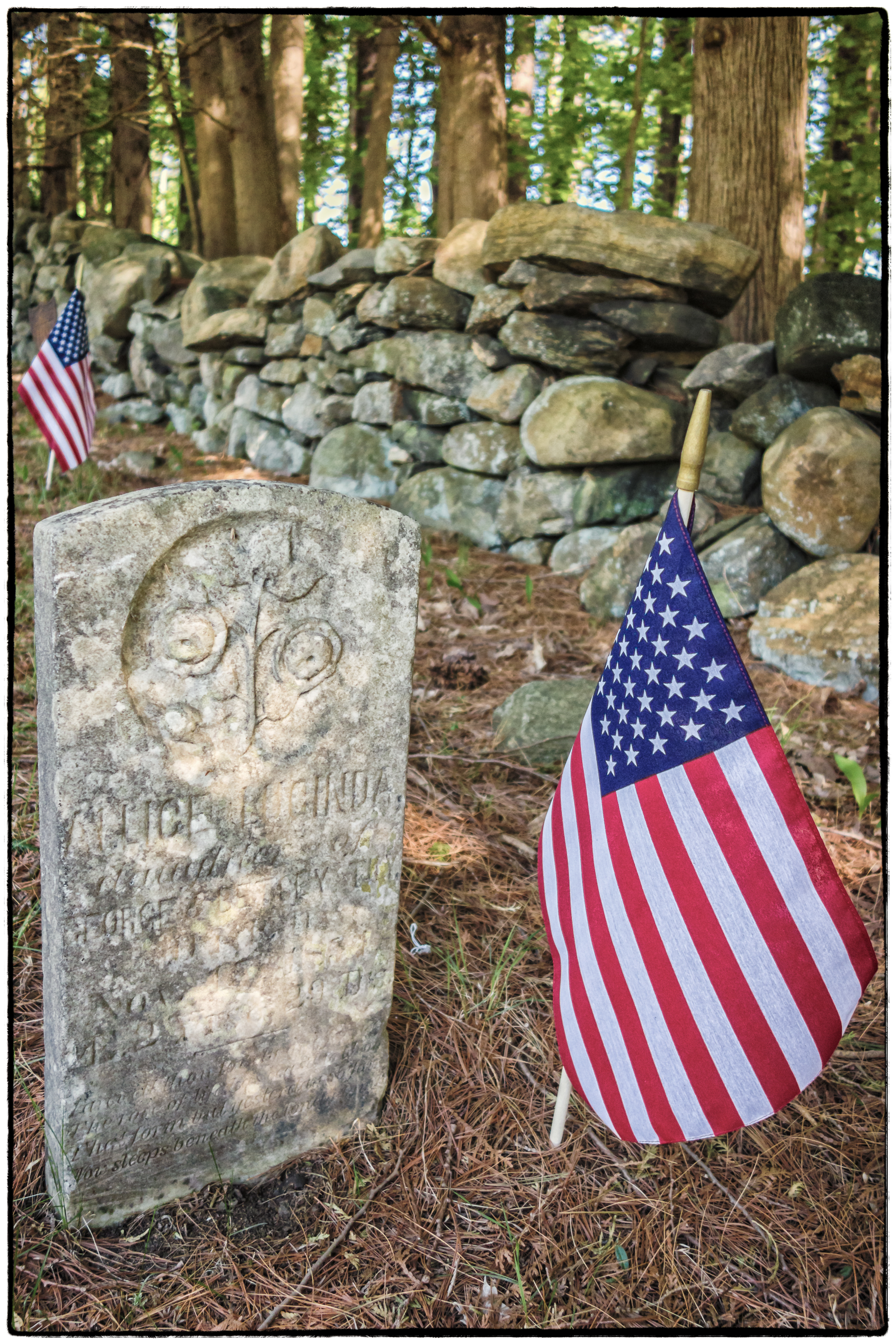
Headstone with flags.

According to Lewisboro Ghosts: Strange Tales and Scary Sightings, November 15, 2007, by Maureen Koehl there is a story associated with the cemetery

…The tale unfolds on a cold winter’s night sometime after the Civil War. Along the road from Cross River to Boutonville stood the home of a poor tenant farmer whose name has long been forgotten. He was a widower with four young children. The war had not been kind to farmers in the area and this farmer struggled to keep his small family fed and clothed. Furnishings in the farmhouse were sparse. To keep warm the children often bedded down close to the hearth of the large kitchen fireplace.

On this particular evening, with a lusty wind blowing outside, the father set his children before the brightly burning hearth in his cold farmhouse, tucked them in with quilts and good night kisses and set out on the two-mile walk to one of the taverns in Cross River village – a journey he often took. The evening passed in friendly conversation with other farmers and travelers around the cheery tavern hearthside.

Meanwhile, the children slept until suddenly, a malevolent gust of wind howled down the chimney, flames licked at the quilts covering the children and in the blink of an eye the room was filled with fire and smoke.

The hours passed quickly and another round had been sent for when the tavern door burst open and a neighbor stumbled in screaming that the farmer’s house was on fire.

“My children! My children!” the farmer cried in horror as he raced from the tavern and headed in a stupor for his home. With no neighbors nearby, the sad old house burned to the ground and the children perished before the distraught dad could reach them.

Overcome with grief, the farmer searched the fire scene, but the children were not to be found. Kind neighbors buried the poor little bodies under the spreading limbs of the huge, welcoming oak tree. This tree, the Boutonville Oak, is still standing not far from the old Route 124 entrance to Ward Pound Ridge Reservation.

Residents of the reservation claim they have seen the father searching the fields and the stones of Avery Cemetery at the western end of the park for the graves of his four children. One park ranger saw the orange glow of the lantern following the road to the small cemetery. He watched as the light seemed to swing to and fro as if a man were carrying it as he walked. Once he even followed the light toward the cemetery, but as he reached the steps into the burial ground the light disappeared.

As far as we know, the distraught father has never found the graves of his children. In fact, no one has discovered the grave markers, but the tale persists and the sight of his single swinging lantern has been seen crossing the fields within the last five or ten years.
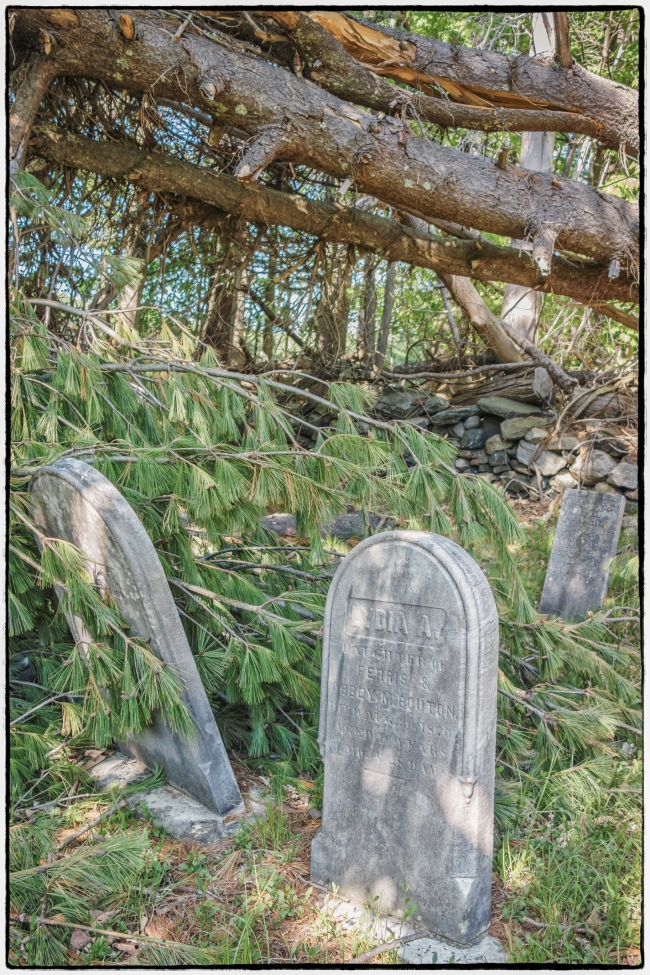
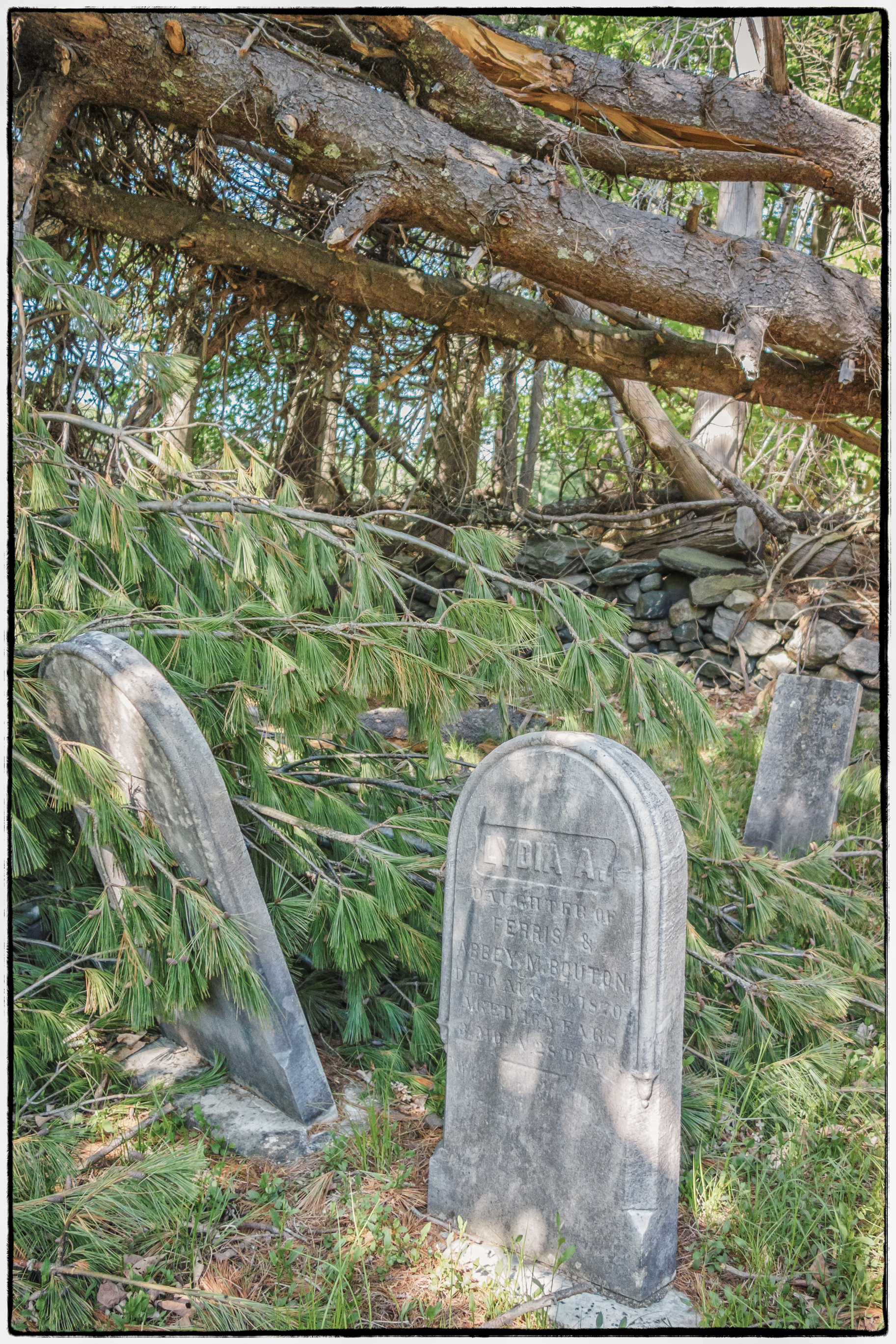
Headstones and downed trees.

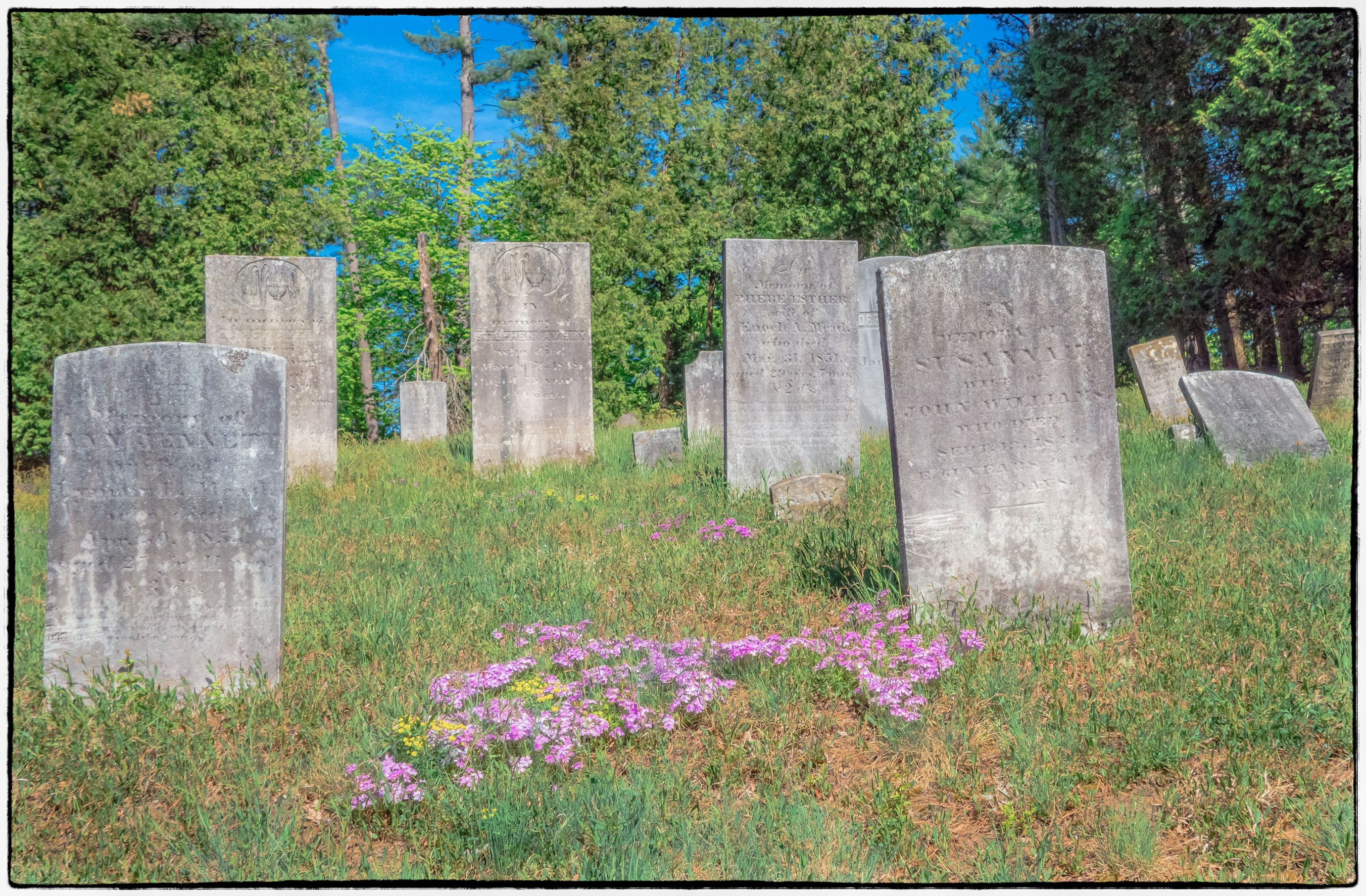
Headstones and flowers