Capturing the Light

Capturing the Light

I’ve just finished reading “Capturing the Light”. It recounts the early history of photography through the stories of two great photographic pioneers: Luis Jacques Mande Daguerre and William Henry Fox Talbot.

Daguerre was an accomplished painter and a great showman. He initially made his name as the creator of dioramas but as that business started to wane he looked for another source of income. Not really a scientist Daguerre through experimentation, strategic partnerships (e.g. with Nicephore Niepce who is credited with producing the first photograph) managed to come up with the process which bears his name: Daguerreotype and started a photographic explosion which continues to this day.

Talbot was the complete opposite to Daguerre. Coming from the British landed gentry he was independently wealth and had the time to indulge his scientific pursuits, of which photography was one of many. He came up with his own process before Daguerre but in characteristic style did not rush to publication so Daguerre got there first. Showing his typical modesty he named his process Calotype rather than Talbottype . Most significantly the Calotype was based on prints made from negatives where the Daguerreotype was a direct positive on a metal plate. Large numbers of additional prints could be made from the Calotype negative whereas each Daguerrotype was unique and additional copies could not easily be produced. So although Daguerre got there first Fox Talbot’s process became the basis for all photography up to the digital era.

I very much enjoyed this book. It combines two of my main interests: history and photography.
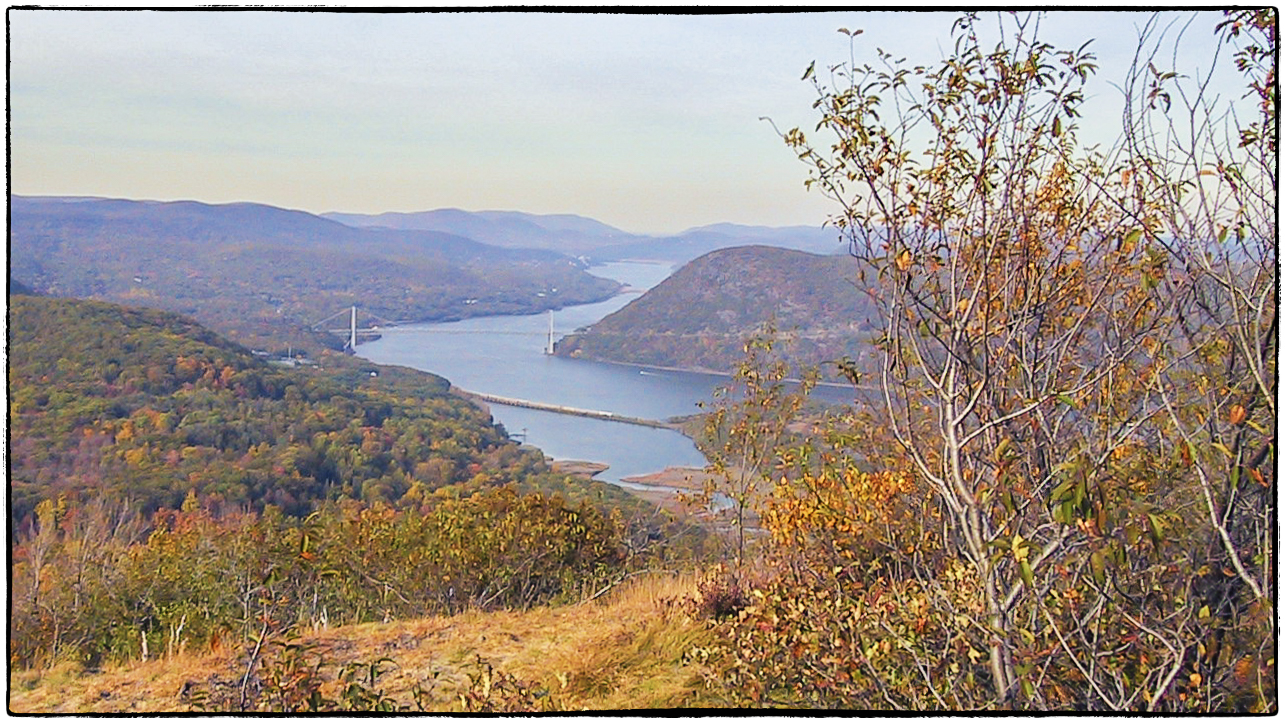
Oldie: Hudson River and Bear Mountain Bridge from Dunderberg Mountain

This was taken back in October 2000 with a Canon Powershot S10 (I still have it) – a 2.1 megapixel camera. I used to think that it was taken from somewhere north of Cold Spring (e.g. from Mount Taurus, or Breakneck Ridge or somewhere). I now realize that it can’t have been. It’s looking north towards the Bear Mountain Bridge so it must have been taken from somewhere south of the bridge. I did some browsing around using Google Maps and the most likely candidate seems to be Dunderberg Mountain, which I do remember hiking to.

You can find more on the Canon S10 – and some more pictures – in an earlier post

Photogrammar and the Farm Security Administration Photographic Archive

Walker Evans. Sharecropper’s family, Hale County, Alabama, 1935

Photogrammar is a web-based platform for organizing, searching, and visualizing the 170,000 photographs from 1935 to 1945 created by the United States Farm Security Administration and Office of War Information (FSA-OWI).

Start exploring »

via Photogrammar.


The Farm Security Administration—Office of War Information (FSA-OWI) produced some of the most iconic images of the Great Depression and World War II and included photographers such as Dorothea Lange, Walker Evans, and Arthur Rothstein who shaped the visual culture of the era both in its moment and in American memory. Unit photographers were sent across the country. The negatives were sent to Washington, DC. The growing collection came to be known as “The File.” With the United State’s entry into WWII, the unit moved into the Office of War Information and the collection became known as the FSA-OWI File.

Of the 170,000 photographs in the collection, approximately 88,000 were printed and placed in the filing cabinets of the FSA-OWI. 77,000 photographs were printed by Stryker’s division and 11,000 prints collected from other sources. Paul Vanderbilt joined the FSA-OWI in 1942 and created a new organizing system for the collection. He developed the Lot Number system and Classification Tags system, which users can search the collection by on Photogrammar. In addition, the collection grew and now includes six different collections.

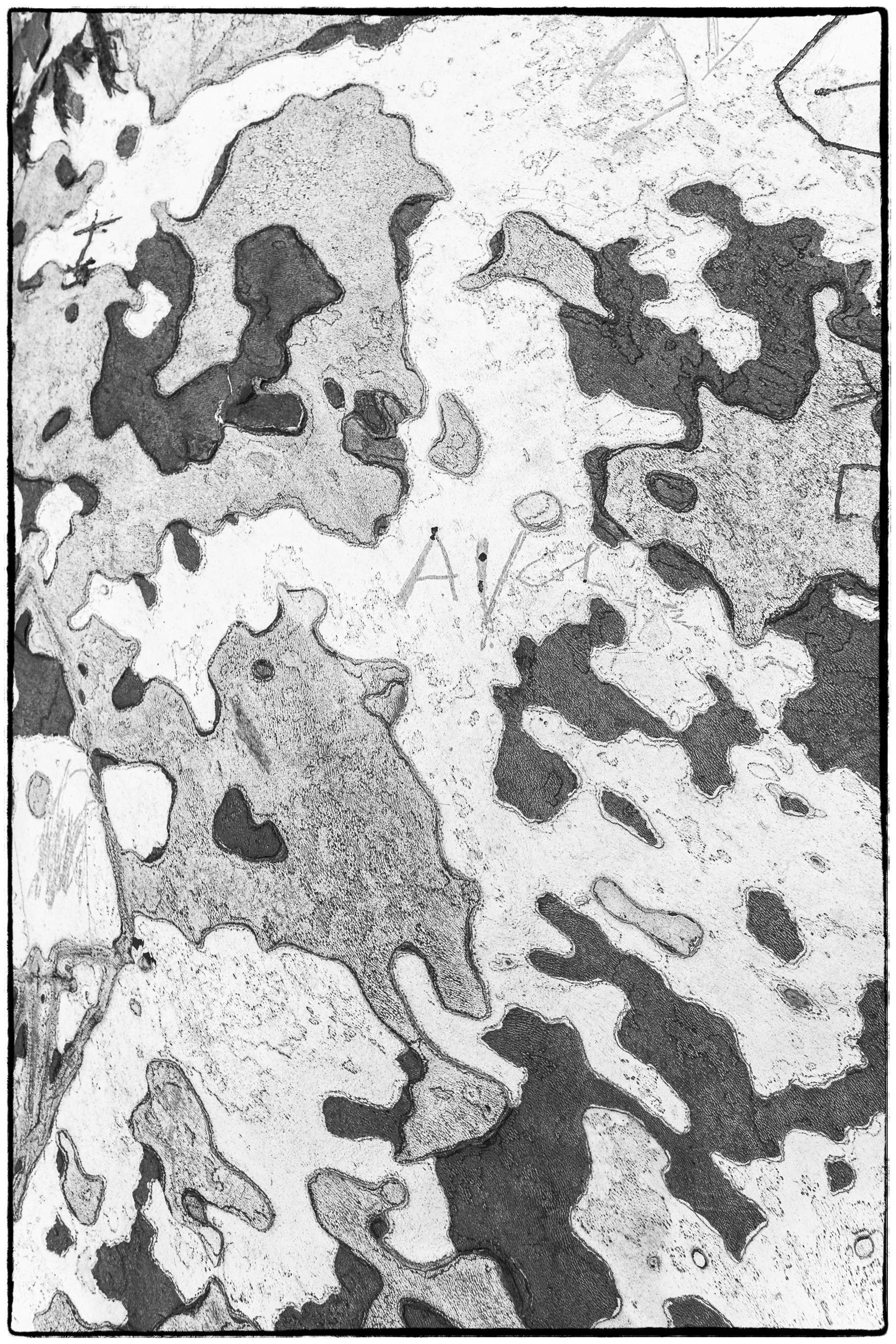
Tree Bark

There are many lovely old trees at Rockwood Hall including a beautiful old (more than 100 years) London Plane Tree. I’ve tried to get a picture of it but somehow I’m never successful. Sometimes the light’s not right. Sometimes I can’t find the right angle. This time I thought I’d get in closer to show the wonderful bark. I hate it that people can’t seem to resist adding graffiti – despite the fact that there’s a quite large sign advising them not to do so.

Paul Strand: Under the Darkcloth

I just watched this absorbing documentary on Paul Strand. I’ve always been a fan of Strand’s work- particularly the abstracts and the work in New England. It was interesting to see how he switched from still photography to movie making and then back again. I also found it fascinating that towards the end of his life when he was no longer very mobile he started to photograph things closer to home – in his own garden. He was so passionate about his photography that during a period when he had vision problems he would have his wife (who was also a photographer) print his pictures while he continually asked her questions. “What do you see in the top left of the picture?” etc.

Early on in the documentary there’s a statement that the photographer must “have something to say”. I hear this a lot and I think it tends to reflect the view of those involved in social documentary photography. Why does a photograph have to have something to say? Do Van Gogh’s sunflowers have something to say? Monet’s garden? I’ve nothing against having something to say, but I don’t see why all photographs have to conform to that model.

A documentary about Paul Strand, one of the greatest photographers of the 20th century.

via Paul Strand: Under the Darkcloth, Part 1 of 6 – YouTube.