Presidential inauguration

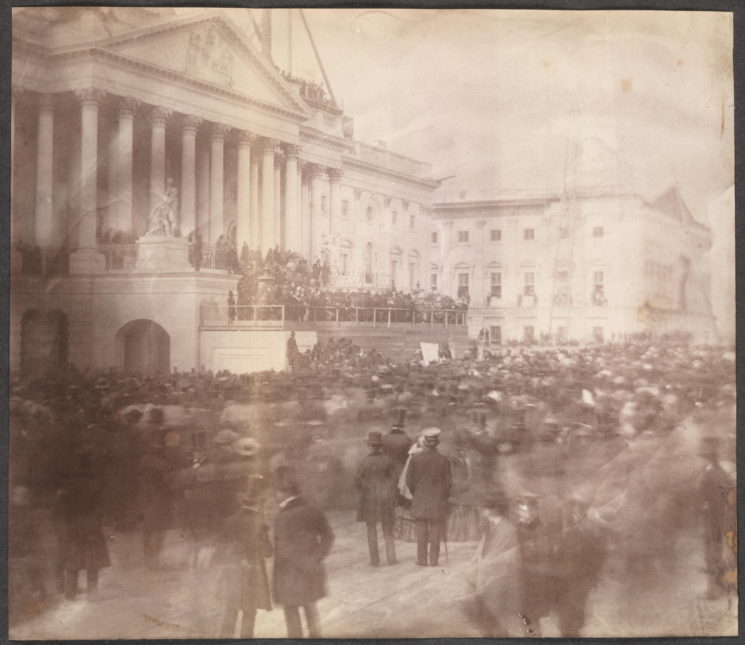
No. Not the one taking place today. This one is much older (160 years to be precise):

And, in 1857, the first known photograph of a Presidential Inauguration was captured.

This image, seen above, was taken by John Wood, who worked for the Architect of the Capitol under Montgomery C. Meigs. According to a presentation given by Wayne Firth (retired Senior photographer at the Architect of the Capitol) in 1996 at the National Building Museum at the U.S. Capitol, Meigs, who was in charge of the construction of the Capitol at the time, hired Wood as a “photographic draftsman” for the building of the Capitol. His job was to photograph the drawings of the construction so they could be easily duplicated.

During Wood’s tenure at the Capitol, his job grew. And, when Meigs was put in charge of constructing a platform for the Inauguration ceremony, he also constructed a platform for Wood to set up his camera and photograph the inauguration of James Buchanan on March 4, 1857.
Photographer Wood would eventually leave his post at the Architect of the Capitol and go on to photograph in the Civil War. According to the Library of Congress, Wood worked for the Architect of the Capitol from 1856 to 1861 and then moved onto photographing maps in the war for Gen. George McClellan.

Little is known of his later life and works, but his legacy will live on forever with this photo.

Source: This is the first known photography ever taken at a presidential inauguration.
Richard Pousette-Dart

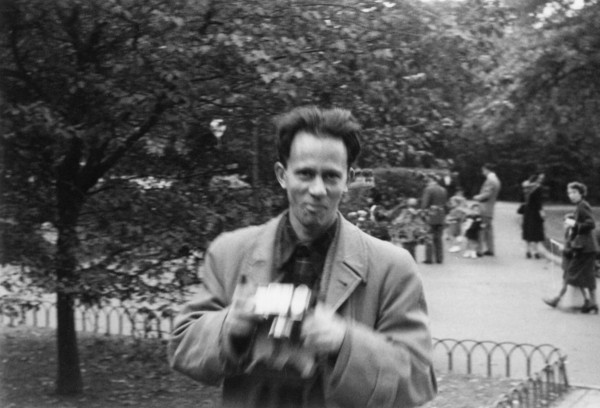
Richard Pousette-dart by Saul Leiter

Source: Richard Pousette-Dart | The Art of Photography

I had never heard of Pousette-Dart until I came across the video below on Ted Forbes fascinating “Art of Photography” website (I’ve already posted about his site in The Art of Photography). He also has a fairly long article on Pousette-Dart on the same site.

Pousette-Dart seems to be better known as a painter, a member of the famous “New York School” of Abstract Expressionism, which included Jasper Johns and Robert Rauschenberg. However, he was also a well-known photographer (and close friend of Saul Leiter).

I quite like some of his photographs, particularly the portraits, which remind me a little of Julia Margaret Cameron and the multiple exposures are also interesting. I surprised to find that, with the exception of the multiple exposures, his photographs are quite representational where his paintings certainly aren’t.

I noticed a brief statement in the Wikipedia article: “He attended the Scarborough School“, which is just down the road from our house in Briarcliff Manor.

RIP Snowdon

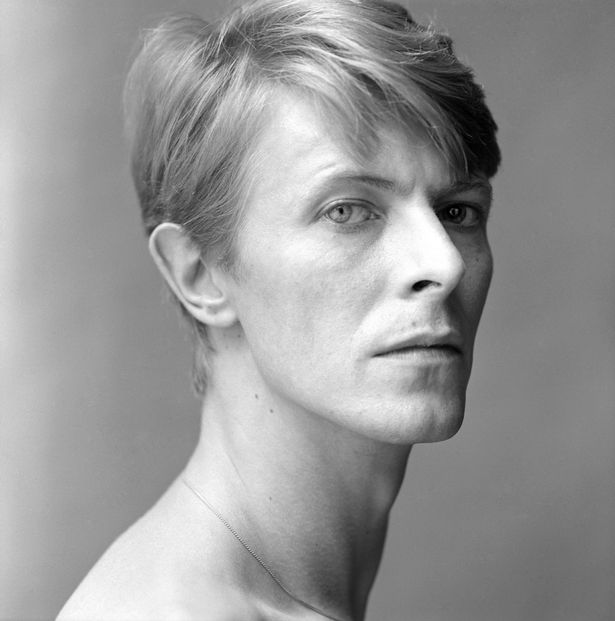
David Bowie by snowdon (Photo: Camerapress/snowdon)

Lord Snowdon, the ex-husband of Princess Margaret died today aged 86.Snowdon, a filmmaker and photographer, married the princess in 1960 but they separated in 1978.The photographer, born Anthony Armstrong-Jones, died peacefully at his home, his photo agency revealed.Camera Press said in a short statement: “The Earl of Snowdon died peacefully at home on 13th January 2017.”

Source: Lord Snowdon ex-husband of Princess Margaret dies aged 86 – Mirror Online

I’m sorry to say that I know very little about Antony Armstrong-Jones (Earl of Snowdon) as a photographer. Growing up in the UK I vaguely remember his first wedding (I was eight at the time) and the subsequent scandals. By the time the divorce came I was 26 and living in the United States and it rather passed me by. I guess I always thought of him as someone married to Princess Margaret (the first commoner to marry a royal in several hundred years and a participant in the first divorce of a senior royal since Princess Victoria of Edinburgh‘s, in 1901) rather than the well-known photographer that he was. The Beetles and Huxley site had this to say about him (bold mine):

Over his long career, Snowdon produced a remarkable archive of images, mastering several genres of photography in the process. Despite his well-honed technique, he has no recognisable photographic style, and indeed has made efforts to avoid developing one. He feels that as a photographer his role is to become an invisible observer, coaxing the truth out of his subjects without turning the result into a Snowdon. He is a master of studio portraiture, photo-journalism, theatre, fashion, advertising, travel, nature and even underwater photography. However, his brilliance as a photographer was always overshadowed by his royal status and the controversy that surrounded his relationship with Princess Margaret, exacerbated by their divorce in 1972 (sic)