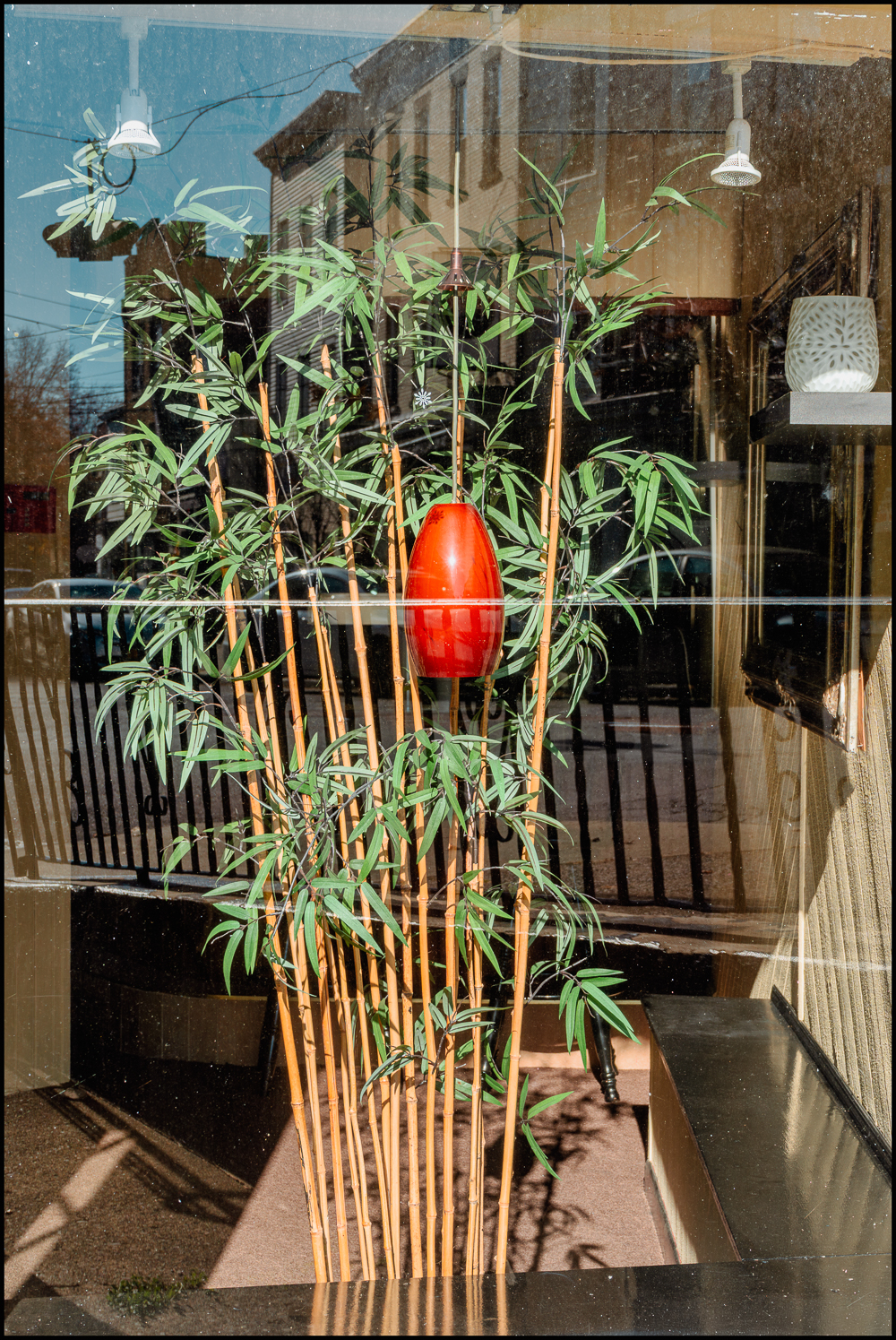
Looking through the window of Casablanca, a Moroccan Restaurant. I like Moroccan food, but the restaurant seemed to be closed. If it had been open I would probably have eaten there.
Taken with a Sony A7CII and Sony FE 28-70 f3.5-5.6 OSS
Photographs and thoughts on photography and camera collecting

Looking through the window of Casablanca, a Moroccan Restaurant. I like Moroccan food, but the restaurant seemed to be closed. If it had been open I would probably have eaten there.
Taken with a Sony A7CII and Sony FE 28-70 f3.5-5.6 OSS
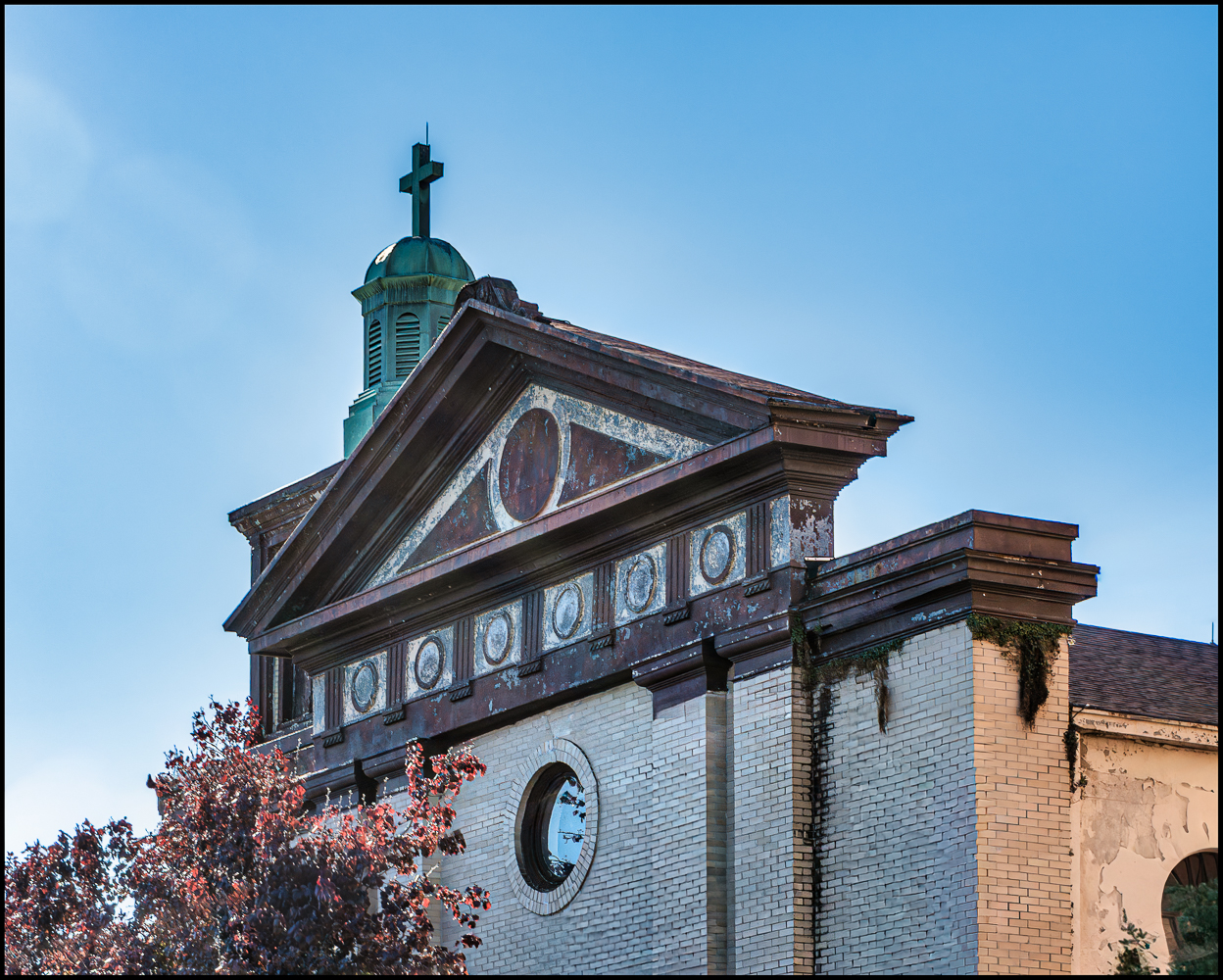
The Church of Our Lady of Mount Carmel is a historic Roman Catholic parish church building located in Poughkeepsie, Dutchess County, New York.
In the early 1900s the Italian population of the city of Poughkeepsie had increased substantially. Fr. William Livingston, pastor of St. Peter’s, invited the growing Italian community to use the lower church for Masses offered by Rev. Angelus M. Iacobucci (d. March 30, 1955). Livingston and his successor, Rev. Joseph F. Sheahan, recognized that these Italian parishioners would be better served by a priest who spoke their own language and was familiar with the community’s customs. At the time, the Mass was in Latin, but the preaching was done in the vernacular.) Unfortunately, because the Mass for the Italians was in the lower church, this was interpreted by many in the Italian community as the Irish having relegated them to the cellar. This was a contributing factor in the Italian community organizing to build their own church
Our Lady of Mount Carmel parish was incorporated on February 20, 1908 as a national parish for Italians even though within the parish boundaries of St. Peter’s, Poughkeepsie. Property was purchased June 1909 for a new church from John I. Platt on the west side of Cataract Place, on what is now Mount Carmel Place and ground was broken the following March. The cornerstone was laid May 1, 1910 by Bishop Cusack and the church was consecrated on October 12, 1910, by the Rt. Rev. Mgr. Michael Lavelle, V.G. A rectory was built November 1913. In 1913, the parish contained 245 families of about 1,700 souls.
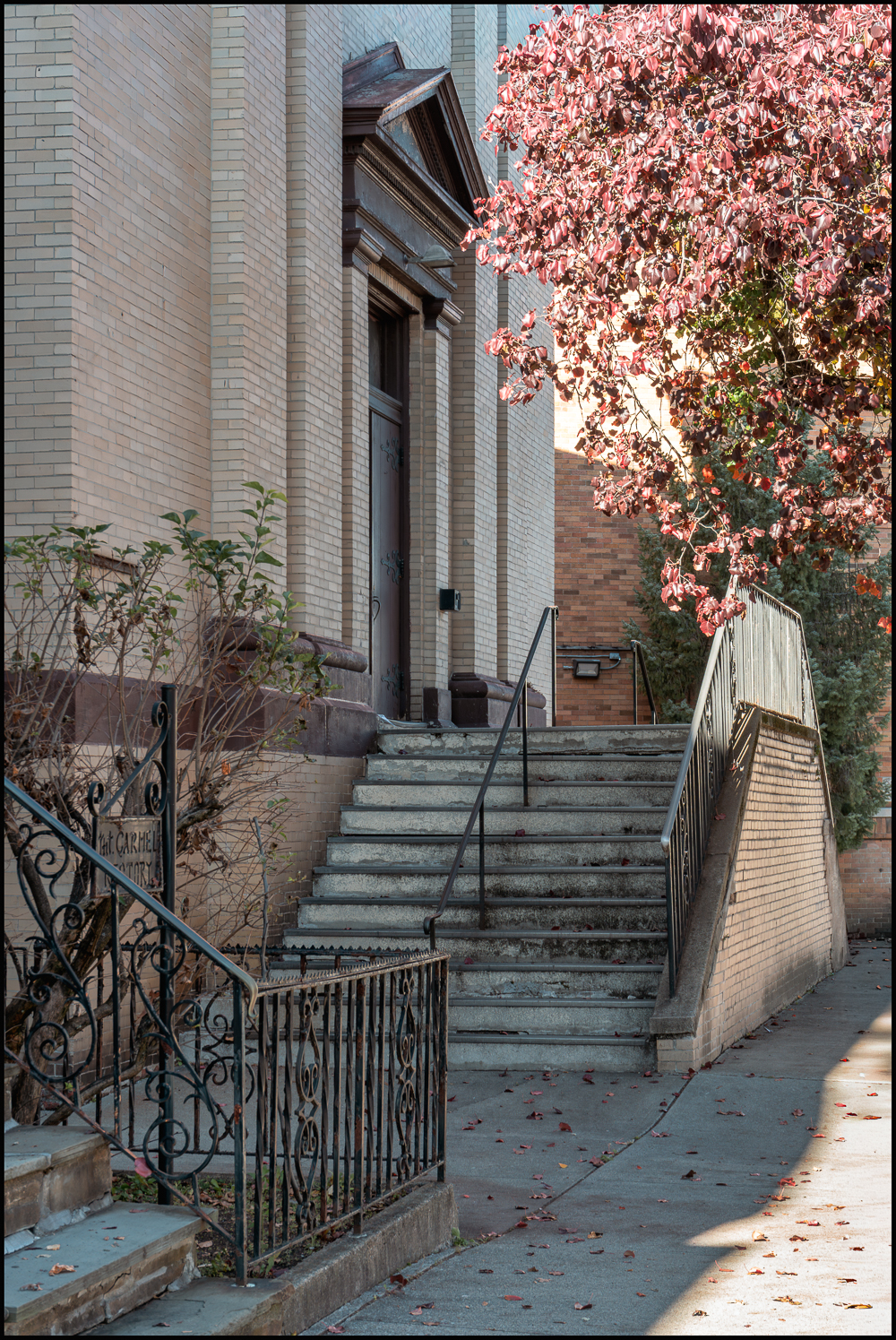
The first pastor was the Rev. Nicola Pavone, who was born at Trivento, Italy, on August 18, 1878, ordained at a seminary there December 23, 1901, and studied at La Minerva University in Rome. From 1903 to 1904, he had a bishop’s secretary in Trivento, then he taught at the seminary at Larino before arriving in New York on December 20, 1905, where he was assigned to St. Peter’s in Poughkeepsie In a gesture of friendship and gratitude to St. Peter’s Church for having hosted the Italian community prior to the building of Our Lady of Mt. Carmel, Fr. Pavone asked the pastor of St. Peter’s at the time Monsignor Joseph Sheahan to offer the first Mass in the newly built Mt. Carmel church after its consecration.
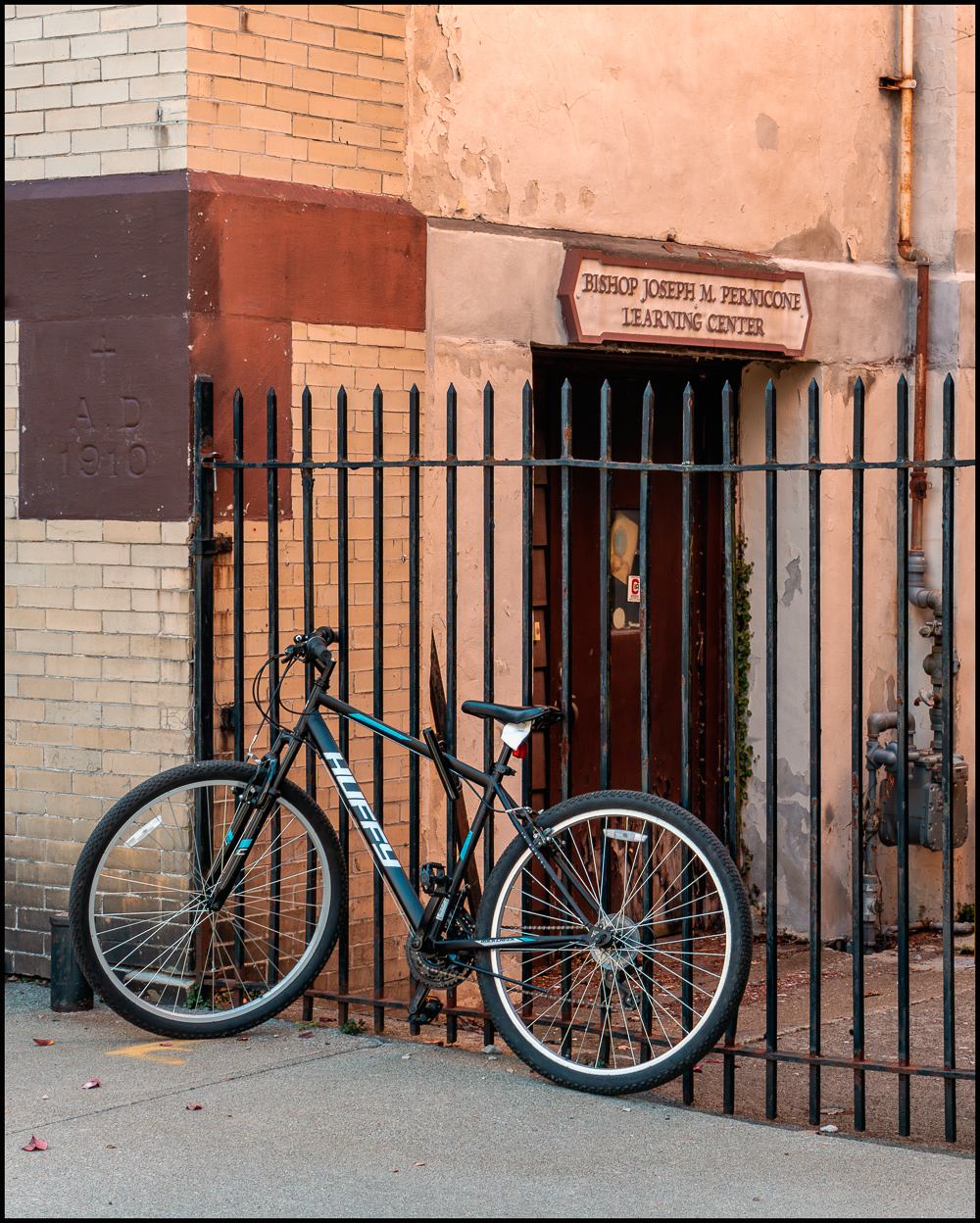
In 1965, when Msgr. Joseph Raimondo was pastor, the congregation moved into the former St. Peter’s church edifice at 97 Mill Street, when St. Peter’s parish re-located to the southeast corner of Dorsey Avenue and Violet Avenue in Hyde Park, NY. (Currently, Astor Services currently occupies the original Church building on Mount Carmel Place.
Italian American pastors, such as Rev. August DiBlasi, Rev. Anthony Mestice, Rev. Mario Ziccarelli, Rev. Mario Bastone, and Rev. Richard LaMorte continued to serve the community, even as many second and third generation Italians who grew up in the Mount Carmel neighborhood, moved out of the City of Poughkeepsie into the surrounding Town of Poughkeepsie but continued to return to Mount Carmel as their neighborhood church. The area has been home to many of Poughkeepsie’s new immigrant populations, starting with the Irish, later the Italians. Still home to several Italian restaurants and bakeries, the area is widely referred to as Poughkeepsie’s Little Italy. Our Lady of Mt. Carmel is now merged with St. Mary and St. Joseph parishes under the pastorship of Rev. Ronald Perez.
It is a brick and marble structure, in the Roman style, and seats 400. Parish tradition holds that much of the brick for the church was actually acquired by the Italian laborers working on the railroad, although it unclear whether this is true and if so, if the bricks were left over, thrown away bricks, or bricks that were supposed to be used for a job
Taken with a Sony A7CII and Sony FE 28-70 f3.5-5.6 OSS
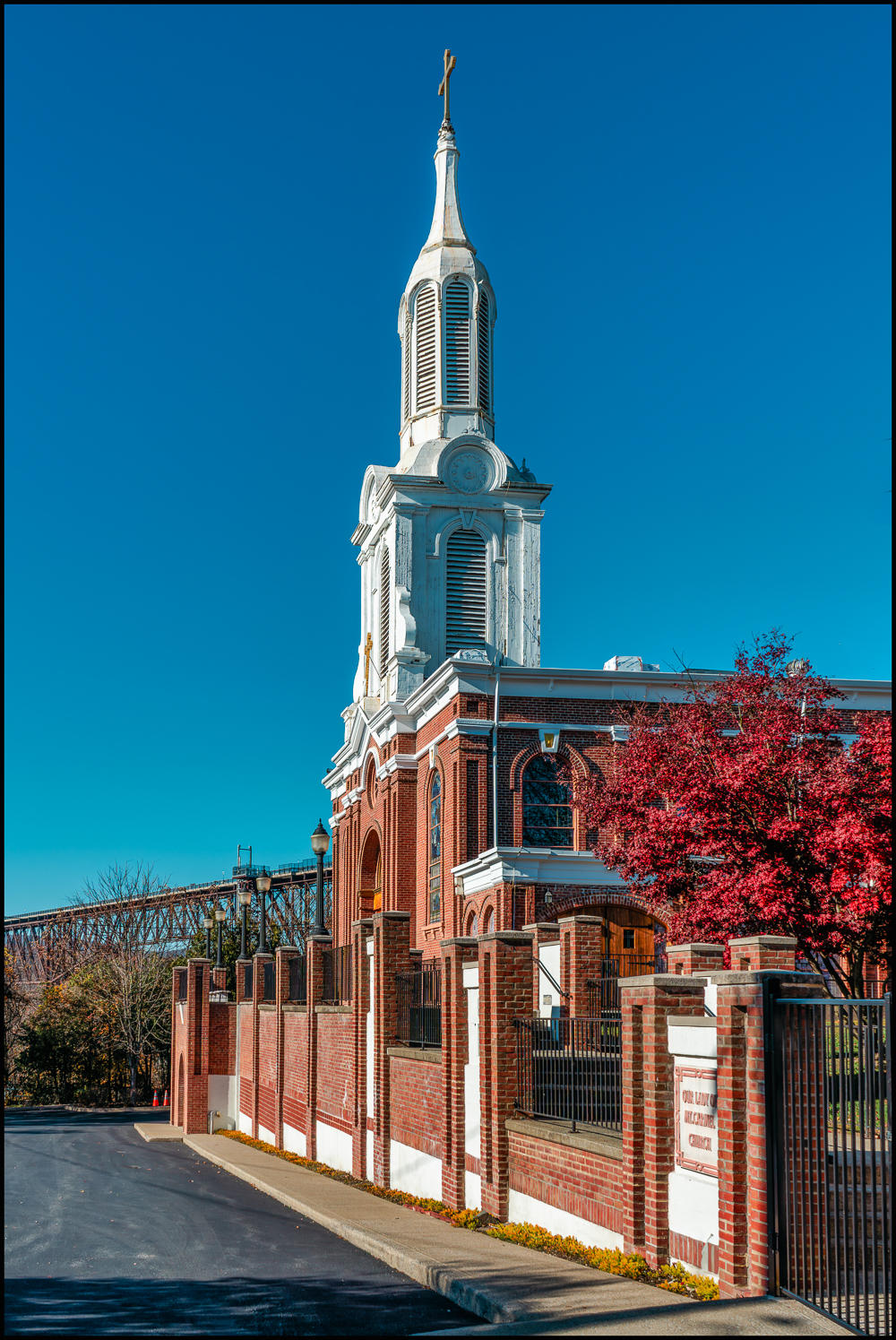
The Old Church of St. Peter is a Roman Catholic church established under the authority of the Roman Catholic Archdiocese of New York in Poughkeepsie, Dutchess County, New York in 1837. It is the second oldest Catholic Church on the Hudson (after St. Mary’s in Albany) and is considered the Mother Church of the Hudson Valley because from it all the parishes in Ulster and Dutchess counties were founded. The church is also referred to as Our Lady of Mount Carmel since 1965 when St. Peter’s parish relocated to Hyde Park, New York and the parish of Our Lady of Mount Carmel church (located a block away) relocated to site.
Twenty-two years after the Diocese of New York was founded in 1808, Bishop John DuBois, in 1830, authorized a Dominican, Father Phillip O’Reilly to establish parishes on the Hudson River north of Manhattan Island. The first congregation he ministered to was the small group of 28 Irish-born Catholic families, who on October 14, 1831, were organized as the Congregation on the Hudson.
Philip O’Reilly O.P. was stationed at Newburgh, New York from 1830 to 1832 and would visit Poughkeepsie once a month in summer. Fr. Patrick Duffy was pastor of Paterson, New Jersey from 1823 to 1836, when he was sent first to Our Lady of Loretto in Cold Spring. From there he served congregations in West Point, Cold Spring, Newburgh, Saugerties, Rondout, and Poughkeepsie. When the house of Robert Belton became too small for the number attending, Mass was celebrated in the old brewery, near the Lower Landing at Pine Street. And later at the Hibbasus’ hall on Market Street near Jay Street.
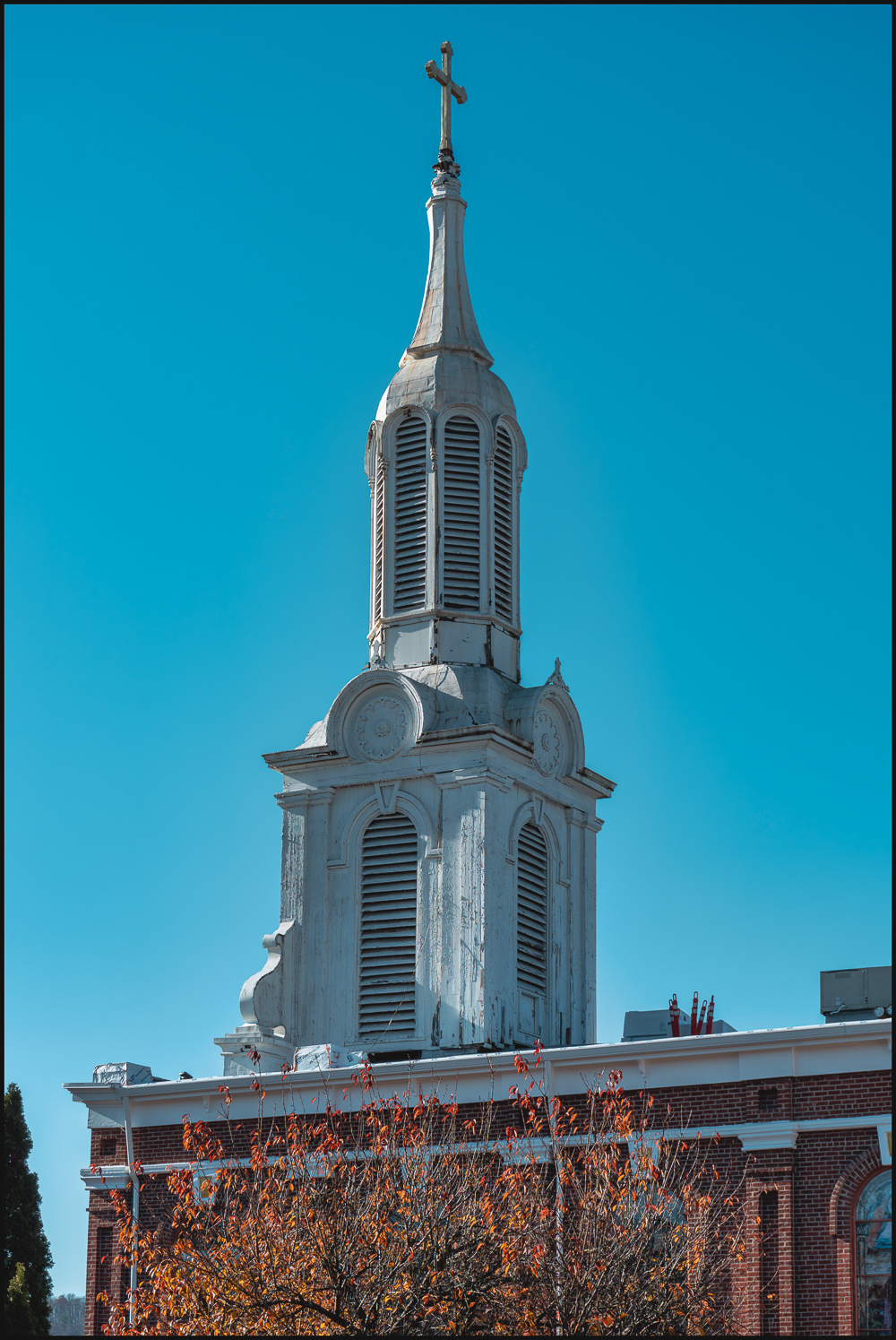
By 1825 emigrants from Ireland were numerous enough in Poughkeepsie to form a well defined segment of the population. In 1837 a church building was erected on land donated by Peter Everett. When some bigoted individuals threatened to burn it down, a vigilance committee, made up of Catholics and Protestants, was formed to defend it. Dr. Pyne, a non-Catholic offered the defenders the loan of a small cannon. There was no further trouble. The church was dedicated by Bishop DuBois on November 26, 1837. Rev. Patrick Duffy, pastor of Our Lady of Loreto Parish in Cold Springs who had been charged with the spiritual care of Poughkeepsie was then transferred to Newburgh. Rev. John McGinnis was named first pastor of St. Peter’s Parish in Poughkeepsie. The missions at Saugerties and Rondout were made dependencies of St. Peter’s with expectation that each would be attended at least once a month.
In 1839 McGinnis was transferred to St. James in New York and succeeded by Rev. John N. Smith. It was Smith who erected a small frame church at Rondout. He also made pastoral trips to Rosendale. In 1842 Rev. Myles Maxwell became pastor at St. Peter’s when Smith was himself assigned to St. James in New York. (Smith would die there in February 1848, having contracted ship’s fever while attending the deathbed of Rev. Mark Murphy who had been ministering to immigrants at the quarantine station on Staten Island.)
Father Michael Riordan became pastor in September 1844 and “steered it safely” through the “Know-Nothing” agitation at that time. He had substantial influence among the Irish building the railroad and more than once quelled disturbances that threatened to turn into riots.
In 1894 Father James Nilan commissioned the paintings of the Stations of the Cross and had them shipped from Rome. The Apostolic Nuncio from Washington and Archbishop Michael Corrigan of New York attended the dedication. Removed during subsequent renovation, they were discovered when Our Lady of Mount Carmel assumed occupancy of Old St. Peter’s and restored. Our Lady of Mount Carmel parish held a celebration in 1994, on the centennial anniversary of their dedication
The abandoned rectory burned around 1977.
In 1965 St. Peter’s parish re-located to Hyde Park, NY, although it kept a Poughkeepsie address. A school and convent were built and parish Masses were offered in the school chapel and auditorium. A rectory was not built until 1975 and until then priests continued to commute from the rectory in the city of Poughkeepsie. Currently, the parish offices are at St. Peter’s Cemetery on Salt Point Turnpike. In 1999, St. Peter’s Parish worked out a deal with New York State to use the Chapel of Our Lady of the Rosary which had been part of Hudson River State Hospital. St. Peter’s parishioners restored the chapel by June 29, 1999. The state sold the chapel to the Archdiocese of New York and granted easements of access on West Cottage and Recreation Drive.
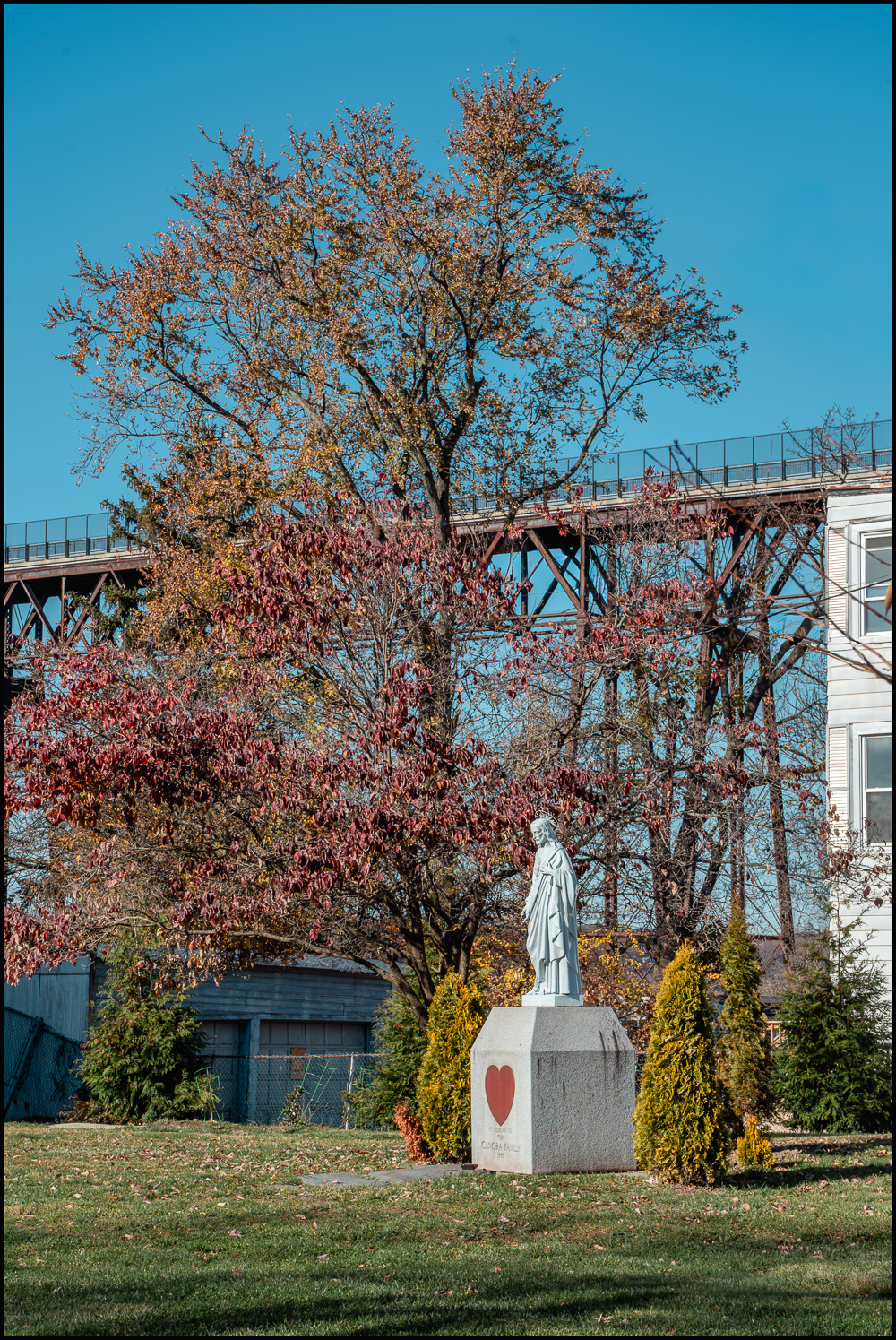
Taken with a Sony A7CII and Sony FE 28-70 f3.5-5.6 OSS
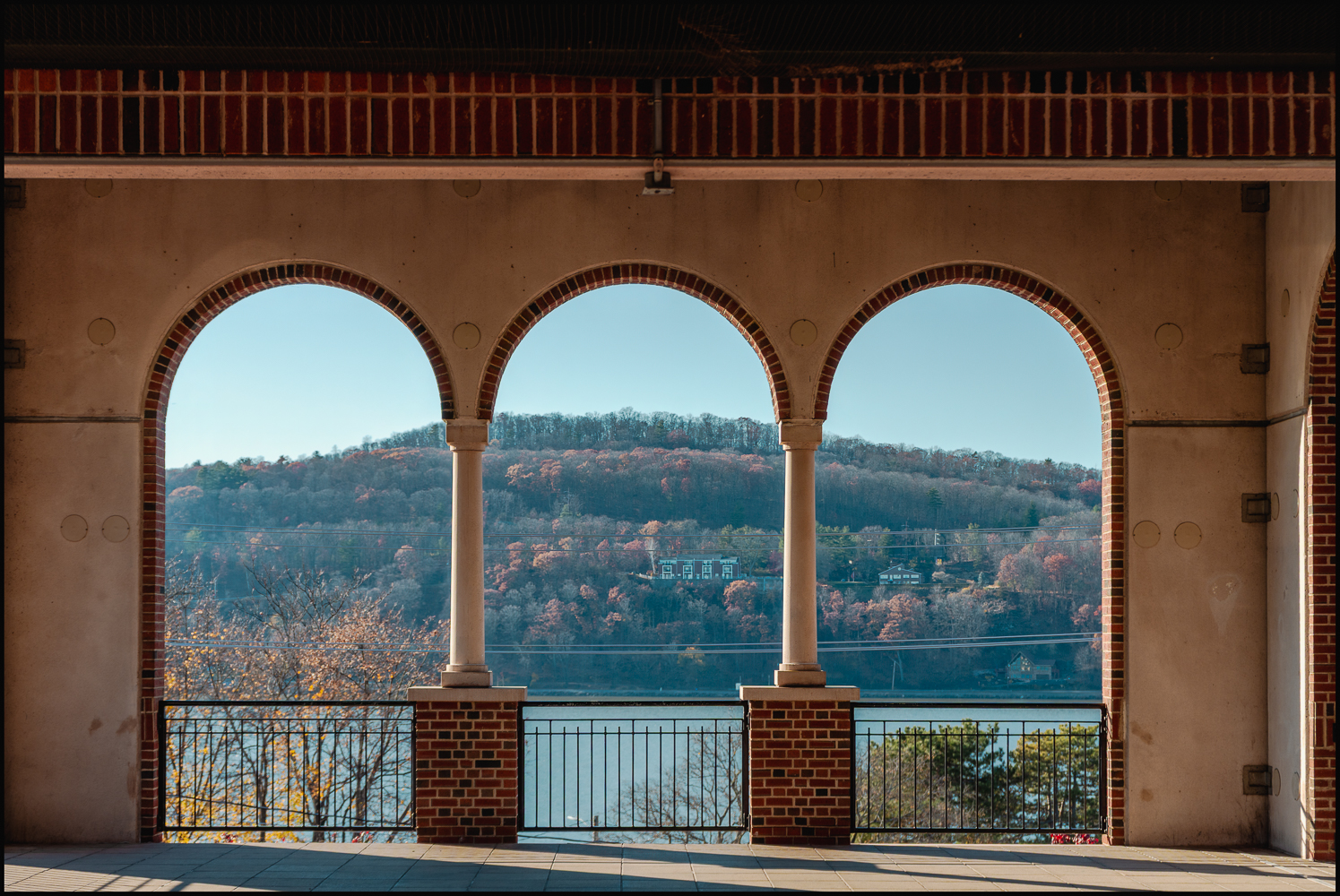
In a parking garage adjacent to the Poughkeepsie Station. Nice view over the river.
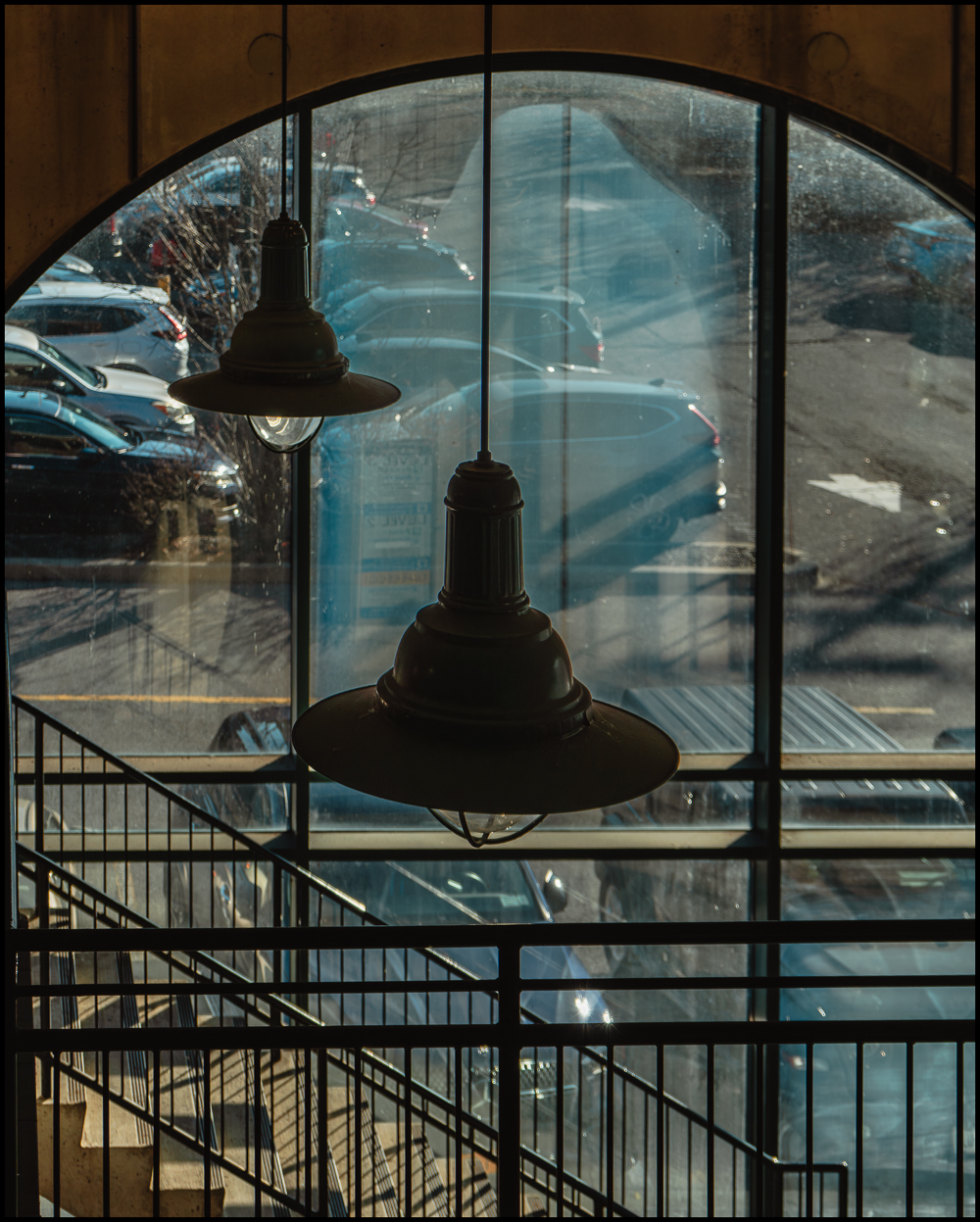
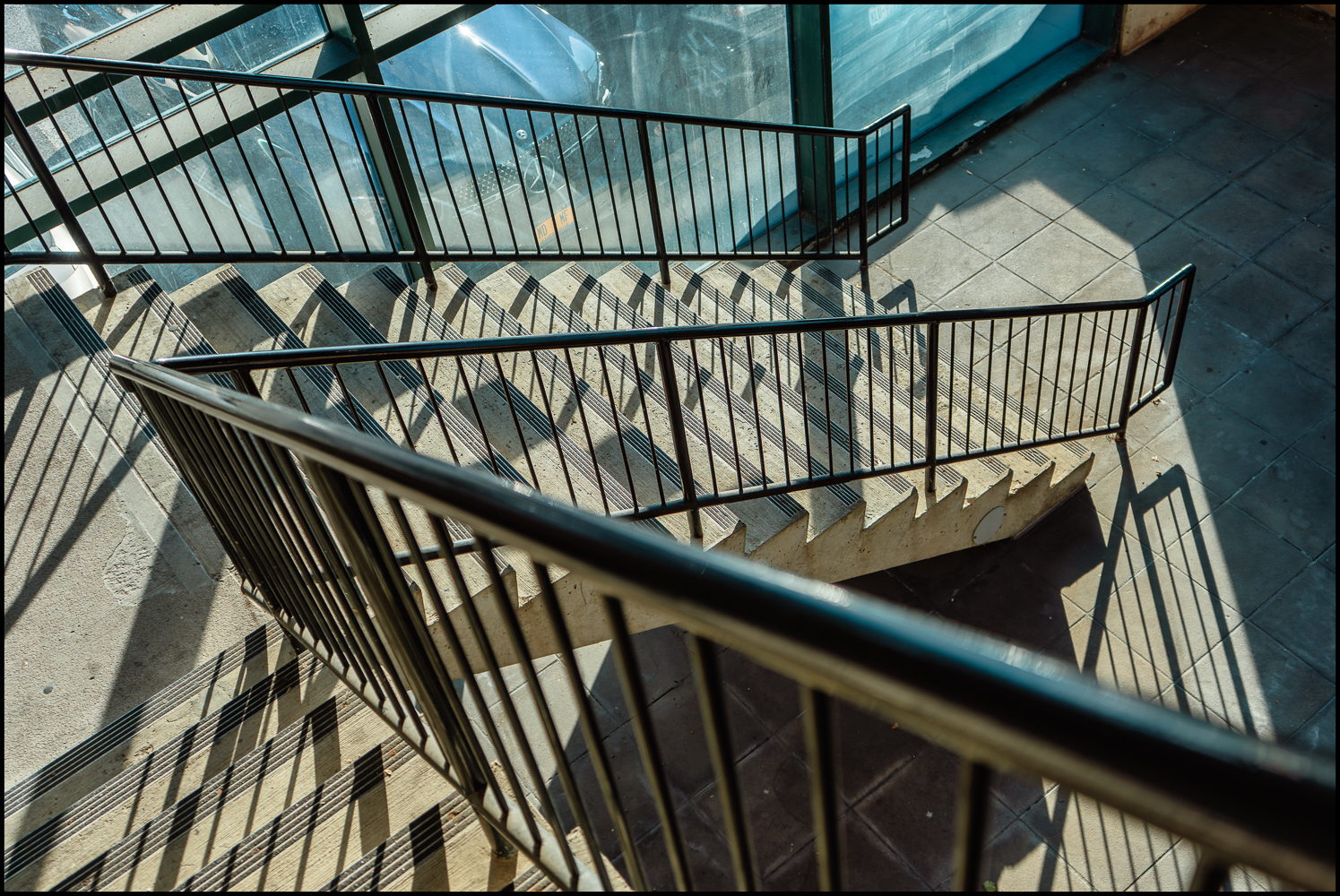
Taken with a Sony A7CII and Sony FE 28-70 f3.5-5.6 OSS
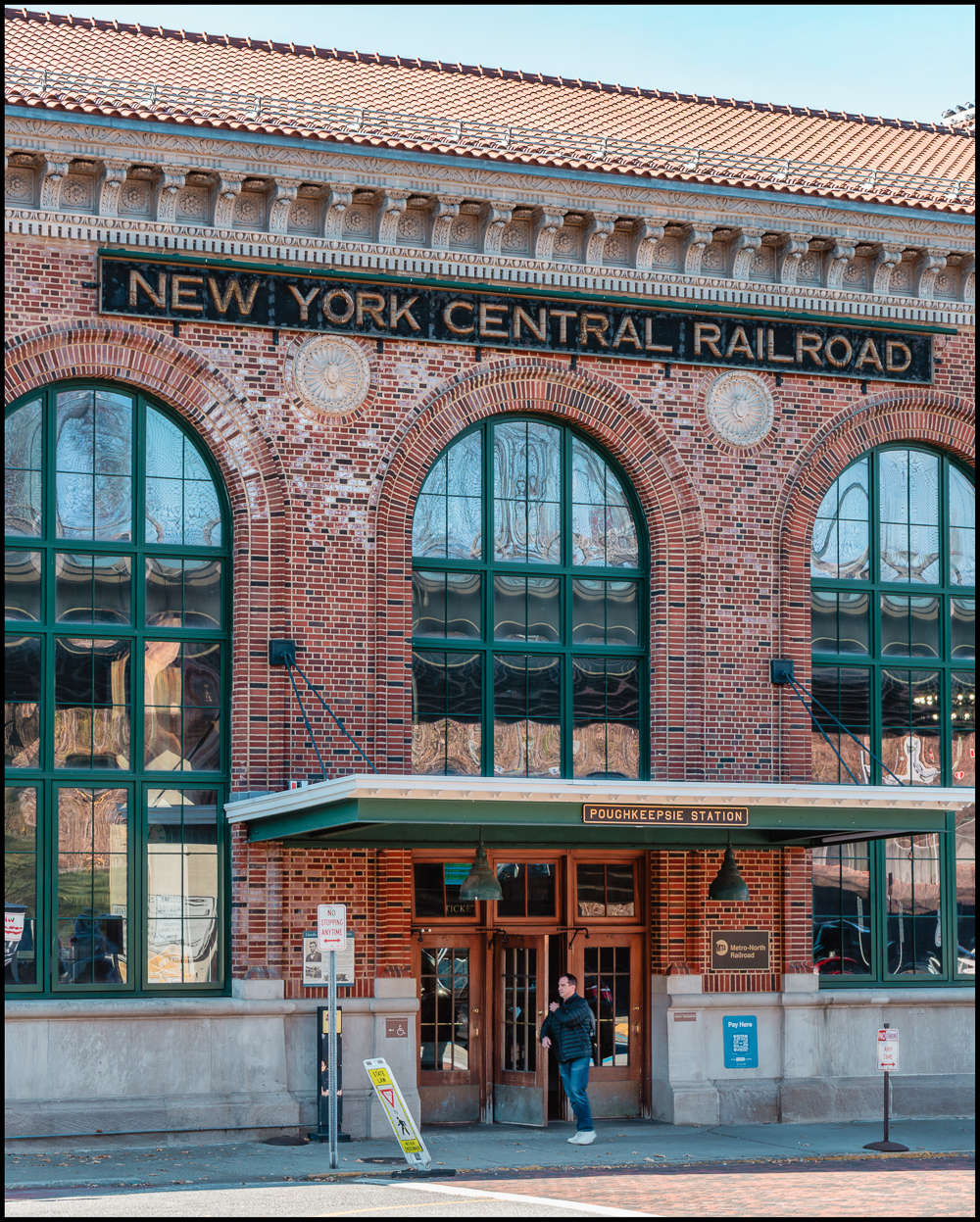
The first Poughkeepsie station was built in 1850 as what became the New York Central Railroad‘s Water Level Route worked its way up the Hudson River. For its first two years it was the end of the line, but even after it was completed all the way to Albany, it remained the most important intermediate stop. Many local industries, particularly the carpet mills and shoe factories in the city, used the rail facilities to get their products to market. The concentration of industry around a major rail stop also led to the rise of banking and finance within the city as well.
In 1889, with the completion of the nearby Poughkeepsie Railroad Bridge providing east–west rail service across the Hudson, Poughkeepsie became even more important to regional rail transportation. When it came time for a third station to be built on the site, the firm of Warren & Wetmore was hired to design a station that would impress travelers and communicate the city’s confidence and cosmopolitan aspirations. They chose to model it on Grand Central, another successful design of theirs.
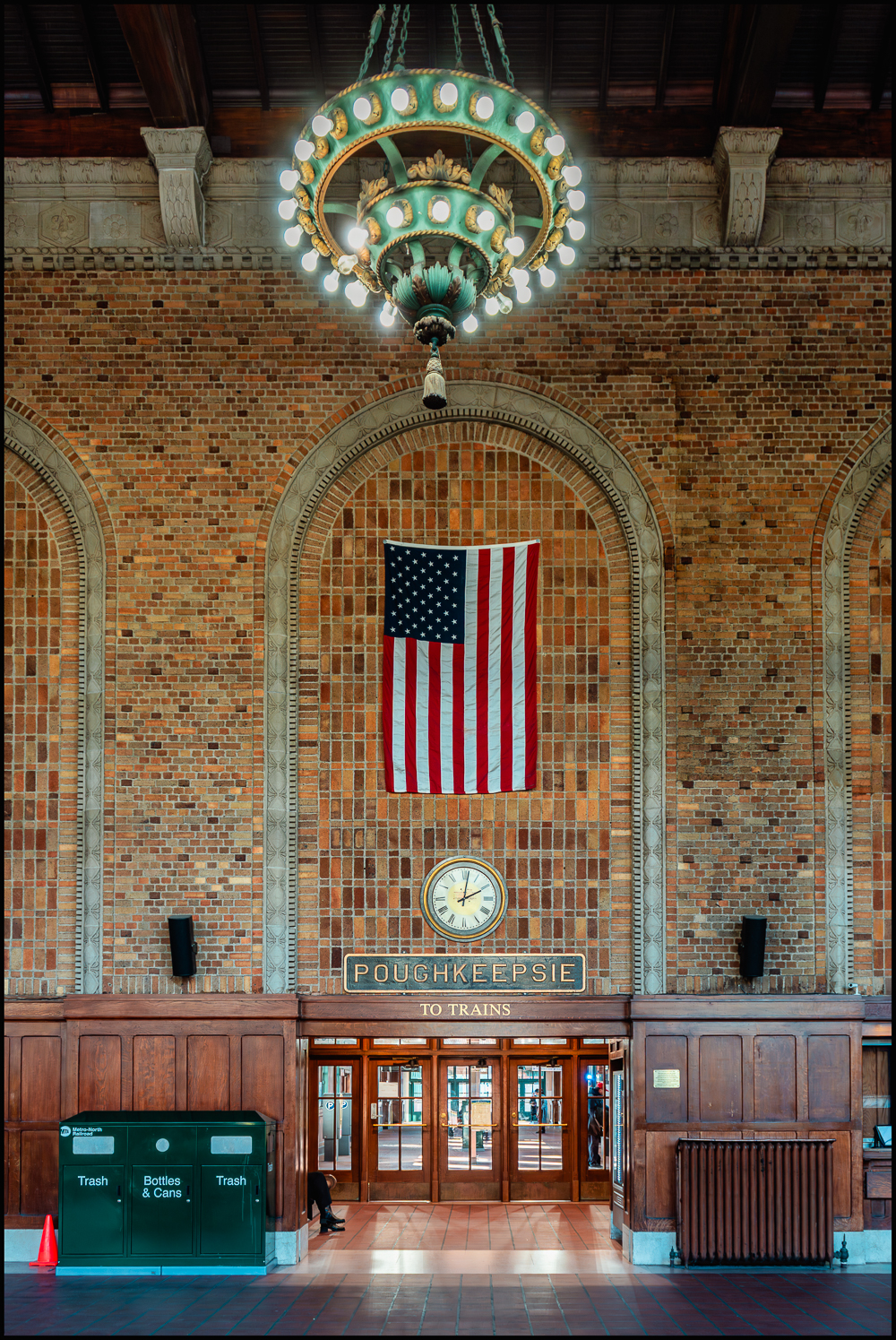
After five years of design and construction, the station was opened on February 18, the main station building is meant to be a much smaller version of Grand Central Terminal. It was a source of civic pride when it opened. In 1976 it was added to the National Register of Historic Places as Poughkeepsie Railroad Station; it and Philipse Manor are the only Hudson Line stations outside Manhattan to be so recognized.
The station is a four-story building built into a rockface, with the bottom two levels given over to the tracks and the top two accounted for by the main waiting room, a two-story brick-faced building. Its five-bay facade features sculptured masonry designs over the five high arched windows. To the west, a 420×15-foot (128×5 m) steel-frame overhead walkway provides access to the tracks via stairs and elevators. Today it continues westward to provide access to the adjacent parking garage. At the time of the station’s construction, it served the businesses along Main Street
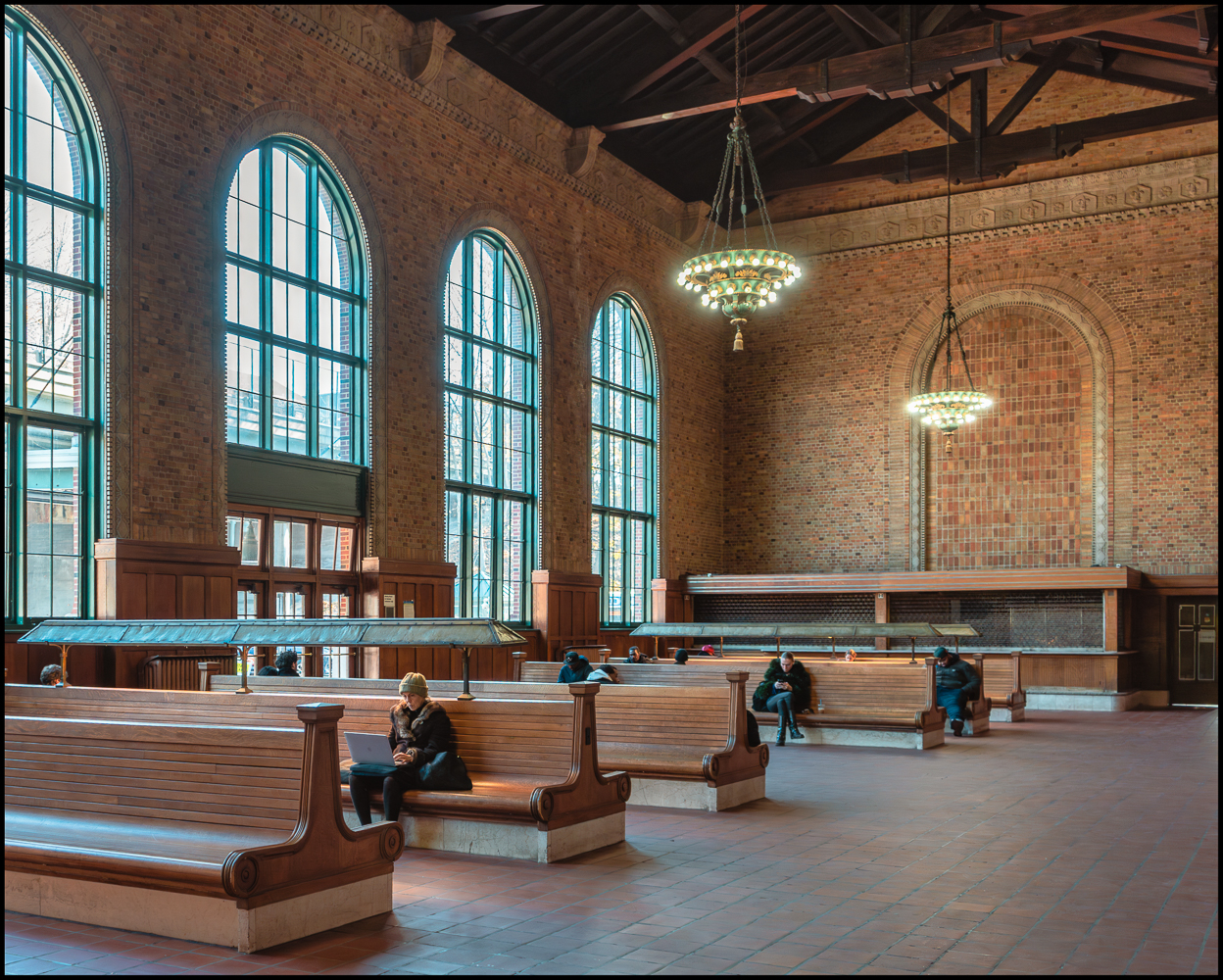
The waiting room, modeled on Grand Central Terminal,[4] is a high gallery lit during daylight by the windows and the three original chandeliers. The 14 benches within are also original finished chestnut pieces. The walls are paneled in wood to eight feet (240 cm), after which the carved stone shows all the way to the cornice. More original woodwork, the stained walnut rafters, is present in the ceiling, possibly modeled after a similar design in San Miniato al Monte, an 11th-century church in Florence, Italy.
Amenities include bathrooms (also modernized), a concession stand, as well as a ticket counter selling Metro-North tickets alongside two vending machines which sold MetroCards prior to May 2025. There is no checked baggage service for Amtrak trains; Amtrak tickets are available only via a Quik-Trak kiosk. The northernmost MTA Police substation is adjacent to the station as well. In the late 1960s the North-South Arterial (US 9) was built and elevated immediately to the station’s east, somewhat isolating it from the rest of the city.
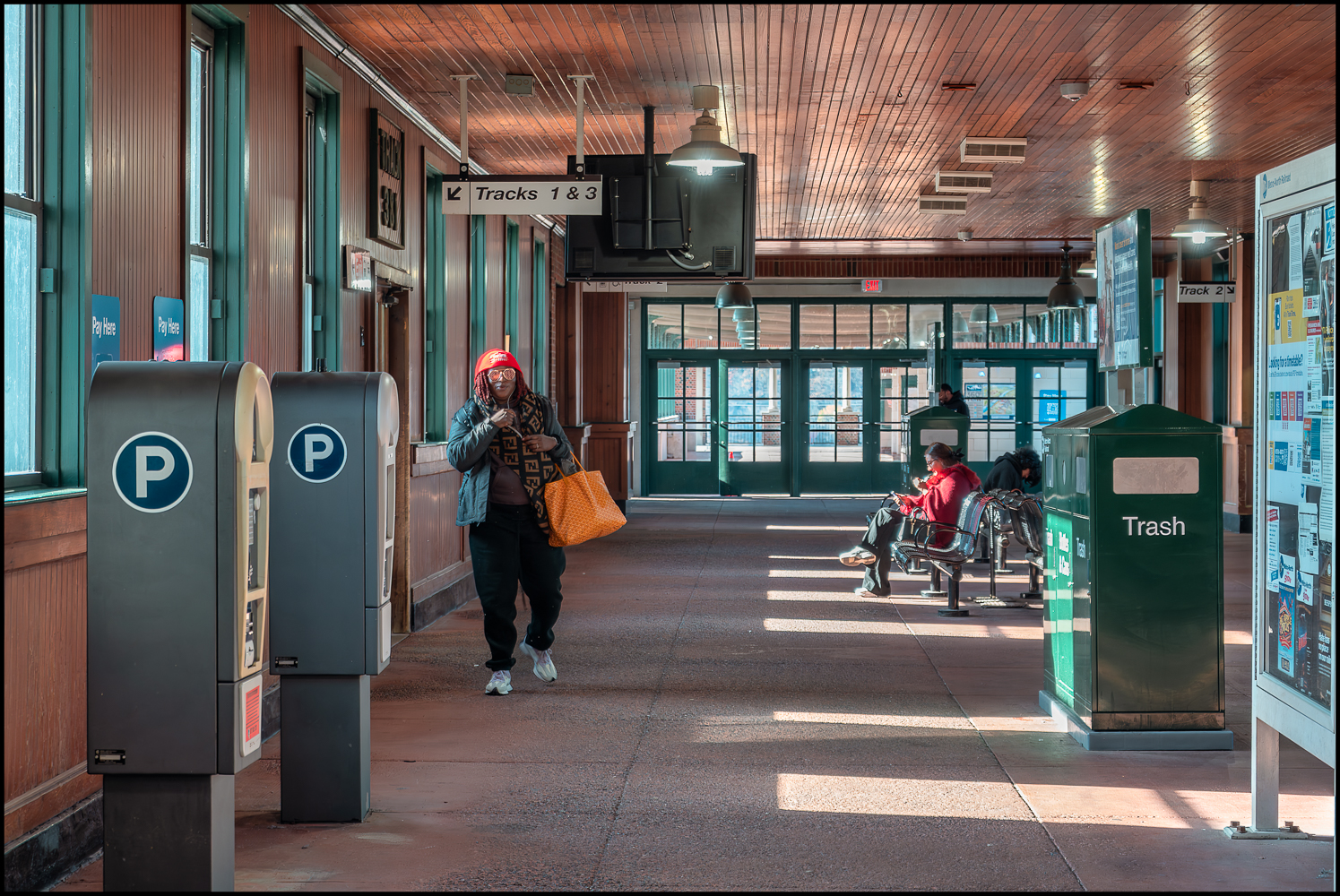
There are four tracks at the platform level, enough to accommodate Amtrak and Metro-North stops simultaneously, and from west to east numbered 2, 1, 3, and 5. Only tracks 2, 1, and 3 are regularly used. Track 5, the easternmost, has a lower speed limit and is used mainly for non-revenue maintenance trains or those experiencing difficulties. The station has a high-level island platform, high level side platform, and a low-level side platform, each six cars long and slightly offset from each other. Only the high-level platforms are used in passenger service.
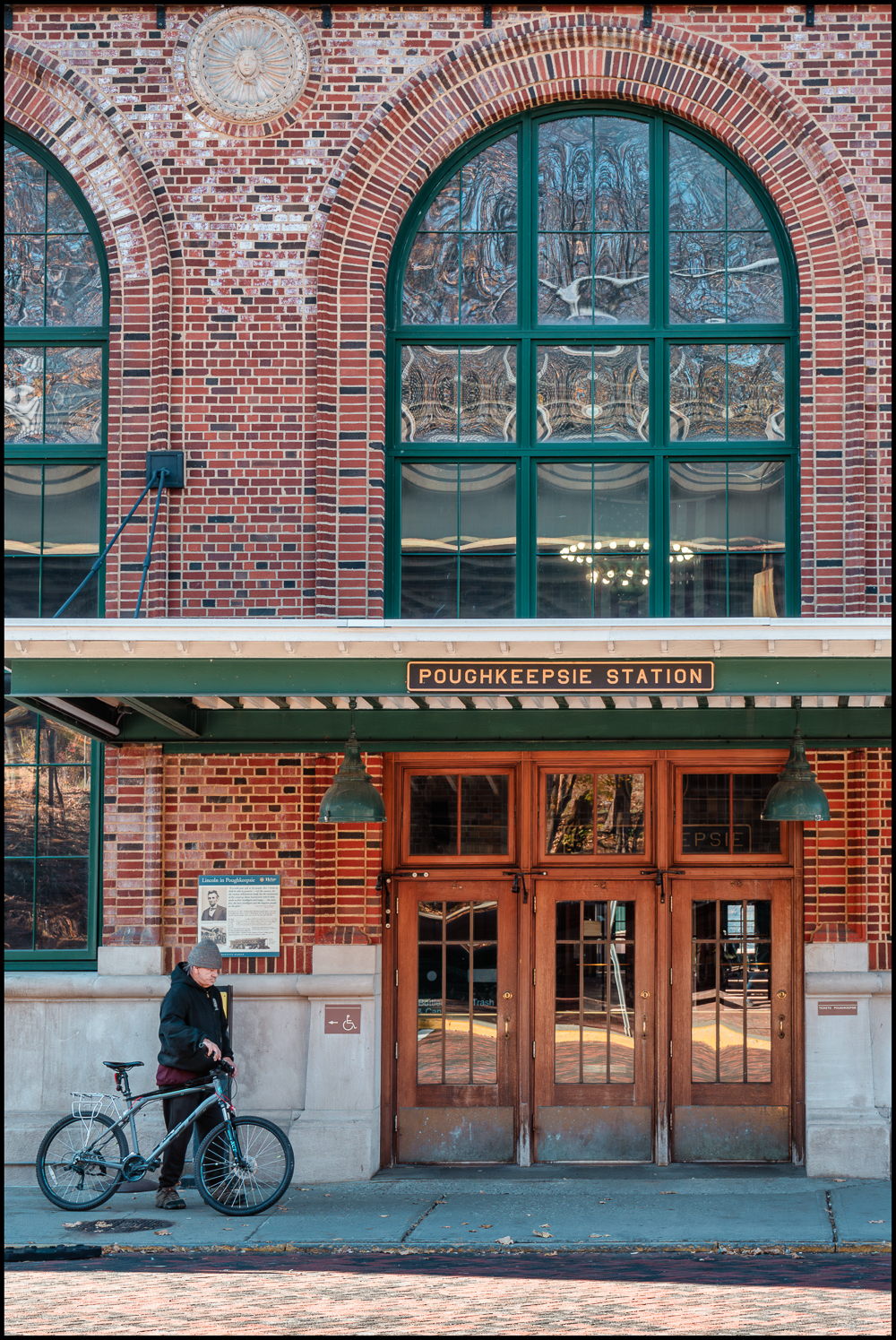
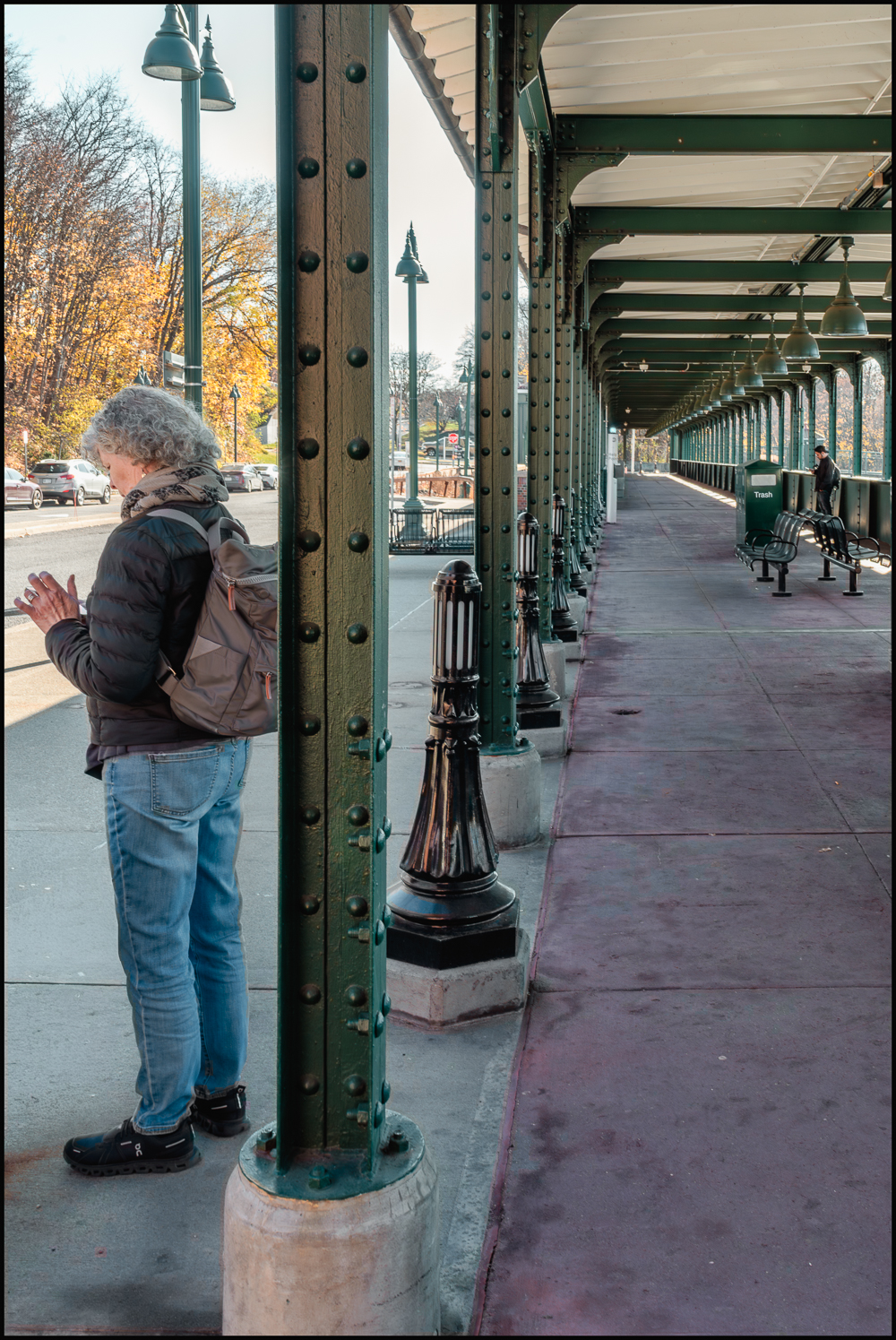
Taken with a Sony A7CII and Sony FE 28-70 f3.5-5.6 OSS