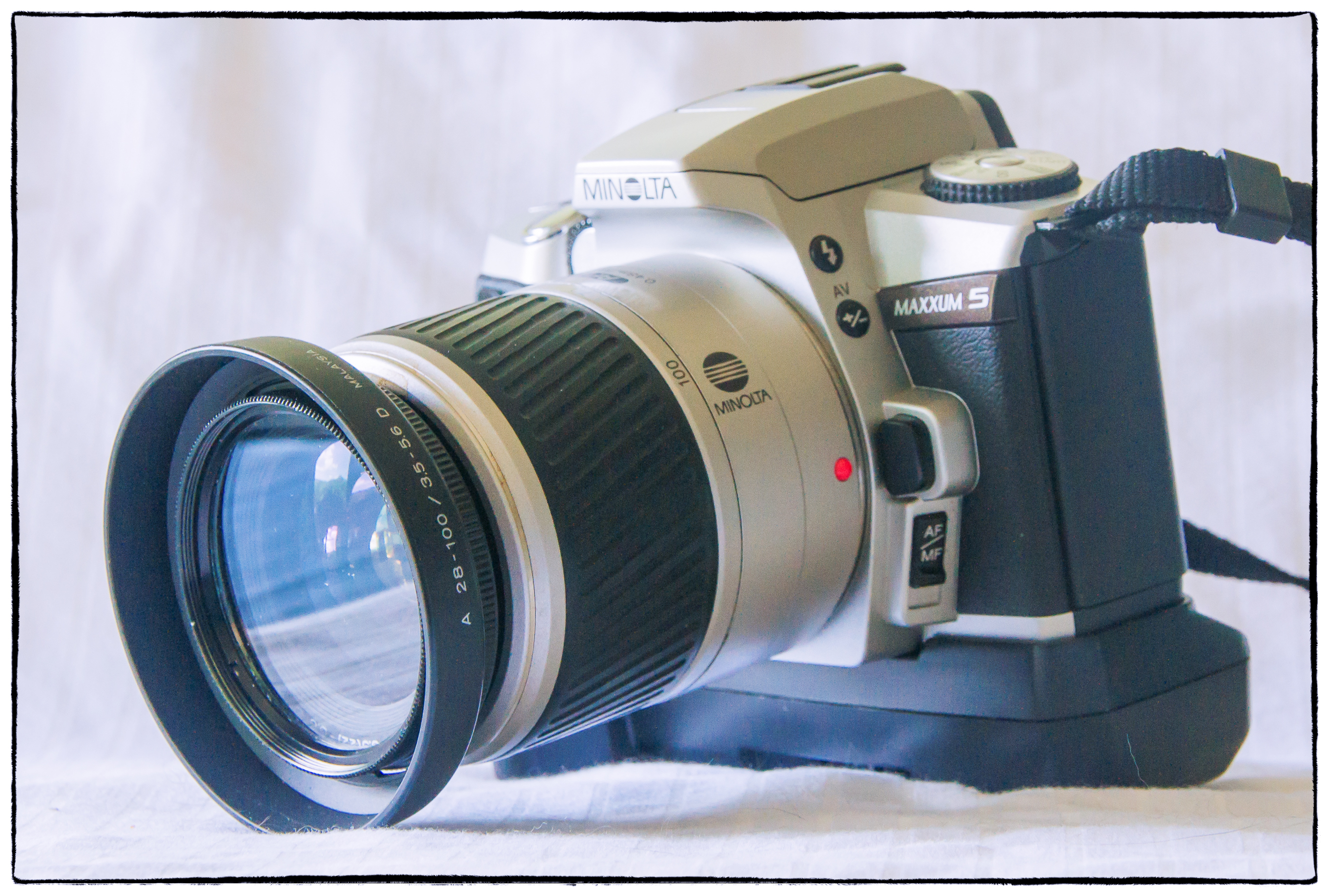
May Film Camera – Minolta Maxxum 5

I don’t recall how I managed to acquire this camera. It could be that someone gave it to me. I’ve mentioned before that I missed the entire autofocus fim era so it might be that reading a good review and finding a decently priced one prompted me to get it. Or it could be that it came with a lens that I could use on my Sony Alpha DSLR. I already have a number of Konica/Minolta/Sony lenses for the DSLR so maybe I thought that having a reasonably inexpensive, later model Minolta AF film camera would be nice (to go with my Nikon N90s, Canon EOS 650, and Canon EOS Elan IIe all of which I love to use).

It’s a Minolta Maxxum 5, the less expensive sibling of the Maxxum/Dynax 7 and 9 cameras, which still command significantly more money. My copy came with a Minolta 28-100 AF lens f3.5 (22)-f5.6 D lens, a strap, a Tiffen UV filter, and a lens hood. It’s also the data back version. (I don’t like data backs and so immediately turned it off) and has a BP-200 battery pack.

It’s very small and is quite light. I like the look and feel of it. While obviously designed to meet a low price point (i.e. lots of plastic) it feels quite solidly made. Because it’s an inexpensive camera, however, this doesn’t mean that it lacks features – quite the contrary. It has a top shutter speed of 1/4000; bracketing; continuous and 7-point autofocus; exposure compensation; automatic (from DX coding) or manual selection of ISO from 6-6400; and multiple exposure capability. It also has an interesting reset button, which returns all settings to default if you mess something up. Powerful, but perhaps a little bewildering are the 14 customizations, which allow you to set up the camera how you want it. They cover such areas as flash settings, leaving the film leader out, spot metering options, metering patterns, etc. Unfortunately you’ll probably need a “cheat sheet” to remember what they are as they are all referenced by number.

The top display shows all of the set options at a glance. Other controls for flash and exposure compensation, spot metering and selecting AF points are conveniently placed. The camera has a built in pop-up flash, which I doubt I’ll use (I’m terrible at flash photography and prefer to use available light). There are also buttons, which select (in conjunction with turning the command dial) scene modes (portrait, landscape, macro, action, night) and drive mode (single frame advance, continuous frame advance, self timer and remote control) options. To the bottom right on lens mount is a depth of field preview button, and on the left a manual/autofocus toggle button. On the right side of the body is a port for a wired remote. It’s the same as the port on my Sony Alpha 500 DSLR so I can use the wired remote with both cameras.

The camera also has “Eye Start” and begins to focus as soon as you lift it up. I don’t like this feature and immediately turned it off. Focus and exposure setting can be locked using a half press of the shutter button.

I found the mode dial initially a little confusing. For example to select aperture priority you have to turn the dial to PASM, then press and hold the central “func” button while turning the control dial on the front. This then cycles through the available options (seen on the top screen). When you reach ‘A’ you let go of the ‘func’ button and you’re all set. It’s not particularly difficult or time consuming – just different from what I was used to (i.e. selecting the programme mode directly from the dial itself). Other settings on the dial include bracketing options; audio signal; eye start, custom settings; ISO; AF options (A,C,S); red-eye reduction.

The viewfinder of the Maxxum 5 is bright and the display on the bottom shows just the essentials: focus pattern, focus confirmation, shutter speed, aperture and exposure setting.

It has a decent sized grip and was very pleasant to use. It would be easily possible to build a substantial system (body and older Minolta AF lenses) at very little cost. Definitely a very likable camera.

I’ll post some results later.
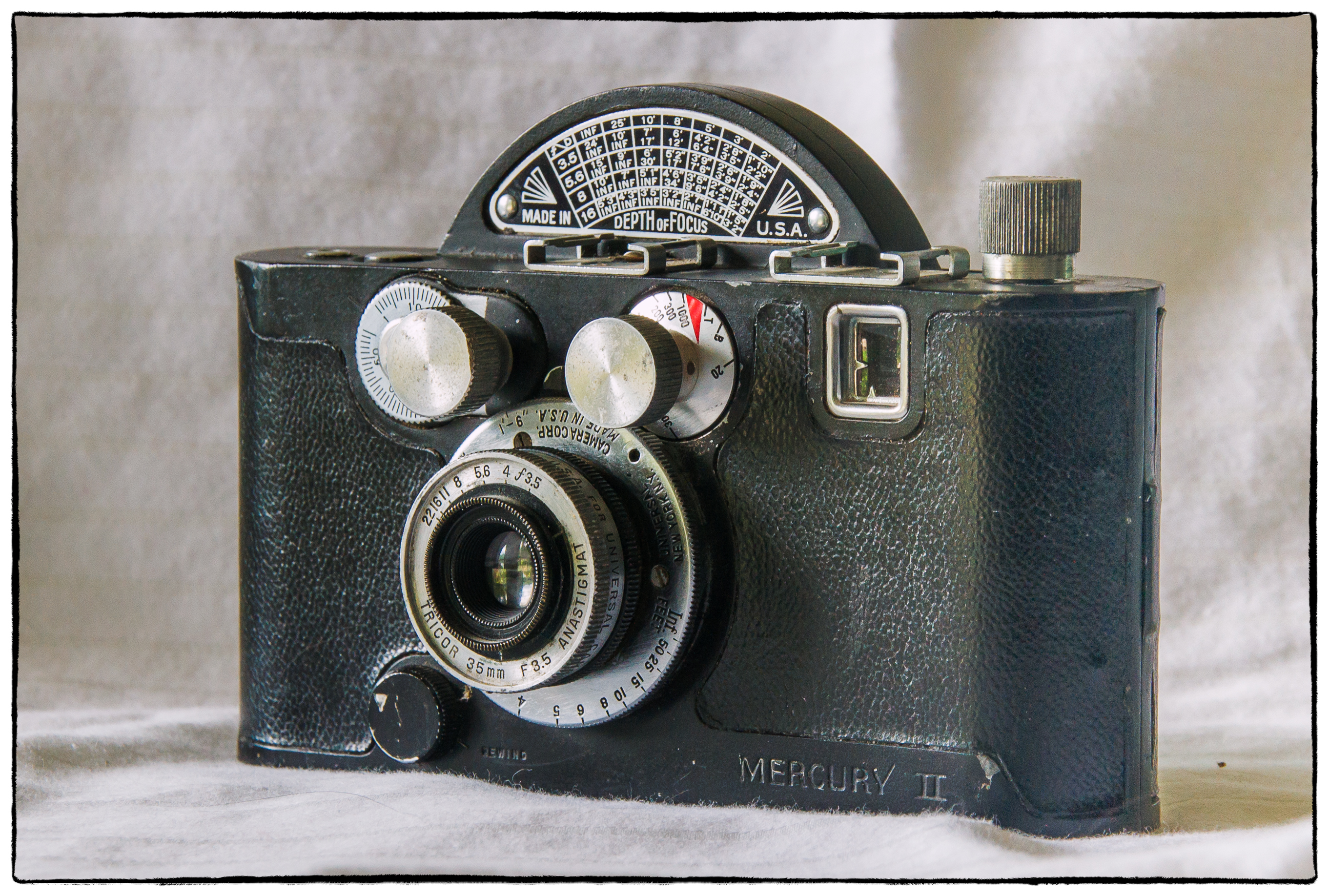
New Acquisition – Universal Mercury II CX

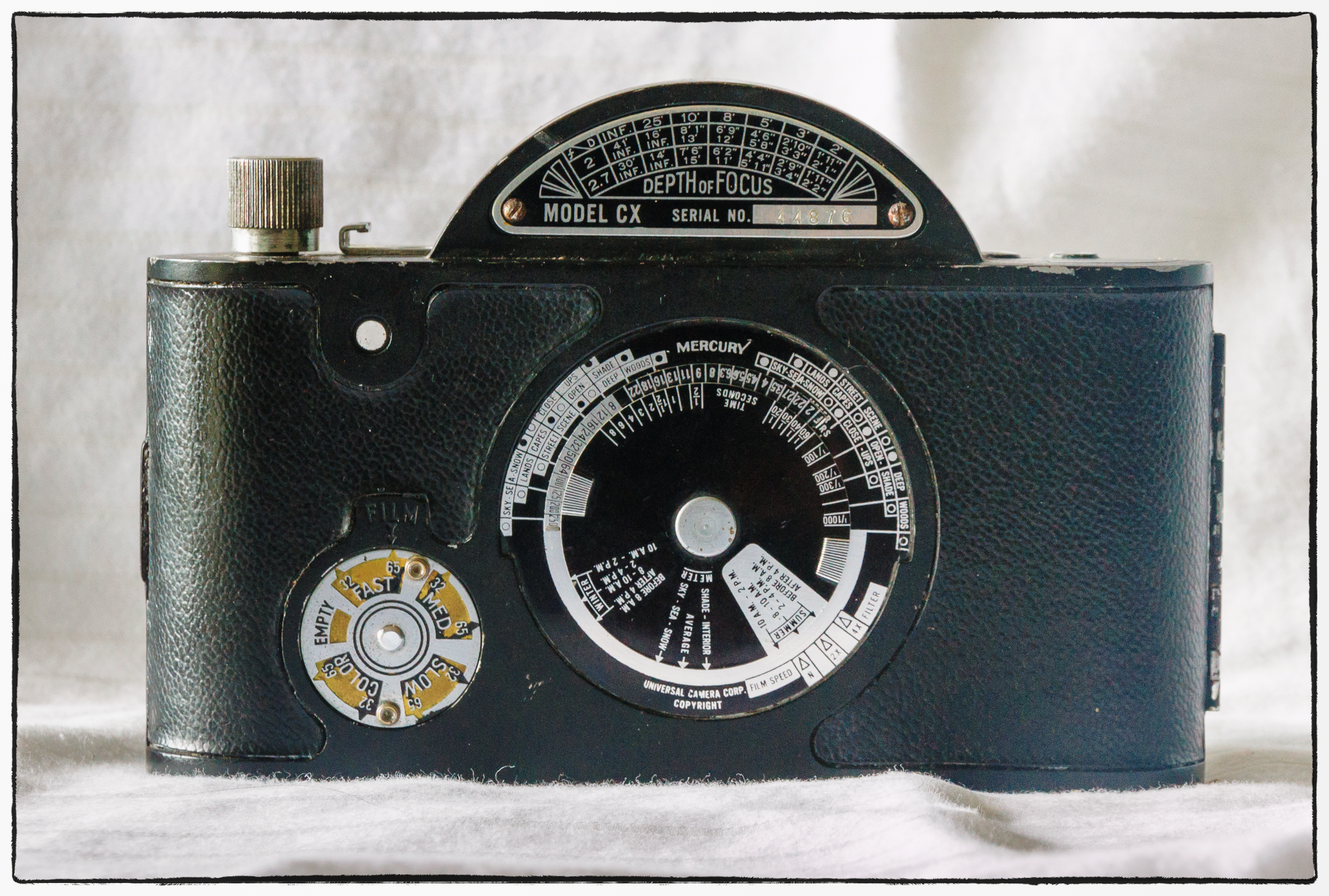
I’d been looking for one of these for a while – either the pre-WWII Mercury (often called Mercury I) or the post war Mercury II. One of the foci of my collection is US 35mm cameras, most of which (with the exception of my beloved Retinas and possibly a few Argus’s) I find to be rather weird and wonderful. When I saw pictures of the Mercury I couldn’t help but notice the large hump on top. For those who don’t already know it’s a rotary focal plane shutter and I’d never seen anything like it. When I came across this one for a reasonable price I just had to have it.

As is often the case Mike Eckman has written one of his excellent reviews (see: Universal Mercury II (1946-48)) on it. He provides a short history of the Universal Camera Corporation, gives his thoughts on the camera, offers some tips regarding repairs and shows some photographs he had taken with the camera.

Since Mike has already provided so much information I’ll limit myself to just a few comments.

First the size of the camera surprised me. This is sometimes the case when you’ve only seen pictures of the camera. I recall seeing an Exacta in a nearby photo shop and thinking that it was much larger than I had thought. I also remember seeing a Kodak Bantam Special in the Kodak Museum in Rochester and thinking that it was much smaller than I expected. In the case of the Mercury it’s a lot smaller than I thought it would be.

Second the camera is black. I think it looks good in black, but I doubt that any Mercury every left the factory like this. All those I’ve seen are chrome. This is without doubt some owners paint job. This is possibly because the finish on the Mercury is generally considered to be pretty dismal. In her superb book: The UniveX Story (more about which in a future post) Cynthia Repinski writes:

Generally speaking, the metal finish on the Mercury II lacked the luster and gleam that characterized the Mercury I. The finish of the Mercury II seemed to become dingy and dull within only a short time. Signs of heavy corrosion are extremely common on Mercy II models today, whereas many of the Mercury I models appear almost like new. Some former Universal engineers recalled the inferior finish of the Mercury II was due to the postwar use of magnesium metal in combination with the aluminum allow normally used in die casting the Mercury housings. Magnesium had become quite popular during WWII and was being readily used by many other manufacturing companies in the post war fabrication of their own products. The aluminum alloy used in the production of the Mercury I camera provided a more gleaming appearance than the combination of aluminium and magnesium used in the production of the Mercury II camera.

When I purchased this camera I had no intention of using it. I’m not a fan of half-frame cameras. I thought that I’d just put it alongside such other gorgeously ugly cameras as the Kodak 35RF (which someone once referred to as a camera “only a mother could love”). However, once I had it in my hands I liked the way it felt. The more I look at it the more I like the way it looks (I no longer consider it to be ugly) and I’d like to try taking pictures with it. Unfortunately I can’t. The shutter works, the aperture works, the viewfinder is OK – but unfortunately the focus is completely frozen. I intend to try to “unstick” it though.

Rear view with the rather complex (I have no idea how it works) exposure calculator.

April Film Camera – Canon Eos Elan IIe

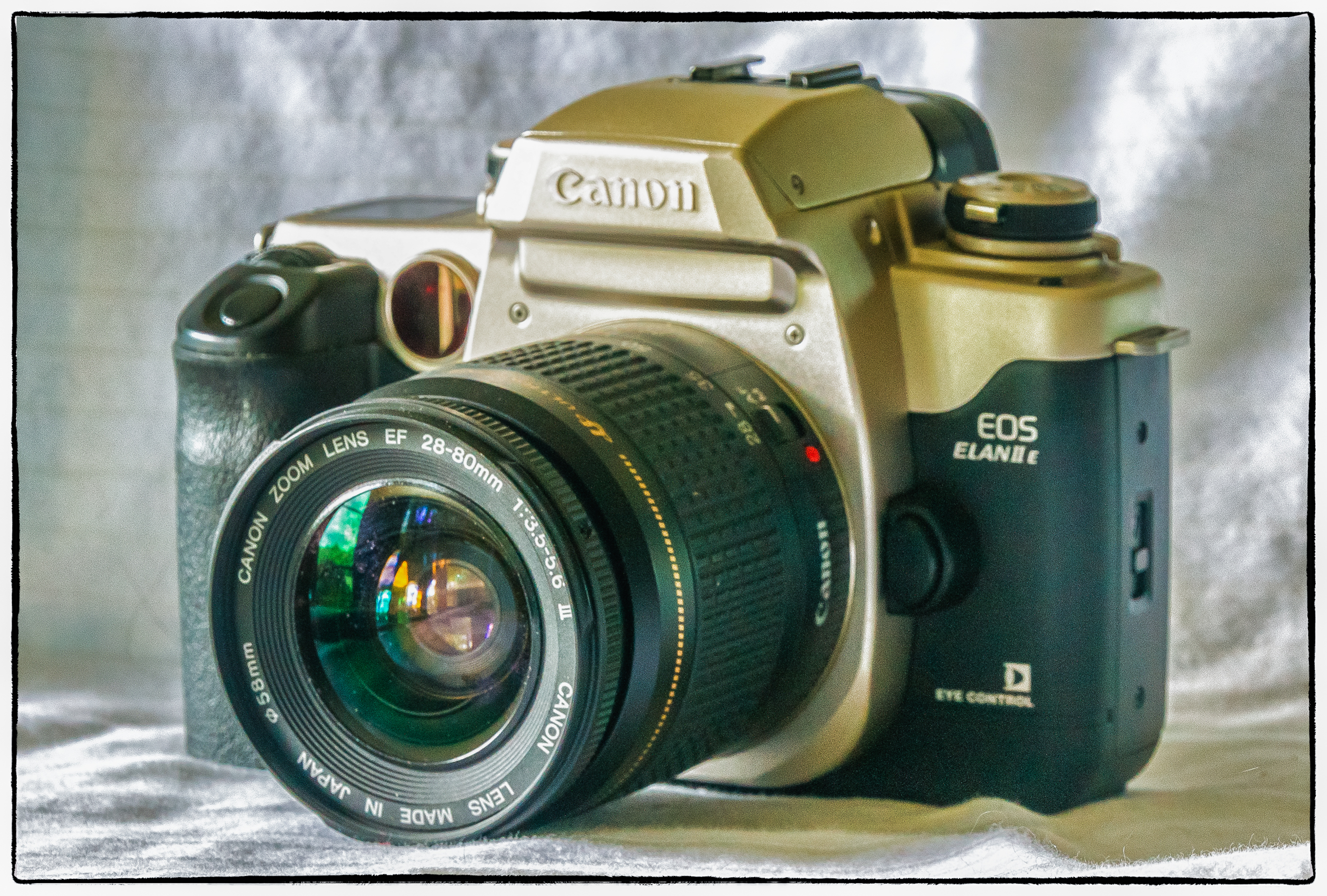
This, and four other cameras, were given to me by an old friend (see: Cameras Galore). It’s a Canon EOS Elan IIe, also known as the EOS-55-P in Japan and the EOS 50e everywhere else. Launched in September, 1995 it was a mid-range camera (with the single digit professional cameras above it and the ‘Rebel’ series below). It looks quite different from other Canon cameras and many seem to consider it to be among the best looking of all Canon cameras.

A significant feature of this camera was it’s Eye-controlled Autofocus function: you can select an autofocus point just by looking at it. I tried it out and it worked fine, but I generally use the centre point and then lock and recompose so I have little occasion to use it.

I won’t get into the major features of this camera. There’s a very good overview here for those who are interested.

I liked using the camera. Compared to the EOS 650 I used last month (See: March film camera – Canon EOS 650) it felt less sold, more “plasticky”, but I guess that’s just the way cameras evolved between 1987 and 1995.

I did have one problem though. I took it to a local antiques fair (see pictures below) to try it out. It worked fine until I got towards the end of the roll and then suddenly refused to take pictures. I suspect this was because I had taken the battery from another camera which uses the same batteries. It had been there for some time. Then I spend quite a lot of time playing with the various functions of the camera. It’s possible that all of this wore the battery down. What was annoying was that it didn’t stop working completely. It still metered and focused, but when I pressed the shutter nothing happened. I haven’t tried the camera since then so I don’t know if fresh batteries will solve the problem, or if something more serious is happening. I hope it’s the former because I rather liked the camera.

For more posts related to this camera see:

Chinese Garden – Lasdon Park and Arboretum
The man in the mirror.
Geese.

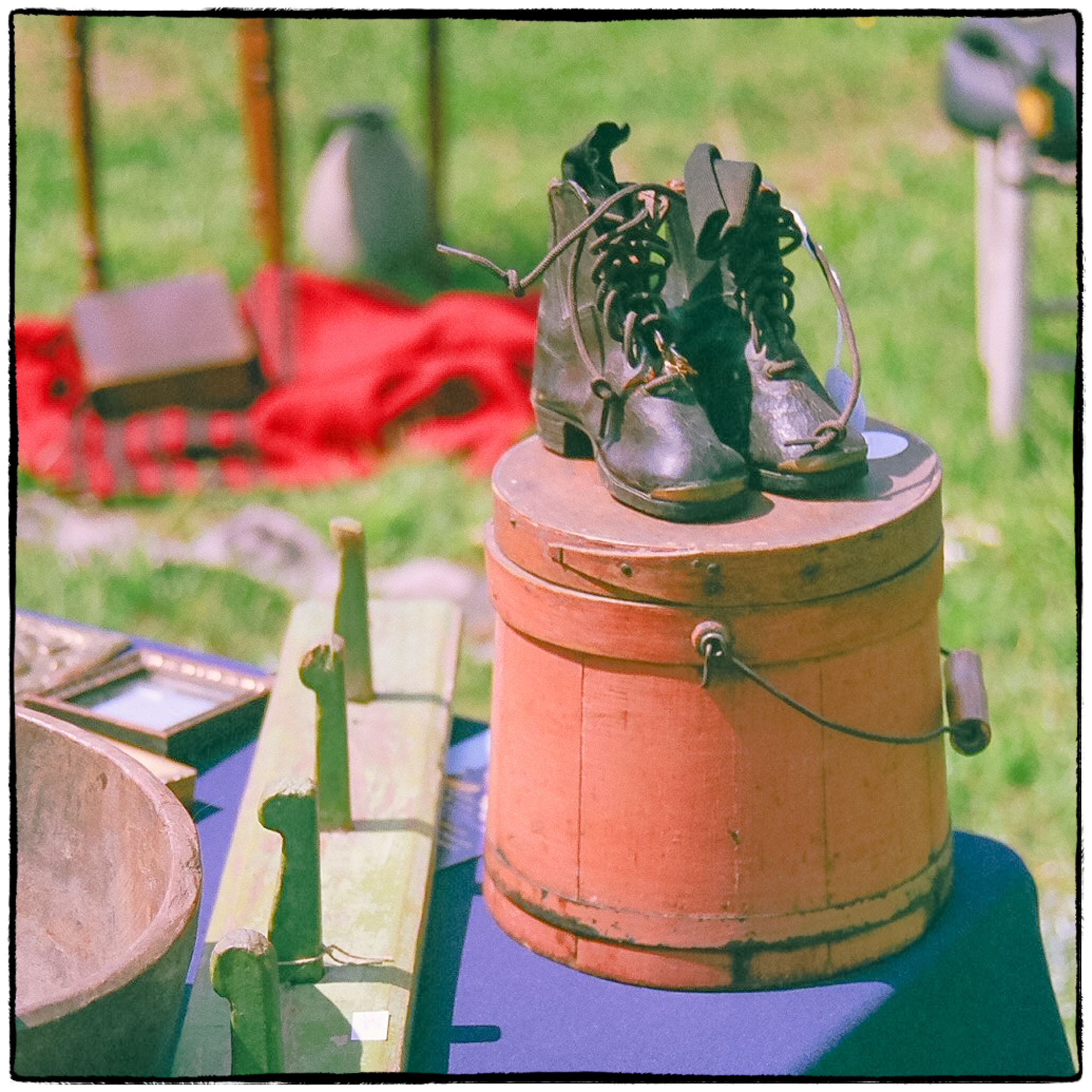
Boots on a bucket.

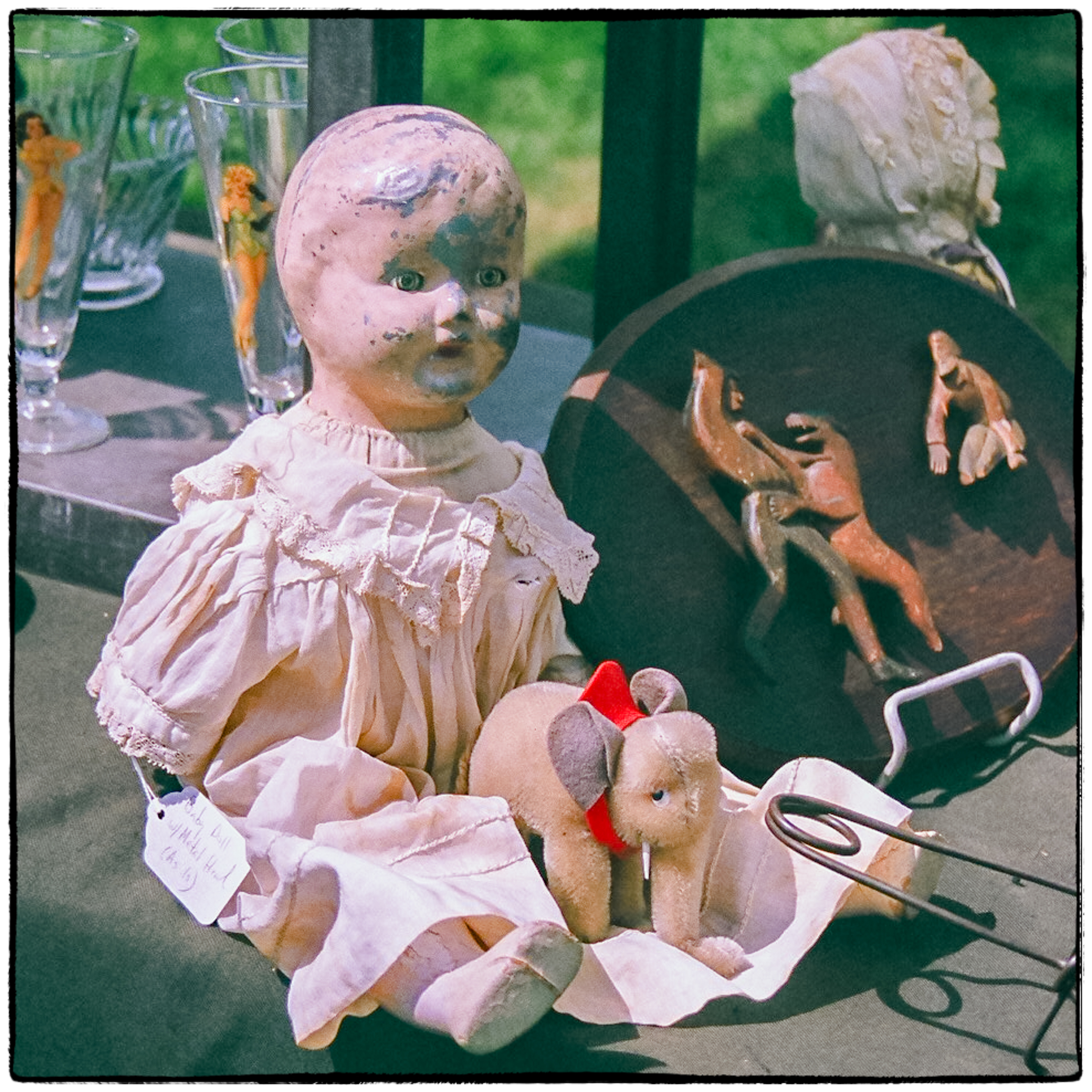
Old doll.

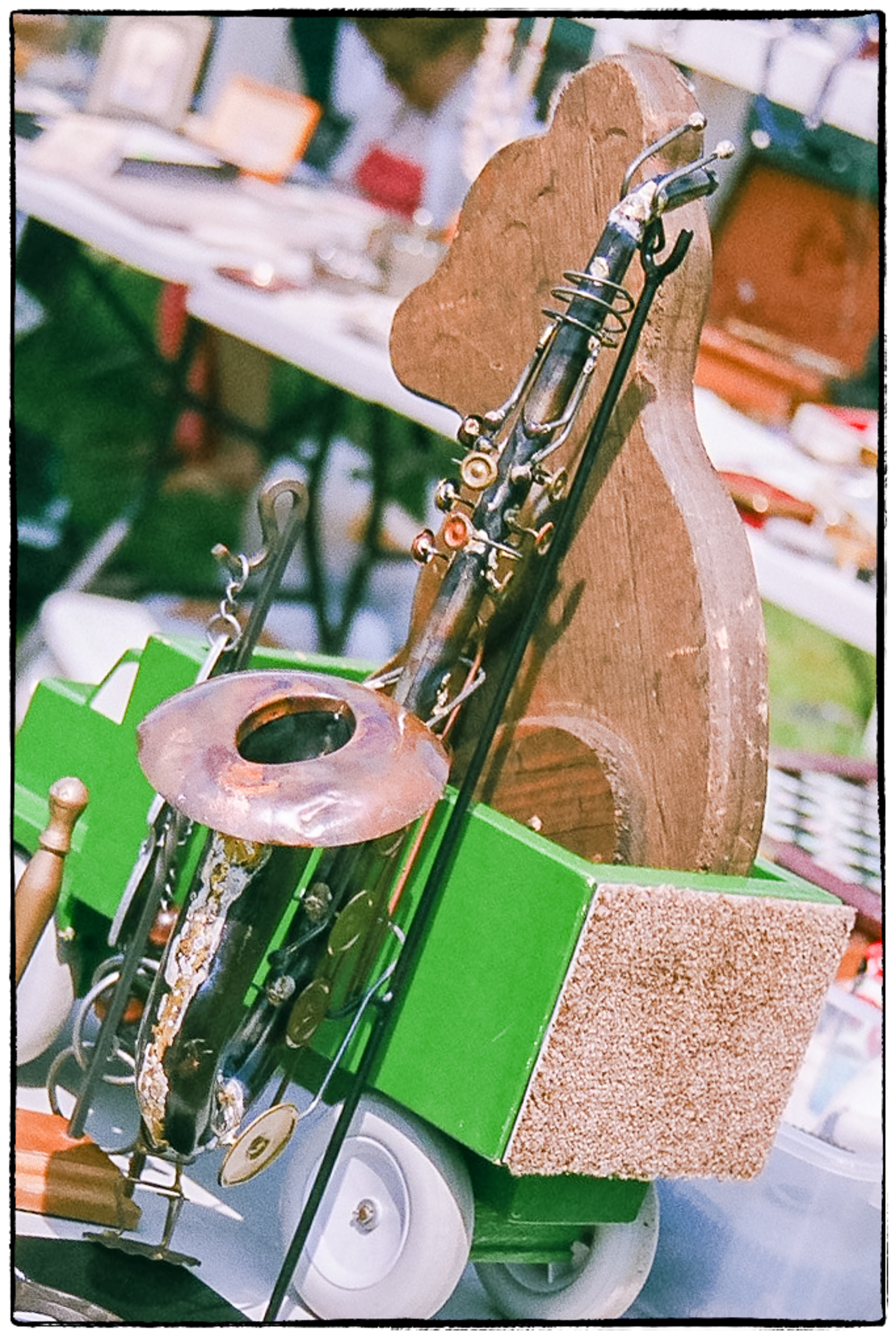
Saxophone.

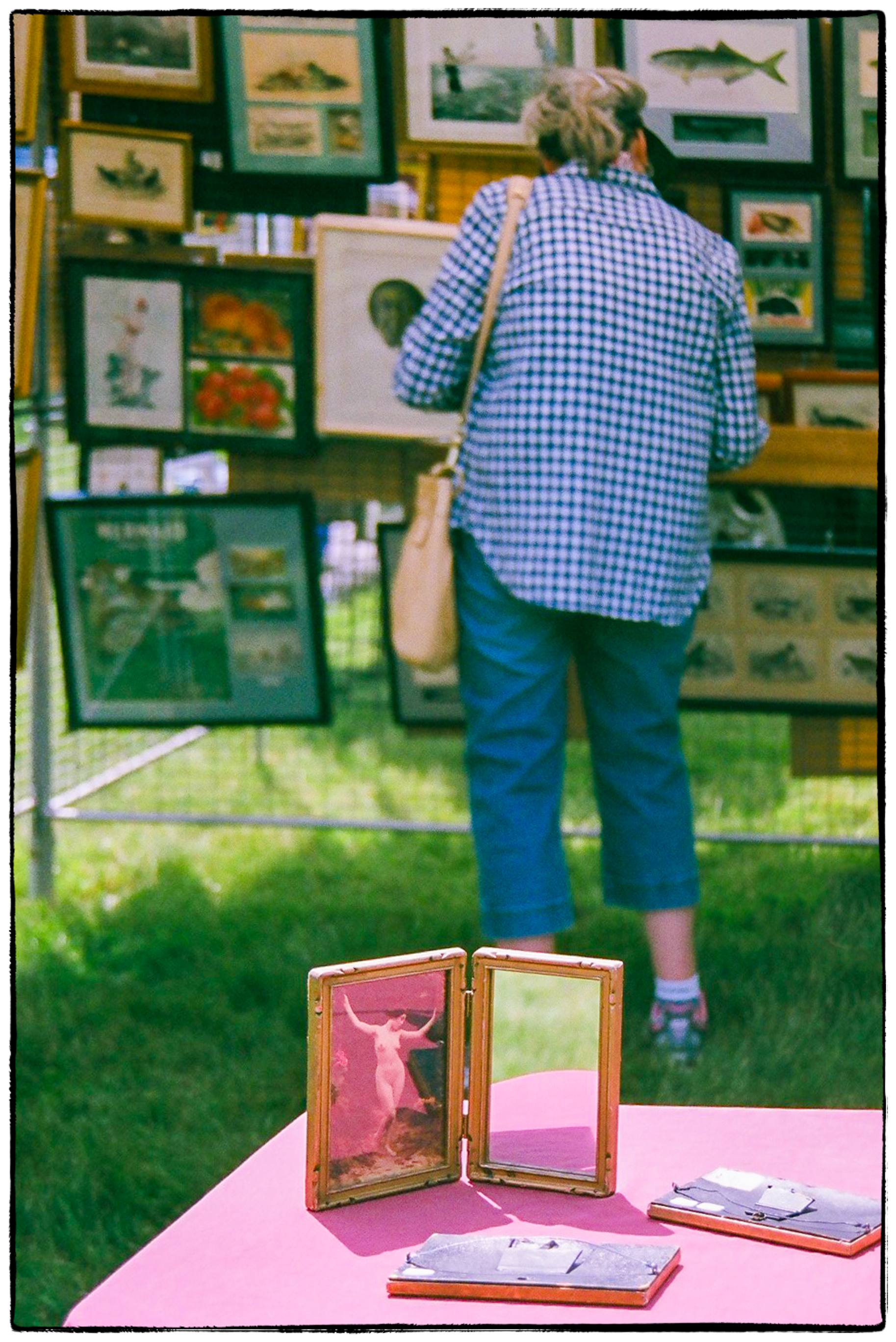
Picture frame.

March film camera – Canon EOS 650

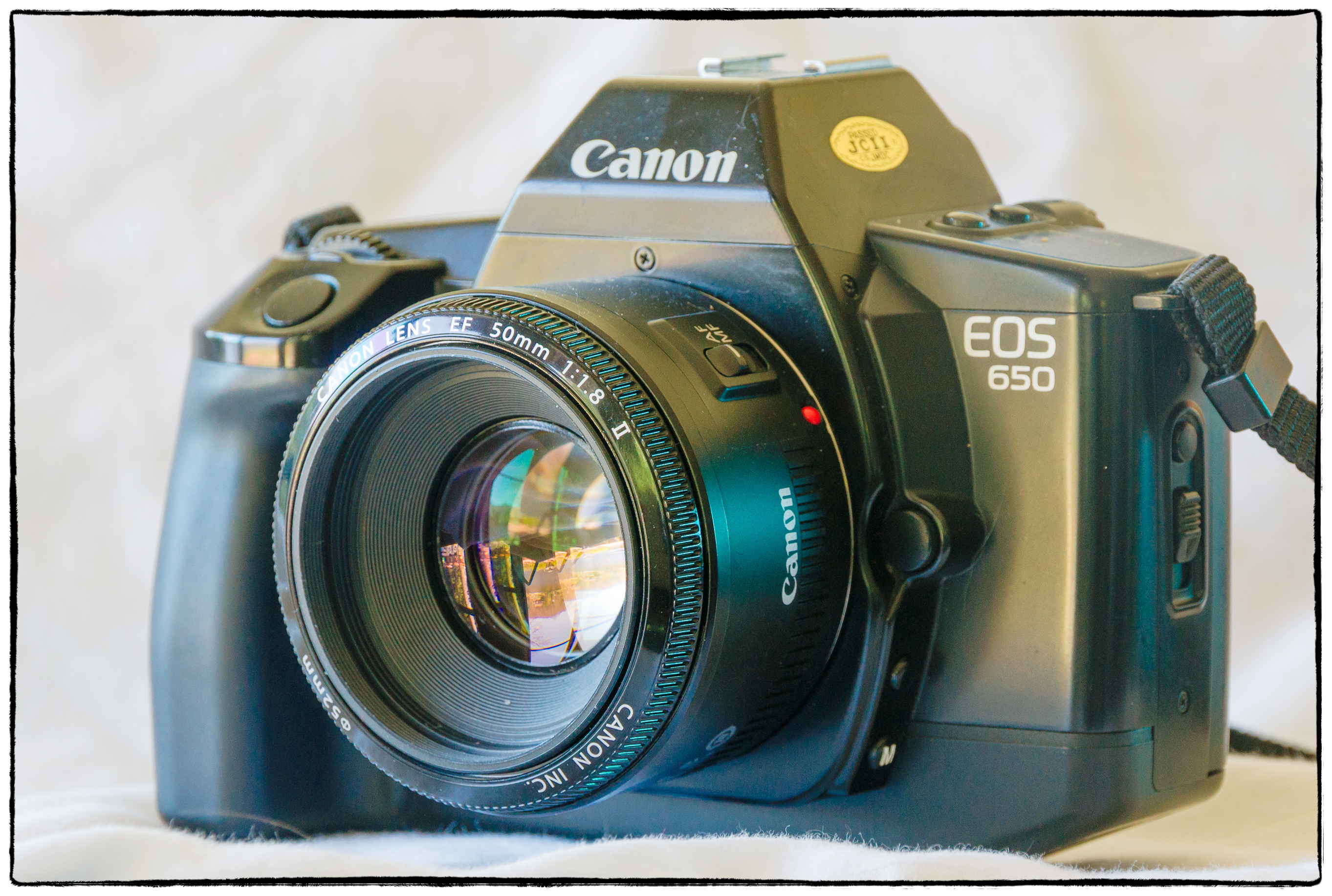
Some time ago an old friend gave me a Canon EOS Elan IIE (also known as the EOS 50E and EOS 55 in other markets) with 28-80mm Zoom Lens. I took a few pictures with and liked the feel and operation of it. I felt the urge to try it with a faster prime lens. Then I came across this Canon EF 50mm f1.8 with a Canon EOS 650 body attached to it for a very reasonable cost (it seems that they almost give away these older autofocus film cameras nowadays) and decided to go for it.

At first I wasn’t particularly interested in the body, but then as I read up on it I discovered that there was something a bit special about it. In 1987 Canon introduced a new lens mount (EF Mount) on it’s new line of Electro-Optical System (EOS) cameras. I remember feeling annoyed about this because at the time I had a Canon AE-1 and a few lenses. I understand that the new mount enabled Canon to “get a jump” on Nikon in the area of Autofocus Lenses. However, this move had one major downside: The old lenses would no longer work on the new cameras. So if I wanted to upgrade to a new body, I had to buy new lenses too. I decided not to upgrade and this is probably the reason why I completely missed autofocus film SLRs. I stuck with my older body and lenses until the digital era arrived, when, after a few digital compacts I finally upgraded to Minolta and subsequently Sony DSLRs.

What was so special about the EOS 650? You’d think that the first camera in Canon’s EOS line would be the EOS-1. But you’d be wrong. That camera was not introduced until 1989. For some reason the weird naming schemes that seem to afflict camera manufacturers dictated that the first EOS camera be called the EOS 650. So this camera introduced a mount that survives to this day. Modern canon DSLR’s have the same mount. Hence, the EOS 650 has some historical significance as the first of the line.

I liked the camera a lot. It feels solid to me and doesn’t overwhelm me with buttons and menu items. It has a mode button, an exposure compensation button, and an on/off dial (which also allows you to turn beeps on/off and to select full auto operation). A small button to the top right allows you to activate ‘partial metering’, which seems to be a 6.5% spot combined with auto-exposure lock (the normal metering is 6-segment evaluative (Matrix)). A fold down panel on the rear exposes buttons for manual film rewind, AF mode selection, drive mode and self-timer, and battery check. Manually setting ISO requires you to push two of the buttons simultaneously and then turn the dial on top. It’s rather cumbersome, but I guess you probably wouldn’t need to use it that much. Two buttons near the lens barrel are used for depth of field preview and manual aperture setting (the procedure for this seemed somewhat convoluted so I didn’t try it). A small LCD panel to the top right shows exposure information, current autofocus mode and exposure modes, a frame counter and battery check indicator. Changing exposure mode is easy. Just hold down the mode button on the left and turn the dial on the right. Options include Manual (M), Programme (P), Shutter Priority (TV), Aperture Priority (AV) and a rather unusual DEPTH mode where you select two focus points and the camera selects an aperture to give optimal depth of field. There are also indicators to show that the film has been wound correctly and whether the film wind mode is single or continuous. It’s a pity that to toggle between ‘one shot’ and ‘servo’ (i.e. continuous) you have to flip down the panel to the lower rear, hold the small button and turn the dial on top). It’s cumbersome if you change autofocus modes a lot. Luckily I don’t, almost always using ‘one shot’. The rear has a small window to show what film is in the camera. It’s all pretty minimal, and I like it.

The viewfinder is huge compared to digital SLRs. I compared it to my Minolta Alpha 500 (I don’t know how typical this is though) and it’s much larger and brighter. I’ve read that some consider the autofocus to be slow. Possibly it is compared to modern DSLRs (and even later generation film cameras), but it was fine for me. I’m not into action (sports, wildlife, small kids running around etc.) and so don’t need lightning fast autofocus. Shutter speeds go from 30 seconds to to 1/2000.

All things considered a very likable camera – and what a change from the last film camera I tried:
a fully automatic point and shoot Minolta 70W Riva Zoom (see February film camera – Minolta 70W Riva Zoom and Minolta 70W Riva Zoom – Results. In it’s day it was considered to be an enthusiast camera, but since it was the first EOS camera it was top of the line (until the slightly later EOS 620 came out). In 1987 it cost (with EF 35-70mm f3.5-4.5 lens)
the equivalent of about $1,250 in today’s dollars adjusted for inflation). Now we’ll see what kind of results it produces.

February film camera – Minolta 70W Riva Zoom

I got this camera, (along with four other film cameras), from an old friend who visited us in May 2014 (see: Cameras Galore). She knew I was into camera collecting and thought I would like them.

I put a film (or so I thought – more on that in a bit) in it, took a few shots outside our house and then put it aside. I mentioned in an earlier post (see: Back to film – Fuji GS645S) that I’d made a New Year’s resolution to try to use one of my film cameras every month. I was thinking about what camera to use for February when I remembered that this one already had a film in it. Might as well use it I thought.

Out it came. I turned it on…nothing. Dead as a doornail and yet I remembered that it had worked when I’d tried it before. Maybe the battery died? It took me a while to get a new battery, but eventually I found one. In went the new battery. I pressed the on/off button…still nothing. It seemed like it was for the garbage, but I left it for a while next to my computer perhaps hoping for divine intervention. Every so often I would press the on/of switch to no end and then suddenly after another press…click! whirr! the camera turned on, lens extended and the flash popped up. Maybe I was right about that divine intervention. I turned it off again and pressed the on/off switch once more…nothing. Obviously a dodgy on/off switch, but at least I now knew that, under the right circumstances, it would turn on. Eventually I figured out that if I pressed the on/off switch in a certain way it would turn on. I can now reliably turn it on after on a couple of presses. Interesting it always turns off after a single press.

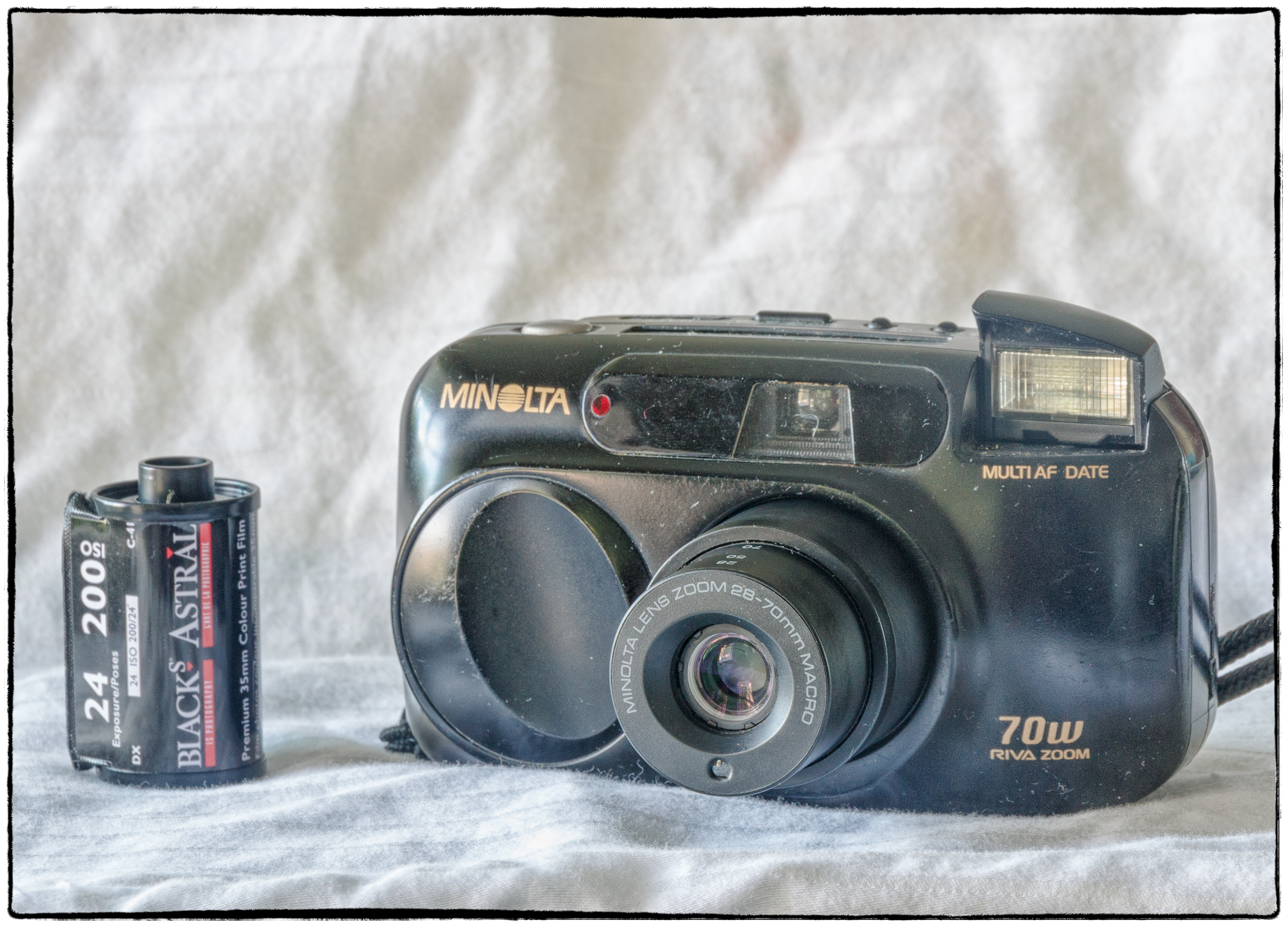
Off I went to take some pictures. Nothing special. Just a few shots around our lake. I got up to the fifteenth exposure and then…Click! Whirr!, Whirr!, Whirr!, the camera rewound. After it had fully rewound I opened the back and took the film out. What on earth…Black’s Astral ISO 200, 24 exposure. I’d never heard of the brand and I never use ISO 200 film. I ‘googled’ it and discovered it was the store brand of a now defunct chain of stores in Toronto. That made sense as my friend is Canadian. I thought I put the film in the camera, but I now realize that it was in there when she gave it to me. Moreover, she hasn’t lived in Toronto for quite some time so it’s possible that this film dates back to a time before I met her, and I’ve known her for over 25 years. Anyway the film is going off to be processed. I’m not optimistic about the results.

Once I got past the dodgy on/off switch the camera worked fine (or at least gave the appearance of doing so). It feels solid, if a little chunky. The lens is a 28-70mm (f3.5-f8.9). It’s a pretty simple camera to use. There’s a rocker switch for the zoom and a series of small buttons on the top. On the left there’s a button to set the flash options (auto; red-eye reduction; manual fill-flash; and flash). The next button to the right activates the self timer; the optional remote control; and the continuous drive mode (the manual explains that with the flash off the shutter will fire every 1.2 seconds.). Then comes a button to select from the various programme/scene modes (auto; macro; night portrait; and landscape/night view). Mine is the date model so there are really tiny (you need a pen or something like it to press them) buttons to set the date and time.

The camera was called the Minolta Explorer Freedom Zoom in the US so mine seems to be the European Version. There’s a fairly extensive review of it on 35MMC entitled Minolta Explorer Freedom Zoom (Riva Zoom 70W) – Guest Review by Benn Murhaaya. It’s not very positive

What I disliked most about this camera is that I have absolutely no idea what’s going on, particularly what aperture and shutter speed the camera had chosen. All you see in the viewfinder (which in my example has a small scratch and a lot of dust) is a green light (indicating that focus has been achieved when you half-press the shutter release) and a yellow light (steady light indicates flash is on; flashing light indicates too slow a shutter speed; rapid blinking indicates flash is charging) I suppose that’s true of pretty much all, inexpensive point and shoot cameras.

I now realize that the only reason I chose to use this camera was that when I got it it already had a film in it. I probably won’t use it much (if ever). When I get the processed film back I’ll check to see if the results suggest the camera is working well. I’ll also check to see if any poor results are a consequence of using antediluvian film rather than other factors (e.g. lousy photographer). If the former is true I might give the camera another chance with a fresh film.