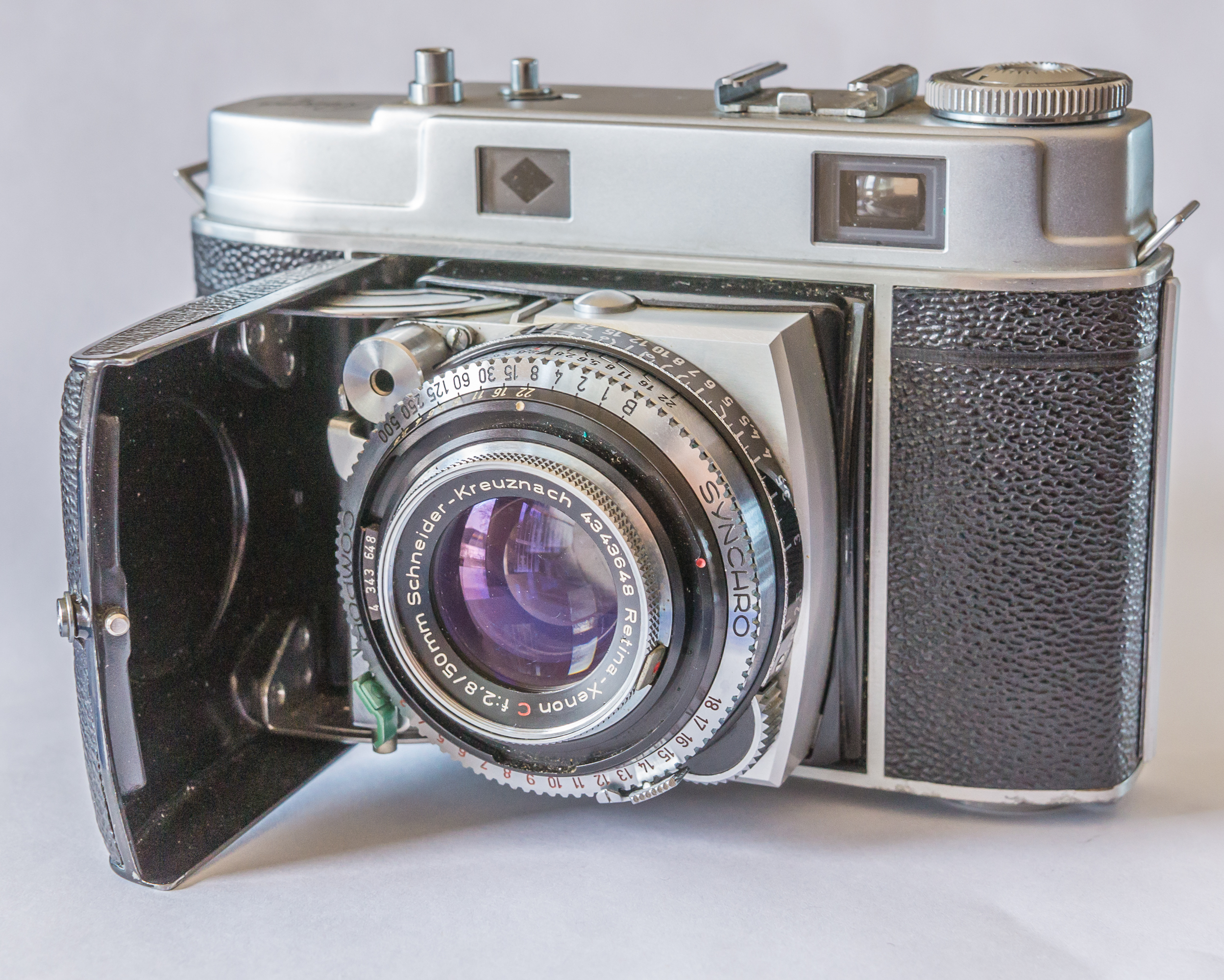
A Gem of a folding 35mm – Retina IIc


I love this camera. It’s one of my all time favourites. The usual Kodak philosophy was to produce inexpensive cameras for everyone. In the case of the Retina they moved in another direction. Kodak purchased German manufacturer Nagel in order to produce a camera that could compete with Contax and Leica. This Retina iic is about 60 years old and I must say I’m impressed. It was also great fun to use and quite small and portable. It has a fairly fast (f2.8) and sharp Schneider lens and when folded (yes it’s a folding camera) it can easily fit in a pocket. Mischa Konig’s Kodak Classics site has lots of information on Retinas including that the first model Retina, Kodak’s first 35mm camera introduced the “135” 35mm film cassette still in use today.
Read More

Gone but not forgotten – Canon Powershot S50, Panasonic ZS3, Panasonic ZS7

I tend to hang on to my cameras and have only disposed of a few, usually in a good cause. Here are three that got away (There is a fourth, but I think that’s a topic for another post).

Canon Powershot S50.  As I recall one of my first digital cameras was a Canon Powershot S10. Unfortunately I left it on a train. After lots of soul searching and research I decided to get a Canon Powershot S50. I left this camera in a taxi in Geneva, Switzerland while attending my daughters wedding.  Curiously both the S10 and the S50 were eventually returned to me.  My granddaughter expressed an interest in photography so I gave her the Panasonic ZS7 (see below). It only seemed fair to give her brother something too so I gave him the S50.


Read More

Another oldie – Zorki 4


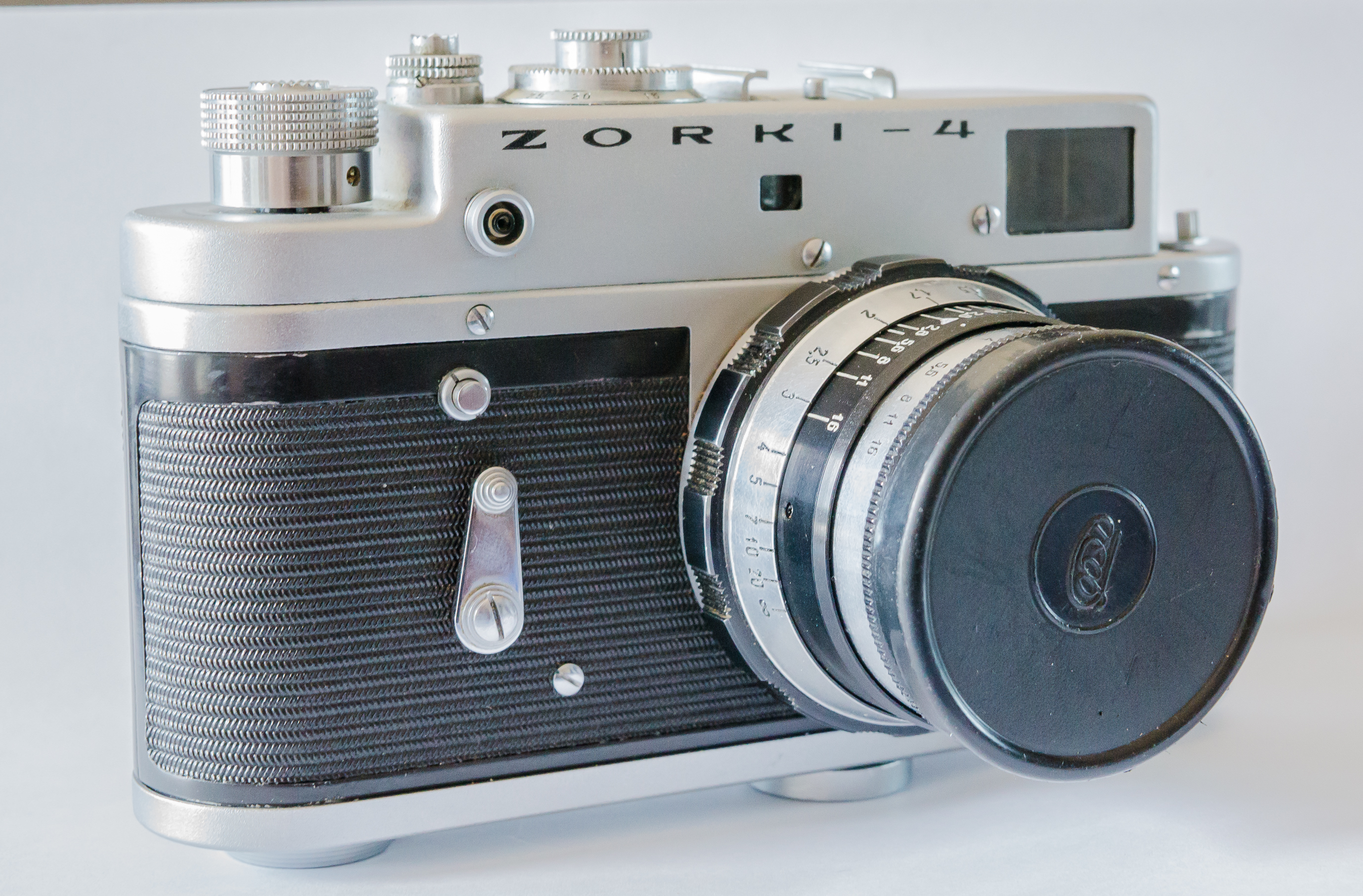
Along with the FED 2 I got a Zorki 4: another FSU Leica II copy. The first time I used it turned into quite a saga. I went to the city and lost a roll because of a problem rewinding (I didn’t fully understand how to do it and tore the film out of the cartridge). Then I thought there was a problem with the camera (there wasn’t there was a problem with the operator again). Anyway I put another film in. Everything seemed to go fine. I dropped it off at CVS and went away for an hour and then went back to pick up the results. Only to find that the CVS guy said that they couldn’t process the film. My first reaction was “then why do you sell it. Or why, at least, do you not have a sign saying that you don’t process it”. I guess I should be grateful. If he had processed it the film would have been ruined.

Read More

The beginnings of a camera collection: Fed 2

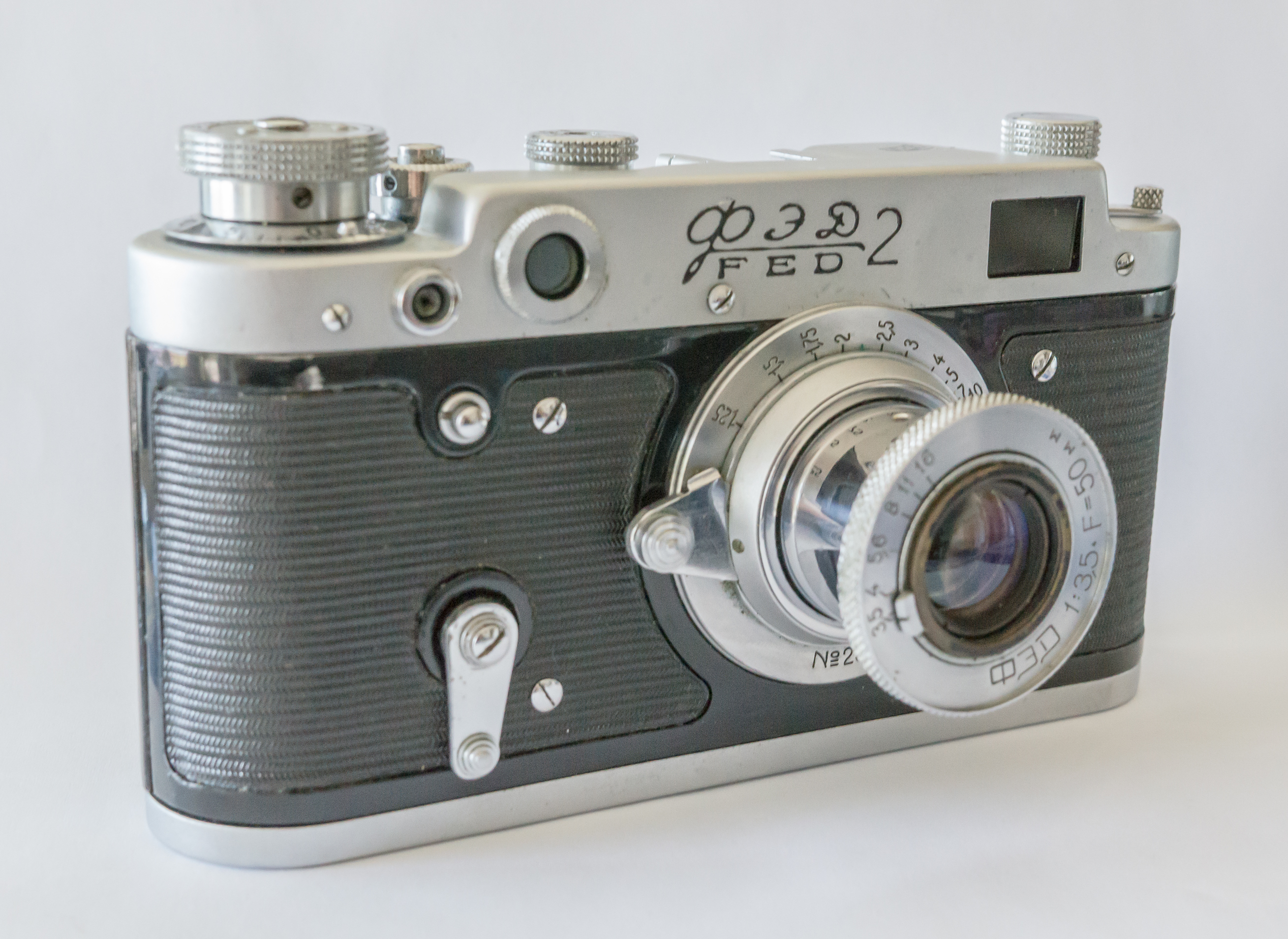
When I decided to start a camera collection this was the first camera I acquired. My first serious camera was a rangefinder camera and I’d heard of Leicas. However, I didn’t want to spend a lot of money so after browsing around on the Internet for a while I decided to try some of the Leica copy former Soviet Union (FSU) cameras. I didn’t like the idea of trimming the film leader (required to use bottom loading cameras like the earlier Leicas and also the early FSU cameras. So I opted for the Fed 2, which has a removable back. I read that it’s not as well made as a Leica (it’s not), but that it had some features that the early (and in some cases even later) Leicas lacked e.g. wide base length rangefinder; combined rangefinder/viewfinder; easier loading.

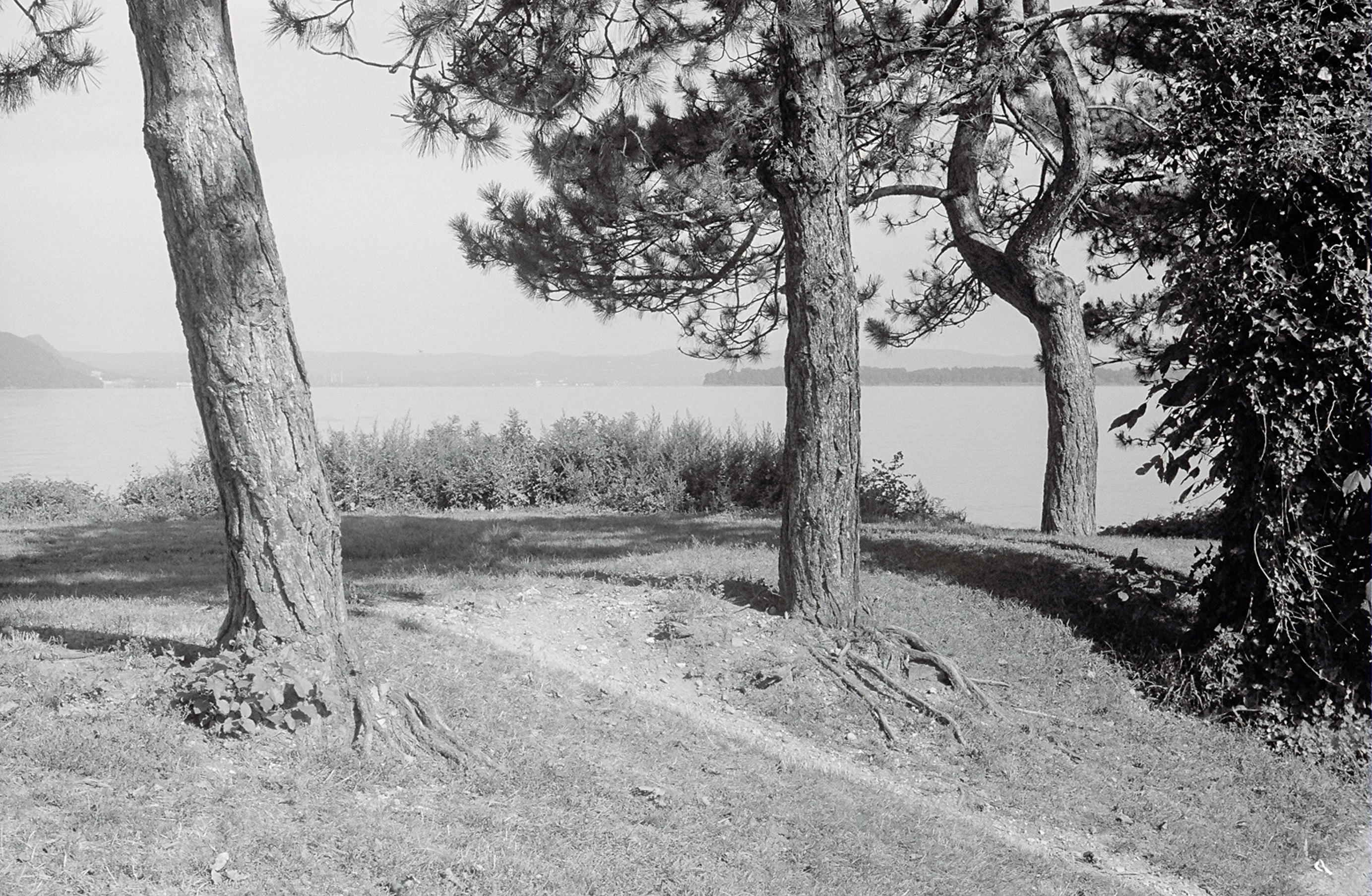
I very much like the viewfinder/rangefinder and the controls are relatively smooth. Of course it has no slow speeds so that limits it a bit (although I admit that I hand hold a lot and tend not to use the slow speeds much. I can’t even hand hold effectively at 1/30 sec). The black and white pictures were taken using an Industar-61 and the colour pictures with a collapsible Fed 50mm 3.5. I rather liked the Fed collapsible and was very pleasantly surprised with the results.

As with the Kiev (see post below) there is an interesting story behind the FED cameras . Who would have thought that such a camera would come from commune established by Felix Edmundovich (“bloody felix”) Dzerzhinsky (FED – get it?). He was the infamous head of the Cheka, predecessor to the KGB.


Scarborough Station park, Westchester, NY.

Read More

Film again – Kiev 4am


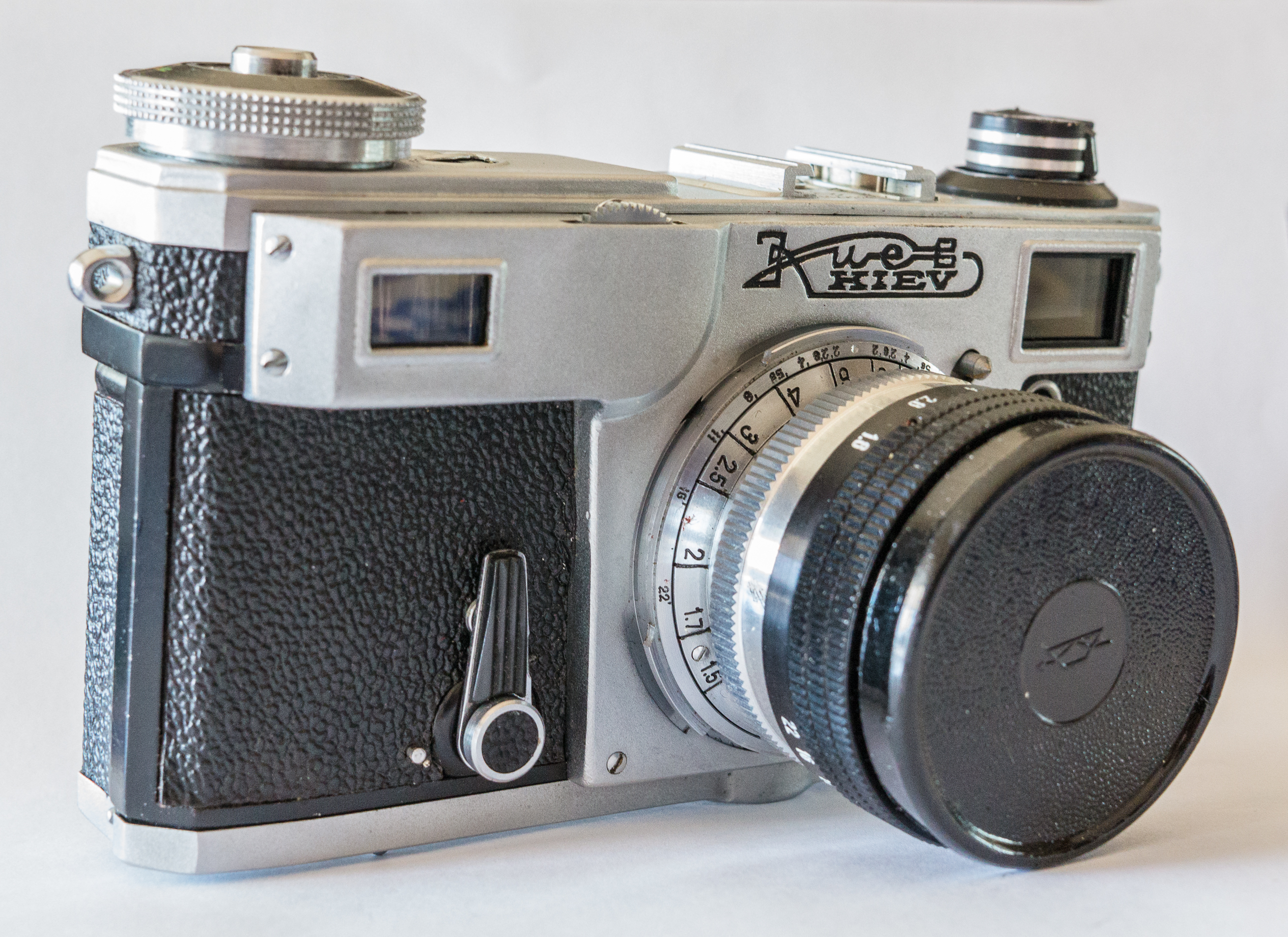
In 1925 Leitz introduced the first 35mm system camera (not the first 35mm camera however): the Leica . For 7 years they had the field to themselves until, in 1932, Zeiss Ikon introduced the Contax series of rangefinder cameras. Contax cameras were made in Dresden, which during the Second World War was occupied by the Soviet Union. Scientists, cameras, camera parts, machines for making cameras were ultimately moved to Kiev and the USSR started to make Contax cameras initially using the Contax name and later under the Kiev brand. The early Kievs were manufactured from Contax parts and so as someone put it: “This is not a Soviet camera – it is a German camera, made in the Soviet Union”. Kievs were made in various forms until 1986. So in the 1980s you could still buy what was essentially a new pre World War II camera (generally not as well made as the German Contaxes}. For more on the Kiev story see here.  It should also be said that a number of the original Contax scientists managed to get to the Allied Zone where they re-started the Contax brand.  So there are pre-war and post-war Contaxes. But that’s another story…..This is a Kiev 4am with Helios 103 lens (probably also a copy of a german lens, but opinions vary as to which: Zeiss Sonnar? Zeiss Biotar? Leitz Summitar?).


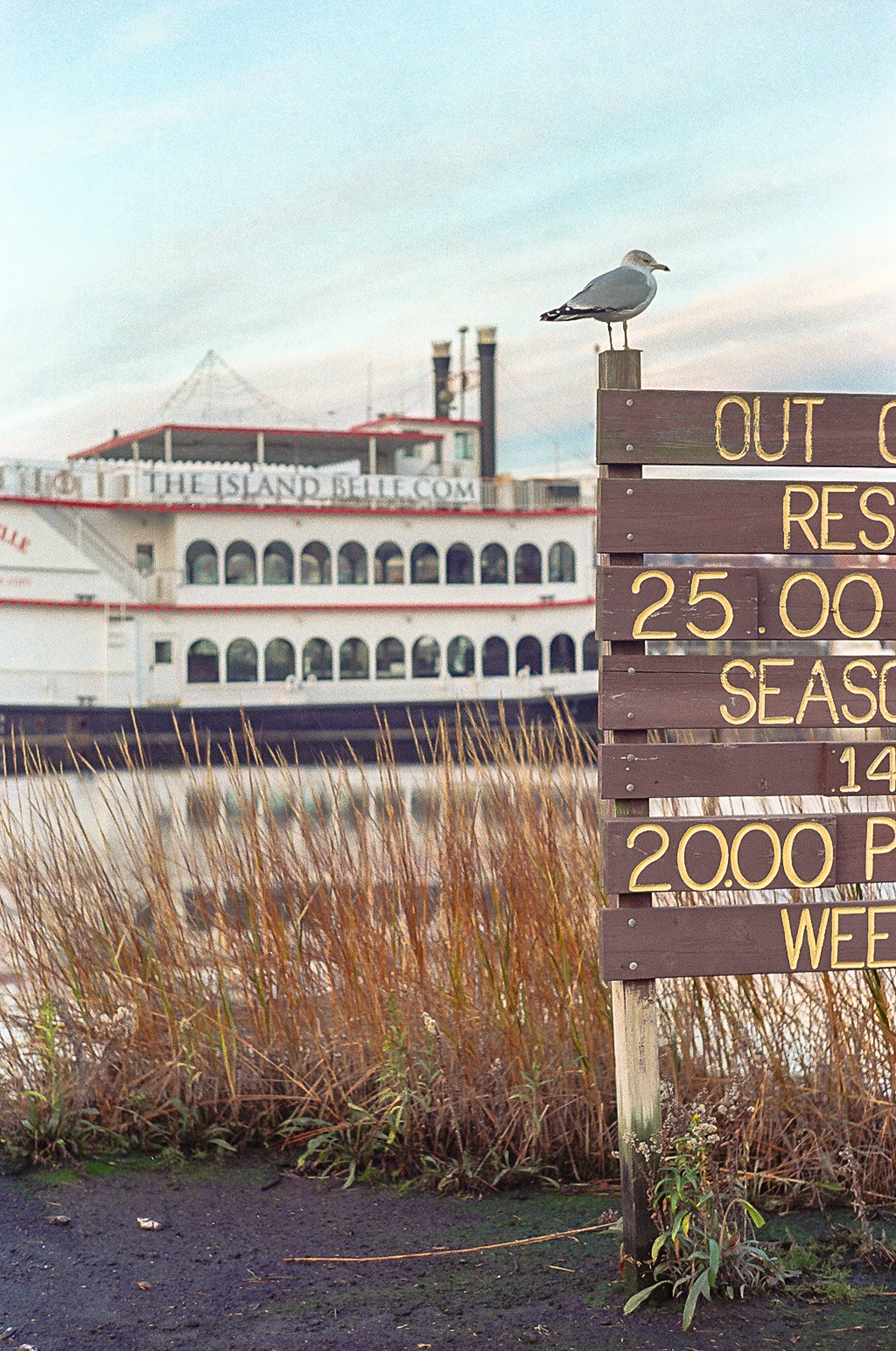
Seagull and the “Island Bell” in South Norwalk, Ct. Couldn’t resist the seagull.

Read More