Trying out my newly acquired Pentax K10

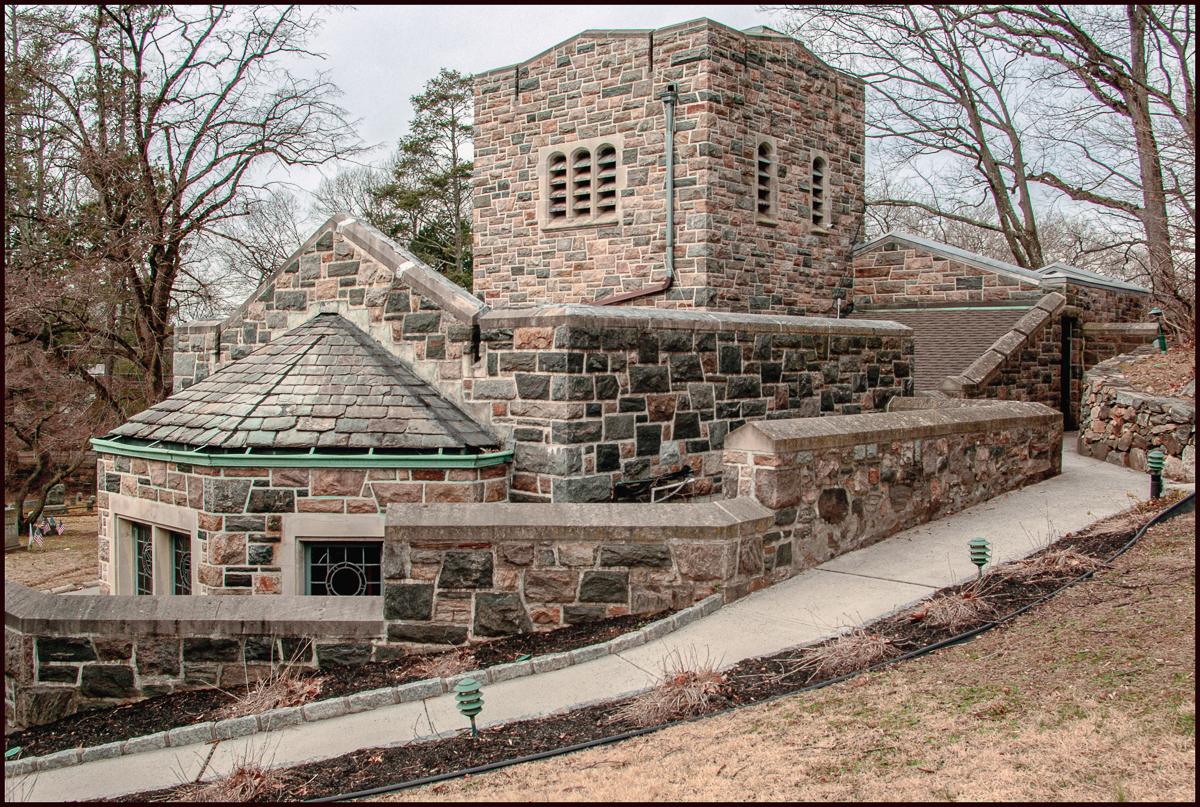
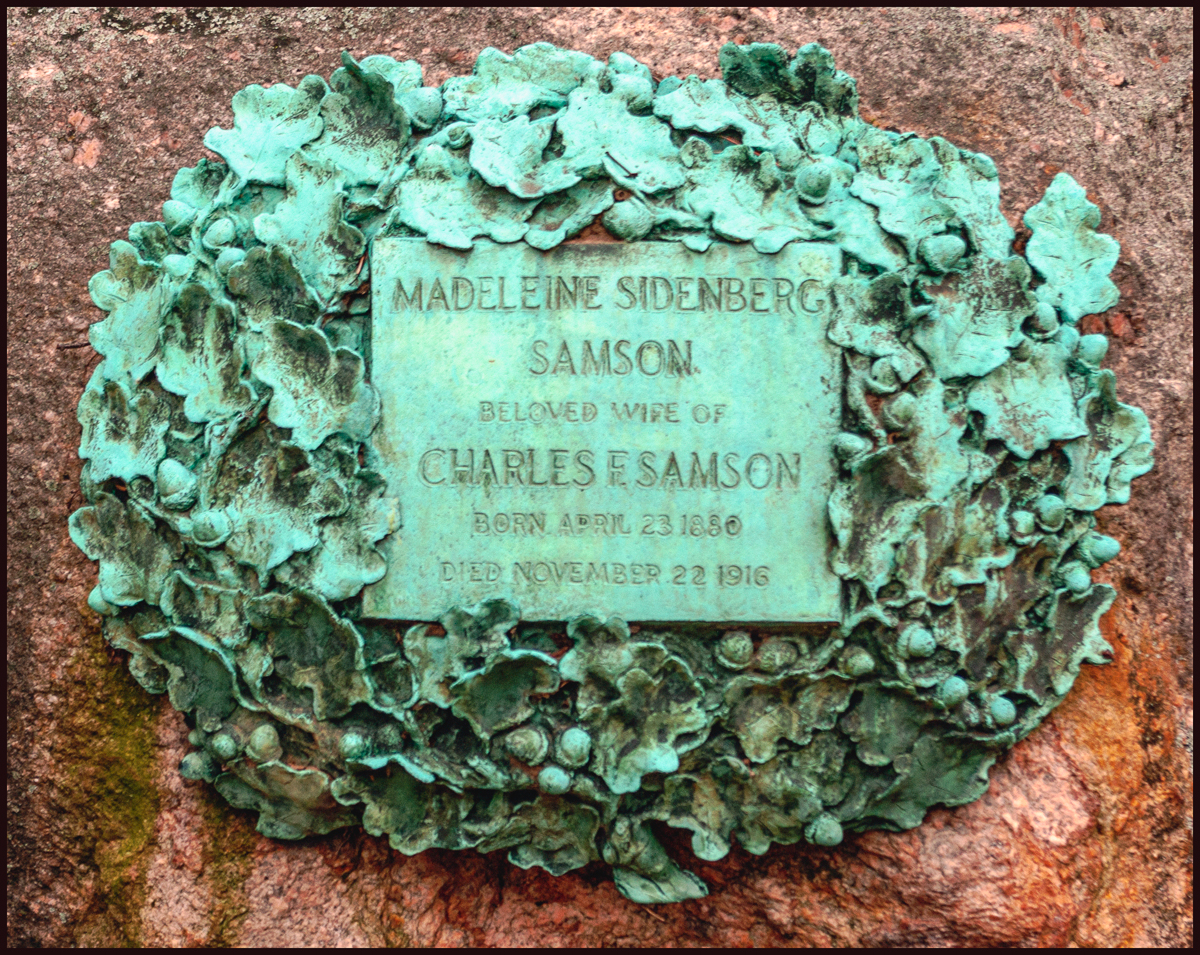
After charging the battery I decided to take my newly acquired Pentax to nearby Sleepy Hollow Cemetery in Sleepy Hollow, NY to confirm that it was working and see how it handled.

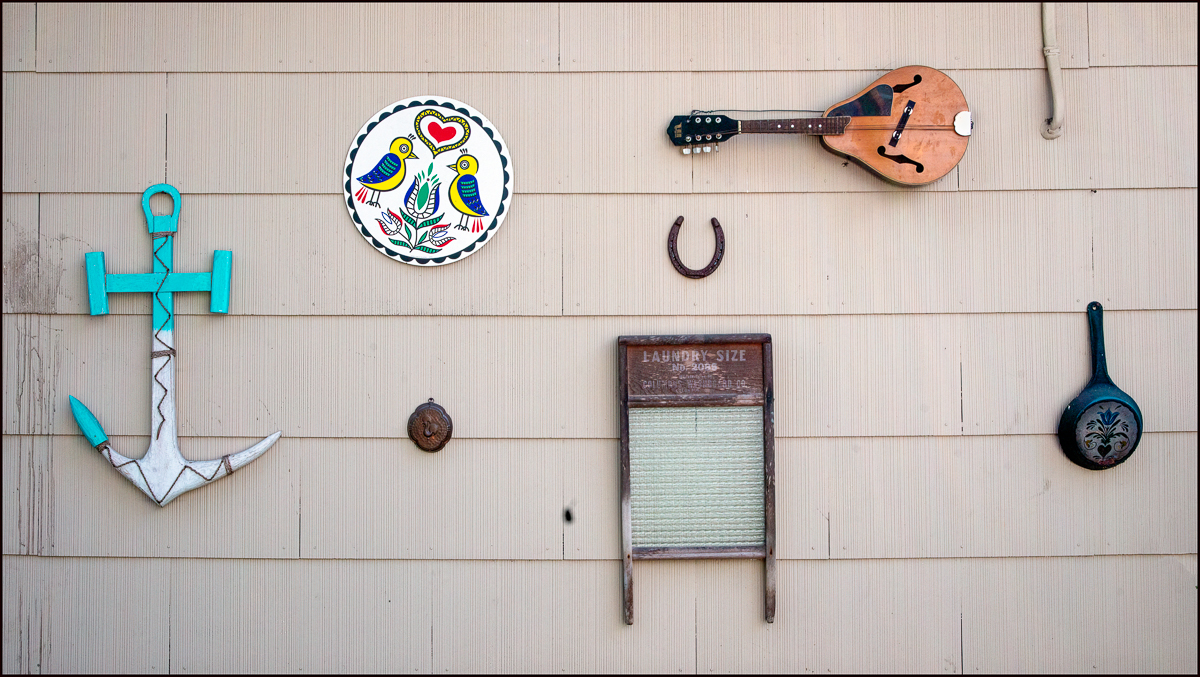
So how did things go. Well, the pictures weren’t bad for essentially quick snapshots. I even quite like a few of them. It was a very dull day and the camera/lens combination was not the best for those conditions: old sensor (2006 vintage) that’s not good in low light combined with a old, slow zoom lens (18-55mm SMC Pentax DA f3.5-f5.6). Added to that I made a stupid mistake: of course the camera was used and in my enthusiasm to try it out I forgot to check out how the previous owner had set it up. Turns out he’d set it up in a way that practically guaranteed slow shutter speeds. I thought they were ok for hand holding, but it seems that they weren’t and this led to soft and in some cases, blurry pictures. Still I enjoyed the 1 1/2 hour walk, the camera was fun to use and I learned a lot about it. I’ll do better next time.


Taken with a Pentax K10 and 18-55mm SMC Pentax DA f3.5-f5.6

Another new old camera

In previous posts I’ve mentioned that I had started to collect old digital cameras. This is the latest.

It’s a Pentax K10D and it’s a 10.2-megapixel (which is plenty for most purposes e.g. web site use, social media and prints up to 12″x8″ prints) digital single-lens reflex camera launched in late 2006. It was developed in a collaboration between Pentax of Japan and Samsung of South Korea, was announced on 13 September 2006 and released in mid-November 2006

At the time the K10D was hailed by Popular Photography and Imaging magazine as “an all-star player,” and was named as a finalist for their 2007 “Camera of the Year” award.

It combines a 10.2 effective megapixel CCD sensor, coupled with a 22-bit analog-to-digital converter (ADC) and a shake reduction system which also provides a dust removal feature to keep dust off the sensor surface. The K10D features a new image processor and is dust and weather-resistant featuring 72 seals throughout the camera. The camera was among the first digital cameras to support the DNG format natively. (adapted from Wikipedia)

There’s a good review of it on DP Review in which they conclude:

My first impressions of the K10D were very positive, a well designed and robust body with a clearly extensive range of manual functions and a fairly logical control layout. The positive experience continued in use with the large, bright Pentaprism viewfinder, fast auto focus and short lag times. Menus and playback are equally as snappy although I personally found the connected 4-way controller less easy to use than the K100D’s four separate buttons.

The K10D’s advantages over the competition are fairly clear; dust and weather seals, in-camera Shake Reduction which delivers at least some low light advantage with all your lenses, selectable RAW file format (although both are 10MB+), user definable Auto ISO, digital preview and those unique sensitivity-priority and shutter/aperture-priority exposure modes. It’s a camera which should provide more than sufficient ‘gadget satisfaction’ for even the most demanding shutterbug.

When we reviewed the K100D we thought Pentax had got their image processing just right, however the single element of the entire K10D equation which left us scratching our heads was just that. Either a poorly implemented demosaicing algorithm or a strange choice of sharpening parameters means that while the K10D’s JPEG images have plenty of ‘texture’ they can lack the edge sharpness we’re used to seeing from semi-pro digital SLR’s.

Pentax may well have been aiming for a smooth film-like appearance but I at least feel that the inability to tweak this out by increasing sharpness is a mistake. That said it’s unlikely you’ll see this difference in any print up to A3 size, it’s a 100% view thing so you have to decide if that’s important to you or not. To get that absolute crisp appearance you’ll need to shoot RAW, and use Adobe Camera RAW or another third party converter (as the supplied converter produces similar results to the camera).

With the criticism out of the way we return to the K10D as a ‘photographic tool’, something it does very well. It’s a camera you get used to very quickly and never really leaves you searching for the correct setting or control. It’s also a camera you can grow into, the unique exposure modes are both creatively interesting and useful, a range of options such as this encourage you to experiment. At just under $900 it’s a very strong proposition, so despite our reservations about the slightly soft image processing the K10D just achieves a Highly Recommended.

UPDATE 23/Jan/07: Pentax has today released firmware version 1.1 which fixes some issues and adds new functionality.

So why did I get it? First, even though I have a couple of cameras with CCD sensors I was keen to try another one. The CCD sensor is said to produce images, which are closer to the look of film than other sensors (with the possible exception of the X-Trans sensor found on Fuji cameras). Second, I have Nikon, Canon, Sony, Olympus, and Panasonic digital cameras, but until now didn’t have one from Pentax. I don’t have a digital Leica either and I don’t see me getting one any time soon, much as I’d love to try one.

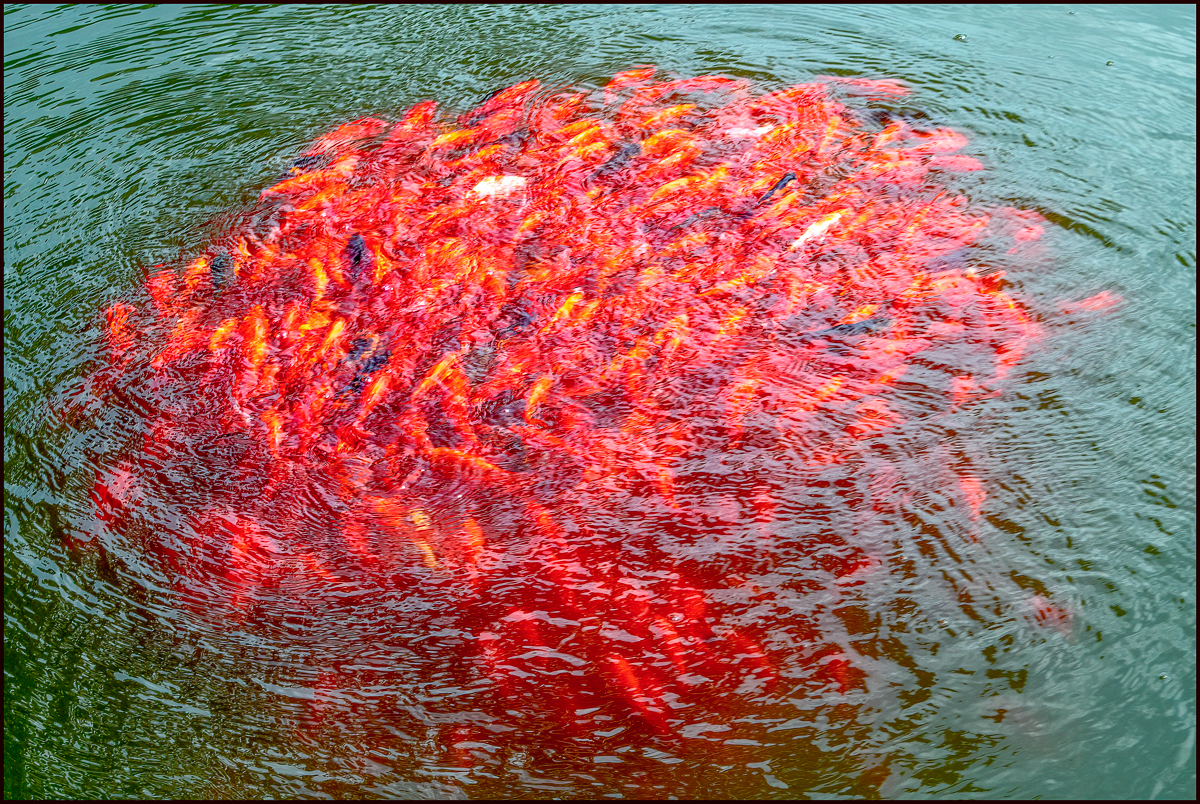
Taken with a Sony RX100 M3

Sleepy Hollow Rescue Hose Company No. 1

According to the Sleepy Hollow Fire Department‘s website:

The Sleepy Hollow Fire Department consists of five individual fire companies. The council of the Fire Department consists of the three chiefs and two wardens from each of the five companies. This council is the governing body of the department and sets all policy. The board of fire wardens answers to the Village Board of Trustees.
Sleepy Hollow Fire Patrol

Sleepy Hollow’s fire patrol and emergency rescue squad was organized on May 26, 1876; it is the oldest company in the department. Originally chartered as a company for the protection of property at a fire, the company is now charged with the protection of life. Fire patrol is used on auto accidents and carries a Hurst tool for the extraction of victims. The company also carries as part of their equipment air-bags which are used to raise an object to free trapped victims. Today the company operates a 1992 International rescue vehicle, fully equipped for any emergency.

Pocantico Hook and Ladder Company Co. No. 1- The Big “6”

An act of the Westchester County Court organized Pocantico Hook and Ladder company on September 24, 1878. Pocantico Hook and Ladder’s main responsibilities at an alarm are search, rescue and ventilation.

Rescue Hose Company No. 1

Rescue Hose, the third oldest company and the first hose company, was organized on November 8, 1887. Rescue Hose was originally located in the Beekman Ave firehouse along with Pocantico and Fire Patrol. On December 27, 1929, Rescue moved into its present quarters on Lawrence Avenue.

Union Hose Engine Company No. 2

The second hose company was organized on December 15, 1887 in the quarters of Pocantico Hook and Ladder. The company moved to a building on the corner of Valley and College Avenue and then in 1928 moved to their present quarters on Cortlandt Street.

Columbia Hose Company No. 3

Columbia Hose Company No. 3 was organized on May 22, 1899 as Sleepy Hollow Company, changing a few months later to the present name. The company was formed to protect the uphill section of the Village known as Briggsville. The first company quarters was located on Webber Avenue. The company has had several quarters since then, moving from Webber Avenue to Broadway, to Valley Street, and then in 1940 after the completion of the municipal building on Beekman Avenue, the company was moved to its present quarters in this building. Today Columbia Hose carries a second Hurst Tool for extraction of trapped victims.

Taken with a Pentax K10 and 18-55mm SMC Pentax DA f3.5-f5.6

More GAS: Nikon D800

For a while now I’ve been collecting old digital cameras. For how this started see: I don’t know what came over me

My latest acquisition is a Nikon D800, which I came across at a very reasonable price. I’d never tried a Nikon full frame camera and thought this might be a good place to start. It’s seen above with a battery grip and Nikon AF Nikkor 70-300mm f4-5.6 G.

The Nikon D800 is a 36.3-megapixel professional-grade full-frame digital single-lens reflex camera produced by Nikon Corporation. It was given a Gold Award by Digital Photography Review.

It was officially announced on February 7, 2012 and went on sale in late March 2012 for the suggested retail price of $2999.95 in the U.S., £2399 in the UK, and €2892 in the Eurozone. Shortly after the camera went on sale, Nikon’s UK subsidiary increased the price of the D800 in that market by £200 to £2599, saying that the original price was due to an “internal systems error”. However, Nikon honored the original price for all pre-orders placed before March 24, and added that no price changes would be made in other markets. (Wikipedia)

For a complete list of specifications see here:

I also came across an interesting piece on Ricks Reviews entitled: “Nikon D800, a 2022 review” in which he concludes:

The Nikon D800 still is a very impressive camera. Even today the resolution and dynamic range are high-end even compared to newly introduced cameras. That is very impressive for a camera that was introduced 5 years ago (Note: much the review is an updated version of a piece that was written in 2017 and updated in 2022. The author stands by his earlier comments). The Nikon D810 is a refined version of the original D800 and still is the go-to camera for professionals that need high resolution images. That say a lot since the D810 still uses (basically) the same sensor and AF system as the older D800. The camera is built to last and very durable. It is big and heavy, something you must be able to accept when you buy one. And to take full advantage of this camera you’ll also need sharp lenses, and most truly sharp lenses aren’t small or light either adding to the bulk and weight. Furthermore you need your shooting technique to be on the top of your game, use high shutter speeds to make sure you don’t have motion blur. And you have to fine tune the auto focus for all your lenses to make sure it is spot on. Only then you will see the magnificent image quality this camera is able to deliver.

I’d pretty much agree with everything he says.

Sample images:


Taken with a Fuji X-E3 and Fuji XF 35mm f1.4 R

A new digital camera

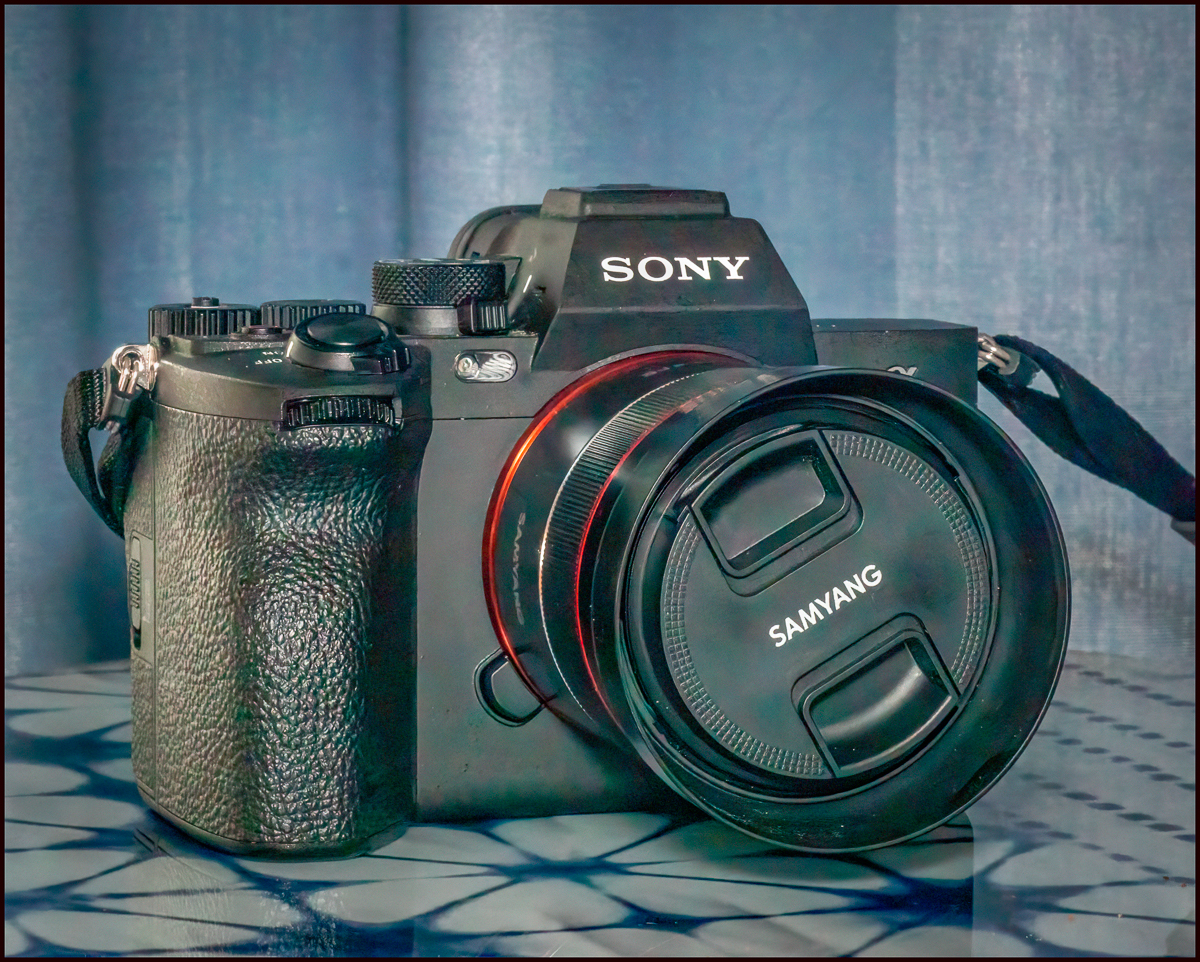
Actually it’s the first brand new camera that I’ve bought in over 10 years. I recently sold some property and I promised myself that after the sale was complete I would treat myself to a new (rather than the used cameras I’ve been buying of late) camera. After my usual tortured selection process I ended up with a Sony A7IV (seen above with a Samyang 45mm f1.8 lens). I bought it soon after it came out in December, 2021.

Camera type: Full-frame mirrorless
Announced: 21st October 2021
Sensor: 33Mp full frame (35.9 x 24.0mm) BSI Exmor R CMOS sensor
Lens mount: FE
Sensitivity range: Stills: ISO 100-51,200 (expandable to ISO 50 to ISO 204,800), Video: ISO ISO 100-51,200 (expandable to ISO 100-102,400)
Still Image format: Jpeg, HEIF, raw (Sony ARW 4.0)
Video format & compression: XAVC S: MPEG-4 AVC/H.264, XAVC HS: MPEG-H HEVC/H.265
4K Video (XAVC HS): 3840 x 2160 (4:2:0, 10bit, NTSC): 60p (150 Mbps / 75 Mbps / 45 Mbps), 24p (100 Mbps / 50 Mbps / 30 Mbps), 3840 x 2160 (4:2:0, 10bit, PAL): 50p (150 Mbps / 75 Mbps / 45 Mbps), 3840 x 2160 (4:2:2, 10bit, NTSC): 60p (200 Mbps / 100 Mbps), 24p (100 Mbps / 50 Mbps), 3840 x 2160 (4:2:2, 10bit, PAL): 50p (200 Mbps / 100 Mbps)
4K Video (XAVC S): 3840 x 2160 (4:2:0, 8bit, NTSC): 60p (150 Mbps), 30p (100 Mbps / 60 Mbps), 24p (100 Mbps / 60 Mbps), 3840 x 2160 (4:2:0, 8bit, PAL): 50p (150 Mbps)5, 25p (100 Mbps / 60 Mbps), 3840 x 2160 (4:2:2, 10bit, NTSC): 60p (200 Mbps)56, 30p (140 Mbps), 24p (100 Mbps), 3840 x 2160 (4:2:2, 10bit, PAL): 50p (200 Mbps)5, 25p (140 Mbps)
4K Video (XAVC S-I): 3840 x 2160 (4:2:2, 10bit, NTSC): 60p (600 Mbps)56, 30p (300 Mbps)6, 24p (240 Mbps), 3840 x 2160 (4:2:2, 10bit, PAL): 50p (500 Mbps)5, 25p (250 Mbps)
Movie functions: Audio Level Display, Audio Rec Level, PAL/NTSC Selector, Proxy Recording (1280 x 720 (Approx. 6 Mbps), 1920 x 1080 (Approx. 9 Mbps), 1920 x 1080 (Approx. 16 Mbps)), TC/UB, Auto Slow Shutter, Gamma Disp. Assist
Autofocus system: Hybrid AF with 759 phase detection points and 425 contrast detection points, Still images: Human (Right/Left Eye Select) / Animal (Right/Left Eye Select) / Bird, Movie: Human (Right/Left Eye Select), sensitive down to -4EV
Maximum continuous shooting rate: 10fps
Viewfinder: 0.5-inch 3,686,400-dot EVF with 100% coverage and up to 0.78x magnification
Screen: 3-inch 1,036,800-dot vari-angletouchscreen
Image stabilisation: 5-axis giving up to 5.5EV compensation
Storage: Dual: 1: SD/SDHC/SDXC (UHS-I/II) & CFexpress Type A slot, 2: SD/SDHC/SDXC (UHS-I/II)
Battery: NP-FZ100 rechargeable Li-ion battery giving 610 images with the screen
Dimensions (WxHxD): 131.3 x 96.4 x 79.8mm / 5 1/4 x 3 7/8 x 3 1/4 inches
Weight (including battery & memory card): 658g / 1 lb 7.3 oz

There’s a good review of it here.

I’m very pleased with my purchase. For some pictures taken with this camera and a variety of lenses see here.

Taken with a Sony A77II and Minolta 50mm f2.8 Macro lens