Bakelite Cameras

I started collecting cameras around 2011. My first serious camera was a Minolta Hi-Matic 7sII given to me by my late wife. So I thought I would focus my collection on compact rangefinder cameras (e.g. Canon G-III, Olympus 35 RC etc.). After acquiring a number of these I switched to full size rangefinder cameras (FEDs, Zorkis, Canon P, Nikon S2 etc. I even got a Leica) What then followed were forays into classic SLRs (e.g. Nikon F, F2 etc.); autofocus SLRs (e.g. Nikon N90x, Canon Eos Elan II, Minolta Dynax 5 etc.); Medium Format cameras (e.g. Rolleiflex, Minolta Autocord etc.). I even picked up a number of Point and Shoot cameras (e.g. Olympus Stylus, Olympus Stylus Epic, Olympus XA2 etc.

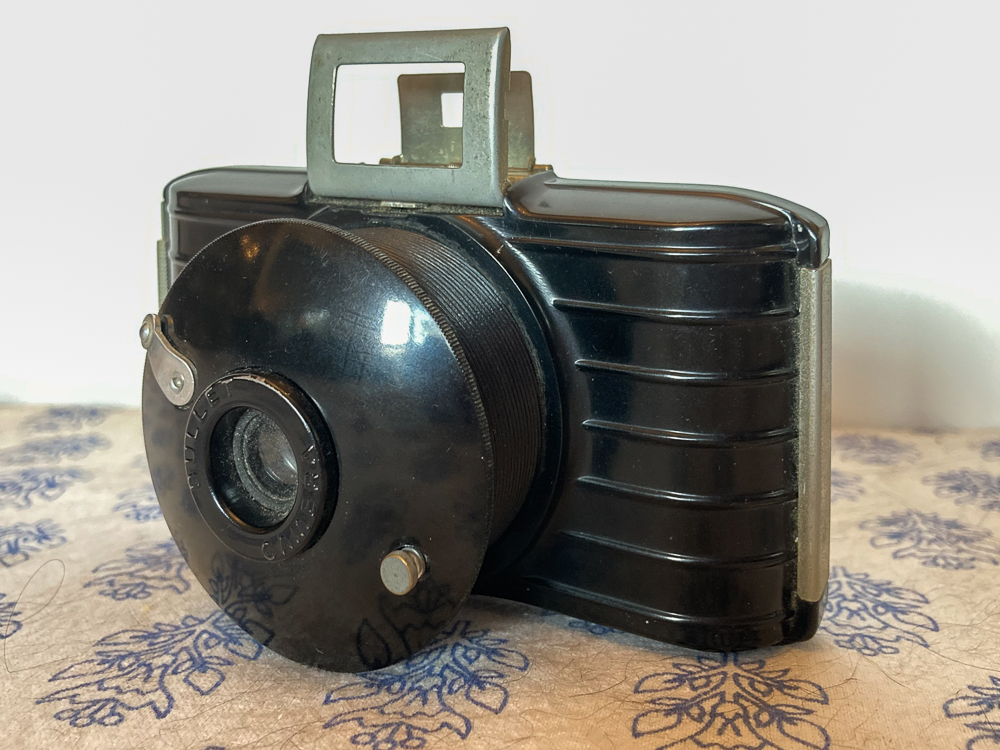
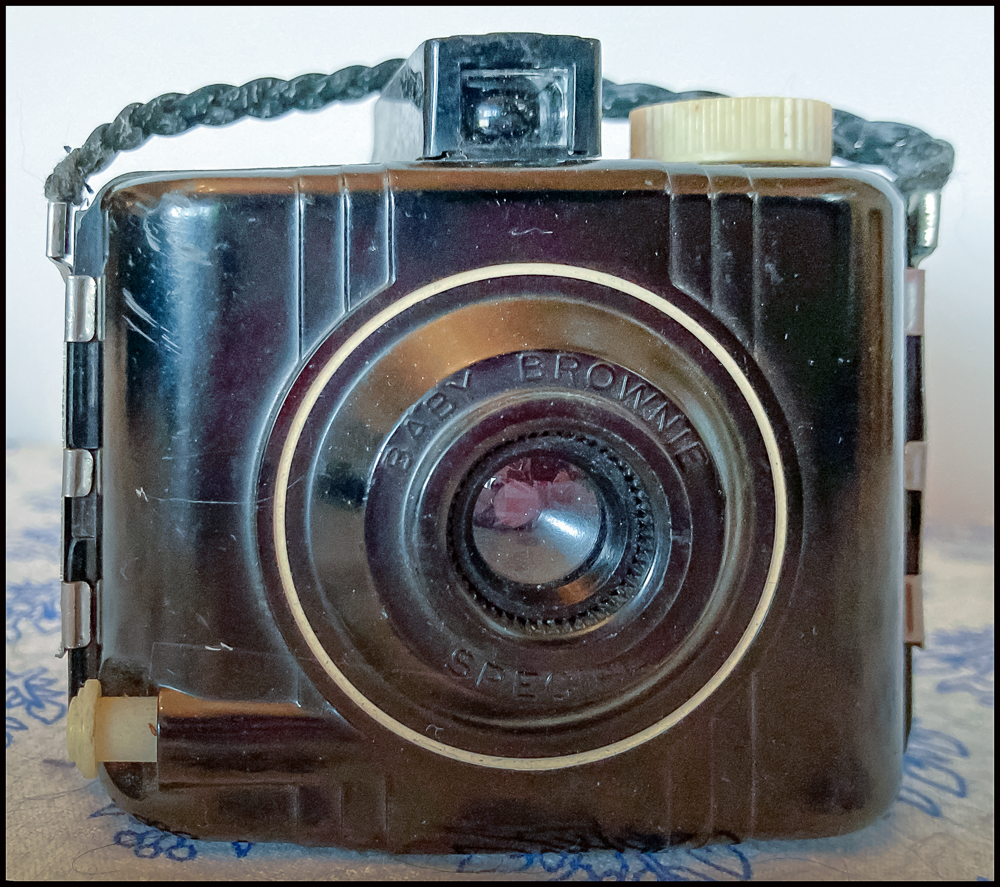
Recently I started to think about what other kinds of cameras I could collect. Then I noticed that somewhere along the line I’d acquired a few bakelite cameras, two of which appear above (a Kodak Bullet) and below (a Kodak Baby Brownie). Maybe I’ll collect some of these. Why? They’re usually quite inexpensive; many of them have lovely art deco designs; I love the shiny (usually but not always) black plastic.

So what is bakelite and how was it used in cameras:

THE FIRST TRULY SYNTHETIC PLASTIC
In 1907 Leo Hendrick Baekeland, a Belgian chemist working in New York, invented the first entirely synthetic plastic. It was a thermosetting phenolic resin patented in 1907 under the name Bakelite. It was made by combining phenol and formaldehyde using heat and pressure. Once the resin hardened, it could not be re-melted by the application of heat. This discovery was of profound importance and effectively gave birth to the modern plastics industry.

BAKELITE CAMERAS
Camera makers soon realized that the properties of this phenolic resin were ideally suited for the use in cameras. Bakelite was opaque, sturdy, durable and could be moulded to any shape. Early Bakelite cameras tended to be phenolic imitations of their metal and cardboard counterparts. However, in 1934 something truly remarkable happened. The industrialist Walter Dorwin Teague designed a camera that was better suited to the characteristics of the new material. This was the Baby Brownie – a black phenolic box with a distinctive vertical ribbing.

Other great designs followed. The Agfa Trolix of 1936 had curved size sides, rounded corners, decorative ribs and a shiny surface all typical of the 1930s streamlining. It is made from Trolitan plastic which is the German equivalent of Bakelite. Such features would have been very difficult to realise in metal.

Another outstanding design of the period was the 1937 Purma Special. This camera took the form of an elegant curved and tapered rectangular case of Bakelite. Unlike most other models the film advance mechanism, shutter lever and shutter release button did not protrude from the body. Again, these features would have been more difficult and costly to realise in metal. (Art Deco Cameras)
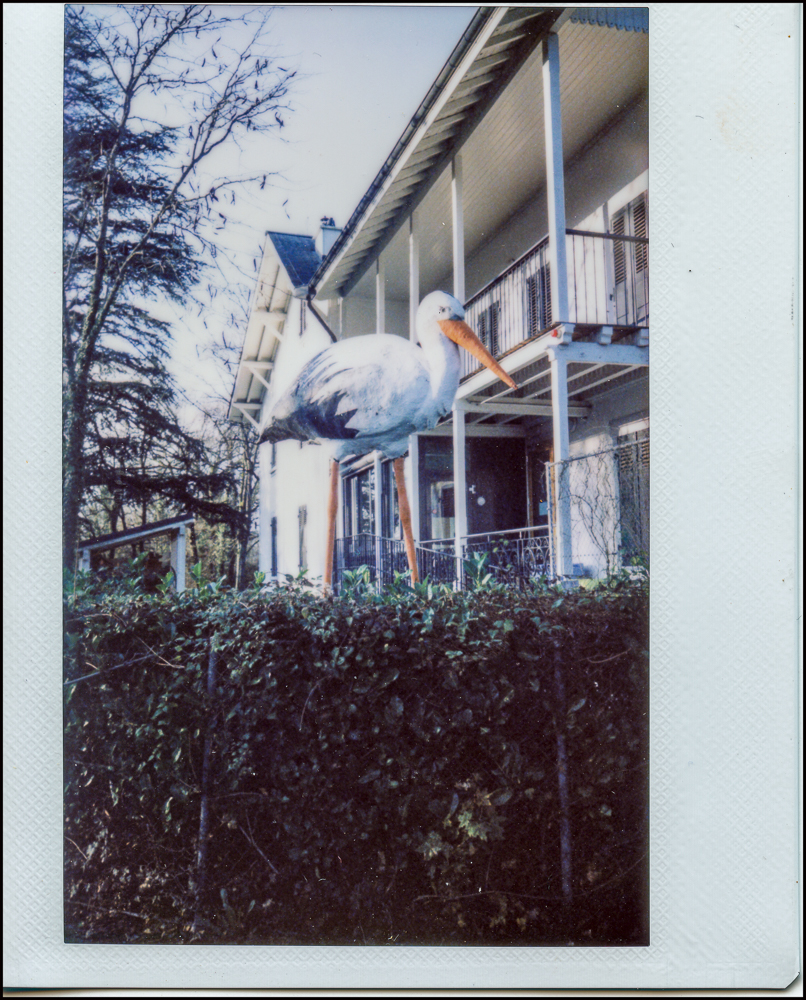
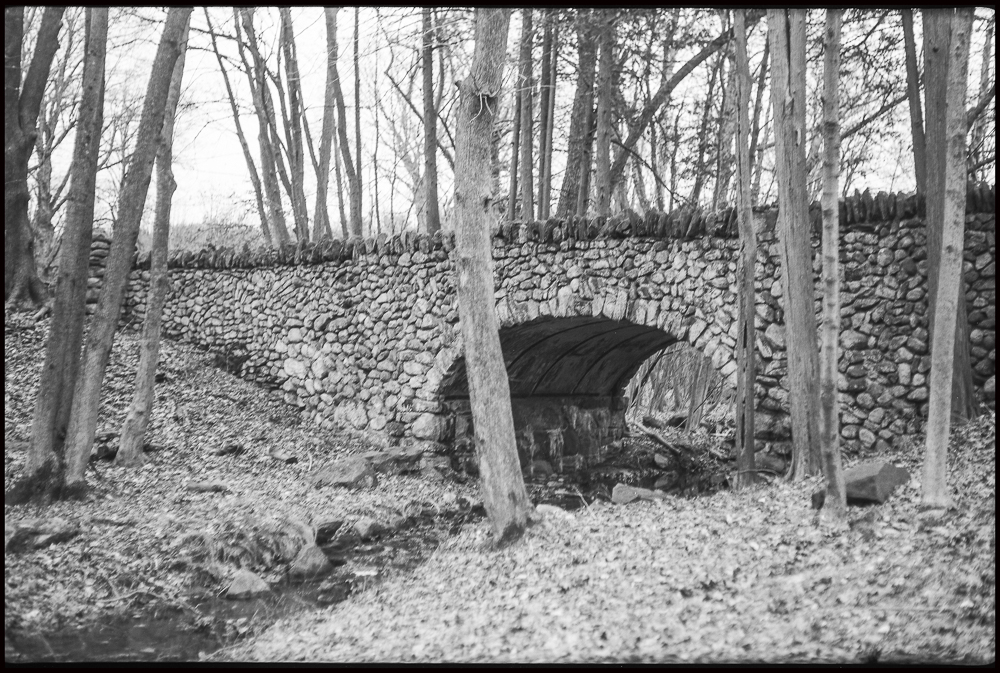
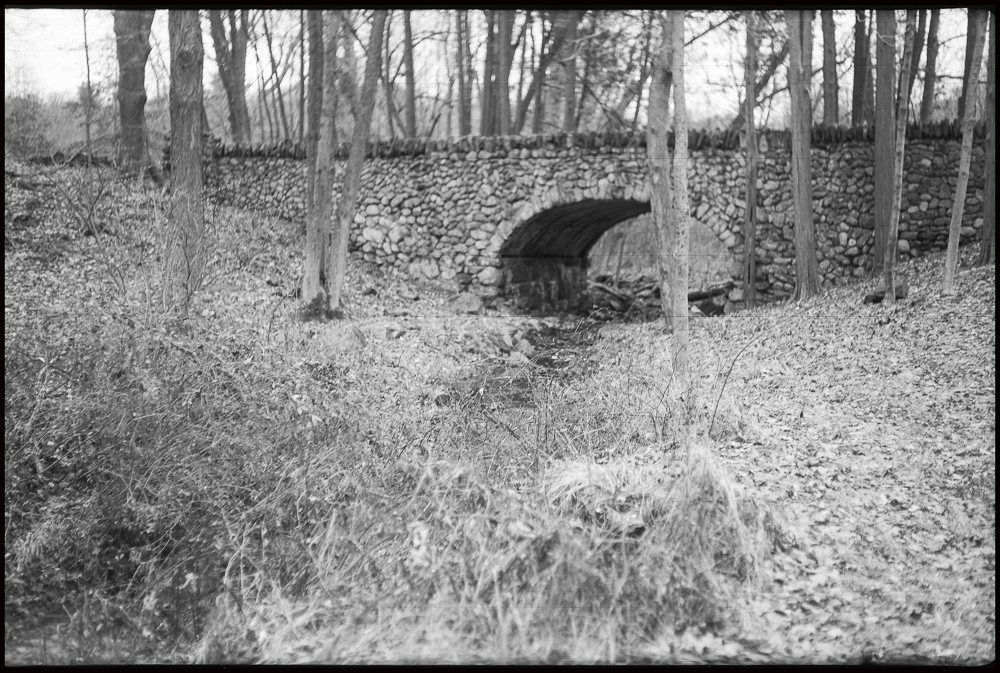
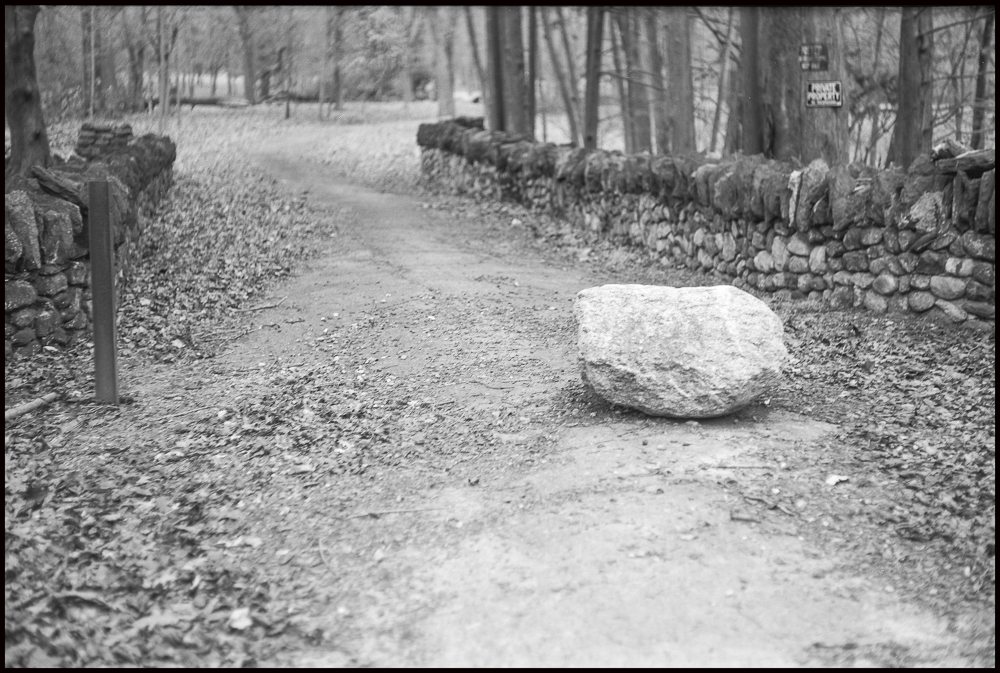
Taken with an Apple iPhone 8 (second version).

Film Camera 2019/12 – Fujifilm Instax Wide 210 – Results

I initially had some problems with the camera. I inserted the film and pressed the shutter release to eject the dark slide. The slide started to move and then jammed. I told my Son-in-Law (it was his camera after all). He replaced the batteries (the camera had been standing for some time) and then tried some brute force. After some tugging the slide finally came out, but unfortunately the first picture came with it, so we lost a frame.

After that it was all plain sailing. Select the appropriate focus zone and then press the shutter release. The first couple of images suffered from light leaks (see picture above), but the rest were good.

What did I like about this camera? Honestly not much. It’s easy to use and there is something rather magical about seeing the image develop in your hands.

What didn’t I like. First it’s huge. Much larger than an SLR even if it is lighter. You’re not going to be putting this one in your pocket. The viewfinder is off to one side, far away from the lens so there are definite problems with framing. There aren’t many controls, but what there are are all off to one side so you pretty much have to take your eye off the viewfinder and turn the camera to see them (and some of them are not all that easy to see even then).

So while it was fun to use I wouldn’t seem myself using one of these long term: not enough controls for me and I didn’t particularly like the quality of the images much.


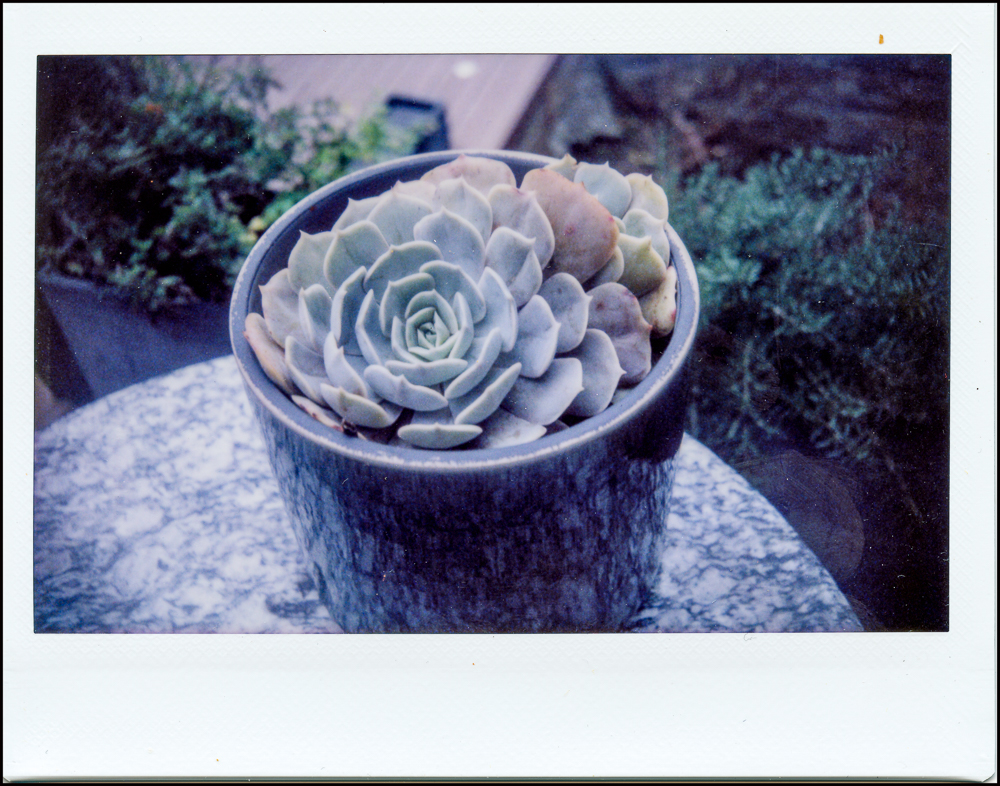
This last image was taken using the close up attachment which allows you to focus to 15 inches (so not really that close).

Film Camera 2019/12 – Fujifilm Instax Wide 210

I’ve never been a fan of instant cameras, largely because I don’t like the results they produce. However recently we stayed with our younger daughter and noticed this camera on a shelf and decided to give it a try. I asked my son in law if I could use it. He said OK and told me that there was film behind it.

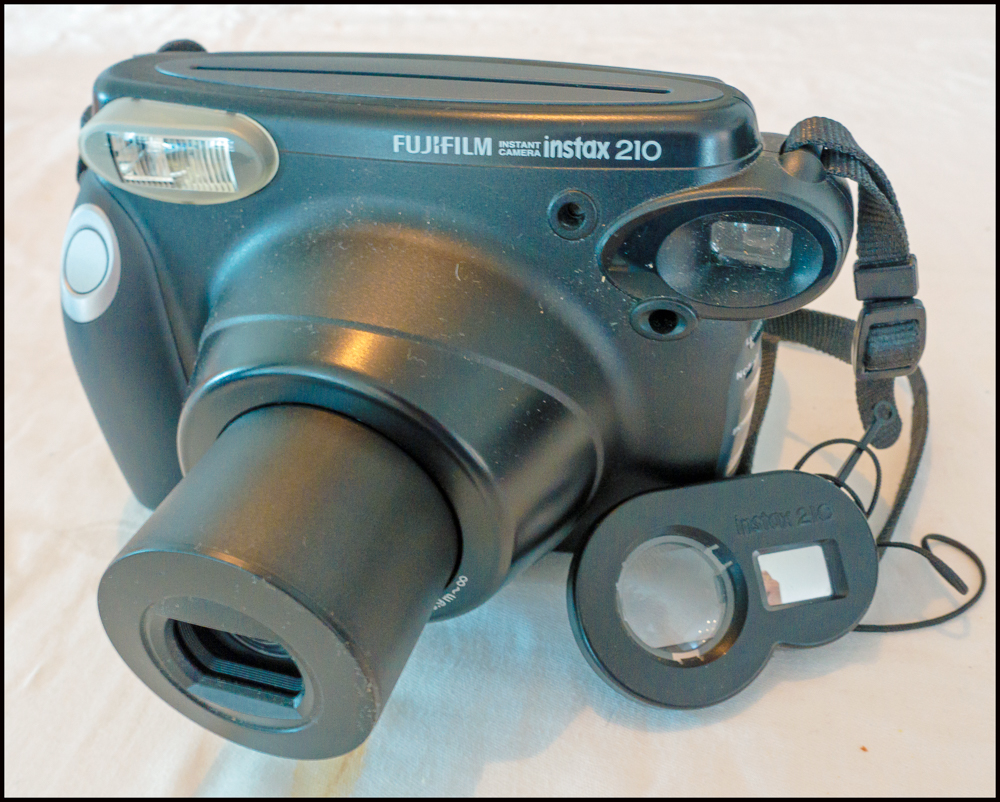
The Instax 210 Wide Camera was the first wide format that Fujifilm developed (It has since been replaced by the Instax 300 Wide). It uses ISO 800 speed film cartridges that come in a pack of ten. Each photo measures 3.4 by 4.25 inches with a white border.

The camera has a film countdown counter as part of an LCD display that also shows the focal distance: either close-up for shots at 0.9 meters to 3 meters or distant for shots from 3 meters to infinity. Every time the camera is turned on, the front lens extends and the camera defaults to close-up mode.

Other controls include a lighten/normal/darken switch and a flash on/off button. The flash on the camera will fire automatically in low light conditions and there’s no way to stop it from doing so i.e. the flash cannot be completely turned off. The shutter speed is fixed at 1/64th and 1/200th of a second, so shots of people (or anything else) moving will look blurred.

The camera comes with a close up lens attachment, which also includes a mirror for taking selfies and requires four AA batteries.

That’s about it. All in all a fairly simple camera.

Film Camera 2019/11 – Leica IIIf

I’d always liked the look of Leica cameras and, of course, their reputation precedes them. When I started collecting cameras (around 2011) I thought about getting a Leica, but I didn’t want to pay what they cost and I wasn’t sure how I’d like the rangefinder experience. So in order to try out rangefinder cameras my first purchase was of two Former Soviet Union cameras: A FED 2 and a Zorki 4.

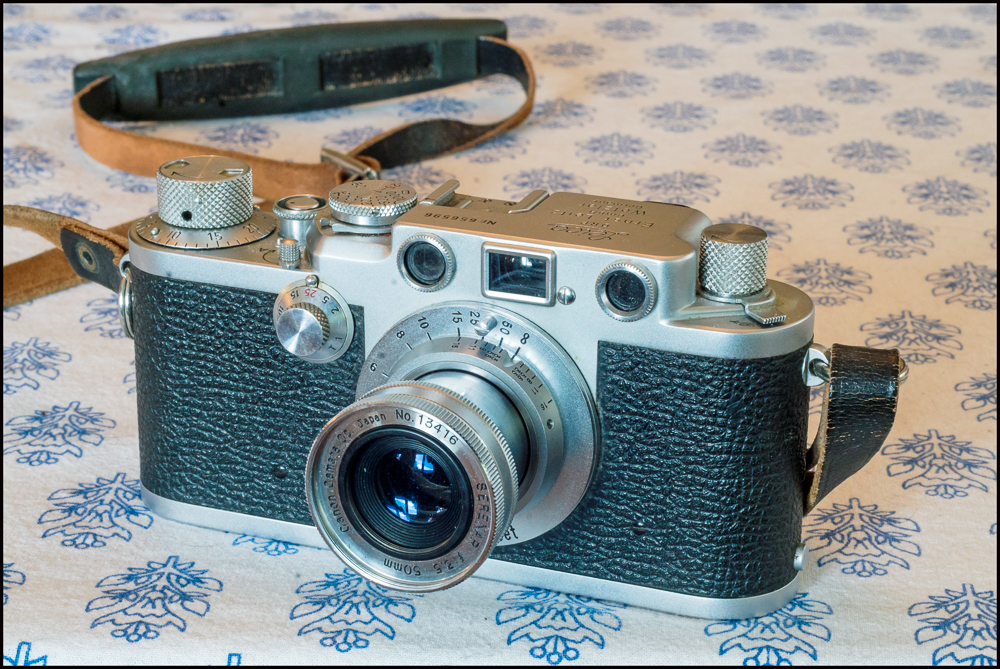
Of course it was not long until the yen for a Leica returned so I got my hands on this one: A Leica IIIf red dial (I think). I also got a Leitz 90mm f4 lens, the only piece of Leica glass that I could afford. I also figured that I could use the lenses (Industar, Jupiter and the like) that I got with the FSU cameras. Subsequently I bought the Canon Serenar 50mm f3.5, which you see in the picture above and which I used for this test.

So back in 2011 I trimmed the leader and loaded the camera with Tri-X. And there it sat until recently when I took it out again.

This is such a well known camera that I’ll content myself with a couple of links to reviews:

Leica IIIf. Screw Mount (1950-1957) on kenrockwell.com

First Impressions: Leica IIIf after sixty years

Leica Screw Mount Cameras – the 1930’s through the 1950’s (not specifically on the IIIf but and interesting overview of Leica screwmount cameras).

Film Camera 2019/10 – Moskva 5 – Results

I struggled with this camera – not the fault of the camera, more my lack of familiarity with it and some basic mistakes I made. Loading was easy enough, but after that things started to go downhill.

Admittedly I was rushing. I was leaving on vacation and wanted to finish a roll quickly before I left. I had the camera set for 6×9 and so only had 8 frames available. I composed my first picture and pressed the shutter release. Nothing happened. Maybe I needed to advance? I did this and still nothing. Now getting flustered I tried again. Still nothing. Eventually I realized that I’d forgotten to cock the shutter – three frames lost, five to go.

It was a fairly dull day and I was using 100 ISO film and in one of the shots I think the shutter speed was too slow for me to hand hold – four frames down four to go.

Only occasionally having used medium format cameras I didn’t realize that depth of field is less than I was used to with 35mm. Only a small area was in focus, with the foreground and background badly out of focus. Five down, three to go (the images above and below),

I found the camera quite cumbersome to use. I couldn’t seem to hold it comfortably and the focus mechanism at the end of the lens was also uncomfortable. I left with the impression that it’s really designed to be used on a tripod, which is what I’ll do next time I use it.

So while I didn’t really like the camera all that much the 6×9 negative is hard to resist so I’ll certainly try it again.