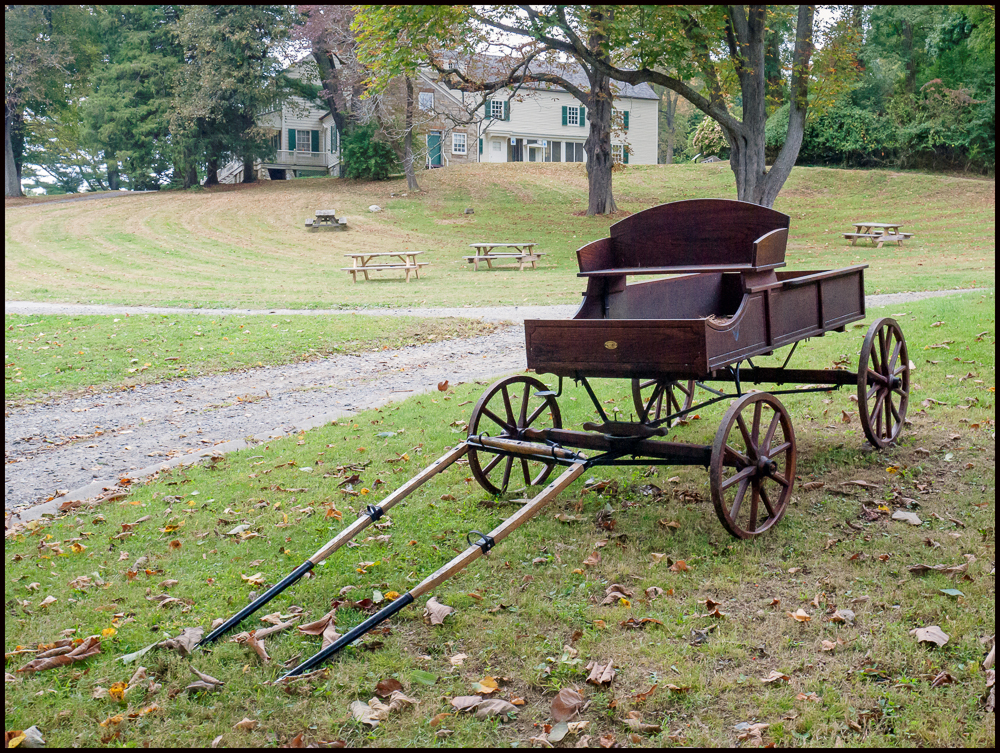
This beautiful old carriage stands next to the visitor’s center. In the background the main house.
Taken with a Panasonic Lumix GF1 and Lumix G Vario 14-42mm f4.0-5.6 II.
Photographs and thoughts on photography and camera collecting

This beautiful old carriage stands next to the visitor’s center. In the background the main house.
Taken with a Panasonic Lumix GF1 and Lumix G Vario 14-42mm f4.0-5.6 II.
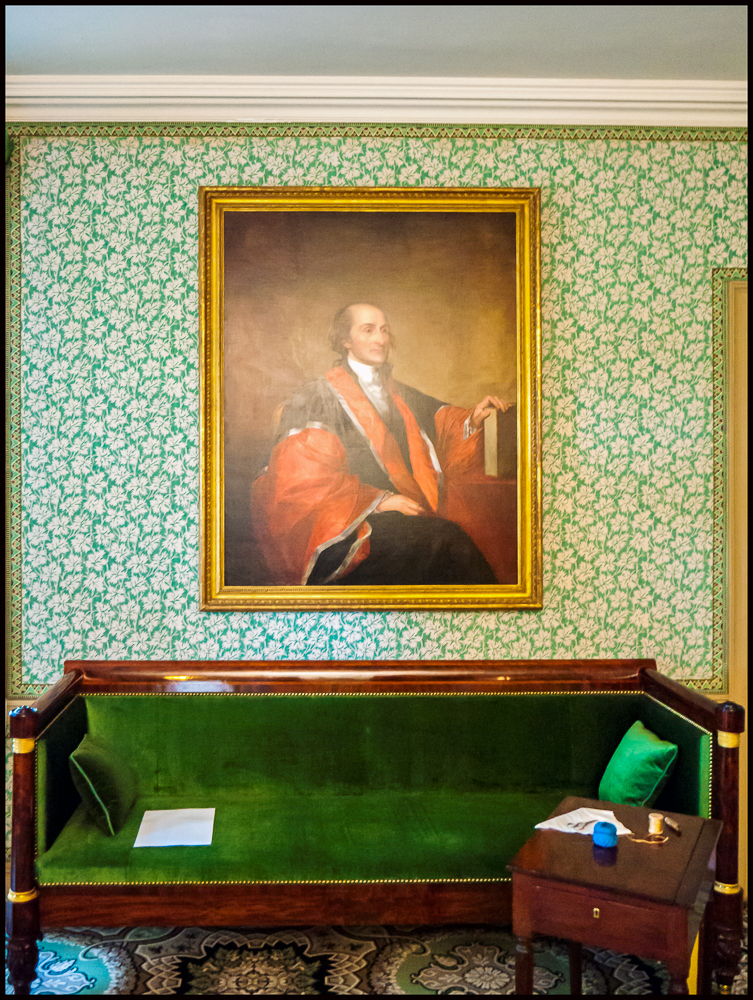
John Jay. President of the Second Continental Congress. Principal negotiator of the Treaty of Paris, which ended the Revolutionary War. US Secretary for Foreign Affairs. Co-author of the US Constitution. First Chief Justice of the United States. Governor of New York from 1795 to 1801.
Taken with a Panasonic Lumix GF1 and Lumix G Vario 14-42mm f4.0-5.6 II.
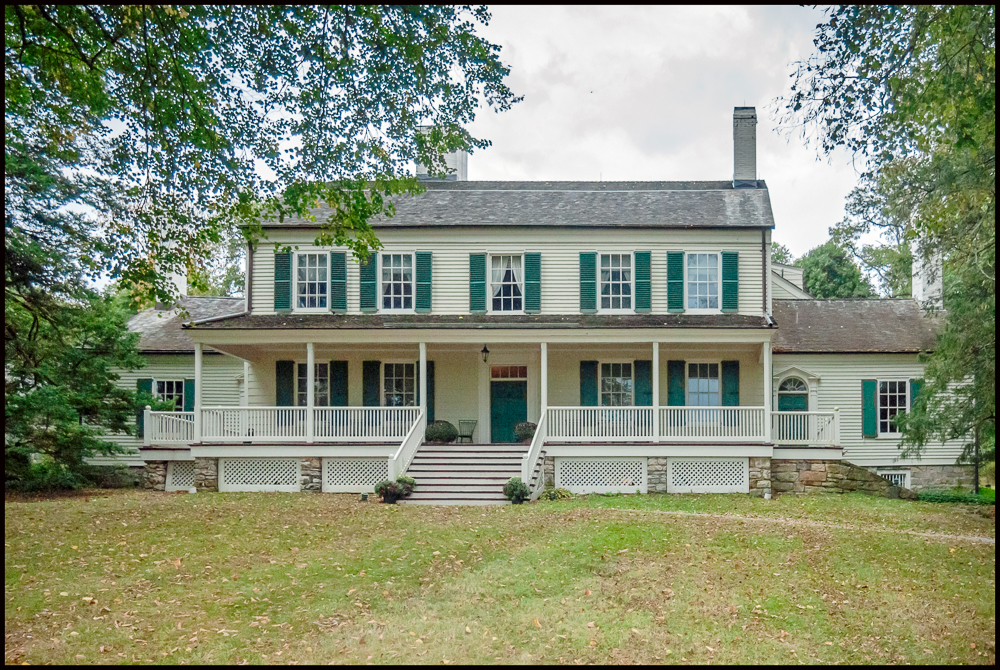
Continuing our Revolutionary War visits we went to the John Jay Homestead in Katonah, NY. Above: The main house. John Jay lived here from 1801 to his death in 1829.
According to the homestead’s website:
John Jay was born in New York City in 1745. His grandfather, Augustus Jay, had been a French Huguenot who came to America in the 1680s seeking religious freedom. His father, Peter Jay, gained wealth as a merchant, and retired to a farm in Rye, New York, shortly after John was born. Following formal education at King’s College (today Columbia University), Jay began a career as a lawyer. However, as the talk of independence from Great Britain grew, Jay became increasingly involved in public service. He would never return to his law practice.
In 1774, Jay married Sarah Van Brugh Livingston (1756-1802), daughter of the fiery patriot and first governor of the State of New Jersey, William Livingston. Sarah Jay, renowned for her beauty, intelligence, and charm, was a devoted wife and the doting mother of the couple’s five children.
Of all the Founding Fathers, no other filled so many high offices. John Jay served the State of New York as a principal author of its first constitution in 1777, and as its first Chief Justice. He served the nation as President of the Second Continental Congress, Minister Plenipotentiary to Spain during the Revolutionary War, and Secretary for Foreign Affairs under the Articles of Confederation. He was author and key negotiator, with Benjamin Franklin and John Adams, of the Treaty of Paris, which ended the American Revolution. With Alexander Hamilton and James Madison, he wrote the Federalist Papers, arguing for adoption of the United States Constitution. After the ratification of the Constitution, President Washington appointed Jay the first Chief Justice of the United States.
In 1794, at Washington’s bidding, Jay went to England to negotiate a treaty both men knew would be controversial. Although unpopular in its day, the Jay Treaty resolved a number of differences with Great Britain left over from the Revolution, delayed open conflict until the War of 1812. It has been said this treaty cost Jay the chance to succeed Washington as president.
Upon his return to New York from England in 1795, he was elected the state’s second governor, and served two three-year terms. As Governor, he signed the “Act for the Gradual Abolition of Slavery.” In 1801, after twenty-seven years of arduous public service, he decided it was time to retire from public life.
By that year, Jay had acquired, by inheritance and purchase, 750 acres of land near present-day Katonah. During his second term as governor, Jay had renovations made to his farmhouse in Westchester in preparation for his retirement. He moved there in 1801. His beloved wife Sarah died the following spring, leaving him a widower with his three youngest children still at home. Jay never remarried. He lived in the house until his death in 1829, quietly enjoying his life as a country farmer, keenly interested in agriculture, his family, and his religion. An avid reader of the Bible, Jay served for seven years as President of the American Bible Society.
Taken with a Panasonic Lumix GF1 and Lumix G Vario 14-42mm f4.0-5.6 II.
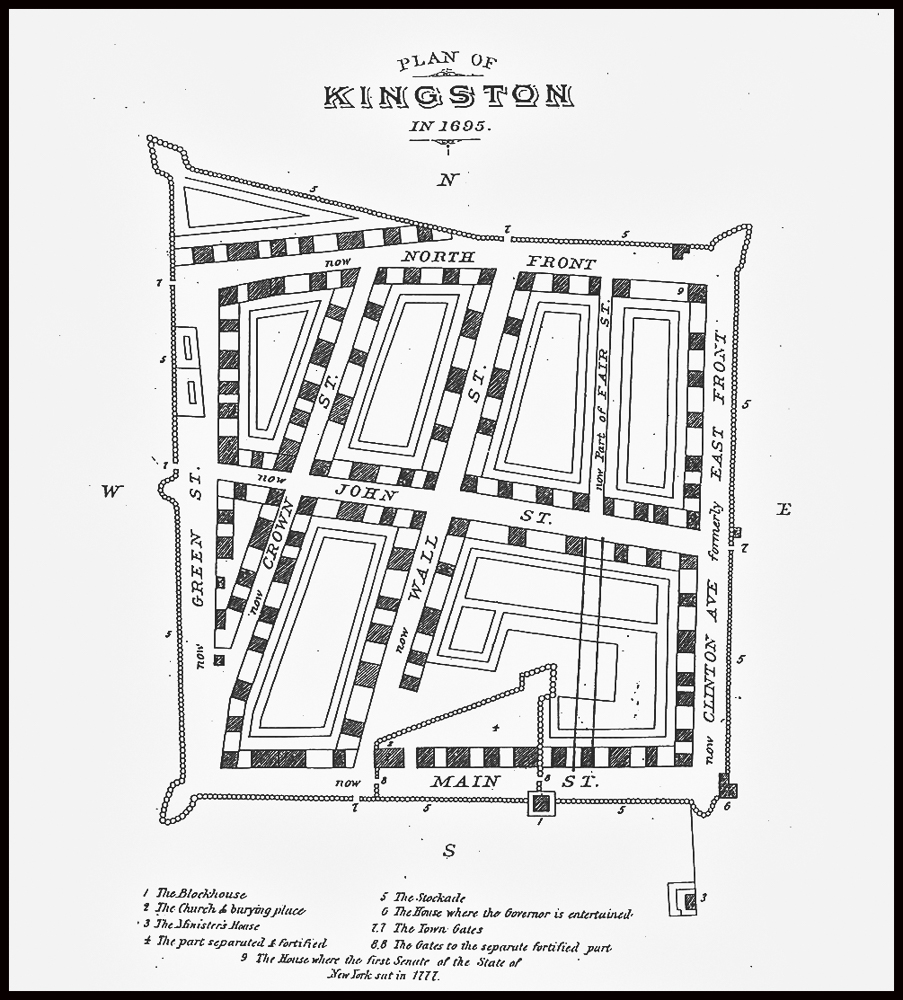
Kingston has Four Historic Districts: The Rondout-West Strand; Chestnut Street; Fair Street and The Stockade.
In 1777 the British sailed up the Hudson River, took Forts Montgomery and Clinton and then continued up the Hudson to Kingston, then the capital of New York State. From the river they proceeded to the stockade surrounding the town and eventually burnt over 300 dwellings to the ground. Many of the buildings were made of stone and were subsequently rebuilt.
As our time was limited we decided to focus on the ‘Stockade District‘.
Taken with a Sony RX-100 M3.

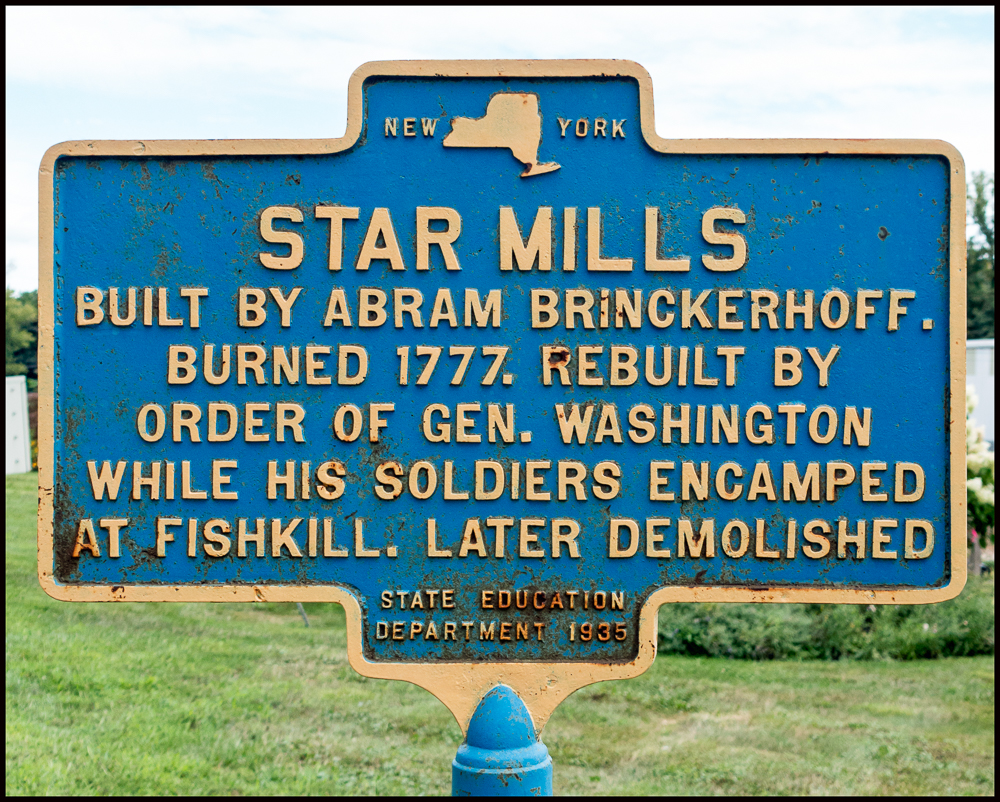
Across the road from the Rombout Rural Cemetery are two historic markers commemorating: The “Fishkill Tea Party (above); and the site of the Star Mills (below). The Fishkill Tea Party warrants further explanation:
“The Brinckerhoffs settled at Brinckerhoffville. They, in 1721, purchased of Madame Brett, a tract of about 1,700 acres. Abram kept a store here during the Revolution, He also built the mills now known as Dudley’s Mills They were destroyed by fire in the time of the Revolution, and the soldiers of the American army, encamped near by, were set to work at re-building them; in a short time the present mills were ready for business.
About this time, tea being very scarce, and having a considerable quantity on hand, Abram Brinckerhoff charged an exorbitant price. The women of the neighborhood were very much exasperated, as the price was beyond their means. Mustering a large company under the command of one Catherine Schutt, they marched in military order in front of his store. The sequel is told in the following extract from a newspaper published at that time:
AUGUST 28th, 1776. – A few days since about 100 women, inhabitants of DUCHESS county, went to the house of Colonel Brinckerhoff, at Fishkill, and insisted upon having tea at the lawful price of six shillings per pound, and obliged that gentleman to accommodate them with one chest from his store for that purpose. Shortly after he sold his cargo to some Yorkers, who, for fear of another female attack, forwarded the nefarious stuff to the North river precipitately, where it is now afloat, but the women have placed their guard on each side
” (From General History of Dutchess County From 1609 to 1876, Inclusive. By Philip H. Smith. Published by the author 1877.
Taken with a Sony RX-100 M3.